What is the difference between balayage and highlights?
Quick answer
Balayage is a freehand painting technique creating soft, seamless gradients, while highlights use foils to produce defined, brighter streaks. Balayage requires touch-ups every 4-6 months, highlights every 8-10 weeks.

Balayage and highlights are the two most commonly confused colour services among Canvas Blend's Central Hong Kong clientele. While both are partial colour techniques, they differ significantly in application method, visual outcome, maintenance cycle, pricing, and ideal client profile. Lead colourist Vit So, with over nearly 30 years of professional experience and 60+ monthly cases between the two, has compiled the five definitive differences to help you choose the right service for your lifestyle and complexion before booking.
For added dimension without recolouring every strand, learn about highlights Hong Kong, including face-framing, partial, and full-head placement options that can complement your usual styling routine.
Application Method: Hand-Painted vs Foil-Wrapped
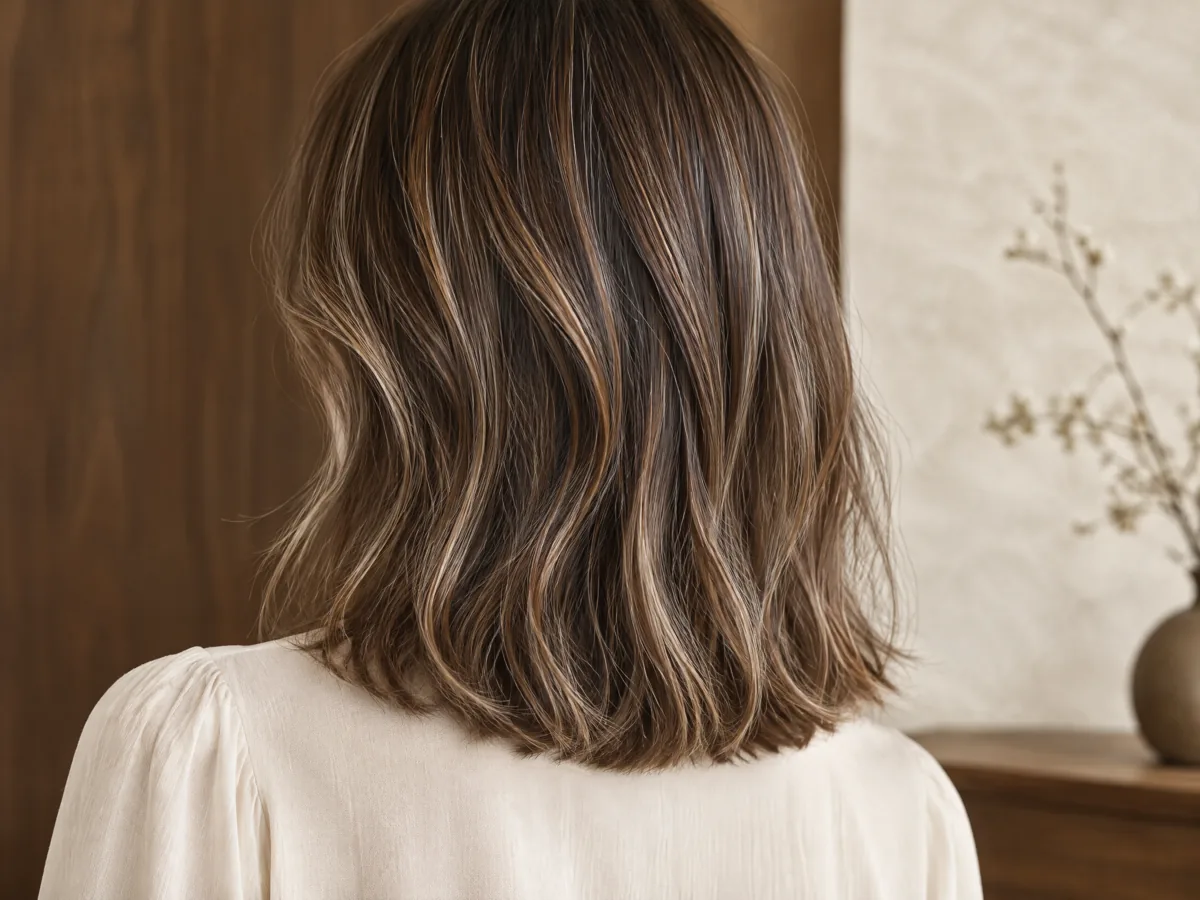
Balayage, derived from the French word for sweep, involves the colourist hand-painting bleach onto hair surfaces using a brush, with no foil wrapping. The result is a soft, irregular, sun-kissed gradient. Highlights use foils to wrap individual sections, with heat accelerating the bleaching reaction to produce sharp, contrasting strands. Because balayage skips the foil and root area, regrowth never produces a visible demarcation line at the roots, which is why this technique is so popular among low-maintenance professionals.
Before lightening through the mid-lengths and ends, read about balayage Hong Kong, assess your current hair condition, and leave time to discuss a simple at-home care routine.
Visual Outcome: Natural Gradient vs Defined Strands
Balayage delivers an undetectable, sun-kissed look: roots remain darker, ends fade lighter, with no harsh transition. Common pairings include milk tea brown, hazy caramel, and linen milk tea brown. Highlights produce visible streaks of brightness with strong contrast and dimensional impact, often used for clients seeking a more striking statement. Easy rule: choose balayage for understated elegance, highlights for sharp, eye-catching dimension.

Maintenance: 4-6 Months vs 8-10 Weeks
Because balayage avoids the root zone, regrowth blends naturally into the existing gradient, allowing 4-6 month touch-up cycles (some clients stretch this to 7-8 months). Highlights require root touch-ups every 8-10 weeks because regrowth creates an obvious dark line against the lifted strands. For Central professionals with packed schedules and limited salon time, balayage is the clear winner for time and cost efficiency.
Pricing in Central Hong Kong
Premium Central salons charge HK$2,800-4,800 for balayage and HK$1,800-3,500 for highlights. Balayage commands a premium because freehand painting requires higher technical mastery and typically uses more bleach product. Canvas Blend's balayage starts at HK$2,880 (Olaplex No.1 + No.2 included), highlights from HK$1,880. Mid-tier salons show HK$500-1,000 price gaps; budget salons typically HK$200-500.
Who Should Choose What: Profile Matching
Choose balayage if you: have a busy career with limited salon time; prefer effortless, natural-looking colour; are new to lightening services; want Japanese-inspired hazy or biracial-look tones; or have fine hair that cannot tolerate frequent bleaching. Choose highlights if you: want a visible transformation with strong contrast; have thick hair needing dimensional layers; prefer Korean-style bright contrasts; want face-framing brightness; or are working with a tighter budget.
Bottom line: an honest colourist's verdict
Balayage versus highlights is not a question of better or worse, but of fit. If you value naturalness, low maintenance, and long-term ease, balayage is the answer. If you want dimension, visible change, and budget efficiency, highlights remain a classic choice. Canvas Blend offers a complimentary 30-minute consultation before every booking to assess hair quality, skin tone, lifestyle, and budget, ensuring you walk out with the colour you actually wanted.
When viewing colour inspiration, ask about grey blending Hong Kong to compare a low-contrast transition with fuller coverage, then choose the look that suits your preferred upkeep.
difference between balayage and highlights – Central salon documentation


What Central Hong Kong clients ask us about difference between balayage and highlights
At Canvas Blend's Hollywood Road studio in Central, the question "What is the difference between balayage and highlights?" comes up 30-50 times per month in consultation conversations. Our Hong Kong colourist team has built up a real-client Q&A database showing that most uncertainty around balayage vs highlights and foil vs freehand comes from inconsistent advice across Xiaohongshu, Instagram and previous salons. Vit So, our lead colourist with nearly 30 years of experience, believes that technical and aftercare questions like this rarely have a single "correct" answer — the honest answer always depends on your hair type, lifestyle, budget and long-term plan.
If you found this page by searching "difference between balayage and highlights" on Google, you are probably about to book a colour appointment or are in the middle of post-colour research. Before deciding, we recommend cross-referencing at least 2-3 sources: this article (Canvas Blend's Central salon perspective), official brand documentation (Olaplex, Wella, L'Oréal technical sheets), and a hands-on consultation with a colourist you trust. For technical specifics such as hand-painted balayage or foil highlights, touching the actual hair and observing real skin tone in studio light is essential — which is why we offer a free 30-minute WhatsApp pre-consultation with no booking obligation.
How Canvas Blend handles difference between balayage and highlights appointments end-to-end
From inquiry to follow-up, the Canvas Blend Central process unfolds in five stages. First, message Vit So directly via WhatsApp +852 5443 7168 with 3-5 reference photographs. Second, Vit So returns a personalised assessment within 24 hours including feasibility, recommended service combination (for example Balayage + Olaplex No.1+2, or Babylight + purple-toning home regimen), estimated pricing and required appointment length. Third, the in-studio 15-minute colour-feel consultation covers undertone analysis under three light sources, hair-quality diagnostic and a printed digital swatch preview. Fourth, the formal service runs 3-6 hours depending on complexity, accompanied by hand-poured Mariage Frères tea pairings. Fifth, post-service photography, written aftercare instructions and your next touch-up appointment are confirmed before you leave. The entire workflow is designed around three principles: transparency before the appointment, focused attention during the appointment, and accountability after.
On the question of balayage vs highlights, Canvas Blend follows one strict principle: "do not bleach if possible, bleach less if possible, and use the best protection if bleaching is unavoidable." Every bleach service includes Olaplex No.1+No.2 (mixed in the bleach plus post-bleach sealant) as standard, with optional add-ons including K18 advanced bond repair (HK$380), deep conditioning mask (HK$280) and scalp soothing massage (HK$180). Central's hard water tends to cause brassiness and accelerated fade, so our home-care guidance covers Milbon Aujua colour-safe shampoo, weekly Olaplex No.3 application, and the correct frequency for purple or silver toning shampoo.
Why Central clients choose Canvas Blend for difference between balayage and highlights
Central is home to one of the densest concentrations of premium hair salons in Hong Kong, but Canvas Blend differentiates on three details specifically related to freehand colour and face-framing: first, each colourist sees a maximum of four clients per day, so no service is rushed; second, the studio is designed around a Kyoto-machiya aesthetic with warm wood tones, natural light and three-zone colour-checking lamps that avoid the colour distortion typical of fluorescent lighting; third, every client receives a bilingual (Chinese-English) written technical service report so you can refer back to exact formulas and aftercare steps later — particularly valued by Central's expat clientele.
Located at 252 Hollywood Road, Sheung Wan, Canvas Blend is exceptionally well-connected: a four-minute walk from Sheung Wan MTR Exit A2, three minutes via the Mid-Levels Escalator from PMQ, an eight-minute walk from Central MTR Exit D2, and an eight-minute taxi ride from IFC Mall. For finance, legal and brand professionals working at IFC, Two Pacific Place, Pacific Place and Landmark, booking difference between balayage and highlights no longer means committing a full day off — weekend slots and special evening appointments after 8pm are available on request, designed around the demands of the Central financial core.
Want personalised advice on difference between balayage and highlights?
Unsure whether balayage or highlights suits you better? WhatsApp Canvas Blend at +852 5443 7168 to book a complimentary consultation. Vit So will personally evaluate your hair quality and complexion, then recommend the technique aligned with your real lifestyle. Limited daily bookings, 3-5 hours of dedicated service per client, in the heart of Central.
Related questions
What's the difference between babylights and highlights?
Babylights use ultra-fine sections (0.5-1mm) for dense, sun-kissed effects mimicking baby hair, while highlights use thicker sections (3-5mm) creating bold streaks. Babylights look ultra-natural; highlights deliver immediate, defined contrast.
Airtouch vs balayage: which is better?
Airtouch uses a hairdryer to separate strands and bleaches only the longer ones, creating ultra-natural depth. Balayage is freehand painting for overall gradient. Airtouch looks more natural with longer touch-up cycles (5-7 months).
What is foilyage and how is it different from balayage?
Foilyage is a hybrid: bleach is hand-painted balayage-style then wrapped in foil with heat to lift higher than pure balayage. Ideal for Asian dark hair achieving milk tea grey, linen blonde and other light tones.
Ombré vs balayage vs colour melt: what's the difference?
Ombré has a clear dark-to-light gradient with a soft transition line; balayage features hand-painted highlights throughout for natural depth; colour melt seamlessly blends multiple tones with no visible boundary—the most advanced gradient technique.
Continue Reading · Knowledge Web