Colour × Makeup × Hong Kong
Pre-Wedding Hair Colour and Makeup in Different Light
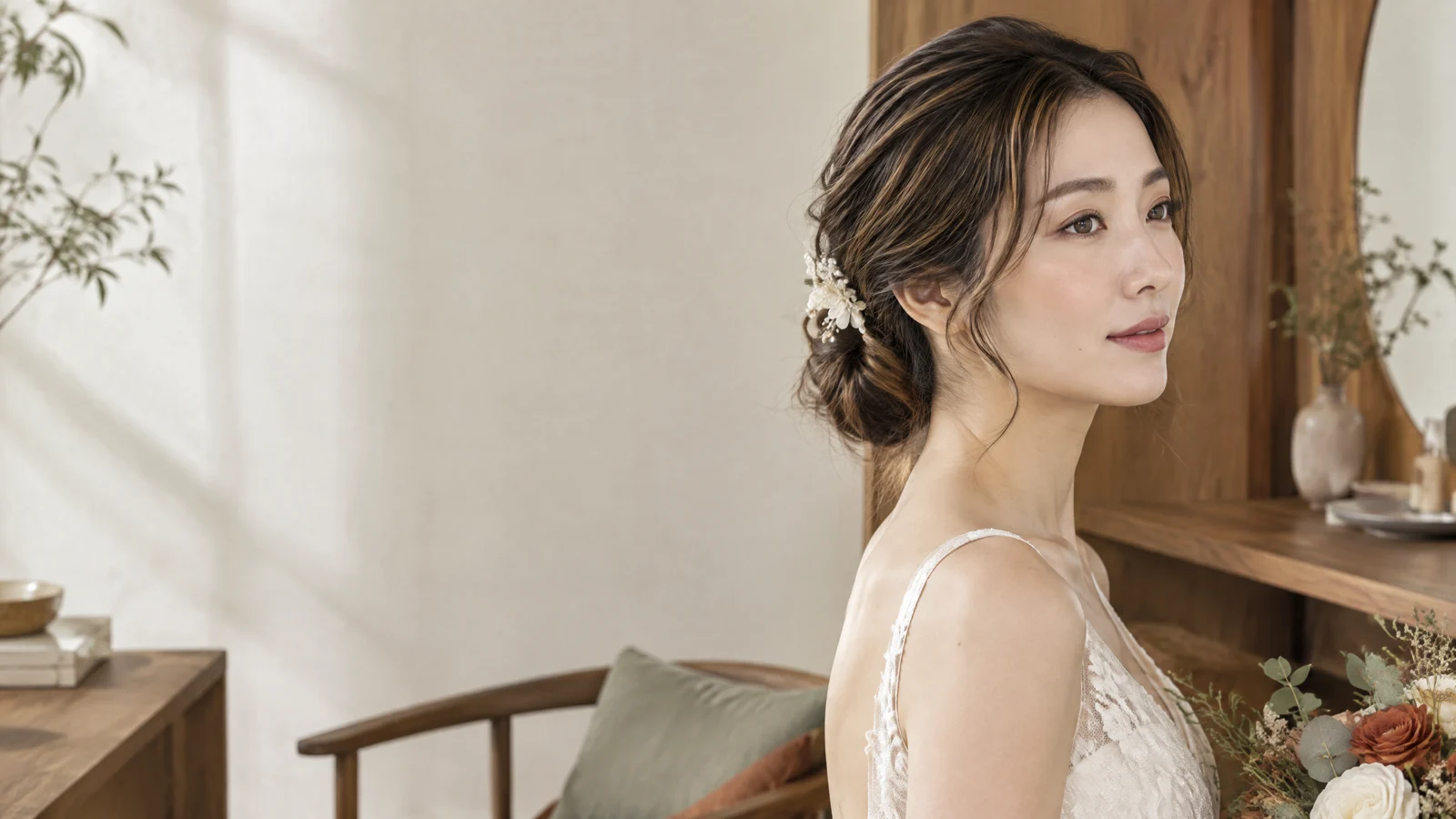
The most dependable approach to pre-wedding hair colour and makeup is not to choose the most dramatic shade in a mirror. Start with the light for your first priority frames, the neckline and silhouette of the outfit, and the real time available for tidying; then leave room for smaller adjustments as you move indoors and outdoors. Daylight often reveals undertone and skin sheen, while studio or flash lighting can emphasise reflection, shadow and structure, so colour, makeup and hairstyling need one shared plan.
The same milk-tea brown, smoky brunette or subtle highlight can appear deeper, warmer or flatter beside a window, under a softbox and in coastal side light. That does not mean the colour has gone wrong, nor that everyone needs lighter hair or heavier makeup. A photograph is shaped by light, camera treatment, fabric, background and movement as well as the styling itself.
This guide separates those decisions for common Hong Kong shoot settings: a hotel window, a studio and an outdoor route. Timing scenarios are planning examples, not a promise of any service. Confirm the shoot sequence, products, venue rules and actual styling scope in writing with the people working on your day.
01
Which light should set the starting point for hair colour and makeup?
Choose the hair-colour direction first by depth and temperature, then consider whether any local brightness is useful. With a white gown and a bright background, brunette depth with restrained reflection may keep attention on the face more effectively than a broad, high-contrast light band. With a dark evening dress, softly warm or cool movement through the mid-lengths can give a side-lit profile more separation. The Canvas Blend bridal hair colour guide is a useful place to define whether you want viewers to notice colour first or silhouette first.
Makeup should answer the crop as well as the light. A close portrait needs brows, lips and local complexion work to read cleanly at high resolution, but it does not require every feature to be maximised. A full-length frame may depend much more on hair outline, shoulder line and gown movement. For a practical brief around call time, first outfit, lighting and shoot order, review BigDeal Make Up’s Hong Kong pre-wedding makeup planning notes and share the actual sequence rather than leaving the lighting to a last-minute guess.
For a useful comparison, separate three views: a face portrait, a half-length frame that includes the neckline, and a full-length frame that shows the dress. Keep your position and camera direction reasonably consistent, then change only one styling element, such as removing an earring or moving a face-framing strand behind the ear. The question is which adjustment clarifies the hierarchy, not which image makes skin look lightest. Save a short note under ‘keep’ and another under ‘ask about’. This prevents one disappointing selfie from overturning an otherwise coherent colour plan during the last consultation, and gives the team a specific issue to address rather than a vague request to make everything more photogenic.
Set a stable base for the first priority frames. Treat later changes in light as reasons for targeted refinement, not a reason to rebuild everything.
02
Where should colour dimension sit so it works with the veil, neckline and makeup?
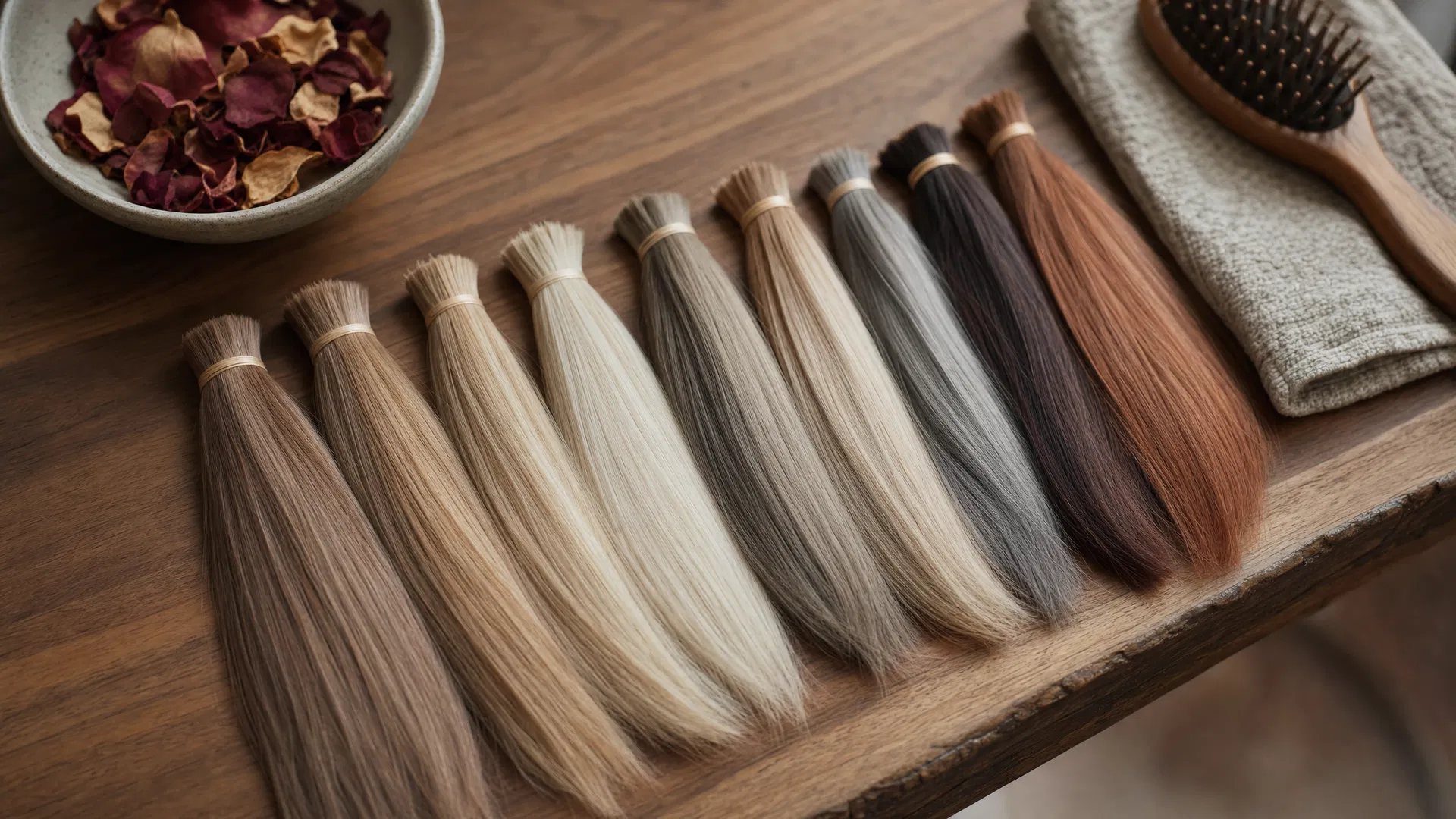
If you are considering an airy, dimensional result, compare balayage with babylights. Balayage usually reads as broader, more fluid graduation through the whole shape; babylights are finer threads of light that can look natural from a distance while offering detail up close. Neither is a guarantee that colour will read identically under every source of light. Existing colour, hair condition, finishing products, styling and camera processing all affect the final image.
Try gown, veil and earrings at the same time. A fringe, habitual parting or glasses can be part of how you recognise yourself; you do not need to erase them to imitate a reference image. When several outfits need coordinating, assemble front, side and back views with accessory photographs. The brief on professional makeup for photoshoot Hong Kong from BigDeal Make Up usefully centres the purpose of the shoot, wardrobe and ready-by time, which is a better starting point than treating each reference picture as a fixed recipe.
| Photo condition | Hair colour and shape focus | Makeup and on-set check |
|---|---|---|
| Window-light close portrait | Keep fine face-framing dimension and a natural part; do not over-brighten the crown simply to make colour obvious. | Use a light base with defined features; check shine around the nostrils, hairline and chin in side light. |
| Studio softbox half-length frame | Let waves or a low bun reveal shape; use one accessory focal point rather than several competing details. | Scale liner and lip edge to camera distance; inspect powder texture, neck tone and jewellery reflection. |
| Waterfront or rooftop full-length frame | Prioritise a shape that can be re-secured; keep face-framing strands from obscuring eyes or earrings. | Plan moments for blotting, lip refresh and hair tidies; change the sequence first if wind or safety conditions demand it. |
Success is not making every highlight visible. It is giving the face, neck line and gown a clear order of attention in the frames you value most.
03
How should complexion sheen change between daylight, studio light and mixed light?
Tell the relevant artist in advance about known discomfort around the eyes or skin, products to avoid and contact-lens plans. FDA eye-cosmetic guidance says to stop using an eye cosmetic immediately if it causes irritation and to see a doctor if irritation persists; it also advises clean tools and no sharing of eye products [2]. This is general safety guidance, not a claim that any product or patch approach can guarantee no reaction. A shoot day is not a good first test for an unfamiliar eye product.
The image-recording method in hair colour before-and-after tips also helps with a makeup trial. Note the light, outfit colour, whether flash was used and how the finish felt on your face. If you refine the look later, the team has a usable record rather than a memory of one heavily edited social-media image.
If one area looks bright in a test frame, describe its location and shape before concluding that the entire base needs replacing. A small spot beside the nose and a broad reflective band near the hairline are different observations. Ask the photography and styling team to compare the angle to the light before deciding whether local makeup refinement is needed, within their normal working process. Change one variable at a time so the comparison remains meaningful. Discuss natural skin texture, the camera display and the intended final edit separately. A phone selfie should not become a demand for texture-free skin or an instruction to add powder across the whole face without assessing the actual professional image.
Keep luminosity where you want softness and dimension; use setting where reflection or movement is most likely to distract. That is more practical than chasing one fixed finish label.
04
How much time should an indoor-to-outdoor move allow before it becomes a rushed restyle?
Here is a planning example. Starting hair and makeup at 8:00 a.m., allocate 90 minutes for the first look, 40 minutes for window portraits, 30 minutes to move, 25 minutes to change outfit, 55 minutes for outdoor work and 20 minutes of buffer. The total is 260 minutes, or four hours and 20 minutes, finishing at approximately 11:20 a.m. The arithmetic simply demonstrates how to expose each block; it is not a recommended schedule for every person. Hair length, gown construction, access, location and the photographer’s sequence can change it substantially.
For several locations, choose one “hero sequence” that deserves a fully maintained look, then decide which local changes truly earn their time. You might keep the same low-bun foundation and change the part, earrings or veil. Or retain lip and brow direction while deepening definition for an evening outfit. If visible dimension is a priority, understand how highlights may appear differently as the part moves, but do not assume a new colour service can be improvised on set instead of designed beforehand.
- Put first-ready time, arrival times and priority frames on the same call sheet.
- For every outfit, name one non-negotiable image and one change that may be dropped if time narrows.
- Label lip refresh, blotting, veil reattachment and a full hair change separately instead of calling every task a touch-up.
- Assign ownership of veil, earrings, hairpieces and personal essentials, with real space for vehicle exits and changing.
- If on-set support is needed, say whether it means one booked quick tidy or continuous availability; those are not equivalent scopes.
Buffer is not wasted time. It preserves the frames that matter when light, clothing, transport or access changes.
05
What should change when humidity, wind or rain affects an outdoor shoot?
The Hong Kong Observatory states that the local rainy season normally runs from April to September, with particularly heavy and persistent rain possible in May and June. It also notes that Red and Black Rainstorm Warnings signal risks including serious road flooding and congestion; under Black Rainstorm conditions, people should stay indoors or take shelter in a safe place [1]. An outdoor pre-wedding plan therefore needs more than a clear umbrella as a prop. Agree an indoor or covered alternative, safe drop-off points, the order of priority frames and a contact process for postponement or change. On the day, follow the latest Observatory, venue and transport safety information.
When you enquire about photoshoot makeup on location Hong Kong with BigDeal Make Up, provide each stop’s entry point, drop-off access, lift or stairs, shelter, washroom and workable surface. These are not minor administrative details. They determine whether a veil can be attached, lips can be refreshed or only a fast visual check is sensible at that stop. On-site support and initial application are different scopes, so the actual inclusions and charges still require written confirmation.
An outdoor contingency is about safety, access and workable tidying points, not a belief that more product can solve every weather change.
06
What belongs on a one-page shoot brief so hair, makeup and photography use the same language?
One page can be enough when it makes sequence visible. At the top, put date, meeting point, contacts, hard ready-by time and the photographer’s first key frame. In the middle, give each outfit a front and side photo with venue, light type, crop and the one hair-or-makeup element that must be retained. At the bottom, list veil, earrings, hairpieces, habitual parting and products or needs that should be flagged. This is more actionable than a folder of dozens of unannotated inspiration images.
Add one decision rule at the end. If the day loses 20 minutes, which outfit and three frames stay? If rain or a venue rule changes the plan, which covered site replaces the original scene? If only five minutes remain, should the priority be lips, shine or veil security? This is not pessimism; it prevents everyone from asking you competing questions on set. You can also use the Canvas Blend booking page to organise photographs and timing for a colour consultation before sharing the confirmed brief with the relevant styling team.
Give the final brief a date or version label and nominate one person to distribute updates. Otherwise a photographer may be working from the revised gown order while an artist still expects the original location. A practical handover states what changed, what did not change, and who has acknowledged it. If the venue changes, repeat the access and ready-by information rather than sending only a new map pin. After the shoot, keep the chosen images and factual styling notes together, without treating them as proof that the same colour or finish will work identically at a later event. This record is a starting point for a future consultation, not a universal recipe.
A good brief does not make styling more complicated. It gives every trade-off a shared basis.
What else should you know?
Must I lighten my hair before a pre-wedding shoot for it to show on camera?
No. Dark hair can show depth through healthy-looking reflection, fine dimension, parting and a clear hairstyle silhouette. Lighter or more obvious placement can also create a particular effect. Choose according to the priority setting, outfits, your everyday comfort and the care time you have, not because a camera supposedly requires a dramatic colour change.
Can one makeup look work from a window-light room to a studio?
One base look can work across several settings, with small adjustments to sheen, local setting, lip colour and hair position. Tell the photographer and stylist the transition order and priority close-ups in advance, and reserve separate time for any genuine restyle.
If rain is forecast, can we simply use more hairspray and continue?
No. Heavy rain, strong wind, slippery ground, transport and warning signals can all change the safety conditions. Confirm a covered or indoor option, venue rules and priority frames first. Whether outdoor work continues should follow real-time safety and professional on-site judgment.
When should I mention eye sensitivity or contact lenses?
Mention prior discomfort, products to avoid and contact-lens arrangements as early as the enquiry or trial. Do not treat the shoot day as a first test for an unfamiliar eye product. If irritation occurs during use, stop using the product and seek appropriate medical advice when needed.
Do several outfits always require completely different hairstyles?
No. One foundation can change through the part, earrings, veil, a small braid or lip direction while still distinguishing the outfits. Put time into the differences that show most clearly in the composition, and confirm that accessory removal will not compromise the next sequence.
How do you turn the plan into a next step?
Set the hair colour and makeup foundation around the first priority frames, then let outfit, light and transfer conditions determine what is worth refining. That approach is more reliable than a single formula for looking good on camera. Hair consultation, makeup arrangements and photography schedules all have separate scopes; rely on the confirmed service details and the safety conditions that apply on the day.
With a one-page brief, outfit and accessory photographs, location information and a clear hierarchy of frames, you can protect time for the expressions and images you actually want to remember.
Sources and editorial notes
- [1] Hong Kong Observatory: Rainstorm Warning System
- [2] U.S. Food and Drug Administration: Eye Cosmetic Safety
This AI-assisted Canvas Blend editorial guide is not a first-person case study or an article reviewed by Vit So or Maggie Yeung. General information is not a substitute for individual professional or medical assessment. Confirm BigDeal arrangements in writing.
This is general planning information, not individual medical, weather-safety or service-scope advice. Hair colour and makeup can photograph differently with hair condition, skin state, light, camera settings and post-production. Stop using a product if discomfort occurs and seek appropriate medical advice when needed. BigDeal Make Up service scope, fees and arrangements are subject to its latest written confirmation with the client.