Colour × Makeup × Hong Kong
Commercial Shoot Hair and Makeup Continuity Guide

Commercial hair and makeup continuity is not the attempt to make every frame identical. It is the discipline of agreeing a camera-tested visual baseline, recording the details that matter, and scheduling small interventions only where they protect the edit. When hair, makeup, wardrobe, camera, lighting and production work from the same record, a campaign can move through looks and locations without losing its visual logic.
A branded film, catalogue, editorial spread or product campaign rarely unfolds in the same order in which an audience will see it. The close-up may be filmed after lunch, the opening scene may return at dusk, and a single talent may move between interview footage, stills and a product demonstration. Without a shared continuity method, a lip edge, fringe, hair parting or colour cast can drift enough to make a cut feel wrong even when viewers cannot name the reason.
Continuity is therefore a production conversation rather than a promise from one department. Creative defines the story, camera and lighting confirm the image conditions, hair and makeup translate the approved look into notes, wardrobe identifies contact points, and a nominated production contact protects the moments when a check is possible. This guide sets out a practical way to turn that conversation into work that can be repeated, checked and handed over responsibly.
01
What should a camera-ready visual baseline include?
Start by replacing the vague instruction to make someone look good with visible, reviewable decisions. For each principal, define the skin finish, the placement and intensity of colour, the lip edge, the brow shape, the hair parting, the direction of the hair flow, loose pieces around the ears and any accessory position. Capture the approved hero look from the angles that the production actually needs: straight on, both three-quarter views, a relevant profile and the back or detail view for hair. A social-media reference can communicate mood, but it cannot replace a reference made with the real camera and lighting. Natural skin texture, hair texture and colour are not defects to be corrected; the brief should state what the image wants to retain.
Colour needs an explicit division of responsibility. White balance affects every colour in an image, not just objects that should appear white; the colour temperature of the light and the camera setting both shape what the camera records [2]. Hair and makeup can note a creative direction such as neutral brown brow, soft warm lip or restrained sheen, while the camera and lighting teams confirm the actual lighting and white-balance approach. If a hair-colour reference is useful, the cool versus warm hair-tone guide can help a team describe intent, and a balayage placement reference can clarify where dimension should appear. Neither replaces a test under the shoot conditions.
For a production that needs prep windows, look changes and on-set coverage translated from a real brief, BigDeal Make Up’s commercial advertising makeup information explains why talent numbers, channels, lighting, desired finish and touch-up needs should be discussed before a practical arrangement is confirmed.
| Area | What to record | Who confirms it and when |
|---|---|---|
| Makeup | Coverage level, finish, key colour placement, lip edge and acceptable natural texture | Hair and makeup with creative after a camera test |
| Hair | Parting, direction, flyaways, accessory position and intended colour read | Hair and wardrobe at the principal camera angle |
| Image | Lens distance, key-light direction, background reflection, crop and colour direction | Camera and lighting on the monitor |
| Record | Scene, wardrobe, date, approved version, time and reason for any change | A named continuity or production contact |
The baseline is not a demand to freeze a person in one image. It gives the crew a camera-verified starting point whenever the same character, wardrobe or scene returns.
02
Which briefing details materially change the hair and makeup plan?
A useful brief carries the story and the constraints at the same time. State whether the deliverable is print, a vertical social film, horizontal video, an interview, a product demonstration or a mixed campaign. Mark the hero frames, close portraits, product applications, hand shots, cover or key-art crops and any frame likely to be heavily reframed. Then list talent, wardrobe order, look changes, headwear, glasses, masks, food, exercise, rain, heat and location moves. This does not make the creative process bureaucratic. It tells the team which changes are reversible, which ones need time, and where a continuity failure could be visible.
Talent notes should be relevant, minimal and treated with care. A designated contact can communicate ingredients to avoid, familiar products, known sensitivities or practical considerations for the eye area and scalp before call time. The FDA advises reading the complete cosmetic label, following directions and warnings, keeping products clean, and stopping use if a rash, redness, burning or other unexpected reaction occurs [1]. That is general safety guidance, not a claim that a product will suit every person or that a self-test guarantees no reaction. If discomfort occurs, pause the relevant product and seek appropriate medical advice.
Build a current call sheet into the brief: arrival, prep, pre-light, first frame, meal, location move, wardrobe changes and wrap all affect the feasible plan. The Canvas Blend hair-colour before-and-after planning notes are also useful when the production wants honest comparative imagery, because posture, crop and camera position need to be specified rather than left to chance. Name one approver for the first look and one contact for updates so a message in a group chat does not silently become a visual instruction.
- Supply the latest call sheet with call, prep, camera test, meal, move and wrap windows, including realistic transition time.
- Make one line per talent: role, wardrobe number, accessory, close-up priority, first appearance and next return to camera.
- Classify references as essential visual requirements, useful inspiration or atmosphere only; do not confuse unrelated retouching or lighting with an application instruction.
- Confirm available mirrors, seating, power, shade or shelter and the areas that must remain clear for sound, grip and wardrobe movement.
- Identify the approver, the on-set contact and all genuinely unresolved items. A provisional idea is not a confirmed scope.
The best brief is not the longest document. It is the one that lets every department understand the image target, decision rights, timing window and constraints without guessing.
03
How should multiple outfits and hair changes be sequenced?
A robust default is to move from the most reversible state toward the least reversible state. A clean hair flow, lighter lip and adaptable base usually travel more easily than wet-look texture, adhesive pieces, dense pigment or a heavy glitter treatment. It is not a rule that every day must progress from natural to dramatic. If the most important publishing image requires a decisive treatment, shoot it early if that best serves the production, but record the choice and reserve a realistic recovery path. The sequence is a tool for protecting options and reducing unnecessary removal, not an aesthetic hierarchy.
Planning example: one model has three deliverables. Look A is a natural interview, Look B is a product close-up and Look C is key art with a stronger textured hair direction. Allow 45 minutes for the initial finish, 15 minutes to refine close-up detail from A to B, 20 minutes to build the hair texture from B to C, and 10 minutes for a camera check. The planned preparation total is 45 + 15 + 20 + 10 = 90 minutes. This is an arithmetic planning example, not a quote, crew recommendation or fixed service duration. Actual time depends on talent count, hair length, location, lighting, scope and the confirmed shooting schedule.
Wardrobe can change the appropriate level of makeup or hair intervention. A mirrored fabric, vivid print or sculptural hat may already carry the frame, whereas quiet knitwear may leave more visual space for hair line or skin finish. When a team is exploring makeup for magazine shoot with BigDeal Make Up, it is useful to provide the intended publication scale, crop, wardrobe list, lighting notes and the outfit that most limits a hair change, so the proposed arrangement can be assessed against the real editorial objective.
| Look | Image purpose | Likely position | Continuity consideration |
|---|---|---|---|
| A — interview | Natural, stable and readable at close range | First | Record base coverage, parting and the starting lip tone |
| B — product close-up | More precise detail at the camera-facing areas | After A | Maintain the overall A silhouette and enhance only what the lens needs |
| C — key art | More visible texture or hair direction | Last or in its own block | Photograph B’s hairline and side profile before a change that may not reverse invisibly |
A look order with a recovery path or a clear record makes creative change purposeful instead of forcing the crew to rediscover the previous state after every wardrobe swap.
04
What belongs in continuity records beyond one phone photo?
Ask whether a colleague could recreate the essential look from the record. Use a shared naming pattern for date, scene, talent, wardrobe and version. Keep front, left, right, back or hair-detail images distinct. Short notes can identify coverage level, eyeliner endpoint, brow tail, lip perimeter, blush placement, hairline, behind-the-ear pieces, accessory direction and places likely to move against a collar. Product shade and mixture notes can be helpful when they matter to the approved look, but copying every item in a kit is not a continuity system. The record should be quick to read during a location move.
Reference imagery also requires consent and access control. Agree whether talent may be photographed for internal continuity, which teams may see the files, how long they are retained, and how confidential products or unpublished people are protected. Phone images can support detail checks, but they cannot replace a reference made at the intended camera and lighting setup. A camera, lens, light position or filter change can change the apparent texture and colour enough that the new conditions need their own labelled hero reference.
A BigDeal Make Up makeup continuity product campaign consultation describes the practical value of a baseline, labelled mood board, reference images, scene order and touch-up checkpoints. It also makes the important boundary clear: continuity support is a production planning function, not a warranty that every frame will be pixel-identical across lenses, lighting and skin settling.
Effective records are precise enough to guide a hand-off and short enough to find in a minute. They should also say which variation is intentional rather than treating every difference as an error.
05
When should a touch-up happen without disrupting the set?
Touch-ups should not be an automatic response to every cut. Mark three categories of checkpoint: first, immediately before hero stills, product close-ups, facial close-ups or a repeated scene; second, after meals, wardrobe changes, helmets, masks, food, exercise, heat or rain where a practical reset is needed; third, after a meaningful change in light, lens distance or character state. At other times, an assistant director, script supervisor or nominated contact should call the available window. This protects sound recording, continuous dialogue and emotionally demanding performance from avoidable interruptions.
The measure is the story and the last usable frame, not perfection in a mirror. Planning example: in a restaurant scene, a small change in lip colour may suit the story of someone who has been eating; restoring an opening-shot lip at every pause could create its own edit problem. Conversely, a broken lip edge, an abrupt reflective shine or hair caught under a collar may become distracting in a close shot. Agree in advance who may view the monitor, who can propose a pause and who gives final approval. That turns touch-up into a focused production decision rather than a competition for a flawless surface.
For hair that has been coloured or styled before a campaign, the Canvas Blend post-colour hair-care guide can support a simple prep conversation about handling hair gently between looks. It does not determine the on-set styling plan or guarantee how colour will read or wear under production conditions.
- Place usable touch-up windows around hero frames in the call sheet instead of writing an undefined instruction to touch up as needed.
- Before making a change, compare the latest usable frame with the continuity card and decide whether blotting, a lip repair, a hair reset or no intervention is appropriate.
- Set a compact station outside essential traffic paths and confirm access, power, sound restrictions and wardrobe protection before the day begins.
- Update the image and version number after any material change so the next department does not return to an obsolete target.
- If skin or eye discomfort occurs, stop the relevant product and seek appropriate medical advice when needed; production pace does not override comfort or safety.
Clear checkpoints let the artist spend time on visible edit risks instead of repeatedly adding product or interrupting performance without a camera reason.
06
How can hair colour stay coherent across lighting, lenses and crops?
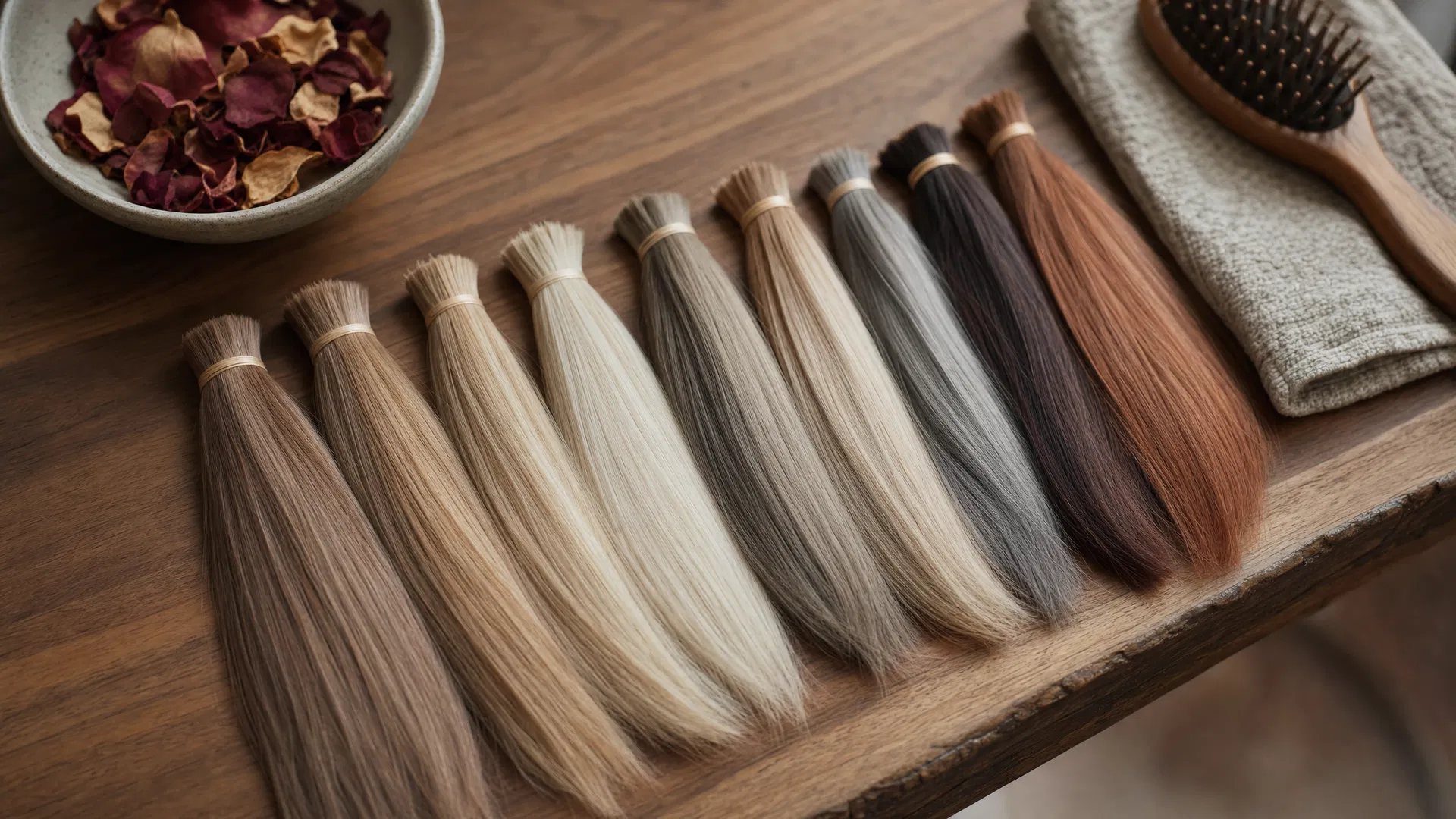
Hair-colour continuity does not mean that every output must show matching RGB values. Hair reflection, key-light placement, background colour, exposure, white balance and colour grade all influence whether a shade appears cooler, warmer, deeper or more luminous. What a production can control is the hairstyle baseline, hero angle, written colour direction, expected reflection and whether a new setup still follows the agreed image intent. If the camera team changes the white-balance or mixed-light strategy, a new hero reference in that setup is more useful than asking hair and makeup to judge a monitor cast by eye.
The key angle matters especially for highlights, face-framing strands and smoky tonal work. A highlights placement overview or a smoky hair-colour direction reference can help a creative team say which pieces should remain visible, but the approved camera test remains the continuity authority. On a windy, wet or warm exterior, distinguish story-appropriate relaxation from a strand that covers the eye or changes the silhouette. That is more honest and useful than promising that a hairstyle will never move.
If hair is dry, tangles easily or needs gentler handling, flag that before call time rather than forcing a hard restyle under pressure. The Canvas Blend damaged-hair repair guidance can help frame a pre-shoot conversation, while the day’s products, tools and method must still be chosen for the individual hair condition, styling direction and actual location.
Hair colour on camera is a shared colour-direction task across hair, lighting, camera and post. A recorded visual baseline is more dependable than an unrealistic promise of absolute sameness.

07
How should continuity be handed over to another location or shoot day?
The final ten minutes of a day can save far more time than an unstructured attempt to remember tomorrow. A named person should confirm the last completed look, the state that starts the next block, retained accessories or shade notes, unresolved corrections and whether the next venue or lighting setup changes the baseline. Store the current look sheet, approved hero reference, scene sequence and material changes in an access-controlled folder. In the group chat, share the current version name and contact point rather than repeatedly circulating old images that can be mistaken for the active target.
A second shoot day should not be expected to recreate the first at pixel level. Skin and hair can settle differently, weather, lenses, lighting positions and post workflows may change, and the production may make a deliberate creative adjustment. The realistic goal is to recreate the approved visual relationship and acceptable range. Begin with a short camera check under the new conditions and label a genuine change as a new version. Post-production then has a clearer account of what was intentional on set and what needs a question.
Before contacting a provider, consolidate the date, location, number of faces, production use, key frames, hair-colour and makeup direction, restrictions and current call sheet. You can book a Canvas Blend consultation once those essentials are ready, or use the same one-page brief to discuss a commercial makeup arrangement elsewhere. Availability, crew, products, fees, timing and on-set support must be confirmed in writing by the relevant provider.
A hand-off is not complete when photographs enter a chat. It is complete when the approved target, next action, decision boundary and open questions reach the right people in a usable form.
What else should you know?
Does continuity mean every shot must be identical?
No. The goal is consistency within the story moment, character state and approved creative direction. A small amount of movement, perspiration or change after eating can be appropriate. Use the last usable frame, the narrative and the designated approver’s judgment to decide whether it needs intervention.
Can phone photos be the only continuity reference?
They are useful for quick detail records, but should not be the only reference. Automatic exposure, white balance and lens processing may differ from the capture camera. Pair detail photos with a labelled hero reference shot using the intended camera and lighting where possible.
If the lighting changes, is adding powder always the answer?
Not necessarily. A lighting change can alter reflected shine, hair-colour read, shadow and lip tone. Camera and lighting should confirm the new setup first, then the monitor can show whether a small makeup or hair adjustment is appropriate. Some problems belong to lighting or camera settings, not to more product.
Should every person in a group scene be touched up at the same time?
No. Prioritise the next frame’s focus, shot size, appearance order and continuity risk. A background performer in a wide shot does not always need the same intervention frequency as the lead in a close portrait. A visible priority order reduces delay and unnecessary product layering.
How should a known sensitivity or eye-area concern be raised before a shoot?
Tell the designated contact early about ingredients to avoid, familiar products or relevant known considerations so an appropriate plan can be discussed. Follow product labels and directions. If discomfort occurs during use, stop the product and seek appropriate medical advice. No self-test can guarantee that a reaction will not occur.
How do you turn the plan into a next step?
The practical core of commercial hair and makeup continuity is simple: replace guesswork with a camera-tested baseline, use look order to avoid needless rework, and protect the shoot with concise records and agreed touch-up windows. When the image target, lighting conditions, character state and approval path are clear, consistency becomes an achievable team practice rather than a vague request.
Before committing to a production plan, share the call sheet, talent list, wardrobe sequence, references, available work area and restrictions with the relevant provider. This article is a planning framework, not a guarantee of a particular result, product suitability, availability, fee, crew size or on-set support.
Sources and editorial notes
- [1] Using Cosmetics Safely — U.S. Food and Drug Administration
- [2] Understand white balance in filmmaking — Adobe
This AI-assisted Canvas Blend editorial guide is not a first-person case study or an article reviewed by Vit So or Maggie Yeung. General information is not a substitute for individual professional or medical assessment. Confirm BigDeal arrangements in writing.
This is a Canvas Blend editorial guide. It is not written, reviewed or personally endorsed by Vit So or Maggie Yeung. Planning examples illustrate communication and arithmetic only; looks, product choices, crew, fees, availability and scope require written confirmation from the relevant provider.