Coverage × Comfort × Personal Choice
Are low density wigs the best way to keep a familiar grey-haired outline?
瀏覽獨立繁體中文指南 →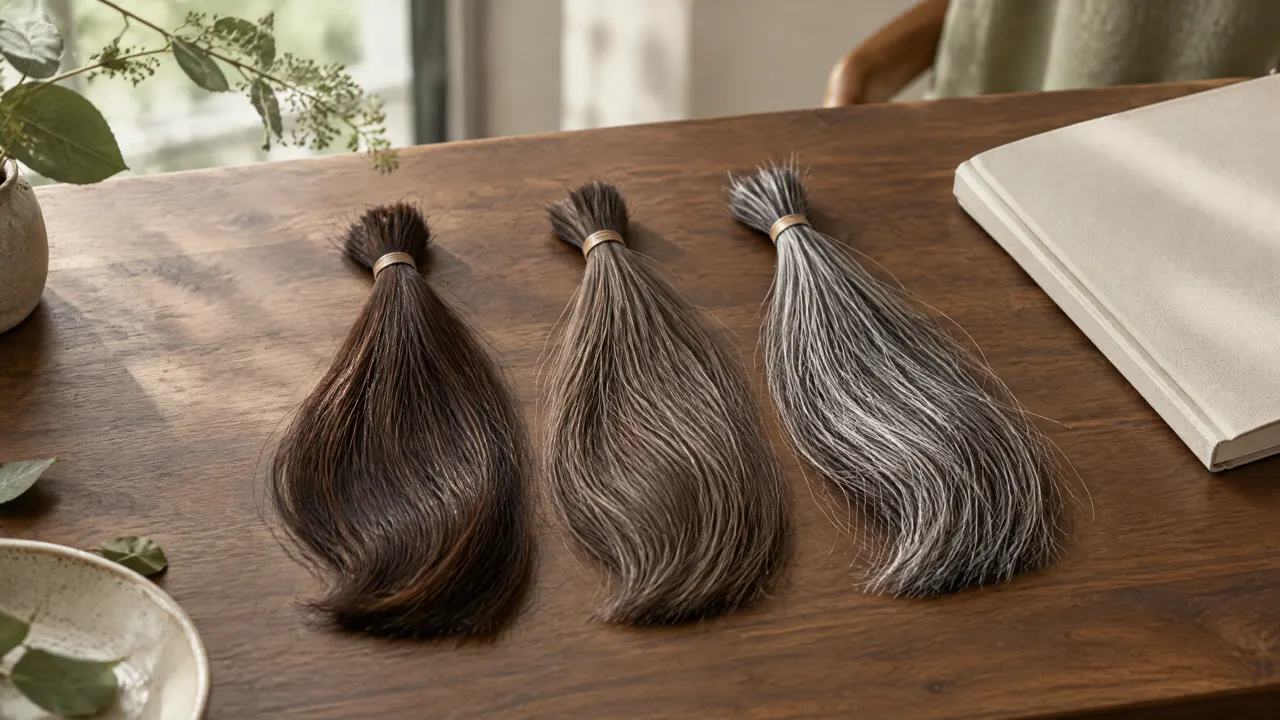
A less-full grey style is worth comparing when your priority is a familiar outline, but the lowest density label is not automatically the best choice. Judge the crown height, side width and placement of light strands together, then check coverage and fit separately before committing.
More hair can solve one visual concern while creating another. A style may cover the top satisfactorily yet introduce a rounded crown or thick sides that you have never worn. If you want continuity rather than a makeover, the useful question is not how much hair you can add. It is which parts of your everyday shape you want to keep recognisable.
Grey tones make that decision more specific because a familiar look can include dark sections, pale temples or an uneven mix rather than one uniform silver shade. The American Academy of Dermatology describes grey hair as a normal part of ageing; keeping it is a valid preference, not a problem that requires correction.[2] This guide focuses on selecting that outline, not diagnosing why hair has changed.
If you are planning a change of colour, learn about hair colour Hong Kong before your consultation and consider the techniques, tones and upkeep that suit your routine.
01
Which parts of your current outline should stay recognisable?
Start with an ordinary photograph you actually like, not necessarily your oldest or fullest-haired photograph. Identify where the crown sits, how closely the sides follow your head and whether the ends turn inward or fall straight. Breastcancer.org recommends photographs of a preferred hairstyle when preparing for a wig.[3] Here, their purpose is to explain your preferred shape rather than prescribe a return to an earlier appearance.
Choose two features to protect and one you are willing to change. You might keep a close side profile and a soft fringe while accepting slightly more coverage at the top. That makes a comparison more honest: the candidate does not have to reproduce every detail, but a fuller crown cannot quietly replace your main priority just because it looks impressive on display.
Use front and side views at a similar camera distance. A close selfie can be useful for details but is a poor sole reference for overall width. Canvas Blend's hair photograph and colour-record tips can help you organise your own references. Keep any haircut or colour history beside the images so that a former shape is not mistaken for your current everyday preference.
You can also browse the Canvas Blend hairstyle gallery to describe a rounded, narrow or softly layered outline in plain language. Those images are style references, not proof that an equivalent wig is supplied or has been tested. A picture should help you communicate what you see, while the chosen product still needs its own coverage and fitting assessment.
Define continuity with visible features, not with a promise to look younger or have more hair.
02
How can you add coverage without making the whole shape wider?
Density describes overall fullness, whereas the cut decides where that fullness appears. A piece with restrained sides can still have noticeable lift at the crown; a blunt edge can look substantial even when the upper section looks airy. Compare a similar length and shape before judging the amount of hair. Otherwise, you may be responding to a different haircut rather than a meaningful difference in fullness.
The Ownstrand guide to low density wigs treats density wording and percentages as starting points rather than a universal scale across brands. Use that distinction to ask a practical question: does this particular style keep the side width and crown height I want? A lower number cannot answer that, nor does it establish the piece's weight, ventilation or fit.
Do not reduce the assessment to whether you can see a parting. Look at the surrounding shape and whether the intended coverage remains satisfactory when you turn your head or arrange the hair as permitted. A less-full piece that reveals an unwanted edge or fails to cover your chosen area is not a successful compromise simply because its outline is close to your reference.
If the crown works but the ends look too heavy, ask whether a qualified wig specialist can assess a shape adjustment for that exact piece. Do not assume removal of hair will fix the problem without affecting coverage. The American Cancer Society mentions professional trimming or thinning as possible styling help, not a requirement for every wig.[1] Agree on the intended outline before authorising an irreversible change.

03
Where should the lighter and darker strands sit within that outline?
A grey percentage, when a seller supplies one, does not fully describe the result. Two blends can contain a similar amount of light hair yet look different if one concentrates it around the face and the other distributes it throughout. Record whether your familiar look has pale temples, a darker back or fairly even variation. Ask about those locations instead of requesting only a larger or smaller grey proportion.
When comparing grey wigs, distinguish a muted grey-led shade from bright silver, near-white or a contrasting salt-and-pepper blend. These names do not establish a standard formula or the availability of a variant. A uniformly pale style may be a deliberate new look, but it should not be mistaken for a familiar mix merely because both options are called grey.
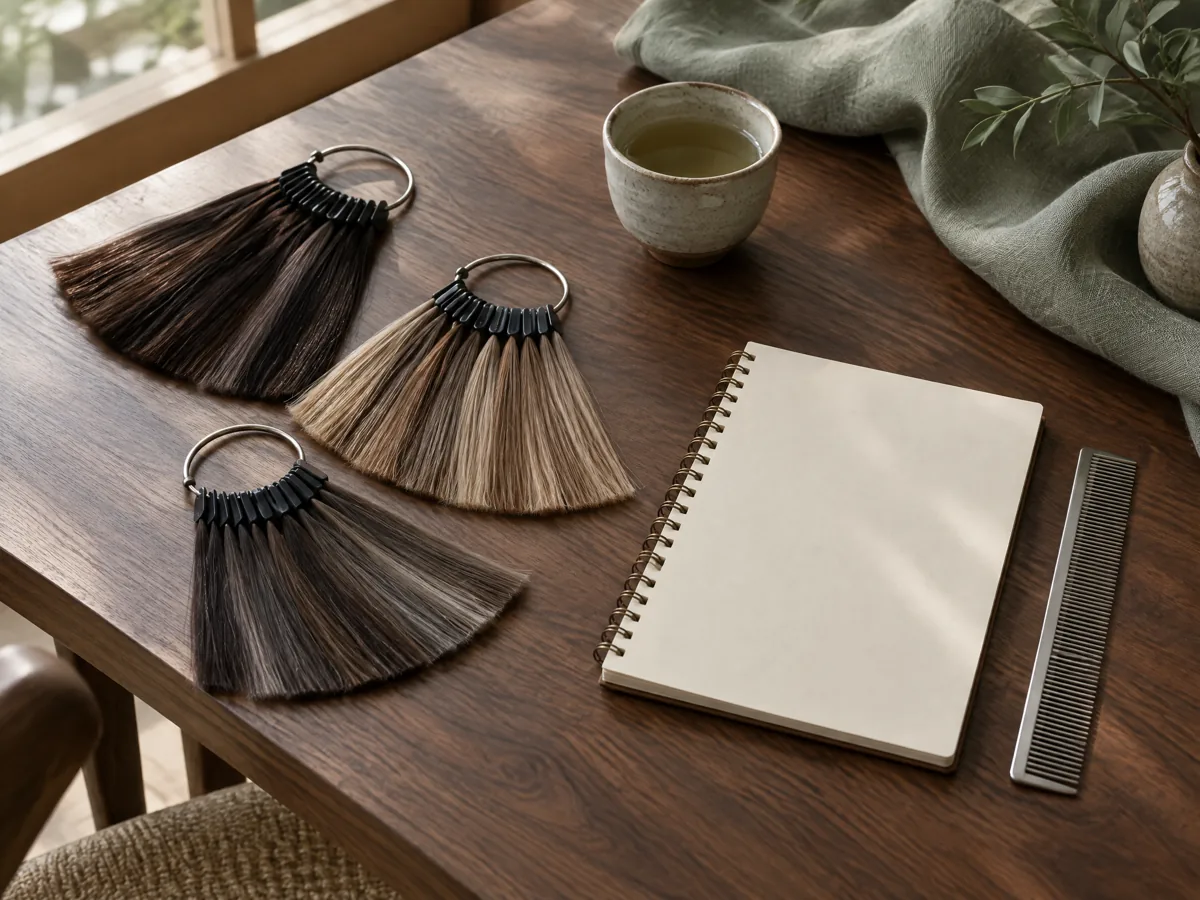
Check the colour within the whole hairstyle, then inspect the face-framing area. A small swatch helps with tone but cannot show where light and dark strands will sit on the finished piece. The American Cancer Society recommends comparing hair and wig swatches in natural light, outdoors or near a window.[1] Add your usual indoor setting if possible, without expecting identical appearance under every light.
If some natural hair remains visible, decide whether you want to retain its current grey pattern rather than automatically dyeing it to suit a purchase. Canvas Blend's natural-hair grey coverage information concerns a separate salon colour decision, not a condition of buying a hairpiece. Choose the piece around your preferences first; any optional change to your own hair deserves its own discussion.
When looking up hair salon Central, check the location details and choose a consultation time that lets you compare tones in natural daylight before or after work.
04
Would partial coverage better preserve your existing side profile?
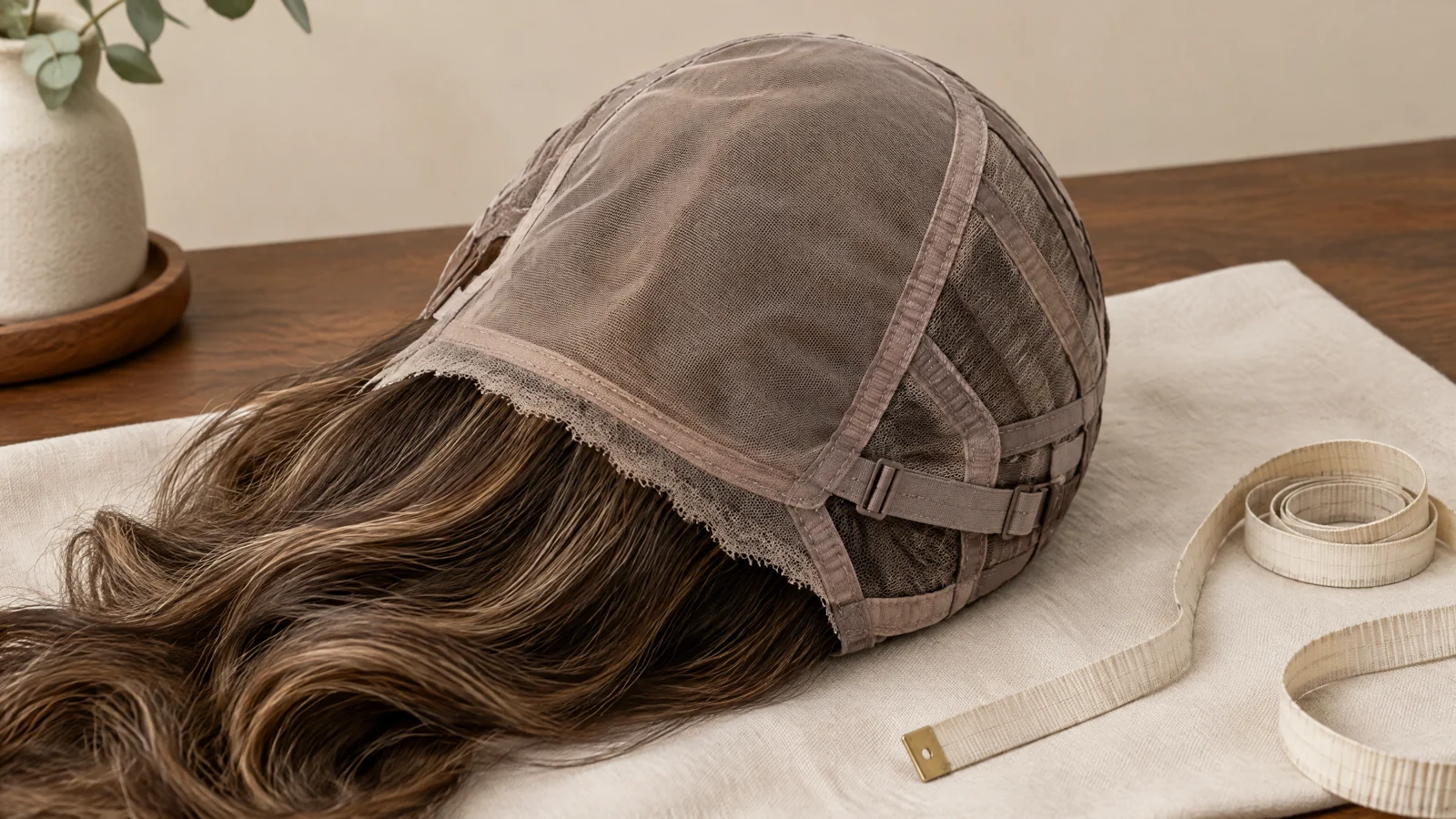
Partial coverage may deserve consideration if your surrounding hair already creates the side and back outline you want to keep. Its appeal here is not simply adding volume at the top: it is leaving more of that familiar perimeter visible. The American Cancer Society distinguishes toppers, which add top coverage and volume, from full wigs that cover the entire head.[1] Neither category alone establishes suitability for an individual.
A human hair topper is one category to investigate, but its fibre name does not tell you its base footprint, attachment or grey distribution. Ask whether the exact option can cover the intended area without creating an abrupt change in height or width. Human hair also does not automatically establish Remy status or permission to colour or heat-style the piece.
Preserving the perimeter brings a dependency: the exposed hair remains part of the finished look. If its length or texture changes, the transition may need reassessment even when the topper itself has not changed. Keep a record of your natural haircut, especially the side length you want to protect. Do not trim that hair solely to accommodate an unconfirmed product or an attachment method you have not assessed.
Attachment is a separate acceptance check, not a minor detail to overlook because the outline is convincing. Ask how the chosen piece is secured and whether the available hair can support the proposed method comfortably. Avoid accepting persistent pulling or discomfort as the price of a subtle silhouette. If there is pain, redness, broken skin or concern about hair-loss causes, seek appropriate healthcare advice rather than relying on a shopping guide.
05
How should a trial separate a good outline from a poor fit?
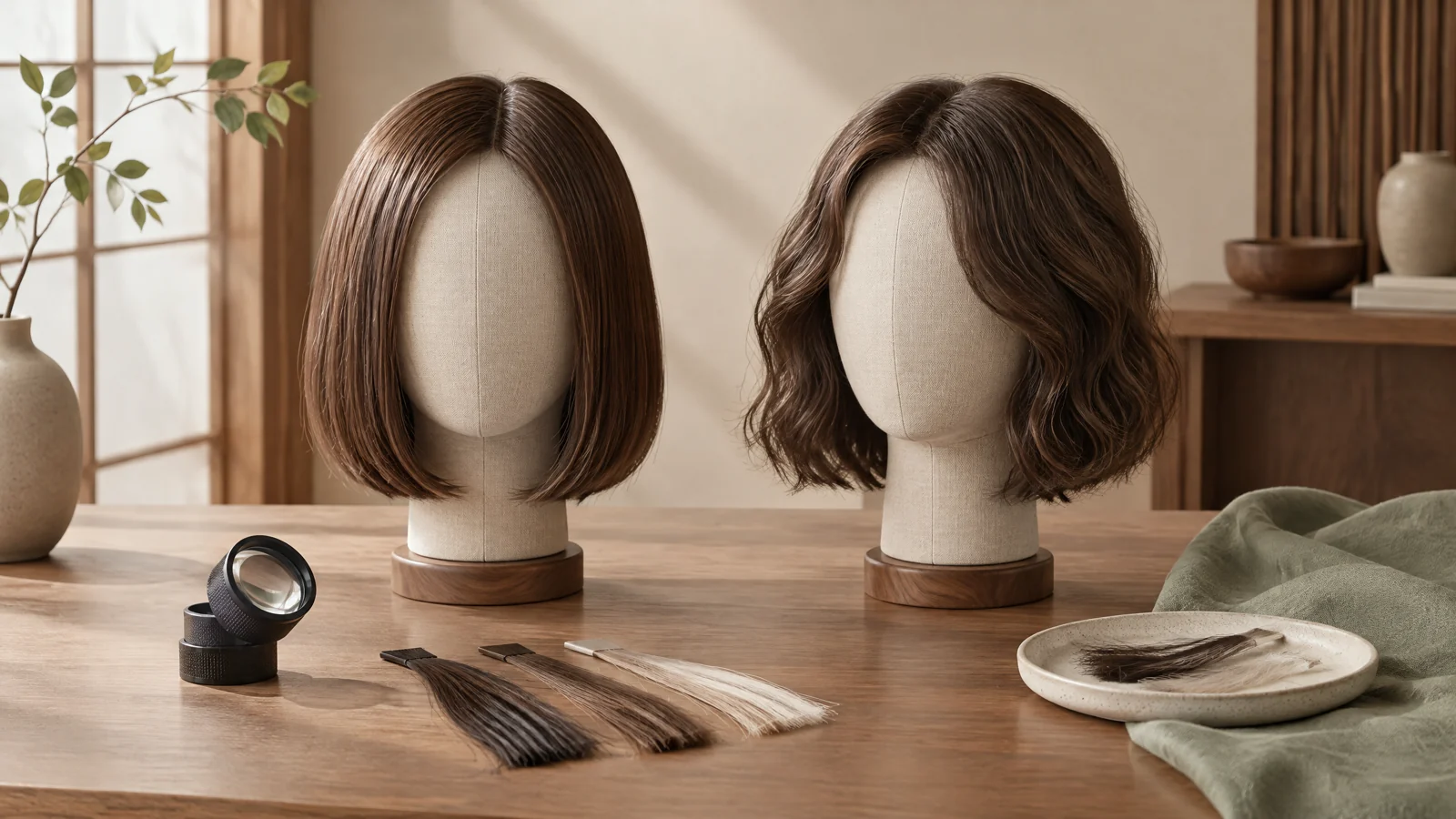
Evaluate the shape and the fit in separate passes. First look at the overall outline without repeatedly rearranging it into the best possible photograph. Then assess the fit under the seller's directions, including whether your usual glasses feel comfortable and whether the piece shifts during ordinary head movement. These observations cannot guarantee all-day wear, but they can reveal why a pleasing still image is not enough.
The American Cancer Society notes that brand size charts can vary and advises checking the chart for the particular brand.[1] A low-fullness label is therefore not a substitute for a size assessment. A flatter-looking crown could reflect the cut, fit or styling rather than density alone. Ask what is causing the unwanted effect before deciding that a different amount of hair will solve it.
Judge the style as you would normally wear it, within its confirmed styling permissions. If it only resembles your reference after repeated lifting, smoothing or repositioning, consider whether that effort fits your routine. Ask for the exact care instructions before assuming that heated tools can recreate the trial finish. General wig guidance cautions against heat use unless resistance is confirmed; it does not establish a safe temperature for your product.[1]
Comfort matters independently of colour and silhouette. Canvas Blend's sensitive-scalp colour guide addresses a separate natural-hair service concern and does not certify wig tolerance. The AAD notes that some dye ingredients can irritate the scalp or cause allergy.[2] Neither dyeing your own hair nor choosing a lighter-looking piece should be presented as a treatment for scalp symptoms or hair loss.
- Compare crown height and side width before discussing a density percentage.
- Check whether the intended coverage works from front, side and back.
- Record which grey areas are deliberately retained and which are changed.
- Keep fit, attachment comfort and permitted care as separate pass-or-fail checks.
06
What would three hypothetical choices trade away?
Consider an explicitly hypothetical shopper, Alex, who prefers a short, softly shaped salt-and-pepper style with close sides. Alex wants more visual coverage over the top but likes the existing pale temples and darker back. Assume the natural side hair remains available for consideration; its ability to support any attachment still requires assessment. These are invented comparison options, not real products, client outcomes or observations from a trial.
Option A is a light-looking, uniformly pale full wig in a similar short shape. Its narrow outline may meet Alex's side-width priority, yet the even pale colour would replace the familiar contrast. Option B is a somewhat fuller full wig with a closer-looking dark-and-light distribution. It might preserve the colour pattern better while introducing too much crown height. Neither automatically wins because one feature scores well.
Option C is a partial piece with restrained visible fullness, leaving the natural sides exposed. It could preserve the pale temples and close side profile, but only if its footprint covers the desired area and its attachment is suitable. A colour transition or unsupported fastening point could rule it out. This option illustrates why preserving more natural hair is a conditional advantage rather than a universal recommendation.
Alex's next step would be to compare A and B in a more similar grey distribution, if such alternatives can be supplied, and to assess C's coverage and attachment before ranking its appearance. If no option meets the two protected features, postponing the purchase is reasonable. A shortlist should expose the compromise clearly rather than persuade Alex to accept the fullest style as better value.
| Option | What it could preserve | Trade-off to assess | Information needed before selection |
|---|---|---|---|
| A: light-looking, pale full wig | A restrained side outline | Uniform pale colour replaces the familiar contrast | Finished shade distribution, adequate coverage and exact fit |
| B: fuller mixed-grey full wig | A closer light-and-dark pattern | Crown or sides may look wider than desired | Comparable cut, side view and any permitted professional adjustment |
| C: restrained partial piece | Visible natural temples and side hair | Blending and attachment depend on the remaining hair | Base footprint, fastening suitability and transition in ordinary styling |
Protect your chosen outline features, then reject options that fail coverage or comfort even if the colour appeals.

07
What needs confirmation before you commit to the familiar look?
Send a focused enquiry with the exact style reference and your two protected features. Ask for confirmed fibre, construction and dimensions, then ask how the finished grey distribution and outline can be assessed. Keep supply status separate from appearance: a catalogue page does not confirm current stock, a particular shade or a sample for viewing. An enquiry is not itself an order or a reserved fitting appointment.
Clarify what changes could be made and when the decision becomes difficult to reverse. Both the American Cancer Society and Breastcancer.org advise checking return or exchange policies before buying.[1] [3] Ask specifically how cutting, custom production or other agreed changes affect those terms. Do not assume a general return statement covers an altered piece, or approve thinning before you understand the coverage consequences.
If arranging a visit with Ownstrand, confirm the purpose and the specific sample or measurement arrangements in advance. Its sole salon is at Unit 2103, Lee Po Time Centre, 50 Hoi Yuen Road, Kwun Tong, Hong Kong. District-related pages do not identify additional branches. Do not assume every material, grey blend or attachment service is available, or that same-day viewing and fitting can be provided for every enquiry.
For work on your own hair, use the Canvas Blend booking page to clarify the natural-hair service you want and whether your request is within scope. That does not book a wig fitting, adhesive installation or a combined package. Keep the two enquiries distinct so you can compare the proposed outline without committing to a haircut, colour change or hairpiece service that has not been confirmed.
What else should you know?
Does the lowest density always look most natural?
No. A restrained outline may feel familiar, but a very light-looking style can still miss your coverage needs or preferred shape. Compare the particular cut, crown height, side width and coverage rather than choosing the smallest label.
Will a grey percentage reproduce my natural grey pattern?
Not by itself. The placement of light and dark strands matters as well as their overall balance. Ask about the face-framing area, temples and back of the exact style, and assess available references without expecting an exact match.
Is a topper better if I want to keep my existing sides?
It may be worth assessing because it leaves surrounding hair visible, but coverage, base size and attachment must work for you. Keeping the perimeter is not an advantage if the transition or fastening causes an unacceptable result.
Can a fuller piece simply be thinned after purchase?
A qualified wig specialist may be able to assess an adjustment for a particular piece. Do not assume it is possible or harmless: removing hair can affect coverage, and alterations may affect return terms. Agree on the intended change beforehand.
Does a light-looking style feel cooler or weigh less?
Not necessarily. Visual fullness does not establish weight, ventilation or comfort. The fibre, length, construction and fit of the actual piece need separate assessment.
Do I have to dye my remaining grey hair to suit a piece?
No. Keeping your natural grey pattern is a valid starting preference. If you consider a separate colour service, discuss its scope and scalp considerations independently; dyeing is not a requirement for coverage and does not treat hair loss.
What is the practical next step?
Before choosing, write one sentence about the shape you want to retain and one about the change you will accept. For example: close sides and mixed-grey temples matter most, while a modest increase in top coverage is welcome. Take your ordinary reference photographs into the enquiry, then compare candidates against that brief rather than against the promise of simply having more hair.
A familiar result comes from selecting a coherent outline, not maximising one specification. Confirm the exact piece's coverage, grey distribution and fit before discussing alterations or payment. If a style needs an unwanted colour change, excessive crown height or uncomfortable attachment to work, keep looking or pause. The useful purchase is the one whose compromises you understand and willingly accept.
For hair that looks dry, frizzy, or prone to breakage in a photo, read about damaged hair treatment Hong Kong to help frame questions for a colour-care consultation.
Sources and editorial notes
- [1] American Cancer Society — Wigs for Hair Loss
- [2] American Academy of Dermatology — What causes gray hair, and can I stop it?
- [3] Breastcancer.org — Wigs
This AI-assisted Canvas Blend guide is not a real-client case study or an article reviewed by Vit So. OWNSTRAND and Canvas Blend share ownership; links are not independent third-party endorsements. Confirm wig, hairpiece and natural-hair services, fees and appointments separately. Materials, stock and handling limits depend on the actual product. Appearance coverage does not replace medical assessment of hair loss or scalp concerns.
Canvas Blend Editorial — AI-assisted guide, prepared as of 6 November 2026. Ownstrand and Canvas Blend have the same owner, so this is not an independent third-party recommendation. The hypothetical shopper and options are explanatory examples, not real client cases or tested products. This guide does not claim authorship or review by Vit So and does not replace individual fitting, manufacturer care instructions or healthcare advice. Canvas Blend natural-hair services do not imply wig supply, adhesive installation or a joint package; exact specifications, shade, supply, services and policies require confirmation with the relevant provider.
Continue reading
 Wig Selection
How should you describe coverage before comparing men's wigs?
Compare men's full wigs, toupees and hair systems by the area covered, the natural hair left visible and the product details a seller must confirm.
Wig SelectionHow should you choose a men's hairpiece for work and compare crown-coverage quotes?
Compare crown hairpiece footprints, workday fitting checks and itemised quote conditions before committing, with a hypothetical office-wear decision example.
Wig SelectionHow can a custom men's hair system enquiry preserve your options?
Plan a custom hair-system enquiry around reversible choices, written permissions and cosmetic limits. Compare wearing commitments before changing your own hair or approving production.