Colour × Wigs × Personal Choice
Men’s Crown Coverage: Match Colour, Grey and Density
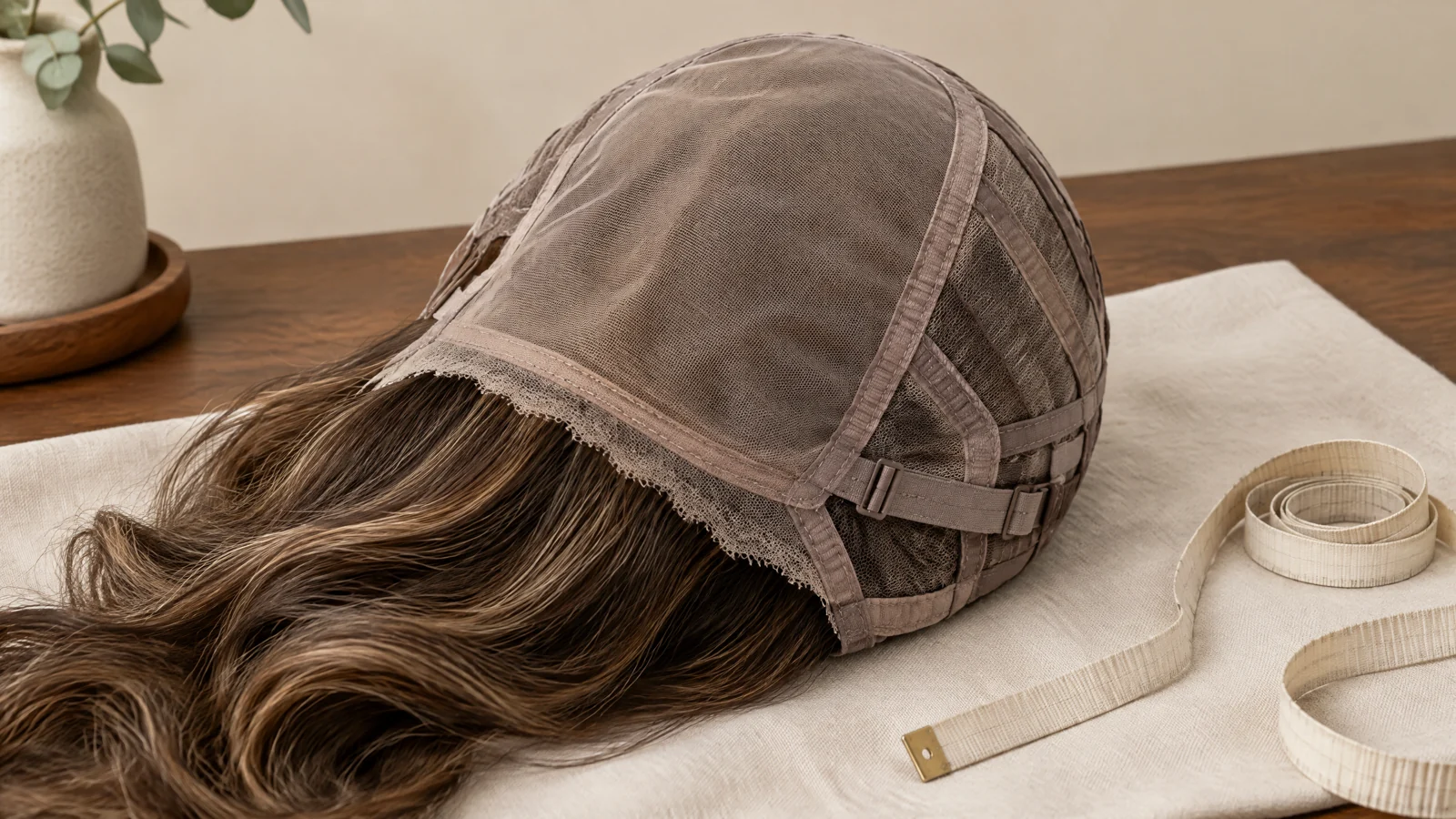
Men’s crown coverage works best when coverage, colour, grey placement and side density are considered together. Recreate the everyday parting before comparing partial and full-wig options; appearance planning does not replace a medical assessment of hair loss.
The crown is often judged from above rather than straight on. A person looking down at a phone, standing under bright office lighting or sitting one step higher can reveal a parting and scalp contrast that a front-facing mirror hides. That is why colour, grey and density have to be planned together.
This is a cosmetic planning guide, not a diagnosis. A hairpiece or wig changes appearance; it does not treat the cause of hair loss. Sudden shedding, patches, pain, scaling or other scalp changes deserve medical attention before you make a long-term styling decision.
01
How do you map the area that actually needs coverage?
Think of the crown as a shape, not a label such as ‘bald’. Check the front hairline, the transition from the forehead to the crown, the centre of the swirl and the view from above. If the sides and nape still carry a stable direction, the edge of a partial piece should finish where that hair can blend. If several areas are thin, compare broader coverage instead of stretching a small piece beyond its useful boundary. For existing-hair contrast planning, the highlights service page can help you frame a colour conversation.
Coverage boundaries change the colour decision. A piece that is too small can leave a dark, dense island; one that is too large can hide useful native hair and alter the whole silhouette. Take reference photos from the front, both sides, above and with your head lowered. Use them to compare views, not to treat phone lighting as a professional colour match.
The OWNSTRAND guide to men’s crown coverage hairpiece guidance and limitations asks readers to consider the exact area, remaining hair and where the edge will sit. Use those questions when requesting a sample or specification. A product label alone cannot establish fit, colour suitability or current supply.
- Mark the area most visible to other people, not only the thinnest centre.
- Record whether you expose the forehead and which way you part the hair.
- Identify the side and nape hair that must remain part of the finished shape.
Map the visible boundary first; colour and density are downstream decisions.
02
How much density looks like your hair rather than an added cap?
Natural does not mean maximum density. If the sides are fine and the crown suddenly becomes tall and heavy, the contrast in weight will show during movement. Discuss density in three zones: the centre that needs coverage, the edge that meets existing hair and the height your usual styling creates. A useful match is a proportion, not a single number. If the native hair needs a maintenance plan, review touch-up options separately from the piece.
Low density can still look covered. Hair direction, strand thickness, base construction and light between the strands all affect scalp visibility. Fine straight hair may need controlled support, while coarse hair can look overbuilt if too much volume is added. When you say ‘natural’, specify the viewing distance and the situations that matter to you.
If you keep existing hair, the perimeter should not be designed like the centre. The centre can provide coverage while the edge gradually approaches the surrounding amount. During a fitting, part the hair with your fingers and ask for side and overhead views. A polished front view can hide an abrupt edge.
NAAF defines density as the amount of hair on a wig and notes that it affects fullness and natural appearance. Its guide also distinguishes a partial topper from a full wig. The practical lesson is to discuss density with coverage category, rather than transfer the visual weight of a full wig to a small crown piece.[1]
| Direction | Why it can work | What to test |
|---|---|---|
| Crown-focused piece | Keeps the sides and nape in the existing style | Edge placement and swirl direction from above |
| Broader top coverage | Unifies several sparse areas in one silhouette | Whether density and length overwhelm the sides |
| Full coverage | Makes overall colour and direction easier to standardise | Hairline, temples, ears, nape and daily routine |
Density is a proportion problem. The transition at the edge often matters more than the centre.

03
How should dark, light and undertone choices work with the crown?
Very dark brown or black increases contrast. If scalp shows between strands, the visual weight can make the parting more obvious. That does not mean every man should go lighter. It means strand texture, swirl direction and lighting must be considered with the shade. Test in the light where you actually work, not only in flattering warm salon light.
A grey-brown or softened tone may connect more comfortably with existing grey, but mixing several shades is not automatically realistic. First locate the grey: temples, hairline, crown or an even distribution. Then decide whether the covered area should echo that pattern, sit slightly deeper, or be allowed a controlled tonal difference.
The OWNSTRAND page on men’s full-wig options questions and options recommends separating full and local coverage and considering the existing hairline, colour and daily styling habit. Treat that as a decision framework, not as a guarantee for every item. Ask to see the exact sample and specifications before committing.
A salon colour consultation and a hairpiece colour decision are related but not interchangeable. Canvas Blend can discuss the tone and grey transition of biological hair; it does not manufacture wigs or assume that a salon colour formula can be applied to an unknown fibre. The supplier must confirm whether that specific piece can be altered.
Choose colour by contrast and grey distribution before chasing a shade name.
04
How can grey hair be integrated instead of hidden at the last minute?
Grey is distribution data, not merely an age signal. If the temples are visibly silver while the crown is solid black, the break may show when you turn or look down. Keeping a controlled amount of grey can make changes across lighting feel less abrupt. Decide whether grey should be retained, softened or echoed only in selected zones.
Separate three variables: amount, location and length. New grey at the roots behaves differently from sun-lightened ends, and a short haircut makes the contrast more direct. Compare roots, parting and side view on a sample instead of judging one loose lock in your hand.
If you colour the existing hair to coordinate, choose a direction you can maintain. Full grey coverage requires repeat maintenance, while a translucent grey-brown may tolerate regrowth better but will not look completely grey-free. See the approach in grey coverage hair colour for the biological hair side, then confirm the separate care rules for the piece.
Human hair does not mean unrestricted bleaching or colouring, and synthetic fibre does not automatically mean heat-safe. If a product page or supplier does not clearly state colour, washing and heat limits, treat the information as unconfirmed. Never infer compatibility from the visual resemblance to natural hair.
- Photograph the grey in daylight before deciding how much to keep.
- Separate the goal of grey coverage from the goal of looking younger.
- Ask for written product-specific limits on colour, heat and care.
Grey looks coherent when its distribution is coherent, not when more silver is added at random.
05
How should you assess a scalp effect and visible parting?
A convincing crown usually answers two questions: where does the hair appear to emerge, and how much scalp should be visible in the part? Base construction, the hairline and the swirl need to work together. Test while speaking, turning, looking down and moving in a light breeze. A motionless front view is only one checkpoint.
A scalp effect is not automatically better when it is paler or more opaque. Skin tone, root shadow and your normal parting all affect the result. If you always part to one side, bring that direction into the sample. If you never expose a part, do not choose a construction that forces a new habit simply to create a close-up detail.
If the terminology feels unclear, use men’s hair system terminology and coverage options to separate a full wig from a partial piece and its attachment routine. A system name does not guarantee an invisible hairline or a universal wearing period. Compare coverage, daily maintenance and the natural hair left at the sides.
The American Academy of Dermatology explains that the cause of hair loss is established through history, scalp examination and, when needed, tests. It also notes that wigs and concealers can give immediate cosmetic results but cannot slow loss or regrow hair. That boundary matters when appearance planning overlaps with a health concern.[2]
Judge a scalp effect through your real parting and movement, not a single promotional angle.
06
How do you make the choice workable in daily life?
The decisive trade-off is often routine. Someone who wants a quick morning style may not suit a high-volume look that needs frequent shaping. Glasses, helmets, exercise, humidity and friction can change how a piece sits and how the hair direction looks. List the three situations you face most often, then test the option in those contexts.
Care instructions cannot be borrowed from another product. Fibres, bases and attachment methods differ. Heat-friendly synthetic fibre still has limits, and human hair can be altered by heat, washing and colour work. Any temperature, replacement period or maintenance schedule must come from the specific product instructions or supplier, not a universal rule.
If you are first organising the tone of your existing hair, the hair colour fading solutions guide can help you review washing, sun and touch-up habits. Keep that routine separate from the piece’s own care requirements so a salon-colour suggestion is not applied to an unknown fibre.
Before deciding, ask the supplier how coverage dimensions are set, where the edge ends, how the sample represents your grey distribution, what the base requires, how attachment relates to your remaining hair and whether the exact option is currently available. Unconfirmed details should stay questions, not assumptions.
A choice that survives ordinary days is more valuable than a perfect first fitting.

07
What order should you use for a fitting conversation?
Start with reference photos and a description of your normal routine. Compare coverage and base construction next. Then place colour, grey and density together on the physical sample. Discuss trimming, attachment and care last. Reversing that order makes it easy to fall for a flattering shade before discovering that the edge or part cannot work.
For colour planning on existing hair, you can use Canvas Blend’s hair colour booking route to discuss tone and grey transition. Booking a salon conversation does not mean Canvas Blend makes wigs, diagnoses hair loss or offers a joint service with OWNSTRAND. Product specifications, fitting and supply remain questions for the relevant provider.
A hypothetical planning example: imagine a man whose thinning is centred at the swirl, whose temples are about one-quarter grey, and who normally wears a side part with little forehead exposed. He could compare a crown-focused piece with broader coverage, then inspect a muted brown-grey sample from above and the side instead of defaulting to the darkest, densest black. This illustrates a method; it is not a client case or a diagnosis.
- Coverage: what must be softened, and what should remain visible?
- Colour: where are the roots and grey in the light you actually live in?
- Density: do the centre, edge and sides agree?
- Limits: what does the exact product allow for colour, heat, washing and attachment?
Put coverage, colour, density and product limits into four separate questions.
What else should you know?
Should a thinning crown always be matched with the darkest shade?
No. Dark shades increase contrast and can make a heavy edge more obvious. Compare the root tone, skin contrast, grey distribution and real lighting on a physical sample.
Can I simply dye a hairpiece black to match my hair?
Do not assume so. Human hair is not automatically unrestricted, and synthetic fibre is not automatically heat-safe. Obtain product-specific colour and care instructions first.
How do I choose between a partial piece and a full wig?
Start with the area you want covered and the native hair you want to keep. A crown-focused piece solves a different problem from broader or full coverage, even when the hairstyle looks similar.
Does a scalp-effect base always look more natural?
Not always. The result depends on the hairline, part, swirl, skin tone, density and movement. Check the exact sample from several angles.
Can I buy a piece first if my hair loss is sudden?
You may make a temporary cosmetic choice, but sudden or patchy loss and scalp symptoms should be assessed by a dermatologist. A piece changes appearance; it is not treatment.
How do you turn the choice into a next step?
The most useful crown-coverage decision treats swirl, grey, density and movement as one composition. Map the boundary, compare colour on a real sample, test the scalp effect from your usual angles, and confirm the exact product’s care limits before ordering.
For existing biological hair, Canvas Blend can discuss colour and grey-transition direction. Questions about a wig or hairpiece’s measurements, materials, attachment, fitting and supply belong with the relevant provider. This article is prepared by Canvas Blend Editorial / AI-assisted research; it is not medical advice, wig manufacturing or a diagnostic service.
Sources and editorial notes
- [1] Wigs and Toppers: Understanding the Basics — National Alopecia Areata Foundation
- [2] Hair loss: Diagnosis and treatment — American Academy of Dermatology
This AI-assisted Canvas Blend editorial guide is not a first-person case study or an article reviewed by Vit So. OWNSTRAND shares the site owner; links do not imply a joint package or medical certification. Confirm product materials, processing, care, fees and availability with the supplier in writing. Consult qualified healthcare professionals about hair loss or scalp symptoms.
Canvas Blend Editorial / AI-assisted research. Cosmetic planning only; not medical diagnosis, wig manufacturing or a guarantee of product suitability.