Colour × Wigs × Personal Choice
Hair Topper Coverage: Plan Parting and Root Volume Guide
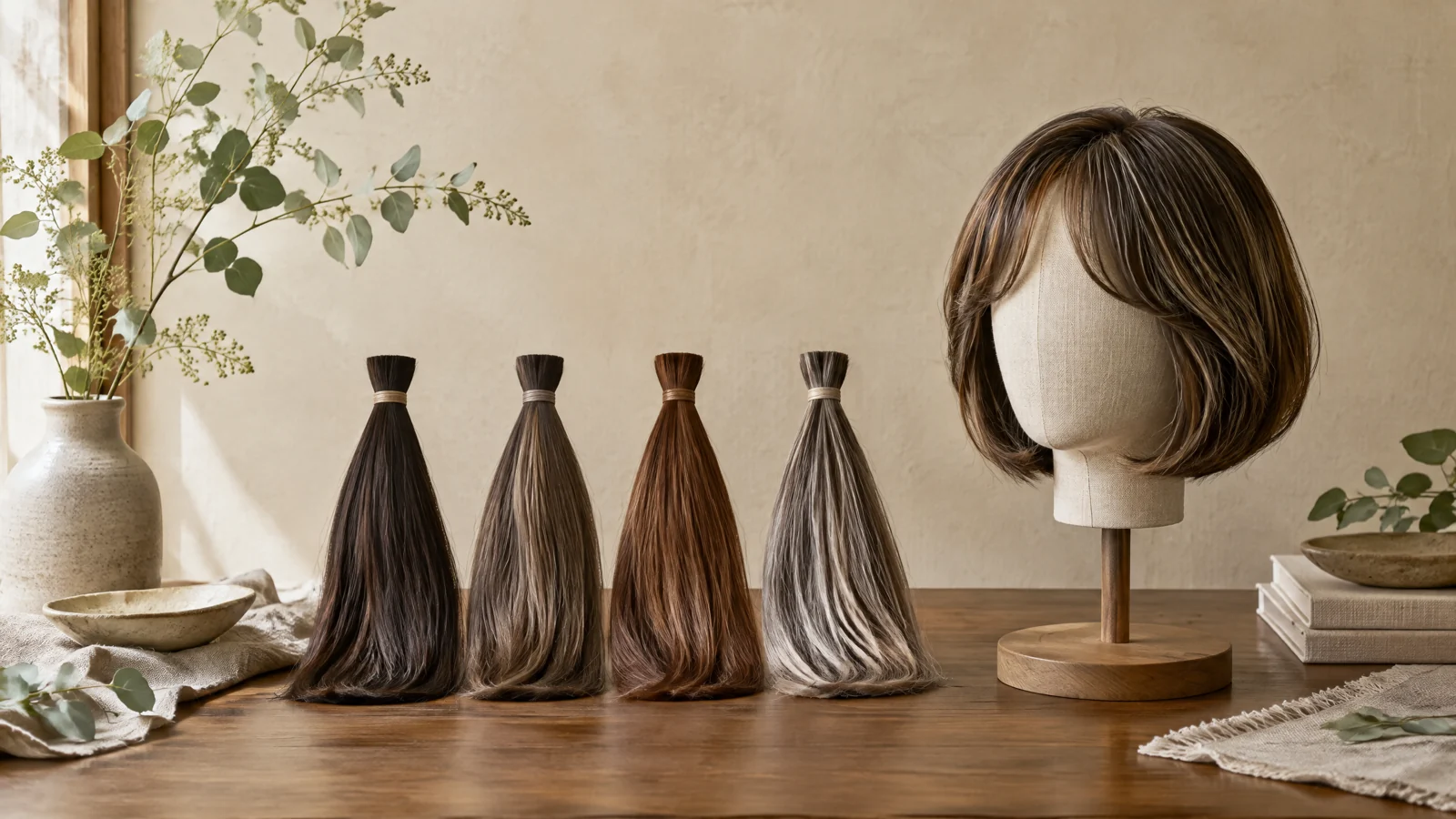
Hair topper coverage starts with the parting, crown and remaining natural hair before base size or root volume. Coverage area and density are different variables: a larger or thicker piece does not automatically create a more believable blend.
When a part or crown looks sparse in certain light, the difficult question is usually not which product name to search. It is where coverage should begin and end. Base size, anchors, root direction, colour, and daily wear all affect one another.
This guide separates those decisions into practical fitting questions, while keeping cosmetic selection distinct from medical assessment.
01
What are you actually trying to cover: the part, the crown, or both?
Plan a topper from the visible problem, not from the largest base available. Use the rear phone camera or two mirrors to view the hairline, the part, the crown, and the side-back angle. Look again under overhead light, while bending your head, and after you move your usual part. One person may mainly notice a widening part; another may see the whorl at the crown. These are different starting points, so they do not automatically need the same footprint.
Draw or mark the area you want to soften and note the natural hair you want to keep outside the piece. Say “the part is visible from this angle” rather than “I need a big topper.” A hairpiece is a cosmetic coverage choice, not a diagnosis. If thinning is sudden, patchy, painful, inflamed, or accompanied by scalp symptoms, seek medical advice. The American Academy of Dermatology explains that accurate hair-loss care begins by finding the cause; wigs and concealers can give immediate cosmetic results but do not regrow hair.[2]
For a starting point, compare the area and attachment options described in hair toppers and crown toppers questions and options. Read the listing alongside your parting direction, crown position, surrounding length, and the angles you care about. The useful question is whether the edge can disappear into your own hair, not simply whether the piece looks dense in a product photograph.
Name the visible zone and the daily part before choosing coverage; cosmetic selection does not replace diagnosis.
02
How can you turn a visual concern into a measurable coverage plan?
Measure the area that needs softening, not your whole head by default. For front-to-back coverage, note the start of the part you want to disguise and the point behind the crown where the concern ends. For side-to-side coverage, measure across the visible zone. If the issue is a central part, a wider base may be unnecessary; if the part and whorl connect visually, continuity may matter more than covering one spot.
Use a soft tape without pulling it tight. Repeat the measurement in your normal part and in the part you sometimes wear. Small, medium, and large labels are not universal measurements. Compare the exact model’s stated length and width, the shape of its edge, and where it will sit relative to your part. Online measurements are useful for shortlisting, but the final check is whether the base lands on hair that can blend over it.
The hair topper base size guide is useful because it frames size as a relationship between the intended coverage area and the specific model. Record how you measured, then ask what each listed dimension includes. Do not treat a larger label as automatically safer or more natural.
More coverage can create more variables. A base that extends far beyond the sparse-looking zone may add weight and require surrounding hair to travel farther over the edge. A base that is too small may expose a boundary when you turn or change your part. The practical target is coverage that works in your common views, not a maximum footprint designed for every imaginable angle.
| Visible zone | Compare first | Typical risk |
|---|---|---|
| Widening part | Front edge, part direction, front-to-back reach | A thick front edge or insufficient blending hair |
| Crown whorl | Whorl direction, top view, side blending | Covering one point while the boundary shows on movement |
| Part to crown | Continuous footprint, anchors, weight balance | Choosing an oversized base to chase total coverage |
Measure the zone to soften, then correct the size by checking whether natural hair can hide the edge.
03
How should the base and attachment points work with your own hair?
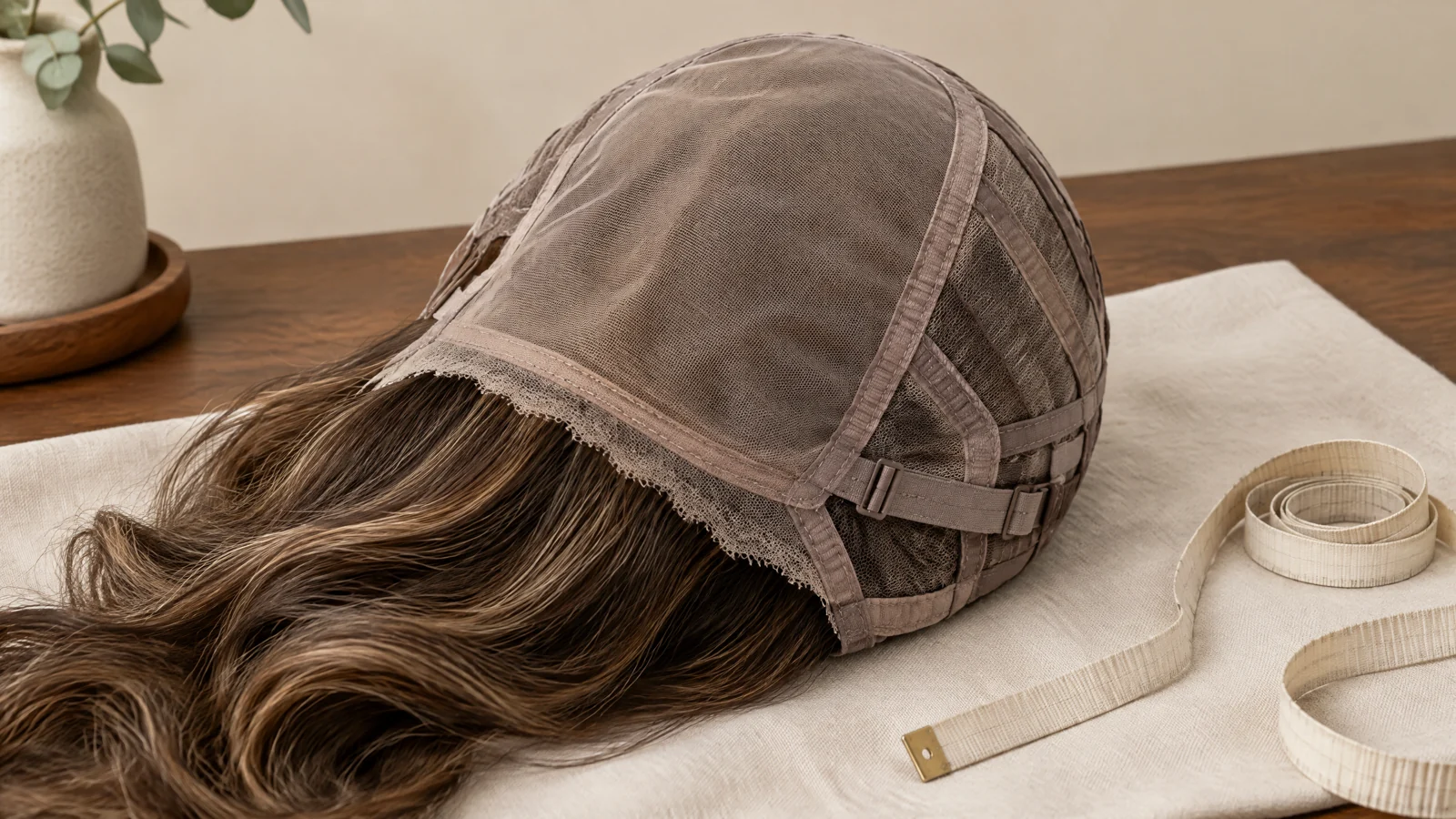
The base is the structure that supports the added hair and sits against the scalp. Terms such as monofilament or lace describe construction, but a label alone does not guarantee the same breathability, weight, or feel across every model. Compare the exact base dimensions, parting flexibility, and attachment points. Partial coverage only works when the edge and the available anchor hair are considered together.
Fine hair at an edge may not tolerate the same clip tension as denser hair. Do not assume that tighter means more secure. Try the piece on without a full styling routine, then make your usual part and move your head. If one side has little usable hair for an anchor, ask the supplier what other attachment options apply to that exact model instead of assuming every base can be worn the same way.
Use the hair topper coverage for a widening part questions and options to place model dimensions beside your own measurements. Confirm what the dimensions include, how the edge sits, and whether the base still works when you change your part. The goal is a stable, blendable footprint, not the largest number on a chart.
Test the attachment with three gentle movements: bend your head, turn left and right, and brush a small amount of your own hair back over the edge. If you have to press the base down after every movement, the issue may be placement, anchors, or size rather than styling skill. Record where it shifts so the next comparison can answer a specific question.
Base, edge, and usable anchor hair form one decision; none should be judged in isolation.
04
How can root volume look natural instead of like a hard bump?
Natural-looking lift is not the same as lifting every root equally. Start with direction: a crown whorl rotates, while a front or side part tends to fall along a line. If the topper’s root direction fights your own hair, both can push against the same small area. Length alone will not solve a flat root, and excessive density can make the transition look abrupt. Compare the direction, root height, and weight of the hair around the base.
Begin with modest lift and use your fingers to place a small amount of natural hair over the edge. Check at eye level, from above, and from the side-back angle. The best result usually has a gradual change from the centre to the surrounding hair. Heavy teasing, stiff product, or a tall ridge at the edge can create a shadow that reveals the piece even when the colour is close.
Colour changes after salon work can alter the apparent volume. A darker regrowth line, a fading topper length, or a warm-cool mismatch can make the same base more visible. If you are planning colour work, use the hair colour before-and-after tips to record natural light, overhead light, and side light separately. That helps you judge the root boundary rather than relying on one flattering image.
Volume also has to survive real situations: office lighting, wind, reading with your head down, and tying the surrounding hair. The target is not one fixed height all day. It is a continuous transition in the angles you actually use. A little natural irregularity is often more convincing than a perfectly arranged, rigid surface.
Build volume through direction and a gradual transition; do not use height to hide a boundary problem.
05
How can colour and post-colour regrowth avoid highlighting the edge?
Compare the topper and your own hair in daylight and in the indoor lighting where you spend time. Check the roots, not only the ends. Grey proportion, shine, and regrowth often reveal a mismatch first. If your hair has recently been lightened or is fading, separate today’s blend from what may happen later. One colour appointment cannot promise a permanent match between two different hair systems.
Human hair means the fibre is human hair; it does not mean unlimited bleaching, colouring, or heat styling. Synthetic fibre does not automatically mean heat-safe. Follow the exact model’s label and the supplier’s instructions. If the information is missing, do not transfer salon experience with natural hair to the topper. Preserve the original colour until the care and alteration conditions are confirmed.
For ideas about the natural hair side of colour transitions, see the balayage colour service. Canvas Blend is a Hong Kong colour salon, not a wig-making service or a medical diagnostic service. Whether a particular topper can be coloured, who should do it, and how the change affects care must be confirmed separately from the product information.
Write down the tone, lighting, part, and washed state when you compare. If the topper is darker, a different part or a small veil of natural hair may help. If the temperature difference is strong, extra volume will not erase it. Choose a model that can coexist with your normal colour changes instead of choosing density alone.
If you are considering a softer light-and-shadow effect in your own hair, discuss the highlights colour service separately from the topper. Highlights are a natural-hair colour option, not evidence that the piece itself can be coloured.
Colour blending is a light, root, and time problem; never assume human hair or synthetic fibre has universal care properties.
06
How should comfort, removal, and daily styling affect the plan?
Work backwards from your routine. Consider exercise, glasses, hats, tied hair, and how often you reset your part during a day. A piece that can be positioned securely in real time is more useful than one that looks perfect only in a long mirror session. During a fitting, notice pressure, pulling, or soreness around the attachment points. Discomfort should not be treated as proof that you simply need to “get used to it.”
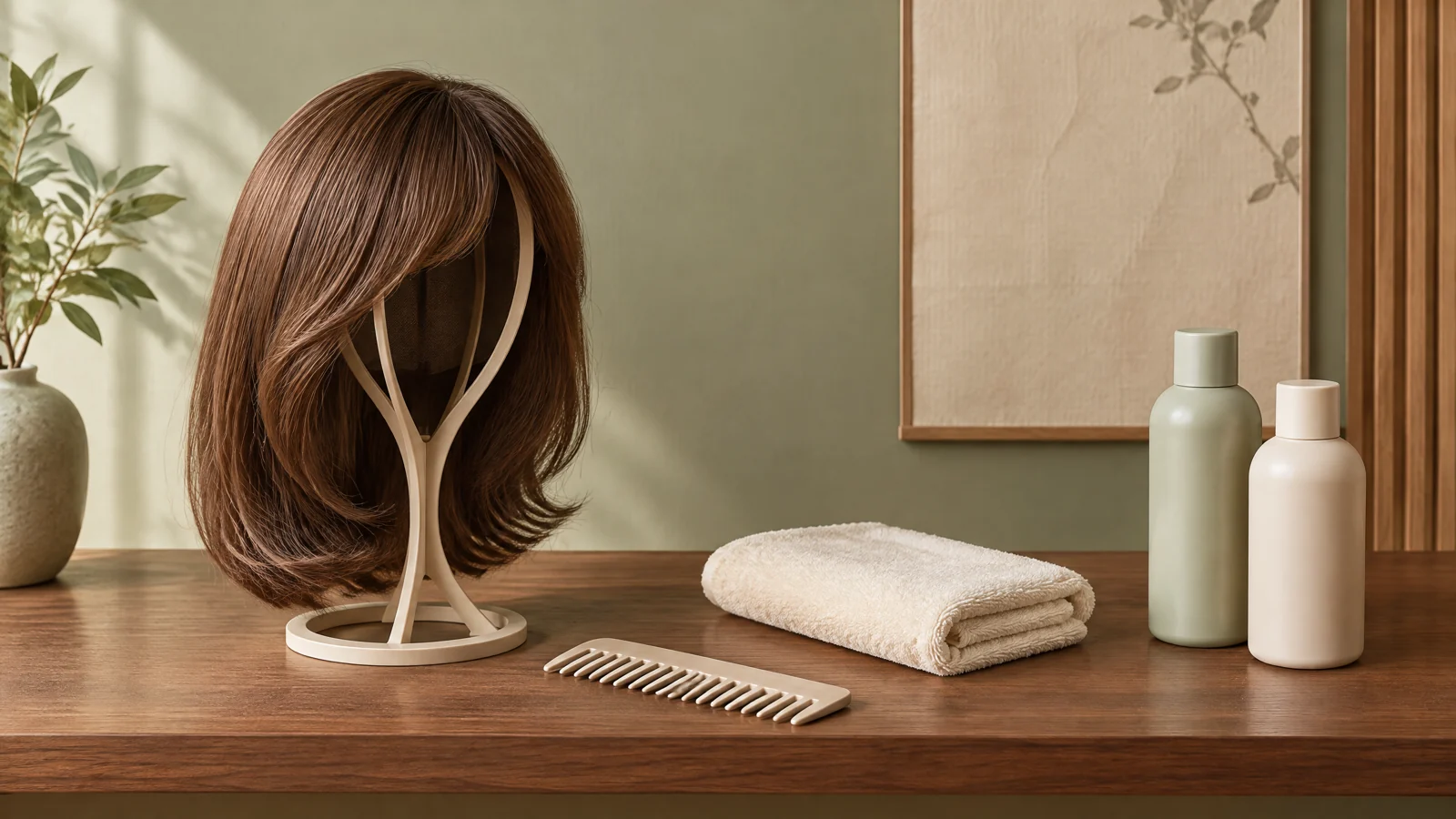
Follow the product’s care instructions for washing and heat. The American Cancer Society describes a hair topper as adding coverage and volume on top, distinguishes it from a full wig, and advises that synthetic hair should not be exposed to a dryer or curling iron unless the product is heat-resistant. It also recommends checking the specific brand’s sizing and fit guidance.[1] These are general safety principles, not a promise about a particular model’s lifespan or warranty.
If your own hair is being coloured, plan a period without the piece so you can observe the scalp and the new colour clearly before returning to the attachment routine. Stop and seek professional advice if there is persistent redness, pain, swelling, discharge, or sudden shedding. Cosmetic coverage and scalp health should be coordinated, but neither should be used as a substitute for the other.
For care of your own coloured hair, the damaged hair repair service may be a useful salon discussion point. It does not replace the topper supplier’s instructions and does not mean the same products or heat can be used on the piece.
- Photograph front, top, and side-back views before fitting.
- Record the part, base edge, attachment points, and root height.
- Test bending, turning, and brushing hair over the edge.
- Ask the supplier to confirm any missing material, heat, colour, or care information.
Test the piece inside your real routine; comfort and stability cannot be judged from a product photo.
07
How can you make a decision you can review instead of guessing once?
Treat the choice as a comparison, not a hunt for the densest piece. Record the coverage zone, base dimensions, edge-blending hair, attachment method, root direction, colour difference, and removal difficulty for every candidate. Mark missing information as “to confirm.” Do not use a brand name, a catalogue photo, or an assumed fibre property to fill the gap.
Here is a hypothetical planning example, not a client case. Imagine someone who notices the centre part and the area just in front of the crown, usually wears a right part, and still has usable hair on both sides. They could compare a narrower right-part base with a base that reaches farther back, then photograph both under overhead and outdoor light. The example demonstrates a method; it does not prescribe a size.
If two options cover the same zone, favour the one that blends when you change your part and does not require strong tension. A slightly smaller footprint with a smooth gradient may look more believable than a larger one that has to be pressed flat at the whorl. Recheck after movement and under more than one light before deciding.
If you need a salon conversation about the colour, condition, or styling of your own hair, use the booking page for a colour consultation. This is not a wig-fitting, customisation, or medical service. Confirm the topper’s dimensions, supply, attachment, and care directly with the relevant supplier, and bring your comparison notes.
| Check | Good sign | Recheck if |
|---|---|---|
| Coverage | The target zone is softened in common views | Turning or changing the part exposes the edge |
| Volume | Root height changes gradually into surrounding hair | The base edge forms a sudden bump or dip |
| Attachment | It stays put without painful tension | You must press or tighten it repeatedly |
| Colour | Roots and surrounding hair agree in usual light | It matches only in one filter or angle |
Choose a plan that can be recorded, retested, and verified; unknown details are not guarantees.
What else should you know?
Do I need the largest topper for a sparse crown?
Not necessarily. Identify the angles and zone that matter, then check whether the base crosses that zone while surrounding hair can hide the edge. A larger base can add weight, more attachment variables, and a longer blending distance.
Can a narrow topper work for a widening centre part?
It can be a useful option to compare. Test it in your usual part, when bending your head, and after turning. If you frequently change the part, a little more front-to-back or side-to-side reach may be more forgiving, depending on the exact model.
Can clips make my natural hair thinner?
An individual risk cannot be judged here. Pulling, pain, or needing excessive tension is a reason to stop and ask the supplier or a medical professional about the attachment. The anchor method must suit both the model and the hair available at the edge.
Can human-hair toppers be bleached like natural hair?
Do not assume so. Human hair does not mean unrestricted bleaching, and synthetic fibre does not mean heat-safe. Follow the exact model’s instructions and ask about colour changes, care, and any conditions before altering it.
Should I add more height if the topper looks flat or too high?
First recheck placement, part direction, and the weight of the surrounding hair. If the edge still forms a ridge, styling product alone is unlikely to solve it. Recompare the footprint, root direction, and attachment points.
Can I simply buy a topper if shedding starts suddenly?
A topper can provide cosmetic coverage, but it cannot diagnose or treat hair loss. Sudden shedding, inflammation, pain, or other symptoms deserve medical assessment. You can plan appearance coverage at the same time, but it should not replace an examination.
How do you turn the choice into a next step?
The most useful next step is to bring three-angle photos, your measurements, and your usual part to a fitting or product enquiry. Check coverage, edge, anchors, root direction, and colour in the lights you actually use.
Canvas Blend Editorial / AI-assisted research. Canvas Blend can discuss the colour and care of your natural hair as a salon; it does not provide custom toppers, wig diagnosis, or medical services.
Sources and editorial notes
- [1] American Cancer Society, “Wigs for Hair Loss”
- [2] American Academy of Dermatology, “Hair loss: Diagnosis and treatment”
This AI-assisted Canvas Blend editorial guide is not a first-person case study or an article reviewed by Vit So. OWNSTRAND shares the site owner; links do not imply a joint package or medical certification. Confirm product materials, processing, care, fees and availability with the supplier in writing. Consult qualified healthcare professionals about hair loss or scalp symptoms.
Canvas Blend Editorial / AI-assisted research; cosmetic coverage is not a medical diagnosis, and fibre and care claims must be confirmed for the exact model with its supplier.