Colour × Wigs × Personal Choice
Face-Framing Hairpieces: Match Colour, Shape and Fit
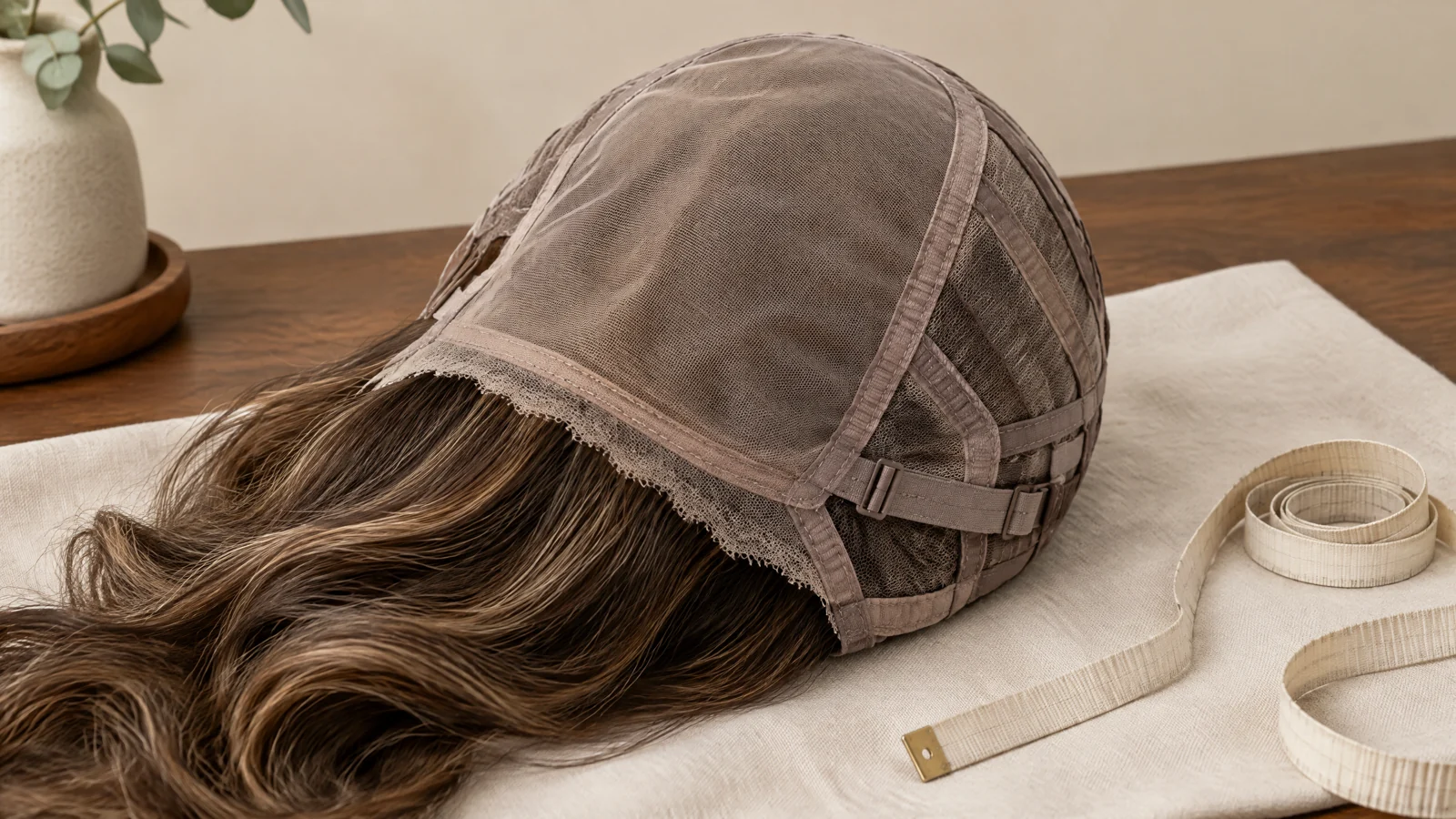
Face-framing hairpieces should be compared by the line around the face, attachment position and colour contrast with natural hair. Bangs, ponytails and partial-coverage pieces serve different purposes, so check movement, weight and each item’s care limits.
After a salon colour service, a removable fringe or ponytail can change the face quickly, but colour matching is not a one-number exercise. Light, shine, texture and placement all change what the eye sees.
This guide compares attachment, length, visible edges and tonal reference for clip-in bangs and ponytail hairpieces, with practical checks for fitting and post-colour care.
01
Should you choose the frame or the colour first?
Choose the facial frame you want to change before choosing a shade. Clip-in bangs alter the forehead and temples, while a ponytail hairpiece attaches to your tied natural hair. Neither is a full wig. If your salon colour has a darker root, a different mid-length and lighter ends, a single colour label cannot represent the whole head.
Face framing means the visible hair boundary around the forehead, cheekbones, jaw and temples. Bangs sit close to the eyes, so a tonal mismatch is easy to notice. A ponytail sits farther back, so the attachment point, exposed natural hair and overall proportion matter more. Natural does not mean perfectly identical; it means the edge and contrast look intentional.
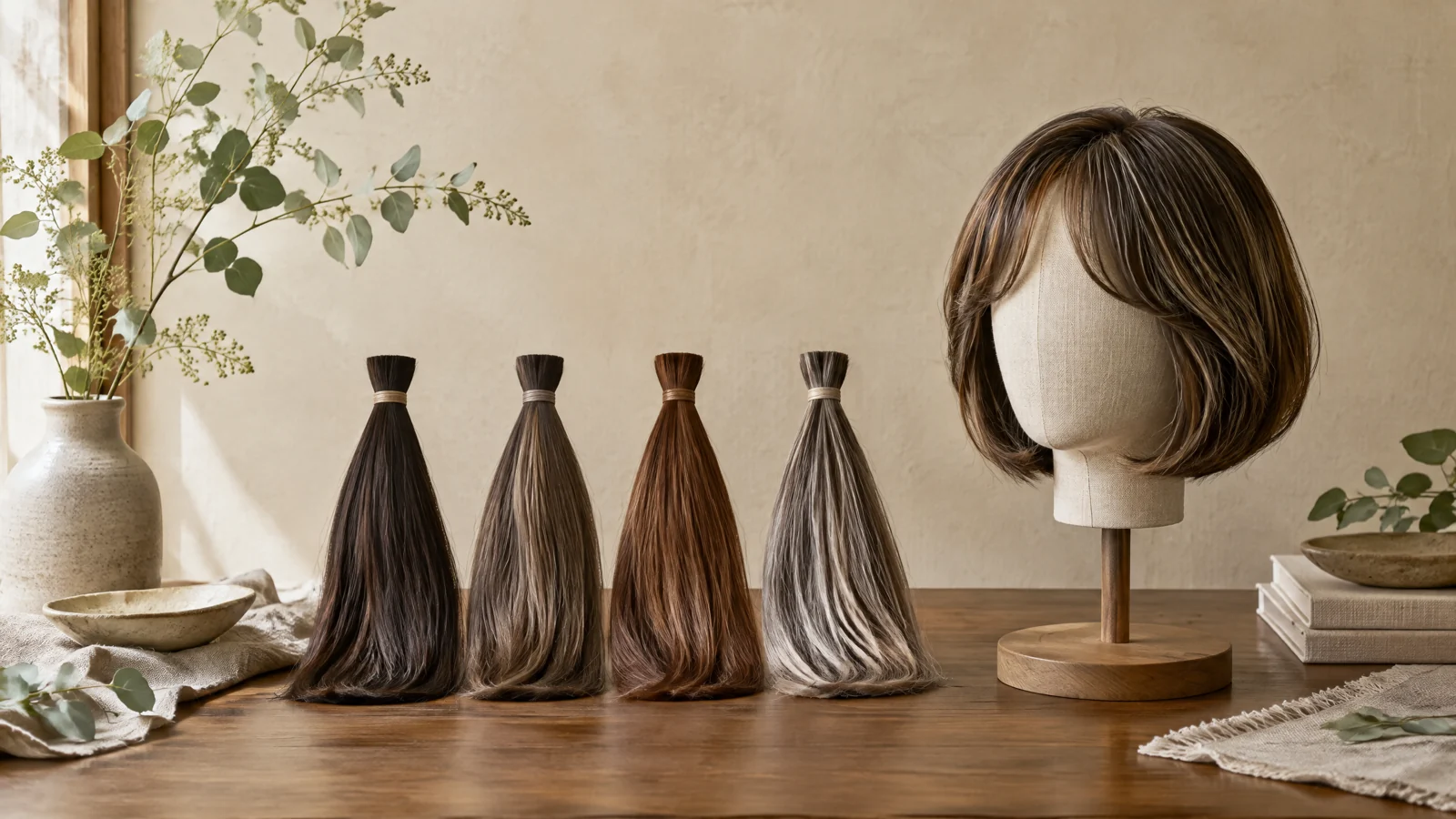
Compare the piece beside your mid-lengths and ends in daylight, then check it under the lighting you normally use. Note the depth, undertone, shine and texture, not only whether both samples are called brown. Canvas Blend’s guide to hair colour for Asian skin tones can help you include skin, brows and roots in the discussion rather than treating a screen colour as a guarantee.
A hypothetical planning example: someone with newly coloured cool dark brown hair wants a light fringe. If the goal is blending, she should prioritise a similar undertone and shine. If the goal is contrast, she can keep the contrast in a small front area and let her own side hair soften the transition. This is a planning method, not a promise of an exact match.
| Piece | Main frame | First checks | Trade-off |
|---|---|---|---|
| Clip-in bangs | Forehead, eyes, temples | Base, clips, front length | Coverage versus lightness |
| Ponytail piece | Back of head, shoulders, ends | Natural ponytail, attachment, weight | Volume versus comfort |
| Full wig | Whole head and hairline | Cap, coverage, silhouette | Complete change versus upkeep |
Map the frame first; match colour only after you know where the piece will be seen.
02
How can clip-in bangs create a believable forehead frame?
Clip-in bangs are a partial hairpiece normally secured to your own hair, allowing a temporary change without cutting your natural fringe. Compare the coverage, front edge, side extensions and base width. A blunt fringe concentrates attention across the forehead; a side-swept fringe makes the parting and one temple more prominent. Thickness and curvature still depend on the exact item.
Before attaching, smooth your hair and section enough natural hair to support the base. Clips should fasten to hair, not press directly against the scalp. Release the covering section and inspect from the front and side. If there is pulling, pain or repeated slipping, remove it and re-section rather than tightening it or adding more styling product.
A side edge that stops abruptly near the temple can make a piece look pasted on. Your existing layers, parting and a small amount of movement may soften the transition, but do not trim before checking that the product permits it. Human hair is not automatically safe to bleach, and synthetic fibre is not automatically heat-safe; follow the exact product information.
Attachment changes the face-framing plan. OWNSTRAND’s clip-in hair topper attachment options concern topper placement rather than an automatic substitute for clip-in bangs. Ask where clips would sit, whether sufficient natural hair remains there, and whether the weight and parting suit your routine before treating any attachment as interchangeable.
- Compare roots, mid-lengths and ends in daylight, not only on a phone screen.
- Turn and bend after fitting to inspect the side edges and clips.
- Confirm permission before trimming, colouring or heat styling.
For bangs, a base that natural hair can hide matters before the shade name.
03
How should a ponytail hairpiece balance attachment, length and proportion?
A ponytail hairpiece is a removable piece attached to a tied ponytail, not a full head covering. Product names may describe clip-on, tie-on, drawstring or wrap-around designs, but the name cannot replace a look at the base. Check the attachment point, the natural ponytail size required and the removal instructions before comparing colour.
A clip-on piece depends on a suitable bundle of natural hair. A tie or drawstring design depends on how its cord is closed. A wrap-around design depends on an added strand covering the join. These structures are not interchangeable. Attachment should not be made tighter simply to feel safer; pressure, pain or ongoing pulling is a reason to stop and reassess.
Measure from the intended attachment point to the desired ends rather than relying on one catalogue length. A high ponytail changes the drop, while curls change the apparent length. If your coloured ends are lighter than your roots, compare the piece with the hair that will remain visible at the join and through the ponytail, not automatically with the root colour.
The same boundary logic applies beyond bangs or ponytails. Comparing partial-coverage toupees and hairpieces for men can clarify how much natural hair stays visible around a covered area. Those pieces have a different purpose from a ponytail extension, so discuss coverage, edge placement and attachment instead of assuming one product fills both roles.
| Style | Useful comparison | Possible limit | Question to ask |
|---|---|---|---|
| Clip-on | Clear attachment point and quick removal | Needs suitable natural hair | Can the clip be hidden comfortably? |
| Tie/drawstring | Adjustable closure in the stated design | Terms may be used inconsistently | How does it close and release? |
| Wrap-around | Added hair can cover the join | Needs careful wrapping | Is the wrap long enough for my ponytail? |
A ponytail should be secure and comfortable before it is made longer or fuller.
04
Should post-colour matching follow the roots, mid-lengths or ends?
There is no universal correct section. For bangs, inspect the front and side hair that will sit beside the piece. For a ponytail, inspect the attachment and the ends that remain visible. Highlights, gradients, grey strands and sun fading mean one shade can only describe part of your hair, so an exact post-colour match should never be promised.
Break a colour comparison into depth, undertone, then shine and texture. A cool dark brown piece beside a red-brown head may look separate even when the depth is close. A matte fibre beside glossy human hair can also appear different. Compare in daylight first, then under the room lighting in which you will normally wear it.
The American Academy of Dermatology says colouring and lightening can leave hair dry and brittle. It advises staying within three shades of natural colour when dyeing and following the manufacturer’s testing instructions; rash, swelling, burning or itching calls for stopping and seeking dermatology advice.[1] This is a safety reminder for hair and scalp, not permission to colour a hairpiece.
Canvas Blend’s cool versus warm hair colour guide can help you name the direction you see. Use that vocabulary to decide whether you want blending or deliberate contrast, then return to the item’s own material and care instructions.
Match depth, undertone, shine, texture and placement; a colour label alone is not enough.
05
How should you test a piece after a salon appointment?
Test the piece where daylight is available. Wear your hair down once, then create the low or high ponytail you would actually use. The first test shows the fringe and cheek-side frame; the second shows the ponytail join and exposed natural hair. Check the front, three-quarter view and side view because one flattering angle does not prove a natural result while moving.
Record the salon date and the colour description. Ends can become lighter after washing, and products can change shine. If the hairpiece stays the same while natural hair fades, the contrast may change over time. That is a planning variable, not automatically a product failure. Ask for a colour swatch, clear photographs and specifications instead of relying on filtered images.
Follow the salon and product instructions for post-colour care. Do not transfer the tools, heat habits or washing products used for your natural hair to a hairpiece without checking its material. If heat, dyeing or trimming is not clearly stated, the cautious choice is to avoid it until the supplier confirms the limit.
If you want to discuss the natural colour and frame with a salon, you can use Canvas Blend’s booking page and bring photographs of the piece. Canvas Blend is a colour salon, not a hairpiece manufacturer or medical diagnostic service; the supplier must confirm the piece’s construction and restrictions.
Test the actual wearing position under familiar light, not just a sample beside loose hair.
06
What can’t you assume about material, heat or trimming?
Human hair, synthetic fibre and heat-friendly fibre are material descriptions, not universal permissions. Human hair may already be processed and is not automatically safe to bleach. Heat-friendly means the specified product has stated limits; it does not mean every synthetic piece can take heat. Never borrow the temperature or care routine of another item.
Trimming changes the front edge, side connection and distribution of volume. A fringe cut too short cannot be put back, and thinning a wrap strand may expose the join. Confirm whether trimming is allowed, who should do it and whether alteration affects the purchase or care arrangement. Those are product decisions that a salon cannot promise on a supplier’s behalf.
Remove a clip-in fringe by releasing each clip, and release a ponytail’s cord or wrap before pulling. Detangle from the ends according to the material instructions. If your scalp develops persistent itch, pain or redness, stop wearing the piece and seek appropriate medical advice. A hairpiece changes appearance; it does not diagnose or treat hair loss.
Canvas Blend’s babylight colour service can help you discuss dimension in natural hair, but a salon colour service is not a promise that a hairpiece can be dyed. Hair loss, chemotherapy and scalp symptoms should be discussed with healthcare professionals, while hairpiece selection remains a cosmetic choice.
- Check the exact material before checking heat, dyeing, trimming and washing limits.
- Do not apply another product’s heat setting or care routine.
- Remove the piece if the scalp feels persistently uncomfortable.
Treat every hairpiece as its own product; missing specifications are a reason to ask, not guess.
07
How can you turn the comparison into a final decision?
Use a short fitting sheet. Write the purpose first: a temporary forehead change, everyday ponytail length, or an event look. Then record your natural hair: post-colour base, root-to-end variation, texture and density. Finally list non-negotiables, such as low tension, quick removal or minimal upkeep. This keeps a beautiful photograph from deciding everything for you.
When two shades are both imperfect, prefer the one with the less visible join, closer shine and an easier length transition. For bangs, the front edge and temple connection usually matter more than the back ends. For a ponytail, the attachment and wrap matter more than choosing the longest tail. This order is often more useful than chasing the closest colour name.
Cancer Research UK suggests asking about a wig before treatment so colour and texture can be matched, while also recognising that people may choose a new look.[2] That general selection principle is not a treatment recommendation. Anyone receiving treatment should ask their healthcare team about scalp comfort and suitable wearing methods.
For a men’s partial-coverage comparison, OWNSTRAND’s human hair men’s wigs and hairpieces overview helps you ask about the category without promising a material result. Confirm the particular piece’s density, cap, colour and processing history; human hair alone does not prove unrestricted heat or chemical styling.
Decide in this order: attachment and comfort, join and proportion, tone and shine, then trend.
What else should you know?
Must the hairpiece exactly match my post-salon colour?
No. Compare depth, undertone, shine, texture and the visible join, then decide whether you want blending or intentional contrast.
Can clip-in bangs damage natural hair?
It depends on the construction and placement. Attach to hair rather than scalp, and remove or reposition the piece if there is pulling or pain.
Should a ponytail piece match the roots or ends?
Compare the section visible at the attachment and through the tail. A single shade cannot reproduce a gradient from roots to ends.
Can human-hair pieces be dyed at home?
Do not assume so from the material name. Confirm the exact product and supplier instructions before colouring.
Can I wear a piece if my scalp feels irritated after colouring?
Stop wearing it if irritation persists and seek appropriate medical advice. A hairpiece is not a treatment for scalp symptoms.
How do you turn the choice into a next step?
When you can name the frame, the attachment point and the section of natural hair used for comparison, choosing becomes a testable process rather than a guess at a shade name. Try the piece in the light and routine where it will actually be worn.
Canvas Blend Editorial / AI-assisted research. Canvas Blend can discuss salon colour and natural-hair framing; the supplier must confirm hairpiece specifications, supply, price and wearing restrictions.
If natural-hair colour is also part of your plan, review highlight contrast and lines to organise your hair history, preferred tone and calendar. These Canvas Blend resources address natural hair, not a promise about wig processing or a medical condition. Keep the supplier’s product assessment and the salon’s colour consultation separate.
Sources and editorial notes
- [1] American Academy of Dermatology: Coloring and perming tips for healthier-looking hair
- [2] Cancer Research UK: Coping with hair loss and thinning
This AI-assisted Canvas Blend editorial guide is not a first-person case study or an article reviewed by Vit So. OWNSTRAND shares the site owner; links do not imply a joint package or medical certification. Confirm product materials, processing, care, fees and availability with the supplier in writing. Consult qualified healthcare professionals about hair loss or scalp symptoms.
Canvas Blend Editorial / AI-assisted research; this article is not a hairpiece manufacturer, medical diagnosis or product guarantee.