Colour × Wigs × Personal Choice
Grey Hair Blending: Natural Hair and Wig Colour Guide
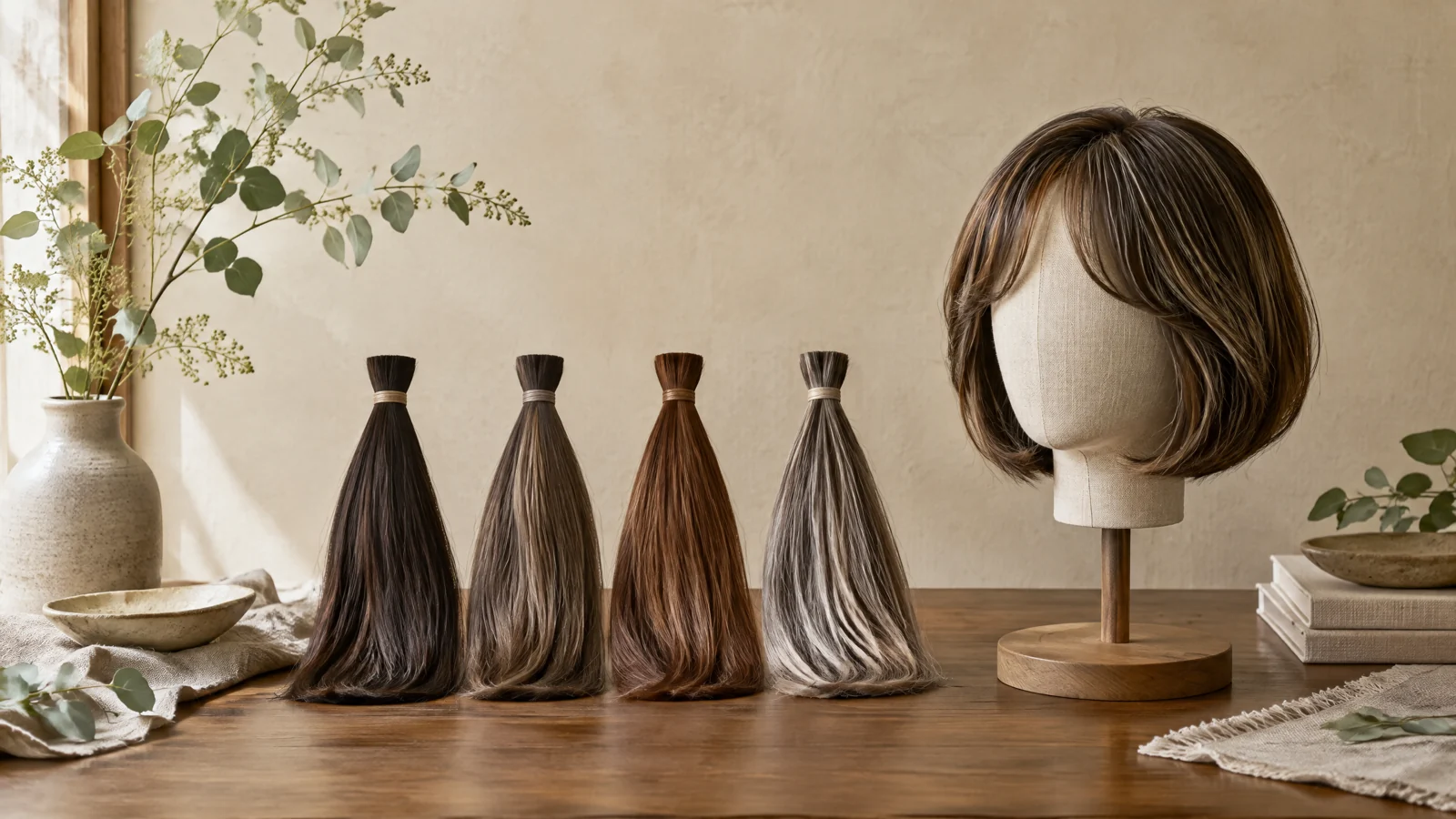
Grey hair blending starts with proportion, placement, direction and the everyday parting, not one shade number. Natural hair and a wig connect through a believable crown, temple and edge transition in ordinary light, rather than identical strands.
People often bring a colour chart and ask which shade is “closest”. Grey hair rarely appears as an even wash, though. It may be concentrated at the temples, scattered through the parting, brighter at the crown, or mixed into dark hair as a few reflective strands. A wig can also reflect light differently from growing hair. One shade name cannot describe all of those variables.
A better consultation separates the problem into visible zones. Which area is noticed first? How much of the natural hair will remain outside the piece? Does the everyday parting expose a boundary? Will the beard or sideburns remain visibly different? This is a cosmetic planning framework, not a medical diagnosis, and no colour discussion can guarantee an invisible match.
01
Why should you map grey placement before choosing a shade?
Grey percentage is useful, but it is not the whole decision. Two people may describe themselves as roughly thirty percent grey while looking completely different. One may be dark except for the temples. Another may have a bright crown and a darker hairline. The first needs a side transition; the second needs the crown, swirl and parting to work together. A number without a map leaves out the places people actually see.
Start with the way you normally wear your hair. Recreate your usual parting and look at the hairline, temples, ears and crown. Then check the same arrangement in neutral daylight and indoor light. Silver strands can appear more prominent under cool light, while warm indoor light can make a darker blend seem heavier. You are not trying to measure every strand; you are building a shared visual reference.
OWNSTRAND’s men’s guidance similarly frames the discussion around existing colour, grey distribution and everyday styling. If you are comparing a men’s grey hair system guidance and limitations, take photos that show your usual parting and side profile, then ask how the proposed distribution would sit beside your own hair.
For women, grey at the parting or crown may matter more than the total amount. A larger topper is not automatically more natural. Its edge can create a new line, especially if the remaining hair is shorter or has a different texture. Mark the zone you actually want to soften before deciding between a partial piece, a topper or a full wig.
| What to inspect | Useful question | Why it changes the blend |
|---|---|---|
| Amount | Is grey a few highlights, a balanced salt-and-pepper mix, or the dominant colour? | It sets the visual weight of dark and silver strands, not a guaranteed code. |
| Placement | Where is it most visible: temples, parting, hairline, crown or back? | It prioritises the edge and the zones that must connect. |
| Direction | Do the natural hair and piece share a parting, swirl, length and movement? | A directional mismatch can look artificial even when colour is close. |
| Light | Does it still work in daylight, indoor light and phone photos? | It prevents a blend chosen only for one lighting condition. |
02
How can you describe the grey balance you want?
Avoid saying only “make it natural”. Use a visual scale instead: a dark look with scattered silver highlights, a balanced salt-and-pepper effect, or a style in which silver is a major part of the overall colour. These descriptions help a consultant select relevant samples while leaving room to vary the distribution between the front, sides and crown.
Describe the face zones separately. A few grey strands at the front can look intentional and familiar, while very dark temples beside a visibly grey beard may feel disconnected. That does not mean the beard must be dyed to match. It means the whole face should be considered when deciding how much contrast you are comfortable with.
For a distribution discussion rather than a fixed shade, OWNSTRAND’s custom wig grey percentage questions can help you separate the amount of grey from its placement. Bring temple, crown and parting references; this is a custom-product enquiry, not a promise that one percentage looks the same on every wearer.
A sample is not the final result. Human hair, synthetic fibre and blended materials can differ in shine, movement and styling behaviour. Human hair does not mean unrestricted colouring, and synthetic fibre does not automatically mean heat-safe. The product label and supplier instructions for that specific item should decide what is permissible.
Describe where the grey sits and how bright it should look, rather than reporting one percentage alone.
03
How do you keep the boundary between natural hair and a piece from looking deliberate?
Natural blending begins with boundary planning. If the edge lands exactly on the brightest part of the parting, the eye is drawn to it. If some natural hair can sit over or beside the edge, the transition may read more continuously. This is not a universal rule: hair density, crown direction and attachment method can change the result.
Check the look from the front, a three-quarter angle, the side and with your head lowered. A front view may look close while the side reveals a piece that is too dark, too straight or too glossy. If you are keeping temple or hairline hair outside the piece, confirm that its grey distribution makes sense beside the front edge.
Grey does not have to be treated as a flaw to erase. Someone may want coverage over a sparse crown while keeping a few silver strands as a recognisable feature. Someone else may prefer a more even overall impression without returning to an entirely dark look. Define what you want to keep before asking for “perfect invisibility”.
The American Academy of Dermatology notes that colouring and lightening can leave hair dry and brittle. It advises following product directions and says that lightening more than three shades generally requires stronger peroxide and can cause more damage.[1] That is why a blend should not begin with an extreme colour change simply to force two materials into one shade.
If hair loss follows treatment or another health issue, keep this article in the cosmetic lane. Persistent shedding, scalp pain, redness or a reaction to dye calls for medical advice rather than a colour adjustment.
- Bring clear photos of your normal parting, side profile and crown.
- Write down which grey areas you want to keep visible and which you want softened.
- Compare samples under a consistent light and note whether each is human hair, synthetic or blended.
- Ask whether attachment, trimming and daily styling will change the visible edge.
04
How do human-hair and synthetic wigs change the blending plan?
Material affects the plan, but it is not a shortcut to judging quality. Cancer Research UK describes synthetic, human-hair and mixed wigs, and warns that direct heat can melt or frizz synthetic fibres unless the manufacturer says otherwise.[2] Therefore, never assume a synthetic label is heat-safe and never assume a human-hair wig can be coloured or bleached freely.
A human-hair wig may offer more flexibility for arranging movement, but its construction, previous processing and care rules still matter. A synthetic wig may retain a preset shape, so compare its movement and shine with your natural hair rather than looking only at the colour. A mixed-material piece needs item-specific questions about heat, washing and colouring.
Colour is only one part of a believable connection. If the wig has a very blunt, polished finish while the natural hair has broken layers and flyaways, a similar grey percentage can still look like two hairstyles placed together. During a fitting, use your regular parting and inspect the ends, volume and silver reflection.
Do not use price or the phrase “premium” as a realism test. Cancer Research UK also says that a more expensive wig is not guaranteed to look more real, and some less expensive wigs can look convincing.[2] Proportion, placement, trimming, fit and care instructions are more useful comparison points.
| Option | Potential advantage | Confirm first |
|---|---|---|
| Partial piece | Keeps more natural hair and targets the parting or crown. | Coverage, edge placement and attachment beside the usual parting. |
| Full wig | Can reset the overall colour balance and silhouette at once. | Cap, size, remaining hair, material and care restrictions. |
| Human hair | Often offers more flexibility in movement and layering. | Whether this item may be coloured or heat-styled, and by whom. |
| Synthetic fibre | May keep its designed shape and routine. | Heat, washing and storage limits; do not generalise across fibres. |
05
What should you ask during a fitting or colour consultation?
Before the appointment, write a short non-negotiables list. You may want to keep grey at the temples, wear a side part every day, keep room for glasses, or avoid intensive styling. These practical details influence the edge, side length and acceptable contrast more than a celebrity photo does.
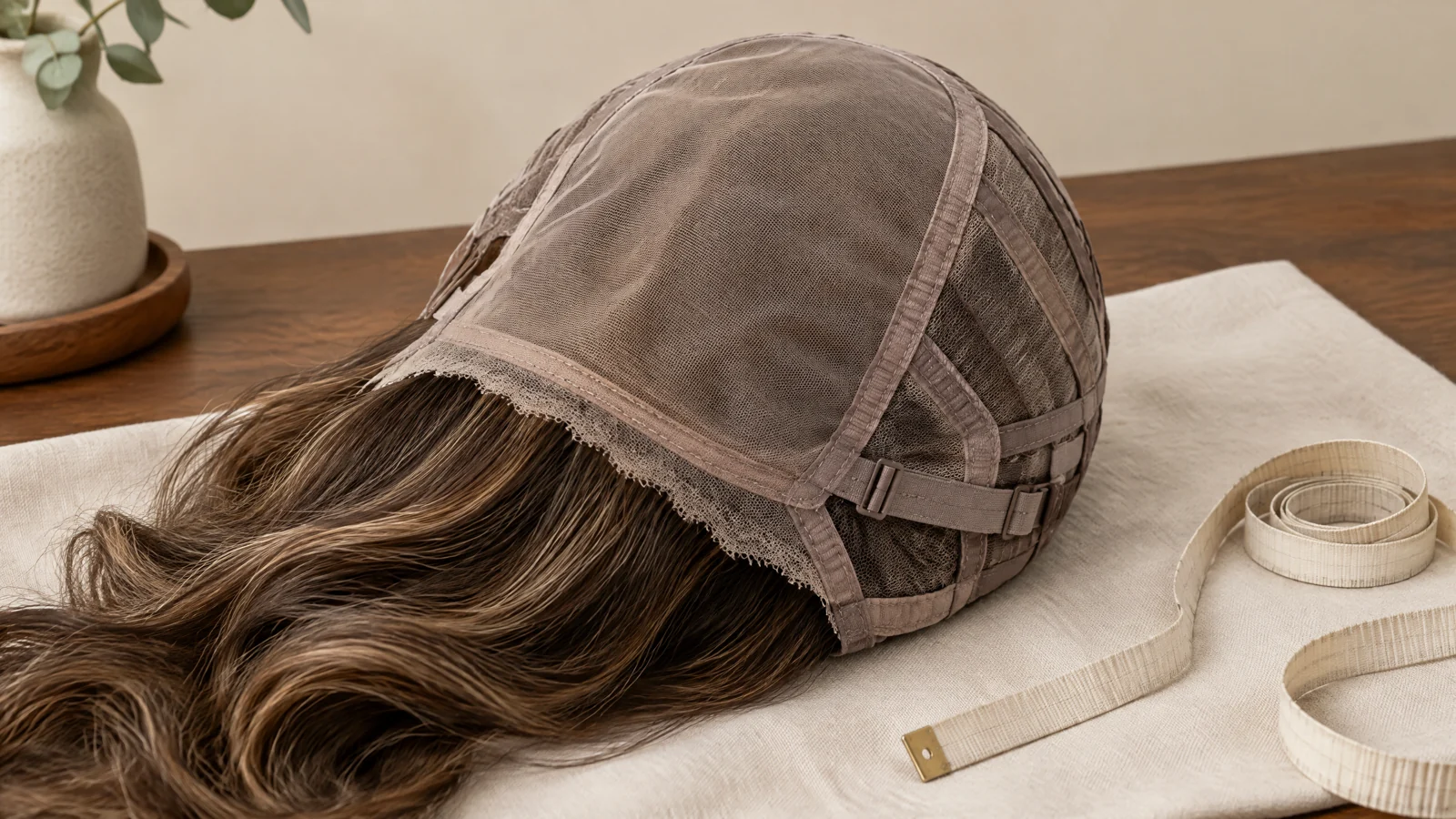
Look at samples before committing to a label. Ask what the material is, how the grey is distributed, under which light comparisons are made, and whether the sample represents an available option or only an illustration. For a custom enquiry, separate measurements and confirmed choices from possibilities still subject to review.
OWNSTRAND’s custom wig consultation and samples guidance and limitations page describes a conversation about silhouette, length, texture, colour, grey preference and measurement. That is a useful checklist for questions, but this article does not claim that Canvas Blend makes wigs or offers a joint service with OWNSTRAND.
If you are also colouring your natural hair, bring the wig or sample for comparison rather than colouring your hair first and asking the wig to chase it. Natural roots grow, shine changes with washing and sun, and a fixed shade can become a moving target. Decide which part of the system is realistically adjustable.
For salon colour questions, you can review grey coverage hair colour and cool versus warm hair colour, then bring your sample to a qualified colour consultation. Those are salon resources, not a guarantee about a wig’s material or a medical condition.
Ask about proportion, placement, parting, material and care before deciding to alter your natural hair.
06
How can you keep the blend stable after the first fitting?
A blend is not a one-time shade match. Natural roots grow and reveal grey again. A wig can change in shine, movement or surface condition through washing, friction, sunlight and styling. Review the look from the same parting and angles you use in daily life rather than relying on a single salon mirror view.
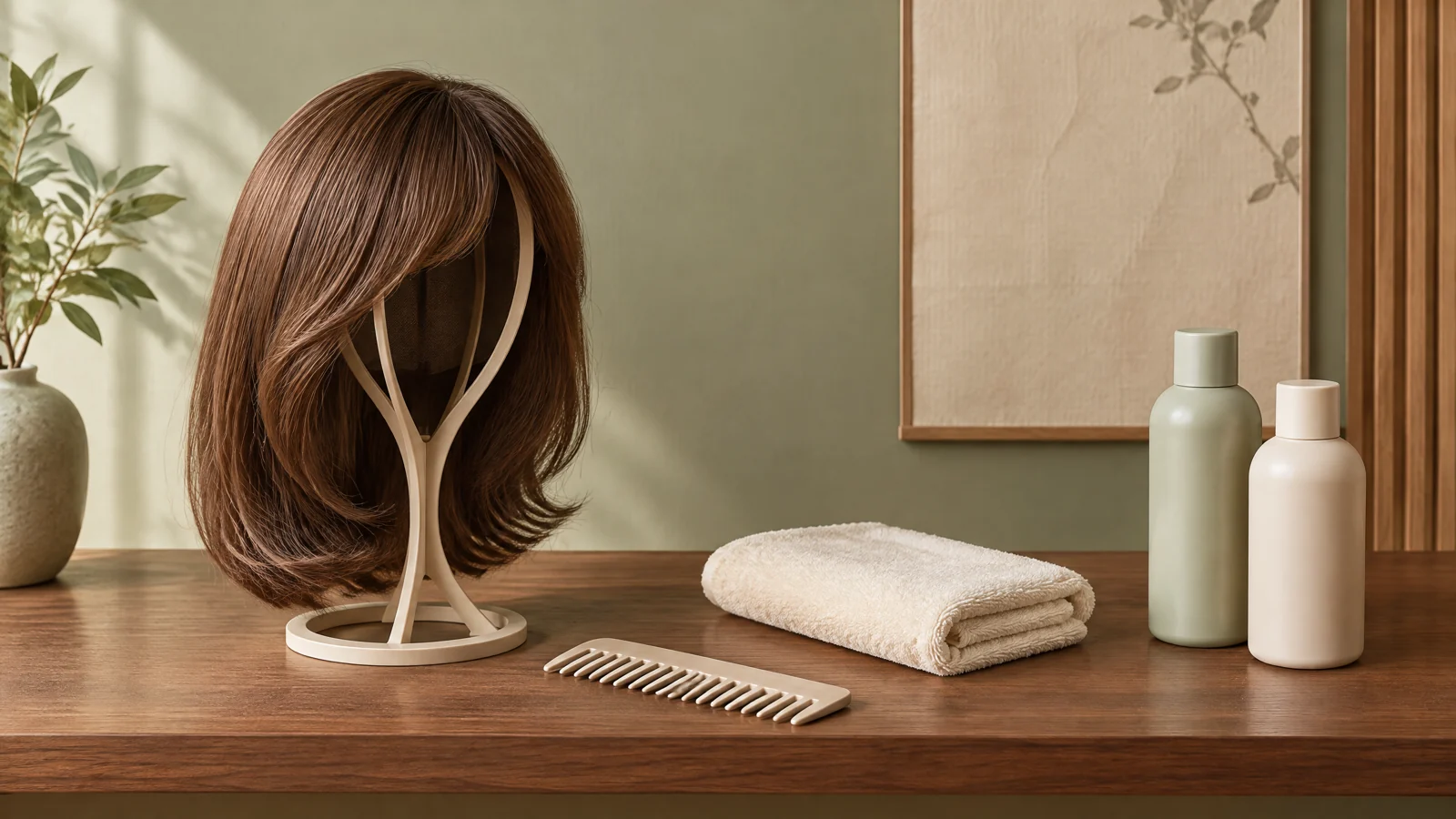
Follow the item’s care instructions first. Do not use high heat on a synthetic piece unless the manufacturer specifically permits it. Do not colour or bleach a human-hair piece simply because it is human hair; confirm the item’s history and suitability, then use an appropriately qualified professional when required.
For natural hair, maintenance can mean adjusting only the most visible roots instead of covering every grey strand each time. A softer transition may come from changing layers or parting rather than repeatedly making the colour darker. The right choice depends on hair condition, previous chemical work and how much upkeep you accept.
Canvas Blend’s touch-up service information and hair-colour fading solutions address salon-colour maintenance, while wig supply and care are separate matters. Tell the salon in advance if you will bring a piece so the scope can be clarified.
Keep a simple photo record of your acceptable range. If silver looks stronger in one picture, first check light, movement, length and surface reflection before changing the proportion. One-variable adjustments prevent unnecessary bleaching or a new order.
Change one variable at a time and compare in the same light, parting and angles.
What else should you know?
Do I need an exact grey percentage?
Not necessarily. A percentage is a starting language, while placement and visibility often determine the result. Describe scattered highlights, balanced salt-and-pepper or silver-led colour, then verify the impression with samples.
Can I dye a wig to exactly match my natural hair?
There is no automatic guarantee. Suitability depends on the item’s material, processing history and supplier instructions. Ask before any chemical service and be prepared to adjust distribution and placement rather than force one shade.
Is a human-hair wig always more natural than a synthetic one?
No. Edge placement, movement, fit, trimming and care matter too. Compare the actual piece beside your everyday parting and in more than one lighting condition instead of judging by material or price alone.
Can I use this method if I have hair loss or a sensitive scalp?
This article covers appearance planning only. Persistent shedding, pain, redness, treatment-related changes or a dye reaction should be discussed with a clinician or dermatologist before choosing attachment or colouring.
What should I bring to a consultation?
Bring photos showing your normal parting, front, sides and crown in more than one light. Note the most visible grey, current length, regular styling and what you want to keep. If you own a piece, bring its material and care label.
How do you turn the choice into a next step?
Build agreement around proportion and placement first, then use samples, lighting, movement and parting to test the direction. You do not have to erase every grey strand, and you do not have to choose a permanent shade at the first conversation.
For natural-hair colour, book a salon consultation with Canvas Blend. For wig or hairpiece samples, measurements and product limits, confirm each point with the relevant supplier. The two discussions can inform one another, but they are not the same service.
If natural-hair colour is also part of your plan, review Canvas Blend colour consultation to organise your hair history, preferred tone and calendar. These Canvas Blend resources address natural hair, not a promise about wig processing or a medical condition. Keep the supplier’s product assessment and the salon’s colour consultation separate.
Sources and editorial notes
- [1] American Academy of Dermatology: Coloring and perming tips for healthier-looking hair
- [2] Cancer Research UK: Wigs, hats and scarves
This AI-assisted Canvas Blend editorial guide is not a first-person case study or an article reviewed by Vit So. OWNSTRAND shares the site owner; links do not imply a joint package or medical certification. Confirm product materials, processing, care, fees and availability with the supplier in writing. Consult qualified healthcare professionals about hair loss or scalp symptoms.
Canvas Blend Editorial / AI-assisted research. This is cosmetic and selection guidance, not medical diagnosis, wig manufacturing or a joint OWNSTRAND service; follow the relevant supplier’s item-specific material and care instructions.