Coverage × Comfort × Personal Choice
How should you compare a removable vs bonded hair system for men by daily responsibility?
瀏覽獨立繁體中文指南 →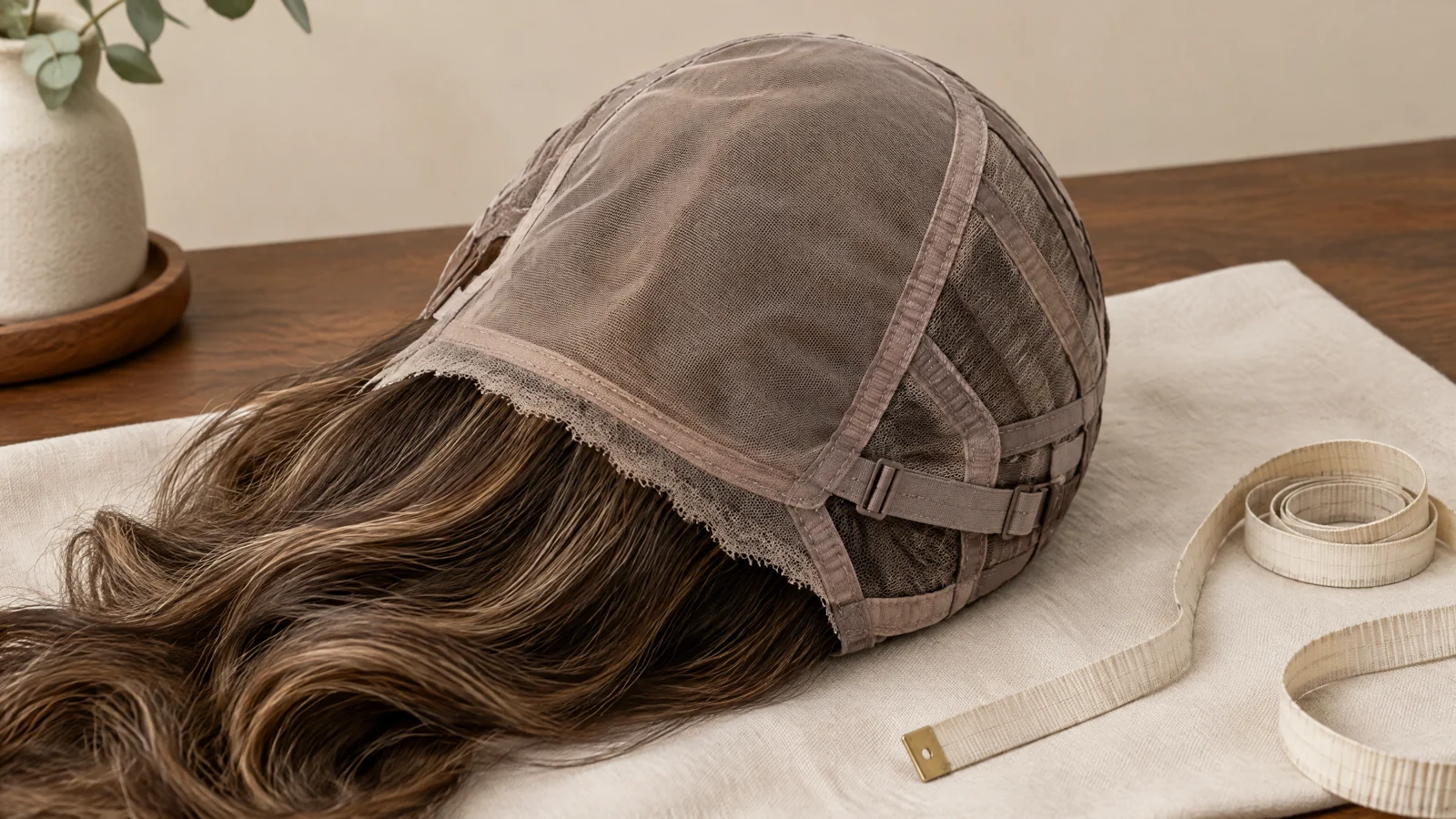
Choose the attachment routine you can realistically manage, after confirming that the exact piece supports it. Compare who handles fitting, removal, cleaning and unexpected problems rather than assuming a stronger-sounding bond is a better purchase.
A hairpiece purchase creates responsibilities after the first fitting. Someone must position the piece, notice a change in comfort, follow its care directions and arrange help when necessary. A removable design may make taking it off part of your grooming; a bonded design requires its specified maintenance and release process. Neither description tells you how much work the particular item will involve.
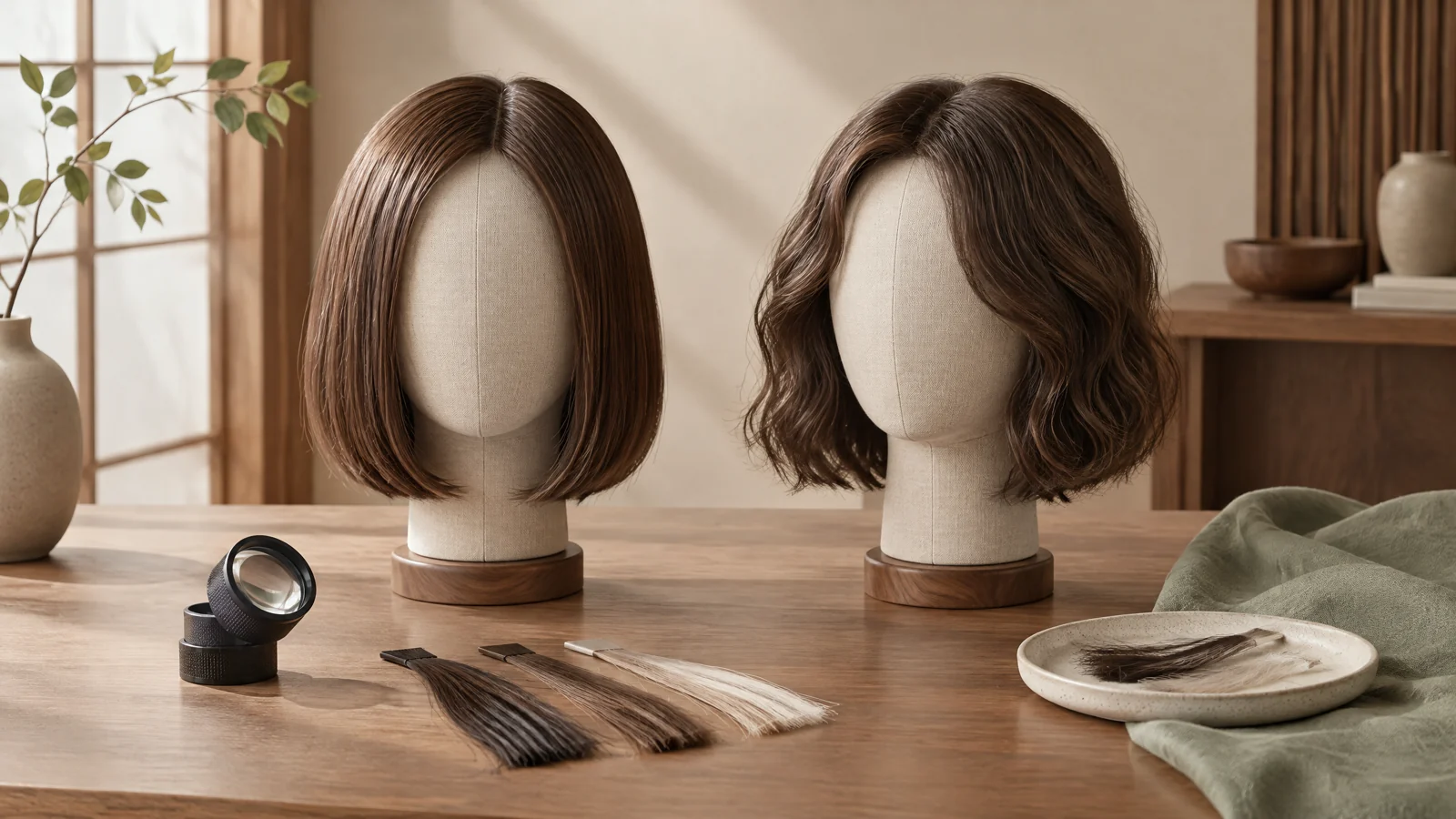
Separate the appearance decision from the routine decision. You may like a hairstyle yet dislike the handling required to maintain it. Use visual references, including the Canvas Blend gallery, to communicate shape and finish, not to infer hairpiece availability or fastening. Then request the actual product instructions and assess whether the proposed routine fits your ordinary week, including the days when you are tired.
This is a Canvas Blend Editorial, AI-assisted buying guide, not independent third-party product testing. Canvas Blend and Ownstrand have the same owner. The comparison below offers a way to organise questions, not an endorsement of a particular attachment product. Its examples are explicitly hypothetical, and neither photographs nor category descriptions can establish that a system, material or installation service is currently available.
From root touch-ups to pre-wedding colour planning, use balayage price Hong Kong as an initial reference and discuss your current hair condition before confirming the service.
01
What responsibilities come with each attachment design?
Begin by asking what holds this exact piece in place. Removable does not necessarily mean clip-on, and clips belong only on a piece whose base is designed to support them. Bonded means using the tape or adhesive specified as compatible with that system. A construction label is not permission to add fasteners, substitute an adhesive or convert the item to a different wearing method.
The Ownstrand guide to a removable vs bonded hair system for men can help frame the attachment enquiry. Use it to ask about the particular piece rather than treating the category as a ready-made maintenance plan. Request the permitted method, the care directions and the removal requirements together; a description of attachment without a clear way to release it leaves a practical question unanswered.
For a removable option, consider the repeated handling you would accept: positioning the piece, checking its intended fasteners and putting it somewhere suitable when off. For a bonded option, ask who performs the specified attachment and release, and what care remains your responsibility between those steps. There is no universal frequency to borrow from another wearer or another product's marketing description.
Also decide who notices problems. If a professional handles maintenance, you still need to know what changes should prompt contact and what to do while waiting. If you expect to manage the piece yourself, ask what instruction or support is available. A practical choice is one with an understood division of work, not simply the fewest visible steps during the first fitting.
| Decision point | Removable design | Bonded design | Evidence to request |
|---|---|---|---|
| Compatible attachment | Use only the fastening the base supports; clips are not universal. | Use only the specified compatible tape or adhesive. | Exact product identification and attachment directions. |
| Hands-on work | Assess positioning, intended fastener handling and storage when off. | Clarify the wearer's tasks and any professional maintenance tasks. | A complete routine with responsibilities assigned. |
| Taking it off | Confirm how the intended fastening is released without forcing it. | Confirm the specified release process and who can provide help. | Removal instructions and a support contact. |
| Comfort concerns | Check fit and intended contact points; easy removal is not proof of comfort. | Check fit and skin-contact products; a bond is not proof of skin suitability. | Product cautions and advice for a change in comfort. |
| Ongoing budget | Account for permitted care supplies, fitting and any repairs. | Account for permitted consumables and any quoted maintenance visits. | Itemised costs with included work stated. |
| Disrupted plans | Decide how you will manage if positioning becomes difficult. | Decide how you will obtain support if planned maintenance cannot happen. | A contingency discussed before purchase. |
02
Which routine can you manage on an ordinary difficult day?
Assess your actual grooming setup instead of an ideal morning. Can you see and reach the relevant areas comfortably? Are small fasteners manageable with your hands? Is there somewhere clean and suitable to store the piece according to its directions? These questions do not disqualify a design automatically, but they reveal whether you need support that has not yet been arranged.
Compare the work as a whole, not only how long it appears to take to put the piece on. A routine that saves a step before work may introduce a less convenient maintenance appointment later. A piece that comes off readily may still demand careful positioning each time you wear it. Ask the supplier to describe the complete routine before judging which option is easier.
Keep care for your own hair separate from care for the system. The Canvas Blend discussion of natural-hair care frequency belongs to a different product and service context; it cannot set a washing schedule for a bonded base or its adhesive. If the routines overlap around exposed hair, request clear guidance about which products and handling are permitted for the exact system.
Consider how you would manage during a disrupted week: an early departure, a late return or an unavailable helper. Do not assume a bond can safely remain in place beyond its directions to avoid an appointment. Equally, do not assume you can leave a removable piece on simply because taking it off is inconvenient. Choose a routine with a workable fallback, not one dependent on perfect scheduling.
03
What should a fitting discussion prove before you commit?
Fit and attachment should be assessed separately. The American Cancer Society notes that wig sizing can vary between brands and recommends checking the relevant size chart and following the supplied fitting directions. [1] This supports checking the actual item, not transferring a full-wig size chart to a partial system. Ask how the coverage outline and intended fastening will be assessed for your selected piece.
Request a fitting discussion that covers more than the front view in a mirror. Ask whether the proposed outline works with the hair you intend to retain, and whether the fastening points can be assessed before purchase. Clarify what can actually be demonstrated or inspected. A sample may help explain a design, but it is not proof that a different size or construction will behave identically.
Bring dated photographs of your own hair and any recent cut or colour notes. The Canvas Blend guide to before-and-after hair records can help organise that reference material. Here, its purpose is to record what remains exposed and what may change with grooming. It is not a recommendation to dye your hair to compensate for an unsuitable system.
Ask what happens if the reviewed fit does not meet the agreed requirements. Which adjustments are possible, who performs them, and what is separately chargeable? If a proposal requires altering your own hair, discuss the extent and consequences before agreeing. Do not treat cutting, adding clips or changing attachment products as casual fixes for an uncertain fit; request a compatible option instead.
Before choosing a new tone, the guide to hair colour salon Sheung Wan can help you consider access from Central, natural daylight, and an appointment time that suits your week.
04
How will you respond to discomfort or a change in your scalp?
Do not translate an attachment label into a skin-safety claim. The American Academy of Dermatology explains that contact dermatitis can occur when skin encounters an irritant or allergen, including on the scalp. Its symptoms can include itching, swelling, tenderness, burning or stinging. [2] That does not diagnose a reaction to a particular hairpiece, but it makes ignoring changing comfort a poor purchasing assumption.
A removable piece is not automatically comfortable simply because it can come off, and a bonded piece is not automatically suitable because it feels secure at first. The AAD also notes that allergic reactions can take time to appear. [2] Describe any known skin concerns and ask about the exact contact materials. Product cautions and clinical advice matter more than a general claim that a design is gentle.
When researching non-surgical hair replacement Hong Kong, remember that the phrase describes a cosmetic appearance option, not hair regrowth or treatment. If there is persistent pain, redness, broken skin or concern about why hair is falling out, seek healthcare advice. Ask the supplier how to obtain appropriate removal support rather than pulling at a bond or improvising with an unrelated solvent.
The Canvas Blend sensitive-scalp colour guide is relevant if you are separately considering colour on your own hair; it is not evidence that an adhesive is safe for you. Keep those assessments distinct. Before buying, establish a support route for discomfort and ask whether professional removal can be arranged if needed, without presuming that the retailer offers that service.
05
Which ongoing responsibilities should appear in the budget?
The purchase amount is only one part of a fair comparison. Ask whether fitting, initial styling, attachment instruction or any follow-up is included for the specific option. Then distinguish supplies you must buy from services you might book. A removable option is not automatically cheaper to maintain, and a bonded option is not automatically an all-inclusive arrangement. Unspecified work should remain an unanswered question, not a zero-cost assumption.
For a men's wig price Hong Kong enquiry, send the exact style reference and request an itemised quotation. Ask for any applicable care supplies and maintenance services to be identified separately. A price for a full wig cannot stand in for a partial system with different specifications, and contacting Ownstrand for information does not place an order or confirm supply.
Budget for care appropriate to the actual fibre and base, not whichever shampoo or heated tool you already own. The American Cancer Society recommends wig-specific care products and cautions against heated tools unless the wig is heat resistant. [1] For your selected system, obtain its own instructions rather than applying a general washing recipe or assuming that all human-hair and synthetic products tolerate the same treatment.
Natural-hair appointments are a separate expense if you choose them. Canvas Blend's pricing page is for its stated salon services, not an Ownstrand hairpiece quotation or a bonded-maintenance tariff. Keep those budgets separate and account for travel or time away from work where relevant. If ongoing frequency remains unconfirmed, request that information before attempting to compare long-term totals; do not invent a wear interval.
06
How might two hypothetical buyers make different choices?
Consider a clearly hypothetical comparison, not a real client account. Buyer A wants crown coverage and strongly prefers removing the piece during his evening grooming. Assume he has enough suitable hair at the proposed attachment points, can comfortably handle the demonstrated fasteners, and is comparing a base explicitly designed for them. Under those assumptions, a removable option deserves closer consideration because its routine matches his preference.
That preference still carries a trade-off. Buyer A must be willing to position the piece again, check the intended fastening and store it properly when off. If the fitting discussion reveals discomfort or insufficient suitability at the proposed points, his preferred routine does not make that product appropriate. He should ask about a different compatible option rather than request clips on a base not designed to support them.
Buyer B, also hypothetical, dislikes repeated positioning and is willing to arrange the professional maintenance required by a particular bonded proposal. Assume the provider confirms compatible products, explains his between-visit duties and can offer a practical removal-support route. A bonded option may fit his priorities, but only if the documented schedule and costs are acceptable. These assumptions do not establish that Ownstrand supplies that arrangement.
Now change one fact: Buyer B cannot reliably attend the proposed maintenance visits and has no agreed alternative support. The apparent advantage of less frequent positioning no longer settles the choice. Likewise, if Buyer A finds the fasteners difficult to manage, removability alone is not enough. This example shows why a buyer's capacity and support arrangements can outweigh a preference formed from attachment strength or a hairstyle photograph.
07
What needs to be confirmed before you pay or alter your own hair?
Create a short written record for each candidate: exact item, coverage, confirmed material and base, permitted attachment, care directions and who handles removal. Add the quoted work and any conditions still unresolved. This lets you compare responsibilities across products instead of relying on memory. If two proposals differ in coverage or included support, acknowledge that difference before treating their prices as competing offers for the same thing.
Ask for specific answers where a description is broad. Does fitting refer only to measurement, or does it include evaluating the wearing arrangement? Does custom refer to the dimensions, hairstyle or another confirmed feature? Which attachment services, if any, are actually offered for your enquiry? A catalogue listing is not stock confirmation, and bespoke language does not establish that every base, material, size or fastening method can be supplied.
If maintaining the surrounding natural hair is part of your plan, discuss that separately through the Canvas Blend booking page and confirm the appointment's scope. Do not assume a natural-hair cut or colour booking includes supplying, bonding or removing a system. Avoid making an irreversible change to your own hair while essential fitting or attachment details remain unclear; establish the proposed service sequence first.
Finally, ask who you contact after purchase, what support costs and how an interrupted routine should be handled within the product directions. Keep the instructions where you can access them, not only in a message thread you may lose. If the seller cannot clarify a responsibility essential to your daily use, pause the purchase. Unresolved support is a reason to seek an answer, not to improvise later.
What else should you know?
Is a bonded hair system always more secure than a removable one?
Neither label establishes security for every wearer. Fit, the actual construction and correct use of the permitted attachment all matter. Compare the exact products and their directions instead of ranking the labels in isolation.
Can I add clips to any hair system?
No. Clips should be used only when the particular piece and its base are designed to support them. Ask for confirmation rather than treating added clips as a way to convert a bonded design.
How often should a bonded system be removed?
Use the schedule and removal requirements for the exact system and compatible attachment product. There is no universal interval established by the word bonded. Clarify who performs the work and how support is arranged before buying.
Does buying a bonded system include professional maintenance?
Not necessarily. Ask which services are offered for the specific enquiry and whether attachment, removal, follow-up and supplies are included or separately charged. A product category or quotation alone does not confirm all those services.
What if wearing the piece causes pain or a rash?
Do not dismiss persistent discomfort. Seek healthcare advice for pain, redness, broken skin or ongoing symptoms, and contact the supplier about the specified removal process and appropriate support. Do not pull at a bond or improvise with an unrelated solvent.
Can Canvas Blend handle the hairpiece and my own hair in one appointment?
Do not assume so. Confirm Canvas Blend's natural-hair appointment scope separately from any Ownstrand product or attachment enquiry. Shared ownership does not establish a joint package or installation service.
What is the practical next step?
Take one removable candidate and one bonded candidate, then request the same responsibility record for each. Compare the whole routine against your handling ability, skin concerns, available support and budget. The better option is not the one with the most reassuring attachment adjective; it is the confirmed design whose care and release requirements you understand and can realistically meet.
Before proceeding, resolve the essential unknowns: compatibility, fitting assessment, removal support and the work included in the quotation. Leave supply and service availability open until directly confirmed. If those answers are incomplete, postpone payment or changes to your own hair. A clear plan for an ordinary difficult day is more useful than an attractive first impression without an understood maintenance arrangement.
When looking up hair salon Central, check the location details and choose a consultation time that lets you compare tones in natural daylight before or after work.
Sources and editorial notes
- [1] American Cancer Society — Wigs for Hair Loss
- [2] American Academy of Dermatology — Contact dermatitis signs and symptoms
This AI-assisted Canvas Blend guide is not a real-client case study or an article reviewed by Vit So. OWNSTRAND and Canvas Blend share ownership; links are not independent third-party endorsements. Confirm wig, hairpiece and natural-hair services, fees and appointments separately. Materials, stock and handling limits depend on the actual product. Appearance coverage does not replace medical assessment of hair loss or scalp concerns.
Canvas Blend Editorial — AI-assisted guide, prepared for 2026-11-06. Canvas Blend and Ownstrand share the same owner, so this is not an independent third-party recommendation. No first-hand product testing or real customer cases are claimed; both buying examples are hypothetical. Vit So is not credited as author or reviewer. General sources do not verify a particular product's compatibility, stock, installation services or medical suitability. Natural-hair salon services and Ownstrand product enquiries must be confirmed separately.
Continue reading
Wig SelectionWhat evidence should you request before buying human hair wigs?
Build a buying brief that separates human hair and Remy claims from verified specifications, care limits, fit and purchase terms, with a hypothetical comparison.
Wig SelectionWhen do synthetic wigs save money by keeping the factory style?
Compare the cost of a ready-shaped synthetic wig with styling flexibility, cap comfort and care needs, using a clearly hypothetical shopping decision.
Wig SelectionHow do you choose custom vs ready-made wigs without over-specifying?
Decide which wig requirements need making to order, which an existing design can meet, and what to confirm before committing, with a practical comparison and hypothetical example.