Coverage × Comfort × Personal Choice
How can you choose chemotherapy wigs at your own pace?
瀏覽獨立繁體中文指南 →
Start with whether you want a wig at all, then compare the actual cap, fit and care burden in a consultation you can pause. You do not need to decide immediately, and scalp symptoms or treatment questions belong with your healthcare team rather than a wig seller.
A wig decision during chemotherapy can arrive alongside appointments, unfamiliar routines and other people's opinions. The practical aim is not to complete a purchase as quickly as possible. It is to find an appearance option that you want to use, with a wearing and care routine that feels manageable. Choosing nothing today is also a valid outcome.
Separate three decisions that are often bundled together: gathering information, trying an option and committing money. You can ask about a cap without agreeing to wear it, view a sample without approving an order, or request a quotation without accepting it. This separation gives you room to notice comfort and preferences instead of treating every conversation as a deadline.
This guide focuses on adults making appearance choices at their own pace. It does not predict whether or when treatment will cause hair loss, recommend a medical intervention, or establish that a particular material suits your scalp. The useful questions are smaller: what matters today, what remains uncertain, and what needs confirming before the next step?
If you are planning a change of colour, learn about hair colour Hong Kong before your consultation and consider the techniques, tones and upkeep that suit your routine.
01
What does choosing at your own pace actually mean?
Macmillan explicitly says there is no pressure to choose a wig straight away and that you can wait until you feel ready. It also describes taking a friend or family member as an option, not a requirement. [2] Turn that into a practical boundary: tell the seller whether this conversation is for information, sample comparison or a possible purchase, and ask what each stage involves.
You might want to gather references before treatment, or you might prefer not to think about hair until later. Neither preference determines a clinical timetable. Ask your healthcare team about expected hair changes for your treatment, then plan shopping around the information and energy you have. A retailer's production schedule should never be interpreted as a reason to alter treatment or rush a decision.
When browsing chemotherapy wigs, treat the category as a route to appearance questions, not a medical specification. Your starting point might be familiar coverage for occasional outings, a different silhouette, or a comparison with a scarf. The label does not establish softness, cooling, skin compatibility or suitability for every stage of treatment; those questions require more specific answers.
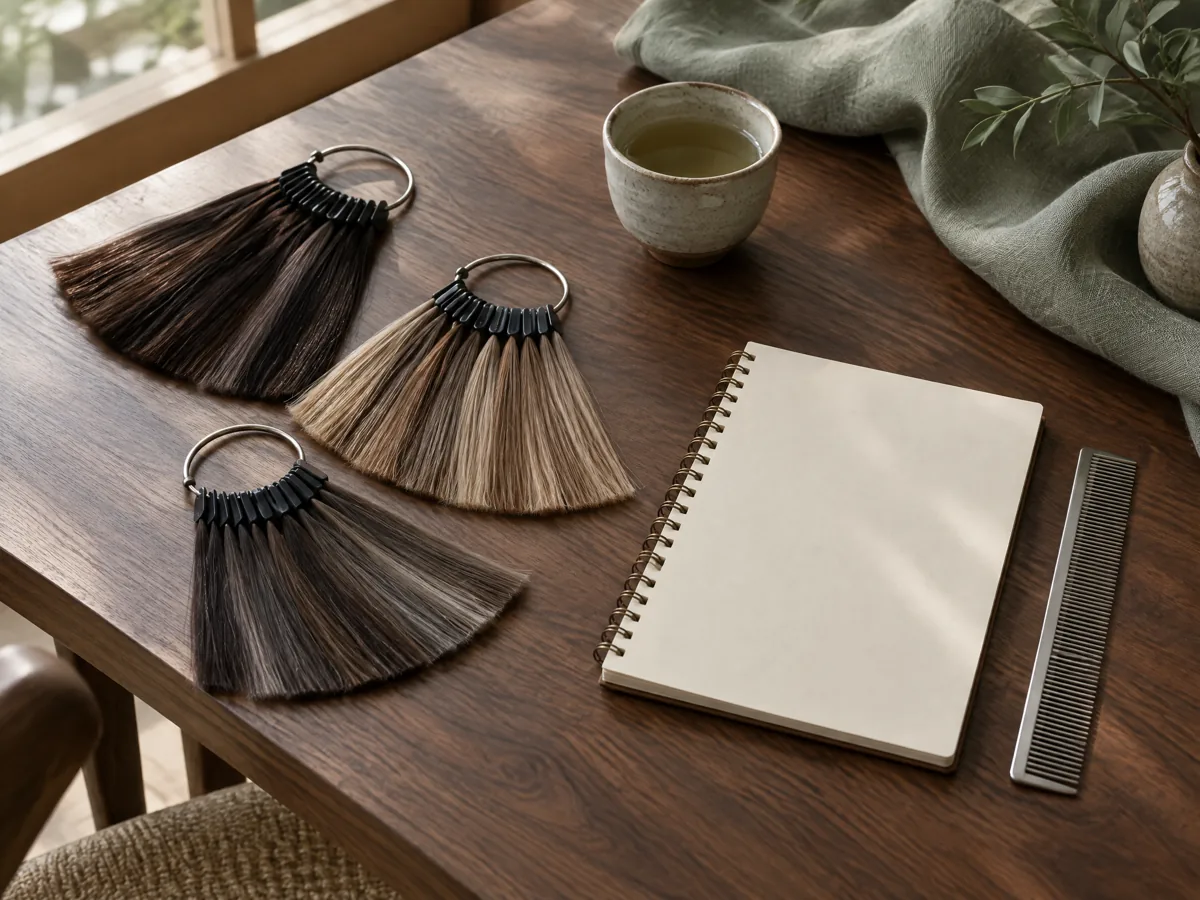
If a familiar look matters, one photograph and a few written observations may be enough. Record your usual parting, the volume you recognise and a colour family, rather than building a perfect reference collection. Canvas Blend's cut-and-colour photo documentation tips can help you organise existing natural-hair references. They are not a recommendation to book colouring or change your hair before choosing a wig.
02
Which comfort concerns should make you pause rather than buy?
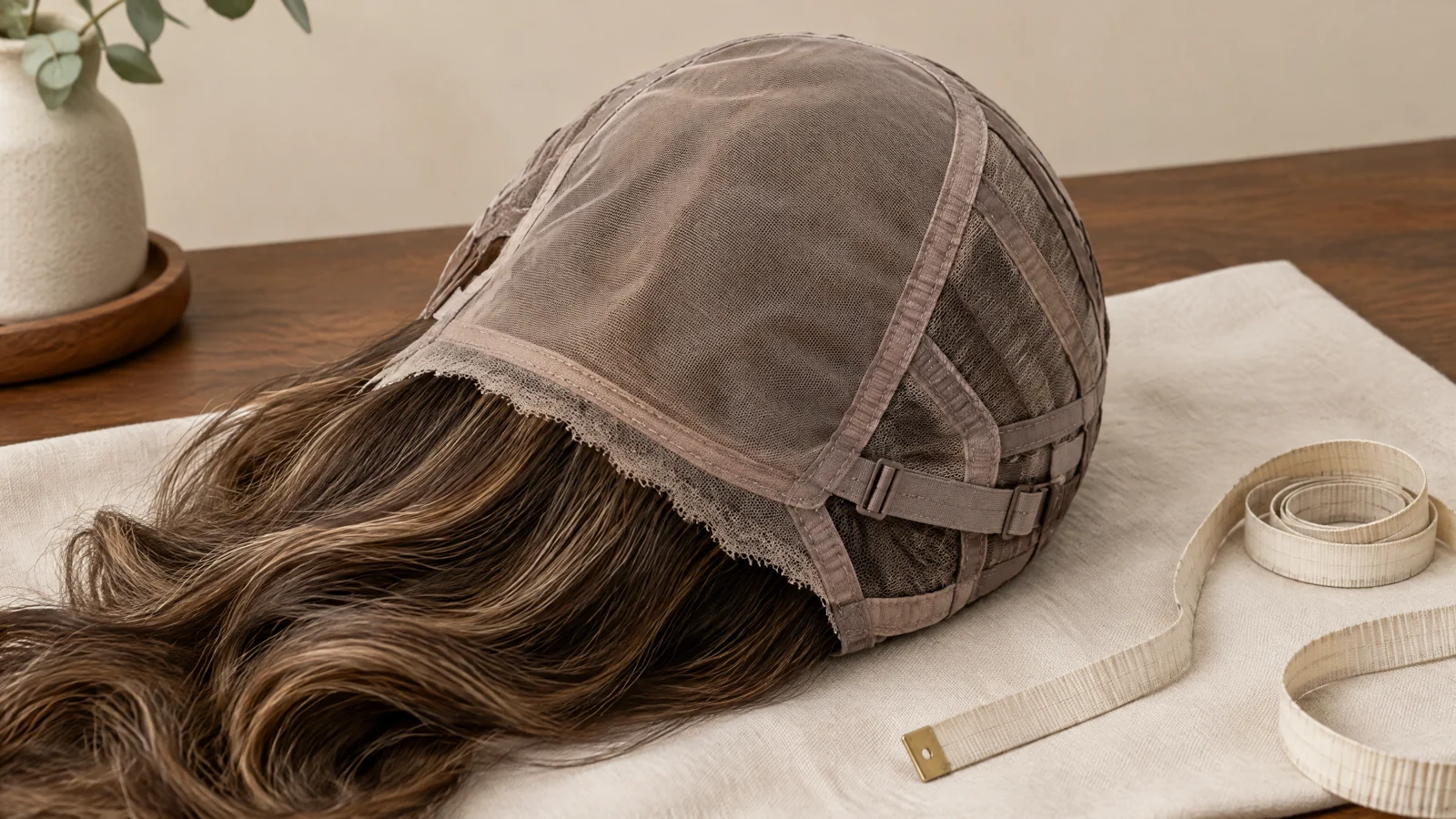
Comfort is not one property printed on a label. A cap can feel acceptable at the crown but catch near an ear, while an extra layer may soften contact yet change how securely it sits. Macmillan notes that wig lining can irritate the scalp and that a thin cotton liner may help, but can also make a wig move more. [2] Compare the actual combination rather than assuming an accessory solves everything.
Describe contact sensations plainly during a fitting: pressure at the temples, an edge rubbing, or a fastening that you can feel. Ask the fitter to explain what can be adjusted and what is inherent to the design. Do not accept discomfort as proof that the wig is secure. If a comfortable fit depends on tolerating an unwanted pressure point, keep the decision open instead of paying first and hoping it settles.
Persistent pain, redness, broken skin or concern about the cause of hair loss needs healthcare advice. A seller can describe a cap or fastening but cannot diagnose symptoms or certify medical suitability. If sensitivity also affects plans for natural-hair services, Canvas Blend's sensitive-scalp colour guide is a separate service-boundary discussion, not permission to proceed with chemicals during treatment and not treatment for hair loss.
Ask which components will touch your scalp and whether the proposed wearing arrangement uses clips, bands or another fastening. Do not assume remaining hair can support every attachment, or that a claim of being glue-free settles comfort. If adhesive is proposed, discuss skin-related concerns with your healthcare team and request product-specific professional guidance. This guide does not provide adhesive application instructions or presume that installation is offered.

03
What should a useful fit comparison include without becoming exhausting?
Start with one or two relevant options, not an entire catalogue. Ask what each sample demonstrates: cap contact, silhouette, colour or a construction feature. If it is a different size from the item being quoted, its feel cannot settle your final fit. A sample can still answer a narrow question, provided both you and the seller are clear about what remains untested.
The American Cancer Society advises checking the maker's sizing because size charts vary between brands. It also highlights adjustable fit when hair volume changes. [1] Ask how the particular cap adjusts and how fit could be reassessed later, rather than copying a generic chart or assuming an average size transfers between makers. A made-to-measure description does not eliminate the need to inspect the completed piece.
If a try-on is confirmed and you feel able, compare how the cap sits near your ears and nape, then check it with the glasses or other items you usually wear. Ask whether ordinary head movements change its position. This is a practical observation, not a stress test or a guarantee of security in every activity. Stop when you have enough information or when the session feels tiring.
Use a short note to separate what you observed from what someone explained. For example, write that the sample felt comfortable while seated, but that the requested size and later adjustment terms are unconfirmed. A brief fitting cannot establish all-day comfort. The comparison below helps identify which questions can be answered today and which should remain conditions of any eventual purchase.
When looking up hair salon Central, check the location details and choose a consultation time that lets you compare tones in natural daylight before or after work.
| Next step | Useful information it can provide | Trade-off or limit | Question before proceeding |
|---|---|---|---|
| Information-only enquiry | Specifications, sample arrangements and written terms | Cannot establish how the cap feels on your head | Can I receive the details without placing an order? |
| Limited sample comparison | Contact points and a clearer sense of the preferred outline | A sample may differ from the final size, shade or construction | What does this sample represent, and may I pause? |
| Requesting a custom quotation | Proposed measurements, design and service scope | Production commitments may reduce later flexibility | What becomes non-refundable, and at which stage? |
| Deferring the wig decision | Time to clarify preferences or ask the healthcare team about symptoms | A later enquiry still needs supply and appointment confirmation | What information can I keep for when I am ready? |
04
How can you compare appearance without creating more daily work?
Choose an appearance priority that matters to you, then ask what maintaining it involves. A familiar fringe may matter more than a perfectly replicated shade; a stable ready-styled outline may matter more than changing the part each morning. Macmillan describes synthetic wigs as generally easy to look after and human-hair wigs as potentially needing regular professional cleaning and styling. [2] These are broad comparisons, not promises about every product.
If full-head coverage is the direction you want, women's wigs is a catalogue route, not a prescription for your identity or needs. Compare the exact fibre and cap rather than assuming all designs in the category behave alike. A style illustration does not confirm the requested colour, size or supply, and the word women's tells you nothing reliable about pressure or skin contact.
Ask for care instructions before committing: which products are needed, how the piece is dried, and whether professional upkeep is expected. Heat-friendly wording is not a universal temperature allowance. Human hair also does not automatically permit colouring, bleaching or any heat setting. The actual manufacturer's instructions and the confirmed service scope should govern the decision, especially if you want a routine with fewer tasks.
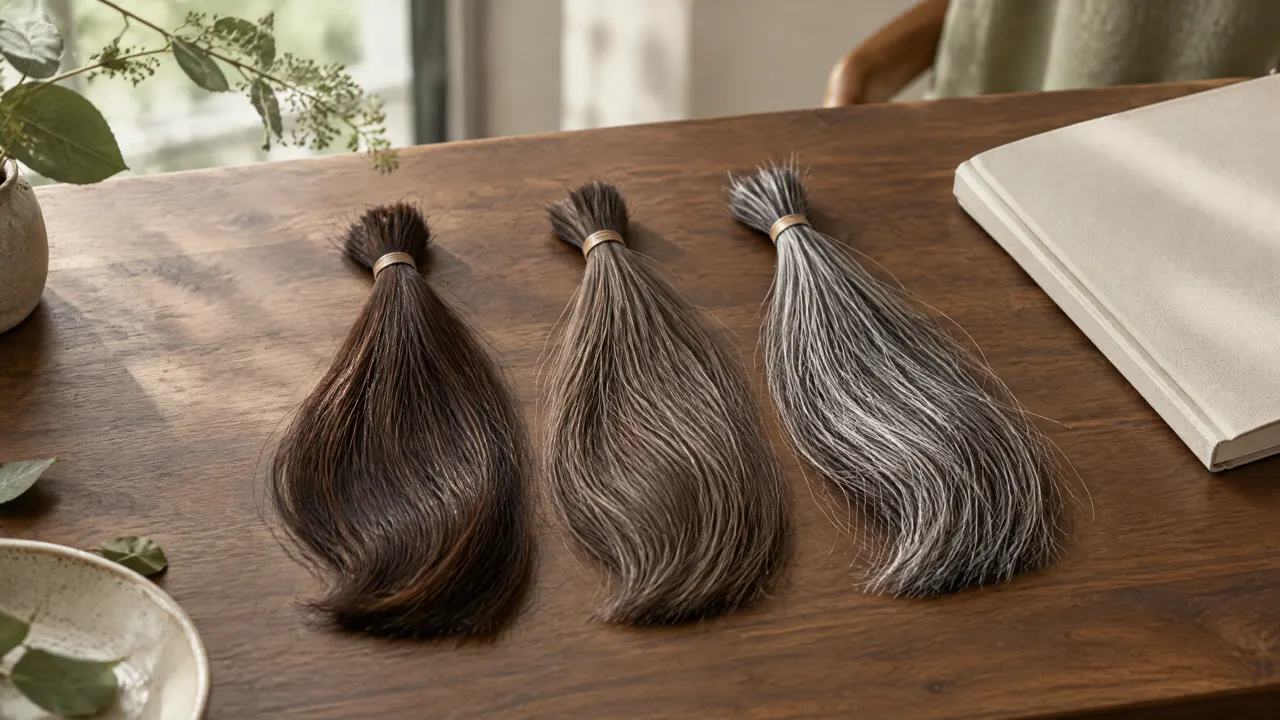
For visual discussion, keep references simple and separate them from promises. Canvas Blend's hair-colour gallery can help describe a broad tone or face-framing preference, but salon colour work is not evidence of wig construction or a guaranteed wig result. The American Cancer Society recommends natural-light comparison for colour references. [1] You can request that kind of comparison without changing or dyeing your remaining hair.
05
How would a low-energy shopping scenario change the shortlist?
Consider this explicitly hypothetical example, not a customer story. An adult wants a familiar bob for occasional appointments, has limited energy for styling and is unsure how much scalp contact will feel comfortable. Assume no product has been confirmed available and no medical suitability assessment has been made. The task is to choose a next step, not to identify a universally best wig.
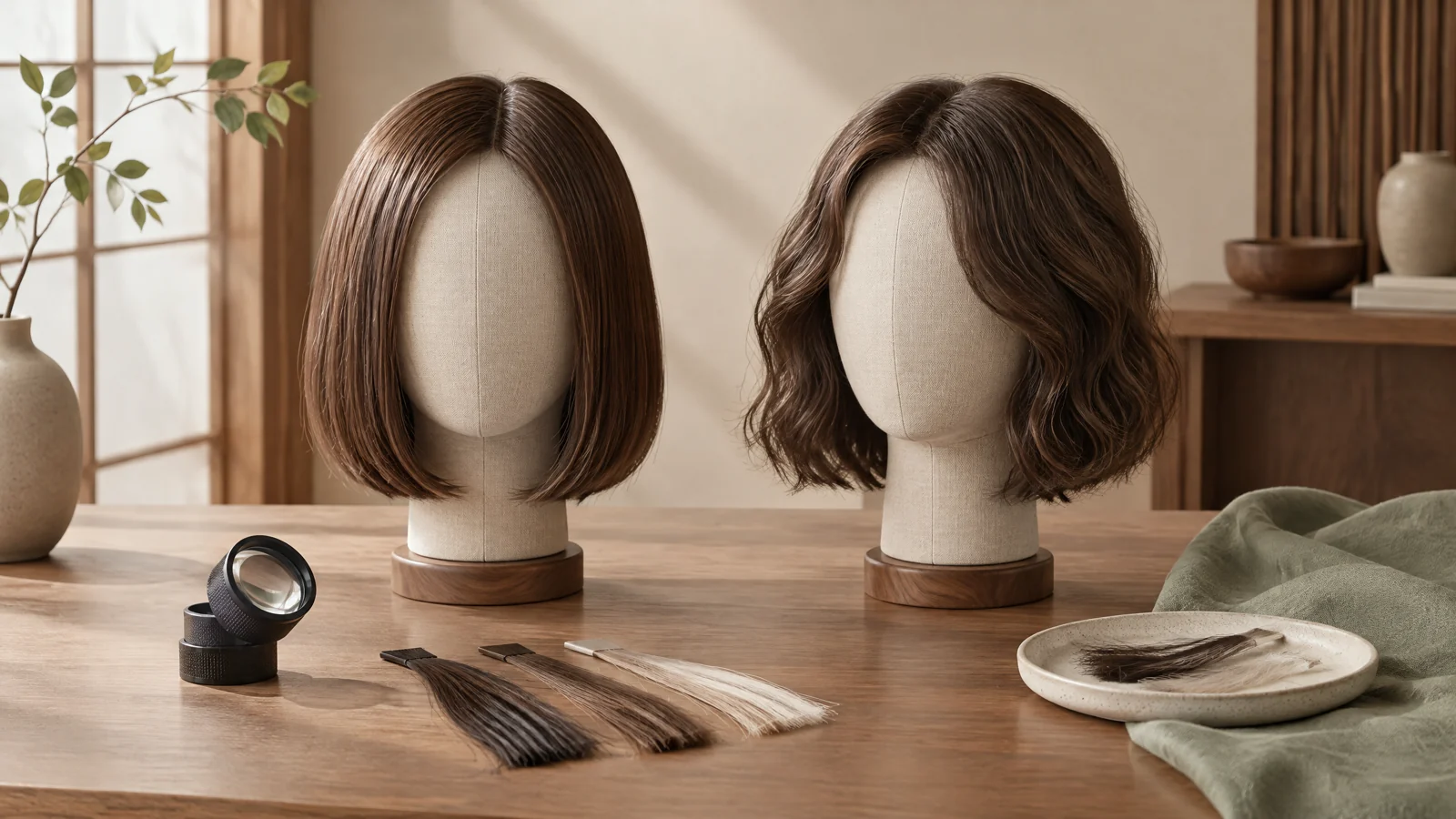
Option A is an existing synthetic bob whose written care routine appears manageable. Option B is a custom human-hair bob that could allow a more specific silhouette discussion. On paper, A addresses the daily-work priority and B addresses the outline priority. Neither wins yet: A's actual cap contact is unknown, while B's upkeep, quotation terms and fitting arrangements still need explanation.
Suppose a confirmed sample of A feels acceptable at first but rubs near one ear. The sensible response is to ask whether that contact can be corrected in the exact size, not to conclude that all synthetic wigs are uncomfortable. If B's sample feels better, ask whether it represents the quoted construction and whether its upkeep is realistic. Better sample comfort is relevant evidence, but not a guarantee about the finished order.
The person could leave with two written descriptions and postpone payment. Alternatively, they might choose A only after fit and terms are clarified, accepting less styling flexibility for a simpler routine. They might choose B if the appearance benefit justifies confirmed upkeep. They could also defer both and use headwear they already prefer. Each outcome respects the priorities; none requires the buyer to tolerate discomfort or prove readiness.
06
What should you confirm before arranging a Kwun Tong appointment?
State the purpose of the visit before asking for a time. You might want information without a try-on, a brief comparison of relevant samples, or discussion of measurements for a custom piece. Ask what is feasible for that enquiry, including whether a shorter session, a companion or a pause can be accommodated. These are requests to confirm, not facilities or appointment conditions this guide can promise.
For a custom wig consultation Hong Kong enquiry, explain the silhouette and practical limits that matter most. OWNSTRAND's verified page describes private custom human-hair discussions, possible sample viewing and measurement questions. It also says arrangements vary. Confirm which samples, if any, can be viewed before travelling; a consultation request does not reserve a style, establish stock or automatically place an order.
OWNSTRAND's confirmed location is Unit 2103, 50 Hoi Yuen Road, Kwun Tong, Hong Kong, in 利寶時中心. Regional service pages should not be treated as branch addresses. Ask the business directly to confirm visit details and any access arrangements you need. Do not assume a walk-in fitting, a particular waiting environment or same-day collection simply because a location and a catalogue are published.
Keep the wig enquiry separate from Canvas Blend natural-hair services. The businesses share an owner, but that does not mean Canvas Blend supplies a selected wig, performs adhesive installation or offers a combined package. Canvas Blend's about page provides the salon's own context. If you also want to discuss remaining-hair trimming, ask separately whether that service is appropriate and available; it is not automatically part of a wig appointment.
- May this visit remain information-only, and is there any consultation charge?
- Which sample, size and construction can actually be viewed?
- Can I bring a companion or pause the comparison if needed?
- What does the quotation include, and what requires a separate charge?
- When would a deposit or production approval become binding?
- What changes, cancellations or later fit checks are permitted in writing?
07
When is it sensible to decide, defer or walk away?
A decision becomes more defensible when the exact item and service are identifiable, the fit questions have usable answers, and the care burden matches your routine. It does not require eliminating every uncertainty. It does require knowing which uncertainties you are accepting. If an important answer still rests on a sample that differs from the quoted piece, request clarification before treating the comparison as complete.
Ask about returns and exchanges before paying. The American Cancer Society warns that retailers may charge restocking fees or refuse returns. [1] This is a reason to read the particular seller's written terms, not a claim about OWNSTRAND's policy. Clarify separately what happens to a custom order after measurements or production approval, and whether any proposed cutting or alteration changes the options for cancellation or exchange.
Deferring is sensible when symptoms need clinical advice, the fitting feels tiring, or the seller cannot yet confirm a critical specification. Walking away may be sensible if the only available option conflicts with your comfort or care limits. You can express that without defending your medical history. A catalogue description, emotional encouragement or more expensive material cannot substitute for the missing information that matters to you.
If you choose a wig, ask for the exact product details, written care guidance and confirmed follow-up arrangements to keep together. Macmillan suggests that wearing a wig first at home or with familiar people can help you get used to it. [2] That is optional, not a wearing schedule. You may prefer occasional use, another form of headwear or no covering, and you can reconsider your preferences later.
What else should you know?
Do I have to buy a wig before chemotherapy starts?
No. Planning ahead can be useful if you want a familiar reference, but you can wait until you feel ready. Ask your healthcare team about treatment-related hair changes and keep that advice separate from a seller's supply timetable.
Does a chemotherapy label mean the cap will suit a sensitive scalp?
No. The label does not establish the feel of the lining, fastening or fit. Compare the actual construction, and seek healthcare advice for persistent pain, redness, broken skin or other concerning symptoms.
Should I add a liner if a sample feels uncomfortable?
Ask whether a liner is compatible with that design and compare how the combination sits. A liner may change both contact and movement, so it is not an automatic fix. Do not use an accessory to mask persistent symptoms that need clinical advice.
Is custom human hair automatically the gentlest choice?
No. Fibre, cap contact, fit and upkeep are separate questions. Custom measurement or human hair does not by itself guarantee comfort or medical suitability; ask what the actual sample and completed design can establish.
Does asking for a quotation reserve a catalogue wig?
Not automatically. Confirm the exact style, colour, size, supply and ordering terms with the seller. An enquiry or sample visit should not be treated as a confirmed order or stock reservation.
Can Canvas Blend's booking cover a wig fitting too?
Do not assume that. Canvas Blend natural-hair services and an OWNSTRAND wig enquiry need separate confirmation, despite the shared owner. No combined package, wig supply or adhesive installation is promised here.
What is the practical next step?
For your next enquiry, choose one appearance priority, one comfort concern and one practical limit. Ask what can be confirmed now, then keep the answer with the quotation and care information. If the visit cannot answer what matters, postponing is more useful than converting uncertainty into a purchase. Your pace is part of the decision, not an obstacle to completing it.
If you separately want help discussing your remaining natural hair, use Canvas Blend's booking page to enquire about that service's scope rather than assuming it books a wig consultation. Direct wig arrangements to the wig business and medical concerns to your healthcare team. Those separate conversations let you seek the right information without committing to unnecessary services.
For hair that looks dry, frizzy, or prone to breakage in a photo, read about damaged hair treatment Hong Kong to help frame questions for a colour-care consultation.
Sources and editorial notes
- [1] American Cancer Society — Wigs for Hair Loss
- [2] Macmillan Cancer Support — Wigs for cancer treatment
This AI-assisted Canvas Blend guide is not a real-client case study or an article reviewed by Vit So. OWNSTRAND and Canvas Blend share ownership; links are not independent third-party endorsements. Confirm wig, hairpiece and natural-hair services, fees and appointments separately. Materials, stock and handling limits depend on the actual product. Appearance coverage does not replace medical assessment of hair loss or scalp concerns.
Canvas Blend Editorial — AI-assisted guide, prepared using the supplied verified business-page information and the cited public sources, accessed 2026-11-06. OWNSTRAND and Canvas Blend share the same owner, so this is not an independent third-party recommendation. It is appearance-focused editorial guidance, not medical advice; no medical hair-growth benefit is claimed. No customer testing, individual suitability assessment, live stock check or appointment confirmation was performed. The shopping example is explicitly hypothetical. This guide is not attributed to Vit So and does not claim his review. Canvas Blend wig supply, adhesive installation and combined service packages are not implied.
Continue reading
 Wig Selection
How should you describe coverage before comparing men's wigs?
Compare men's full wigs, toupees and hair systems by the area covered, the natural hair left visible and the product details a seller must confirm.
Wig SelectionHow should you choose a men's hairpiece for work and compare crown-coverage quotes?
Compare crown hairpiece footprints, workday fitting checks and itemised quote conditions before committing, with a hypothetical office-wear decision example.
Wig SelectionHow can a custom men's hair system enquiry preserve your options?
Plan a custom hair-system enquiry around reversible choices, written permissions and cosmetic limits. Compare wearing commitments before changing your own hair or approving production.