Shape × Colour × Personal Choice
Should you choose grey coverage or a softer regrowth plan?
瀏覽獨立繁體中文指南 →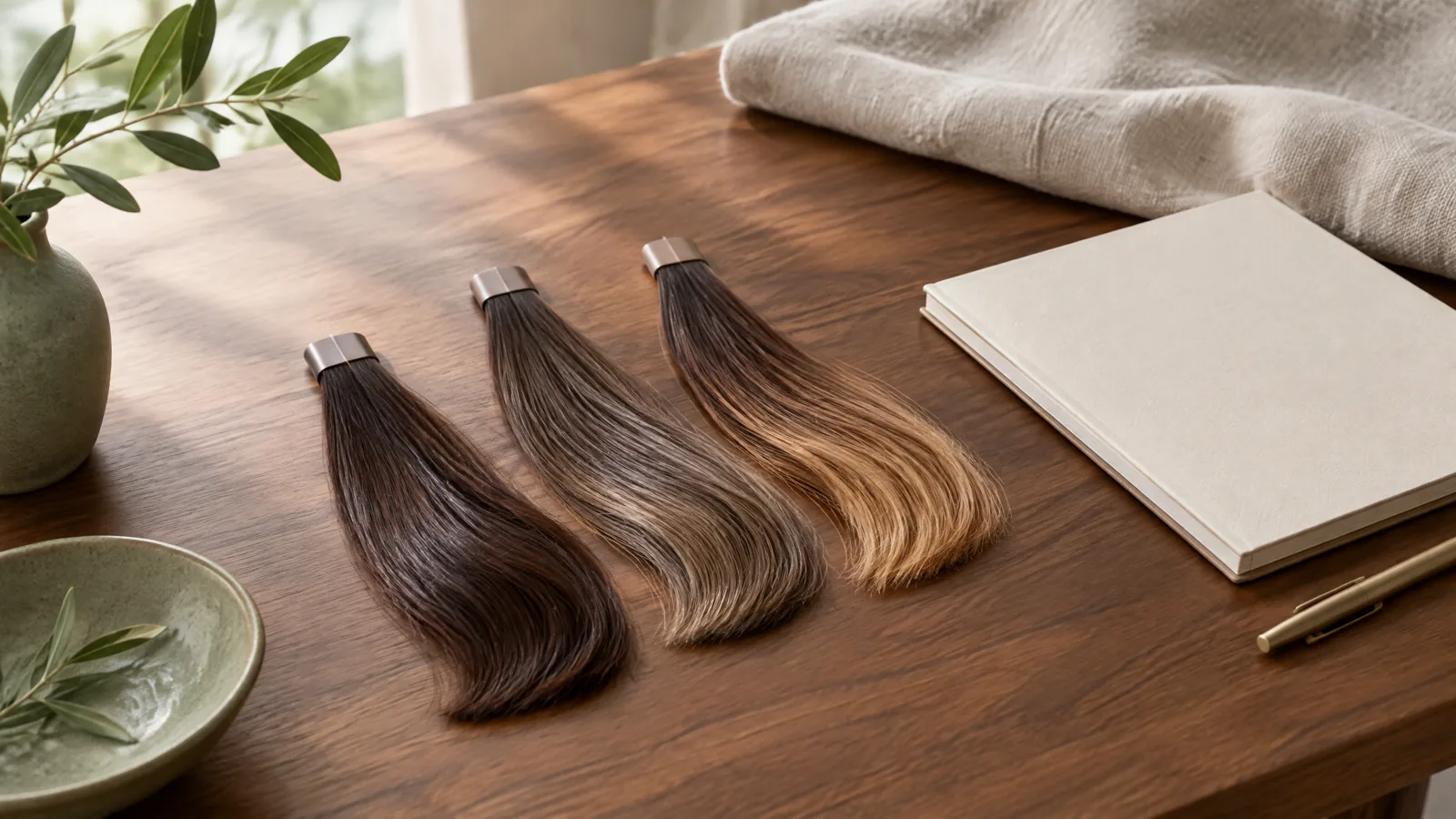
Choose coverage when your priority is a more uniform colour; choose blending when you want some natural white strands to remain visible within a deliberately varied finish. Decide what you can comfortably wear as new growth appears, then agree which roots and previously coloured areas actually need work.
The useful question is not whether grey hair should be hidden. It is whether you prefer a consistent dark appearance, a softer mixture of dark and light strands, or your natural silver with no further colouring. Each is a legitimate choice. A successful brief connects that preference to your actual hairline, the colour already on your lengths and the amount of contrast you are willing to see between appointments.
Two people with visibly similar white strands can want very different results. One may dislike a bright line beside the face but enjoy silver underneath; another may want the parting to look evenly brown in a tied-back style. Start with those observable priorities rather than asking for a fashionable technique. The same service name does not establish a formula, a guaranteed coverage level or a return interval.
If you prefer a softer change, discuss ombre hair colour Hong Kong alongside hand-painted highlights or a lower-contrast gradient, so the placement reflects your existing colour and everyday styling.
01
Do you want to hide white strands or make them less isolated?
Coverage and blending describe visual goals before they describe salon processes. Coverage seeks greater consistency between naturally white strands and the surrounding coloured hair. Blending lets some lighter strands remain part of the appearance, with their placement and contrast considered alongside the darker hair. Neither term tells you exactly what products will be used. Ask the colourist to explain the proposed result in the areas you actually notice.
Vit So's grey coverage page frames the choice around the temples, hairline and parting, rather than promising a fixed percentage of concealment. That is useful preparation for an enquiry: describe which strands you want darker and which can stay visible. Treat the page as information from the related service provider, not as independent evidence that a particular result is achievable on your hair.
The trade-off is often the appearance of the next untreated growth. If white roots sit beside a very uniform dark colour, the boundary may be conspicuous to you. A varied design may make that difference feel less abrupt, but it cannot stop new hair growing in its natural colour. Even coverage that initially looks consistent does not remove the need to decide how much contrast you will tolerate later.
Do not select blending only because someone calls it lower maintenance. If you want every white strand hidden, a deliberately translucent or varied result could disappoint you. Conversely, choosing maximum darkness while hoping to avoid a visible root boundary can set conflicting goals. Use the Canvas Blend grey-hair colour guide to organise the enquiry, then choose the appearance you would still accept after the freshly styled finish has passed.
| Option | Best-fitting priority | Regrowth question | Important limitation |
|---|---|---|---|
| More consistent coverage | White strands should read closer to the surrounding colour | How much untreated white beside dark colour will I accept? | The desired uniformity and achievable result need assessment |
| A blended finish | Some natural white should remain visible but look intentional | Will the new growth sit comfortably beside the planned pattern? | Blending can still need root, tone or placement upkeep |
| Preserving a natural streak | A specific silver area must remain recognisable | Where must colour stop as the streak grows? | Its boundary must be discussed before application |
| Growing out previous colour | Move towards natural hair without repeatedly hiding new white | Can I accept the existing boundary while old colour remains? | Changing the lengths may require separate work; waiting is also an option |
The deciding preference is whether visible white is unwanted, welcome or welcome only in certain places.
02
Which areas of your hair actually need to change?
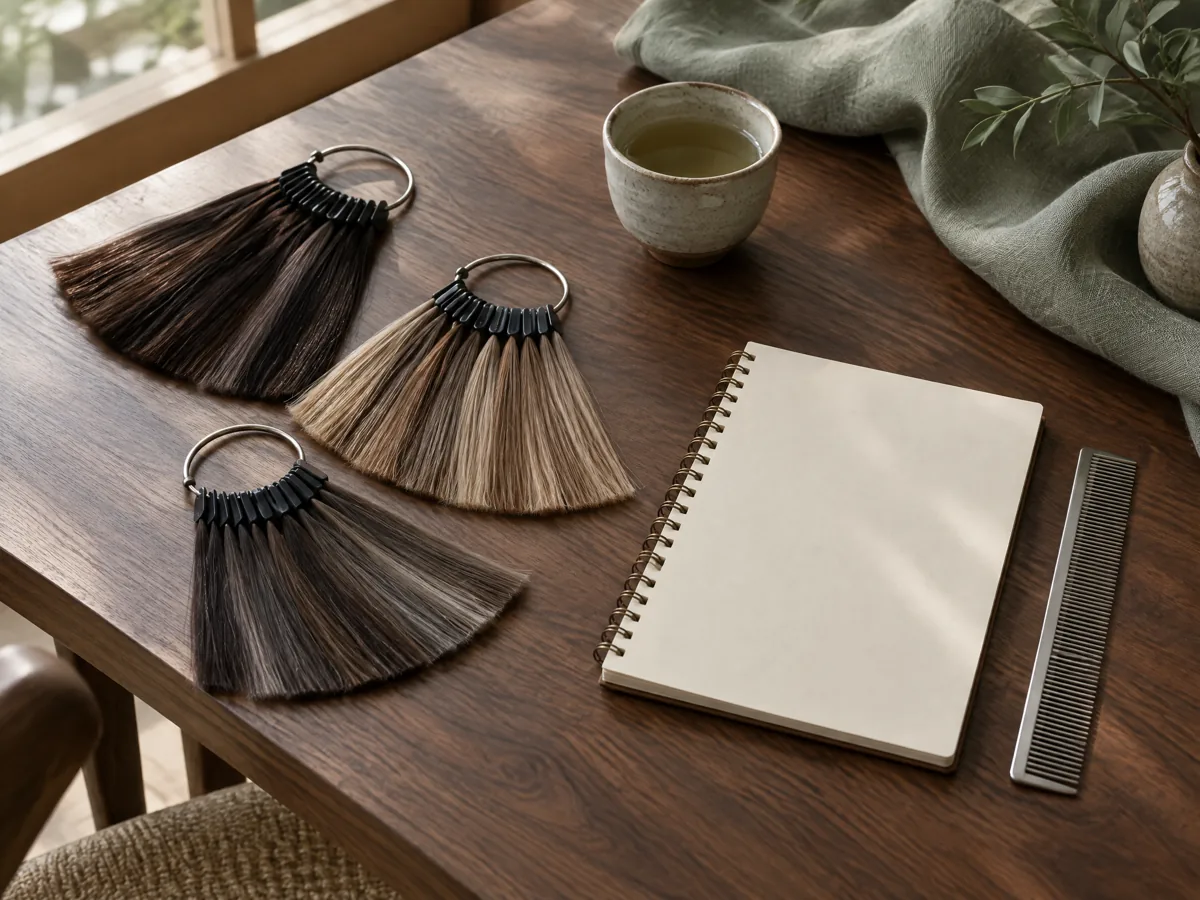
Map your front hairline, both temples, usual parting and any white area underneath. Mark each area 'hide', 'soften' or 'keep'. This is more informative than estimating a whole-head percentage from memory. A small bright cluster beside your face can matter more to you than a larger amount hidden at the back. Different preferences in different places are a useful brief, not a contradiction.
Photograph your hair in the positions you normally wear it. Loose hair may cover a temple that becomes prominent in a ponytail, while changing your parting can expose another group of white strands. Use comparable daylight without a colour filter, and include a full view as well as a close-up. Photographs communicate the concern; they do not establish the hair's condition or replace an in-person assessment.
Separate what bothers you about colour from what bothers you about the hairstyle. If you mainly dislike a bright edge when hair is slicked back, ask whether the proposed colour work is confined to that concern or changes the whole appearance. If you frequently switch parts, tell the colourist before a placement plan is agreed. A result assessed only in one carefully arranged position may not answer your everyday brief.
Reference photographs should also be annotated. Say whether you like the visible silver near the face, the overall brown depth or the amount of variation. A uniformly pale silver photograph is not the same request as keeping your own natural white streak. If you want that streak preserved, identify its boundaries explicitly and ask how nearby colour will be handled. Do not assume that 'natural-looking' communicates this important exception.
- Identify the area you notice first in your usual mirror view.
- Show your normal parting and any alternative you wear regularly.
- Mark natural white that should remain visible, especially a streak.
- Keep current-hair photographs separate from inspiration photographs.
A location-specific brief is more useful than asking to treat every white strand identically.
03
Can blending keep a brunette appearance without copying a silver photograph?
Blending does not require you to describe your goal as becoming blonde or all-over silver. You may want dark hair to remain dominant while a few natural white strands look less isolated. However, retaining a brunette appearance and adding widespread pale pieces are different requests. Specify how much lighter you would accept the surrounding hair becoming, not just how much white you want to keep.
For a discussion of that visual balance, Vit So's grey blending information distinguishes retained white from a completely concealed finish. Ask what the proposed work changes: the shade of the white strands, the darker background, selected pieces or a combination. The method and maintenance should follow your starting hair and chosen balance; the phrase alone does not imply that lightening is necessary or unnecessary.
If lightening is proposed, ask why it is needed to meet your particular goal and what a less extensive alternative would look like. The American Academy of Dermatology warns that substantial lightening can cause more damage because higher volumes of peroxide are needed. [3] This does not prove every darker colour is harmless. It does give a practical reason to avoid pursuing overall lightness when your real priority is simply a quieter hairline.
Existing colour makes this decision more complex. Newly grown white hair, untreated dark hair and previously coloured lengths are different starting areas, even when they look similar in a photograph. Disclose home dye, bleach, henna, colour-depositing products and straightening or perming still present on the hair. If you cannot identify a product, show its packaging or label and describe the date as approximate rather than assuming it is irrelevant.
A proposed highlight pattern should have a job: for example, changing the surrounding contrast where natural white is concentrated. The Canvas Blend highlights page can help you frame a placement enquiry, but highlights are not automatically the right response to grey roots. If the lengths already feel fragile or have uneven old colour, ask whether leaving them unchanged, choosing a smaller change or growing out colour better fits your priorities.
Before a first colour appointment or a refresh, browse hair bleaching Hong Kong for visual inspiration, practical preparation and a clearer sense of what to discuss during your consultation.
Agree the amount of retained darkness first; do not let a pale reference photograph silently expand the work.
04
Is the concern new growth, faded lengths or an old colour band?
Root work is most straightforward as a brief when you like the colour already on your lengths and want the new growth to relate to it. Show the boundary between untreated hair and previous colour, then say what you want preserved. The target might be the current shade, an earlier shade you preferred or a deliberately darker root area. Those are different instructions, so a generic request to 'match it' leaves too much undecided.
Vit So's root touch up page treats new growth separately from previously coloured lengths. Use that distinction when enquiring: identify whether the roots are white, naturally dark or mixed, and explain whether the ends are still acceptable. A root-service label is not permission to recolour everything, nor is it a quote for correcting an unwanted band or changing a highlight pattern.
Fading and regrowth can happen together without needing the same response. The new white at the parting may concern you while the softer colour through the ends still looks attractive. Alternatively, you may dislike warmer ends more than the roots. Show both in comparable light. Ask which concern the proposed root application addresses and whether any separate length work is optional, necessary for the stated goal or better deferred.
A dark ring or patch from previous colouring should not be described simply as longer roots. Explain when it appeared and what was applied there. The distinction matters because the hair in that area may already contain colour. Avoid trying to solve it by repeatedly applying the root mixture farther down at home. Bring the history to an assessment instead of assuming a broader application will produce an even result.
Use the Canvas Blend touch-up guide when your existing colour is still the one you want. For a quote, identify the areas to be treated and ask about any separate tone adjustment, lightening, finishing or haircut. Keeping acceptable lengths unchanged is a valid boundary. A small root concern does not, by itself, establish how much work is needed or how long the appointment will take.
State what stays unchanged before agreeing what will be coloured.
05
How can you choose a regrowth plan you will actually maintain?
Build the plan around a visible trigger rather than a universal calendar rule. Decide what makes you want another appointment: an obvious white edge at the hairline, a contrast along the parting or a change in the tone of coloured pieces. These triggers may not appear together. Describing them helps the colourist distinguish future root work from a broader refresh instead of treating every return as the same service.
Then compare that preference with your real availability. If you cannot return whenever the first white strand becomes visible, say so before choosing a very uniform dark finish. Ask what the planned colour may look like with untreated growth and whether you would accept that appearance. There is no honest maintenance-free promise in the word blending, and no service name establishes a fixed interval suitable for every head of hair.
Planning example, not a client case: imagine someone with dark coloured lengths, white temples and a natural streak they enjoy. Their priority is a less bright edge when hair is tied back, while keeping the streak recognisable. A useful consultation would compare a focused coverage goal around the unwanted edge with a softer mixed finish there. It would also identify the streak as an area to preserve, not automatically colour.
In that hypothetical situation, acceptable lengths could remain unchanged if assessment supports the agreed scope. If the person instead wants all the roots to appear evenly dark, the streak preference needs revisiting. If their availability cannot support the root contrast they dislike, a softer goal or growing out colour may be more realistic. The example demonstrates a decision process; it does not predict a formula, a number of visits or a result.
Growing out old colour is an alternative, not a failed colour plan. It can involve living with the boundary while coloured hair remains, or asking whether selected changes could make that transition more comfortable. Any adjustment to old lengths needs its own assessment. A temporary cosmetic concealer is another option to discuss for visible roots, but check ingredients, application directions and wash-out instructions rather than assuming all temporary products are suitable for sensitive skin.
Choose the between-appointment appearance first, then discuss a maintenance plan that supports it.
06
What safety checks matter even for a small grey-root application?
A small application area does not remove allergy precautions. The FDA advises following product directions and performing a skin patch test before every use. It also notes that a reaction can occur after previously trouble-free colouring, and even after a skin test shows no reaction. [1] Ask the salon what preparation the intended product requires before arranging the colour appointment; do not infer the testing procedure from another salon's routine.
Tell the provider about previous itching, burning, swelling, blistering or a rash after colour, even if symptoms appeared later. The NHS says symptoms can take up to 72 hours to appear. [2] A test strand used to assess a hair result is not a substitute for the product's skin-testing instructions, and a routine salon test is not a dermatologist's diagnostic investigation of a suspected ingredient allergy.
Ingredient history matters more than reassuring marketing words. The NHS notes that many permanent and some semi-permanent dyes contain PPD, which can irritate skin or cause allergic reactions, and that a previous black henna tattoo can increase risk. [2] 'Semi-permanent' or 'natural' should therefore not be treated as proof of safety. If you have reacted before, seek appropriate medical advice rather than choosing a different-looking box and assuming the problem is solved.
Do not colour an irritated, sunburned or damaged scalp; this is part of the FDA's safety checklist. [1] Read the Canvas Blend sensitive-scalp colour guide to organise what to disclose, but do not use salon scalp care as a treatment for disease or an allergy. If the skin is uncomfortable now, prioritise assessing that problem over hiding visible roots for an event.
If you suspect a reaction during colouring, tell the person applying it immediately and stop the application. The NHS advises washing the hair and scalp thoroughly with mild shampoo if a reaction is suspected. Worsening symptoms need medical advice; sudden mouth or throat swelling, trouble breathing or difficulty swallowing need emergency help. [2] Do not wait for a cosmetic appointment to address those signs, and do not continue because the scheduled processing time is unfinished.
Previous successful colouring and a small treatment area do not establish that the next application is safe.

07
What should you confirm before booking and caring for the result?
Take three things into the consultation: your area-by-area colour goal, the history of products and chemical work still on the hair, and your maintenance preference. If an older photograph shows a colour you liked, explain whether you want its darkness, tone or placement repeated. Keep a current full-length photograph available too. A historic image cannot show the new white pattern or the condition of the hair today.
Ask for the proposed scope in plain language. Which areas will receive colour, which will stay untouched, and is any lightening or length adjustment involved? If a separate service is suggested, ask what problem it solves and what happens if you decline it. The Canvas Blend pricing page is a starting point for Canvas Blend enquiries; do not combine its entries with another provider's prices or treat a general category as an individual quote.
Aftercare should support the appearance and manageability of the hair you have, not promise that colouring damage can be permanently reversed. Ask for instructions appropriate to the actual products and any lightened sections. The Canvas Blend post-colour care guide offers further preparation for that discussion. If coloured lengths become difficult to manage, describe the change before requesting another all-over colour as the default answer.
Sun exposure belongs in that care discussion. The American Academy of Dermatology notes that sun can leave hair weak, rough, faded and brittle, particularly when it has been dyed, bleached or permed, and recommends a wide-brimmed hat outdoors. [3] That is a practical protective step. It is not a guarantee that a cool tone will stay unchanged, nor does it establish that every visible colour change comes from sunlight.
For a Canvas Blend enquiry, use the Canvas Blend booking page and identify whether you want coverage, retained silver or help reviewing the difference. Share availability and any required departure time without assuming root work will fit a narrow break. Confirm appointment arrangements and the assessed scope with the chosen provider. A related site's service description is useful reading, but it is not a Canvas Blend appointment confirmation or a shared package offer.
- Confirm what natural white will be hidden, softened or retained.
- Separate the root application from any proposed work on old colour.
- Ask about product preparation, testing and any reaction history.
- Confirm included items, optional additions and the provider's own quote.
- Agree which visible change should prompt the next maintenance discussion.
A useful consultation ends with clear colour boundaries, safety preparation and a realistic next-step plan.
What else should you know?
Will blending hide every grey strand?
Not necessarily. Blending usually means some lighter strands remain part of the intended appearance. If you want all visible white to look closer to the surrounding colour, say that explicitly and ask what consistency is realistically achievable on your starting hair.
Does grey blending always require bleach?
The name does not establish the method. Ask whether the proposed result changes the natural white, the darker background, selected pieces or several areas. If lightening is proposed, ask why it is needed and what a less extensive alternative would look like.
Can I colour my temples but keep a natural white streak?
That is a valid goal to discuss, but the boundaries need to be identified before colour is applied. Show the streak in your normal hairstyle and ask how nearby work will preserve the part you want visible. Feasibility depends on the actual distribution and proposed method.
How often should I recolour white roots?
There is no universal interval established by a root-service label. Agree what visible contrast bothers you, how much untreated growth you can accept and what visits are practical. The plan should also account for the condition and existing colour of your hair.
Does a root appointment automatically refresh faded ends?
No. New growth and previously coloured lengths are separate areas to clarify. If you dislike fading, show it and ask whether a separate adjustment is proposed. If you still like the lengths, state that they should remain unchanged unless the assessed plan requires otherwise.
Do I still need safety testing if I have used the same dye before?
Follow the product's instructions and the salon's preparation requirements each time. The FDA recommends a skin patch test before every use and warns that prior uneventful colouring does not rule out a later reaction; a negative test is not a guarantee either. [1]
What is the practical next step?
Before enquiring, write one sentence about what you want to see: an evenly coloured parting, a softer bright hairline, or natural silver that remains recognisable. Add which areas should stay unchanged. This gives the provider a clear decision to assess instead of an open-ended request for a fashionable technique or the strongest possible dye.
Then check the plan against the hair you already have and the appointments you can realistically arrange. Coverage, blending and growing out colour all involve different compromises. Choose the one whose regrowth appearance you can accept, disclose relevant product and reaction history, and confirm the actual service scope before proceeding. The goal is a manageable choice, not a promise that white hair or future maintenance will disappear.
If you are searching for hair colour salon Central, plan a colour visit around meetings or after work, with enough time to discuss tone, upkeep, and your journey from Central.
Sources and editorial notes
- [1] U.S. Food and Drug Administration: Hair Dyes
- [2] NHS: Hair dye reactions
- [3] American Academy of Dermatology: Coloring and perming tips for healthier-looking hair
This AI-assisted Canvas Blend guide is not a first-person case study or an article reviewed by Vit So. Vit So Hair Stylist and Canvas Blend share ownership. Links are not independent third-party endorsements and do not mean that fees, booking policies or packages are interchangeable. Colour, chemical processes, extensions and styling require individual assessment; cosmetic hair and scalp care do not replace medical advice.
This AI-assisted Canvas Blend editorial guide addresses naturally white hair, existing colour and regrowth decisions as of 2026-11-06. It is not written as Vit So's personal advice or presented as reviewed by him. Canvas Blend and vitsohair.com share ownership, so the related service links are not independent endorsements. The planning example is hypothetical, not a client result; individual colour feasibility, safety preparation and service scope require assessment.
Continue reading
Hair DecisionsChoosing a hair salon: How to Write a Design Brief That Helps
Turn hairstyle references into a practical salon brief: define length, routine, chemical history, budget and alternatives before agreeing to a cut or colour.
 Hair Decisions
A family haircut routine that works on busy weekdays
Plan family haircuts around school rules, children's comfort and realistic styling habits. Compare lengths, prepare the visit and confirm each person's appointment scope.
 Hair Decisions
Planning a men's haircut: Fade, Taper and Colour Without Guesswork
Choose fade height, taper coverage and top length before adding colour. Compare practical options, scalp safety, upkeep and the questions to ask at a consultation.