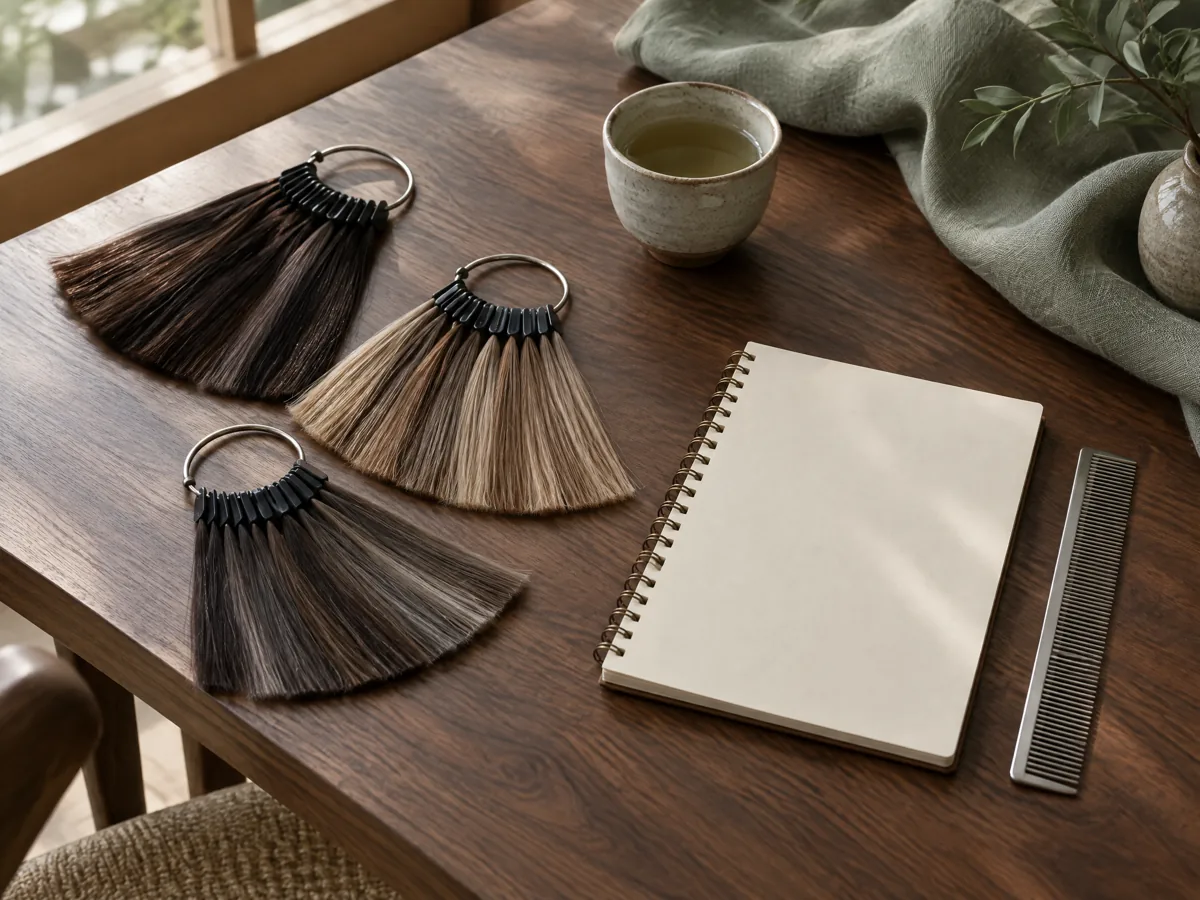
A partial perm can suit short or long hair when the desired change is limited to clearly identified sections and those strands are suitable for chemical treatment. Short hair needs particular attention to how the treated area changes the whole outline; long hair needs a clear wave start point and a plan for connecting treated lengths with the hair left straighter.
Choose the area you want to change before choosing a curl label. On a short cut, movement around the front or upper outline can affect how the sides and nape appear together. On long hair, movement limited to the lower lengths can leave the upper outline quieter, but the transition still needs designing. Neither length makes partial treatment automatically preferable to a full-head service.
The published partial perm entry describes selected coverage, not a promise that every fringe, root or ends-only request is available. Explain which hair should move and which should remain comparatively straight, then ask whether that boundary makes sense for your cut and condition. A small treated area can still contain heavily processed strands, so a smaller scope is not a substitute for assessing them.
Start with your current dry hair, not a reference photograph alone. Note its shortest layers, the position of the ends and the sections that have been coloured or straightened. Use the Canvas Blend gallery to organise the visual features you want to discuss, rather than treating an image as proof of an achievable chemical result. This guide focuses on planning a decision, not prescribing a processing method.
If you are planning a change of colour, learn about hair colour Hong Kong before your consultation and consider the techniques, tones and upkeep that suit your routine.
01
What does partial treatment actually need to change?
Separate three decisions: coverage, visible movement and method. Coverage is the hair included in the proposed treatment. Visible movement is the bend or curl you hope to see when dry. Method is the process selected after assessment. A smooth-looking upper section in a photograph does not reveal how it was treated, and a broad wave does not establish one particular procedure. Ask about these decisions separately instead of using a style name to answer all three.
Describe the problem in ordinary language. Perhaps the front falls too flat, the lower edge looks stiff, or you want movement below the shoulders without making the upper sides fuller. Then identify what already works. Preserving a neat nape, a comfortable ear tuck or a ponytail is part of the brief, not an afterthought. A localised request is useful only when the remaining hair still forms a coherent haircut.
Make the boundary visible during the consultation. Show the front, sides and back with your usual parting, and indicate the area you imagine changing. Ask where that proposed area would meet the untreated hair. The answer may involve changing placement, adapting the curl goal or reconsidering coverage. The purpose is not to draw a chemical application map yourself; it is to make your preferences understandable before the stylist proposes the work.
Treat the service description as a starting point for questions. Two requests involving only some of the hair can require different planning if one concerns a very short front section and the other concerns long, previously highlighted ends. A menu label alone cannot confirm suitability, included cutting or the final amount. Ask for the assessed scope rather than assuming that a smaller visible change must also be a simpler appointment.
Define both the area to change and the outline to preserve before deciding whether partial coverage is appropriate.
02
How does a partial perm affect a short haircut differently?
Short hair gives each section a prominent role in the silhouette. A curved front can sit differently against the cheek even when the back remains unchanged. Extra movement above the ears can make a close-fitting cut appear wider. Before discussing a perm for short hair, identify your preferred widest point and the shortest dry position you would accept at the front. These are more useful boundaries than simply asking for soft curls.
Assess the shortest relevant sections, not only the longest strand. A longer front piece does not establish whether a short crown or nape can support the intended shape. There is no useful universal minimum length for every cut and method. Ask which sections can be included after any proposed trimming, and which would remain outside the treatment. Leaving a very short section unchanged may be an option, but its connection to the treated hair still needs consideration.
Short cuts also make everyday arrangements important. If you tuck one side behind your ear, wear glasses or sweep the front away for work, demonstrate those habits. A section that curves more may no longer rest in the same place. Compare the outline loose and tucked, with your actual glasses if relevant. Do not approve the design only in a carefully arranged front view when the side view is what you usually notice.
A limited treatment can be a poor match when you want texture distributed throughout the entire short silhouette. Conversely, changing every area may be unnecessary when one specific part is the concern and the rest works well. Discuss both possibilities without treating full coverage as an upgrade. If the underlying cut feels bulky or disconnected before any curl is added, a cut-led revision may deserve priority over additional chemical work.
| Decision | Short hair priority | Long hair priority | Useful consultation question |
|---|---|---|---|
| First visible movement | Its effect beside the cheek, ear and crown | Its position in front and through the back lengths | Where should the first bend be visible when dry? |
| Length boundary | Shortest acceptable front and nape outline | Lowest edge and length needed for tying back | Which dry lengths must remain? |
| Untreated connection | How changed sections join short sides and nape | How waves join the straighter upper lengths | How will the treated and untreated areas sit together? |
| Chemical history | History of each short section, including remaining processed ends | Different histories across roots, layers and older ends | Which of the proposed sections may be unsuitable? |
| Daily handling | Ear tucks, glasses, front direction and sleeping | Detangling, clothing contact, drying and loose ties | What will I need to do on an ordinary morning? |
For short hair, judge partial treatment by the connected outline, not by the treated section in isolation.

03
Where should movement begin on long hair?
Long hair creates more distance between the upper outline and the ends, making placement central to the decision. A perm for long hair should be discussed from the first visible bend downwards, rather than as a request for large curls alone. Movement beside the face and movement only below the shoulders communicate different goals. Describe the front separately from the back, especially when you want the upper back to remain relatively quiet.
Use landmarks instead of vague terms such as halfway down. Point to the cheek, shoulder or lower back length where you want the movement to become noticeable. Show the hair both brought forward and hanging behind you, because those positions change how placement appears. Ask how the proposed treatment would connect to your existing layers. The visible start of a wave is a design goal, not necessarily the exact starting boundary of the treated area.
Consider the lower outline as carefully as the wave. Curves can make an unchanged strand look shorter, while trimming changes actual length. Specify whether the dry ends should remain below a collar, reach a comfortable low tie or preserve a full lower edge. A proposed layer change may keep the longest length while shortening face-framing pieces. Ask about those pieces separately if they already struggle to reach your usual hair tie.
Do not assume that adding layers solves every long-hair problem. The shape also depends on density, current layers and the fullness you want to retain. If the ends already look sparse, protecting a substantial perimeter may matter more than introducing additional short sections. Ask whether the reference relies on styling, haircut structure or the visible wave pattern. This helps avoid approving a major cut change merely because a finished photograph looks lighter.
After browsing PMQ or Hollywood Road, readers can use the local overview of hair salon Sheung Wan to coordinate a colour consultation with shopping, work, or weekend plans.
For long hair, agree on the first visible bend, the front-to-back relationship and the dry lower edge together.
04
Which hair history or warning signs should change the plan?
Map chemical history by area rather than giving only the date of the latest appointment. Include bleach, highlights, permanent colour, straightening and previous perms, including home products. Darker colour applied later does not make previously lightened lengths untreated. The Canvas Blend highlights page provides context for identifying lightened sections when preparing that history. Short hair can retain processed ends, and long hair can contain several differently treated areas within the same proposed partial section.
Condition can override a preferred placement. The Canadian Dermatology Association states that chemicals used for colouring, perming and relaxing permanently weaken hair and increase its tendency to break; it advises avoiding these products on already damaged hair. [2] Restricting treatment to the ends does not bypass that warning if those ends are the most compromised section. Ask whether the desired area should be excluded, trimmed or left without further chemical work instead.
Report unusual breakage, persistent tangling and scalp discomfort before any treatment is agreed. These observations do not let you diagnose the problem yourself, but they give the assessor relevant information. A strand assessment, if proposed, is one part of planning rather than a guarantee of a damage-free outcome. Use Canvas Blend's damaged-hair care page to prepare realistic questions about appearance and handling; cosmetic care should not be described as permanently reversing structural damage.
Discomfort during processing is not a signal to endure for a stronger result. The American Academy of Dermatology warns that perming requires caution and that excessive stinging or burning calls for immediate washing off of the solution and consultation with a dermatologist. [1] Tell the stylist immediately so processing can stop and the product can be rinsed away. Persistent or significant scalp symptoms belong with a medical professional, not a promise of salon treatment.
- Show where bleach, colour, straightening and previous perm remain in the hair you plan to keep.
- Mention scalp reactions and current discomfort before processing begins.
- Ask what would make the proposed section unsuitable and what the alternative would be.
- Do not accept hair protection as a guarantee that chemically weakened strands cannot break.
The condition of the intended section matters more than the percentage of hair included.
05
When is partial coverage the wrong choice?
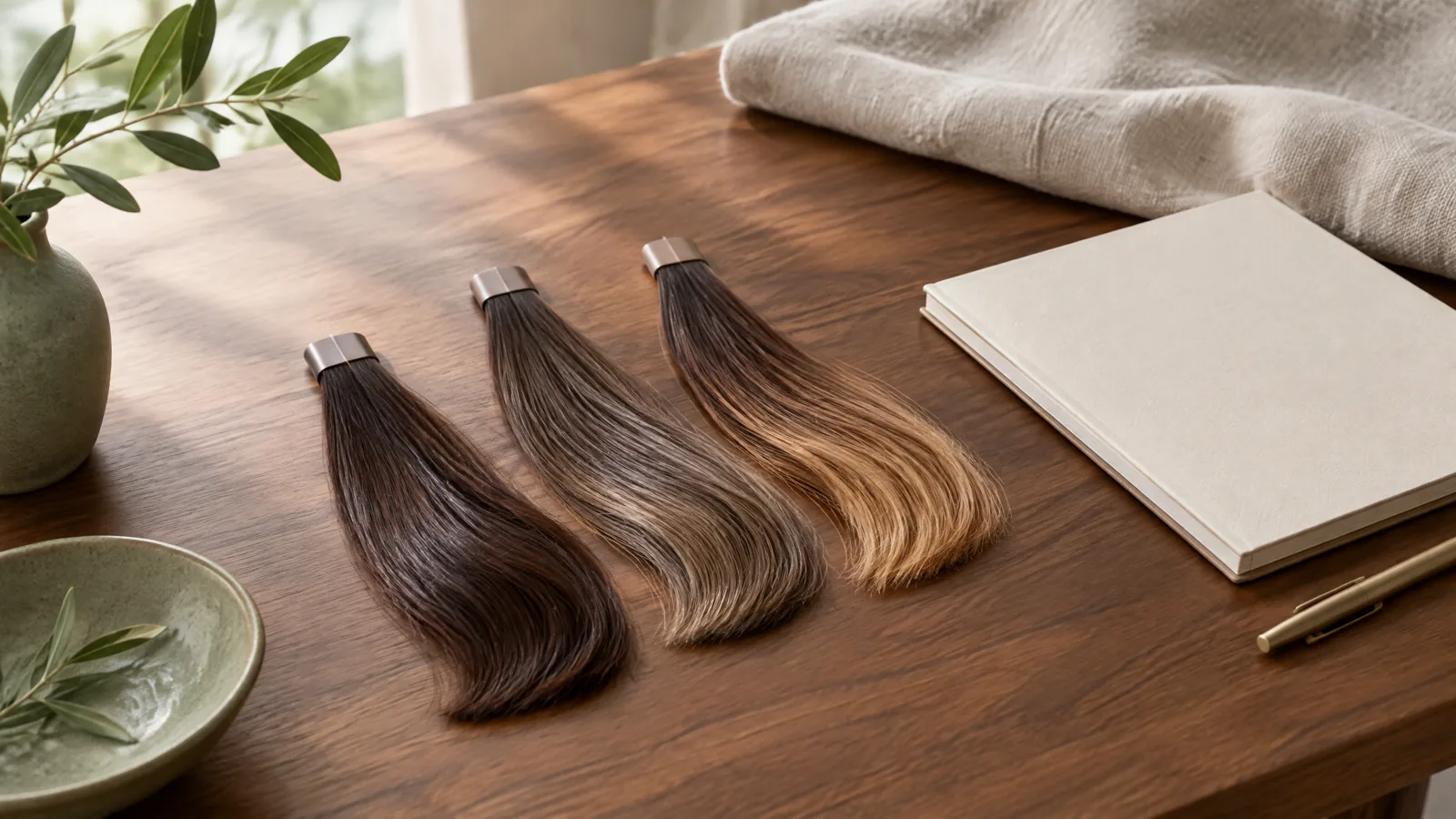
Partial coverage is worth exploring when you can identify a limited change and a clear reason to preserve the rest. It is less persuasive when every visible area in your reference has the same textured finish, or when your main concern is a haircut shape that needs rebalancing. Ask the stylist to explain what partial treatment would leave unresolved. A design that works only when untreated sections are heavily styled may not fit a minimal morning routine.
Full-head treatment is not automatically safer, better or more lasting; it is a different coverage proposal. It may be discussed when movement throughout the haircut is the actual goal, but suitability still applies to all included areas. Do not accept more coverage simply because the difference in a headline quote seems attractive. The meaningful comparison is the assessed work, the shape it aims to create and the handling required afterwards, not the size of the menu entry.
A nonchemical route can be useful while placement remains uncertain. A professional styling demonstration, if available, can help you compare a curved end with movement higher through the hair. It cannot predict exactly how a perm will behave. Occasional heat styling also has a cost in hair exposure: the AAD advises limiting heated tools and using low or medium heat with a heat-protective product. [3] Temporary styling is an alternative to assess, not a harmless default.
Postponement is a valid outcome when the desired section is unsuitable or the practical boundaries conflict. You may prefer to revise the cut, keep the existing texture or wait while a haircut plan changes which processed lengths remain. No generic waiting period can establish suitability for every chemical history. Ask what specifically needs to change before reconsideration. This produces a more useful plan than booking another date without understanding why the current request was declined.
| Route to discuss | Useful when | Important limitation |
|---|---|---|
| Partial coverage | One clearly identified area needs movement and the remaining outline works | The transition and the condition of that area still need assessment |
| Full-head coverage | The goal is movement distributed throughout the haircut | More included hair does not remove damage risk |
| Cut-led change | Width, bulk or disconnected layers are the main concern | A cut changes shape but does not create a permanent chemical curl |
| Temporary styling | You want to compare placement before committing | It does not predict a perm result and heated tools can damage hair |
| Postpone chemical work | Proposed sections are damaged or the plan remains unclear | Reconsideration needs a specific assessment, not a universal waiting rule |
Choose the smallest suitable intervention that addresses the real problem, including no chemical treatment when appropriate.
06
What daily routine should short and long hair owners expect to discuss?
Describe an ordinary wash day before agreeing on a finish. Explain whether you dry the hair fully, sleep before it is dry or usually brush it into a smooth shape. A partial treatment can leave you managing two textures, and the way those areas meet may need attention. Ask for a demonstration of the essential steps for the proposed design and distinguish them from optional polishing. Neither short nor long hair guarantees a wash-and-go result.
For short hair, focus on front direction, parting and the shape around the ears after sleep or a hat. For long hair, discuss how you will detangle the lengths and dry the lower movement without pulling everything straight. Conditioner and gentle handling support manageability: the AAD recommends conditioning after washing, adapting placement to hair type and detangling carefully from the ends upwards. [3] A curl-enhancing styling product and a conditioner do different jobs, so ask what each proposed product is meant to accomplish.
Handle moisture without vigorous rubbing. Both the AAD and Canadian Dermatology Association advise gentleness with wet hair, and the AAD suggests a towel or T-shirt to absorb moisture rather than rough towel-drying. [2] [3] These are general care principles, not a universal immediate post-perm schedule. Obtain the timing instructions for the actual service, including the first wash and any restrictions on tying or styling, instead of borrowing a fixed rule from an unrelated method.
Long hair owners should show their usual ponytail or bun, especially if front layers are short. Repeated tight, pulling styles can cause breakage and traction-related hair loss, according to the Canadian Dermatology Association. [2] Ask about a comfortable arrangement rather than planning to force a new texture into a tight tie daily. If the hair is also coloured, Canvas Blend's post-colour care guide can help organise overlapping care questions without implying that every colour routine is perm-specific.
Approve the everyday handling plan alongside the shape, and obtain product-specific aftercare instructions.

07
What should you agree before confirming an appointment?
Bring current dry-hair photographs from the front, side and back, plus a reference that shows the placement you want. Identify one priority and one firm boundary. A priority might be a quieter upper outline; a boundary might be keeping the front long enough to tuck away. Ask what can realistically be pursued together and what would need changing. Photographs help explain shape, but they cannot establish the condition or processing suitability of the strands.
Planning example, not a client case: imagine one person with a chin-length bob who wants the front to turn softly inward while the nape stays close, and another with longer hair who wants lower movement while retaining a low ponytail. The first consultation would prioritise cheek-level width and how the altered front joins the sides. The second would prioritise wave placement, retained tie-back length and the history of the older ends. Neither brief decides suitability in advance.
If the bob's relevant front section is too short for the intended shape, the discussion might move towards retaining more length or a temporary finish. If the long-haired person's desired lower section is compromised, treating only that section may be inappropriate even though the upper hair looks healthy. The shared lesson is to revise the plan around the actual limiting section. There is no invented result, service duration or guarantee attached to this example.
Confirm the named service, treated areas, any haircut changes and included finishing work in the quote. The Canvas Blend pricing page concerns Canvas Blend's own published scope; it is not a substitute for confirming another site's service. If you want to contact Canvas Blend, use its booking page, explain that your enquiry concerns a perm assessment and ask whether the relevant work is available. An enquiry is not a confirmed appointment, and the two sites' packages should not be combined by assumption.
- State the first visible bend and the sections you prefer to leave quieter.
- Agree on the shortest acceptable dry outline and any length needed for glasses, ear tucks or a tie.
- Confirm which chemical history affects each proposed section and whether assessment may lead to postponement.
- Clarify the service name, included cut or care, individual quote and appointment confirmation.
- Request the essential styling steps and the aftercare instructions for the proposed method.
Leave the consultation with a connected shape plan and a defined service scope, not just a curl name.
What else should you know?
Is a partial perm automatically gentler than a full-head perm?
No. It includes less hair by scope, but the included strands still undergo chemical treatment. Their condition and previous processing may matter more than the size of the area. Partial coverage is not a damage-free guarantee.
Can only the front of a short bob be treated?
That is a request to assess, not a universally available or suitable service. The front needs enough workable length for the proposed movement, suitable condition and a plan for joining the untreated sides. Confirm both feasibility and availability.
Does an ends-only request mean the roots will look completely unchanged?
Not necessarily in the overall silhouette. Changing the lower movement can affect how the hair sits as a whole. Explain which upper outline you want to preserve and ask about the expected connection; a photograph cannot guarantee that every untreated area will appear identical.
Will long hair keep the same visible length after a perm?
Curves can make the visible outline more compact even without cutting. Any trim creates a separate change in actual length. Agree on the shortest acceptable dry finish, and discuss the front and back separately rather than relying on wet or stretched length.
Can highlighted hair have a partial treatment?
It requires an assessment of the actual highlighted sections and other treatment history. Choosing partial coverage does not make lightened ends automatically suitable. If the intended section is damaged, avoiding further chemical processing may be the appropriate recommendation.
How long will the appointment or result last?
Ask the service provider about the assessed appointment scope and how the proposed finish may change with washing, styling, growth and cutting. A generic duration or longevity estimate from another method is not a reliable promise for your hair.
Should I use one fixed first-wash rule for every perm?
No. Obtain aftercare instructions for the actual products and method used. General advice about gentle detangling and limiting heat does not determine a universal first-wash time or a schedule for repeating chemical treatment.
What is the practical next step?
For short hair, begin with the connected silhouette: where width belongs, how the front joins the sides and which practical lengths must remain. For long hair, begin with the first visible bend, the connection through the layers and the lower edge you want when dry. In both cases, describe the area to preserve as clearly as the area to change, then let condition and method assessment decide whether the proposed scope is appropriate.
Prepare photographs and a section-by-section treatment history, choose your main priority and ask for an alternative if it cannot be met safely. Confirm the quote and everyday routine only after the shape and suitability discussion. A useful partial-treatment plan is not simply fewer curls or a smaller menu entry; it is a defined change that fits the rest of your haircut without asking unsuitable strands to carry the result.
While comparing hair colour salon Central, consider a colour appointment that accounts for professional presentation, travel plans, and root maintenance, with a location convenient for journeys from Central.
Sources and editorial notes
- [1] American Academy of Dermatology: Coloring and perming tips for healthier-looking hair
- [2] Canadian Dermatology Association: Hair Care
- [3] American Academy of Dermatology: Tips for healthy hair
This AI-assisted Canvas Blend guide is not a first-person case study or an article reviewed by Vit So. Vit So Hair Stylist and Canvas Blend share ownership. Links are not independent third-party endorsements and do not mean that fees, booking policies or packages are interchangeable. Colour, chemical processes, extensions and styling require individual assessment; cosmetic hair and scalp care do not replace medical advice.
AI-assisted Canvas Blend editorial guide, current as of 2026-11-06. The linked VitSo website shares an owner with Canvas Blend; these links are not independent third-party endorsements. This article is not authored by Vit So and does not claim his review or approval. The comparison concerns coverage and visual planning, not self-application instructions. Availability, processing method, suitability and included work require confirmation with the relevant provider.
Continue reading
Hair DecisionsLayered haircut or lob: how to keep the length you actually need
Compare layers, lob outlines and shoulder-to-collarbone lengths by dry landing point, end fullness, ponytail reach and the styling you will actually do.
Hair DecisionsDo curtain bangs work with a wolf cut on naturally wavy hair?
Compare fringe length, crown layers and retained end weight before combining curtain bangs with a wolf-inspired cut on natural waves, without relying on a styled photo.
Hair DecisionsHow to set realistic brunette goals with no bleach hair colour
Plan a realistic no-bleach brunette shade by comparing depth, warmth, natural roots and old dye, with practical safety, maintenance and consultation questions.