Colour × Wigs × Personal Choice
Human Hair Wig Colouring and Perming: Questions to Ask

Human hair wig colouring and perming depend on this piece’s processing history, fibre condition and cap restrictions. Ask the supplier what is permitted before a suitable professional assesses it; human-hair or Remy labels are not permission for unrestricted chemical work.
The useful question is not simply “can it be done?” It is “can this particular wig reach the target without unacceptable fibre or cap damage?” The sections below separate colour, bleach, perming, consultation, and aftercare.
Fibre source, Remy terminology, cap construction, and processing history are different facts. They must be considered together rather than replaced by one reassuring label.
01
Why must you identify the exact wig first?
Possibly, but the accurate answer is “it depends on this piece,” not “human hair means yes.” Human hair describes the fibre source. It does not reveal whether the hair was previously coloured, lightened, processed, blended, or weakened, and it says nothing by itself about the cap. Get the product history before discussing a formula or curl pattern.
Start by photographing the label, order information, and the wig in its current state. Note the base colour, dry ends, tangling, shedding, and any previous colour, straightening, or perming. If a listing only says “100% human hair,” ask for processing history, care instructions, and whether chemical work affects the supplier’s care or service terms. Missing information is a reason to pause, not an invitation to test bleach.
The word Remy also needs a narrow interpretation. It commonly describes hair gathered with the cuticles running in a more consistent direction. It is not proof that the hair is virgin, untreated, single-source, or safe for every chemical service. The Remy versus non-Remy human hair wigs guidance and limitations guide is useful when you separate the label from construction, processing, care, and fit.
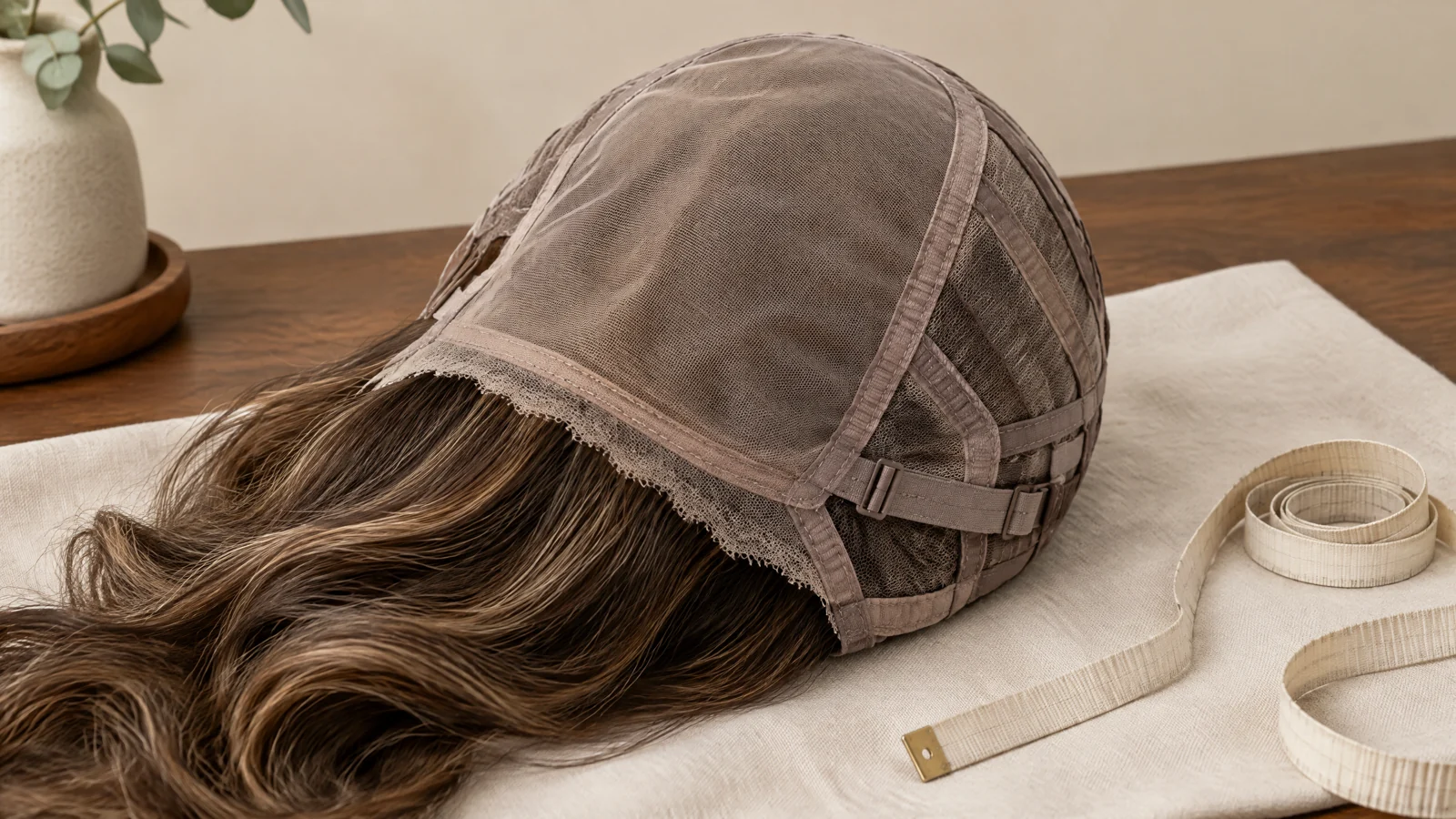
The cap creates a second set of constraints. Lace, monofilament, attachment points, and knots are not hair fibre. Colour can stain a hairline, while soaking and pulling can weaken delicate areas. A strand test that looks acceptable does not automatically prove that the hairline, parting, or cap can survive the full service.
| Question | Decision it affects |
|---|---|
| Previous colour, bleach, or perm | Whether more chemical load is realistic |
| Current tone and end condition | Deposit, darken, lighten, or stop |
| Cap and attachment construction | How product and water can be isolated |
| Supplier care guidance | Whether specialist handling is required |
Without a usable product history, do not promise colour, bleach, or perming.
02
How are depositing colour and bleaching different?
Darkening or refreshing tone is often easier to control than lifting, but “lower risk” does not mean risk-free. A deposit service still depends on the existing pigment, previous factory colour, and porosity across the piece. Lightening removes pigment and creates a larger technical and cosmetic risk. Roots, mids, and ends may not respond in the same way.
The American Academy of Dermatology notes that colouring and perming can leave hair dry and brittle. It also explains that lightening several shades generally needs stronger peroxide and causes more damage.[1] This is general hair chemistry, not approval for a particular wig. A wig has no living scalp oil supply, so dryness and friction may be less forgiving than on growing hair.
The Wig Company’s care guidance takes a conservative position: chemical processes such as colouring or perming should be handled by a professional stylist, and it does not recommend lifting or bleaching human hair wigs; depositing colour is presented as the better result.[2] If the goal is to soften warmth, deepen a tone, or add richness, discuss the least-change option first.
When identifying the material category, compare human hair wig selection and product information before assuming a chemical service is possible. The actual label, previous processing, cap and supplier restrictions matter more than a category name. Do not treat a human-hair overview as permission to colour, lighten or perm every piece.
- Ask whether the current colour is natural, deposited, or factory-processed.
- Discuss depositing or darkening before pigment removal.
- Request a small test and agree how it differs from the full piece.
- If a failed result is unacceptable, choose another colour or another wig.
Lightening is a risk jump, not an ordinary colour appointment.

03
Can a human-hair wig be permed or straightened?
A perm is not simply placing curls into the hair. Chemical perming changes internal bonds and fixes a new shape. Hair that has already been bleached, coloured, heated, or dried may not have enough resilience. Perming, relaxing, smoothing, and heat styling are different services, so the product, timing, and cap protection must be assessed separately.
A common mistake is treating heat styling as proof that chemical perming is safe. Temporary styling and chemical restructuring belong to different risk categories. Even heat tools require supplier permission and a suitable condition check. The Wig Company recommends professional handling for chemical work and warns that conditioner on the base can affect integrity and contribute to shedding.[2]
If the need is a one-day look, ask whether a reversible curl set, blow-dry, or cut can achieve it. If permanent movement is essential, the stylist should inspect elasticity, breakage, uneven stretching, and tangling before proposing a test. Read about does bleaching damage hair for general damage context, but return to the wig’s own supplier instructions for the decision.
When a wig is worn during hair loss or treatment, comfort, security, and scalp experience come before a particular curl. Redness, burning, open areas, or treatment-related concerns belong with a healthcare professional. A stylist can discuss appearance and handling risk, but cannot diagnose a scalp condition.
For lasting curl, prove that both fibre and cap can tolerate the process before choosing a chemical.
04
What can chemicals do to the fibre and cap?
A wig is not growing hair. It has no continuing oil supply from a scalp, and every wash, blow-dry, brush, and contact with clothing uses some of the fibre’s limited surface condition. If colour or perming roughens the cuticle and dries the ends, the practical result can be tangling, dullness, breakage, and a routine that no longer feels manageable.
The visual result also matters. A colour may look even while the ends feel rough, and a curl may look attractive while the cap sits differently. Ask for an assessment under ordinary daylight and with the wig secured as it is normally worn. This separates a photographic finish from a result that remains comfortable and controllable in daily use.
Cap damage is harder to reverse. Water and product can reach knots, strong combing can pull lace, and colour can mark a hairline. Even removing the hair for processing may alter density, direction, or parting when it is reattached. “We can fix it afterwards” is not a universal safety plan; the construction must be known first.
Imagine a planning example: a reader has an older dark-brown wig with dry ends and wants a lighter brown look for a wedding. A sound process is to confirm history, inspect the ends, compare deposit colour or a replacement, and set a no-go point before any lightener. This is a hypothetical planning example, not a client case.
If the piece is judged suitable, agree on aftercare before starting. Use gentle handling, avoid twisting, and follow the product’s own directions. Damaged hair repair can explain general salon repair thinking, but salon care is not a promise to rebuild a wig cap or restore lost knots.
| Goal | Main risk | More cautious discussion |
|---|---|---|
| Deposit or darken | Uneven absorption or cap staining | Test first and keep an unchanged option |
| Lighten | Dryness, brittleness, uneven lift | Consider a different colour or piece |
| Chemical curl or straighten | Loss of elasticity or shape control | Confirm history and supplier permission |
Fibre suitability and cap suitability are separate questions.
05
Who should handle it, and what should you ask?
The right professional is not simply someone who colours natural hair. They should be willing to identify the wig construction, read the product information, and explain what they cannot confirm. At booking, say that the item is a detachable wig or hairpiece and bring its packaging, care sheet, and previous photos. Hiding the fact that it is a wig makes the assessment less reliable.
Prepare specific questions: Has this piece been processed? Is the goal depth, tone, or curl? What happens if the result cannot be reversed? Can product be kept away from lace and knots? Who will confirm the supplier’s restrictions? “All human hair can be coloured” is not a piece-specific answer and should not be treated as one.
If the required shade cannot be reached within the item’s limits, use custom versus ready-made wigs: specification trade-offs to compare another route. Separate a custom enquiry from a sourced style and ask what colour, construction and fitting can actually be confirmed. Replacing a piece is an option to evaluate, not a guarantee of a particular result.
Salon colour and wig processing are also different responsibilities. Canvas Blend is a Hong Kong colour salon and can discuss hair-colour and repair directions for appearance. That does not mean it makes wigs, diagnoses medical conditions, or offers a joint package with a wig supplier. The product owner, processor, and wearer each need to confirm different facts.
Bring the evidence, define the target, and ask for item-by-item confirmation.
06
How can you reduce wear after processing?
After a colour or styling service, do not treat the wig as ordinary hair that can be repeatedly remade. Follow its care sheet. Keep conditioner away from the base and attachment areas unless the maker says otherwise. Detangle from the ends upward and reduce pulling while wet. If the ends remain dry, adding more oil may mask rather than solve structural damage.
Washing should match the piece’s condition and instructions, not an invented universal schedule. The supplier guidance reviewed here recommends products for colour-treated hair, cautions against over-cleansing, and advises gentle rinsing, no twisting or wringing, and complete drying on a suitable stand.[2] The individual manufacturer’s directions still take priority.
After a colour change, sunlight, heat, and friction can shift tone or worsen dryness. Protect the piece outside and use heated tools only if the supplier permits them. The post-colour hair care guide offers general colour-care context, but natural-hair advice must not be copied blindly onto lace or knots.
Set a stop point. Stop reprocessing if there is widespread matting, continuing shedding, cap distortion, or discomfort. Do not cover a problem with more bleach, perm solution, or high heat. Keep photographs and service notes so the supplier or a qualified professional can assess the next option.
Aftercare slows wear; it does not make high-risk processing infinitely repeatable.

What else should you know?
Can I dye a human-hair wig black?
Not automatically. Darkening may be more controllable than lightening, but existing pigment, dry ends, and the cap still require a test and piece-specific assessment.
Can I bleach a black human-hair wig blonde?
Do not assume so. Supplier guidance may advise against lifting; prior processing and uneven response can make a replacement or different colour safer.
Does Remy mean the wig can be coloured and permed?
No. Remy generally describes cuticle direction and collection, not an untreated or chemical-service guarantee.
Can I perm the wig at home?
Home chemical processing is not recommended. Have the exact piece assessed by a professional and follow the supplier’s instructions.
What if I wear the wig because of hair loss or chemotherapy?
The product still needs the same condition check. Redness, sores, or treatment-related scalp questions should go to a healthcare professional; this article covers appearance and product risk only.
How do you turn the choice into a next step?
Gather the label, care sheet, processing history, target colour or curl, and your acceptable failure limit before asking for a service. Ask both the supplier and the processor to confirm what applies to this exact piece.
Canvas Blend Editorial / AI-assisted research. Canvas Blend is a Hong Kong colour salon; this general information is not wig manufacture, medical diagnosis, or a joint service with OWNSTRAND.
If natural-hair colour is also part of your plan, review hair colour planning resource, Canvas Blend colour consultation to organise your hair history, preferred tone and calendar. These Canvas Blend resources address natural hair, not a promise about wig processing or a medical condition. Keep the supplier’s product assessment and the salon’s colour consultation separate.
Sources and editorial notes
This AI-assisted Canvas Blend editorial guide is not a first-person case study or an article reviewed by Vit So. OWNSTRAND shares the site owner; links do not imply a joint package or medical certification. Confirm product materials, processing, care, fees and availability with the supplier in writing. Consult qualified healthcare professionals about hair loss or scalp symptoms.
Canvas Blend Editorial / AI-assisted research. General styling and product-risk information only; no wig manufacturing, medical diagnosis, or Vit So review is implied.