Shape × Colour × Personal Choice
Planning a men's haircut: Fade, Taper and Colour Without Guesswork
瀏覽獨立繁體中文指南 →
Choose the side coverage, shortest finish and top length of a fade or taper before deciding which hair to colour. Planning the shape first does not prescribe the order of salon procedures: the stylist still needs to assess your scalp, previous treatments and the proposed colour process.
A short cut can look dramatically different without changing the fringe at all. Removing coverage around the ears alters the visible outline; changing the top length alters what can be swept back, parted or worn forward. Colour adds another contrast, but it cannot restore length removed by a cut. Start with the shape you would enjoy in your natural shade, then decide whether colour contributes something worth maintaining.
The linked men's haircut page provides context for a wash, cut and blow-dry enquiry rather than an assumed cut-and-colour package. For this guide, the useful question is not which style name sounds most current. It is which areas should stay covered, which can become shorter and how the finished top should behave when you style it yourself. Treat any additional chemical service as a separate decision.
From root touch-ups to pre-wedding colour planning, use balayage price Hong Kong as an initial reference and discuss your current hair condition before confirming the service.
01
What actually changes when you choose a fade rather than a taper?
In common salon usage, a fade creates a broader transition from shorter to longer hair across the sides and back. A taper usually concentrates shortening near the sideburns and neckline, with more coverage retained above. Terminology overlaps, so neither label fully describes an appointment. Ask the stylist to show the intended short area on your head before discussing a number or borrowing the label from a photograph.
The fade haircut guide separates coverage from height and the shortest finish. That distinction prevents a common misunderstanding: a higher transition does not automatically require bare skin, and a low transition can still be very close at the bottom. Explain both how far the short area should rise and whether you want visible hair remaining at its lowest point.
A local taper is worth discussing when the overall side fullness works but the edges feel untidy. A broader fade is a different proposal when you want less visible width through the whole side panel. Neither settles the connection to the top. Leaving a heavy band beneath a long top can preserve softness, but if the band projects outward it may need reshaping rather than merely a cleaner neckline.
Choosing a more conservative outline first can be useful when scalp exposure is unfamiliar. It gives you a clear starting preference without requiring a drastic change for the sake of a style name. That is not a guarantee that every shape can be revised without further shortening. Ask what would need to be removed to make the transition higher, and remember that rebuilding coverage requires regrowth.
| Option to discuss | Main visual change | Decision to confirm | When it may miss the goal |
|---|---|---|---|
| Local taper | Tidier sideburns and nape with coverage above | How much weight should remain above the edges? | When the problem is upper-side bulk rather than the perimeter |
| Lower fade | A broader gradient kept relatively low | How close is the bottom, and where does the transition stop? | When the retained band still feels too wide |
| Higher fade | More of the side becomes visibly short | What coverage should remain beneath the top and crown? | When scalp or head-contour exposure feels uncomfortable |
| Softer retained-length outline | Less abrupt separation around the sides | How should the hair sit against ears and glasses? | When a very close, high-contrast edge is the main priority |
Choose the area you want changed first; agree on height and closeness separately.
02
How can you turn a reference photograph into a precise brief?
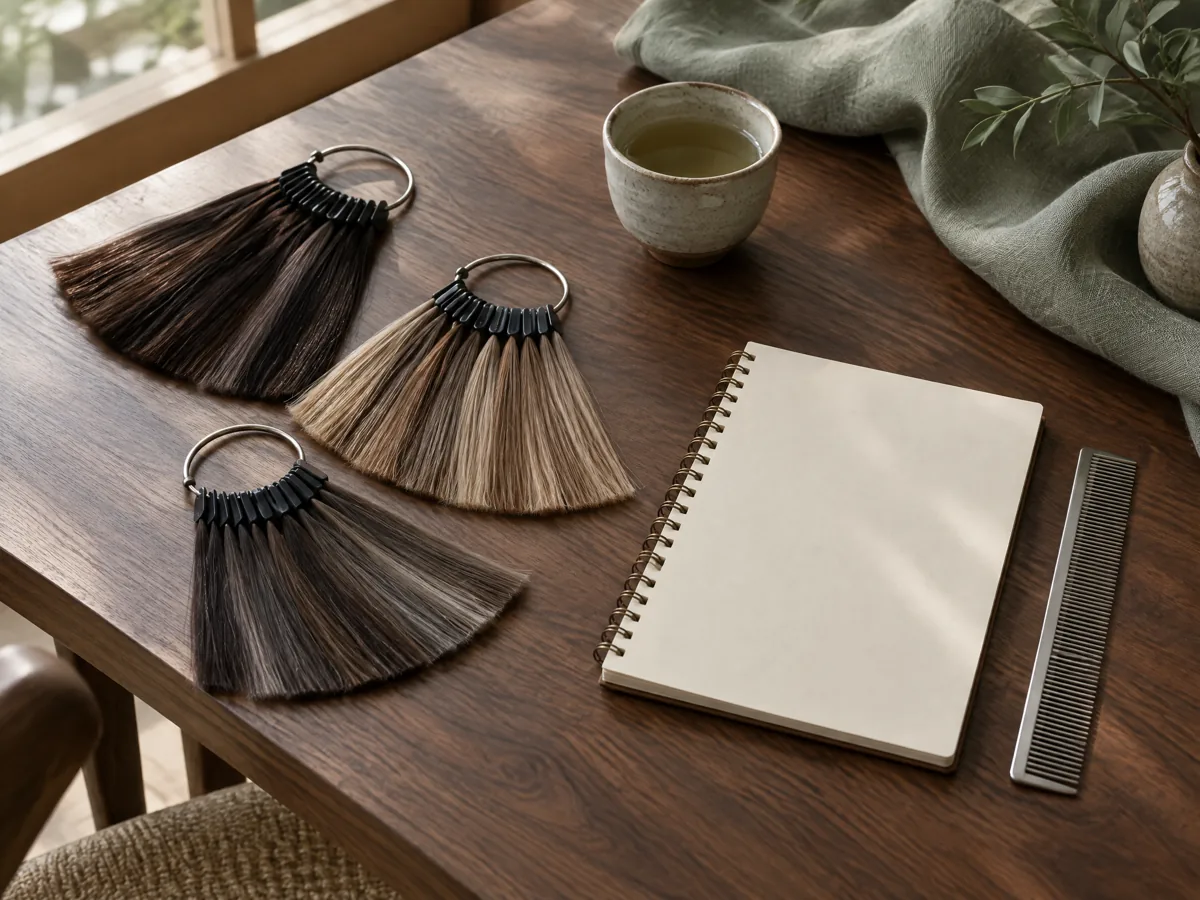
Choose a front, side and rear view of the same intended shape if available. A front photograph can conceal the weight behind the ears and the connection beneath the crown. Identify the one or two features you actually want, such as covered temples or a clear nape. You do not need to accept the model's fringe length, colour or styling height as part of the request.
Compare references with your own hair photographed dry and without a heavily sculpted finish. Strong lighting can make scalp exposure look greater, while wet hair can make the sides look flatter. These images are prompts for discussion, not measurements of your density or instructions to reproduce someone else's result. Tell the stylist which differences concern you instead of asking for an identical copy.
Read colour and cut separately. A bright top above dark sides may look more disconnected than the same haircut in one shade. Before choosing that contrast, imagine the outline without colour and decide whether you still like it. The Canvas Blend gallery can be used to practise noticing shape, lighting and finish, without assuming any pictured result predicts what your hair will do.
Make the brief include a boundary as well as an ambition. Say where the shortest area must not extend, how much fringe you need to keep and whether the nape should remain soft. If glasses, a helmet or a work collar affect the outline, mention them. These details are more actionable than asking for a cut that is simply clean, professional or easy.
- Show the highest acceptable boundary of the short side area.
- Confirm visible short hair versus a skin-level appearance at the bottom.
- Identify the top, fringe and crown lengths that must remain.
- Show the rear connection, not only the side profile.
- Explain how you normally dry and arrange your hair.
A useful reference records what to keep, not only what to remove.
03
How should hair direction, density and top length affect the choice?
Look at the hair when it is sitting naturally before judging how much side weight to remove. Outward-growing sides may behave differently at different retained lengths; taking them shorter is not automatically the same as making them lie flatter. Ask which section creates the width you dislike. An edge tidy-up, reshaping the upper side and removing the entire side panel are distinct responses to that problem.
For a taper haircut, the useful discussion is how the retained hair above the perimeter connects to the top. A narrow taper can keep that fullness largely intact. If your main complaint is a shelf below a longer top, ask about that shelf explicitly. Otherwise you may receive neater edges while the part you found bulky remains substantially unchanged.
The fringe and crown deserve their own length decisions. A front section that you push back needs a different conversation from one worn forward. At the crown, a change in length may alter how a growth pattern becomes visible. Show the stylist the unstylised position and ask what the proposed cut will leave you to arrange. A salon finish alone cannot demonstrate how the hair behaves after your own wash.
If your hair looks sparse in one area, avoid treating a very short cut or a new shade as a density treatment. Both can change contrast and appearance, but neither creates new follicles. Ask to compare retained coverage with a closer outline rather than assuming one hides every thin patch. If thinning is new or troubling, a medical assessment is more appropriate than relying on a cosmetic adjustment; AAD recommends dermatology advice for hair-loss concerns. [2]
Before choosing a new tone, the guide to hair colour salon Sheung Wan can help you consider access from Central, natural daylight, and an appointment time that suits your week.
Evaluate the unstylised top and sides together; neat edges cannot solve every growth or density concern.
04
Where should colour go once the haircut shape is agreed?
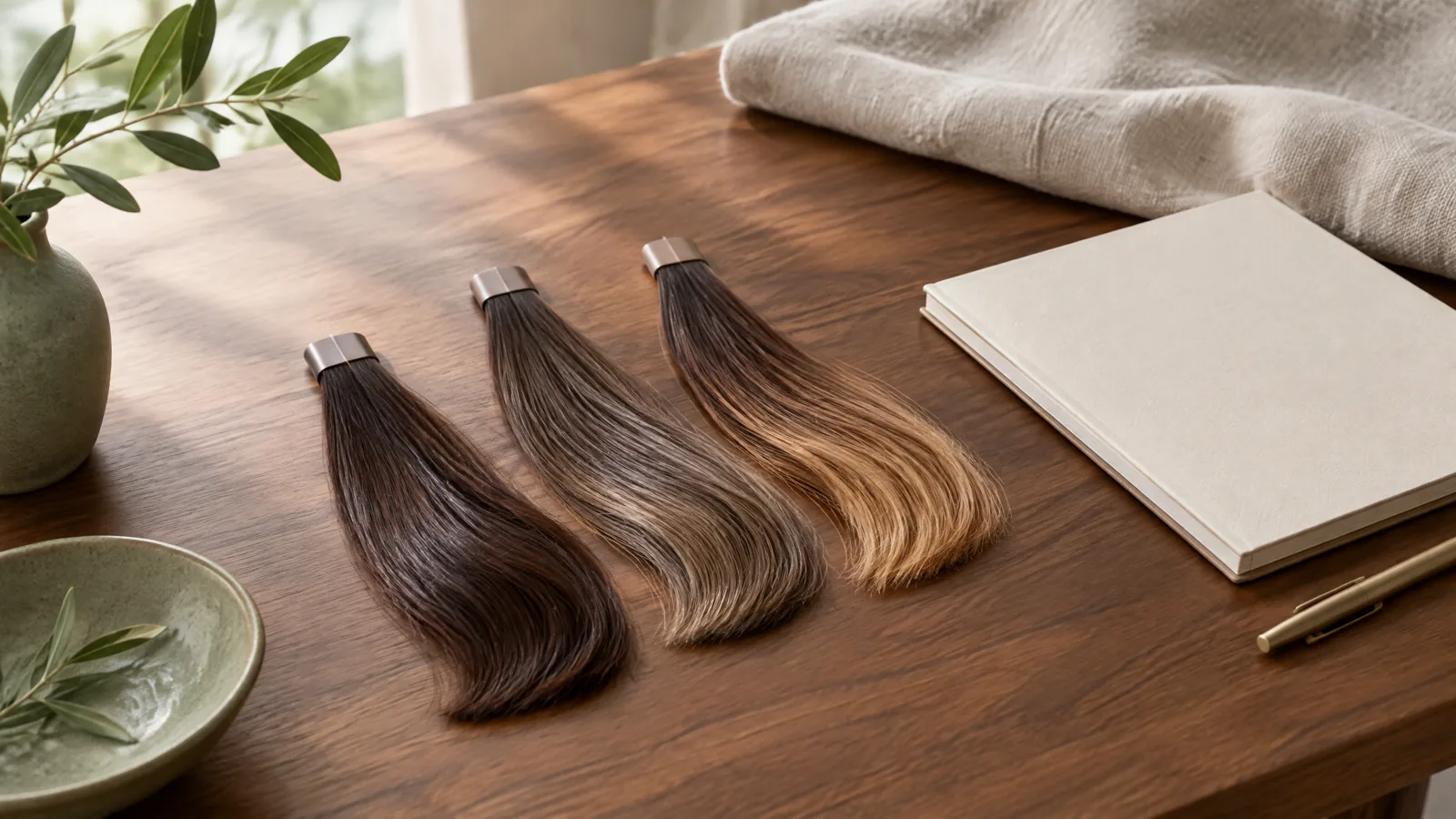
Agree on the intended shape before choosing colour placement, even if the professional later chooses a different order for carrying out the services. This avoids planning a coloured area that the cut will substantially remove. Ask which lengths remain at the front, through the crown and above the transition. The most useful colour map is based on those retained areas, not on the current uncut outline.
Colour on the longer top can emphasise movement or separation from natural sides. Colour through both top and retained sides creates a different overall effect, and repeated close trimming may remove some coloured side hair. Neither approach is inherently better. Decide whether you want a distinct top or a more unified shade, then ask how the plan will look when the top is worn flat rather than lifted.
Darkening, softening the appearance of grey and pursuing a much lighter result are different requests. Do not assume a shade name reveals whether lightening is needed on your current hair. Show earlier colour, bleach, perm or straightening history, including treatments that remain only on the ends. The no-bleach colour options guide is a useful starting point for discussing less dramatic changes, not a promise that every reference can be achieved without bleach.
A lighter finish also changes how the transition reads. Pale hair can make scalp and hair contrast less obvious in some lighting, while a dark retained band may become more noticeable next to a light top. These are visual possibilities, not universal rules. Ask to discuss placement in relation to the side outline and your natural base instead of expecting colour to compensate for an unwanted cut.
If the colour goal is uncertain, a haircut-only appointment is a valid alternative. You can learn whether you like the new proportions before committing to a chemical change. Temporary colour products may offer another way to explore a different look, but they still require their own label checks and may not resemble a lightened salon result. Do not assume that temporary, natural or ammonia-free wording means allergy-free. [1]
| Planning option | What it can contribute | Main limitation | Question to ask |
|---|---|---|---|
| Keep the natural shade | Lets the cut provide the visual change | Does not address a separate colour preference | Will I like the shape without a colour contrast? |
| Colour selected longer top areas | Draws attention to the retained top | Can create stronger separation from the sides | Where should colour stop near the transition? |
| Colour top and retained sides | Works towards a more unified shade | Side trims can remove some coloured lengths | How should trimming and colour maintenance be coordinated? |
| Discuss subtle darkening or grey blending | May suit a restrained change | Process and outcome depend on existing hair and product | What coverage and regrowth contrast should I expect? |
| Discuss a substantially lighter top | Creates a stronger tonal change | May require lightening and a separate condition assessment | Is the required process appropriate for the retained lengths? |
Design the colour around the hair that will remain, and confirm the technical sequence separately.
05
When should you postpone close cutting or chemical colour?
Inspect the scalp before treating a close outline and colour as one routine request. Tell the stylist about soreness, broken skin, sunburn, persistent itching or a previous reaction. The FDA advises against dyeing an irritated, sunburned or damaged scalp. [1] If a close cut causes irritation, do not assume it is acceptable to cover that area with dye simply because both services were originally requested for the same visit.
Product-directed skin testing and a strand test answer different questions. A strand test helps assess how a product behaves on a sample of hair; it does not establish that your skin will tolerate it. Follow the relevant dye instructions and the salon's requirements rather than inventing your own shortened test. FDA guidance calls for skin testing before every use and notes that a negative result still cannot guarantee no reaction. [1]
Previous comfortable colouring is useful history, not permanent clearance. Tell the stylist about reactions to hair products and black henna tattoos, and identify the product or ingredient if known. NHS explains that PPD in many permanent and some semi-permanent dyes can cause irritation or allergy. [3] If there has been a suspected allergy, professional medical advice matters more than trying a different marketing label or treating a salon test as a diagnosis.
Stop treating discomfort as a styling inconvenience if dye application produces symptoms. NHS advice is to stop using a dye when you react and wash the hair and scalp thoroughly with mild shampoo if a reaction seems to be developing. Worsening symptoms need medical advice; sudden mouth, tongue or throat swelling or difficulty breathing requires emergency help. [3] A beauty appointment is not a substitute for treating those warning signs.
Separate safety decisions from the desire to complete every change at once. AAD recommends avoiding the combination of colouring with other chemical processes such as perming or relaxing without appropriate separation. [2] Tell the professional what was done and when, and ask whether the proposed work should be deferred. The sensitive-scalp colour guide can help you prepare that conversation, but it cannot clear an active scalp condition for colouring.
An irritated scalp or suspected allergy changes the plan; do not use a haircut-and-colour booking to override it.
06
What upkeep should you consider before choosing a sharper contrast?
The cut and colour have different maintenance triggers. Hair growing at the perimeter can soften a crisp outline while the longer top still sits well. Coloured hair can show regrowth or a change of tone even when the cut does not yet feel heavy. Ask how those needs might be handled separately. There is no useful universal appointment interval without considering your hair, preferred sharpness and the actual colour process.
Think about your tolerance for an in-between stage rather than only the first-day finish. If you dislike any softening at the ears, a very defined edge may prompt more enquiries for tidying. If you can accept a softer outline, retained coverage may fit your habits better. Choosing less contrast can reduce the pressure to keep a particular visual boundary, although it does not remove the need for washing or shaping.
Keep the home routine proportionate to the style you will actually wear. AAD recommends gently massaging shampoo into the scalp, using conditioner after shampooing, avoiding rough towel rubbing and choosing the lowest heat setting when heat is used. [2] Apply that advice to the hair that remains, especially a longer or coloured top. Short sides are not a reason to scrub the whole head aggressively or repeatedly heat the same front section.
Ask for a finish you can repeat without excessive pulling or heat. If a reference depends on a lifted top but you normally air-dry, discuss a shape that also works flatter. The post-colour care guide can help organise the wash and styling questions after colour. Conditioning can improve manageability; it should not be presented as permanently reversing the effects of chemical or mechanical damage.
Choose a cut and colour you can tolerate between appointments, not only a finish you admire immediately afterwards.
07
What should you confirm before booking the cut and possible colour?
Send a current side and rear view, your preferred references and a short statement of what must stay. Explain whether you want a local edge change or a wider side transition, then describe the top in everyday terms. Include how you wear the fringe, whether glasses affect the sides and any chemical history. Those details help the service provider assess the requested work without pretending that a message alone confirms suitability.
Ask for scope rather than inferring it from a hairstyle photograph. Washing, cutting and blow-drying do not automatically include colour, lightening, a beard trim or shaving. If colour is under consideration, request a separate explanation of placement and process. Use Canvas Blend pricing for the relevant Canvas Blend enquiry and confirm the agreed work directly; do not combine one site's listed services with another site's quote.
Planning example: imagine someone who wears glasses, likes their longer fringe and wants tidier edges plus a subtle colour change. This is a hypothetical decision exercise, not a client result. The first brief could preserve the fringe and upper-side coverage while discussing a local taper. The colour conversation would then focus on the retained top rather than promising to colour very short hair that will soon be removed during trimming.
In that example, a broader fade becomes worth discussing only if the upper-side width is also unwanted. A lighter top becomes a separate choice only if the person accepts the required process and upkeep after assessment. If the scalp is irritated or the colour requirement is unclear, the fallback is to reconsider the chemical service, not to rush it because a new cut has already been selected.
Before agreeing, ask the stylist to describe the final outline in the same terms you used: coverage, shortest finish, retained top and colour boundary. Request clarification if the explanation conflicts with a length you want to preserve. Confirm availability and any required preparation directly. A useful consultation ends with shared decisions and remaining conditions, not an implied guarantee that the reference photograph will be reproduced exactly.
- Confirm the cut independently of any colour or lightening request.
- Share prior colouring, bleaching, perming or straightening and any reactions.
- Ask what testing and scalp assessment are required before the proposed colour.
- Clarify the price scope and whether additional work is being quoted separately.
- Agree what happens if colour must be deferred or the reference is unsuitable.
A clear haircut brief plus a separate, conditional colour brief is more useful than asking for an unnamed combination package.
What else should you know?
Is a taper always less short than a fade?
No. A taper describes a more local area of shortening in common usage, not a guaranteed minimum length. Confirm the shortest finish at the sideburns and nape separately from the area that will stay covered.
Does a high fade have to be a skin fade?
No. Height and the shortest finish are separate decisions. Show the highest acceptable transition and say whether you want visible short hair remaining at the bottom. Do not expect a clipper number alone to explain the entire shape.
Should the salon always cut first and colour second?
Not necessarily. Agreeing the retained shape first is a design recommendation, not a universal procedure sequence. The professional must choose an appropriate working order after assessing the scalp, chemical history and colour plan. Irritation can require colour to be postponed.
Can I colour only the longer top?
It can be a placement option to discuss, provided the proposed process is suitable. Confirm the boundary near the sides and crown, whether lightening is required and how the contrast will look with the top worn flat. A photograph does not confirm that suitability.
Does a negative skin test mean dye is completely safe?
No. FDA notes that a reaction is still possible after a negative skin test. Follow the product instructions and professional requirements, disclose previous reactions and do not use a strand colour test as proof of skin tolerance. [1]
Can a fade or darker colour fix thinning hair?
They may change the appearance of contrast or coverage, but neither creates hair growth or treats a cause of thinning. AAD recommends dermatology advice for concerning hair loss. [2] Keep cosmetic choices separate from medical evaluation.
What is the practical next step?
Start with three decisions you can point to: the area that will become shorter, the hair that must remain and the way you want to wear the top at home. Then choose whether colour adds a useful effect to that shape. If you cannot yet describe the colour boundary or accept its maintenance, keeping the natural shade while changing the cut is a complete option, not an unfinished service.
Use the Canvas Blend booking page to send the intended work, current hair details and possible dates, then wait for confirmation. Keep scalp concerns and chemical history in that enquiry rather than saving them until application begins. The best next step is an assessed plan with a clear haircut scope, a separate colour decision and an agreed alternative if either request needs to change.
When looking up hair salon Central, check the location details and choose a consultation time that lets you compare tones in natural daylight before or after work.
Sources and editorial notes
- [1] FDA: Hair Dyes
- [2] American Academy of Dermatology: 10 hair care habits that can damage your hair
- [3] NHS: Hair dye reactions
This AI-assisted Canvas Blend guide is not a first-person case study or an article reviewed by Vit So. Vit So Hair Stylist and Canvas Blend share ownership. Links are not independent third-party endorsements and do not mean that fees, booking policies or packages are interchangeable. Colour, chemical processes, extensions and styling require individual assessment; cosmetic hair and scalp care do not replace medical advice.
An AI-assisted Canvas Blend editorial guide prepared for current use on 2026-11-06, not written in Vit So's voice or represented as reviewed by him. Canvas Blend and VitSo share ownership; the three linked pages provide related context, not independent third-party endorsement. Haircut design advice does not prescribe a universal chemical-service sequence or establish scalp or allergy clearance. The planning example is hypothetical, and medical sources do not endorse a particular salon or haircut.
Continue reading
Hair DecisionsChoosing a textured crop haircut or an undercut: shape, styling and upkeep
Compare a forward crop with undercut contrast, choose fringe coverage and side connections, and plan realistic styling, grow-out and scalp care.
Hair DecisionsCan a two block haircut work with your natural curls?
Plan a two-block shape around your natural curls: compare dry fringe length, side coverage, weight, styling effort and the questions to ask before booking.
 Hair Decisions
Planning a women's haircut: bob and pixie colour placement that fits your routine
Compare bob, lob, pixie and bixie shapes, then plan colour around the lengths you will keep, your natural parting, hair condition and realistic upkeep.