Colour × Wigs × Personal Choice
Synthetic Wig Care: Texture, Tangles and Expectations

Synthetic wig care begins by distinguishing texture, tangles, frizz and shedding before choosing a routine. Synthetic fibre is not automatically heat-safe, and human hair is not unrestricted; stop forceful handling if the comb catches or the construction appears damaged.
Choosing a wig is more than choosing a straight or curly photograph. Texture changes visible volume, nape friction and the time you will spend maintaining the piece.
This guide separates selection, detangling, washing, frizz assessment and salon boundaries so you can set realistic expectations without a lifespan promise.
01
How should you compare straight, wavy and curly silhouettes?
Choose a texture by the outline you want to live with, not by one attractive photograph. Straight hair shows length, ends and the parting clearly. Waves and curls redistribute visible volume and can make the same measured length look shorter. Try a sample from the front, side and back, then look again while wearing the collars and glasses you normally use.
A straight versus curly wigs decision is also a routine decision. A ready-shaped style may suit someone who wants a short daily routine. A curlier style may suit someone who is willing to separate sections with their fingers and protect the curl direction. Neither choice is automatically more natural. The useful question is whether the silhouette matches your clothes, face framing and available time.
Write down three conditions before you shop: your usual parting, the longest length you can manage, and the collars or scarves that touch your nape. These details are more useful than saying you want something natural. Compare length, ends and parting with a physical sample; a photograph does not replace a product-specific fitting or supplier advice.
If you still have your own hair, the wig also needs to sit beside the visible hairline, temples and neckline. Do not judge only from a front-facing selfie. Use ordinary light and try the wig with an everyday outfit. Hair-loss or treatment-related choices are cosmetic decisions here; pain, broken skin or sudden changes in shedding should be discussed with an appropriate clinician.
| Choice | Useful expectation | Check first |
|---|---|---|
| Straight | Clear length, ends and parting | Friction and dryness can show clearly in a straight line |
| Wavy | Soft movement and changing visual volume | Follow the item’s method for preserving the wave |
| Curly | A defined outline that can be maintained in sections | Knots may be harder to see; forceful brushing is not a solution |
Compare the physical sample and the routine, not just the photograph.
02
Why must fibre and human-hair expectations stay separate?
The word synthetic describes the fibre, not a universal heat rating. Human hair also does not mean unlimited bleaching or styling. Macmillan explains that synthetic wigs commonly have their shape set into the fibre and may be hand-washed in cold or tepid water and left to dry, while heat can affect real and synthetic hair differently.[1] The individual maker’s label remains the controlling instruction.
Before the first wash, identify the fibre, approved cleanser, drying method and heat limits. If the label does not clearly say that a tool is suitable, treat the wig as not heat-friendly. Do not transfer a salon routine for natural hair to a synthetic wig. Equally, do not use one heat-friendly synthetic item as evidence that every synthetic fibre can take heat.
Mixed-fibre pieces are harder to judge by appearance. A synthetic section may stretch, frizz or deform under a dryer or iron, while human hair may become dry or already contain previous chemical processing. Photograph the label and ask the original supplier before buying a new styling product. A professional salon can discuss your own hair, but that is not the same as authorising wig processing.
Keep a small care card with four fields: fibre, washing method, permitted tools and prohibited actions. Recheck it whenever you change a product or notice frizz. This is more reliable than a generic online tip and stops heat-friendly, colourable and long-lasting from becoming accidental synonyms. For a natural-hair routine after colour, see the post-colour hair care guide.
A fibre name cannot replace the individual care label.

03
What is the least forceful way to handle a synthetic wig tangle?
Detangling is not a test of how hard you can pull. The aim is to reduce simultaneous stress on the fibres, comb and cap. Place the wig on a clean surface or support the cap securely. Divide a long style into sections, beginning at the nape and ends where collars and scarves create friction. OWNSTRAND’s guide to synthetic wig tangling care guidance and limitations likewise describes small sections, support and easing knots upward.
Take a small strand and work on the last few centimetres first with a tool approved for that fibre. Once the end is loose, move slightly higher. Do not pull from root to tip in one long stroke. If the knot tightens or the comb catches repeatedly, separate nearby fibres with your fingers and stop if control is decreasing.
Wet hair needs even more restraint. Follow the label for removing water, then let the piece dry in the required position. Do not twist it dry or press a wet mass into a towel. For curls, finger separation may protect direction better than brushing. For straight hair, avoid leaving damp lengths compressed against a collar. Pulling can affect the cap or hand-tied areas as well as the visible hair.
Notice the friction source after you finish. A collar, bag strap, scarf or repeated adjustment may be responsible for the same knot returning. This is not a demand to stop wearing the wig. It is information for choosing a different length, neckline or daily check. A brief check while the knot is small is easier than a large knot a week later.
- Support the cap and start with a small end section.
- Move upward only after the lower section is loose.
- Use products and tools labelled for that fibre.
- Stop when the knot involves the cap or hand-tied area.
Small sections, ends first and a willingness to stop protect both hair and cap.
04
How can you distinguish frizz, shedding and ordinary wear?
If persistent tangling makes you consider replacement rather than more styling, compare wig prices and quote comparison questions using the actual specifications. Separate product cost from any fitting or work included, and confirm supply in writing. A higher quoted price is not evidence that a piece cannot frizz, shed or require a different routine.
Do not reach for high heat as soon as the surface looks fuzzy. Do not layer several styling products to hide a rough feel. Check the fibre and heat conditions, then observe a small, less visible area only if the label permits the product. The supplied guidance also separates washing, water removal, combing and drying from questions about cap or hand-tied tension.
If you see shedding, record where it collects and whether it follows pulling. Loose ends and hair emerging from a cap area are not the same event. If the cap changes shape, a section suddenly thins, or a hand-tied area loosens, do not cut, glue or patch it before asking the supplier. Keeping the label and a photograph will make that conversation clearer.
Frizz can also be a texture problem created by treatment. Repeatedly brushing a curl pattern can spread it into a fuzzy outline. Rubbing straight fibres at the nape can create a rough patch. Separate restoring the existing shape from redesigning the style; otherwise a care problem can be mistaken for a salon styling request. For fading on natural hair, the hair-colour fading solutions page is a separate salon topic.
Locate friction, moisture, heat and cap tension before choosing a remedy.
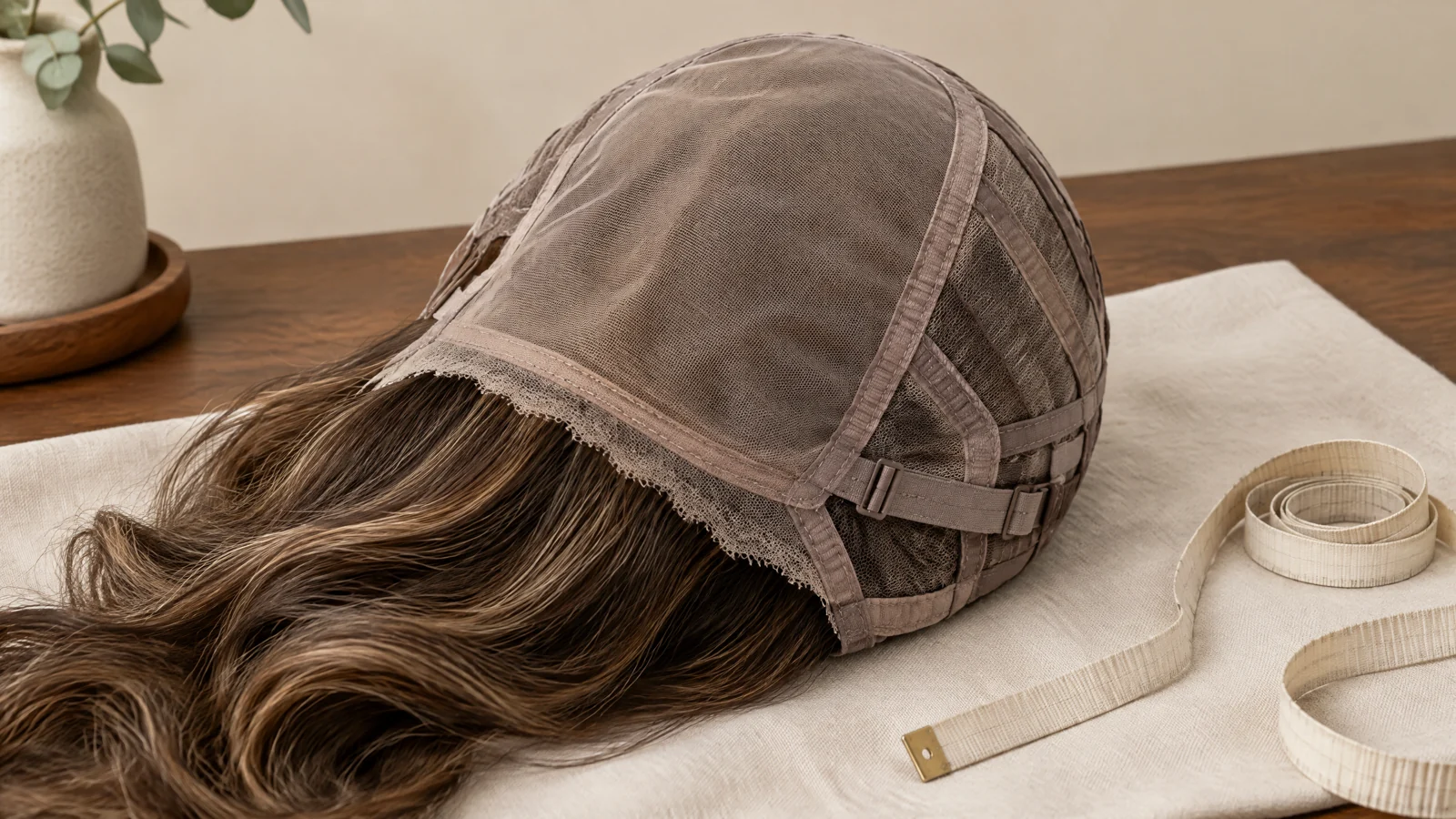
05
What routine makes washing, drying and storage easier to sustain?
Before washing, remove any detachable parts and read the supplier’s instructions. Macmillan says both human-hair and synthetic wigs need careful washing and warns against flames, ovens and unconfirmed dryer heat. Cancer Research UK similarly notes that direct heat can melt synthetic fibres or make them frizzy; only some products may tolerate heat, and the maker’s information must be checked first.[1] [2]
Use soaking and gentle pressure rather than scrubbing. After rinsing, do not wring the fibres or twist the whole length. Remove water in the manner specified by the label and let the piece dry in a position that protects its shape. If the item has not dried fully, do not seal it in a bag or put it straight back on your head.
Storage is mainly about reducing compression and friction. Avoid forcing a long wig into a narrow drawer or leaving the ends against a sharp edge. If you rotate several pieces, note the wash date, fibre and problem area for each one. This helps distinguish frequent wear from a repeated collar problem.
Care is not a lifespan guarantee. Cancer Research UK gives a broad six-to-nine-month indication for some synthetic wigs, while also directing readers to manufacturer information.[2] Wear frequency, friction, fibre, styling and care all change the outcome. Therefore, do not replace a piece only because a calendar number has arrived, and do not promise a fixed lifespan after one successful wash. If your natural hair needs local colour maintenance, the touch-up service explains that salon scope. For realistic expectations about wear over time, read how long a wig lasts and care guidance and limitations from the assigned supplier guidance.
| Task | Home-care priority | When to ask the supplier or suitable professional |
|---|---|---|
| Detangling | Sections, ends upward, low tension | A knot involves the cap or repeatedly catches |
| Washing and drying | Follow the label; press, do not twist; do not guess heat | The label is unclear or the shape changes markedly |
| Shape adjustment | Maintain the existing texture only as instructed | You want cutting, a new parting or a changed outline |
| Natural-hair styling | Confirm the hair is yours, not wig fibre | You need bleach, colour or chemical processing |
Cleaning preserves a state; styling changes an outline. They need different expectations.
06
How should wig care and salon styling be discussed separately?
Salon styling usually concerns your natural hair: trimming, colour direction, fading, repair and texture assessment. Wig care depends on a particular fibre, cap construction and supplier instructions. Both conversations may mention line, volume and frizz, but their tools, products and responsibility are different. Saying “make everything look smooth” is not a sufficient technical brief.
When discussing an overall appearance, identify which strands are your own and which belong to the wig or topper. A colour salon may help you think through the relationship between your natural hair and the wig’s length, tone or visible texture. Whether the wig itself may be cut, washed or heated must still be confirmed by the original supplier or label.
Canvas Blend is a Hong Kong colour salon. It does not make wigs, diagnose medical conditions or provide a joint OWNSTRAND package. If you want to discuss natural-hair damage, the damaged hair repair service explains the salon-side scope; for natural-hair colour or styling, use the booking page and describe what is actually your own hair.
A hypothetical planning example makes the boundary clear. Suppose a synthetic wig tangles at the nape while you want your natural roots closer to its colour. First ask the supplier about the wig’s care and whether any trimming is allowed. Then discuss your natural hair with a salon. Do not bleach the wig as though it were natural hair and expect its original curl to return.
If you have persistent scalp irritation, broken skin, infection concerns or a sudden change in hair loss, stop treating the problem as a styling choice and contact an appropriate healthcare professional. Cosmetic planning can happen alongside care, but it cannot replace diagnosis.
Name the hair, the material and the responsible instruction before discussing an outcome.
What else should you know?
Can I use a straightener on a synthetic wig?
Not because it is synthetic. Use heat only when the individual product explicitly permits it and follow its instructions. Otherwise avoid straighteners, curling irons and unconfirmed dryer heat.
Should I brush a wig every day?
Not automatically. Respond to wear, friction and texture. If you need to detangle, use small sections and work from the ends upward rather than trying to make every fibre perfectly straight.
Does shedding mean the wig is finished?
Not necessarily. Check where the hair is coming from and whether pulling or cap tension is involved. Sudden thinning, a loose hand-tied area or a distorted cap should be referred to the supplier before repair.
Can a regular colour salon bleach a human-hair wig?
Do not assume so. Human-hair wigs may already have chemical processing and different construction. Ask the supplier whether processing is allowed and who is qualified to do it.
What if my scalp is uncomfortable while wearing a wig?
Fit, lining and wearing time may be cosmetic considerations, but pain, redness, broken skin or sudden hair-loss changes need appropriate healthcare advice rather than only a new styling product.
How do you turn the choice into a next step?
Keep the label, fibre information, friction notes and photographs together. The next time the wig tangles or frizzes, you will have a clearer basis for choosing gentle care or asking for help.
Canvas Blend can discuss colour and repair for natural hair. Product-specific wig care, heat permission and wig alteration should be confirmed with the original supplier.
Sources and editorial notes
This AI-assisted Canvas Blend editorial guide is not a first-person case study or an article reviewed by Vit So. OWNSTRAND shares the site owner; links do not imply a joint package or medical certification. Confirm product materials, processing, care, fees and availability with the supplier in writing. Consult qualified healthcare professionals about hair loss or scalp symptoms.
Canvas Blend Editorial / AI-assisted research; practical appearance and care information, not medical advice or a substitute for the product supplier’s instructions.