Colour × Makeup × Hong Kong
Advanced Bridal Hair and Makeup Training Choices

Choose advanced bridal hair and makeup training by identifying the part of your work that cannot yet be repeated reliably—not by choosing the most elaborate finished photograph. A clear gap in hair structure, colour judgement, eye balance, timing or changeover planning gives you a much better basis for selecting a course and practising afterwards.
Advanced bridal work is not simply adding more curls, more lashes or a more complicated base. A wedding look has to make sense with the person’s hair density and texture, dress line, veil, accessories, photography distance, venue light and movement through the day. The useful skill is being able to explain and adjust a choice when one of those conditions changes.
This guide uses a Hong Kong wedding-day context to help compare focused makeup study, focused hair study and integrated training. It is not a review, accreditation or employment promise. Confirm the current syllabus, entry level, dates, language, materials, practice models, tools and policies directly in writing before enrolling in any programme.
01
What should you diagnose before calling a course advanced?
Start with an unretouched baseline rather than a moodboard. Complete one look you already use, time the stages from sectioning to finish, and photograph the front, both profiles and back. The point is not to grade yourself or manufacture a portfolio. It is to spot where you redo work: perhaps the root support collapses, a liner disappears when the eye opens, an accessory shifts the centre of gravity, or a base reads too heavy under a second light source.
Sort each issue into one of three groups: an unstable hand movement, an unclear design decision, or an unplanned workflow. Curl direction, pin placement and a shadow edge are movements. Knowing whether to reduce volume, lower the bun or shorten a lash is a design decision. Deciding when to fit a veil, do makeup, or reserve time for a touch-up is workflow. A repeated problem across more than one head of hair or face is a meaningful training goal.
Write down what you can already do alone as well. A clean ponytail does not automatically mean that you can distribute weight through an updo, and everyday eyeliner does not automatically stay balanced with the eye open, closed and in profile. Use the observations in this bridal hair colour planning guide to note face-framing brightness, depth lines, fringe and accessory placement before an enquiry.
A practical sentence is: “I can deliver A within a stated time, but when B happens, C shows D.” For example: “I can complete a low bun, but the right rear line loosens when a pearl comb is fitted.” That is neither self-criticism nor vague ambition. It tells an educator whether you need structural breakdown, proportion diagnosis or more timed repetition.
- Keep unstyled front, side and back images, with hair length, layers, fringe and habitual parting noted.
- List three actions you can repeat and three visible points that require reworking; describe what is seen rather than calling it simply wrong.
- Bring two reference images and label whether you are studying silhouette, colour, eye placement or veil position in each one.
- Time one complete practice run and note interruptions caused by tools, products or decisions.
- Ask how demonstration, step-by-step breakdown, hands-on practice and feedback are divided in the proposed training.
A training choice becomes more precise when “I want to improve” is converted into a visible issue under a named condition.
02
Why should hair colour and structure be assessed together?
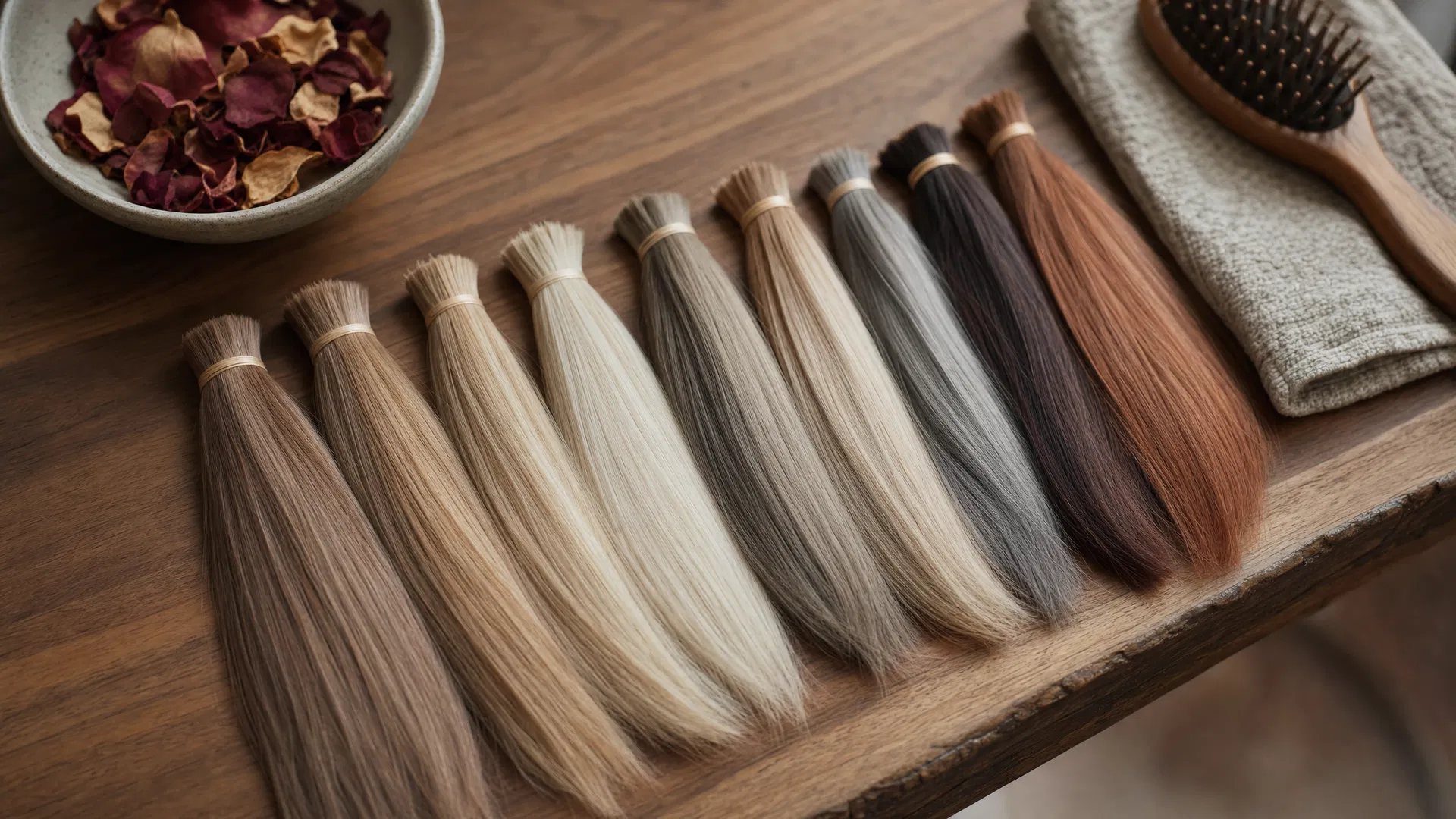
The readability of a bridal hairstyle is not created by its bun shape alone. Depth and light lines, natural texture, strand thickness and layers affect whether a curl registers, whether pins can be concealed and whether the outline breaks apart in a photograph. Hair colour is not a defect to correct. It is useful design information: deep hair can make an edge read crisply, while lighter or highlighted pieces can reveal braid and wave separation. Both still need an appropriate foundation and finish.
Read the movement of light and dark before deciding which angle should carry the visual focus. With brighter face-framing pieces, a low bun may not need many loose pieces to show dimension. With very even depth through the back, curl pattern, section thickness and shadow may need more attention. The cool versus warm hair-tone comparison can help you frame colour questions alongside skin, gown and jewellery, but no tone is inherently the correct bridal choice.
Sequence matters more than the number of finished styles. Secure clean sectioning first, then practise the support underneath, and only then place surface pieces, braids or accessories. Change one variable per repeat: use the same low bun but move the padding, or use the same comb but alter the anchor point. When something loosens, you can then distinguish weight, texture, pin direction and surface tension instead of treating more product as a universal fix.
If colouring and the wedding date are close together, leave time to observe the hair rather than making a dramatic last-minute change to reproduce a reference image. If you are studying light-catching placement, the balayage dimension guide is a useful visual reference. In training, placing the same structure on heads with different depth patterns is a better exercise in choosing section thickness and accessory contrast than copying one finish.
Advanced hair judgement means selecting a structure that can be supported and read clearly for the actual colour pattern, texture and accessory weight in front of you.
03
How can eye adjustment practice remain observant and safe?
The purpose of advanced eye work is not to force both eyes into a perfectly identical shape. It is to make brow, liner, shadow and lash placement look coherent when the person is naturally looking forward, closing the eyes and speaking. Map with a light shade, step back to view the whole face, and accept that a deeper crease or a different outer-corner direction may call for different lash length or density. For a course-specific enquiry, use BigDeal Make Up’s bridal makeup artist course guide as a starting point and confirm the current practical scope in writing.
Individual lashes can support small, local adjustments, but adding more is not proof of skill. A planning example: begin with a short, sparse outer-corner section to test horizontal extension; then look with the eye open to see whether the line is hidden. If the emphasis is already falling below the eye, reduce lower-lash or lower-shadow weight rather than intensifying both areas. This is an exercise in judgement, not a fixed instruction for any eye shape.
Hygiene belongs inside the technique. The U.S. Food and Drug Administration advises keeping hands and instruments used around the eye clean, not sharing eye cosmetics, and stopping use immediately if irritation occurs; persistent irritation calls for medical advice.[1] Follow product directions. Do not force adhesive use on inflamed, broken, infected or clearly uncomfortable eye areas, and do not treat a personal test as a guarantee against a reaction.
Build a fixed review order: open the eye and view it from a distance, check liner continuity with the eye closed, then assess lash direction and comfort during a natural expression. To relate the eye area to the overall colour impression, compare how a smoky hair colour reads in Hong Kong light behind the face. This avoids solving every contrast issue by simply expanding the eye-shadow area.
Transferable eye work comes from gradual observation, modest adjustment and clean practice—not from density alone.
04
How do you turn a demonstration into verifiable independent practice?
A course can give you a sequence, but reliable results come from repeating it. Set one primary objective for each independent run: “the low bun keeps its right-side line after a head turn” or “both eyes receive a small lash adjustment within the planned time.” Save more than the best image. Record the weak point, tool choice and time before and after adjustment in the same note so that the next run has a defined starting point.
Here is a planning example, not a course-hour requirement. Use three look directions, photograph each from front, left, right and back, then inspect each view under a mirror-light condition and a more camera-like light condition. That produces 3 × 4 × 2 = 24 comparable review points. The count does not create quality, but it prevents the front view from becoming the only verdict. If one direction repeatedly loosens at the rear profile, repeat only that structure next time instead of adding another new style.
Photographs also require consent. With a live practice model, explain the intended image use, angles, possible retouching, display audience and whether consent can be withdrawn before shooting. Do not treat an image as public portfolio material without clear permission. A practice head and close-up structural images are enough when the aim is technical diagnosis. Use these hair-colour before-and-after documentation tips to avoid mistaking a changed filter, angle or light for an improved technique.
| Practice focus | Condition held constant | Review after completion | One variable for the next run |
|---|---|---|---|
| Low-bun structure | Same hair length and accessory weight | Front, side and rear outline; loosened points after movement | Padding location or anchor direction |
| Eye balance and lashes | Same base and camera distance | Open eye, closed eye, natural expression and comfort | Outer-corner length or density |
| Integrated hair and makeup | Same neckline reference and hair depth | Face frame, visual centre, accessory and eye contrast | Bun height or shadow depth |
Small, comparable and repeatable practice loops reveal which decision improved the result, rather than just generating more images.

05
Should you choose makeup detail study, hair study or integrated bridal training?
The choice is not about which title sounds more advanced. It is about whether you lack depth in one craft or connection between several decisions. If base layering, brow-and-eye proportion and trial communication are the recurring obstacles, concentrated makeup detail practice may be more useful. If you can finish makeup but lose the overall balance after adding a veil, updo or outfit change, structure and transition practice belong in the same plan.
Use three filters: Where do I rework most often? Do I need to finish hair and makeup in the same practice run? Do I already have enough foundation to follow a pace that may not reteach every basic movement? For an eye, brow or complexion gap, ask about live practice, stepwise feedback and hygiene arrangements. For whole-look planning, ask how much hands-on time is assigned to hair and makeup respectively, and whether accessories and after-change adjustments are practised.
If you already have basic techniques but need to check whether an advanced scope fits your particular gap, consult BigDeal Make Up’s bridal makeup advanced course page. Its published information asks prospective learners to discuss existing experience and learning direction. The syllabus, dates, fees, materials and any add-on content should still be confirmed directly in writing; a course title alone does not prove that a particular technique is included.
Let tool purchases follow the decision. Do not buy every curling-barrel size, padding shape or eye product because it appeared in one demonstration. First establish whether your current tools allow you to practise the key movement, then identify the gap that genuinely blocks progress. Where hair is bleached, repeatedly heat-styled or otherwise fragile, factor gentle handling into the post-class plan; this damaged-hair repair guide offers everyday context, while individual hair needs still require personal judgement.
Focused and integrated study are not higher or lower options. The better route is the one that reduces reworking in the next real condition and lets you explain the trade-off.
06
How should a wedding-day flow and weather change the skills you prioritise?
Do not judge a look only on a still practice head in an air-conditioned room. Consider a planning example: hair and makeup are completed at a hotel in the morning, an outdoor ceremony follows, and an evening reception comes later. The priority is not just one bun. It is the sequence for fitting, removing or replacing a veil, reducing facial shine, checking rear and side balance, and tidying flyaways under time pressure. Put outfit changes, travel, outdoor time and expected photo angles on a workflow card, then use it in the course conversation.
The Hong Kong Observatory explains that its Very Hot Weather Warning alerts the public to heatstroke and sunburn risk, and advises attention to hydration, exertion and physical condition during outdoor activity.[2] This is not a promise about makeup wear or hairstyle performance. It is a reason to include shade, water, breaks and an indoor fallback location in a simulated workflow. When a weather warning or personal discomfort is involved, safe on-site arrangements take priority.
For a conversation about connecting makeup, hair, dress and transitions, review BigDeal Make Up’s bridal hair and makeup course outline. Its published scope discusses coordination, touch-ups and styling transitions. Confirm class size, models, tools, dates, materials and the actual lesson distribution before booking, since these details determine how much hands-on practice you will receive.
Create a small contingency checklist outside class: separate clean pins and sectioning clips, decide when a veil changes hands, identify who holds touch-up items, name the photo angle to check first, and state when eye-area work stops because of discomfort. The wedding-day touch-up preparation guide can help you organise the sequence. The goal is not carrying the largest kit; it is knowing why and when an item should be used.
Clear sequencing through changes and outdoor conditions is a more useful advanced bridal skill than reproducing a beautiful still image alone.
07
Which enrolment questions reveal whether a course fits you?
Treat an enquiry as a two-way check rather than a price request. State your foundation, two situations you want to improve, time available for independent practice and tools already owned. Then ask the provider to explain the expected level, how practical work and feedback are arranged, and whether you must supply a model or materials. Compare the written response line by line with your goals; clarify anything that remains vague before deciding.
Separate published content from a promotional image. Photography, models, named brands, certificates, employment support, private coaching, airbrush instruction and specialised products should never be assumed to be automatic inclusions because of a course name, photograph or conversation. If an element is essential, request a written answer on whether it is scheduled, who supplies it, whether you personally practise it and whether extra conditions apply.
Finally, schedule a personal review date after the first practice cycle. Repeat the original workflow and compare it with the recorded baseline. If the issue has not improved, the explanation may be a goal that was too broad, changed practice conditions or a need to revisit a fundamental movement—not necessarily a lack of aptitude. This record gives you better evidence when choosing a short workshop, one-to-one coaching or a broader future course.
Written scope, repeatable goals and a process that respects safety and consent are the foundations for turning training time into durable judgement.
What else should you know?
I can do everyday makeup or basic set hair. Does that mean I should go straight into an advanced class?
Not automatically. List the actions you can perform alone, the points you routinely rework and the situations you intend to handle. Then compare those with the stated entry level and practical format. If sectioning, basic securing or everyday base application is still unstable, strengthening that foundation may be more useful than adding styles quickly.
Is lighter or highlighted hair always easier for bridal styling?
No. More visible depth variation may reveal braids and texture, but hair quality, layers, length, holding method and accessory weight also affect structure. Test the actual hair first, then decide on section thickness, bun position and accessory contrast.
Should eye adjustment make both eyes exactly the same?
No. A practical aim is coherence and comfort with the eyes open, closed and in a natural expression. Adjust liner, shadow or lash emphasis one side at a time and check both front and profile views instead of forcing a perfect mirror image.
Can a personal test with individual lashes guarantee that I will not react?
No. Follow the product directions, keep hands and tools clean, and pay attention to the eye area. Stop use and seek appropriate medical advice if irritation, swelling, persistent tearing or visual disturbance occurs.
How can I compare group training with one-to-one tuition beyond the number of hours?
First compare the feedback density and practice environment you need: do you need repeated correction on a live model, a practice head or a simulated changeover? Then confirm class size, hands-on time, tools, materials, models, language, dates, payment and cancellation terms in writing. Hours alone do not establish suitability.
How do you turn the plan into a next step?
The most useful first step in advanced bridal training is to complete one full practice look, identify three visible issues, and take your front-side-back record, references and workflow card into a course comparison. If you are preparing for your own wedding rather than training professionally, the booking page can help you organise hair-colour, styling and trial questions; service arrangements and learning arrangements should be confirmed separately.
From hair colour to supportive structure, eye comfort to wedding-day changes, each capability can be separated, practised and placed back into the whole look. Choose learning that supports that cycle rather than a promise of an overnight transformation, and your bridal design judgement will have a more durable base.
Sources and editorial notes
This AI-assisted Canvas Blend editorial guide is not a first-person case study or an article reviewed by Vit So or Maggie Yeung. General information is not a substitute for individual professional or medical assessment. Confirm BigDeal arrangements in writing.
This is a Canvas Blend editorial guide, not personal experience, instruction, endorsement or review by Vit So or Maggie Yeung. Confirm BigDeal Make Up’s current syllabus, instructors, fees, dates, materials, tools, models, language, certificates and any add-ons in writing before enrolment.