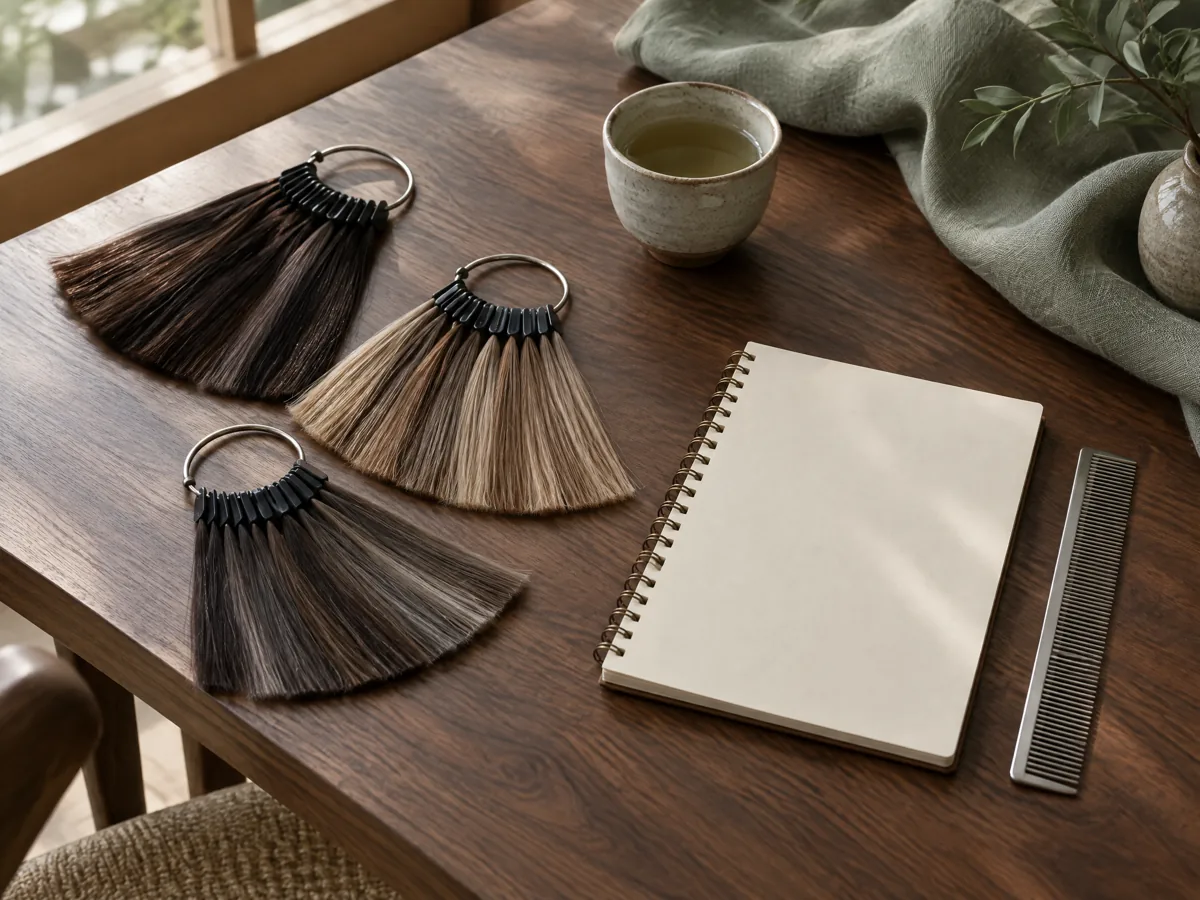
Plan the visible hair shape around your outfit, accessories and real departure deadline, then decide whether colour needs changing at all. For a wedding, confirm the hair-only work separately from any trial, makeup, venue attendance or later touch-ups; none should be assumed from a styling enquiry.
A special occasion does not automatically call for a more elaborate hairstyle or a new colour. The useful starting point is what should remain visible: your earrings, the dress back, the shoulder line or movement around your face. Decide which of those matters most, then compare it with your present length and layers. A photograph can explain a preference, but it cannot establish how much hair you have or how an accessory will sit.
The linked hair styling description is useful for distinguishing a loose finish from hair up before adding wedding or event requirements. Treat these as temporary shape choices, not permanent texture changes. This guide focuses on building a workable brief: choosing the outline, considering colour without unnecessary processing, checking comfort and separating the salon appointment from the rest of your day. It does not establish availability or an agreed service package.
If you are planning a change of colour, learn about hair colour Hong Kong before your consultation and consider the techniques, tones and upkeep that suit your routine.
01
What should your hairstyle show, and what should it keep out of the way?
Start with the outfit rather than a collection of disconnected hair photographs. A detailed collar may compete with a low gathering; an open back may be hidden by falling length. Neither means that one style is wrong. It means you need to choose which feature takes priority. Show the front and back of your outfit, and include any glasses or jewellery you expect to wear rather than evaluating the hairstyle on its own.
Your role at the event matters too. Someone giving a speech may want the front clear without having to tuck it behind an ear. A guest who mainly expects seated portraits may prioritise the side profile. Dancing, walking between locations and outdoor photographs add different practical demands. Describe these activities without asking the stylist to promise an unchanged finish through every condition. An adaptable outline can be a more realistic aim than absolute immobility.
Choose one essential feature and one preference you could change. You might need both eyes clear but be flexible about whether the back is fully gathered. Alternatively, visible length could matter more than a perfectly smooth crown. This distinction helps when a reference conflicts with your layers or accessory. It also prevents the consultation from becoming an attempt to combine a high bun, loose waves and a separate front detail that do not work together.
Use reference images as a vocabulary for shape. Explain the parting, the amount of ear exposure and where the ends fall. Compare images with your own hair in ordinary light, because lighting and camera angle can change the apparent fullness. The Canvas Blend gallery can help you identify visual preferences, but any image remains a discussion aid rather than a promise of an identical result on your hair.
Name the feature that must remain visible before choosing how the hair will be arranged.
02
How do loose, half-up and gathered styles compare in practice?
A loose finish retains the most falling length and may feel closest to your everyday appearance. Its practical question is where that length will move. If you usually sweep hair away from your face, a reference with curls over both cheeks may be uncomfortable even when it looks attractive. Ask where the front sections will sit and how much movement you are willing to accept, rather than judging only the shape at the back.
A half-up outline offers a different compromise: some front sections are gathered while the lower length remains visible. It is not automatically a quicker or cheaper version of an updo. Short layers, a fringe and the weight of an accessory can affect the arrangement. Ask which strands can reach the chosen support point and which will remain deliberately loose. That answer is more useful than requesting a generic soft finish.
Fully gathered hair clears more space around the neck and shoulders, but bun position still needs checking against your clothing. A low shape can catch against a high collar, while a higher outline may conflict with headwear. For shorter hair, a partly pinned arrangement may be more suitable than forcing every strand into a distant fastening point. A larger reference shape does not mean extensions or a hairpiece are required, available or included.
The comparison below is a starting point for assessment, not a durability ranking. Two styles with the same name can have very different structures. Choose according to your visible priorities and then ask what needs adapting for your own hair. If the proposed shape depends on an accessory you have not bought, keep an alternative that works without it instead of allowing an untested attachment to determine the whole appointment.
| Outline | Useful when | Check before choosing | Possible alternative |
|---|---|---|---|
| Loose finish | Visible length and movement are priorities | Hair across the face, neckline contact and your habit of tucking it | Gather selected front sections |
| Half-up | You want a clearer front without hiding all the length | Whether layers reach the support point and where the accessory attaches | A deliberately partly pinned outline |
| Low gathering | An open shoulder line and a shape near the nape suit the outfit | Collar clearance, sitting comfort and accessory weight | Move the gathering or reduce its size |
| Higher gathering | You prefer the visible shape above the nape | Headwear, tension and whether the available length supports the outline | A lower or less tightly gathered shape |
Select an outline for a practical reason; do not treat complexity as a measure of formality.

03
Should you change your colour before an event or wedding?
First assess your current colour in the intended shape. Hair worn loose shows different sections from hair gathered at the back, so a concern that seems prominent in your everyday parting may change when the front is moved. This is a visual planning exercise, not a reason to hide something you want corrected. Take front, side and back photographs with the proposed parting before deciding whether you need a colour appointment as well as styling.
Separate three requests: changing the overall shade, adjusting contrast through selected sections and addressing visible regrowth. They are not interchangeable ways of preparing for photographs. A colour consultation should identify which concern actually matters and what your previous processing allows. The bridal colour planning page offers a relevant starting point, while the regrowth touch-up page helps keep a root-focused enquiry distinct from recolouring all the lengths.
If you want more visible separation in waves or a gathered shape, show exactly where you want it rather than requesting lightness everywhere. Discuss whether existing variation already creates enough contrast. Where a large change is not suitable for the available preparation window or hair condition, keeping the current colour and refining the outline is a valid alternative. The no-bleach colour guide can support a conversation about options, without implying that every lighter target is achievable without bleach.
Safety requirements should lead the calendar, not be squeezed around it. The FDA advises following the product instructions and performing a skin test before every dye use; previous tolerance does not rule out a reaction, and a negative test cannot guarantee one will not occur. It also advises against dyeing an irritated, sunburned or damaged scalp. [3] Discuss your reaction history and the actual product protocol before agreeing to colour. If preparation cannot be completed appropriately, defer the change rather than treating the event as an exception.
There is no universal wedding countdown that proves a colour result will be ready or the scalp will be comfortable. Ask the colourist to sequence the assessed work, any required checks and a realistic opportunity to review the appearance. A strand assessment, where proposed, addresses how hair responds and what colour may be achievable; it is not the same as a skin allergy test. Do not use one as evidence that the other is unnecessary.
After browsing PMQ or Hollywood Road, readers can use the local overview of hair salon Sheung Wan to coordinate a colour consultation with shopping, work, or weekend plans.
Make colour a separate, justified decision and preserve the option of styling your existing shade.
04
What should a bridal enquiry or trial actually resolve?
Prepare a bridal brief with the wedding date, current hair photographs, outfit details and the time you must leave the salon. The bridal hair page describes an in-salon hair enquiry, not an automatically included trial or mobile wedding service. Ask whether a trial can be arranged and what it would test. Its value lies in resolving specific uncertainties, not in assuming unlimited experiments with every saved reference.
Bring the accessory itself when practical, or provide clear photographs of both its decoration and attachment. A comb, clip and band need different placement discussions. Mention a veil and who will remove it later, if removal is part of your itinerary. Ask whether the chosen outline can remain acceptable after that step. Do not assume that accessory fitting, a later rearrangement or instructions for another person are included until the provider agrees to them.
During any agreed trial, examine the front and side as well as the back. Check the look with your earrings and consider how the dress neckline sits beside it. Turn your head and look down to notice a collar conflict or uncomfortable support. Record what should stay and what should change in plain language. A useful note might describe a clearer ear or a lower gathering; it should not rely on remembering how the style felt from a photograph alone.
Identify which change matters enough to retest or discuss further. If the accessory proves too heavy for the proposed outline, an alternative attachment or a different shape may be preferable to making everything tighter. If the loose front detail repeatedly crosses your eyes, gather more of it. A trial is still a trial under its own conditions. It cannot establish a guaranteed all-day result under different weather, movement or clothing changes.
Use a trial, if available, to settle shape, attachment and comfort questions rather than to obtain a guarantee.
05
How can you protect comfort and fragile lengths while styling?
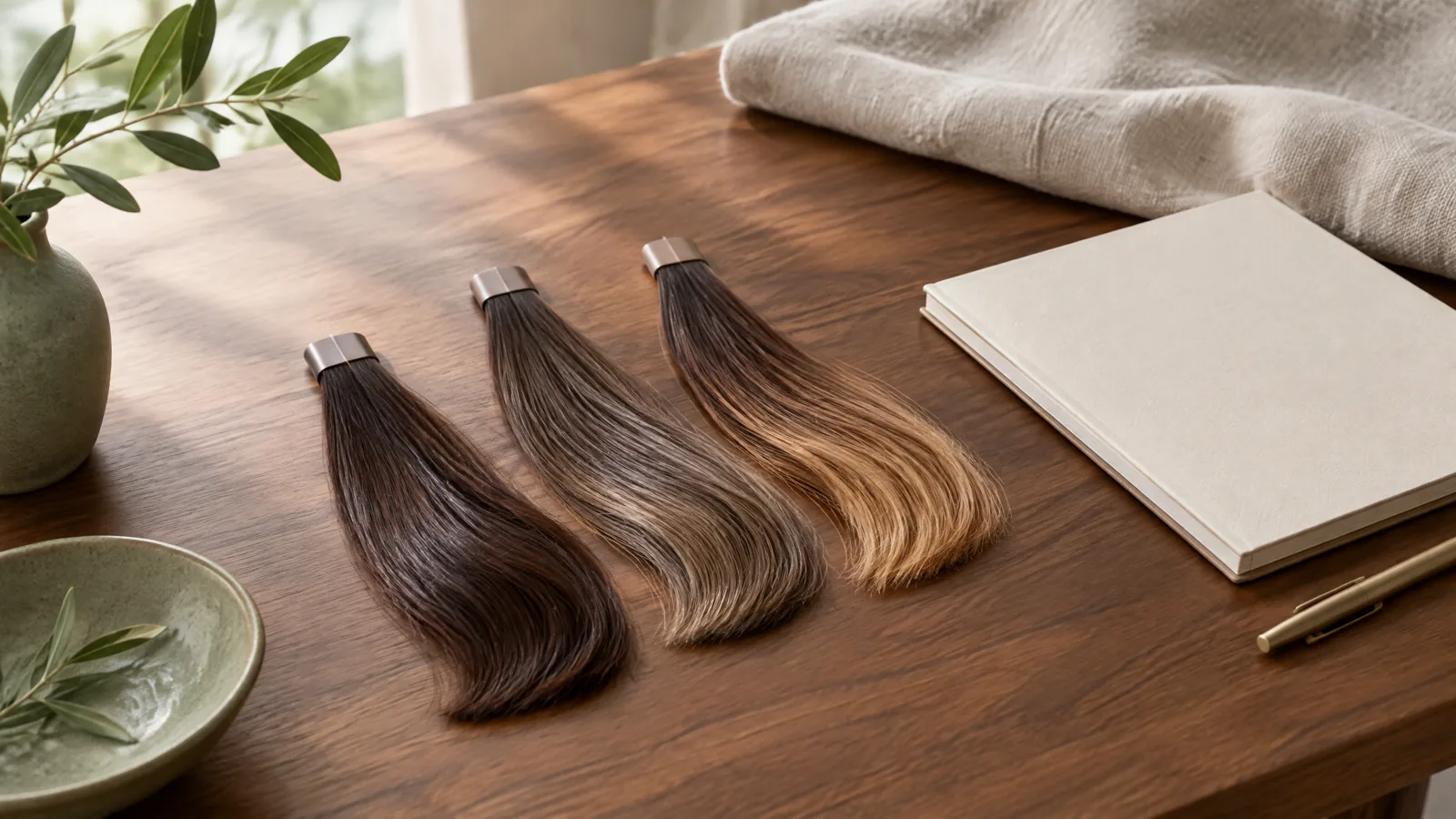
Tell the stylist about recent bleaching, colouring, straightening or perming, and mention ends that snap or tangle easily. The American Academy of Dermatology advises that excessive heat can damage any hair type and recommends using flat irons on dry hair at low or medium settings. [2] That guidance is not a prescription for a particular salon tool. It is a reason to discuss a suitable approach and avoid assuming that more heat will solve every holding problem.
Comfort is an active check, not something to evaluate only after leaving. The AAD explains that repeated tension can cause traction alopecia and advises changing a hairstyle immediately if tightly pulled hair causes pain or the scalp stings. [1] This does not mean every occasional updo causes hair loss. It does mean a polished appearance is not a reason to tolerate painful pulling. Point out the exact area so the arrangement can be adjusted.
Ask about preparation before washing your hair or adding products. There is no need to assume that every gathered style requires unwashed hair, or that arriving dry means no further preparation is needed. Describe oils, dry shampoo and firm-hold products already present. If the lengths are fragile, use the damaged hair care page to organise questions about manageability, without treating cosmetic care as a permanent reversal of structural damage.
After the event, avoid forcefully brushing through a fixed shape simply because you want to remove it quickly. The AAD warns that combing hair after applying long-lasting hold products can cause breakage. [2] Ask how to release pins and remove the finish gently. If you also coloured the hair, keep the post-colour care guide available for the separate washing and care discussion. Persistent scalp symptoms or hair loss need medical assessment, not another styling product.
Reduce unnecessary stress and report pain immediately; a secure-looking style should not depend on enduring discomfort.
06
How should you plan salon timing, travel and outfit changes?
Work backwards from the first moment you must be ready, which may be portraits rather than the ceremony or dinner. The event hair styling description asks for the outfit, practical demands and salon departure deadline. Give that deadline alongside your preferred arrival time. The assessed work and confirmed availability determine whether the appointment fits; an invitation time alone does not tell the provider how much salon time you actually have.
Separate styling from transport, makeup, dressing and meeting other people. Add your own allowance for each stage rather than assigning a generic duration to a hairstyle. If you must return home to change, say so. If several people need appointments, provide each person's current hair, chosen outline and ready time. Sharing an event does not establish group capacity or mean that appointments can run together with the same finish deadline.
Consider how clothing will pass over the finished hair. A narrow neckline pulled over the head may disturb pinned sections or volume. Decide whether you can change before styling or use clothing that does not drag across the outline, while keeping the provider informed about the actual outfit. Mention headwear required during travel too. These details may change the preferred shape without requiring a more complex or more expensive service.
For an outdoor stage or a later outfit change, agree on a manageable fallback rather than an unsupported claim of weatherproof hold. Ask what small adjustment you could safely make and what should not be pulled apart. Do not assume you can convert a gathered structure into loose waves by removing a few pins. If a second look matters, describe it as a separate request and confirm who would carry it out, where and under what arrangement.
Book against the real salon departure deadline and keep every later preparation stage visible in the plan.
07
What should you confirm before treating the plan as booked?
Ask for a quote tied to the assessed work, not just a style name. Clarify washing, drying, shaping and positioning your own accessory, then identify any proposed cut or colour separately. The Canvas Blend pricing page is a starting point for that site's published services, not evidence of a shared package with another website. Do not transfer a general styling entry into a bridal package or assume separate providers include the same steps.
Get a clear answer about location, who performs the work and whether the requested finish is available for your date. Makeup, venue attendance, trials, touch-ups and other people's appointments need explicit agreement if you require them. Extensions or hairpieces also need separate confirmation of suitability, supply and charges; a full-looking reference does not establish that they are offered. Written scope is useful because it lets you compare like-for-like enquiries without inventing a price for missing items.
Planning example: suppose you prefer visible waves but also want the open back of a dress to remain clear, and you will later wear an outfit with a higher collar. This is a hypothetical decision exercise, not a client result. You could compare side-directed falling length with a half-up shape, then check collar contact. If your ends are fragile and the current shade is acceptable, retaining the colour avoids adding an unnecessary chemical request to the styling plan.
In that example, the essential requirement might be a clear face and acceptable appearance with both outfits; the negotiable detail could be the exact wave pattern. Take those priorities to the provider and request a feasible outline plus a fallback if the accessory is unsuitable. Use the Canvas Blend booking page for a Canvas Blend enquiry and wait for direct confirmation. Sending photographs or selecting a date is not the same as having an agreed appointment.
- Send current front, side and back hair photographs and describe recent chemical processing.
- Identify the essential outline, the outfit conflict and one acceptable alternative.
- Give the salon departure deadline and disclose travel or clothing changes afterwards.
- Confirm the quoted hair work, preparation instructions and accessory responsibilities.
- Ask separately about a trial, additional looks, makeup, venue work or group capacity if needed.
A workable booking specifies the finish, the limits and the arrangements, not merely the occasion.
What else should you know?
Is hair up always a better choice for a formal event?
No. A loose or half-up finish may better preserve the movement or face framing you prefer. Compare the outfit, activities and your current hair before choosing; greater complexity does not establish greater suitability.
Should I wash my hair on the day of the styling appointment?
Follow the provider's preparation instructions for the assessed style. Tell them whether your hair will arrive damp or dry and which products are already present. Do not assume that unwashed hair is required for every updo.
Does a bridal enquiry include a trial, makeup or venue attendance?
Not automatically. Confirm whether each arrangement is available and how it is quoted. A hair-only salon enquiry does not establish a mobile team, makeup service or continuing support through the wedding itinerary.
Can I skip the dye skin test if I have used the colour before?
The FDA advises testing before every use and following the product instructions. Past use without a problem does not rule out a reaction, and a negative test is not a guarantee. Discuss any previous reaction with the provider and seek healthcare advice where appropriate. [3]
What if the finished style pulls or a pin hurts?
Tell the stylist immediately and identify the area. The AAD advises changing a hairstyle if tightly pulled hair causes pain or the scalp stings. Do not wait until after photographs to raise painful tension. [1]
Will colour make my event style look fuller?
Visible colour variation may change how you perceive sections, but it does not add hair density or guarantee a fuller appearance. Evaluate the intended shape with your current colour first, then discuss whether a specific colour change is justified and suitable.
What is the practical next step?
Build the plan in a clear order: choose the visible priority, compare realistic shapes, then decide whether colour needs changing. Prepare your own hair photographs and the outfit details before asking for an appointment. Keep one alternative that does not depend on an untested accessory or a major colour change. This gives the consultation room to adapt the idea while preserving the feature you care about most.
Before committing, confirm the hair-only work, preparation instructions, quote and departure deadline with the appropriate provider. Separate any trial, makeup, venue arrangement or later look from the initial salon visit. On the day, check the shape while moving normally and speak up about discomfort. The aim is an appearance you recognise and can comfortably use for the occasion, not an unsupported promise that every strand will stay unchanged.
While comparing hair colour salon Central, consider a colour appointment that accounts for professional presentation, travel plans, and root maintenance, with a location convenient for journeys from Central.
Sources and editorial notes
- [1] American Academy of Dermatology: Hairstyles that pull can lead to hair loss
- [2] American Academy of Dermatology: Hair styling without damage
- [3] U.S. Food and Drug Administration: Hair Dyes
This AI-assisted Canvas Blend guide is not a first-person case study or an article reviewed by Vit So. Vit So Hair Stylist and Canvas Blend share ownership. Links are not independent third-party endorsements and do not mean that fees, booking policies or packages are interchangeable. Colour, chemical processes, extensions and styling require individual assessment; cosmetic hair and scalp care do not replace medical advice.
This is an AI-assisted Canvas Blend editorial guide for event shape and bridal colour planning, current to 2026-11-06, not a personal account by Vit So or a guide claimed to have his review. Canvas Blend and vitsohair.com share ownership, so the linked descriptions are not independent third-party endorsements. Bridal trials, makeup, venue attendance, additional looks, touch-ups and hairpiece provision require confirmation from the relevant provider.
Continue reading
 Hair Decisions
Choosing a textured crop haircut or an undercut: shape, styling and upkeep
Compare a forward crop with undercut contrast, choose fringe coverage and side connections, and plan realistic styling, grow-out and scalp care.
Hair DecisionsCan a two block haircut work with your natural curls?
Plan a two-block shape around your natural curls: compare dry fringe length, side coverage, weight, styling effort and the questions to ask before booking.
Hair DecisionsPlanning a women's haircut: bob and pixie colour placement that fits your routine
Compare bob, lob, pixie and bixie shapes, then plan colour around the lengths you will keep, your natural parting, hair condition and realistic upkeep.