Shape × Colour × Personal Choice
Planning a hair perm: colour history and full-head scope
瀏覽獨立繁體中文指南 →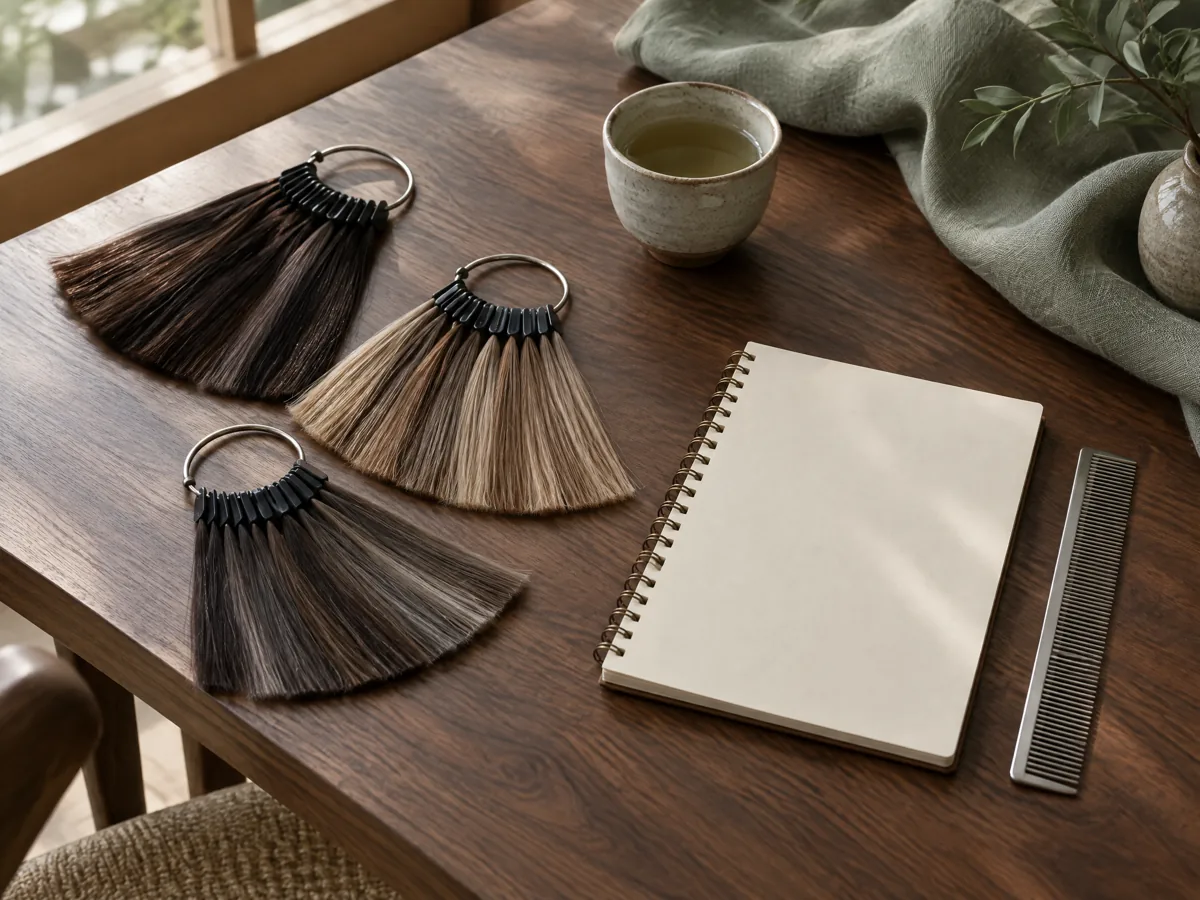
A full-head perm describes a proposed coverage area, not proof that every hair section is suitable for chemical treatment. Before choosing it, map your colour and straightening history, agree on the dry shape you want, and ask which areas can be treated without assuming that a package or protective product removes the risk of damage.
Start with the hair you have, rather than the curl photograph you hope to copy. The roots, highlighted lengths and older ends may have different treatment histories, even when they now look like one uniform brown shade. A useful consultation connects that history to your desired shape and the routine you can maintain. It should leave room for a smaller treatment, a cut instead, or no chemical service.
VitSo's hair perm page frames the decision around current length, previous chemical work and preferred movement. Use that service description to prepare questions, not to diagnose suitability from a menu. This Canvas Blend guide focuses on how to communicate mixed colour history, interpret coverage labels and make a practical decision before committing to full-head work.
When looking up hair colour salon Central, check the location details and choose a consultation time that lets you compare tones in natural daylight before or after work.
01
What colour history should you disclose before asking for a perm?
Describe treatments by both date and location on the hair. Saying that you coloured it recently is less useful than explaining that the latest appointment covered the roots, while highlights remain through the mid-lengths and a previous smoothing treatment may still be present at the ends. Give approximate dates when exact records are unavailable. Being uncertain is better than presenting an incomplete history as certain.
Include home dye, bleach, colour removers, previous perms and straightening or smoothing services. If you do not know the product or process used, bring packaging photographs, receipts or the previous salon's description if available. These details help the stylist ask the right questions; a product name by itself should not be treated as proof that another chemical process is compatible.
Do not leave earlier lightening out simply because you later chose a darker colour. The current shade describes appearance, not the full history of those lengths. The American Academy of Dermatology notes that appearance-enhancing treatments can leave hair dry and brittle, and that substantial lightening can cause more damage. That makes the distinction between untouched roots and previously lightened lengths relevant to your assessment. [1]
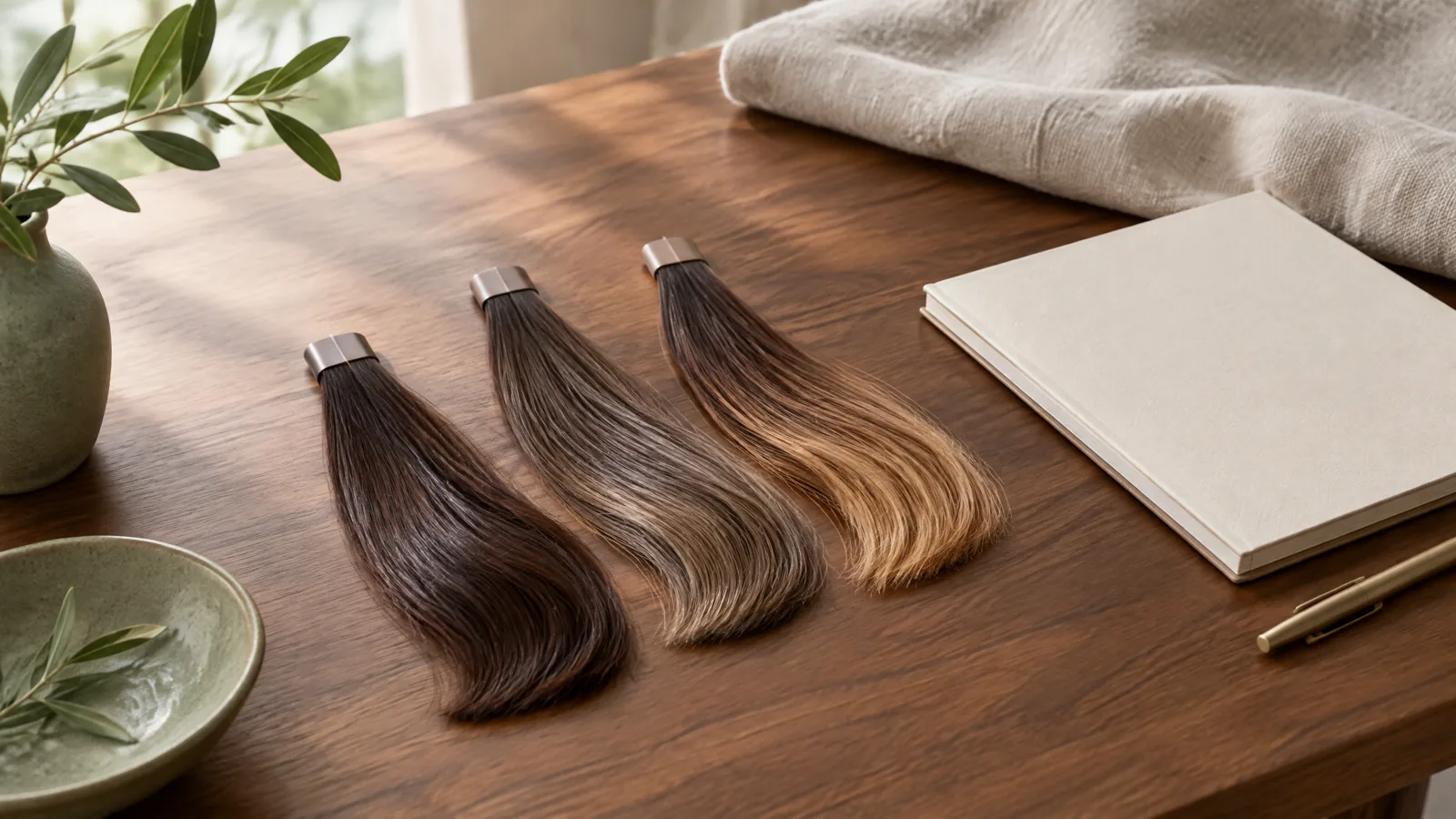
For example, describe whether lightened sections are scattered through the hair or concentrated around the face. Canvas Blend's highlights information can help you name the colour placement you previously requested. The purpose is to identify what is still on your head, not to judge suitability from the colour technique's name. Let the stylist inspect the actual sections rather than assuming all highlighted hair behaves alike.
- Record approximate dates, treated areas and whether bleach or colour removal was involved.
- Include older straightening, smoothing and perm treatments if treated lengths remain.
- Disclose breakage, difficult tangling, previous scalp reactions and any unknown product history.
A section-by-section history is more useful than a single label such as coloured hair.
02
How should an assessment change the plan when hair condition is uneven?
Ask what the assessment needs to establish before the stylist agrees to the treatment. Current photographs can communicate length, layers and visible colour placement, but they cannot reliably establish the condition of every strand or the compatibility of unknown previous treatments. An enquiry can start remotely; the final scope should remain conditional on examining your hair and discussing the products proposed.
Mention any sections that snap during ordinary handling, become unusually tangled or feel noticeably different from the rest. These observations are useful information, not a diagnosis you need to make yourself. Ask whether the plan should exclude an area, change the desired movement or be postponed. Reducing the covered area does not automatically solve the problem if the most fragile sections are still within it.
If a strand assessment is proposed, ask which section it represents and what the result would change. A favourable result from one area should not be understood as a guarantee for hair with several different histories. Also distinguish a hair-strand assessment from skin allergy testing. The FDA's skin-test advice concerns hair dye reactions; it is not a test that certifies the condition of hair for perming. [2]
Protection and conditioning may be discussed as part of a service, but they do not justify treating every section regardless of condition. Canvas Blend's damaged-hair care information is a useful starting point for discussing care priorities. Do not interpret the word repair as permanent reversal of previous damage. Sometimes keeping manageable hair and reviewing the cut is the more useful immediate goal than adding new curl.
Suitability should determine coverage; a requested coverage label should not override the assessment.
03
What does full-head scope mean compared with a partial or named perm?
Full-head coverage and curl placement are separate questions. You might want movement through the overall hairstyle but still prefer straighter face-framing pieces or a wave that begins lower down the lengths. Ask the stylist to describe the proposed treated areas and the visible shape separately. A full-head label alone does not specify the height of the wave, curl size or treatment method.
The VitSo full head perm entry sits alongside partial perm and Technical Perm entries. The published page treats full-head and partial as coverage descriptions and explains that Technical Perm does not, by its name alone, establish a digital, hot or cold procedure. Confirm the proposed work rather than reading those entries as a ladder from basic to advanced.
A partial enquiry should identify the exact areas you hope to change and how they will meet the untreated hair. A localised wave can look disconnected if its position does not work with the existing cut, and a smaller service is not automatically the best option just because it sounds conservative. Ask whether the chosen boundary serves the design and whether the proposed localised work is actually available.
Use the comparison below to identify missing information before comparing totals. Canvas Blend's pricing page belongs to Canvas Blend; it should not be used to calculate a VitSo bill. The two websites' service entries and packages must be confirmed with the relevant provider. A quoted amount is useful only when you know the treated areas, included work and conditions that could change it.
Before a first colour appointment or a refresh, browse hair bleaching Hong Kong for visual inspiration, practical preparation and a clearer sense of what to discuss during your consultation.
| Proposed option | Useful reason to discuss it | What must be clarified | When to reconsider |
|---|---|---|---|
| Full-head coverage | Movement intended across the overall hairstyle | Treated areas, straighter areas, method and suitability of mixed-history sections | Some intended sections are unsuitable or the desired change is only localised |
| Partial coverage | Movement wanted in specified areas | Exact boundary and connection with untreated hair; availability of the requested work | The fragile section would still be treated or the result would not connect with the cut |
| Technical Perm menu entry | A named service the provider can explain | Actual procedure, coverage and included work; do not infer hot, cold or digital | The name is being chosen without understanding the proposed procedure |
| Cut and temporary styling | A non-permanent way to discuss shape without adding perm chemicals | Length changes, styling effort and appropriate heat use | The routine requires handling you cannot maintain; heat styling can also damage hair |
| Postpone chemical work | Time to resolve uncertainty or prioritise condition and scalp concerns | Care steps, any medical referral and what a future reassessment would consider | Do not set a guaranteed restart date without reassessment |
Coverage, method, design and package contents are different parts of a quotation.
04
How can the cut and daily routine determine the right curl design?
Choose reference images for specific reasons. One may show the height where movement begins, another the amount of width around the face, and another the direction of the ends. Explain which feature matters most rather than asking for all three photographs to be reproduced together. Pictures communicate a preference; they do not establish that your length, colour history and natural texture can deliver an identical finish.
Agree on the length you want to see when the hair is dry, not only its stretched length. Mention whether you need to tie it back, keep hair away from glasses or retain enough length around the front. If changing layers is part of the proposal, ask how that supports the intended shape and whether cutting is included. The perm and haircut should be considered together.
Describe an ordinary wash day. Do you leave quickly, use a dryer, prefer loose movement or regularly smooth everything straight? If the reference depends on a polished finish that you will not recreate, ask what the less-styled version might look like. A perm is not a promise of effortless hair. It changes the movement you work with, while the visible finish still depends on handling.
Canvas Blend's gallery can help you practise describing a silhouette or colour placement, but do not treat an unrelated image as a verified perm result or evidence of your own likely outcome. Ask for a routine that uses your existing tools where practical, and identify which steps are essential. Agree on an achievable everyday finish before considering extra products or a more elaborate design.
A good reference explains the desired shape and a good consultation tests whether that shape fits your routine.
05
Should colour and perm services be combined or planned separately?
Bring future colour plans into the discussion before agreeing to a perm. A request for curl now and lighter hair soon afterwards is not two unrelated decisions when the same lengths would be treated. Decide which change matters most and ask whether the other should be delayed, reduced or avoided. Do not add a chemical service spontaneously because you are already attending an appointment.
The FDA's hair-dye safety checklist advises waiting at least 14 days after bleaching, relaxing or perming before using dye. The AAD also recommends one chemical service at a time and, when more than one is wanted, perming or relaxing first and colouring two weeks later. These are general safety recommendations, not individual clearance for mixed-history hair or permission for every product combination. [2] [3]
That distinction matters especially if the direction is reversed. The FDA statement about dye after a perm does not establish a universal waiting period for perming after bleach. Nor does reaching a calendar interval prove that fragile ends are suitable. Ask the stylist to explain the order appropriate to the actual products and areas involved; uncertainty about old treatments may still be a reason not to proceed.
When enquiring about a women's perm, include the colour work you hope to have later as well as work already done. If colour becomes the priority instead, Canvas Blend's no-bleach colour guide can help you frame alternative colour questions. No-bleach is not the same as damage-free, and it does not make a subsequent perm automatically suitable.
Plan chemical services as one treatment history, not as isolated appointments on a calendar.
06
What care instructions and warning signs should you understand before leaving?
Request first-wash and styling instructions for the treatment actually used rather than applying a universal rule from social media. Ask how to detangle, dry the front sections and refresh the shape between washes. Where colour history is mixed, clarify whether the ends need different handling. Written notes can make the routine easier to remember, but confirm what guidance the provider can supply.
For general damage prevention, the AAD advises conditioner after each shampoo, towel absorption rather than rubbing, gentle wide-tooth combing and the lowest heat setting when heat tools are used. Its detangling advice differs for straight hair and textured hair or tight curls, so ask how to apply it to your resulting texture. These measures help reduce avoidable damage; they do not guarantee curl retention or permanently restore damaged hair. [3]
Protecting chemically treated hair from sun exposure also belongs in the care discussion. The AAD highlights that dyed, bleached or permed hair can become weak, dry and brittle in the sun, and recommends a wide-brimmed hat outdoors. [1] Canvas Blend's post-colour care guide provides related care questions for coloured lengths, but treatment-specific perm instructions should still come from the provider performing the service.
Know when an issue needs more than a styling adjustment. The AAD advises immediate rinsing and dermatological advice if perm solution causes excessive stinging or burning. Tell the stylist immediately rather than tolerating it to finish the service. [1] Persistent scalp symptoms, unexpected breakage or concerns about hair loss should not be treated by automatically booking more chemicals. Seek appropriate medical advice for scalp or hair-loss concerns. [3]
Separate routine styling questions from signs of a reaction or worsening hair condition.
07
How can you turn mixed colour history into a clear enquiry and quote?
Planning example, not a client case: imagine someone with uncoloured regrowth, older lightened lengths now covered with brown dye, and a desire for loose movement below the ears. They also want to preserve enough dry length for a ponytail. The initial question is not simply which full-head service costs less. It is whether the sections needed for that design can reasonably be included after assessment.
In this hypothetical situation, the person sends clear current photographs and lists the earlier lightening as well as the latest brown colour. At the consultation, they identify preserving manageable ends as the priority. If the intended lengths are unsuitable, a smaller perm is only worth considering if its actual treated area avoids the problem and still meets the shape goal. Otherwise, discussing a cut or postponement is more coherent.
The same person asks for a quote that names the service, treated areas and included items. If a package includes cutting and protection, they ask what those components mean in practice and which additional charges could apply. Protection is not an assurance that chemical treatment cannot cause damage. Any changed scope should be explained before agreement, rather than discovered after the service has started.
For your own enquiry, explain the movement you want, what must remain straighter and which lengths are negotiable. Provide approximate treatment dates and mention unknown history explicitly. Ask whether a consultation, assessment or changed plan could affect the appointment arrangements. Do not organise a later commitment around a generic duration from another provider; request the expected timing for your assessed work without assuming it is guaranteed.
Use Canvas Blend's booking page when the enquiry is for Canvas Blend, and the relevant provider's own contact route when the enquiry is for VitSo. Confirm who will perform the service, where to attend, the agreed scope and the charge before travelling. Keeping those details together prevents a service description, an unconfirmed message and a package from being mistaken for the same thing.
- Send front, side and back photographs that show the current lengths and ends.
- Explain previous chemical work by area, including uncertainties and home treatments.
- Rank your priorities: condition, retained dry length, curl placement and styling effort.
- Confirm the service name, treated boundaries, included cutting or protection and any extras.
- Ask about treatment-specific care and wait for appointment confirmation.
The useful outcome is a clearly assessed plan, even when that plan is not the original full-head request.
What else should you know?
Can previously coloured hair be permed?
It may be worth assessing, but coloured hair is not one uniform category. Disclose earlier bleach, straightening, colour removal and which treated lengths remain. Suitability depends on the actual sections and proposed products; the current shade does not establish a yes or no.
Does full-head mean identical curls from roots to ends?
No. Coverage does not specify the visible wave height, curl size or which areas should remain straighter. Ask for the proposed treated areas and design to be explained separately.
Is a partial perm always safer for highlighted hair?
No. A smaller coverage area can still include unsuitable highlighted sections. It is only a useful alternative when its assessed boundaries and resulting shape address the reason for reducing the scope.
Can I assume Technical Perm means digital perm?
No. VitSo's published description does not establish a hot, cold or digital method from that name. Ask what procedure is proposed, whether it is available for your intended design and what work is included.
Is waiting two weeks enough to make perming after bleach safe?
There is no such clearance in the cited FDA recommendation. Its 14-day advice concerns using dye after bleaching, relaxing or perming. It does not certify perming after bleach, and elapsed time alone does not establish the condition of previously treated lengths. [2]
Does a protection package remove the risk of damage?
No. Ask what the product is intended to do and whether it is included in the quotation. Protection and conditioning do not replace suitability assessment or guarantee against breakage, dryness or scalp reactions.
What is the practical next step?
Before requesting full-head work, prepare a short chemical-history map and choose one or two shape priorities you can explain clearly. Ask the stylist to connect those priorities to the sections that can actually be treated. If the proposed plan depends on assumptions about unknown history, a package name or a photograph, pause until those assumptions are resolved.
Compare quotations by scope and included work, then confirm the provider, appointment and care instructions. The right decision may be full-head coverage, a carefully defined partial service, a revised cut or postponement. Preserving manageable hair and understanding the everyday routine are more valuable than obtaining a particular menu label regardless of condition.
If your hair feels dry, fragile, or difficult to detangle after lightening, explore damaged hair treatment Hong Kong before planning another colour service or adjusting your home-care routine.
Sources and editorial notes
- [1] American Academy of Dermatology: Coloring and perming tips for healthier-looking hair
- [2] U.S. Food and Drug Administration: Hair Dyes
- [3] American Academy of Dermatology: How to stop damaging your hair
This AI-assisted Canvas Blend guide is not a first-person case study or an article reviewed by Vit So. Vit So Hair Stylist and Canvas Blend share ownership. Links are not independent third-party endorsements and do not mean that fees, booking policies or packages are interchangeable. Colour, chemical processes, extensions and styling require individual assessment; cosmetic hair and scalp care do not replace medical advice.
AI-assisted Canvas Blend editorial guide, current as of 2026-11-06. Canvas Blend and vitsohair.com share ownership; this is not an independent endorsement, a personal account by Vit So or a claim of his review. The labelled planning example is hypothetical. Service names are used to clarify scope, not to confirm a procedure, quote, product compatibility or individual suitability; those decisions require confirmation with the provider.
Continue reading
 Hair Decisions
Planning a women's haircut: bob and pixie colour placement that fits your routine
Compare bob, lob, pixie and bixie shapes, then plan colour around the lengths you will keep, your natural parting, hair condition and realistic upkeep.
Hair DecisionsLayered haircut or lob: how to keep the length you actually need
Compare layers, lob outlines and shoulder-to-collarbone lengths by dry landing point, end fullness, ponytail reach and the styling you will actually do.
Hair DecisionsDo curtain bangs work with a wolf cut on naturally wavy hair?
Compare fringe length, crown layers and retained end weight before combining curtain bangs with a wolf-inspired cut on natural waves, without relying on a styled photo.