Colour × Makeup × Hong Kong
Natural Camera-Ready Grooming for Grooms and Work
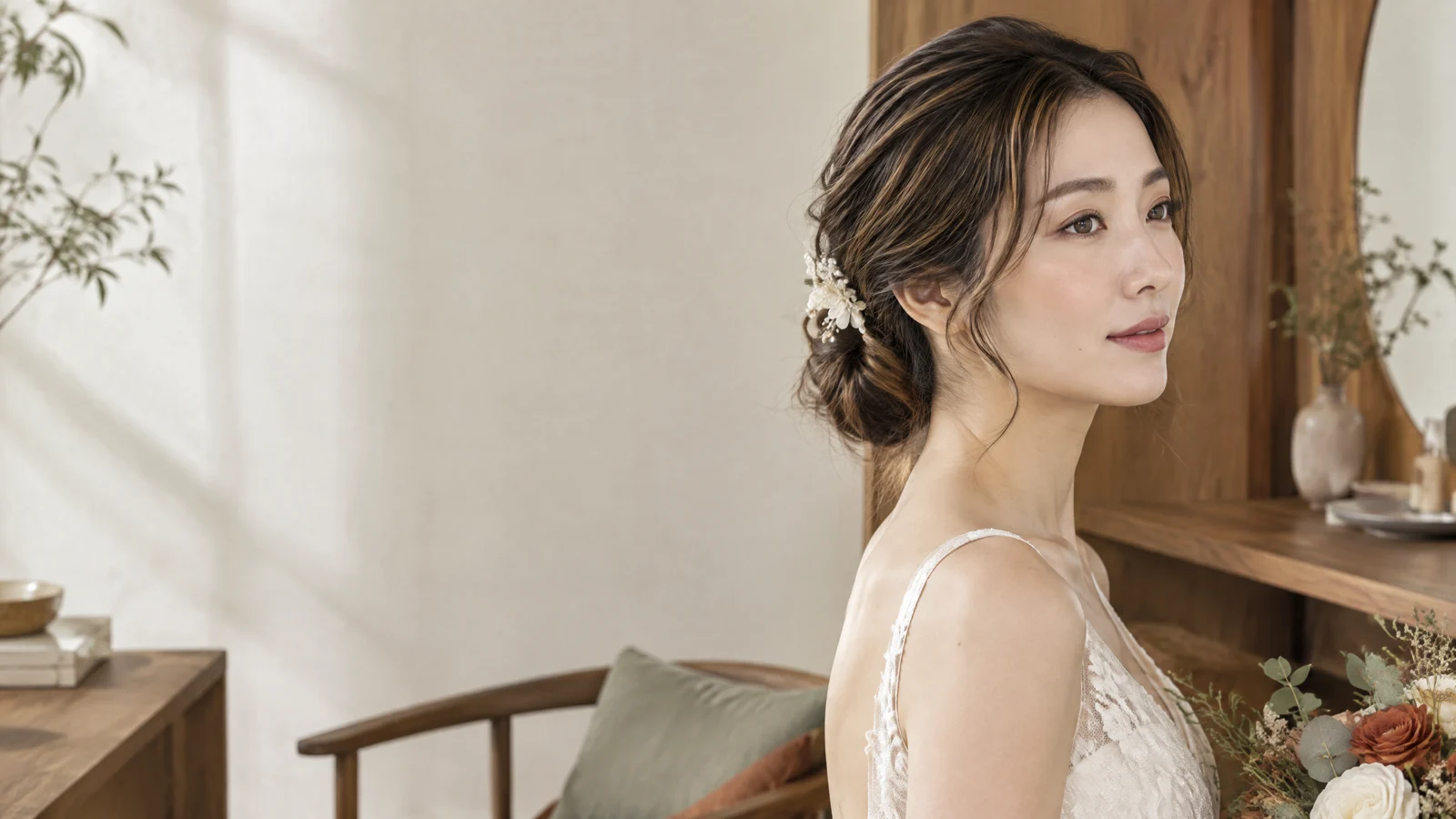
Natural camera-ready grooming is not about turning your face into someone else’s. It keeps your familiar hairline, parting, skin texture and expression, then addresses only the shine, flyaways, clothing shadows or timing issues that distract in the actual camera setup. For a wedding, a work headshot or a video, the most useful brief says what you want to keep before it says what you want to conceal.
Many people treat being camera-ready as a choice between a heavy makeover and doing absolutely nothing. Neither is a rule. A controlled forehead reflection can help a face look rested under soft light, while a full matte base may feel uncomfortable or unfamiliar. Equally, someone who wears no makeup can still ask for hair, collar and beard checks without being pushed into a look they do not want.
The shared objective across a groom’s wedding, a corporate portrait and a filmed interview is simple: the viewer should notice your eyes, voice, clothing and presence before they notice product. The choices behind that objective differ with crop, lighting, movement and duration. This guide turns those choices into practical questions, so natural means intentional rather than vague.
01
What does natural actually mean on camera?
Start by making natural visible and specific. It might mean leaving freckles, facial hair, grey hair and a natural curl pattern untouched. It might mean combing brows without filling them, or reducing reflection only at the centre of the forehead and nose while leaving the rest of the complexion skin-like. It does not mean every facial feature must be softened. Nor does it mean a person who prefers a polished finish is somehow less authentic. The useful test is whether the result still feels like you when you smile, speak and turn your head.
The crop changes the task. A wedding has close greetings, changing rooms and possibly outdoor portraits. A corporate headshot often enlarges the eyes, glasses, hairline and collar within a head-and-shoulders frame. Video adds speech, movement, repeated takes and light that changes as a day moves on. A choice that looks subtle in a mirror can read differently in a close shot, while a choice that is perfect for a still can be awkward when you move.
Clothes are part of the grooming decision, not an afterthought. A dark jacket next to a white shirt sharpens the edge of a hairstyle; a warm shirt can alter how a complexion is perceived. Before making a major change, take one unfiltered image in the actual outfit. If wedding hair colour is already being considered, use the English guide to bridal hair colour planning to relate colour direction to outfit, occasion and timeline rather than choosing from a trend image alone.
| Situation | Prioritise | Do not assume you need | Check before the camera rolls |
|---|---|---|---|
| Groom on a wedding day | Targeted shine, beard edge, parting and collar | Completely texture-free skin | Look in window light and indoor light after putting on the jacket |
| Corporate portrait | Glasses glare, eye visibility, flyaways and neckline | The contouring of an evening look | View the real camera framing straight on and at a 45-degree angle |
| Interview or video | Close-up texture, hair movement, continuity and touch-up windows | A promise that nothing will change all day | Use the monitor and note the first approved state |
A natural result becomes easier to plan when you name three things to preserve and three things to tidy, rather than asking generically for no-makeup makeup.
02
How can hair look polished without looking unlike your everyday hair?
Hair has one important camera job: it gives the face a clear, familiar outline from more than one angle. Begin with your normal parting and note what happens at the temples, above the ears and at the back after a few hours. If you normally have curl or wave, a clean version of that texture may be more convincing than forcing it straight. Tell a stylist how your hair behaves after commuting, humidity or a long meeting, not just how it looks immediately after a blow-dry.
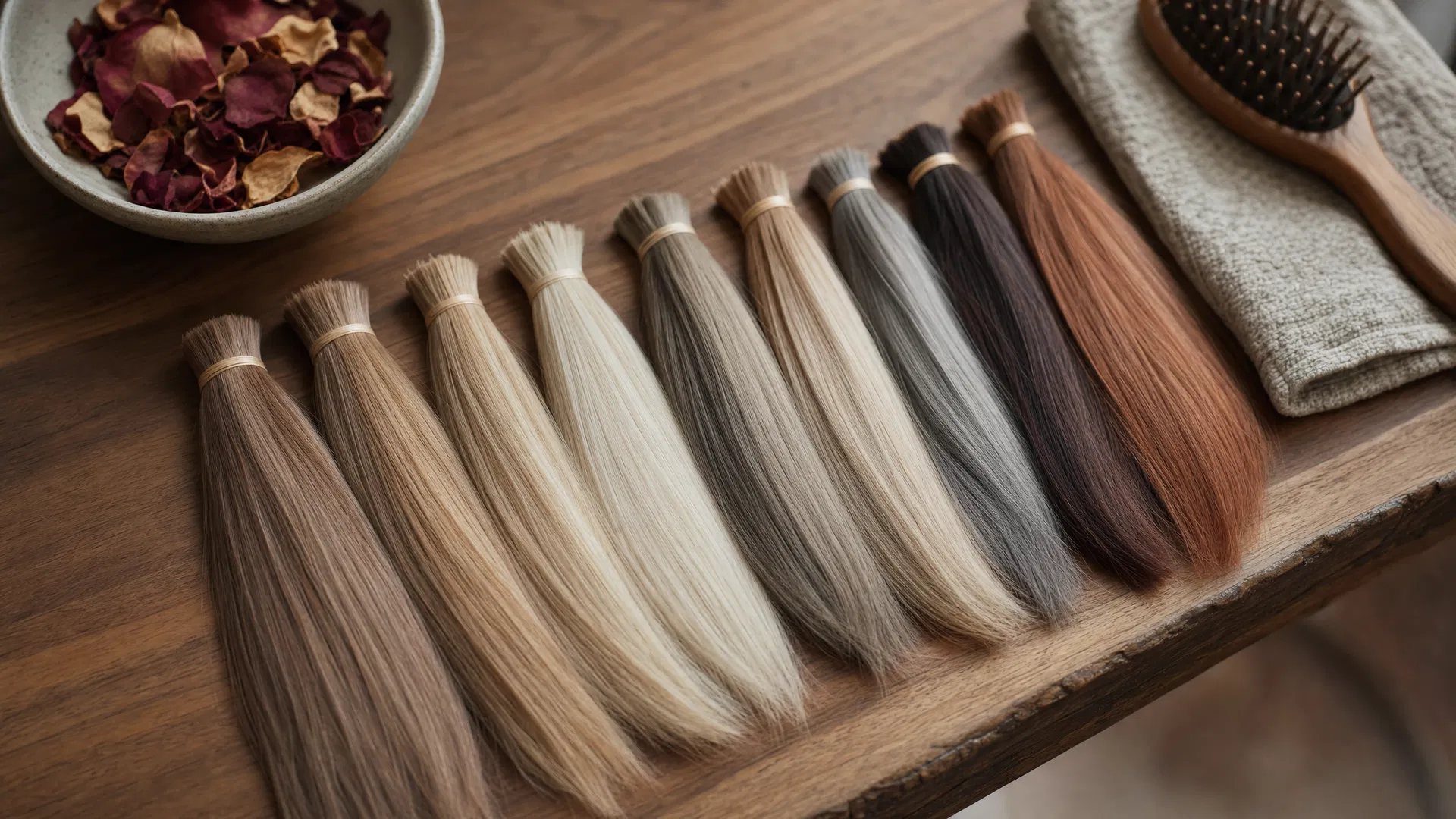
Choose product by both movement and camera need. A lighter finish suits someone who wants to be able to touch or reset their hair. A firmer finish may suit a long outdoor schedule, wind or repeated movement between locations. In either case, inspect whether roots catch too much light or whether strands have fused into hard, visible lines. If hair has recently been coloured or lightened, stable hydration and gentle handling are more useful than an unfamiliar product on the eve of a shoot; the post-colour hair-care guide offers a sensible daily-care starting point.
Hair colour is not a defect to correct. Dark hair, silver strands, natural regrowth and varied depth can all belong in a professional or formal portrait. If you are considering a small shift only to create dimension around the outline, first understand the soft transitions associated with babylight hair colour. Do not make an untested, dramatic colour change just because a wedding or shoot date feels important.
- Bring one current, everyday front-facing photo and one photo in the outfit you will wear. They communicate more than a celebrity reference alone.
- Mention glasses, a veil, headphones, a helmet or any headwear, because these can change roots and side sections after styling.
- Put haircuts, washing, shaving, styling and changing clothes in one order of service so finished hair and skin are not repeatedly disturbed.
- Ask for a quick test image from the front, at 45 degrees and while seated speaking. A style should work beyond the mirror.
The strongest camera-ready hair usually keeps your familiar outline and improves its edges; it does not replace your regular identity with a trend.
03
How should a groom schedule grooming without disrupting the wedding morning?
A groom’s biggest grooming issue is often sequence, not coverage. Shaving, washing, contact lenses, hair, suit jacket, tie, pickup duties and individual portraits can all touch the same face or hairline. If shaving normally leaves your skin feeling sensitive, follow your established routine and allow time before any cosmetic work. A wedding morning is not the moment to introduce a new exfoliant, strong active treatment or unfamiliar grooming product. Persistent irritation, stinging or eye discomfort calls for stopping the suspected product and seeking appropriate healthcare advice.
For a discussion that takes the wedding flow, beard, glasses and ready-by time into account, review BigDeal Make Up’s groom makeup service information. Its page describes a discreet, camera-aware direction with complexion balancing, selective shine management and one tidy hairstyle, while location, date, travel, touch-up needs and final scope need confirmation when booking. A published service page is useful for framing an enquiry; it is not a promise that every possible timing or add-on is automatically included.
Planning example: if individual portraits begin at 10:30 a.m. in a hotel lobby, do not merely subtract a generic grooming block. Work backward from the jacket, tie, boutonniere, lift ride and the photographer’s light check, then put shaving and hair preparation before face finishing. Keep a final buffer for a camera check only. If you will wait outside or move between venues, a small plan for touch-up and flyaway control can be tailored to glasses, heat, perspiration and the actual portrait moments.
A groom’s natural finish survives the day when the schedule protects it: complete the actions that touch skin and hair first, then make the camera adjustments last.
04
What makes a corporate headshot professional without making it overdone?
A work portrait is neither a passport photo nor an evening selfie. Define where it will appear: a recruitment page, company website, speaker biography, press material or professional profile. That audience informs whether the image should lean approachable, steady or creative. A natural approach can retain freckles, moles, facial hair and your own eye shape, while addressing temporary redness, distracting reflection or untidy flyaways that the camera exaggerates. No skin tone, facial structure or hair texture needs to be treated as a flaw in order to look work-appropriate.
The most valuable headshot test is not a filter; it is your real pair of glasses, two possible tops and the intended background colour. A hair edge that appears balanced from the front may cover a frame or a lapel pin at 45 degrees. If you are reassessing overall colour, the cool-versus-warm hair-tone explainer can help you evaluate hair alongside clothing and light before deciding whether any change is needed.
If the brief needs to account for use, clothes, number of people and shoot time, see BigDeal Make Up’s corporate headshot makeup information. The page describes a natural camera-ready makeup direction and basic hair tidy for an agreed location, and separately notes that photography, retouching, early starts and remote areas require confirmation. Grooming support can help plan the subject’s on-camera preparation; it should never be represented as a guarantee of photography, retouching or employment outcomes.
Professional headshots do not require colleagues to look identical. The goal is for every person to be clear, rested and recognisable within a coherent visual setting.
05
Why should video touch-ups be a planned process rather than an emergency fix?
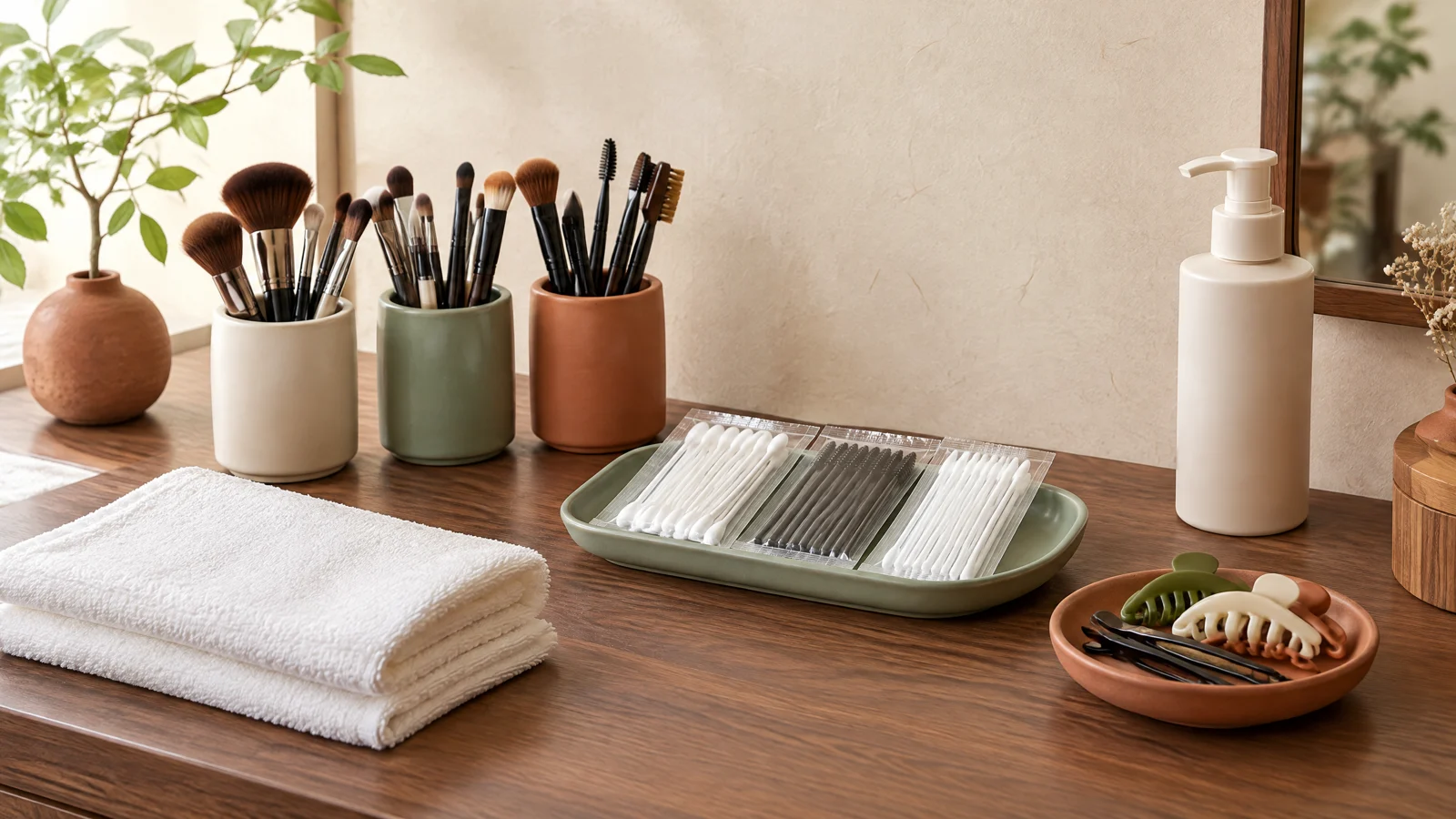
Video shows what a single image does not: speaking, turning, pausing, redoing a line and moving through changing light. A close shot can reveal dry texture or powder; heat from lights can change forehead reflection. Adding heavy layers at the first sign of shine is not automatically the answer. Use the monitor to ask whether the issue is skin, a lamp, camera settings, a reflective shirt fabric, hair movement or seating position. Then make the smallest adjustment that responds to the actual cause.
When a project includes several takes, a meal break, wardrobe changes or a return on another day, record the first approved state in simple language. Note the side of the parting, beard edge, whether lips were only conditioned, collar placement and the broad light direction. The point is not to force every hair into identical placement; it is to give a reshoot a consistent starting point. Hair that already feels fragile or dry benefits more from steady care routines, such as those in the damaged-hair repair guide, than from masking it with increasingly sticky product on set.
For a production conversation about call sheets, talent count, preparation time and on-set support, read BigDeal Make Up’s film and video makeup Hong Kong page. It frames support around shot distance, lighting, movement and continuity. Staffing, equipment, windows for touch-ups and location conditions should be checked against the confirmed production brief. That is more realistic and more useful than asking anyone to guarantee that a look will remain unchanged all day.
Natural video grooming holds together through scheduled checks. Each intervention should return to the monitor and continuity notes, rather than becoming a cycle of adding product by instinct.
06
How should lighting, weather and comfort shape the plan?
Window light, office ceiling panels, stage fixtures and overcast outdoor light can make the same face read very differently. With hard directional light, you may only need to control the small areas that flash back rather than forcing the whole complexion matte. Under soft light, the opposite risk is losing all structure. The most helpful test is usually a short, unfiltered video or burst taken from the intended camera direction, not a beauty-filter preview on a phone.
For outdoor wedding portraits, location shoots or travel between venues in Hong Kong, weather is a production input rather than background information. Checking the Hong Kong Observatory’s weather warnings and signals page before departure and again near the shooting window shows which warnings are in force or have been cancelled. It does not replace the venue’s or production team’s safety decisions, but it supports earlier conversations about umbrellas, indoor alternatives and meeting times.[2] Heat, wind or rain should lead to a revised shooting and rest plan, not an unrealistic expectation that more product will solve every condition.
Cosmetic safety belongs in the plan too. FDA consumer guidance says to read labels, follow directions, wash hands before use and avoid sharing makeup; products used near the eyes should be intended for that area. It advises stopping use and contacting a healthcare provider for a rash, burning or another unexpected reaction.[1] Natural and hypoallergenic are not guarantees of no reaction, so communicate known sensitivities, contact-lens habits and ingredients you wish to avoid in advance.
A sound camera-ready plan protects both the picture and the person: use light and weather to adjust the schedule, and use labels and physical response to decide whether a product should stay in the routine.

07
What should a useful grooming brief include before people start work?
A useful brief needs no specialist vocabulary, but it needs an order. State the use of the image and the earliest moment you must be camera-ready. Then give location, indoor or outdoor conditions, close-up requirements, clothing, glasses and beard habits. Add reference images and preferences after those facts. This lets the stylist, makeup artist, photographer and coordinator work from the same meaning of natural instead of each guessing. You can also use the Canvas Blend gallery to identify whether it is root lift, tidy sides or low-key sheen that you actually like, and write down why.
Planning example: a company is photographing six people from the chest up, with the first person in front of the camera at 9:00 a.m. The coordinator can list arrival time, clothing, frames, changing needs and the latest acceptable order for each person, then place people who need more hair preparation earlier. If the provisional plan allocates 35 minutes of grooming plus 10 minutes for changing and camera checks for each person, the arithmetic is 6 × (35 + 10) = 270 minutes, or 4 hours 30 minutes. This is a planning example only; actual time must be confirmed for the people, venue and service scope.
Finally, state boundaries plainly. You may request a natural finish, fragrance avoidance where possible, retained facial hair, avoidance of an ingredient or no eye makeup. You may also choose no makeup at all and ask only for hair and collar checks. If you want to enquire about an in-salon appointment or a feasible slot, use the Canvas Blend booking page with images, date and requirements. Any service feasibility, products and final charges must be confirmed in writing by the relevant provider.
- Purpose: ceremony, personal headshot, interview, livestream or internal profile; state whether public use is planned.
- Timing: earliest camera-ready point, photographer arrival, changes of clothes, outdoor segment, meal break and final departure.
- Picture conditions: close-up or half-body crop, indoor or outdoor setting, known lighting, background colour and glasses.
- Personal routines: normal parting, facial hair, contact lenses, known sensitivities, recent treatments and products to avoid.
- Preserve list: the skin texture, moles, freckles, silver hair, natural curls and expression you want the image to keep.
A good brief does not try to control every brushstroke. It protects what should not be sacrificed: comfort, recognisability, camera timing and safety.
What else should you know?
Does a groom have to wear makeup to look good on camera?
No. You can choose hair, beard, collar and selective shine checks only, or no cosmetics at all. If you do want complexion work, agree the acceptable level in advance. The aim is to help the camera read energy and structure, not to change who you look like.
Can freckles, moles or facial hair stay in a corporate headshot?
Yes. Include them in a preserve list in the brief. Natural camera-ready grooming does not mean erasing all texture. It can focus on temporary redness or reflection that the light exaggerates while keeping the features that make you recognisable.
When should I put on glasses for a portrait?
Use the actual pair during the final camera check, after main skin and hair preparation. That is when you can assess the nose bridge, whether the frame hides brows or eyes, and whether glare needs an adjustment to lighting, angle or finish.
How often does makeup need touching up during video?
There is no universal interval. Set checks around meals, wardrobe changes, close-ups under hot lights, outdoor moves and planned retakes rather than a fixed clock. Look at the monitor first, then address the specific change that matters to the picture.
Can sensitive skin have a natural makeup finish?
A natural finish still uses products, so disclose known sensitivities, recent discomfort, contact lenses and ingredients you want avoided. Follow product directions. If you experience a rash, burning or eye discomfort, stop use and seek appropriate healthcare advice. A self-test cannot guarantee that there will be no reaction.
How do you turn the plan into a next step?
Natural camera-ready grooming is not about doing the least possible. It is about making every action answer a real need: hair keeps a familiar outline, skin work addresses only what distracts on camera, and clothing, light and touch-up windows belong in the same schedule.
Whether you choose full grooming, a few focused adjustments or no makeup, make one unfiltered test and classify what you see before changing anything. Then confirm practical arrangements with the relevant provider. That process is more likely to leave you with wedding and work images that still feel like your own.
Sources and editorial notes
This AI-assisted Canvas Blend editorial guide is not a first-person case study or an article reviewed by Vit So or Maggie Yeung. General information is not a substitute for individual professional or medical assessment. Confirm BigDeal arrangements in writing.
This is a Canvas Blend editorial guide, not the personal experience or approval of Vit So, Maggie Yeung or any BigDeal representative. BigDeal service scope, feasibility, products, timing and fees are subject to written confirmation before booking; this article does not guarantee grooming, weather, photography or skin outcomes.