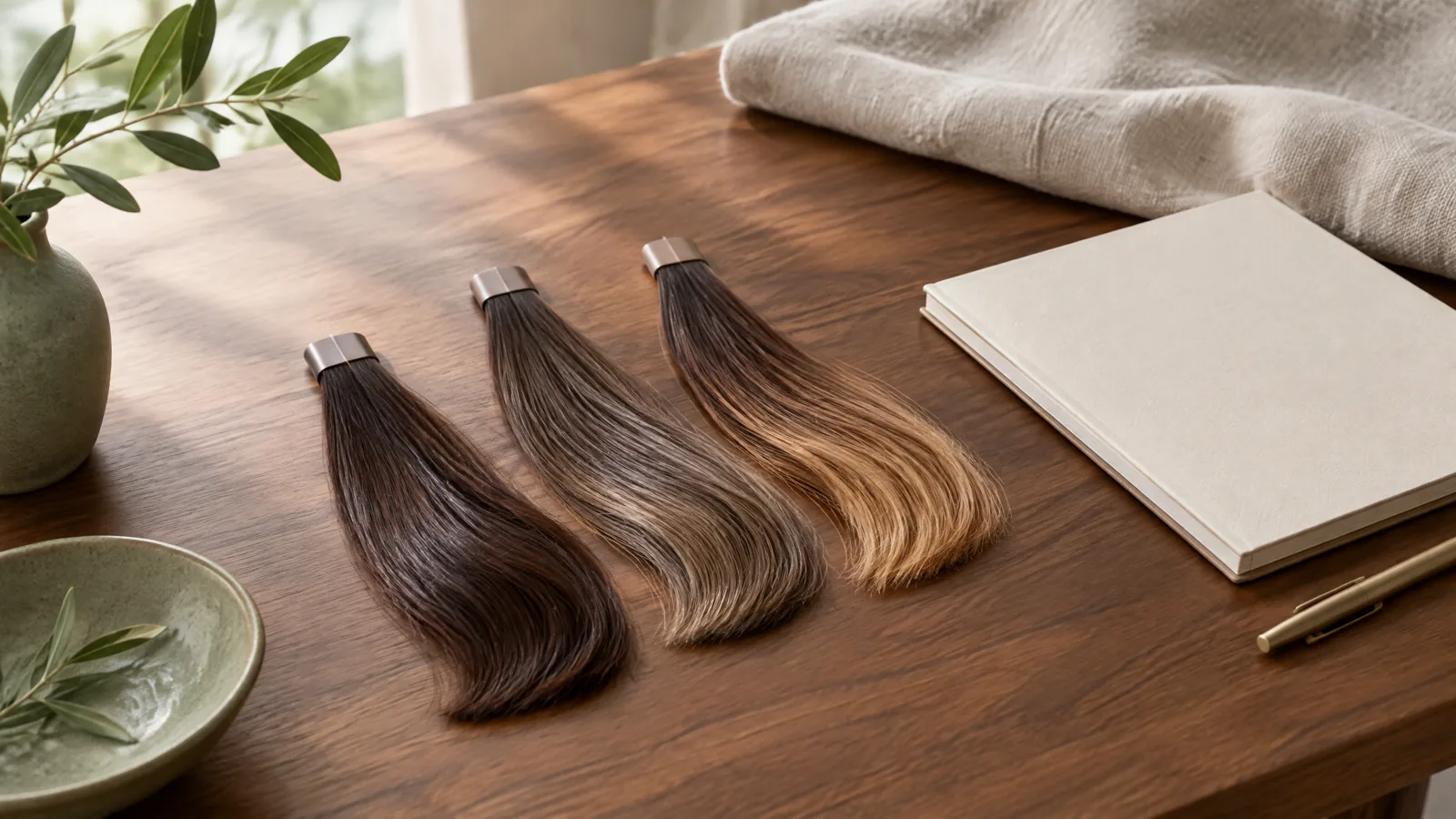
Choose a root-focused service when the new growth is the concern and the coloured lengths still suit you. Consider a wider colour plan when the change you want extends into the lengths, but confirm the treatment areas and inclusions rather than assuming full-head colour means one formula everywhere.
The useful starting point is not whether you can see roots. It is whether you want to maintain the colour you already have or change the overall result. Someone with visible white regrowth and brown lengths they like has a different brief from someone with the same regrowth who also wants lighter ends. The service name should follow that distinction, not replace it.
Before asking for a quote, separate three observations: the colour of new growth, the appearance of previously coloured hair and the condition of the ends. A dark root line, warmer lengths and rough-feeling tips are not interchangeable problems. Write down the area that bothers you most and one feature you want preserved. This prevents a request for maintenance from becoming an unintended all-over change.
Photographs help when they show the problem rather than conceal it. Include your usual parting, the front hairline and a back view with the ends visible, without filters or temporary root cover. Canvas Blend's before-and-after colour preparation guide can help you assemble useful references. Keep current photographs separate from inspiration images so neither is mistaken for evidence of your starting colour.
If you prefer a softer change, discuss ombre hair colour Hong Kong alongside hand-painted highlights or a lower-contrast gradient, so the placement reflects your existing colour and everyday styling.
01
Which areas actually need a colour change?
Look at your hair in ordinary daylight and divide it into new growth, mid-lengths and ends. Describe each area without choosing a treatment yet: white at the parting, brown through the middle, lighter at the tips. Then add what you would prefer in each place. A root-focused appointment is worth discussing if the only requested change is at the scalp and the existing lengths remain suitable.
Vit So's explanation of root touch up vs full head colour treats this as an application-scope question rather than a simple small-versus-large booking. Use that distinction to ask whether the proposal addresses new growth alone, also refreshes selected lengths or changes the overall colour. The location of the problem matters more than how prominent it looks in a mirror.
Full-head colour describes a wider working area; it does not establish identical treatment from roots to ends. New growth and hair with earlier colour may need different decisions. Likewise, a darker strip close to the scalp is not necessarily untouched growth: it could be a band from previous work. Show any boundary you cannot explain and allow the assessment to determine what it represents.
Use the Canvas Blend root touch-up page for the local service discussion, but describe your actual objective when enquiring. Saying that you want the white hairline coloured while keeping the current lighter ends is more informative than requesting a root service and expecting everything else to match automatically. If you want both areas changed, state that before the appointment scope is agreed.
Book around the area and result you want changed, not the visibility of roots alone.
02
When is leaving the lengths alone the better question?
Preserving existing colour can be a positive choice, not a compromise. You may like the lightness near your face, the contrast in your waves or the brown depth through the ends. Identify these details before asking for a more uniform appearance. Uniformity might remove variation you enjoy, whereas coordinating the root colour with the existing design could retain it. Ask what would remain visible under each proposed option.
Existing highlights deserve particular attention because an all-over darker finish could change how strongly they stand out. Show the lighter pieces you want kept when your hair is straight as well as styled. The Canvas Blend highlights guide is a relevant starting point for discussing placement, but a root maintenance enquiry should still specify whether those pieces are to be preserved, toned or reconsidered.
Do not use more colour as a default response to dullness or roughness. The American Academy of Dermatology explains that appearance-enhancing treatments can leave hair dry and brittle. [1] That does not mean every coloured head needs the same restriction; it means the condition concern deserves a separate assessment. Ask whether the problem is unwanted colour, difficult handling or both before agreeing to process the lengths again.
The root-only option also has a failure condition: it will not resolve an issue that remains below the application boundary. If the ends are visibly uneven or no longer match the result you want, leaving them unchanged may retain the very problem you hoped to fix. Ask to compare the likely appearance with untouched lengths against an assessed refresh, rather than assuming that the smaller scope is always the right one.
Preserve the lengths deliberately, but do not expect a root-only application to correct a length-level problem.
03
Does visible grey change the scope or the finish you want?
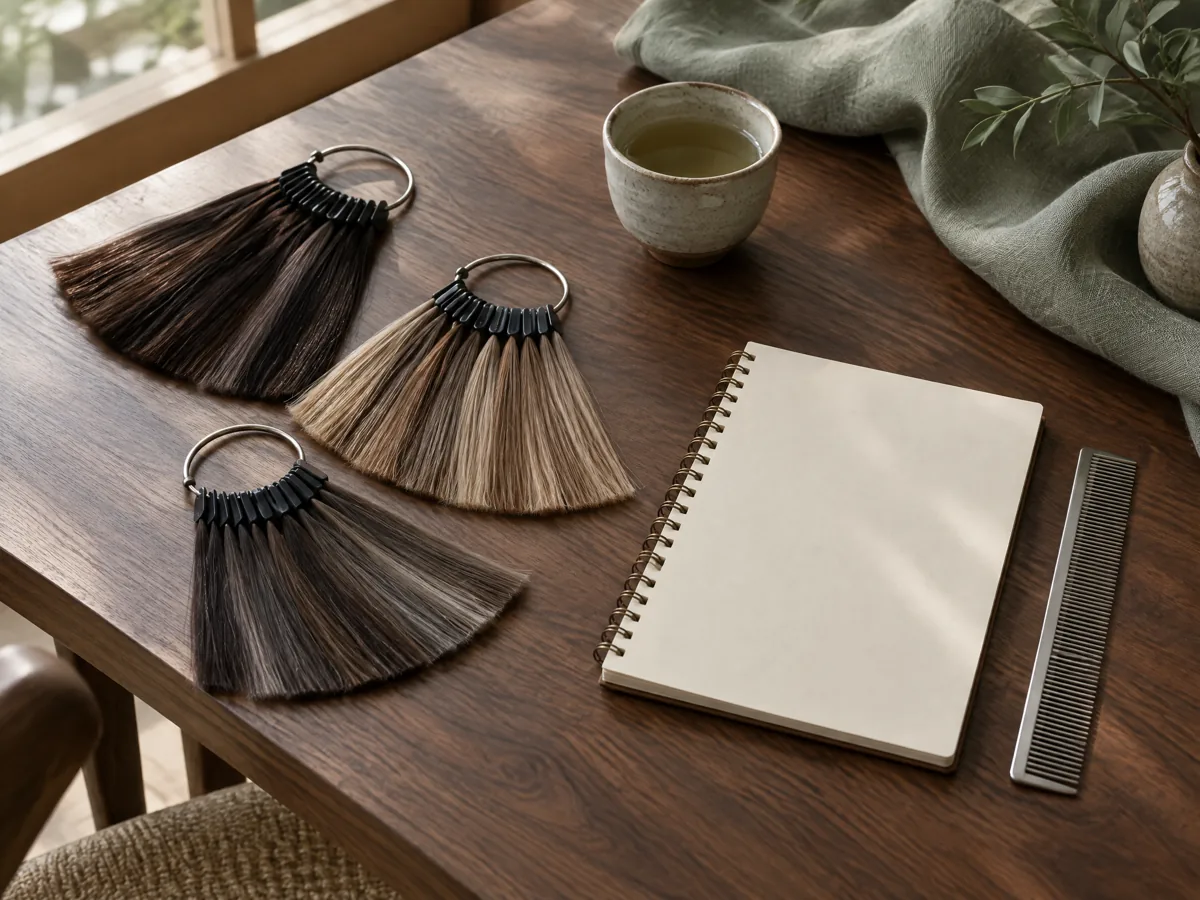
Grey coverage and root coverage answer different questions. The first concerns how visible you want white strands to remain; the second concerns where colour is applied. A root-focused plan can aim for a more consistent colour at the hairline, while a wider design might intentionally retain lighter strands. State the finish you want before assuming that visible grey requires an all-over application.
The comparison of grey blending vs full coverage is useful when you are unsure whether you want silver concealed or included in the design. Bring one reference with an acceptable amount of visible white and another that feels too streaky or too solid. Explain the difference at the parting and temples, because a styled back view may not show your main concern.
A change towards a softer mixture has to relate to your existing dyed lengths. If those lengths are uniformly dark, changing only the newest growth may leave an obvious difference between the areas. That is a reason for a broader design conversation, not proof that every strand must be lightened. Ask whether retaining the current depth, accepting a visible transition or changing selected areas best fits your preferences and condition.
If you want a consistently brown hairline, say so rather than asking only for a natural look. If you enjoy some silver, identify where it should remain. Use Canvas Blend's grey-coverage information to prepare that discussion. Also describe the regrowth stage you can live with: a softer first-day result does not establish maintenance-free colour, and a more uniform result does not stop new white hair from appearing.
Before a first colour appointment or a refresh, browse hair bleaching Hong Kong for visual inspiration, practical preparation and a clearer sense of what to discuss during your consultation.
Decide how much white should remain visible, then decide which areas need work to support that finish.
04
Do faded lengths need a refresh or a wider colour plan?
Faded is an incomplete description. The lengths might appear lighter, warmer, less even or simply less glossy than you remember. Compare them in similar lighting and explain which change matters. If you still like their brightness but dislike the warmer reflection, ask about a tonal adjustment. If you want a different overall depth or have uneven bands, ask whether a tone-focused refresh would leave that problem unresolved.
Treat toner, gloss and refresh as terms requiring clarification, not automatic inclusions. Ask what product and application area are proposed, whether the aim is to refine tone or change depth, and how the existing lighter pieces would read afterwards. A familiar service label does not tell you whether untreated roots, white strands or previously dyed lengths would meet your objective. The answer needs to relate to your starting hair.
Moving much lighter is a different brief from restoring a familiar brown. The AAD notes that stronger lightening can cause more damage and advises caution about large departures from natural colour. [1] If preserving length and manageability is your priority, discuss a smaller change or retained depth. The Canvas Blend guide to no-bleach colour options offers a useful alternative discussion, not a promise that every target can be reached without lightening.
| Option to discuss | When it may fit | What it does not establish | Question before agreeing |
|---|---|---|---|
| Root-focused colour | New growth is the concern; lengths still suit you | A length refresh, bleach-regrowth procedure or all-over correction | Which boundary is being coloured, and what stays untouched? |
| Roots plus an assessed length refresh | Roots need attention and selected lengths have unwanted tone or fading | That both areas receive the same product or that the refresh is included | What would the result look like without the optional refresh? |
| Full-head colour plan | The intended change extends through much of the hair | One formula everywhere or correction of every old colour band | How will roots, mid-lengths and ends be treated differently? |
| Bleach-regrowth assessment | Natural growth meets previously lightened hair | Eligibility for an ordinary tint retouch or a guaranteed pale match | Where is the earlier processing boundary, and what checks are needed? |
| Blending or retained-depth discussion | You want softer contrast or some silver and dark areas preserved | Complete concealment, no maintenance or a particular method's availability | Which light and dark areas should remain visible? |
A refresh addresses an agreed appearance goal; a wider change needs its own feasibility and scope discussion.
05
What history and safety checks should come before either option?
Bring a sequence of previous colour and chemical work, including home dye, bleach, highlights, straightening, perms and plant-based products. Where possible, provide product names or packaging photographs and identify the areas treated. Approximate dates are more useful than invented precision. The purpose is to distinguish untreated growth from hair with earlier processing, particularly when your current colour hides that history.
Previously bleached lengths make the application boundary an important assessment question. Tell the stylist about breakage, fragile patches or a dark band between the natural roots and lightened hair. Do not treat every dark section as fresh growth or ask for a home formula to match an online reference. Confirm which areas would be lightened, which might be toned and which would be left alone; preserving some depth or postponing work may be appropriate.
Root-only colour is not an allergy exemption. The FDA explains that sensitivities can develop with repeated exposure and that a reaction can occur despite earlier trouble-free dyeing. It recommends following product directions and performing the instructed skin test before each use; a negative test cannot rule out a reaction during colouring. [2] Tell the service provider about past reactions before agreeing to either colour scope.
The FDA also advises against dyeing when the scalp is irritated, sunburned or damaged. [2] A smaller application area does not override that advice. Share itching, soreness or broken skin and consult a healthcare professional about a reaction or persistent symptoms rather than relying on a cosmetic appointment. The Canvas Blend sensitive-scalp colour guide can help you organise questions, but it is not medical clearance to proceed.
Condition, processing history and scalp safety can change or postpone the plan, regardless of how little hair needs colour.
06
How should you compare root and full-colour quotes fairly?
Compare written scope before comparing headline amounts. A quote for new-growth tinting is not equivalent to one that includes a separate length refresh, lightening or a haircut. Ask which areas are covered, whether washing and finishing are included, and which requested additions would change the total. The Hong Kong Consumer Council recommends checking less prominent surcharges beforehand and retaining a receipt that lists the services provided. [3]
Checked on 2026-11-06, Vit So's page for root touch up price lists quick root touch-up at HKD 800 for new growth within three inches, tinting at HKD 800-1,000 and toner separately at HKD 900. These are published entries for that provider, not Canvas Blend prices or a combined quotation. Ask which entry applies and whether the published below-chest length surcharge affects the proposed work.
Those entries show why a smaller application area should not automatically be assumed cheaper than every wider colour service. They also do not establish that ordinary root tinting includes bleach regrowth, band correction or toning through the ends. If roots and lengths need different stages, request the assessed total rather than silently adding menu figures and assuming that no further work or conditions apply.
For a Canvas Blend enquiry, use the separate Canvas Blend pricing page and obtain confirmation from Canvas Blend. Keep the provider's name attached to any quote you save. If your budget is fixed, prioritise the change that matters most and ask what can safely be addressed within that scope. Optional care or finishing should remain explicit choices, not unexplained additions to an initially attractive price.
Compare like-for-like application areas and inclusions, and keep each provider's quote separate.

07
What would a realistic appointment and maintenance plan look like?
Planning example, not a client case: imagine someone with white regrowth at the parting, brown mid-lengths they like and slightly warmer highlighted ends. Their first priority is a more consistent hairline, while preserving the lighter pieces matters more than removing every warm reflection. A sensible enquiry would ask for assessment of a root-focused option first, with any length refresh presented separately rather than assumed necessary.
In that hypothetical situation, the decision depends on the comparison offered after assessment. If the roots can be coordinated with the existing lengths and the warmth remains acceptable, the smaller scope may meet the brief. If the ends no longer fit the agreed appearance, a separate refresh could be discussed. If earlier processing or scalp symptoms raise concerns, neither preference establishes that the chemical work should proceed that day.
Ask what would prompt the next review: visible white at the hairline, an unwanted root boundary, changing tone or a condition concern. These are different triggers and need not lead to the same repeat service. Record the agreed finish in ordinary daylight so later photographs can show what changed. Do not adopt a universal visit interval from a reference image; your visibility preferences and actual hair determine the maintenance conversation.
Care should support the finish rather than compensate for an unclear colour plan. The AAD notes that sun exposure can weaken and fade treated hair and recommends a wide-brimmed hat outdoors. [1] Ask for cleansing, conditioning and handling advice appropriate to the products used, alongside Canvas Blend's post-colour care guide. Care can help with everyday appearance and handling, but it does not stop new growth or permanently undo processing damage.
- Identify the exact root, middle and end areas you want changed or preserved.
- Bring current daylight photographs and a separate target reference showing the hairline.
- Disclose previous dye, lightening, chemical work and any reaction or fragile section.
- Confirm the method, required checks, optional refresh, included finish and total quote.
- Agree how regrowth, tone changes and condition concerns will be evaluated after the visit.
A workable plan states what changes now, what stays intact and what would justify different work later.
What else should you know?
Can I colour only my roots if my ends are already dyed?
That is a reasonable goal when the lengths still suit you, subject to assessment of colour history and condition. Confirm the application boundary and whether the ends will be left untouched; an end refresh should not be assumed included.
Does full-head colour mean bleach is included?
No. The label describes a wider colour scope, not a guaranteed lightening procedure. Ask what products and areas are proposed, whether lightening is needed for your target and what separate quote or assessment applies.
Will toner cover my new white roots?
Do not infer coverage from the name alone. Ask whether the proposed product and placement are intended to refine existing tone, tint white strands or achieve a more consistent root colour, and whether that matches your goal.
Is a root touch-up always less expensive than full-head colour?
Not necessarily. Published categories may overlap in price, and different inclusions or technical work can change the comparison. Compare the assessed application areas, additions and total rather than assuming that less hair means a lower final charge.
Do I still need the required skin test for a small root service?
Follow the instructions and testing requirements for the actual product, even after previous trouble-free dyeing. The FDA warns that reactions can still occur despite a negative skin test. Disclose previous reactions and do not proceed on an irritated or damaged scalp. [2]
What is the practical next step?
Choose your priority before choosing the service label: conceal new white growth, maintain a familiar depth, refresh an unwanted tone or change the broader design. Then identify the lengths and lighter pieces you want preserved. If two areas need different work, ask for a plan that names both instead of treating full-head colour as a catch-all answer. Condition and safety remain part of that decision.
For the next step, send Canvas Blend current photographs, your colour history and a short change-and-preserve brief through the Canvas Blend booking page. Ask for the appropriate assessment, treatment areas and confirmed quotation, including optional work. An enquiry is not a confirmed appointment. Keep any separate Vit So menu or quotation clearly attributed to that provider rather than using it as Canvas Blend's booking terms.
If you are searching for hair colour salon Central, plan a colour visit around meetings or after work, with enough time to discuss tone, upkeep, and your journey from Central.
Sources and editorial notes
- [1] American Academy of Dermatology: Coloring and perming tips for healthier-looking hair
- [2] U.S. Food and Drug Administration: Hair Dyes
- [3] Hong Kong Consumer Council: Consumers' Woes against Hair Salons Many and Varied - CHOICE #456
This AI-assisted Canvas Blend guide is not a first-person case study or an article reviewed by Vit So. Vit So Hair Stylist and Canvas Blend share ownership. Links are not independent third-party endorsements and do not mean that fees, booking policies or packages are interchangeable. Colour, chemical processes, extensions and styling require individual assessment; cosmetic hair and scalp care do not replace medical advice.
AI-assisted Canvas Blend editorial guide to tint-maintenance scope, not a bleach-regrowth instruction or medical assessment. Vit So's linked site shares ownership with Canvas Blend; links are not independent endorsement, and this article does not claim personal authorship or review by Vit So. Published Vit So menu details were checked on 2026-11-06 and remain separate from Canvas Blend quotations; product suitability, availability and the final service scope require provider confirmation.
Continue reading
 Hair Decisions
A family haircut routine that works on busy weekdays
Plan family haircuts around school rules, children's comfort and realistic styling habits. Compare lengths, prepare the visit and confirm each person's appointment scope.
 Hair Decisions
Planning a men's haircut: Fade, Taper and Colour Without Guesswork
Choose fade height, taper coverage and top length before adding colour. Compare practical options, scalp safety, upkeep and the questions to ask at a consultation.
Hair DecisionsChoosing a textured crop haircut or an undercut: shape, styling and upkeep
Compare a forward crop with undercut contrast, choose fringe coverage and side connections, and plan realistic styling, grow-out and scalp care.