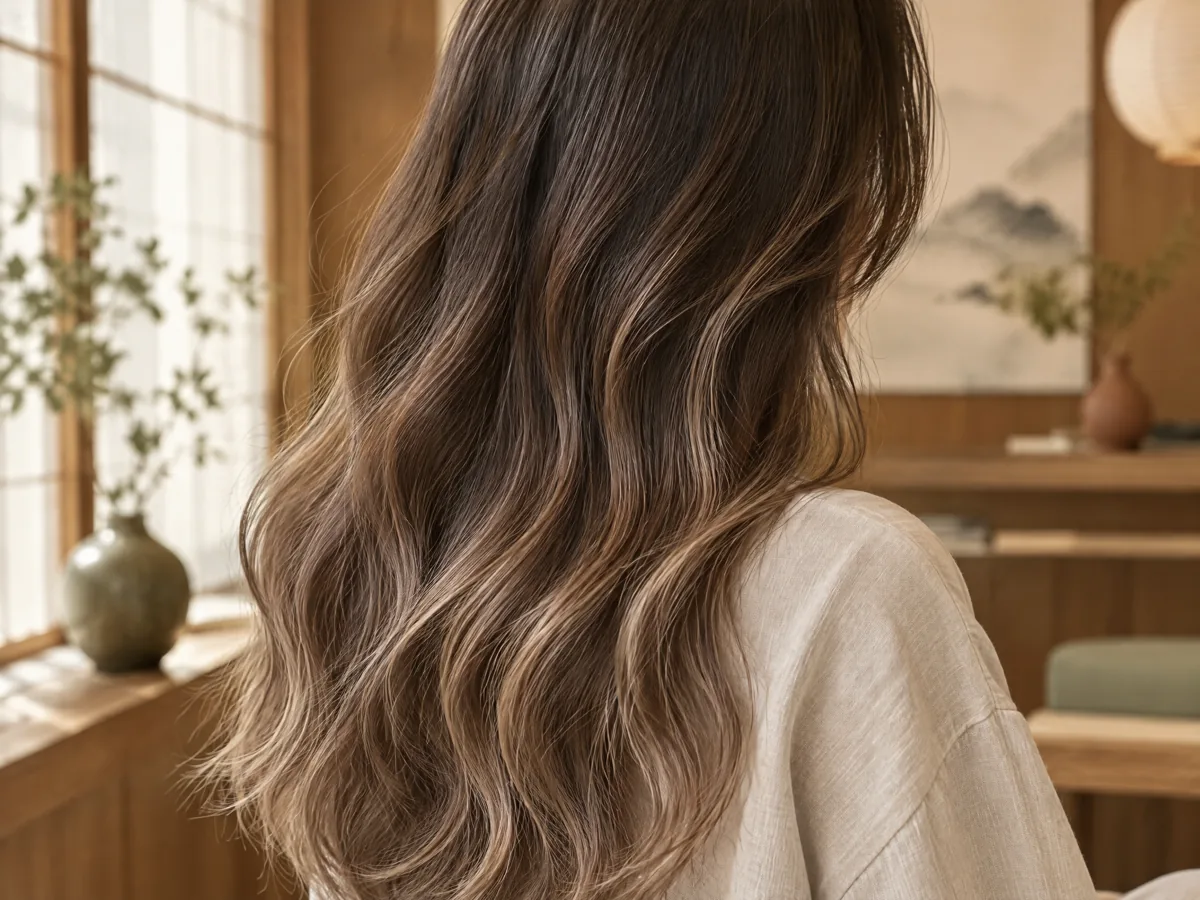
2026 Hong Kong Hair Colour Trends & Tone Guide: Milk-Tea, Smoky-Grey, Linen-Blonde
Every spring-summer, the liveliest question in the consultation room is: "What colour is in this year?" As a ~30-year colourist (Vit So) running a premium colour studio in Sheung Wan, I want to share my read on Hong Kong's 2026 colour trends. This year continues the low-saturation, soft-misty, easy-maintenance theme — but the devil is in the detail: one degree warmer or cooler in the same milk-tea can dramatically change how flattering it looks. This guide covers the three mainstream families — milk-tea brown, smoky-grey, linen-blonde — with skin-tone matching and maintenance.

The 2026 direction: low-saturation soft-misty aesthetics
Over recent years Hong Kong colour taste has shifted from high-saturation brights toward "misty, understated, refined". In 2026 this matures further — clients no longer chase eye-catching colour but tones that "look expensive, endure, and photograph naturally", echoing fashion's wider preference for Quiet Luxury.
Technically, misty tones are harder than brights. Clean mistiness requires precise control of the post-lightening base and the grey ratio in the formula; a small deviation produces "dirty, yellow, muddy" results. That's why the same "smoky-grey" can look completely different between salons.
Below I break down 2026's three signature families with skin-tone advice. To first see how different tones appear on Asian hair, see our autumn-winter colour trends article.

Family 1: Milk-tea brown — the most versatile flattering tone
Milk-tea brown has been Hong Kong's most enduring family for years and remains the 2026 favourite. Sitting between brown and grey with a soft milky touch, it's neither too dark-and-flat nor too loud — widely seen as the most versatile and flattering tone. From deeper "caramel milk-tea" to lighter "linen milk-tea", it adjusts to skin tone and preference.
Its biggest strength is high error tolerance — most Asian skin tones can carry it, and it fades naturally without ugly brassiness. Warm skin suits warmer caramel milk-tea; cool skin suits a greyer misty milk-tea. To see full results and pricing across hair types, see our milk-tea brown colour page.
Skin-tone matching quick reference
| Skin undertone | Recommended | Avoid |
|---|---|---|
| Warm (green veins) | Caramel milk-tea, honey-tea, warm brown | High-grey cool smoky tones |
| Cool (blue-purple veins) | Smoky-grey, linen-blonde, cool-brown | Overly warm orange-gold |
| Neutral | Milk-tea brown, linen milk-tea (both work) | Extreme high-saturation colours |
| Yellow-leaning | Misty brown, grey milk-tea (brightens skin) | Pure yellow linen-blonde |
For a deeper understanding of cool vs warm tones, read our cool vs warm hair colour guide.
Family 2: Smoky-grey / grey-brown — the most refined cool tone
Smoky-grey is 2026's most talked-about family among younger clients. Its charm is that "misty, hazy, veiled-in-fog" refined quality. But it's also among the hardest to create and maintain — it requires lightening the base cleanly, then neutralising yellow with a precise grey formula, demanding exceptional colour control.
Smoky-grey leans cool and suits cool and neutral skin best; warm skin should opt for "grey-brown", a compromise with a brown base that flatters complexion more than pure grey. It fades faster and needs diligent purple-shampoo care. To see smoky tones realised on Asian hair, browse our smoky hair colour page.

Family 3: Linen-blonde — airy, refined light colour
Linen-blonde is the most popular light tone among Asians — slightly warm yet not too yellow, giving an airy, refined, ethereal feel. It usually needs 1–2 lightening sessions and is more demanding on hair, so pre-colour hair assessment and post-colour repair matter greatly.
These three families — milk-tea brown, smoky-grey, linen-blonde — may seem like just "picking a colour", but doing them cleanly, enduringly and without damage rests on solid colour theory. A colourist who consistently mixes clean trend tones has usually completed full colour theory courses and hair colouring courses. That's an "invisible bar" worth knowing when choosing a salon.
If you're drawn to colour-mixing itself, even as a career, study a professional colourist certificate course or start from a comprehensive Hong Kong hairstyling course system — build fundamentals first, then progress to confidently commanding trend colours.
Maintaining trend colour: four habits to extend colour life
Whether you choose milk-tea brown, smoky-grey or linen-blonde, post-colour habits determine how long it lasts. First, switch to sulphate-free shampoo and lower water temperature. Second, use purple shampoo 1–2 times weekly for cool tones (smoky-grey, linen) to neutralise yellow. Third, do a colour-care mask every 2–3 weeks to replenish protein and moisture. Fourth, limit sun and heat styling, and use UV-protective products outdoors.
The other half of maintenance is touch-up timing. Generally return every 3–4 months to refresh and adjust tone, avoiding a large gap between regrowth and coloured sections. For a complete aftercare routine and product advice, see our post-colour hair care guide; for pricing across colour families, browse our colour pricing.
2026 hair colour trends — FAQ
- What hair colours trend most in Hong Kong 2026?
- 2026 continues the low-saturation, soft-misty direction. The top three are: milk-tea brown (warm, flattering, versatile), smoky-grey / grey-brown (cool, refined), and linen-blonde (light warm, airy). The overall trend favours natural, enduring, low-maintenance tones over high-saturation statement colours.
- Does my skin suit cool or warm tones?
- Quick self-test: green wrist veins suggest warm undertones, blue-purple suggest cool, unclear suggests neutral. Warm skin suits milk-tea, caramel, honey-tea; cool skin suits smoky-grey, linen, cool-brown; neutral suits both. The most accurate check is an in-person colour-chart comparison.
- Does dark milk-tea brown require bleaching?
- In most cases a 2–3 level dark milk-tea can be achieved without bleaching or with only partial lightening. But clean linen-blonde or smoky-grey usually needs 1–2 lightening sessions for a clean target tone.
- How fast do trend colours fade, and how to maintain?
- Cool tones (smoky-grey, linen) fade faster than warm tones because blue-purple pigment molecules are smaller. Alternate sulphate-free and purple shampoo, lower water temperature, and limit sun and heat styling to noticeably extend colour life.
- What training is needed to mix these trend colours?
- Mixing clean trend colours rests on colour theory and undertone reading. Professional colourists complete systematic colour-theory and colouring courses first, then build formulation intuition through extensive live practice. It is not a skill learned quickly from videos.
Closing: trends are a reference, the right colour is the best colour
Trend colours change yearly, but "what suits you" never goes out of style. Rather than chasing the hottest shade, find a colourist who selects the tone that flatters your skin, hair and lifestyle. At Canvas Blend we believe good colour begins with a serious consultation.
And if this article added a little curiosity about colour — wanting to understand the science behind it, or even to become a colourist who mixes clean trend tones — consider starting at an academy that emphasises colour theory courses. Only by understanding colour can you truly command it.
Find your most flattering 2026 colour
WhatsApp Canvas Blend for a colour consultation — Vit So will match your skin and hair to the right milk-tea, smoky-grey or linen-blonde.