Colour × Wigs × Personal Choice
Wig Length Choices: Short, Medium or Long Salon-Cut Guide

Wig length should be compared against face-framing lines, shoulders, clothing and everyday movement. Short, medium and long styles each carry silhouette and care trade-offs; describe the actual end point, parting and movement instead of relying on a length label.
“Short, medium or long” is only a category. The visible result comes from the end point and the line that travels from the parting around your face.
This guide replaces rigid face-shape rules with try-on observations, while making clear that a reference image cannot replace the actual piece, measurement or finished cut.
01
How should you map a wig length to your salon cut?
Choosing short, medium or long is only the first decision. The useful question is where the ends will sit on your own face and body. Mark the earlobe, cheekbone, chin, shoulder and collarbone as practical reference points. A labelled length can look different on different head shapes, neck lengths and shoulder lines.
To echo a salon cut, separate the haircut into visible features. Do you like a clean perimeter, an inward bend, airy layers or face-framing pieces that become longer toward the shoulder? Those details often matter more than a product label. They also give a stylist or wig supplier clearer instructions than “make it natural.”
A short style brings attention to the eyes, ears or jaw. A medium style interacts with the shoulder and neckline. A long style creates a continuous line toward the chest or back. These are observations, not fixed face-shape rules. Look from the front for the outline, from the side for fullness, and while moving for the way the ends settle.
Use online images to record a parting, texture or perimeter that you like, not as proof of the final result. Camera angle, model proportions, density and styling can all change the apparent length. The final choice should be checked on a real piece or sample against your own face and shoulders.
| Direction | Main visual landing point | Question to ask |
|---|---|---|
| Short / bob | Ear area to chin and nape | How much ear and neck do I want visible? Will the edge sit on my cheekbone or jaw? |
| Medium | Shoulder to collarbone | Do I want the ends to touch the shoulder or continue below it? Will my usual neckline lift them? |
| Long | Chest to back | Will I accept the detangling time? Do I want a straight or curved line beside the face? |
Choose the landing point before the label, and check the side view before trusting a photo.
02
How can a short wig echo a precise cut and face frame?
Short wigs include more than one cropped outline. A pixie usually exposes more of the ears and nape, with crown layers creating direction. A bob keeps a visible line near the chin, but a bob is a shape rather than one fixed measurement. A short bob may finish at the jaw, while a longer version can pass the chin.
Try a short piece against four points: earlobe, highest cheekbone, chin and nape. Move the front strands to each point and notice what they emphasise. A blunt perimeter makes the boundary clear. Light layering creates movement. Neither is universally better; the choice depends on how closely you want to preserve the precision of your salon cut.
Glasses, earrings and mask loops make the ear area worth testing in motion. A dense side piece may overlap the glasses arm, while a very short side can feel unfamiliar. If you often wear collared shirts, check whether the nape line catches on the collar. Small movements reveal more than a still front-facing image.
If you are translating a short salon cut into a wig search, compare short and bob wigs guidance and limitations by where the ends fall, the jaw outline, parting and layers. The page provides a way to narrow the shape; it does not guarantee that every design suits your head or is currently available.
The advantage of a short style is that its outline is easy to read and there is less length to manage. The trade-off is that each small change is visible, and an edge cut too short cannot be hidden in a ponytail. State what you do not want, such as an end on the jaw angle, before discussing the final cut.
- Check whether the ends land on a cheekbone or jaw area you want to emphasise or avoid.
- View the temples, occipital shape and nape as one continuous outline.
- Simulate glasses, collars and tucking the hair behind an ear before choosing layers.
A short wig is not better because it is shorter; it is better when the ends sit deliberately.
03
How should a medium wig sit between the shoulder, collarbone and neckline?
Medium-length is a useful bridge between cropped and long silhouettes, but it has no universal measurement across brands. A shoulder-length piece is defined by how it meets the moving shoulder area. A collarbone style keeps a little more vertical length below it. Straight, inward-bent, wavy and layered ends can all change the apparent landing point.
Do not test a shoulder-length wig only while standing still. Turn your head, lift an arm, put on a jacket and carry a bag. The shoulder and collar can push the ends outward. If your salon cut has a clean line, compare blunt and lightly layered versions directly. If you want less density at the shoulder, inspect where the layers begin rather than assuming “layered” means light.
Collarbone length is not automatically elongating. Neck length, shoulder width, height and curl pattern change the proportion. Wear a usual crew neck, shirt collar or high neck while trying a piece. Replace the vague phrase “to the collarbone” with a concrete description such as “when hanging naturally, the ends should sit just below my collarbone.”
If you are between a short outline and a collarbone shape, use medium-length wigs guidance and limitations to compare shoulder and mid-length decision points. Treat the page as a selection framework, not as a personal prescription or a promise that every listed option is in stock.
Medium styles can preserve face-framing movement without the full handling demands of long hair. Their trade-off is shoulder friction: the ends may flip or change direction during the day. If mornings are rushed, choose a piece that looks acceptable when it hangs naturally, not only after a perfect blow-dry.
| Point | Shoulder length | Collarbone length |
|---|---|---|
| Where to look | The moving shoulder area; collars may lift the ends | Below the shoulder toward the collarbone; a longer vertical line |
| Cut expression | A blunt or lightly layered edge reads clearly | Straight, inward and wavy finishes create distinct effects |
| Try-on movements | Turn, lift an arm, use a bag and put on a jacket | Tuck behind the ear, wear a high neck and view front, side and back |
| Routine trade-off | Crisp outline but more shoulder interaction | Softer length impression but more hair to handle |
Test a medium length against your shoulder and clothing, not against the category name.
04
How can a long wig keep a face frame without creating needless work?
For a long wig, define the end point relative to the shoulder, chest or back before choosing a style. A long straight piece shows the continuous line from parting to ends. A long wavy or curly piece requires you to check where the bend begins and whether the curve makes the visible length look shorter.
Length becomes more informative when you move. From the front, check whether the face frame gives the coverage you want. From the side, check fullness over the shoulder. From the back, check whether the ends remain balanced. If you tuck hair behind your ear, tie it up or carry a cross-body bag, reproduce those actions during the fitting.
Long hair also magnifies the difference between centre and side partings. A centre part can distribute the sides evenly; a side part can add weight to one side. Shorter pieces around the face can preserve a salon-cut feeling, but layers that begin too early may make the ends appear thin. Describe the curve and density you want rather than saying only “natural long hair.”
For a first comparison of long straight and long wavy directions, review long wigs guidance and limitations. Confirm the actual sample, fibre and care instructions for the individual design; a category page is not a shared specification for every item.
Long wigs offer more styling options, but the trade-off is more detangling, storage and humidity management. Human hair does not mean unrestricted bleaching or heat styling, and synthetic fibre does not automatically mean heat-safe. Any plan to change the part, straighten, curl or colour should be checked against the exact product guidance.
Ask how you will handle the hair every day before asking how dramatic the length looks.
05
How do fibre, cap construction and parting affect a believable cut?
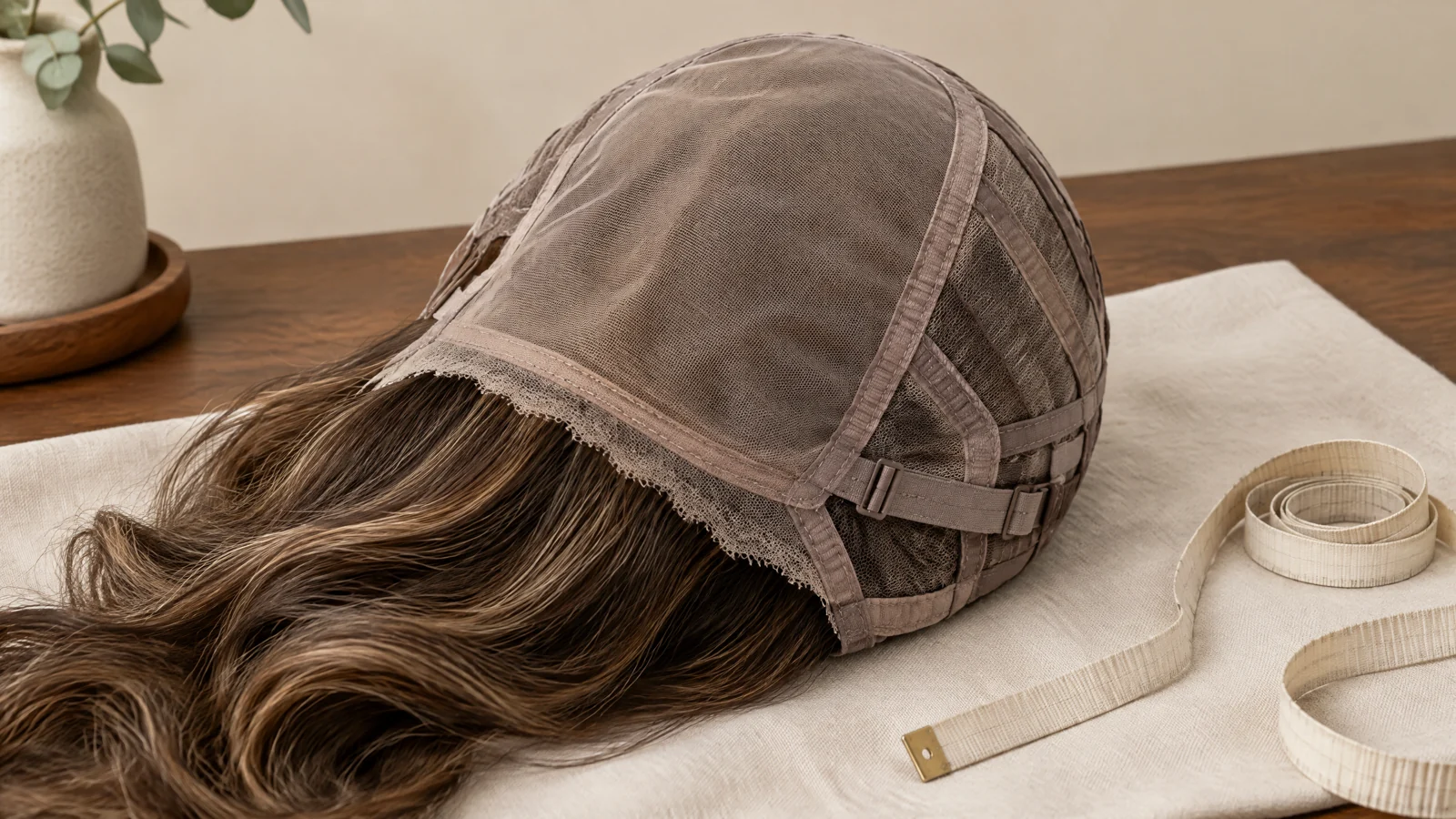
Length decisions are easier when basic terms are clear. Fibre describes the hair material: human hair, synthetic fibre or a blend. The cap is the internal foundation holding the hair. A monofilament or scalp-like area can create a visual parting, while a lace front concerns the appearance of the front edge. None of these features automatically makes every length look natural.
Human hair can offer broader cutting and styling conversations, but it is not a licence to bleach, colour, perm or heat-style without limits. Some synthetic pieces hold their original shape; some are labelled heat-friendly; others must avoid direct heat. Check the individual product and manufacturer instructions instead of generalising from the material name.
Cap fit also affects face framing. A loose cap may let the part and ends move during the day. A tight cap may compromise comfort. Measure according to the supplier method and explain whether you have natural hair underneath, use a liner, or need a particular parting position.
If colour and face brightness are part of the salon reference, Canvas Blend resources on balayage colour direction and babylight detail can help you name the lightness or contrast you want. They describe salon colour services, not wig making, medical assessment or a joint package with a wig supplier.
When the parting matters, compare centre, side and tucked-behind-the-ear views during the fitting. A selfie can distort the hairline and crown height, so use several angles and ordinary lighting.
Confirm fibre, cap and parting from the piece and its instructions; do not let the style name do that work.
06
How can a salon reference photo become a practical fitting checklist?
The most useful part of a reference photo is not the celebrity’s face. It is the describable line: end position, parting, shortest face-framing layer, straightness or bend, and the amount of ear or neck you want visible. Bring one or two front and side images, then discuss these points while a sample is on you.
Imagine a planning example in which someone has a collarbone layered cut and wants to keep its light face frame. This is hypothetical, not a client case. They could compare a shoulder-length straight piece with a softly curved collarbone piece under the same parting, then decide whether the perimeter or the layers matter more.
Another hypothetical planning example is someone moving from a short bob to long hair. Instead of jumping straight from chin to chest length, they can test whether they accept longer face pieces, shoulder friction and extra brushing. Medium length may be a useful comparison point, but it is not automatically the best answer.
If hair loss or treatment is part of the reason for choosing a wig, this article stays with appearance and fitting communication. Cancer Research UK notes that people can bring photos of their previous hair and ask a wig fitter for help; scalp sensitivity and treatment restrictions should be discussed with the clinical team [1].
After trying a piece, photograph the front, both sides and back while wearing a usual neckline. If the result looks different from the mirror, first identify whether the cause is length, parting, colour or lighting. For a salon colour conversation, highlights direction and bridal hair colour ideas can help describe visual preferences, but Canvas Blend does not provide wig customisation or medical diagnosis.
- Bring one or two front and side references, rather than one model photo only.
- Write down the desired end point and any position you do not want, such as the jaw angle.
- Wear normal clothing and simulate glasses, earrings, bags and tucking the hair back.
- Confirm the post-cut outline after washing, cutting and blow-drying, not only the untrimmed sample.
Translate an imagined hairstyle into an end point, parting, movement and care questions.

07
How should daily time decide the final length?
If you need to leave quickly each morning, prioritise a silhouette that already looks close to right when it hangs naturally. A short style may take less brushing but demands a precise perimeter. Medium hair interacts with the shoulder and clothing. Long hair allows more changes but requires more detangling, storage and care. This is a time trade-off, not a ranking of beauty.
If you plan to change the part or use heated tools, state that before choosing. Never assume that a heat-friendly label permits every temperature, and never assume that human hair can be bleached or coloured freely. If your own hair will show or needs styling alongside the wig, assess that separately.
Colour can change the visual weight of a face frame even when the length stays the same. A deeper overall tone may make the perimeter feel more concentrated, while a gentle transition can make layers easier to see. For grey blending or coverage language, grey coverage colour planning can help you formulate the salon colour question, but the wig’s shade and fibre must be checked separately.
If you need a salon appointment, booking and service information explains Canvas Blend’s salon arrangements. It does not mean the salon provides wig fitting, wig customisation, medical assessment or a joint OWNSTRAND package. Confirm wig availability, sizing and care with the relevant supplier.
Use three final questions to remove weak options: Do I like the ends in their natural state? Does the shape work with my usual neckline and movements? Am I willing to follow the fibre’s care instructions? Three clear yes answers are more reliable than chasing one photograph.
The best length is the one you are willing to wear and care for on ordinary days.
What else should you know?
Which wig length most closely matches a salon haircut?
No length does that by itself. Match the perimeter, parting, layers, face-framing pieces and fibre limits, then test the result from several angles.
Does every bob wig end at the chin?
No. Bob describes a cut shape, not one fixed measurement. The ends may sit near the jaw, pass the chin or extend farther, so check the actual piece.
Should I choose shoulder or collarbone length?
Choose shoulder length if you want the edge to focus near the shoulder. Compare collarbone length if you want more vertical line below it. Wear normal clothing and move while trying both.
Are long wigs always harder to maintain than short wigs?
They usually involve more ends and detangling, but the real workload depends on fibre, texture and your routine. Choose the length that fits your available time.
Can a human-hair wig be bleached or heat-styled freely?
No. Human hair is not unrestricted. Follow the exact product and manufacturer guidance, and ask before bleaching, colouring, perming or using heat.
What should I ask if hair loss or treatment is involved?
Bring a photo of your previous style and ask a wig fitter about fit, cap construction and wearing options. Discuss scalp discomfort or treatment limits with your clinical team; this article is not medical advice.
How do you turn the choice into a next step?
Write down the salon elements you want to keep: end point, parting, shortest face-framing layer and acceptable routine time. Take those notes and your reference photos to a fitting.
Canvas Blend can discuss general salon colour and styling services. Wig construction, sizing, availability, care limits and medical concerns should be confirmed with the appropriate supplier or healthcare professional.
Sources and editorial notes
This AI-assisted Canvas Blend editorial guide is not a first-person case study or an article reviewed by Vit So. OWNSTRAND shares the site owner; links do not imply a joint package or medical certification. Confirm product materials, processing, care, fees and availability with the supplier in writing. Consult qualified healthcare professionals about hair loss or scalp symptoms.
Canvas Blend Editorial / AI-assisted research. General appearance and fitting information only; no wig customisation, medical diagnosis or availability guarantee is provided.