Colour × Wigs × Personal Choice
Wig Colour Matching Before a Salon Colour Change: Guide
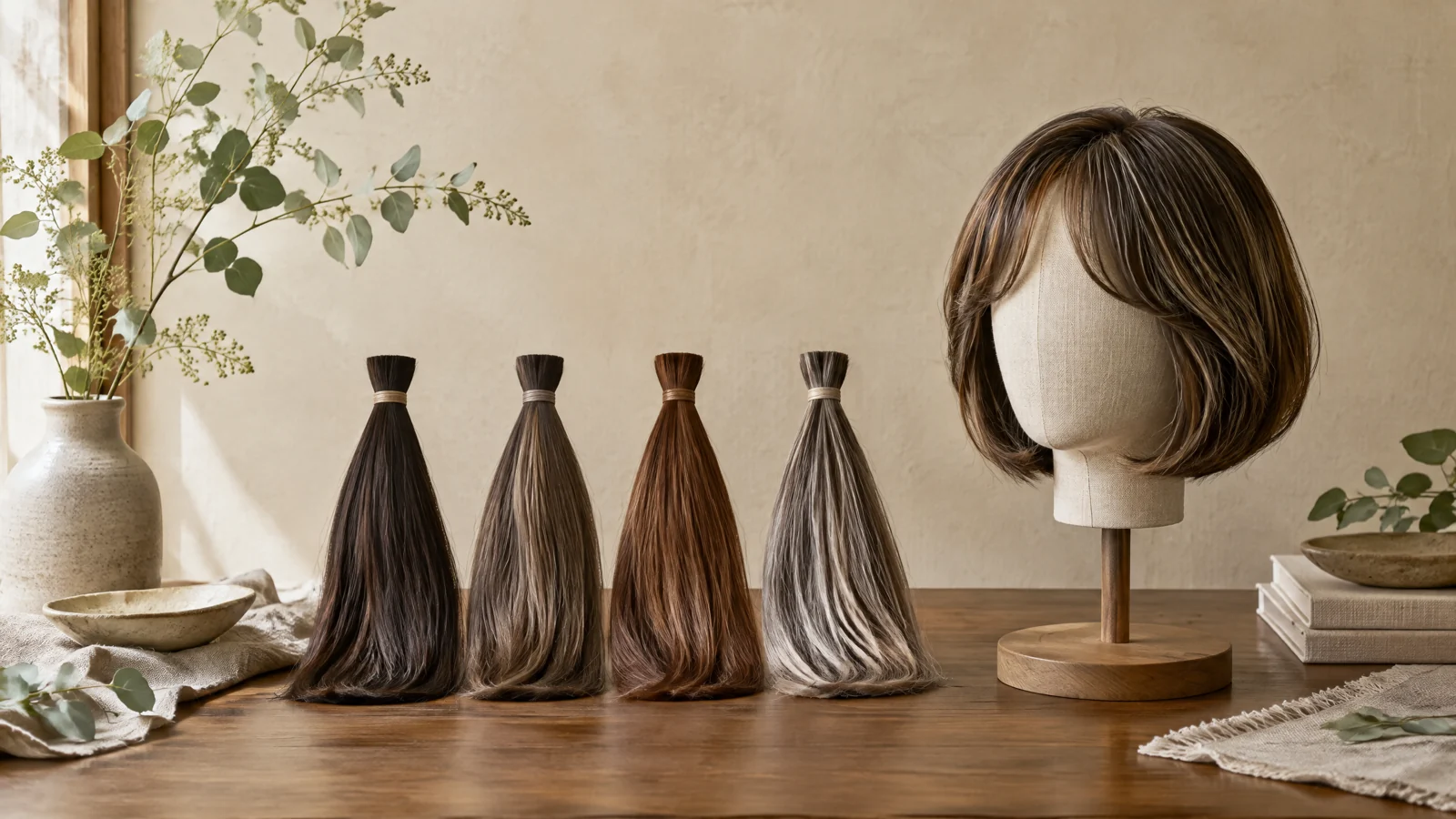
Wig colour matching can help you compare depth, undertone and silhouette before changing your natural hair. Treat it as a styling reference, not a promise of a salon result; confirm the wig’s material and processing limits separately.
A wig turns a vague wish such as ‘something more natural’ into a visible choice. You can examine depth, temperature and face framing before changing your own hair.
The useful goal is not an exact copy. It is to separate what you like, record your limits and bring both to a realistic colour consultation.
01
What can a wig show you, and what can it not predict?
Treat a wig as a visual test board for tone, depth, length and silhouette. It lets you see whether a dark brown feels more balanced than black, whether a softer brown opens the face, and whether a shorter outline changes your proportions. These are useful style decisions. They are not a promise of the colour your own hair will produce.
The fibre, density, shine, cap construction and way a wig sits are different from the hair on your head. Even labels such as natural black or deep brown are not universal colour codes. Ask, ‘Do I like this direction?’ rather than ‘Will my salon colour look exactly like this?’ A wig helps turn a vague wish into something you can discuss.
A colour consultation still needs an assessment of your existing shade, previous colour, porosity, ends and desired level of change. A wig cannot diagnose hair condition or replace a discussion about the scalp. If you have scalp discomfort or a previous reaction to colour products, keep that safety question separate from the style experiment.
A useful way to test your preference is to compare the wig with your usual brow depth, clothing and make-up rather than with an idealised studio photograph. A shade that looks striking in a catalogue can feel too high-contrast when it sits beside the colours you actually wear. Conversely, a small shift in warmth may be more noticeable than a dramatic change in level.
Write down the effect you want people to notice: a softer face, more definition, less visible regrowth, or simply a different mood. This gives the stylist a purpose to protect if the exact wig shade is not technically realistic. Also check whether the wig is worn with your natural hair tucked away or visible at the hairline. That edge can change your judgement of continuity. Photograph both versions if you can.
The best reference is not the most expensive or fashionable wig; it is the one that helps you explain a specific visual preference without hiding the limits of your own hair.
If dimension matters more than a full change, review the salon’s highlight service and mark the areas where the wig catches light. That keeps the discussion specific.
Use the wig to choose a direction, then let the stylist assess how safely your own hair can approach it.
02
How should you compare warm, cool, light and dark tones?
Check the same wig beside your face in window light, ordinary indoor light and the setting where you spend most of your day. Warm indoor bulbs can make brown look more golden or red, while a dark shade may appear softer than it does outdoors. Keep the parting and position similar each time. Take unfiltered photographs so you can review the differences later.
Cool colour usually suggests grey, blue or violet direction; warm colour suggests gold, honey or red-brown direction. These words still do not function as cross-brand shade codes. Place the hair beside your face and observe whether your complexion looks even, whether under-eye shadows look stronger, and whether the contrast with your brows feels intentional.
A plain sheet of white paper can help you notice the fibre’s apparent cast before you judge it against your face. If the photograph and your eyes disagree, note the lighting and phone white balance first. Do not make an automatic camera adjustment your salon target.
For a clearer vocabulary before your appointment, compare Asian wig colour and fit questions and options. It can help you describe the visual direction, but it cannot certify the shade of a particular wig or dye formula.
For a second opinion, compare the reference with the salon guide to cool versus warm hair colour tones. Use it to name the direction you see, not to promise a formula.
| What to observe | Question to record | Why it helps the consultation |
|---|---|---|
| Depth | Does the shade sharpen the face or make it look heavy? | Clarifies whether depth matters more than tone |
| Temperature | Do you prefer grey, gold or red influence? | Replaces the vague word ‘brown’ with a direction |
| Contrast | Do the roots, brows and ends connect? | Opens a discussion about all-over colour or dimension |
| Lighting | Does it work in both daylight and your usual room? | Sets a realistic everyday expectation |
Compare the same shade in at least two kinds of light before deciding.
03
Why can length change your judgement of colour?
Colour does not act alone. Long, straight hair creates a larger continuous field of darkness, while a short or layered shape may make movement and contrast more visible. A wig can reveal that what you like is not only the colour, but the colour combined with a particular outline and face frame.
Try three passes. First, look only at the shade. Second, examine the fringe, parting and face frame. Third, move, turn and look at the ends. If you still like the shade after clipping the wig shorter, the colour direction is probably more stable. If the result suddenly feels too heavy, the issue may be silhouette rather than tone.
Bring front and side photographs to the consultation, but label them as references. Your own root distribution, growth pattern, previous colour and the way your ends absorb product will affect the result. A stylist may suggest a partial highlight, a softer root or a staged change instead of copying the full wig.
If you are drawn to light moving through the shape, review synthetic wig options guidance and limitations before the appointment. The purpose is not to transfer a wig effect literally, but to identify where you want brightness and where you want depth.
- Take front, side and movement photographs.
- Write down whether the strongest attraction is tone, length, fringe or ends.
- Turn ‘natural’ into an observable description such as a softer root or a low-contrast face frame.
Separate colour, length and outline so a shape problem is not mistaken for a colour problem.
04
Which wig material makes a better pre-colour reference?
Material changes the shine, movement and styling behaviour you see. A human-hair wig may offer a more familiar sense of movement, but human hair does not mean unlimited bleaching or recolouring. Its condition, processing history and supplier guidance still matter. Synthetic wigs may hold a designed shape, yet fibre descriptions and care limits can differ from one item to another.
Do not infer heat tolerance from softness, and do not assume every synthetic label means the same thing. Before washing, heating or recolouring any wig, read the item-specific instructions and ask the supplier. For a colour consultation, the safest use is to observe the existing shade rather than experimenting on the wig as a substitute strand test.
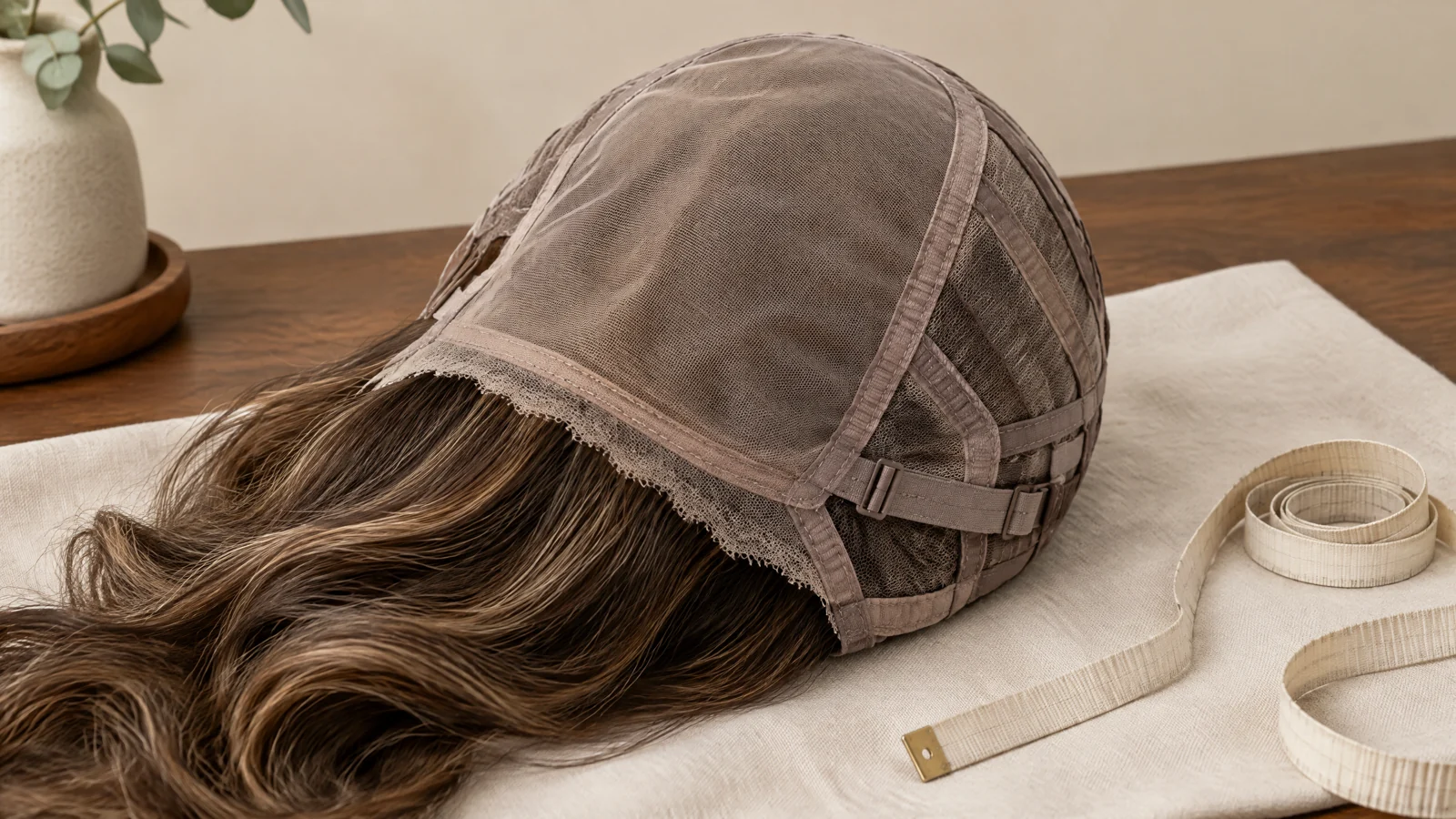
Make material one variable in your decision. Are you checking tone and shape only, or do you also need the daily handling to feel familiar? If it is a visual reference, a fitting, photographs and a sample may answer enough. If you need to judge routine styling, also ask about cap structure, density and care requirements.
The guide to wig choices in Hong Kong guidance and limitations can help you separate questions about touch, styling and maintenance. It is not a promise that a particular item is heat-safe or suitable for dyeing.
If complexion is part of the decision, compare the guide to the best hair colour for Asian skin tone and note which contrast feels comfortable rather than chasing a universal rule.
| Option | Useful visual quality | What still needs checking |
|---|---|---|
| Human hair | Movement and texture can support a nuanced shape reference | It does not imply unlimited bleaching; assess the individual item |
| Standard synthetic | Often preserves a defined silhouette for easy comparison | Shine, feel and heat limits depend on product information |
| Mixed or specialty fibre | May combine different visual and handling qualities | A category name cannot establish care instructions |
Material affects the reference; product instructions govern care and processing.
05
How do you turn a wig fitting into a useful salon brief?
Bring front and side photographs, the shade name or product page, and notes from different lighting. Instead of saying ‘make it identical’, describe the acceptable range: deep brown rather than black, a darker root, or a small amount of brightness around the face. This gives the stylist a visual aim without hiding the differences between the wig and your hair.
State your limits as clearly as your preferences. Do you want to avoid lightening? Do you need a low-maintenance routine? Will frequent outdoor exposure affect how you feel about fading? Tell the stylist about black dye, bleach, plant colour or home colour in your history. A complete history makes the expectation more realistic.
The stylist may suggest stages: first adjust tone and shine, then reassess the condition; or use local dimension instead of an all-over change. That is not a rejection of the wig reference. It recognises that your underlying pigment and hair strength are different. Ask what each step is intended to solve and what you keep if you stop there.
If your reference depends on a soft transition rather than one flat shade, browse balayage colour direction and use the appointment to point out where you want depth and light. A service page cannot replace an in-person assessment; the final plan must reflect your hair on the day.
If your preferred result is a gradual light-and-dark transition, review balayage colour direction and explain where the wig looks brightest. A consultation still needs to account for your own base and history.
Turn photographs into preferences, limits and acceptable variation—not a colour that must be copied.
06
What safety checks belong before the colour appointment?
A wig fitting is mainly a visual choice, while colouring involves product contact with hair and scalp. The American Academy of Dermatology advises following the product directions and testing store-bought colour; if rash, redness, swelling, burning or itching appears, do not colour and seek dermatology advice.[1] A wig cannot replace that safety step.
Tell the salon about current scalp symptoms, previous product reactions and recent chemical services. If the scalp is broken, persistently itchy or you have a known ingredient sensitivity, address the health concern before the style plan. General appearance guidance is not a diagnosis, and chemotherapy-related hair loss should not be reduced to choosing a shade.
For treatment-related hair loss, Cancer Research UK says a wig fitter can help with style and colour, while fit and comfort need separate consideration.[2] In that situation, keep the roles distinct: the medical team addresses treatment and scalp concerns, the wig professional addresses fit, and the colour salon addresses a colour service only where appropriate.
A useful final sentence is: ‘This wig shows the tone and outline I like; please tell me the safest way to approach that direction on my own hair.’ It preserves your visual goal while leaving room for a proper assessment.
When your notes are ready, use the colour consultation booking page to arrange a conversation. Bring the wig reference, but expect the plan to be adapted after your hair is assessed.
Complete product and scalp safety checks first, then use the wig as a communication tool.

What else should you know?
Will my hair look exactly like the wig after colouring?
No. Fibre, shine, density, cap position and your underlying pigment are different. A wig shows a direction, not a guaranteed result.
Can I dye the wig first as a trial?
Do not assume that you can. Human hair and synthetic fibres have different limits. Check the item instructions and ask the supplier; using the original shade as a reference is safer.
Is indoor lighting enough for choosing a shade?
It is better to compare daylight with your ordinary indoor light and use unfiltered photographs. One warm shop light can distort the decision.
Should I complete a safety test before colouring?
Follow the product and salon instructions. If a test or previous use causes redness, swelling, burning or itching, stop and seek medical advice rather than proceeding.
Can someone with hair loss or a sensitive scalp use a wig as a reference?
Yes for appearance, but comfort, attachment and scalp health need separate assessment. Treatment-related concerns should be discussed with the medical team or a qualified wig fitter.
How do you turn the choice into a next step?
Before booking, take three unfiltered photographs, note the difference between daylight and ordinary indoor light, and write down the changes you will not accept. That is more useful than bringing only a shade name.
Canvas Blend Editorial / AI-assisted research provides styling and colour-communication guidance. It does not provide wig making, medical diagnosis or wig diagnosis; the salon must assess your hair on the day.
Sources and editorial notes
- [1] Coloring and perming tips for healthier-looking hair
- [2] Wigs, hats and scarves
- [3] 網購假髮髮色怎樣選?假髮髮色選擇與色差指南|OWNSTRAND 假髮 — Relevant page linked in the body.
- [4] 真人髮假髮同纖維假髮有甚麼分別|材質選購比較|OWNSTRAND 假髮 — Relevant page linked in the body.
This AI-assisted Canvas Blend editorial guide is not a first-person case study or an article reviewed by Vit So. OWNSTRAND shares the site owner; links do not imply a joint package or medical certification. Confirm product materials, processing, care, fees and availability with the supplier in writing. Consult qualified healthcare professionals about hair loss or scalp symptoms.
Canvas Blend Editorial / AI-assisted research. Ownstrand pages are used only for the assigned colour-selection and material context; no price, stock, heat or dyeing claim is inferred.