Colour × Wigs × Personal Choice
Men’s Hairline Choices: Compare Bases and Wearing Options
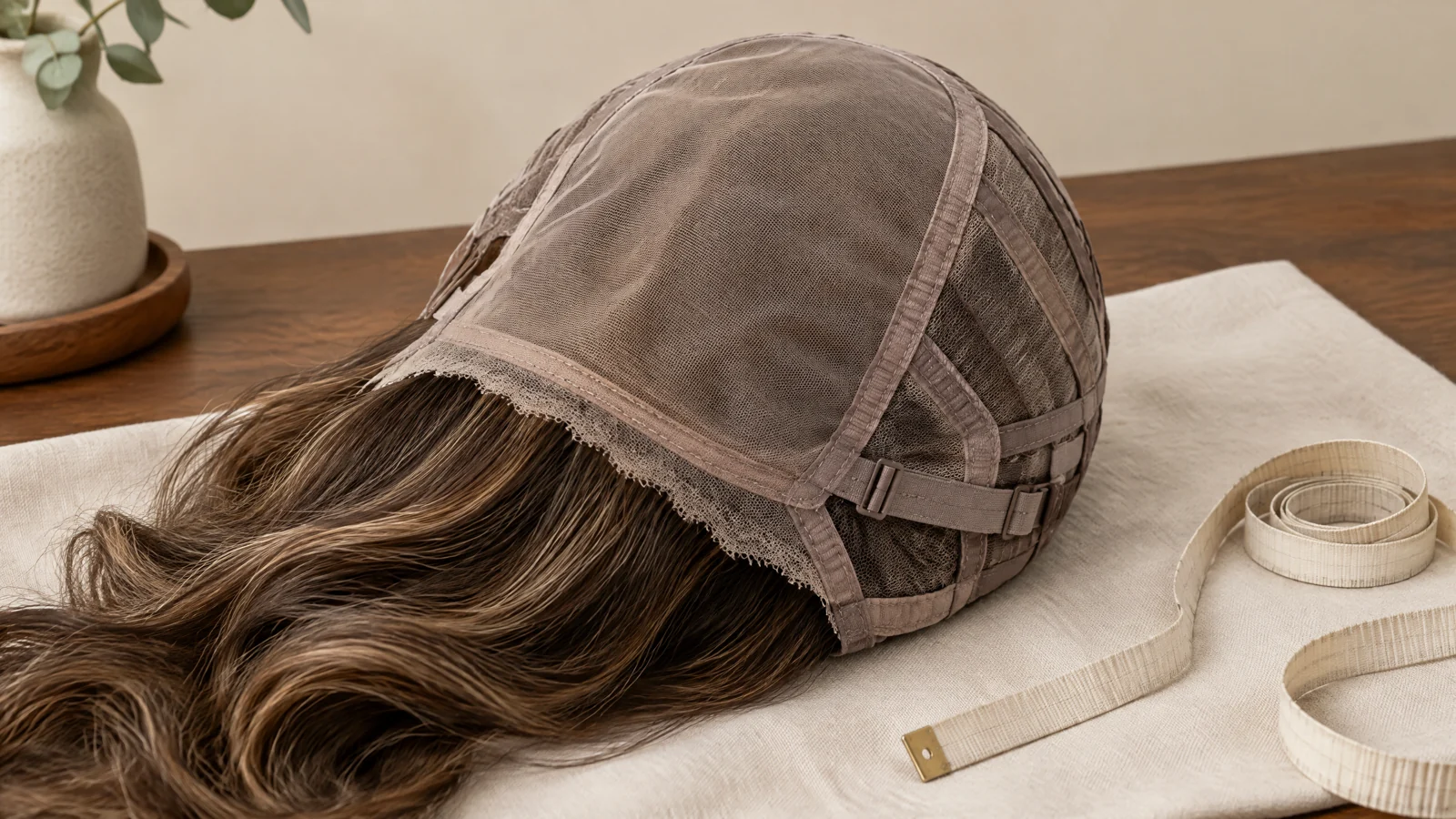
Men’s hairline choices involve the front edge, base, fit and attachment routine together. Removable and bonded systems have different care demands, so a front-view photograph or a material label alone cannot confirm comfort or suitability.
For men considering a hairpiece or wig around a receding front, the practical order is simple: map the hairline, identify the base, choose an attachment routine you can manage, and only then discuss colour. Treat the wearer’s own hair, the unit, and the attachment edge as separate subjects.
This guide turns vague goals such as natural, secure, and easy to maintain into questions that can be checked in a fitting, during movement, and after colour. It does not claim that one base, bond, or wearing choice suits everyone.
01
What exactly should you change at the front hairline?
A useful consultation starts with a map, not with the phrase “a natural wig.” Point out whether the concern is deeper recession at both temples, a higher centre hairline, or the whole frontal outline. Also say what you want to keep visible. A small frontal hairpiece can behave very differently from a full wig when the temples, sideburns, and existing hair remain part of the look.
Divide the front into three visual zones: the centre, the two temple corners, and the transition into the sideburns. Look at them from straight on, three-quarter view, and while looking down. Your usual parting matters as much as your still photograph. A man who brushes up and exposes the corners needs a different conversation from someone who wears a low side part every day.
The Ownstrand guide to men’s receding hairline coverage guidance and limitations uses the covered area, outline, base, fit, and styling possibilities as starting questions. Use that framework to describe your brief; do not treat a category name or a sample photograph as a promise that one solution will suit every head.
Here is a hypothetical planning example. A man with a left part wants to soften empty temple corners but keep the centre hairline recognisably his. He should bring a normal styling photograph and mark the area he is willing to cover. That turns “I want it natural” into a testable brief about edge position, density, direction, and how much of his own hair will blend.
| Visible concern | Ask first | Do not assume |
|---|---|---|
| Deep temple corners | How far should each side extend? | A wider piece is automatically more natural |
| Centre and temples both receding | How will the curve connect at the sides? | Moving only the centre forward is enough |
| Frequent exposed-forehead styling | How does the edge look while talking and looking down? | A still front photo predicts daily wear |
Mark what you want covered and preserved before discussing a product.
02
How should you question base terminology?
A base is the structure that supports the hair and contacts the head; it is not a single material called “the net.” Lace front usually describes a front edge, monofilament or mono top usually describes a parting area, and wefted construction describes rows of hair attached to a base. One unit can combine several structures in different zones.
Turn the unit inside out and ask zone by zone: what is used at the frontal edge? Is the part fixed or movable? Is the hair individually tied or attached in rows? What happens at the sides and back? The Ownstrand guide to men’s hair system base types guidance and limitations stresses that labels are prompts for questions, not a universal ranking.
Hand-tied does not automatically mean lighter, cooler, or more natural in every situation. Wefted does not mean there is no lace or mono section. The useful statement is specific: “The area I will show uses this construction, and it works with my parting and direction.” This prevents a familiar word from carrying claims the actual item never made.
Base construction and fibre type are separate facts. Human hair is not a licence for unrestricted bleaching or colouring. Synthetic fibre is not automatically heat-safe. Before colouring or using tools, confirm the exact product instructions, what part may be treated, and whether the edge or attachment area must be protected. For your own hair colour dimension, you can also review the salon’s highlight service before deciding what belongs on the unit.
Ask which construction is used where; never let one label describe the whole unit.

03
Removable, clips, tape, or bonding: which routine can you manage?
There is no universal winner in attachment. A removable arrangement may suit someone who wants to take the piece off as part of grooming, but it still requires a repeatable fitting routine. Clips belong only on a base designed to support them and need suitable existing hair. Tape or adhesive must follow the directions for the particular product and base.
Start with your week rather than with a promise of maximum security. Do you exercise or sweat? Wear a helmet? Need to expose your forehead? Want to remove the piece every evening? The Ownstrand guide to removable versus bonded hair systems guidance and limitations compares attachment by fit, removal, care, and manageability instead of claiming that one method suits everyone.
During a fitting, set the front and back direction first. Then inspect the edge, parting, ear area, and back. Slowly look down, turn, look up, and move the hair in your normal direction. If you feel pressure, pulling, or repeated slippage, do not simply tighten everything. Recheck size, placement, base support, and the movement that caused the problem.
Macmillan Cancer Support says a well-fitting wig should stay in place on its own and suggests bending forward and gently shaking the head as a general check; it also notes that sensitive skin needs care when tape is considered.[2] This is general guidance, not a guarantee that any unit will stay fixed in every weather or activity.
- Write down the movements and headwear you use each week.
- Confirm that the base supports the proposed attachment.
- Treat pressure or irritation as a fit question, not proof of better security.
Choose the routine you can repeat safely, after checking what the base supports.
04
Before colour: are you colouring your own hair or the unit?
Before a colour service, separate three subjects: your own hair, the hairpiece or wig, and the transition between them. Say whether the goal is darker roots, warmer sides, grey blending, or a lighter overall result. Then ask whether the specific unit is approved for that treatment. “Human hair” alone does not establish that bleaching, perming, or every hot tool is appropriate.
The American Academy of Dermatology advises following the manufacturer’s directions and testing a store-bought colour before use. Rash, redness, swelling, burning, or itching can indicate an allergic reaction; the advice is to stop colouring and consult a dermatologist.[1] With a hair system, also separate a skin test, scalp condition, and attachment products from the cosmetic colour decision.
If the practical goal is to blend your side hair with a unit, bring photographs taken in daylight and indoor light. Identify the exact mismatch instead of asking for an undefined “natural brown.” A salon can plan colour on the client’s own hair, but any treatment of the unit must be cleared against that item’s care instructions first.
Consider a hypothetical case: a man owns a dark-brown unit and wants to bleach the side hair to light brown. That is not a minor add-on. New growth, fading, fibre response, and the border between the two can diverge. A safer planning conversation defines the target level, the area to be treated, and how later touch-ups will be handled. If bleaching is not part of the brief, compare no-bleach hair colour options for the client’s own hair.
Name the fibre and treatment area before choosing a colour service.
05
After colour: how do you preserve the transition and routine?
Colour changes over time, but not always at the same rate on your own hair and on a unit. New growth can expose the border. Washing and sunlight can alter the visible tone. Check the centre, temples, and sideburn transition under your normal parting instead of judging only the freshly styled front. Natural appearance is coordinated placement and direction, not forced uniformity.
Follow the care sheet for the actual fibre and base. Human hair can still have a history of processing and may not tolerate unlimited chemical work. Synthetic fibre may have a specific heat instruction, or none at all. Before using a dryer, iron, toning product, or deep treatment, confirm compatibility and keep unsuitable products away from attachment edges.
Take repeatable photos after a colour or cut: front, three-quarter view, and looking down. This makes it easier to identify whether a problem is tone, density, edge placement, or attachment. If you are planning post-colour hair care, tell the salon that a hairpiece is present and which areas must not receive a product.
If the scalp develops persistent burning, swelling, flaking, or itching, stop the product that may be aggravating it and seek medical advice. Hairline coverage is a cosmetic choice, not a treatment for hair loss or a scalp condition. Anyone receiving chemotherapy or other treatment should check wearing and colouring plans with the clinical team first.
Track colour and comfort after the service, using the product instructions as the boundary.
06
What should you say at a salon or fitting appointment?
A concise brief can use four sentences: this is the area I want to address; this is how I part and expose my forehead; this is how I wear and move through a normal day; and this is whether I want colour on my own hair, the unit, or only a visual blend. These facts help a colourist and a wig provider ask different but compatible questions.
Bring three kinds of reference. Show an ordinary day rather than only a styled portrait. Show your usual parting and any up-styled look. Bring the current colour or care information for the unit, plus a note of any recent scalp reaction. Photos support communication but do not replace measurement, fitting, product directions, or clinical advice.
Canvas Blend is a Hong Kong colour salon. It can discuss colour planning for your own hair and after-colour care; it does not manufacture wigs or diagnose hair loss. If you need a hair colour touch-up, disclose the attachment arrangement and the areas that must remain untouched so the salon can define its service scope.
Do not use “natural,” “secure,” or “low maintenance” as the acceptance test. Turn each word into an observation: does the edge look balanced from the side? Does it stay in position while looking down? Can the parting be repeated? Which area needs a future touch-up? Specific tests reduce misunderstandings created by broad adjectives. If you want the colour team to review the situation first, use the colour appointment page and include the unit details.
- Bring normal styling and activity photographs.
- Separate your own hair, the unit, and the base in your explanation.
- Write the desired result as positions, movements, and care limits.
Replace adjectives with visible conditions that both sides can check.

07
What should you confirm before making the decision?
Before booking colour or committing to a unit, record the coverage area, front edge, parting construction, supported attachment options, removal method, cleaning instructions, and styling limits. If the answer is only “usually,” ask where the instructions for this exact item can be checked. A category page cannot replace an item-specific specification.
Plan the timeline in three stages. Before the service, check the fibre, scalp, and existing attachment. During the service, keep unsuitable chemicals away from the unit and its edge. Afterward, observe colour change, movement, friction, and cleaning response. A timeline answers more than a single yes-or-no question about colouring.
For a small frontal piece, ask where its border will sit, whether existing hair can blend, whether the parting crosses the edge, and how movement will be checked. If you later move to a full wig, measure again and review the entire base. Do not transfer assumptions from a partial solution to a different construction.
Keep photographs of the item name, fibre, base description, and care sheet. They will be useful when you book a colour refresh, change an attachment product, or compare a replacement. Follow each new product label. If discomfort appears, stop and seek appropriate medical advice rather than trying to overpower the symptom with stronger fixation.
Make coverage, base, attachment, colour, and care one written checklist.
What else should you know?
Does an M-shaped hairline require a full wig?
Not necessarily. Map the temples, centre, and sideburn transition first, then compare a partial piece with broader coverage through samples, measurements, and normal movements.
Is hand-tied always more natural than wefted?
No. Those terms mainly describe how hair is attached. The visible result also depends on the front edge, parting area, density, size, and wearing routine.
Must a men’s hair system be bonded to stay secure?
No. Clips, tape, or bonding depend on the base, available hair, skin condition, and routine. No attachment method suits every person or every unit.
Can I bleach a human-hair hairpiece myself?
Do not decide from the words “human hair” alone. Check the exact unit and manufacturer instructions for colouring, bleaching, heat, and base protection before doing anything.
What should I do if my scalp itches after colouring?
Stop the relevant product if you develop rash, redness, swelling, burning, or itching, and seek appropriate dermatology or medical advice. A cosmetic fitting is not a diagnosis.
How do you turn the choice into a next step?
The strongest decision is not a universal “best” base or attachment. It is a documented match between the front edge, visible angles, daily movement, colour plan, and care limits of the exact unit.
Canvas Blend can discuss colour planning and after-colour care for your own hair. The supplier must confirm the exact wig or hairpiece construction, attachment, and chemical-treatment limits. This article is prepared by Canvas Blend Editorial / AI-assisted research and is not medical or wig-specialist diagnosis.
Sources and editorial notes
- [1] American Academy of Dermatology: Coloring and perming tips for healthier-looking hair
- [2] Macmillan Cancer Support: Wigs for cancer treatment
This AI-assisted Canvas Blend editorial guide is not a first-person case study or an article reviewed by Vit So. OWNSTRAND shares the site owner; links do not imply a joint package or medical certification. Confirm product materials, processing, care, fees and availability with the supplier in writing. Consult qualified healthcare professionals about hair loss or scalp symptoms.
Canvas Blend Editorial / AI-assisted research. Ownstrand links are used as decision-oriented further reading; exact construction, availability, attachment, and colour-care limits must be confirmed for the specific product and supplier.