Colour × Wigs × Personal Choice
Natural Hairline Wigs: Compare Front, Part and Finish

Natural hairline wigs need more than a convincing front edge: parting, base, knots, density and finishing also affect appearance. Lace-front, monofilament and silk-top features serve different roles; compare the actual piece in everyday light rather than relying on names.
If you expose your forehead, change your part, brush hair back or tie it away, a polished front photograph is not enough. The front hairline and crown part are separate zones, and the final cut changes weight and direction.
This question-led guide moves from sample inspection and fitting to fibre, colour and finish checks. Any medical context is general information only; cosmetic wig selection is not a clinical assessment.
01
Which part of my forehead actually needs to look natural?
Do not let the words “lace” or “natural” make the decision for you. Bring photographs that show your usual front view, whether you expose your forehead, and how you wear your fringe. The hairline, temple transition and direction of the first few hairs work together. A neat edge alone cannot explain whether the whole front will make sense on you.
A lace front mainly addresses the meeting point between the forehead and the front hairline. It is not automatically the whole cap, and it does not automatically solve the crown part. Ask the fitter to point out the exact working area: “Which part will I see when I brush the hair away from my face?” Then repeat the question while you are wearing the item, not only while looking at a product photograph.
Inspect a sample closely, from straight on and from an angle. Gently separate the front hairs and look at the change in density, the position of the edge and the temple transition. These checks do not promise that an item will look like biological hair in every situation. They turn a vague promise into details you can compare.
If you still have hair, ask how your own hairline will meet the piece. If your hair is thinning or changing, ask about sizing, attachment and later cutting. Hair loss, treatment and scalp symptoms belong with a healthcare professional. A cosmetic consultation can discuss appearance, but it is not a diagnosis.
For a useful visual checklist, see the monofilament hair topper guidance and limitations guide. It separates the front hairline from the part, density and colour under different light. Use those observations as questions for a specific item, not as a guarantee that every item described by the phrase will suit you.
If you also need a natural-hair colour conversation, the salon’s highlights service shows the scope of that work; confirm wig mesh and base specifications with the actual supplier.
- Bring front, side-part and relaxed photographs from ordinary days.
- Ask the fitter to point to the front, temple and parting zones separately.
- Look in indoor light and near daylight rather than relying on a phone filter.
First identify the visible zone; only then compare construction names.
02
Do I need a front hairline, an adjustable part, or both?
The front hairline and the crown part answer different questions. The front controls the forehead edge. The part controls where the hair separates, how the roots travel, and whether a change from centre to side part feels credible. A request for a “lace wig” can therefore be incomplete: the front may work while the crown does not fit your routine.
During a fitting, perform the movements you actually make. Try a centre part, your regular side part, brushing hair back and looking down. Ask whether the part is fixed or can be restyled, how large the visible parting area is, and whether your own hair needs to be left out. The answer should describe the exact design, not just the category label.
Monofilament usually describes a fine mesh area, but the term alone does not state coverage, attachment, fibre or colour-treatment suitability. Silk top is also a base-related description, not a universal construction standard. Record base, coverage, attachment and care as separate questions so that attractive terminology does not hide a missing specification.
Colour clients should inspect the roots as carefully as the ends. Highlights, grey regrowth and fading can make a parting look more obvious than the perimeter. Before changing colour, ask whether direction, density and cutting could create a softer transition. Any dye or bleach decision must follow the supplier’s instructions for that individual product.
The salon’s hair colour before-and-after tips can help you photograph the same angle and lighting during a fitting. This does not turn a colour salon into a wig maker. It simply gives you a more reliable record of how the part and colour read from one comparison to the next.
| Question | What to inspect | Useful follow-up |
|---|---|---|
| Front hairline | Forehead edge, temples and transition | Which area will show when I expose my forehead? |
| Crown part | Direction, root density and visible area | Can I wear my normal part, and what confirms that? |
The front manages the edge; the part manages direction. Test both.
03
What do lace, Swiss mesh, cap and monofilament actually describe?
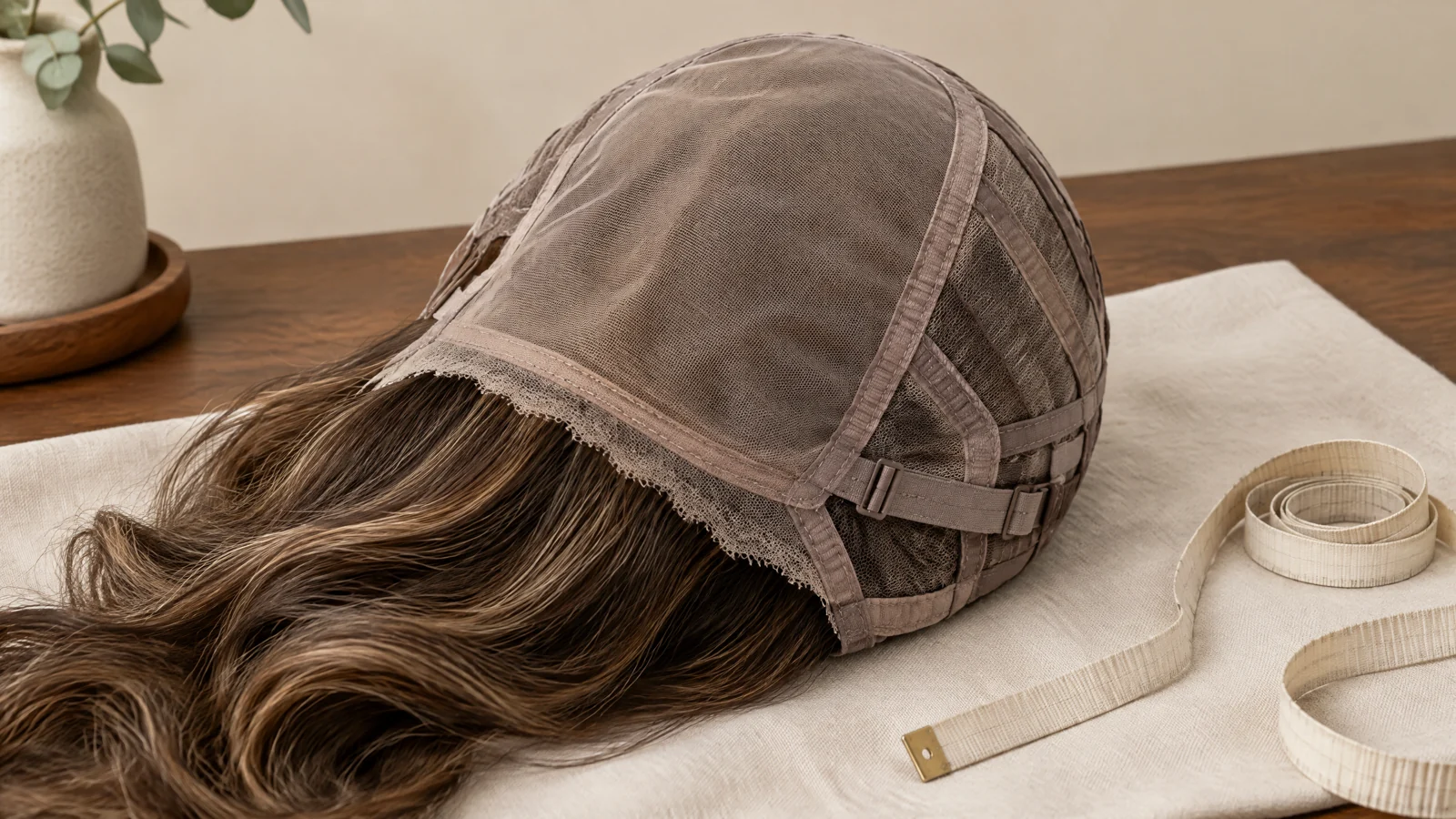
Construction terms first answer where and how a piece is made. A lace front points to the front hairline area. Swiss mesh should be checked as the actual mesh and hairline used on that item. Cap is a broad word for the internal support and configuration. Monofilament commonly describes a fine mesh zone. None of these words, by themselves, means universally natural-looking.
Ask the fitter to mark the boundaries: “Show me the front structure, the parting structure and the main cap. Which areas are mesh?” Then ask how the hairs are attached in each zone. This is more useful than asking which option is “the most breathable” or “the most real”, because it produces an answer tied to a construction you can inspect.
Look straight on, then lower your chin and turn slightly sideways. Check whether the hair direction continues from the edge, whether the part is an unnaturally straight line, and whether the cap creases where you are most likely to expose it. Fit matters too: movement can change the hairline position you saw in the first minute.
A Swiss mesh label is not a universal promise. The OWNSTRAND information describes sample comparison, head measurement and a completion visit for its stated custom process. Those details belong to that page and should not be extended to every supplier. Confirm the current item’s construction and arrangements directly.
The silk-top hair topper base guidance and limitations guide is useful for preparing sample-based questions. Use it to ask about a chosen item, rather than treating a category description as proof of comfort, durability or suitability.
Ask where a term applies, then ask what that area changes in your daily style.
04
How should my colouring history change the fibre decision?
Human hair does not mean unlimited bleaching or colouring. It may already have been processed, and its tolerance depends on the actual item and the supplier’s assessment. Synthetic fibre does not automatically mean heat-safe either. A pre-set style can change with heat. Do not apply bleach, dye or hot tools simply because the hair resembles your own.
Start with your routine: Do you want one stable style, frequent part changes, outdoor wear, or home styling? Then ask four precise questions: What fibre is this? How was the current colour made? Is recolouring allowed? What are the heat and washing limits? If the reply is general, treat the point as unconfirmed rather than converting “usually” into permission.
A human-hair item may suit someone who wants professional restyling, but that is not a promise about every human-hair product. A synthetic item may hold its intended shape, but fibres differ. The sensible choice is the care routine you can follow consistently, not the label that sounds most premium.
If your own hair is highlighted or changing tone, compare root, face-framing and ends separately. Ask whether a cut or colour selection can soften the join before considering a chemical change to the item. Never assume a whole piece can be recoloured to match a future salon appointment.
Canvas Blend can discuss colour direction for natural hair. Construction, fibre, chemical limits and wig care must be confirmed with the actual supplier. Keeping those responsibilities separate prevents a colour consultation from becoming an unsupported product claim.
| Decision area | Human hair | Synthetic fibre |
|---|---|---|
| Restyling | May allow more styling options, subject to condition and supplier advice | May retain a preset style; heat rules vary by fibre |
| Colour change | Never assume unrestricted bleach or dye | Never assume it can be dyed; check the label |
| Routine fit | Requires willingness to manage care and professional work | Requires acceptance of the specified care routine |
Translate a fibre label into the care you will actually have to provide.
05
What does a finished cut need to include?
“Cut” does not simply mean removing length. The front wisps, temple angle, parting weight, ear area and ends decide whether the piece follows your habits. Bring front and side photographs and demonstrate whether you tuck behind your ears, tie the hair back or brush it away. A cut based only on a model photograph may solve a shape that you never wear.
Before cutting, ask whether the item will be fitted first, when you can request a small adjustment, and how the front, part and back will be checked after drying. Fit, direction and silhouette should be evaluated together. Once length is removed it may not be recoverable, so agree the conservative starting point and the areas that must remain longer.
A completion check should include standing normally, looking down, turning sideways and lightly moving the hair. Look for a blunt front edge, an abrupt face frame, excessive crown bulk or heavy ends. If you wear one part every day, make that version work before testing optional styling.
The OWNSTRAND English completion guide describes a return visit for trying on the completed custom item, checking fit, discussing adjustments and, where arranged, washing, cutting and blow-drying. That is a description of its stated process, not a universal promise for every wig or an item bought elsewhere.
Read about custom wig fitting completion guidance and limitations to distinguish a completion visit from an initial try-on. Write your own inspection list and check each point before collection; “Does it look natural?” is too broad to be a useful acceptance test.
For a clearer discussion of dimension in natural hair, you can review balayage colour, then keep wig cutting and care questions separate from the salon colour plan.
- Confirm placement before deciding how much to remove at the front and temples.
- Check front, three-quarter, side and lowered-head views after finishing.
- Describe unacceptable changes as length, direction or weight, not only as a feeling.
Finish means fit, direction and cutting have been checked together.
06
Will my daily routine matter more than the product name?
The same construction can behave differently in different lives. If you part to one side, wear glasses, exercise or pull hair back, test those movements. A seated front view cannot reveal shifting, friction or a part that becomes visible when you look down. Natural appearance comes from placement, flow, colour, outline and movement together.
Ask how measurements are taken, how the item is secured and what should happen if your own hair changes. If your scalp is sensitive, ask a healthcare professional or the supplier about contact and attachment options. Do not treat tape, clips or a cleaning product as a universal answer, and do not use a wig question to diagnose a scalp condition.
Care changes the finished appearance. Follow the item’s instructions for washing and storage, and do not introduce unapproved heat or chemicals. Keep a short record of the front, part and ends after care. If irritation, slipping or sudden shape change appears, stop the questionable method and seek appropriate advice.
For treatment-related hair loss, a wig can be an appearance and confidence choice, but treatment and scalp changes belong with your clinical team. Cancer Research UK advises checking return policies before buying online or without trying on, a practical purchasing point rather than a promise about any supplier.[2]
Write a one-page brief: where you expose hair, how you part it, what care you accept and how the finished item will be checked. Take it to the fitting appointment and mark material, heat, colour, supply and follow-up questions that are still unconfirmed.
If you want to arrange a natural-hair colour consultation, use the booking page as the salon entry point; it does not mean Canvas Blend makes wigs or provides medical assessments.
Test the item through your real movements, not through a single polished photograph.

07
How do I turn the answers into a defensible choice?
Sort the result into must-haves, negotiables and unknowns. Must-haves might be part direction, forehead exposure and stability. Negotiables might be face-framing layers, density and cool or warm tone. Unknowns include dyeing, heat, care, price, availability, returns and completion arrangements. Ask the product maker or supplier to confirm that last group rather than guessing.
Do not replace a fitting with a single ranking of “most natural”. Your priority may be the front hairline, while someone else needs crown coverage or an easy fixed style. Compare each option under the same light, part and movement. Write the trade-off down so that a flattering first impression does not erase a practical limitation.
If you colour your own hair, keep the salon plan separate from the wig plan. A colourist can discuss tone and cutting direction for natural hair. The supplier must confirm whether that particular wig may be recoloured, heated, washed and stored in a particular way. “Usually fine” is not a product specification.
Imagine a client who wears a side part, sometimes exposes the forehead and wants to soften existing highlights. This is a planning example, not a real client story. She could test the front and side part first, assess face-framing weight second and compare tone third. If recolouring limits remain unclear, keeping the item in its original colour is the safer decision.
Use the salon’s cool versus warm hair colour tones article to clarify colour language before a fitting. Then use the same terms for roots and ends. This keeps colour discussion separate from construction decisions and makes both conversations more precise.
- Write three must-ask questions: where it covers, how it parts and how completion is accepted.
- List fibre, heat, colour, care, supply and return points as confirmation fields.
- Photograph the same angles after fitting and decide after you have had time to reflect.
A good choice is not a universal construction; it is a documented set of answers and trade-offs.
What else should you know?
Is a lace front always more natural-looking?
No. It mainly addresses the forehead hairline and skin transition. Parting, fit, density, colour, movement and the final cut also affect the result. Compare the area you actually expose.
Does monofilament guarantee a scalp-like part?
No. It usually describes a fine mesh area. It does not by itself state coverage, attachment, fibre or the visual result of a particular product. Check that item’s specifications.
Can I bleach or dye a human-hair wig?
Never assume so. Human hair may already have been processed, and the supplier should assess the individual item. Synthetic fibres also cannot be assumed to accept dye or heat.
What should I do during a fitting?
Try your usual centre or side part, brush the hair back, look down, turn sideways and wear any glasses or accessories you normally use. Inspect front, part and temples from several angles.
Who should I ask if I have hair loss or scalp discomfort?
Ask a healthcare professional about causes, treatment and symptoms. Ask the supplier about cosmetic construction and attachment. A wig fitting is not a medical diagnosis.
How do you turn the choice into a next step?
Before your next fitting, bring ordinary photographs and write down the areas you expose, the part you wear and the care limits you will not accept. Obtain confirmation for material, recolouring, heat, price and arrangements rather than guessing.
Canvas Blend Editorial / AI-assisted research. Canvas Blend can discuss colour direction for natural hair; confirm wig construction, supply and care with the actual supplier.
Sources and editorial notes
This AI-assisted Canvas Blend editorial guide is not a first-person case study or an article reviewed by Vit So. OWNSTRAND shares the site owner; links do not imply a joint package or medical certification. Confirm product materials, processing, care, fees and availability with the supplier in writing. Consult qualified healthcare professionals about hair loss or scalp symptoms.
Canvas Blend Editorial / AI-assisted research; Ownstrand page facts are used only within the brief’s verified scope, without inventing prices, stock, lead times or universal product properties.