Colour × Makeup × Hong Kong
Korean and Japanese Makeup with Your Hair Colour
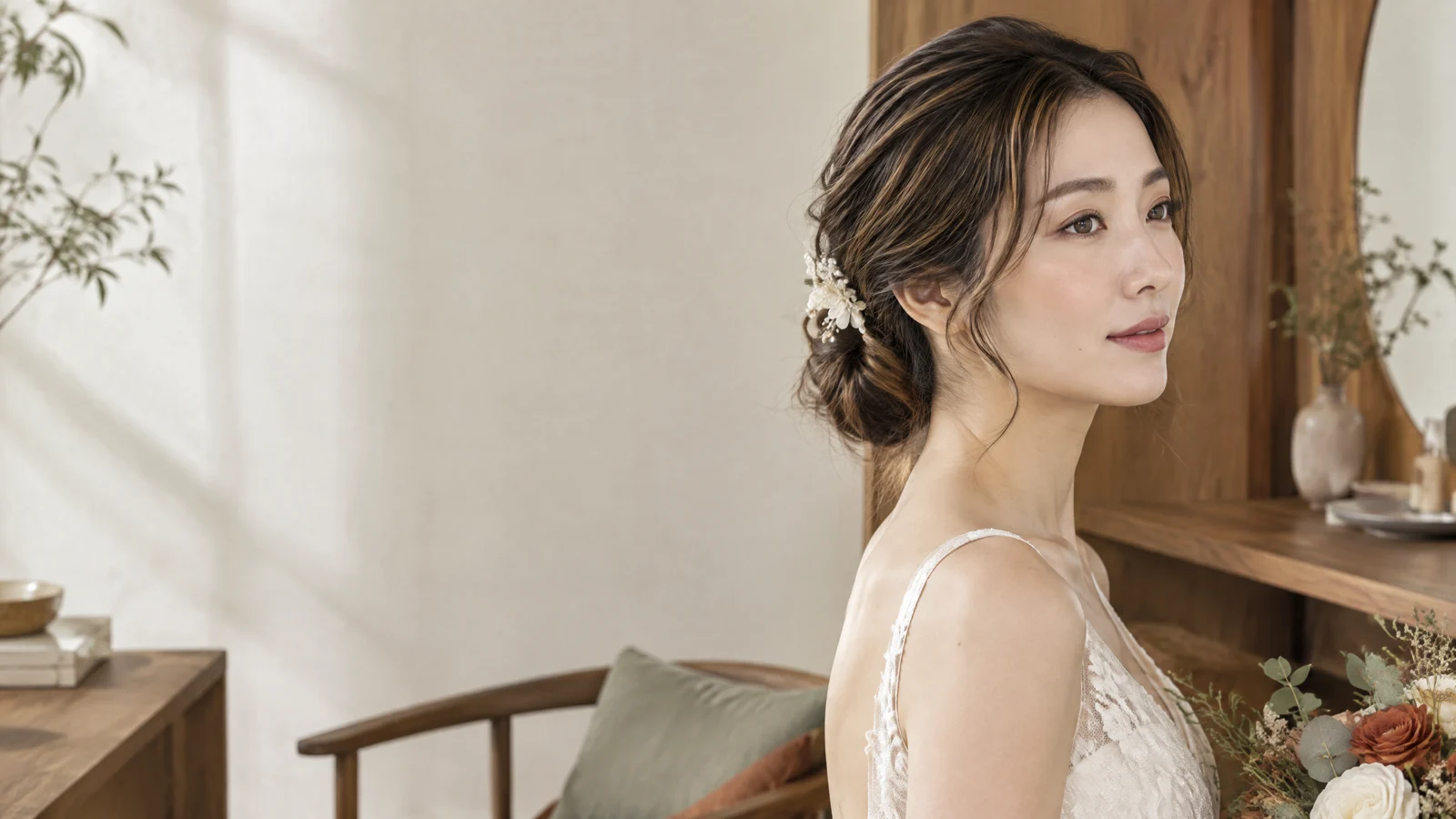
To match Korean or Japanese-inspired makeup with your hair colour, start with the hair’s value, undertone and surface texture—not a rule about ethnicity, skin tone, or a copied reference face. The lighter, cooler or more diffused the hair looks, the more useful it is to retain one readable facial focal point; the darker or glossier the hair, the more softly the rest of the makeup can transition around it.
Korean and Japanese makeup are useful visual vocabularies, not standards that anyone has to fit. A Korean-inspired direction may use a luminous base, soft brows and layered colour that still looks fresh. A Japanese-inspired direction may preserve skin texture, use precise but quiet definition and keep colour low in saturation. Either can work with natural dark hair, milk-tea brown, smoky grey-brown or a vivid face-framing highlight.
A reliable plan separates three questions. First, what is the hair doing in daylight: does it look dark or light, warm or cool, glossy or diffused? Second, how much definition do you want in person and in photographs? Third, what will the clothes, venue and timing ask of the look? Treating these as separate decisions makes a Korean or Japanese reference easier to personalise without asking your face or hair to become someone else’s.
01
What should you read in your hair colour before choosing makeup?
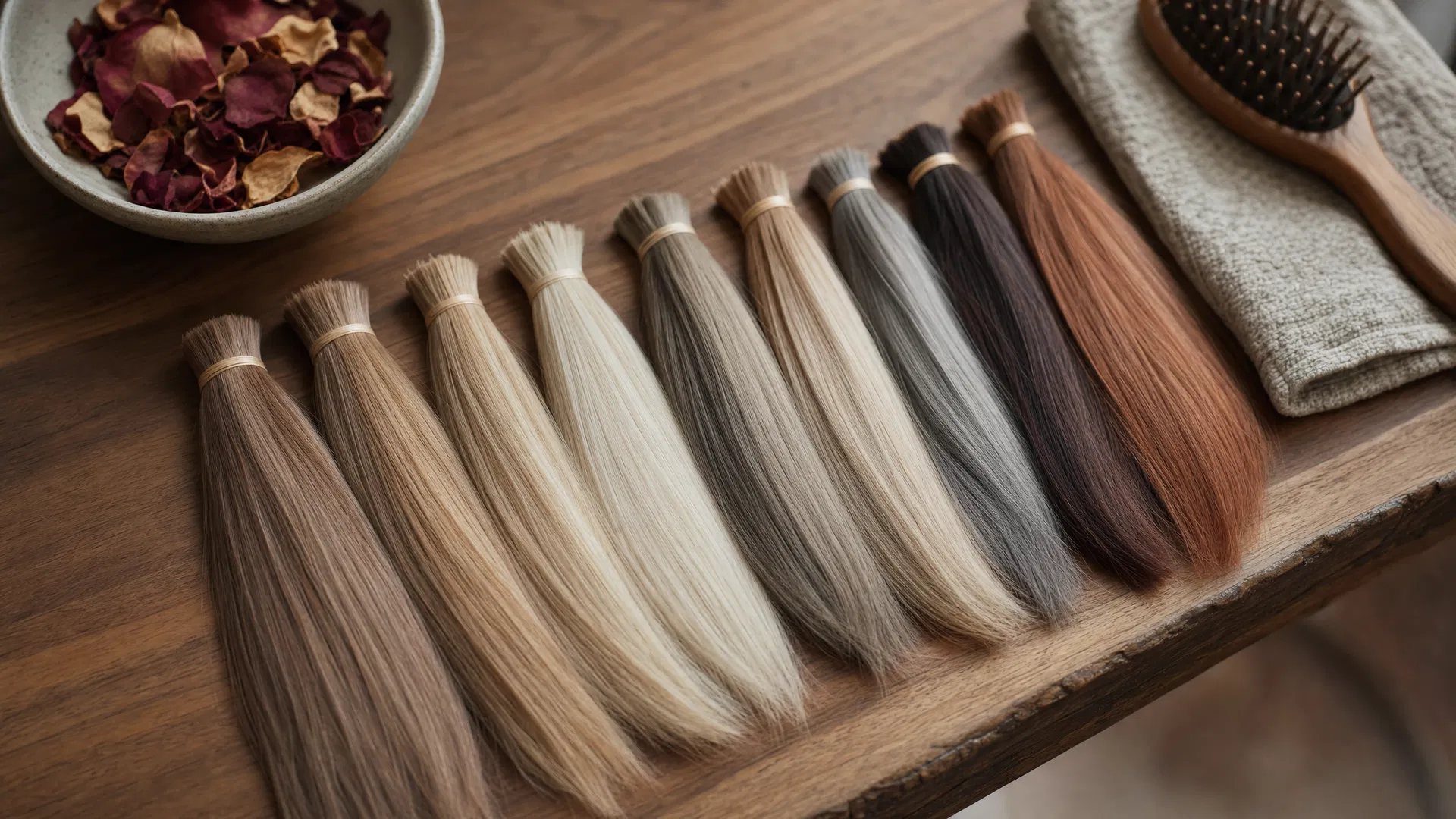
Read value before you read the shade name. Value is simply how dark or light your hair appears in the light where you will be seen. Ink black and deep chocolate hair make the edges of brows, liner and lips look comparatively crisp. Beige brown, ash brown and heavily highlighted hair soften the whole frame. Then notice temperature: honey, caramel and copper reflect warmth, while smoky brown, blue-black and muted violet-brown feel cooler. Finally, look at texture. A glossy straight surface returns light, whereas a matte colour, airy waves or broken-up highlights scatter it.
For a wedding, use bridal hair-colour planning to place your length, fringe and neckline in the same decision as makeup. For everyday colour, the guide to warm versus cool hair tones can help turn a vague “too yellow” or “too grey” reaction into a practical colour observation. That is not a judgement on your complexion; it is a way to see whether hair, cheek colour and eye colour sit comfortably beside each other.
Here is a planning example, not a client case. Someone with dark cool-brown hair and a soft grey suit may find that ash brows, grey-pink cheeks and an extremely pale nude lip all disappear from a distance. Keeping two elements quiet and giving either the lip or lash line a little more clarity can restore balance. Conversely, honey-brown hair with bright highlights already creates movement. It may need only a warm rose or brown-gold wash on the eyes rather than extra shimmer everywhere.
Value, temperature and texture tell you more than a trendy colour name when you are coordinating makeup.
02
What is the useful difference between Korean and Japanese makeup directions?
A Korean-inspired look can mean translucent glow, feathered brows, soft lip gradients and controlled layers. It can also be a clean soft-matte base with a little luminosity exactly where you want it. The common idea is considered freshness and dimension built in thin layers. A Japanese-inspired look is not “no concealer”; it often concentrates correction where it is needed and leaves the surrounding skin, blush edges and liner finish lighter. Both directions can be adapted to your own features and preferences.
Instead of asking which category you belong to, ask what you want the finished image to communicate: luminous, gentle, grown-up, playful, calm, or camera-ready? You can use a Japanese-style skin-like base and delicate cheek placement with a Korean-style straight soft brow and blurred lip. You can also use a Korean luminous base with a Japanese muted rose lip. Picking elements this way is more honest and more flexible than treating a cultural style as a fixed face template.
| Hair-colour state | A compatible makeup direction | What to test first |
|---|---|---|
| Black, blue-black or deep chocolate | Korean soft luminosity or Japanese soft-matte skin with clean brows | Let one of lip, cheek or liner keep a visible edge |
| Milk-tea brown, honey brown or warm highlights | Muted peach, warm rose and fine, controlled sheen | Avoid making eyes, cheeks, lips and highlight all equally golden or bright |
| Ash brown, smoky colour or cool lightening | Rose-brown, muted berry, grey-pink or neutral satin textures | Check that brows do not read greyer or heavier than the root |
| Strong root contrast or face-framing colour | Keep the base transparent and place definition locally | Photograph the side hair and cheek together to see if they compete |
A style label is a collection of choices, never a requirement based on face shape, colour or background.
03
How should dark or light hair change the weight of base and brows?
Dark hair already gives the face a strong perimeter, so it does not automatically call for a heavy base. Targeted concealer around the under-eye, nose or any area you personally want to soften, followed by a light set where you become shiny, can retain a skin-like finish. Lightened or smoky hair reduces overall contrast. If brows, lashes and lips are also too light, the face can fade in photographs. The answer is not necessarily more foundation; it can be a cleaner brow tail, a defined lash root or a lip edge with slightly more presence.
At a trial, make “I want glow” specific. Do you mean cheekbone high points, the under-eye area, the bridge of the nose, or the entire face? One level of shine everywhere can lose dimension once oil and venue lighting enter the picture. For bridal context on translucent bases, brows, gowns and timing, read BigDeal Make Up’s Korean bridal makeup planning guide and confirm the actual trial, touch-up, travel and service scope directly before booking.
Choose brow colour in relation to the root rather than the palest ends. Warm brown roots may suit soft brown, tea brown or an understated neutral brown. Cool grey-brown hair does not demand a silver brow; a balanced taupe is often easier to wear. Deep brown liner can replace black when hair and clothing are already soft, but black is still a valid preference. Shortening the flick or reducing its angle can preserve its character without making every feature compete.
Let the base and feature definition compensate for each other: when hair lowers contrast, retain one readable facial anchor.
04
Which Korean or Japanese elements pair well with common hair colours?
Milk-tea or gently warm brown hair can carry a Japanese-inspired transparent base with peach or warm-rose colour placed softly through the centre of the face. Use the milk-tea brown hair-colour guide to decide whether your result is more beige, honey or tea brown; those versions need different cheek temperatures even when they share a popular name. Add a Korean-inspired element through a hydrated lip finish or a restrained blurred gradient, rather than making every surface glossy.
Ash brown, smoky colour and cool lightening can sit beautifully with rose-brown, muted berry, grey-pink and satin textures. The smoky hair-colour guide can help you see the depth in your colour before selecting a shadow. Keep shimmer local—perhaps at the centre of the lid or in a small lower-lid area—so a wide field of icy sparkle does not make both hair and makeup look flat. For a Japanese-inspired route with sheer coverage and deliberate detail, BigDeal Make Up’s Japanese sheer makeup guide explains why dress fabric, venue light and a reference image should be discussed as part of the brief rather than copied literally.
Natural black, dark brown and uncoloured hair can support a clearer outline without requiring a full-glam face. For day, try a soft-matte base, brown or taupe eyes and one lip shade with enough definition to remain visible. For an evening, deepen only one point—an outer lash line or the lip—so the dark hair works as a frame. With face-framing colour or highlights, check whether the cheek and side hair fight for attention; the highlights placement guide is useful when the brightest section sits close to the face.
Judge colour with the root, face-framing pieces and outfit together, not from the palest hair end alone.
05
How should wedding, outdoor and evening light change the plan?
A lip colour can look entirely different beside a window, under warm hotel lamps and with flash, so a trial should be more than a mirror check. Planning example: for outdoor portraits followed by dinner, choose one medium-saturation cheek-and-lip family as the shared foundation. In the evening, deepen the lip, add a little liner or change earrings instead of rebuilding the daytime base. That preserves the lightness of a Japanese-inspired finish or the controlled glow of a Korean-inspired one while still giving the evening image an anchor.
Put comfort and sun protection ahead of styling for outdoor time. The Hong Kong Observatory advises limiting direct exposure of skin and eyes to sunlight, checking the current UV Index, and using measures such as shade, a hat, umbrella, UV-blocking sunglasses and suitable sunscreen when needed; UV can remain high even during cloudy periods [2]. These steps do not guarantee makeup wear. They do help a photo schedule make room for shade and orderly touch-ups instead of reacting by repeatedly piling on base makeup after prolonged sun exposure.
Fresh colour, fading colour and hair condition also influence how a photograph renders warmth and shine. If you need a root refresh or a colour adjustment before an event, use touch-up timing guidance to plan it separately from the first use of unfamiliar base products and an all-day shoot. That is simple risk management for a busy schedule, not a promise of a particular result.
Test daylight, venue light and camera light; a sheer finish needs enough structure to remain intentional at every stage.
06
How can you protect comfort around the eyes while maintaining the look?
Mention contact-lens habits, lash adhesive sensitivities, fragrance preferences and any products you want to avoid before a makeup appointment. The U.S. FDA advises washing hands before eye makeup, keeping tools clean and not sharing eye cosmetics. It also advises stopping use immediately if an eye cosmetic causes irritation and seeking healthcare advice if irritation persists [1]. These are basic hygiene precautions, not a promise that a self-test or a product switch can prevent sensitivity.
After colouring, dry or vulnerable lengths do not need every styling element turned up at once. Build shine with suitable care and reduce unnecessary tension on the hair before deciding how much heat styling or how many accessories you need. The post-colour hair-care guide can help separate ongoing hair preparation from makeup decisions. If skin or the eye area is irritated or under treatment, prioritise comfort and appropriate medical advice, and pause any step that causes discomfort.
- Bring two reference images in daylight and two in indoor light; label what you like about the hair, base, brows, eyes or lips in each one.
- At a trial or self-test, photograph front, 45-degree and side views so you can see whether face-framing hair weakens cheek colour or contour.
- If you wear contact lenses, explain your usual routine and product restrictions early; do not share eye makeup or lash tools.
- For an outdoor segment, pack blotting tissue, a lip colour for touch-ups and a sun-protection plan; press away shine rather than repeatedly layering foundation.
- Schedule colour work, trimming, makeup trial and dress fitting with room for adjustment instead of clustering every first-time change on the event day.
Hygiene, comfort and timing are part of a usable look, not separate concerns that can be left to the last minute.
07
Should you book a service or learn the coordination yourself?
For a wedding, graduation portrait or significant event, the immediate task is to communicate hair colour, clothes, schedule and photography needs, then use a trial to see whether the choices translate. If you change hair colour often or want an everyday solution, learning a repeatable thin base, brow adjustment and two reliable lip depths may be more useful. Neither route is more advanced or more worthy; they solve different problems.
If you want to turn Korean-inspired thin base work, soft brows and restrained eye-and-lip balance into steps that fit a real morning, review BigDeal Make Up’s Korean makeup course Hong Kong outline. Before enrolling, confirm dates, location, supplied or required tools, lesson content, fees and rescheduling terms in writing. A course name or demonstration image does not itself promise a certificate, a particular instructor, product provision or an employment outcome.
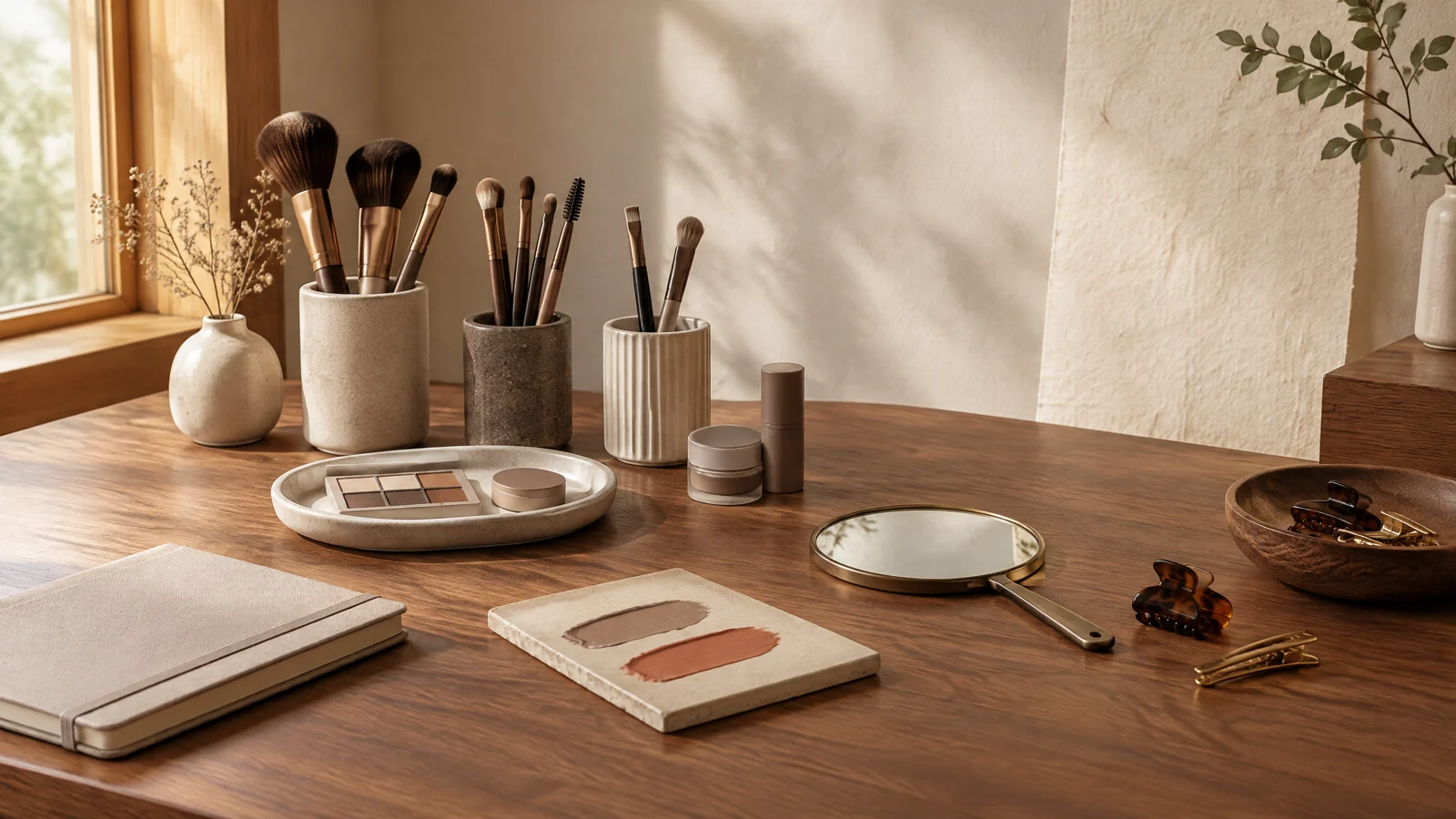
A simple self-practice exercise is to keep the same hair colour and window position, then create one Korean soft-luminous version and one Japanese sheer version. Take front and side photographs. Compare only three points: are the brows too heavy, does the lip make the face look dull, and do the face-framing pieces distract from the eyes? Change just one variable next time. That will show whether you prefer a style language or a particular adjustment that suits your current hair colour.
A service solves a specific important occasion; learning builds repeatable judgement. Both require clear scope and a realistic personal goal.
What else should you know?
Does black hair always suit stronger makeup?
No. Black hair already creates a strong frame, so a thin base, softened brows and one clear lip colour can be more balanced than increasing every feature. For a more formal result, strengthen one focal point—liner or lip—rather than all of them at once.
Should milk-tea brown hair be paired with orange or pink blush?
It depends on whether the colour reads honey-gold, caramel or beige-ash in daylight. Warm versions can start with peach, apricot or warm rose; greyer versions can try soft pink, rose-brown or neutral mauve. Photograph the side hair and face together in daylight before deciding.
Does Japanese sheer makeup mean imperfections cannot be covered?
No. Sheer makeup does not reject correction; it places coverage where it is useful and leaves the rest lighter. The appropriate amount depends on your skin on the day, comfort level and the lighting of the occasion. There is no universal coverage level.
Is Korean dewy base always suitable for Hong Kong summer?
Not necessarily. Glow can be limited to chosen high points while oil-prone areas are lightly set. Outdoor duration, humidity, your skin’s behaviour and flash photography all affect the amount and placement of sheen that feels practical.
How soon after colouring hair should I schedule a makeup trial or shoot?
That depends on the colour service, hair condition and whether you still need a trim or heat styling. A sensible plan avoids putting a first-time colour, unfamiliar makeup products and an important shoot on the same day. Leave adjustment time and follow the actual guidance of your hair and makeup professionals.
How do you turn the plan into a next step?
Use Korean and Japanese makeup as adaptable languages: Korean-inspired choices can contribute luminosity and soft layers, while Japanese-inspired choices can contribute transparency and refined edges. Your hair colour supplies the clues about value, temperature and reflection. Starting with one visible focal point will usually look more considered than changing every feature at once.
For an important occasion, bring recent hair-colour photos, outfit images, venue-light references and a timeline. State what you want to keep and what you want to avoid. Confirm all service, trial, touch-up, course-material and fee arrangements in writing before booking or enrolling.
Sources and editorial notes
This AI-assisted Canvas Blend editorial guide is not a first-person case study or an article reviewed by Vit So or Maggie Yeung. General information is not a substitute for individual professional or medical assessment. Confirm BigDeal arrangements in writing.
This is editorial guidance on makeup-and-hair coordination, not medical, dermatological or service-scope advice. All examples are planning examples; services, courses, products, availability and fees require the provider’s written confirmation.