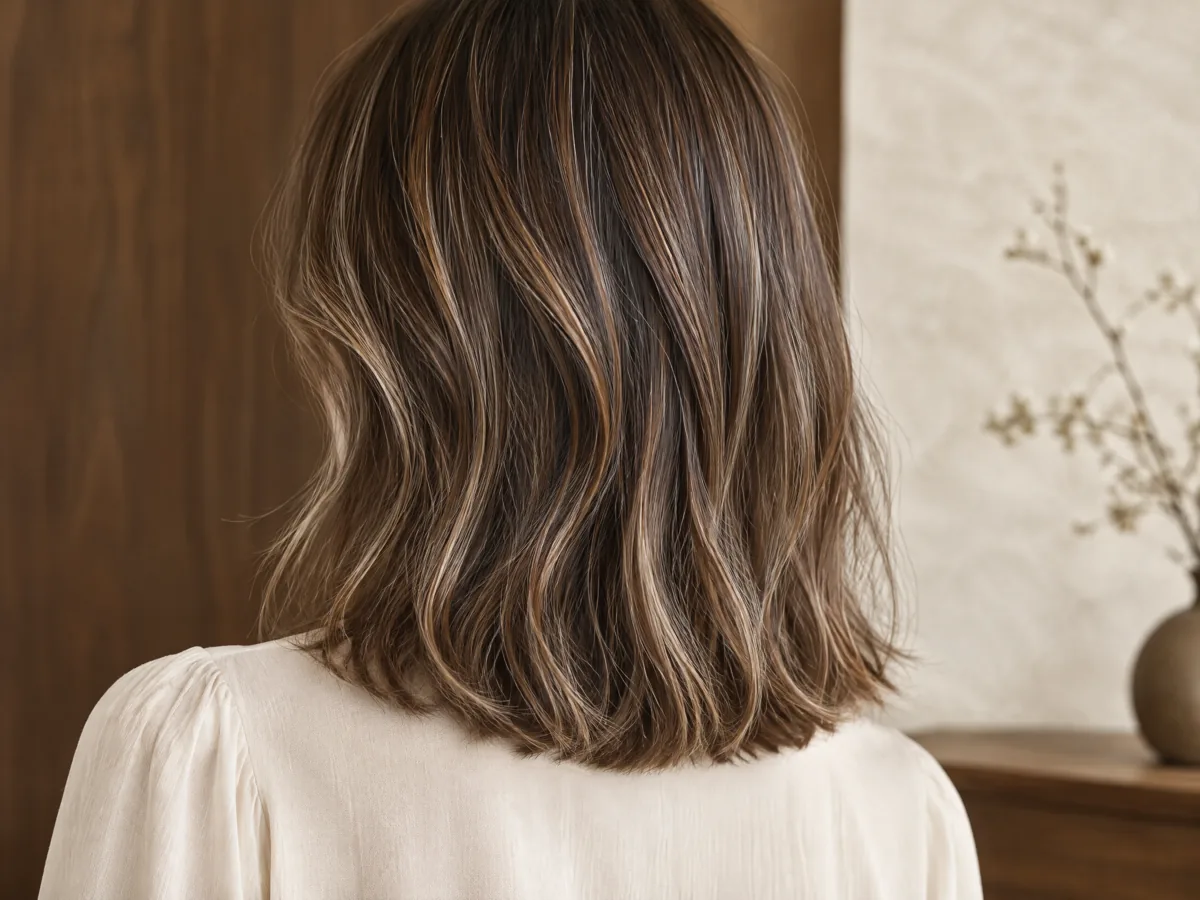
Balayage vs Babylight: Differences, Suitability and How the Techniques Are Mastered
"What's the difference between Balayage and Babylight?" is the question I (Vit So) hear most in the Canvas Blend consultation room. Both are Hong Kong's most popular freehand colour techniques and look similar — yet differ clearly in method, effect, hair suitability and maintenance. Drawing on nearly 30 years of colouring, this guide unpacks both: helping clients choose correctly, and showing those curious about the craft how freehand colour is actually mastered.

The fundamental difference between Balayage and Babylight
Balayage comes from the French "balayer" — to sweep. It is a freehand painting technique from the mid-lengths to the ends, emphasising a natural dark-to-light gradient with visible dimension. Because colour does not sit at the scalp, regrowth shows no harsh demarcation line, making it one of the lowest-maintenance colour techniques.
Babylight uses ultra-fine highlights inspired by the delicate sun-kissed strands of children's hair. The stylist isolates very fine sections and colours them individually, creating a soft, sun-kissed brightening. Its contrast is gentler than Balayage and closer to natural hair colour — ideal for those who want "undetectable colour with luminous dimension".
I often summarise it for clients: choose Balayage for visible dimension and contour; choose Babylight for subtle, natural brightening that looks born-with. The two can also be combined — Babylight as a base with Balayage concentrated around the face — which is exactly where freehand colour becomes both beautiful and technically demanding.
Side-by-side comparison
| Aspect | Balayage | Babylight |
|---|---|---|
| Method | Freehand painted blend | Ultra-fine strand-by-strand |
| Contrast | Medium to strong, visible | Soft, natural lift |
| Best for | Bold, dimensional, contoured | Natural, sheer, subtle |
| Maintenance | 3–4 months | 3–4 months |
| Session time | ~2–3.5 hrs | ~3–4.5 hrs |
| Bleaching | Often 1–2 sessions | Often 1–2 sessions |
To see real results and pricing, view our Balayage service and Babylight service, or browse our colour pricing.

Which suits Asian hair and your face shape
Asian black hair has dense pigment and a thicker shaft, so the main freehand challenges are even lightening and managing the warm orange undertone. Balayage demands strong blending skill due to its larger painted area; Babylight demands patience and precise sectioning. Neither is a "quick colour" — both are crafts built on time and technique.
For face shape, Balayage can contour via face-framing brightness, lengthening and softening round or square faces; Babylight's even lift suits those wanting to keep a natural look, with finer hair, or trying highlights for the first time. Cool skin tones suit smoky-grey and linen; warm tones suit milk-tea brown and caramel.
Making these judgements precisely rests on a full body of colour theory. A mature freehand colourist has usually completed systematic hair colouring courses — from the colour wheel and undertone reading to lightening control and sectioning — before live practice. That's precisely why salon freehand colour looks so different from rushed budget colouring.
Mastery: the path to becoming a freehand colourist
Clients often tell me after colouring, "I'd love to learn this — is it very hard?" My answer: hard, but with a clear path. Freehand colour is advanced and shouldn't skip fundamentals. The usual progression is: colour theory → lightening control → full colour & correction → foil/highlights → freehand graduation (Balayage / Babylight) → correction & colour matching.
Balayage and Babylight sit at the advanced end. Those focusing on graduation can, after a solid base, take a dedicated Balayage course to drill brush pressure, angle and sectioning; those refining fine highlights can pursue a Babylight highlighting course to train strand delicacy and overall placement. These specialties usually require 40–100 intensive hours with extensive live or mannequin practice.
Complete beginners wanting to enter the industry from scratch should first study a comprehensive Hong Kong hairstyling course system, building from cutting, colour and perm fundamentals up to advanced colour. A solid systematic foundation makes advanced techniques like Balayage and Babylight far easier to master later.
Aftercare: keeping freehand colour beautiful longer
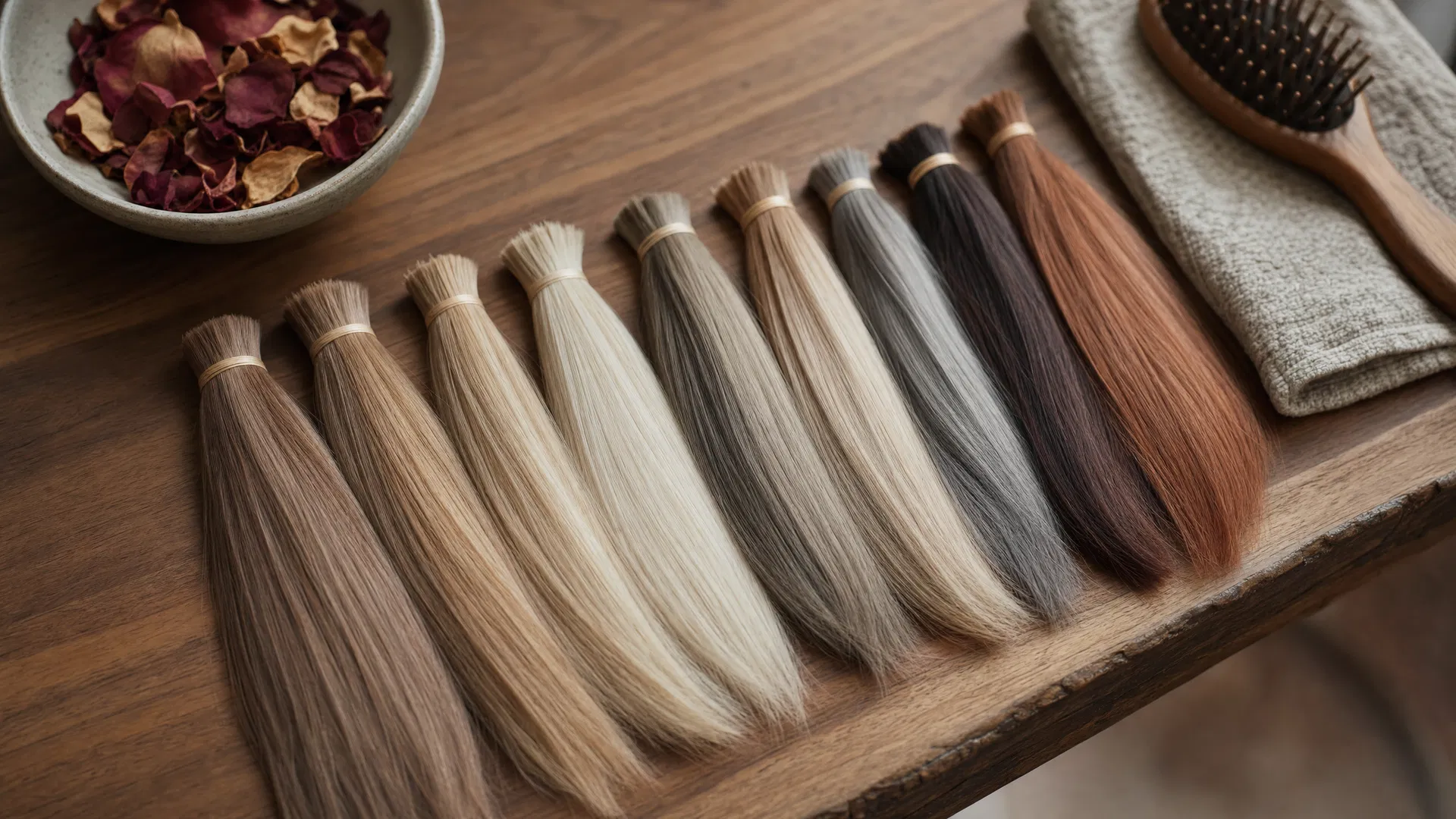
Although freehand colour is low-maintenance, colour freshness still depends on aftercare. First, switch to sulphate-free shampoo and lower water temperature to reduce fading. Second, use purple shampoo 1–2 times weekly for lighter tones (linen, smoky-grey) to neutralise brassiness. Third, do regular colour-care masks to replenish protein and moisture lost to lightening. Fourth, always apply heat protectant before hot styling.
Sun and swimming are the two biggest enemies of light colour. UV accelerates pigment oxidation, and pool chlorine turns hair yellow and brittle. Wear a hat outdoors or use UV-protective hair products. For a complete aftercare routine, see our post-colour hair care guide.
A final caution: never DIY-touch-up freehand colour. The transition zones are highly refined, and home colouring easily creates blocks and demarcation lines. When regrowth needs adjusting, return to your original stylist for fine-tuning to preserve the natural gradient. To see more real work, browse our gallery.
Balayage vs Babylight — FAQ
- What's the biggest difference between Balayage and Babylight?
- Balayage is a freehand graduated paint giving a stronger dark-to-light transition and visible dimension. Babylight uses ultra-fine highlights mimicking sun-kissed childhood hair for a softer, more natural lift. In short: choose Balayage for visible dimension, Babylight for subtle natural brightening.
- Does Asian black hair need bleaching for Balayage or Babylight?
- It depends on the target level. A 2–3 level lift toward dark brown / milk-tea tones is often achievable in one session; lighter linen, smoky-grey or blonde tones usually need 1–2 lightening sessions. We assess with a colour chart and hair test during consultation to avoid over-processing.
- How often do Balayage / Babylight need redoing?
- Because both colour the mid-lengths or fine strands rather than the scalp, the regrowth cycle is far longer than a full colour. Every 3–4 months is typical, and the natural regrowth even creates a flattering shadow-roots effect.
- I want to learn Balayage / Babylight — where should I start?
- Freehand colour is an advanced technique requiring colour theory, lightening control and sectioning skills. Build a systematic foundation at a proper academy first, then specialise in Balayage and Babylight, and accumulate live model practice in a working salon.
- How do I maintain the colour afterwards?
- Focus on colour-lock, antioxidant care and hydration: sulphate-free shampoo, lower water temperature, less heat styling, regular colour-care masks, and limited sun exposure. For lighter tones, add a purple shampoo to neutralise brassiness.
Closing: choose the right technique, and the right hands
There is no absolute better between Balayage and Babylight — only what suits you. Once you understand the difference, the most important thing is finding a colourist who reads your hair, skin tone and lifestyle. At Canvas Blend we always do a full consultation and hair test before deciding the right freehand approach.
And if this article sparked an interest in the craft itself — turning you from consumer to creator — a systematically taught hair colouring course is the most worthwhile starting point to compare seriously. From understanding why a strand changes colour to painting a beautiful gradient by hand — that path is worth walking with care.
Find the freehand colour that suits you
WhatsApp Canvas Blend for a colour consultation — Vit So will assess your hair and skin tone and tailor a Balayage or Babylight plan.