Colour × Wigs × Personal Choice
Online Wig Research or Salon Fitting? A Colour Checklist
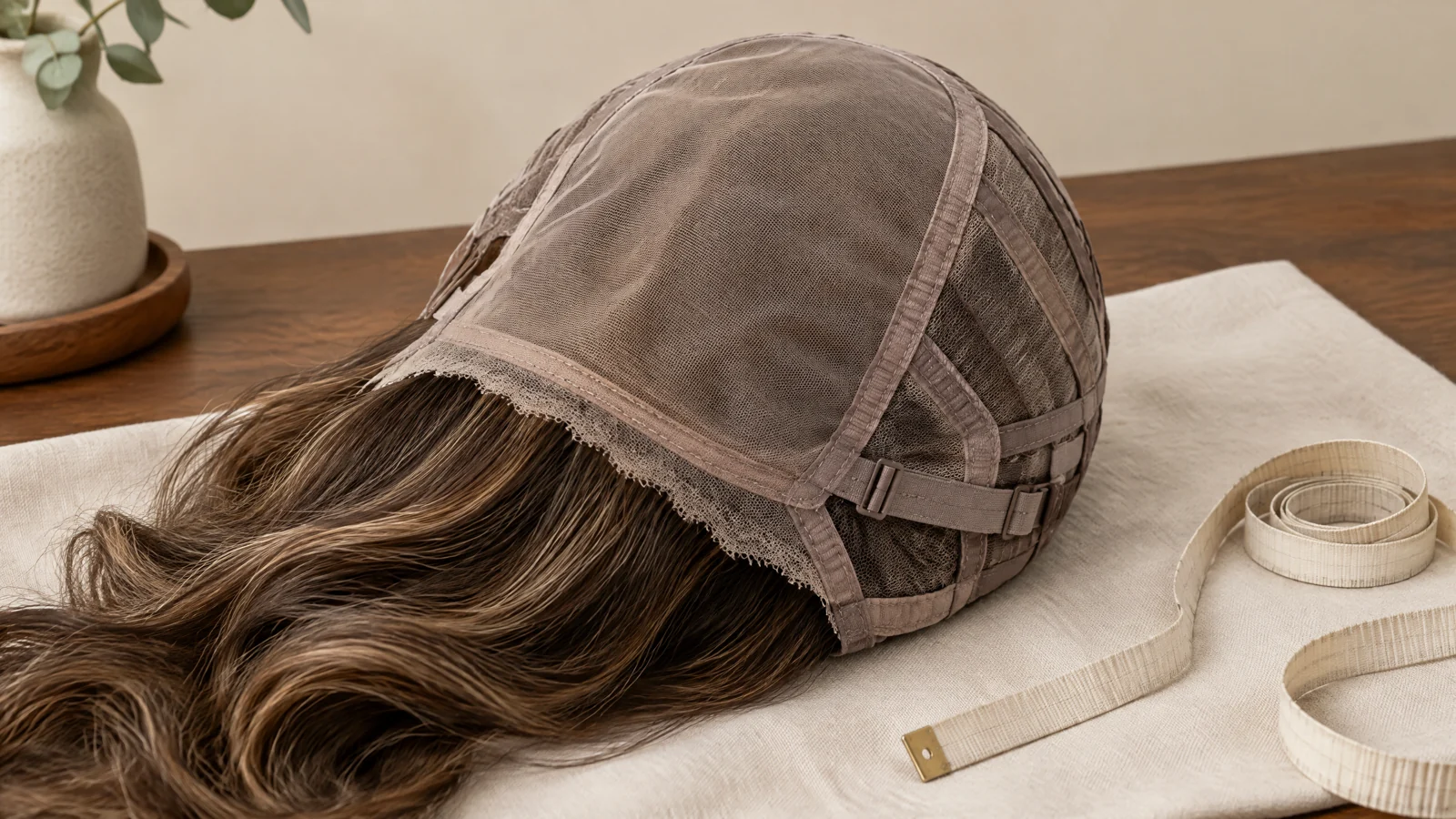
Online wig research helps organise questions about style, material and quotations, while an arranged salon viewing supports comparison of fit, colour and everyday movement. They complement each other, but browsing, a sample or a message does not confirm stock, suitability or an order.
For a colour client, wig selection involves more than matching a shade. You also need to judge information quality and confirm what photographs cannot show about fit and comfort.
This checklist puts online research, fitting, colour review, pre-payment terms and the next step into one practical framework.
01
Should you research online or book an in-salon fitting first?
The most reliable route is usually a sequence, not a contest between two channels. Use online research to narrow the outline, length, fibre label, cap construction and colour direction. Use an in-salon fitting to test the things a screen cannot settle: sample appearance, hairline position, parting, head shape, pressure points and the balance of the finished look. This division keeps a catalogue from becoming an accidental promise.
Colour clients already know how to discuss tone, depth and contrast, but a wig adds another layer. The same warm brown or cool brown can look different under a phone screen, a salon lamp and daylight. Density, parting and the front edge also change how colour sits around the face. A short online shortlist followed by a focused fitting is more useful than asking a message to solve every visual question. For a separate colour reference, see hair colour before-and-after tips, then return to the wig sample notes.
Treat an online catalogue as a research and enquiry tool, not as live stock, a delivery guarantee or an automatic checkout. OWNSTRAND’s relevant guidance describes online contact as an enquiry and asks readers to confirm styles, quotations and arrangements directly. A salon visit is not an automatic answer either: record the cap, size, care instructions and terms for each sample so the comparison remains fair.
| Decision area | Online research | In-salon fitting |
|---|---|---|
| Best first use | Outline, length, colour direction and listed specifications | Samples, touch, hairline, parting and fit |
| Main limitation | Screen colour, incomplete data and no physical measurement | Time required and selection depends on the appointment |
| Ask before paying | Size chart, adjustment range, availability and terms | What fitting, adjustment and styling are included |
| Useful outcome | A short list of realistic candidates | A record of how those candidates behave on you |
- Write down wearing time, exposed areas and acceptable length before browsing.
- Keep two or three realistic candidates instead of saving every attractive photo.
- Group questions under fibre, size, colour, care and terms.
Research online to reduce uncertainty; fit in person to test what a screen cannot show.
02
What should a catalogue tell you before you trust the image?
Good online research turns photographs into comparable fields. Record whether the item is a full wig, topper or another hairpiece, then note the stated fibre, cap construction, cap size, length, density and colour option. Words such as natural, light or comfortable are not universal measurements. If a page omits a detail, mark it as an unanswered question instead of filling the gap with an assumption.
Cap construction deserves attention. Lace front, monofilament, wefted or basic cap and hand-tied construction can affect the visible hairline, parting, sensation and adjustment options. The name alone does not prove that a cap will fit your head. Ask which construction the photograph represents, especially if you normally expose a parting, brush hair behind the ears or wear the front edge clearly.
Fibre labels also need product-specific care instructions. Human hair does not mean unlimited bleaching, colouring or heat styling. Synthetic fibre does not mean every fibre is heat-safe. Macmillan explains that wigs have their own care instructions and that human-hair and synthetic wigs differ in washing, styling and heat response[1]. The useful question is therefore what this exact item allows, not what the material name seems to imply.
On a phone, copy the product name and specification into one note and keep the date of the enquiry. This prevents one style’s size from being applied to another and makes missing information visible. Information quality is part of the comparison: the more blanks you have, the more confirmation is needed before payment.
When you want a structured starting point, the compare wig shops in Hong Kong questions and options guide is useful for comparing fibre, construction, fitting arrangements, quote scope and written care terms. It is a checklist, not confirmation of live stock for a particular style.
- Save the product name with the fibre, cap and size fields, not only the model photo.
- Write ‘not stated’ where information is missing and ask directly.
- Never infer heat or colouring permission from a brand name or photograph.
A photo inspires the shortlist; specifications and unanswered questions control the decision.
03
How can a colour client compare wig colour with their own hair?
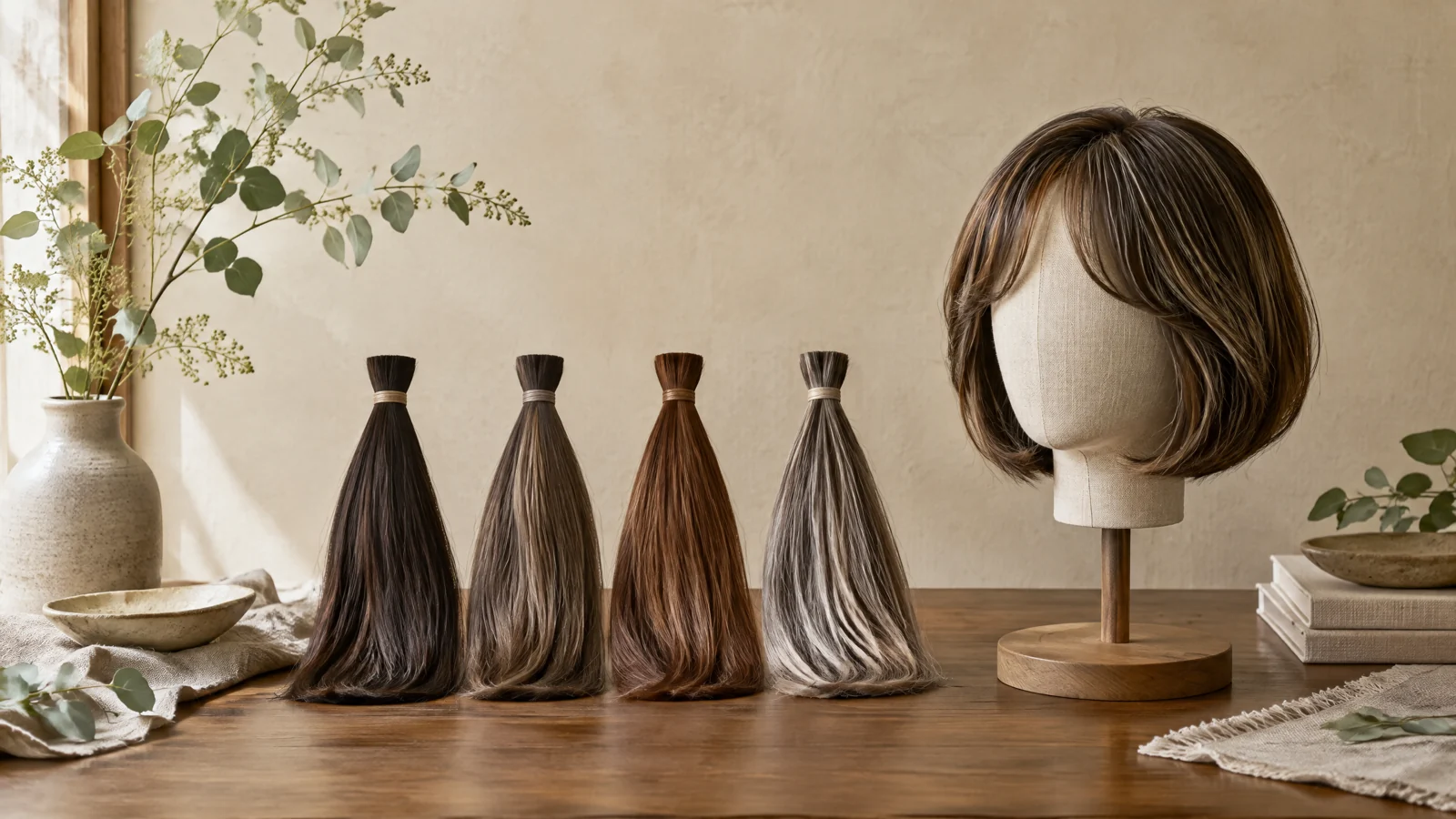
Salon colour vocabulary helps, but a wig colour code is not a hair-dye swatch. Describe the intended result through three lenses: depth, such as dark or medium brown; temperature, such as ash or golden; and distribution, such as solid, rooted, highlighted or grey-blended. This gives a supplier a clearer starting point than one outdoor photograph whose lighting may be misleading.
During a fitting, look at the front, both sides, behind the ears and the back of the head. Hair fibre reflects light, and density changes the apparent depth near the face. Compare daylight with the available indoor light where possible. Do not treat a fitting as permission to recolour the item; first confirm whether any alteration is allowed and who would be responsible for it.
If you have regrowth, grey percentage or fading between salon visits, describe that as a lifestyle requirement rather than trying to reproduce one perfect day. A shade you can live with as your own colour changes may be more practical than chasing a tiny difference visible only in one photograph. Macmillan notes that a colour close to your own, or slightly lighter, may look less noticeable; this is general guidance, not a substitute for trying a shade on yourself[1].
Natural-hair wig processing and salon colour are separate subjects. A human-hair wig may already have a processing history, while fibres have their own limitations. Any plan to bleach, dye, perm or use heat should be checked against the item’s instructions or the supplier’s answer. A colour salon can help you articulate tone, but should not turn one product’s care conditions into a universal promise.
For a broader colour reference, you can read the best hair colour for Asian skin tone and bring the preferred direction to your wig enquiry. That salon article helps with colour language; it does not mean Canvas Blend makes wigs or diagnoses wig suitability.
| Stage | Check | Do not assume |
|---|---|---|
| Screen shortlist | Depth, temperature, root and highlight direction | The screen equals the physical shade |
| Sample review | Reflection, density and face-framing effect | One shade looks identical in every light |
| Fitting decision | Proportion with skin, brows and existing hair | A liked colour guarantees a suitable cap |
Describe the colour direction first, then verify the physical sample and lighting before deciding.
04
Why does an in-salon fitting add value for size and comfort?
Head circumference is a useful online starting point, but one number does not equal a fit. Cap depth, front placement, ear position and the curve at the nape all affect pressure and stability. When researching online, compare your measurement with that item’s chart, units and adjustment range. Do not rely only on a familiar small, medium or large label from another brand.
A fitting is not just a beauty check. Look at the front edge first, then whether both ear points sit evenly, and finally whether the nape and crown feel balanced. Turn your head gently, look down and speak normally to notice movement. Do not tighten a cap aggressively to hide a mismatch. Remove it and explain the exact pressure point instead.
If you are experiencing hair loss, thinning or treatment-related changes, the amount of hair under the cap may differ from usual. Cancer Research UK advises considering an adjustable size and notes that the required size can differ with and without hair[2]. This is general selection information, not medical advice. Persistent redness, pain, broken skin or scalp symptoms should be discussed with an appropriate healthcare professional.
For the service decision, compare custom wig salon versus online enquiries in Hong Kong by what each step can actually establish. Online research can narrow specifications, while an arranged viewing can test samples and measurements. Neither route removes the need to confirm supply, fitting arrangements and the scope of any custom work.
- Measure twice with the same soft-tape route and record the unit and date.
- At fitting, check the front, ears, nape, parting and movement when turning.
- Stop wearing a piece that causes pain, numbness, rash, swelling or broken skin.
A size chart narrows the field; an honest fitting reveals how the cap behaves on your head.
05
What should you clarify about quotes, availability and terms?
A fair price comparison starts by checking that the configurations match. Fibre, cap, length, density, colour work, measurement, cutting, washing, styling and return-visit arrangements can all differ. A lower number is not automatically better value, and a higher number does not prove a more natural result.
If a page says enquire for a quotation or confirm availability, treat that wording literally. Ask which style the quote refers to, whether it is a ready-made item or a custom direction, what services are included and whether the next step is an enquiry, appointment, payment or confirmed order. These stages are not interchangeable. A catalogue is not live inventory. If you need to review the salon’s own booking process, see book a colour appointment; this is not a wig-fitting appointment.
Before paying, ask about an ill-fitting size, personal alterations, fitting conditions, care responsibility, cancellation or changes, and whether the item must remain unused. Do not invent return or aftercare promises for a supplier. Save the written answer and ask other suppliers the same questions so the comparison is based on terms rather than impressions.
Once you have narrowed the outline, use buying wigs online in Hong Kong: details to confirm to record the exact style, material, size and quote questions. Browsing is research, not checkout or a confirmed order. Reconcile the online description with the supplier’s written response before relying on stock, colour or service assumptions.
- What configuration is quoted? — Fibre, cap, size, colour and included service — Different configurations cannot be compared as one total
- Is it available or only listed? — Current status and confirmation process — A catalogue is not live stock
- What happens if fit or size is wrong? — Applicable terms, timing, fees and responsibilities — Do not assume every item can be returned
- What care or styling is allowed? — Manufacturer and supplier guidance for that item — Material names are not universal permission
Separate the product configuration from the service terms, and keep the confirmed answers.
06
How do you connect online research to one useful fitting?
Start with the wearing situation, then make a short list and book the step that resolves the biggest uncertainty. Note daily wearing time, outdoor activity, whether the forehead will show, whether you want a new parting and how much maintenance you accept. These details are more useful than saying only that you want a natural look.
Bring two or three photographs of your own hair, ideally front, side and preferred parting. Add one colour reference and explain that it is directional rather than an exact-match demand. During the visit, compare a small number of samples from different angles. Record the name, fibre, cap, size and any pressure point instead of relying on one selfie. For a natural-hair colour budget reference, see colour service pricing; a wig quotation still needs direct confirmation.
If you cannot visit immediately, an online enquiry still has a clear role. Send a style name or screenshot and ask what information is needed, what can be discussed and whether a visit may be arranged. This establishes a next step; it is not remote measurement, virtual try-on or a completed order.
After the fitting, wait before deciding if the terms allow it. The light, novelty and social pressure of an appointment can distort judgement. Review the notes later against colour, comfort, maintenance, quote scope and confirmation status. The best decision is the one that still makes sense after the fitting atmosphere has passed.
- Write three non-negotiables and three points you can compromise on.
- Record cap, size, colour, fit and discomfort for every candidate.
- Recheck written care guidance, quote scope and availability after the visit.
A good fitting converts an online shortlist into evidence, not an impulse purchase.
07
Final checklist: do you have enough information to decide?
Before payment or confirmation, check that every note belongs to the same product. If you know the style and colour but not the cap, size or care instructions, the decision is incomplete. If you tested fit but did not assess colour under more than one light, keep the shortlist open rather than treating one try-on as proof.
A useful checklist does not force you to choose online or in person. It tells you what to do next: ask when data is missing, see a sample when colour is uncertain, fit when comfort matters and request written confirmation when terms are unclear. The same logic can apply to toppers and full wigs, but the coverage and measurement questions are different.
A colour salon can help you discuss tone, silhouette and everyday styling. Canvas Blend does not therefore provide wig manufacturing, medical diagnosis or specialist wig diagnosis. If hair loss, chemotherapy-related scalp changes or continuing discomfort are involved, keep product selection separate from medical questions and speak with an appropriate healthcare professional.
For your natural hair after colour, see this post-colour hair care guide. It covers colour-care habits, not wig washing or wig styling, so follow the selected item’s own instructions.
You are ready when fibre, size, colour, scope, availability and terms are confirmed for the same item.
What else should you know?
Can I buy a wig based only on online photographs?
Photographs can help you build a shortlist, but they cannot settle size, cap construction, physical colour or terms. If the hairline, parting or fit matters, arrange a fitting or obtain clear product-specific answers first.
Does human hair mean a wig can always be dyed or bleached?
No. Existing processing and the item’s construction matter. Confirm colouring, bleaching and heat permissions for that exact wig and follow its manufacturer or supplier guidance.
Does a catalogue listing mean the wig is in stock?
No. A listing can be a browsing or enquiry entry point. Confirm availability, quotation, delivery or collection arrangements and order status directly before paying.
Which areas should I check during a fitting?
Check the front edge, both ears, nape, parting and crown pressure. Turn and look down gently to notice movement. Remove the wig if it causes persistent pain or skin irritation.
Can a colour salon decide whether a wig suits me?
A salon can help you describe colour, shape and styling needs. It does not replace the supplier’s product specification or provide medical or specialist wig diagnosis.
How do you turn the choice into a next step?
Turn any unanswered point into a short enquiry, keeping the style name, measurement and written terms together.
Canvas Blend Editorial / AI-assisted research. Canvas Blend is a colour salon; it does not make wigs or provide medical or specialist wig diagnosis. Seek appropriate healthcare advice for hair loss, treatment or scalp discomfort.
Sources and editorial notes
- [1] Macmillan Cancer Support: Wigs for cancer treatment
- [2] Cancer Research UK: Wigs, hats and scarves
This AI-assisted Canvas Blend editorial guide is not a first-person case study or an article reviewed by Vit So. OWNSTRAND shares the site owner; links do not imply a joint package or medical certification. Confirm product materials, processing, care, fees and availability with the supplier in writing. Consult qualified healthcare professionals about hair loss or scalp symptoms.
Canvas Blend Editorial / AI-assisted research. Ownstrand pages are used only within their verified scope; confirm current style, availability, price, timing and terms directly.