Shape × Colour × Personal Choice
Choosing hair extensions for fine hair: fit, load and package scope
瀏覽獨立繁體中文指南 →
Fine hair may suit an extension plan, but strand thickness alone cannot establish suitability: the supporting hair, attachment placement, added amount and removal plan need assessment. Start with the smallest change that meets your goal, and compare its full upkeep and cost with a cut or styling-only alternative before committing.
If your ends look wispy, adding substantial length may solve the wrong problem. First identify whether you want a stronger end line, fuller sides or a longer silhouette. Each request changes what the added hair must do. A good consultation connects that visual goal to the condition of your own hair, rather than treating every fine-haired person as a candidate for the same attachment system.
Vit So's overview of hair extensions is a starting point for discussing the desired shape and appointment scope. It asks readers to confirm the actual method, materials, supply, fitting and maintenance arrangements. A service overview is not confirmation that a particular attachment or colour is available, nor does it establish an extension-inclusive package price.
The central safety issue is repeated pulling, not simply whether the finished hair looks natural. The American Academy of Dermatology explains that weaves and extensions can damage natural hair and that traction-related hair loss can become permanent. Its advice makes comfort during fitting and sensible ongoing care part of the decision, not optional extras after installation.[1]
For hair that looks dry, frizzy, or prone to breakage in a photo, read about damaged hair treatment Hong Kong to help frame questions for a colour-care consultation.
01
What does fine hair mean for the result you want?
Fine describes the thickness of individual strands; density describes how much hair covers an area. These are separate observations. Fine strands can form a relatively full outline, while someone with thicker strands may still have sparse areas. Ask the stylist to distinguish the hair available to carry an attachment from the hair available to cover it. A photograph of the ends cannot answer both questions.
Define the result in ordinary wearing conditions. Look at your hair dry, with your usual parting, without an unusually elaborate curled finish. If the outline becomes transparent against clothing but your roots look balanced, the discussion may be about end fullness. If scalp visibility has recently increased, that is a different concern and should not automatically become a request for added lengths.
Separate what you want to gain from what you want to keep. You might want a fuller back outline while retaining a collarbone length, soft sides and an easy low ponytail. A major length increase changes more of those conditions. Ask whether a smaller adjustment could satisfy the priority without creating a style that needs repeated heat styling or restricts the ways you normally tie your hair.
Reference pictures become more useful when they have a clear purpose. Identify the end thickness or movement you like, then show unfiltered views of your own back and sides. Canvas Blend's guide to useful hair before-and-after photographs can help you think about consistent lighting and viewpoints. Photographs support a conversation; they do not establish attachment suitability or promise a matching result.
| Main concern | First comparison to request | Important limit |
|---|---|---|
| Wispy ends at a length you like | A fuller end line versus a cut that preserves more weight | Extra length is not automatically needed |
| A narrow-looking ponytail | The proposed shape down and in your usual loose tie-back | A loose-hair finish does not show attachment exposure or pulling when tied |
| A noticeably longer silhouette | The natural-to-added transition and the proposed supporting areas | The inspiration photo cannot establish how much your hair can carry |
| New scalp visibility or unexplained thinning | Healthcare advice before a cosmetic addition | Extensions do not diagnose hair loss or stimulate growth |
| Fullness for one occasion | A reproducible styled finish versus a temporary addition | Temporary attachments still need suitable support and handling |
A specific fullness target is more useful than a request for maximum hair.
02
How should supporting hair and added load be assessed?
Ask the stylist to explain the proposed supporting areas before choosing an amount of hair. The assessment should consider visible fragility, previous processing, the intended placement and your everyday hairstyles. Concealment and support are not interchangeable: an attachment may hide under a layer when the hair is down, yet still put an unsuitable demand on the strands carrying it or become visible when those covering layers move.
The supplied weight, bundle count or attachment size should describe the proposal, not function as a safety certificate. Neither of the dermatology sources used here provides a universal safe gram limit for fine hair.[1] [2] A smaller-looking connector does not answer how the total arrangement will pull during wear. If a recommendation depends only on a marketing label such as lightweight, request an explanation tied to your own hair.
The discussion in hair extensions for fine hair distinguishes retaining the current length from adding a longer outline. That is a useful design comparison, not proof that volume-only fitting is harmless. Ask how the amount and placement would change if you kept your present length, and what would make the stylist advise against either version.
Disclose bleaching, straightening, perming and previous extension problems, including tender areas or breakage after removal. The British Association of Dermatologists identifies repeated tension from styles including extensions as a cause of traction alopecia and notes increased risk when certain tight styling practices are combined with chemical treatments.[2] This does not mean every coloured head is unsuitable, but it is a reason not to leave chemical history out of the assessment.
- Ask which natural hair would carry the proposed addition and which areas would be left alone.
- Describe any discomfort, slipping, tangling or breakage from previous attachments.
- Compare a modest fullness goal with a longer proposal rather than accepting a preset amount.
- Ask what findings would lead to less added hair, a different approach or no installation.
A defensible recommendation explains support and placement, not just the name or size of the attachment.
03
Is one attachment method always best for fine strands?
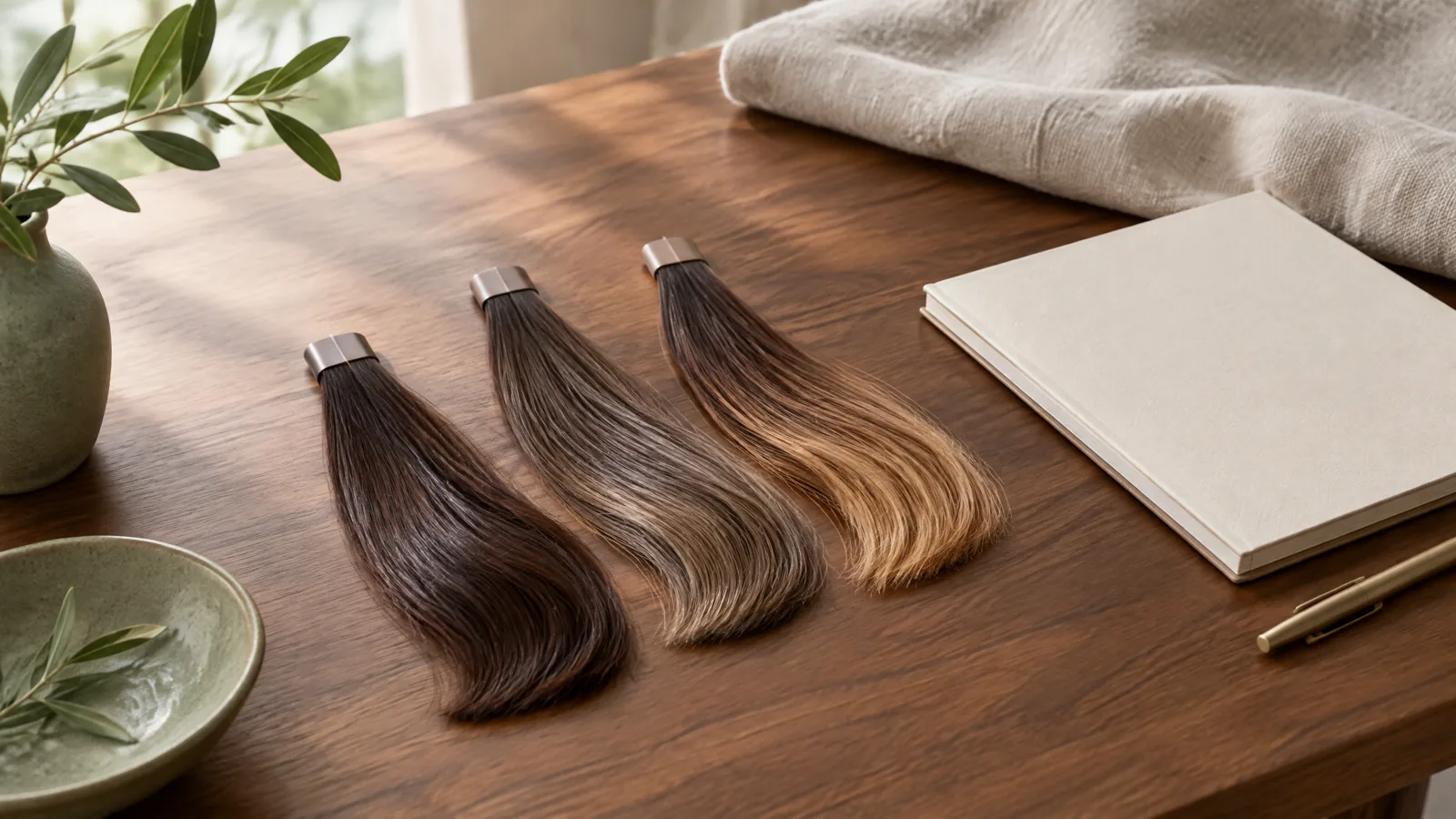
There is no universal winner established by the sources cited in this guide. Tape, rings, bonds, wefts and clips describe different ways of attaching hair, but a method name alone cannot settle suitability. Request the exact system being proposed, how it connects to your hair and how it is removed. Treat this as a comparison of real arrangements rather than a ranking of advertised categories.
Ask to understand the connection as well as the loose hair sample. What fixes it in place? Where would it sit relative to your parting and hairline? What does removal involve, and can the salon assess or remove that particular system? A beautiful sample can help with texture and colour, but it cannot show how the attachment will feel when you wash, turn your head or wear your usual accessories.
Temporary clip-ins change the wearing commitment, but temporary does not mean free of traction. The AAD specifically advises removing clip-ins before washing natural hair.[1] You still need suitable areas for the clips, a manageable amount and a way to remove them without pulling. If the goal is only one event, compare a styling-only finish too, rather than assuming occasional use makes any attachment acceptable.
During fitting, comfort is an immediate check rather than a later maintenance question. The AAD says pain or a headache means the style is too tight and advises asking for the affected area to be loosened.[1] Do not accept an instruction to endure pain so that the result can settle. Ask what will happen if the assessed plan proves uncomfortable, including how adjustment or removal would be arranged.
Before choosing a new colour, review balayage price Hong Kong alongside your hair length, density, and preferred technique so you can plan the appointment with clarity.
Choose between assessed proposals, and reject pain as an expected part of fitting.
04
What makes the blend convincing without overloading the design?
A convincing blend involves the transition from your own cut to the added hair, not only matching the final length. A short blunt outline and a softly layered outline create different visual transitions. Discuss which natural lengths must remain and which hair would be trimmed. Permission to shape supplied hair should not become unspoken permission to remove substantial natural length that matters after the extensions come out.
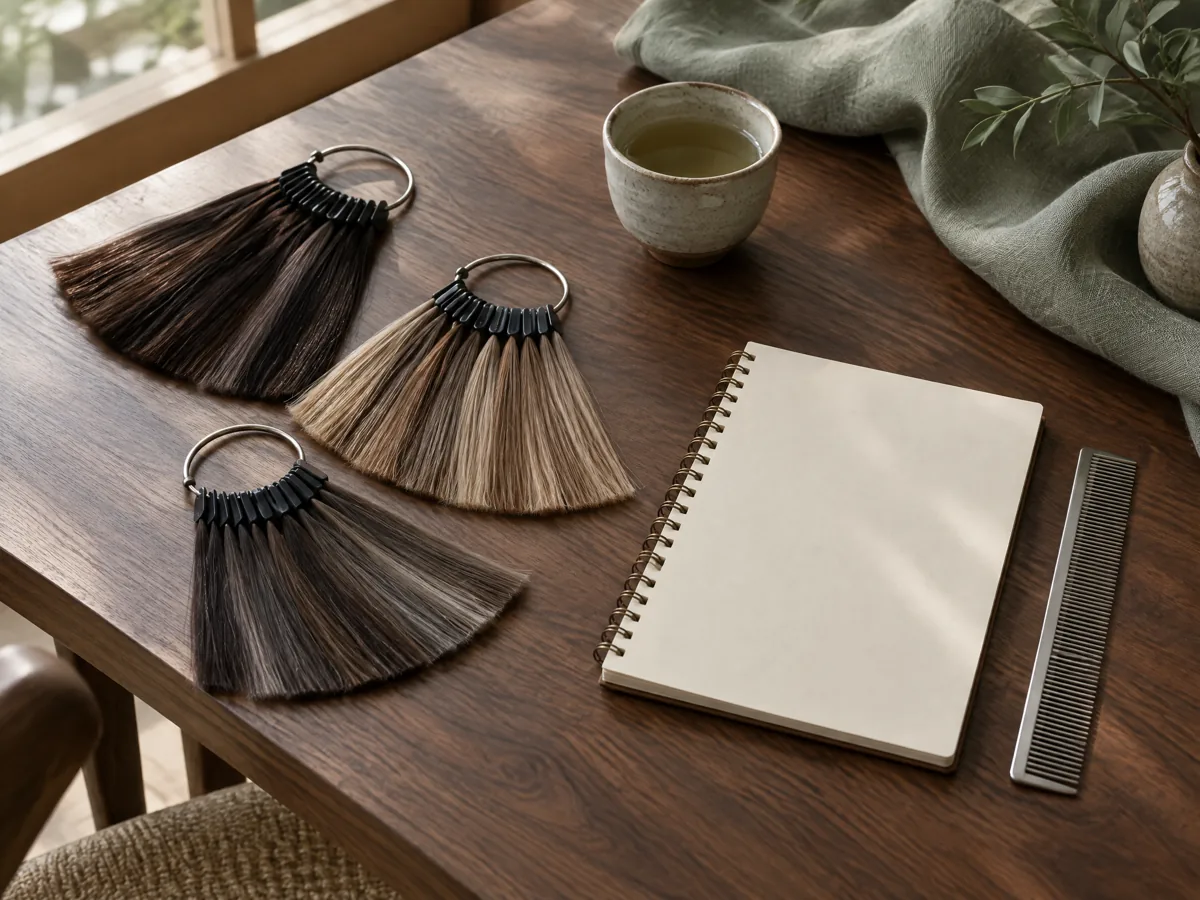
Compare colour through the visible lengths, not only at the roots. Lightened ends may have a different tone from the newer hair near your scalp. Confirm the actual supplied shade and any processing limitations before deciding how a mismatch would be handled. Do not assume either your own fragile ends or the supplied hair can be bleached simply to make a chosen product work.
Texture matters in the state you intend to wear. Ask whether the sample's movement fits your natural dry hair or depends on smoothing and curling that you would rarely repeat. If you already maintain colour, Canvas Blend's post-colour care guide is useful background for discussing your existing routine. It does not replace attachment-specific instructions, which need to cover the particular fitted system and supplied fibre.
Check the design from the back and both sides, then discuss your normal parting, ear tuck and loose tie-back. These movements can reveal a connection that was hidden in the first view. Canvas Blend's gallery can help you communicate shapes you like, but it should not be used to infer that an image shows fine-hair extensions or proves invisible attachments. Ask whether a less ambitious outline would blend better with your actual haircut.
Judge the proposed result in ordinary hairstyles, not only in one polished photograph.
05
How can you compare packages without mistaking the headline price for the total?
An extension quote needs to separate the supplied hair from the work performed on it and on your own hair. A figure that includes fitting but excludes blending, preparation or removal cannot be compared directly with a broader proposal. Ask for the scope in writing before committing to supply or installation. Where something remains uncertain, request the condition that would change the amount rather than treating a starting figure as a final total.
Vit So's hair salon packages page lists named services and combinations, but those entries should not be treated as an extension-inclusive offer. The supplied extensions service information says there is no published extension price in the current list. Confirm the actual proposal with the relevant provider; do not borrow a haircut or colour package amount and add an assumed extension charge to construct a supposed deal.
Keep future work separate from the initial visit. Ask about checks, removal, reattachment if applicable, replacement connectors and whether the supplied hair may be reused. Reuse is not established by attractive-looking lengths alone. It depends on the fibre, the system, the state of the attachment and the provider's assessment. A clear quote should explain who will handle the work and what happens if reuse is not appropriate.
Canvas Blend's own pricing information can help you compare an alternative consultation, cut or colour enquiry on its own terms. The two websites share ownership, but their service entries are not interchangeable and should not be combined into an unconfirmed joint package. If you already own extension hair, declare that before requesting a quote and confirm whether the provider accepts it rather than assuming outside supply is included.
| Quote item | What to establish | Why it changes the comparison |
|---|---|---|
| Supplied hair | Fibre, shade, texture, proposed amount and supply conditions | Hair purchase and installation are distinct commitments |
| Fitting | Exact attachment system and work included | A general service name does not define the installation |
| Blending and preparation | Which hair is cut and whether washing, colour work or finishing is included | A usable finished shape may involve separately charged work |
| Care and checks | Instructions, contact route and any assessment charges | An initial fitting figure may omit later support |
| Removal or later reattachment | Who can perform it, what is charged and whether reuse is conditional | The exit plan affects both the commitment and the total cost |
| Change or cancellation | What happens to a deposit or supplied hair if the assessed plan changes | Supply approval and suitability approval may be different decisions |
Compare the complete agreed work and the exit plan, not a package label.
06
What home-care commitment should you accept before fitting?
Ask for a practical routine covering washing, drying, detangling and the fitted connections before installation. You should know which instructions concern the supplied fibre and which concern your natural hair. Human hair describes a material, not permission to use any temperature or chemical product. Check the actual hair's processing history and supplier instructions rather than assuming it behaves exactly like the hair growing from your scalp.
The AAD recommends washing according to hair type and using gentle, moisturizing shampoo and conditioner while keeping the scalp clean.[1] Translate that general advice into instructions for the actual attachment, including where products may be applied. Do not invent a universal wash interval or product rule for every system. If the proposed routine conflicts with how you normally wash your hair, resolve that before you decide the design is manageable.
Explain swimming, frequent exercise, helmet use and your normal styling tools. Ask how each habit affects the connections and whether the plan requires changes you are willing to make. Request a demonstration of handling the hair without tugging the attachments, and find out what to do if a knot develops near them. A care sheet is more useful when you understand the steps than when it merely lists products to purchase.
Conditioning may improve feel and manageability, but it does not remove an unsuitable pulling force or make damaged follicles safe. Canvas Blend's damaged-hair care information can support a discussion of existing length damage; cosmetic care should not be described as permanent repair or treatment for hair loss. If you cannot maintain the proposed routine, choose a simpler goal or a non-extension option rather than relying on a treatment to compensate.
The right design must fit your actual washing and styling habits as well as your preferred photograph.
07
When should you pause the plan or choose an alternative?
New thinning, persistent soreness or scalp changes deserve separate attention before adding hair. The British Association of Dermatologists lists itching, soreness and increased flaking among possible symptoms of traction alopecia, but those symptoms do not diagnose the condition by themselves.[2] Seek medical advice about unexplained hair loss or ongoing scalp symptoms. A stylist can discuss appearance and fitting; a cosmetic consultation is not a substitute for diagnosis.
Pause if the provider cannot explain support, offers no workable removal arrangement or treats discomfort as unavoidable. You can also decline a technically possible plan if the daily burden is wrong for you. A fuller-looking end line from a cut, a different parting or a styled finish may meet the visual goal without attachments. These alternatives rearrange or reshape existing hair; they do not create new density or regrow lost hair.
Planning example, not a client case: imagine someone who likes a collarbone length but dislikes the sparse-looking back edge and often wears a low ponytail. The first comparison would be an end-focused cut or styling adjustment versus a modest volume-only proposal. The longer inspiration image would remain a separate option, not the default. The decision would depend on assessed support, concealment when tied and the care the person is willing to maintain.
In that example, the outcome might reasonably be no installation. If the supporting areas are unsuitable or the proposed additions cannot be hidden in the preferred ponytail, a smaller goal or no attachment may be the better choice. If an extension plan remains under consideration, ask for the initial scope and removal plan together. The example illustrates a decision process; it claims no tested result, appointment duration or guaranteed improvement.
A successful consultation can end with a smaller change or a decision not to fit extensions.
What else should you know?
Can fine hair always support extensions if they are lightweight?
No. Lightweight is not a universal suitability standard. The supporting hair, attachment placement, condition, added amount and usual hairstyles need assessment, and the safer decision may be a smaller proposal or no installation.
Do I need extra length to make fine ends look fuller?
Not necessarily. A volume-only design may be considered at your current length, but it still requires suitable support and blending. Compare it with a cut that preserves a stronger outline or a styling-only finish before deciding.
Are tape or ring attachments automatically the best choice for fine hair?
No universal ranking is established by the dermatology sources used here. Ask for the specific proposed system, its supporting areas, concealment, care and removal process. A category name alone is not evidence of suitability.
Should a tight or painful fitting be left to settle?
The AAD advises that pain or a headache means the style is too tight and that the affected area should be loosened.[1] Report it during fitting and arrange prompt professional assessment if discomfort develops later. Seek medical advice for persistent scalp symptoms or hair loss.
Does a published salon package include extension hair and removal?
Only if that scope is explicitly confirmed. A named cutting, colour or styling package does not establish extension supply, fitting, blending or future removal. Ask the relevant provider for an itemized proposal rather than combining unrelated menu entries.
Can I reuse the same extension hair at every later appointment?
Do not assume so. Reuse depends on the actual fibre, attachment system, condition and assessment. Confirm whether new connectors, preparation or replacement hair may be needed and who can perform the work.
Will scalp care or a conditioning treatment make extensions safe for thinning hair?
Cosmetic care cannot establish attachment suitability, remove excessive tension or diagnose the cause of thinning. New or unexplained hair loss should be discussed with an appropriate healthcare professional before treating it as a fullness problem.
What is the practical next step?
Prepare a short brief with your current length, the area you want fuller, your chemical history and the styles you need to keep. Bring clear photographs and request an explanation of the supporting hair, added amount and removal process. Compare the proposal with one realistic cut or styling alternative, then decide whether the improvement is worth the complete care and cost commitment.
If you want to discuss an existing Canvas Blend service or a cut-based alternative, use the Canvas Blend booking route and specify the enquiry. Confirm any extension supply or fitting request with the relevant service provider before treating it as an available appointment. A practical plan ends with clear scope, manageable care and permission to stop if the fit is uncomfortable, not with a promise that more hair will always be better.
After browsing PMQ or Hollywood Road, readers can use the local overview of hair colour salon Sheung Wan to coordinate a colour consultation with shopping, work, or weekend plans.
Sources and editorial notes
- [1] American Academy of Dermatology: How to prevent hair damage from a weave or extensions
- [2] British Association of Dermatologists: Traction alopecia patient information leaflet
This AI-assisted Canvas Blend guide is not a first-person case study or an article reviewed by Vit So. Vit So Hair Stylist and Canvas Blend share ownership. Links are not independent third-party endorsements and do not mean that fees, booking policies or packages are interchangeable. Colour, chemical processes, extensions and styling require individual assessment; cosmetic hair and scalp care do not replace medical advice.
AI-assisted Canvas Blend editorial guide, current to 6 November 2026. Canvas Blend and vitsohair.com share ownership; these links are not an independent third-party endorsement. This article is not written as Vit So's personal advice or represented as reviewed by him. Extension supply, attachment availability, suitability, package inclusions and removal arrangements require confirmation with the relevant provider; no extension price, medical benefit or service guarantee is asserted.
Continue reading
 Hair Decisions
Planning a men's haircut: Fade, Taper and Colour Without Guesswork
Choose fade height, taper coverage and top length before adding colour. Compare practical options, scalp safety, upkeep and the questions to ask at a consultation.
Hair DecisionsChoosing a textured crop haircut or an undercut: shape, styling and upkeep
Compare a forward crop with undercut contrast, choose fringe coverage and side connections, and plan realistic styling, grow-out and scalp care.
Hair DecisionsCan a two block haircut work with your natural curls?
Plan a two-block shape around your natural curls: compare dry fringe length, side coverage, weight, styling effort and the questions to ask before booking.