Shape × Colour × Personal Choice
Choosing chocolate brown hair or ash brown: preparation before colour
瀏覽獨立繁體中文指南 →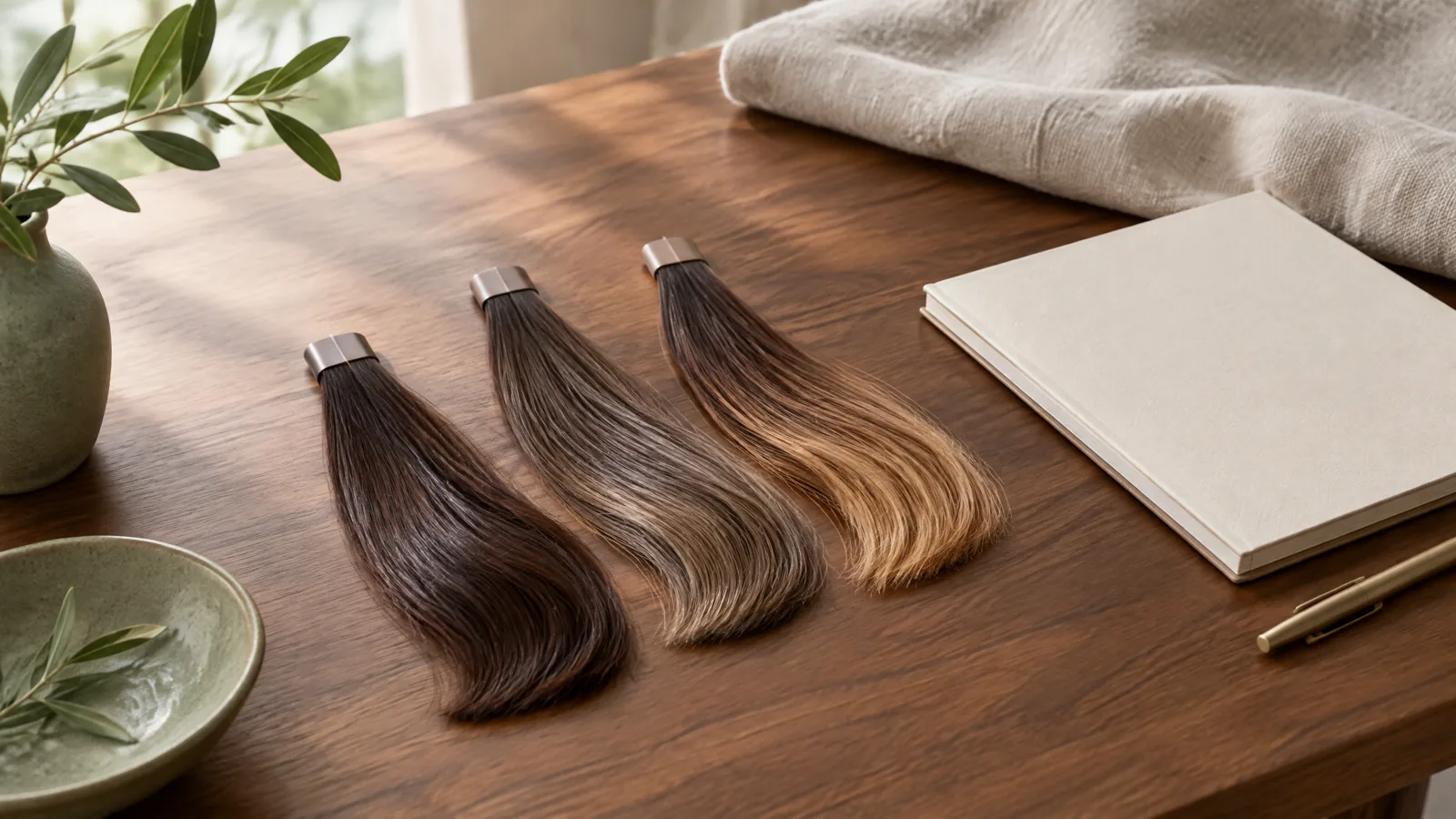
Choose warm or ash brown by separating the depth you want from the reflection you prefer, then assess what your current hair would need to reach it. Before agreeing to colour, disclose previous processing and reactions, clarify any testing requirements, and treat conditioning as cosmetic support rather than permission to lighten fragile hair.
A rich brunette photograph and a smoky brown photograph can look like opposite choices, but the important difference is not always warmth. One may be much lighter, contain separate highlighted strands, or show a different root colour. Start by deciding what you want to keep about your existing brown. Then identify the specific change: a softer reddish reflection, less visible gold, a brighter surface, or more even-looking lengths.
Preparation makes that preference useful. A colourist needs to know what is already on the roots, middle lengths and ends, not simply which shade name you prefer. The condition of those areas and your tolerance for later colour changes also matter. This guide helps you organise those questions before a consultation, so the proposed process can be compared with a deeper alternative or a decision to postpone further chemical work.
If you prefer a softer change, discuss ombre hair colour Hong Kong alongside hand-painted highlights or a lower-contrast gradient, so the placement reflects your existing colour and everyday styling.
01
What does a warm brown reference actually ask for?
Read the dark areas of an inspiration photograph before studying its shine. Hair beneath the outer layers can reveal whether the overall impression remains deep brown, while a wave beside a window may show a much brighter reflection. A request based only on that bright band can accidentally become a request for lighter hair. Describe the shaded base and the reflected colour separately, especially when your own hair is naturally dark.
The VitSo guide to chocolate brown hair treats the name as a range of brunette impressions rather than a fixed shade. That is a useful starting point for discussing depth alongside reddish or golden warmth. Use the reference to explain what you see, not to select a ready-made formula. A deep brown with gentle warm reflection is a different brief from brown lengths crossed by bright caramel strands.
Compare two images at similar brightness. If one still looks redder in its shaded areas, that may be the warmth you want to discuss. If the difference disappears when you compare the darker sections, the photograph's lighting may be driving your preference. Ask for an everyday-looking reference as well as a styled one. You do not need hair to look identical under every lamp; you need to understand which impression matters most to you.
Avoid choosing warmth through a rigid rule about ethnicity or complexion. Test the appearance against the clothes and makeup you normally wear, and note whether you enjoy the reflection near your face. Canvas Blend's hair-colour and skin-tone guide can help organise that preference. An annotation such as 'keep the deep brown, but less red than this image' communicates a practical boundary more clearly than combining several shade names.
Define the brunette depth first, then describe how much red or gold you want to see in reflected light.
02
Does changing the tone mean you need lighter hair?
A cooler finish and a lighter finish are separate goals. You might want your current deep brown to look less warm, or you might want pale smoky lengths that visibly contrast with dark roots. Those requests can involve different preparation. Tell the colourist which feature is essential before asking for a process. If preserving depth is acceptable, it creates room to discuss a more restrained target rather than treating the palest reference as compulsory.
The American Academy of Dermatology advises staying closer to the natural shade and explains that substantial lightening can involve more damage than colouring darker. Its advice supports evaluating the brightness change alongside hair condition; it does not establish which product or technique your individual hair needs. A warm reference is not automatically gentle, and an ash reference is not automatically demanding. The starting hair and the amount of change remain central. [1]
Previously coloured lengths need their own discussion even if they now look similar to untreated roots. A dark colour may cover an older lightened area without removing that processing history. Share what you know rather than assuming the present colour tells the whole story. The plan should explain whether the roots and lengths are being treated differently and which areas, if any, are being left alone to avoid unnecessary additional processing.
If avoiding bleach is a firm preference, state it before the service is designed. Canvas Blend's no-bleach hair-colour options offer a useful conversation starter, but the title of an option cannot promise a particular result on every starting base. Ask what brown depth and reflection are realistically being proposed without lightening, and what details of your inspiration image would need to change. An alternative should be described visually, not presented as an identical substitute.
- Decide whether cooler reflection, increased lightness or both are essential.
- Identify any area where retaining the existing depth would be acceptable.
- Ask what part of the reference the proposed process may not reproduce.
- Request a separate plan for previously processed lengths rather than assuming one application suits the whole head.
Judge the proposed change from your starting hair, not from a shade family's reputation.
03
How should you compare ash brown with softer or warmer alternatives?
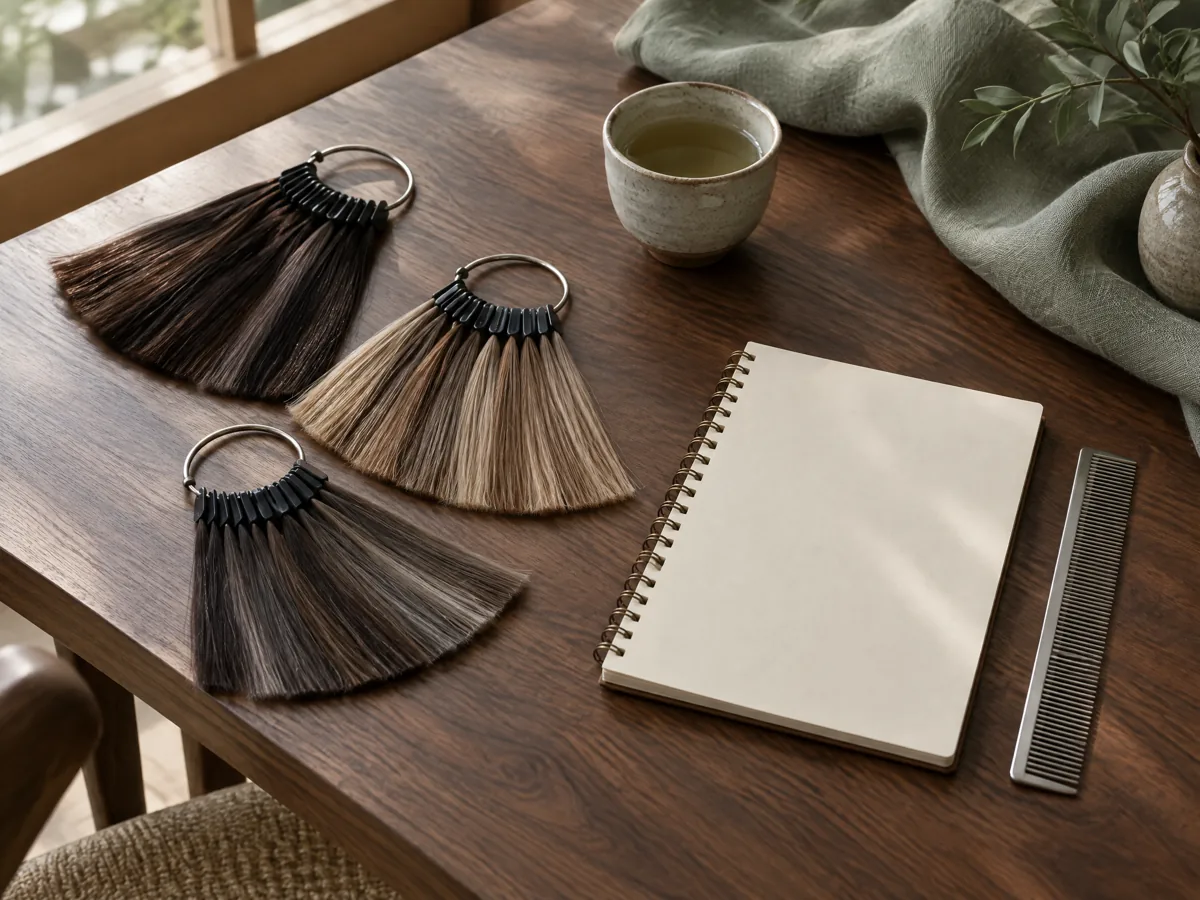
For a cooler direction, the VitSo discussion of ash brown hair colour separates smoky reflection from the depth of the brown underneath. Use that distinction when deciding between a deep cool brunette and a much lighter grey-brown image. If you enjoy muted colour but dislike an obviously silver appearance, say so. A softer, more balanced reference may describe your preference better than asking for the strongest possible ash effect.
Placement matters as much as the chosen reflection. A deep brown with a few cooler strands near the face can differ noticeably from an all-over lighter brown, even when both photographs are labelled ash. Look at how much dark hair remains between the bright sections. Canvas Blend's highlights guide is relevant when your reference relies on distinct strands rather than an even colour across the lengths. Discuss their visibility with straight hair as well as styled waves.
The comparison below is a decision aid, not a formula chart or a ranking of guaranteed difficulty. Its purpose is to expose the question hidden behind each visual preference. A warm brown can be deep or light; a cool brown can be deep or light too. Keep the required brightness separate from the reflection, then ask which combination fits your starting condition and how much future colour change you would accept.
If natural white strands are another concern, add that as a separate objective. An ash-looking photograph does not tell you whether those strands are hidden, blended or visible. Review Canvas Blend's grey-coverage information before assuming a cool shade solves coverage. You may prefer the overall brown of one image but want a different approach at the temples. Both preferences need to be discussed before agreeing on the service scope.
Before a first colour appointment or a refresh, browse hair bleaching Hong Kong for visual inspiration, practical preparation and a clearer sense of what to discuss during your consultation.
| Direction | What to identify in the reference | Question that changes the plan | Alternative to discuss |
|---|---|---|---|
| Deep warm brown | Brown stays dark in shadow; red or gold appears in reflection | Do you want only a warmer reflection or noticeably brighter lengths? | Retain more depth if brightness is not essential |
| Deep ash brown | Brown remains deep with a restrained cool reflection | How much warmth would you accept as the initial tone changes? | A softer balanced brown rather than an intensely smoky target |
| Light ash or beige brown | The body colour itself is visibly lighter, not just shiny | Can the current roots and processed ends support the proposed brightness change? | A deeper interpretation with less emphasis on pale detail |
| Brown with contrasting strands | Light sections remain separate from darker hair | Where should the contrast appear when hair is straight or tied back? | Fewer or less bright strands if broad contrast is not essential |
Compare equal depths, then compare reflection and the distribution of lighter hair.
04
What information should you bring before the consultation?
Prepare a short history divided into roots, middle lengths and ends. Include salon colour, home dye, bleach, henna and chemical texture services that may remain in the hair. Product names or old appointment notes are helpful when available, but incomplete information should be labelled as uncertain. Do not guess that an unidentified treatment was harmless. Explaining where it was applied gives the colourist more useful information than simply naming your most recent appointment.
Describe the hair's ordinary behaviour as well as its appearance. Mention ends that catch during detangling, areas that snap during normal handling, or sections that feel unusually rough after washing. Avoid repeatedly stretching or pulling strands to prove whether they are damaged. A photograph cannot determine processing tolerance on its own. Ask whether an in-person assessment and a strand test are needed before the colour plan can be confirmed.
Bring current-hair photographs in soft daylight and your usual indoor lighting, without beauty filters. Show the roots, underside and ends rather than only a glossy front view. Canvas Blend's before-and-after photograph tips can help you make useful comparisons. For inspiration, choose one image you like and one you do not, then identify the exact feature behind each reaction. Negative references can prevent a vague request for 'not too warm' from being misunderstood.
Finish with your priorities in order. If your first priority is keeping the lengths manageable, say that it outranks matching a pale photograph. If you want a low-contrast grow-out, explain that root contrast matters more than maximum brightness. Bring questions about the proposed service scope rather than requesting a universal formula. You should understand which areas will change, which may stay closer to their current appearance, and what remains uncertain until assessment.
- Record known processing by hair area, and mark unknown products clearly.
- Bring unfiltered current-hair photographs and annotated inspiration images.
- Disclose previous dye reactions and current scalp symptoms before discussing colour.
- Rank your priorities: condition, depth, warmth, contrast and upkeep.
- Ask whether the colour proposal is provisional until assessment or testing.
A useful preparation note explains both your starting hair and what you are willing to compromise.
05
Can conditioning prepare fragile lengths for a brown colour change?
Conditioning can be part of preparation when the concern is rough-feeling lengths or difficult handling, but softness and suitability for chemical work are not the same assessment. A smoother feel does not establish that fragile ends can tolerate lightening. Canvas Blend's damaged-hair care information can help frame questions about care and trimming. If ordinary handling repeatedly produces breakage, discuss postponing further processing instead of treating a mask as clearance to continue.
VitSo's pre-colour hair treatment destination describes cosmetic conditioning and pre-colour or pre-perm protection. If you enquire about that option, ask what product is proposed, where it is applied and how it relates to the planned colour process. Do not assume it permanently restores damaged strands, prevents all breakage or makes any brightness target suitable. Confirm the contents and charge with the relevant provider rather than transferring a treatment description into a guarantee.
For everyday preparation, the AAD recommends conditioner after shampooing, gentle detangling and reducing heat exposure. It advises using a lower heat setting and avoiding pulling or tugging while styling. These are ways to reduce additional handling damage, not evidence that existing damage has been reversed. Keep your routine understandable for the consultation: explain what leaves the ends comfortable and what seems to make them harder to comb. [4]
Avoid adding several unfamiliar masks, oils or scalp products immediately before the visit in an attempt to 'strengthen' the hair. Ask the salon what wash and product preparation its proposed process requires instead of assuming dirty hair, freshly clarified hair or a heavy coating is universally preferred. If care is quoted separately, ask whether it is optional and what cosmetic goal it addresses. A clear scope lets you compare care with a less ambitious colour change or postponement.
Use conditioning to support handling; assess further chemical work separately.
06
Which safety checks can change or stop the colour plan?
Tell the salon about previous itching, burning, swelling or rashes after dye, even if the reaction was mild or occurred with a different product. The FDA explains that sensitivity can develop with repeated exposure and that a reaction is possible despite previous uneventful colouring. It recommends following the product instructions and performing the required skin test before each use. A negative test does not guarantee that a full application will be reaction-free. [2]
A skin allergy test and a hair strand test serve different purposes; do not treat one as a replacement for the other. Ask how the actual product's testing directions will be followed and whether the proposed colour needs a separate strand assessment. If you have a history of reaction, seek appropriate medical advice rather than testing another dye on yourself to prove it is safe. The NHS notes that a doctor may refer someone who has reacted for dermatologist patch testing. [3]
An irritated, sunburned or damaged scalp is a reason not to proceed with dye under the FDA's safety guidance. Raise current symptoms before the appointment, not after colour is mixed. Canvas Blend's sensitive-scalp colour guide can help organise the enquiry, but salon conditioning does not diagnose or treat a scalp disorder. A product described as gentle is not a substitute for identifying the concern and following its safety directions. [2]
During application, tell the stylist immediately if you feel you are having a reaction; do not endure increasing discomfort to protect the colour result. The NHS advises washing out dye promptly if a reaction is suspected and seeking medical help for worsening symptoms. Symptoms need not appear immediately. Sudden swelling of the mouth or throat, or difficulty breathing, requires emergency help; call 999 in Hong Kong rather than waiting for salon advice. [3]
Scalp symptoms and reaction history can override the shade choice or treatment add-on.
07
How do you turn the shade choice into a maintainable plan?
Describe your normal routine before choosing the final reference. Frequent washing after exercise, swimming and outdoor time are relevant to the care discussion, as is your willingness to return for assessment. Ask what changes you are likely to notice first and which would actually bother you. A warmer reflection, a growing root contrast and rougher-feeling ends are different concerns; they should not automatically lead to repeating the same all-over colour service.
There is no reliable refresh interval that can be read from the words warm brown or ash brown alone. Ask about care for the actual process and product used, including whether a colour-depositing home product is appropriate. Do not choose a strongly tinted shampoo simply because the label sounds cool. Canvas Blend's post-colour care guide offers a starting framework; individual product directions and the agreed service plan still matter.
For outdoor care, the AAD recommends protecting processed hair from the sun, including wearing a wide-brimmed hat. For swimming, its damage-prevention guidance recommends a swim cap, rinsing promptly after swimming and suitable cleansing followed by conditioning. Discuss how those recommendations fit your actual routine rather than promising that one product will prevent all fading or roughness. Keeping comparison photographs in similar lighting can also help you distinguish a real change from a different reflection. [1] [4]
Planning example, not a client case: imagine untreated dark roots, previously coloured warm lengths and ends that catch during normal detangling. The preferred image shows pale smoky brown, but the person's first priority is manageable lengths. The sensible enquiry starts with the processing history and ends' condition, not a demand for the palest finish. Ask whether a deeper cooler brown, reduced contrast or postponing the colour better respects that priority. No result is assumed before assessment.
In that planning example, agreeing to a deeper reference would be a deliberate compromise, not a failed version of the pale image. The person could ask how the existing warm lengths affect the proposed reflection and which areas might be left unchanged. If the assessment raises concerns, care and gentler handling can become the immediate plan. The practical success criterion is an informed choice whose appearance, limitations and upkeep are understood before committing to further processing.
Choose a target you can accept both initially and as its reflection and root relationship change.
What else should you know?
Is chocolate brown always a warm colour?
Not as a fixed technical specification. The name can describe different depths and reflections, so show a photograph and explain whether you want red, gold or a more restrained brunette impression. Compare its shadowed areas with its brightest shine before deciding.
Does ash brown always require bleach?
The name alone cannot answer that. A deep cool-looking brown and a pale smoky brown are different targets, and previous colour matters. Ask for an assessment of your starting hair and a clear description of what a no-lightening alternative would look like.
Can a preparation treatment make damaged ends safe to lighten?
Do not assume that it can. Cosmetic conditioning may improve handling or feel, but that is not proof that the ends can tolerate more chemical work. Ask whether the colour plan should be reduced, postponed or combined with a trimming discussion.
Should I wash my hair immediately before the appointment?
Ask the salon for instructions suited to the proposed product and process. There is no preparation rule in a shade name. Mention your usual styling products and any scalp symptoms rather than adding a heavy mask or aggressive cleansing step on your own.
Do I need a skin test if I have coloured my hair before?
Follow the actual product's testing directions every time. The FDA notes that reactions can occur after previous uneventful use and that even a negative skin test is not a guarantee. Disclose prior reactions and obtain appropriate medical advice rather than relying on familiarity with the shade. [2]
Is a strand test the same as a skin allergy test?
No. A strand assessment concerns a small section of hair; a skin test follows the dye's directions for checking a possible reaction. Ask which checks are needed, and do not substitute one for the other or use a strand test as reassurance after an allergic reaction.
How often will ash brown need refreshing?
That depends on the actual process, starting hair, desired reflection and routine. Ask what change would justify a review rather than accepting a universal timetable. A deeper or softer target may be worth discussing if frequent tone adjustments do not fit your preferences.
What is the practical next step?
Before arranging colour, prepare one annotated reference, a roots-to-ends processing history and a short list of priorities. Decide whether depth, cooler reflection or visible lightness is the main goal. Add any breakage, scalp symptoms and reaction history at the start of the enquiry. Those details allow the discussion to include a deeper alternative, targeted care or postponement instead of assuming every inspiration image should be reproduced immediately.
When you are ready to discuss the plan with Canvas Blend, use its booking page and ask what must be assessed before the service and quotation are confirmed. Keep any enquiry about an external provider's treatment separate. The useful outcome is a clearly described colour direction, an understood preparation process and a care routine suited to your hair, not a promise that a shade name or conditioning add-on removes every limitation.
If you are searching for hair colour salon Central, plan a colour visit around meetings or after work, with enough time to discuss tone, upkeep, and your journey from Central.
Sources and editorial notes
- [1] American Academy of Dermatology: Coloring and perming tips for healthier-looking hair
- [2] U.S. Food and Drug Administration: Hair Dyes
- [3] NHS: Hair dye reactions
- [4] American Academy of Dermatology: 10 hair care habits that can damage your hair
This AI-assisted Canvas Blend guide is not a first-person case study or an article reviewed by Vit So. Vit So Hair Stylist and Canvas Blend share ownership. Links are not independent third-party endorsements and do not mean that fees, booking policies or packages are interchangeable. Colour, chemical processes, extensions and styling require individual assessment; cosmetic hair and scalp care do not replace medical advice.
AI-assisted Canvas Blend editorial guidance prepared for current use on 2026-11-06, not written in Vit So's voice or represented as reviewed by him. Canvas Blend and vitsohair.com share an owner; the external references are not an independent endorsement. The planning example is hypothetical. Treatment descriptions concern cosmetic hair-fibre care, not medical treatment, permanent repair or clearance for further processing; confirm individual suitability, service scope and charges with the relevant provider.
Continue reading
Hair DecisionsShould you choose grey coverage or a softer regrowth plan?
Compare covering grey with keeping silver visible, separate root colour from faded lengths, and build a realistic maintenance plan with safety checks.
Hair DecisionsHow to choose root touch up vs full head colour
Compare root-only colour, a length refresh and an all-over change by coverage, grey goals, hair history and quote inclusions before booking in Hong Kong.
Hair DecisionsChoosing hair highlights and babylights without losing depth
Compare highlight width, density, contrast and full-head coverage. Plan visible brightness, assess colour history and choose manageable care for your hair.