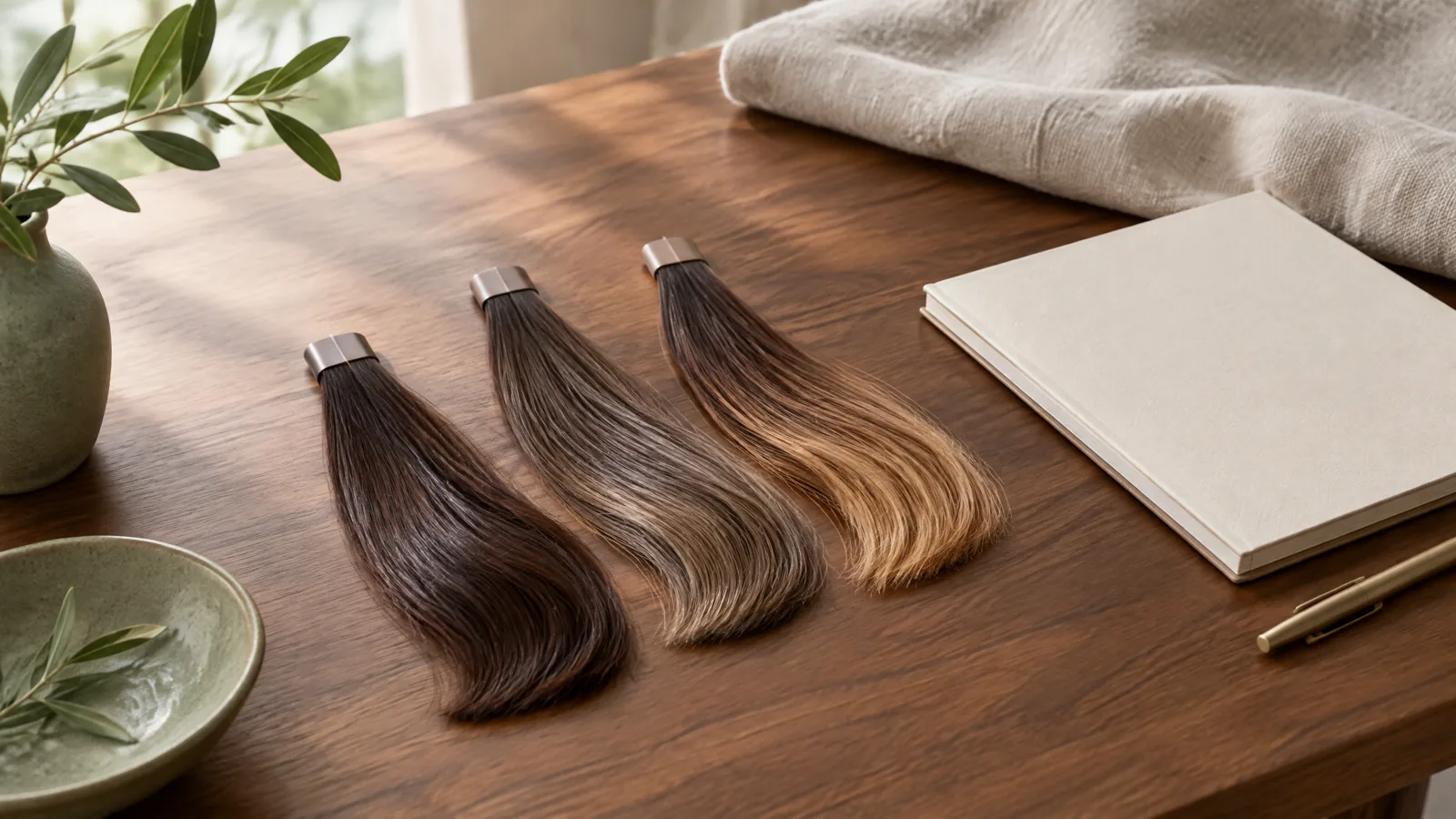
For a dark bob or crop, choose highlights by where the brightness will remain visible in the finished cut, not by copying a long-hair balayage photograph. Keep enough dark hair between the lighter areas, agree the next trim line and have previous colouring assessed before settling on a lightness target.
A short haircut gives you less length over which to spread a dark-to-light transition. That does not rule out balayage, but it makes proportion important: a light tip on a crop can occupy a substantial part of the visible strand. Start with the haircut you intend to keep, then decide whether you want a few accents, a brighter face frame or a generally lighter outline.
The related VitSo guide to balayage on dark hair is useful for separating strand brightness from the amount of dark base left visible. Here, the focus is how those decisions change on shorter lengths. A mostly dark bob with brown ribbons is a different brief from dark roots above pale ends, even if both inspiration photographs are labelled balayage.
Before selecting a shade, bring an unfiltered photograph of your current hair in its usual finish and a clear account of previous colour. Include any planned change to the fringe, front length or nape. Those details help identify which strands are worth lightening and which may disappear at the next cut; a photograph alone cannot establish processing suitability.
If you prefer a softer change, discuss ombre hair colour Hong Kong alongside hand-painted highlights or a lower-contrast gradient, so the placement reflects your existing colour and everyday styling.
01
How dark do you want the finished haircut to remain?
Describe the overall impression before discussing how fine the highlights should be. If your priority is to remain visibly dark-haired indoors, ask to preserve dark spaces through the surface and the perimeter. If you want the whole bob to look lighter, more distributed brightness may fit better. These are coverage choices as well as shade choices, so a single word such as subtle leaves too much undecided.
Strand width, spacing and contrast work together. A few very pale strands can look conspicuous against black hair even when most of the head remains untouched. Closely spaced brown strands may make a larger area look brighter without producing the same distinct lines. Neither arrangement is automatically gentler to process: the visible pattern does not establish what chemistry the chosen lightness requires.
Think about where you look first when you see yourself. Brightness beside a cheek can feel more prominent than an equally light section at the back. A dark fringe can preserve a familiar front view while lighter side layers show when you turn. If you prefer a restrained result, identify the places that should stay deep rather than asking the colourist to make everything less noticeable.
Canvas Blend's highlights overview can help frame a conversation about lighter strands within a retained base. Take two references: one showing the maximum contrast you would accept and another showing an effect that feels too bold. Explain whether the objection is a pale shade, a broad panel or too little dark space. That is more actionable than rejecting the entire technique.
Agree how much of the haircut should still read as dark before choosing individual highlight width or a shade name.
02
Where can brightness sit on a bob, crop or short layered cut?
Map placement on dry hair in the way you normally wear it. A blunt bob has a clear end line, while a short layered cut has several visible lengths. If you value a dark, continuous bob edge, explain that the perimeter should not become uniformly light. If your aim is to distinguish layers, selected accents may make more sense than concentrating every light area at the tips.
A longer bob side provides a different visible space from a close nape. Do not expect an identical gradient in both areas. Discuss the front, profile and back separately, then check that the combined design still looks intentional. Leaving a very short nape dark can be a design choice; it does not mean the rest of the haircut must also remain entirely dark.
Your parting changes which surface strands are exposed. A side part can show more brightness on one side even when the underlying sections are similar. Ask to assess the visible balance with your usual parting, then move it if you change it regularly. The aim is an effect you like in those positions, not necessarily a perfectly symmetrical application that appears different when worn.
An ear tuck, glasses or a swept fringe can reveal or conceal front colour. Bring your glasses if they are part of your daily routine, and show how you tuck the sides without rearranging them for the consultation. On a compact cut, a front section running to the jaw can dominate the outline. Check whether you want that emphasis before treating face framing as a minor addition.
- Mark the front length and perimeter you intend to retain after cutting.
- Identify the crown, fringe or nape areas you want to keep predominantly dark.
- Show the normal parting, ear tuck and uncurled finish.
- Ask where each proposed light area would sit after the planned trim.
The useful placement map follows retained strands and ordinary styling, not only the current hair length.
03
Should you choose fine highlights, selected ribbons or short balayage?
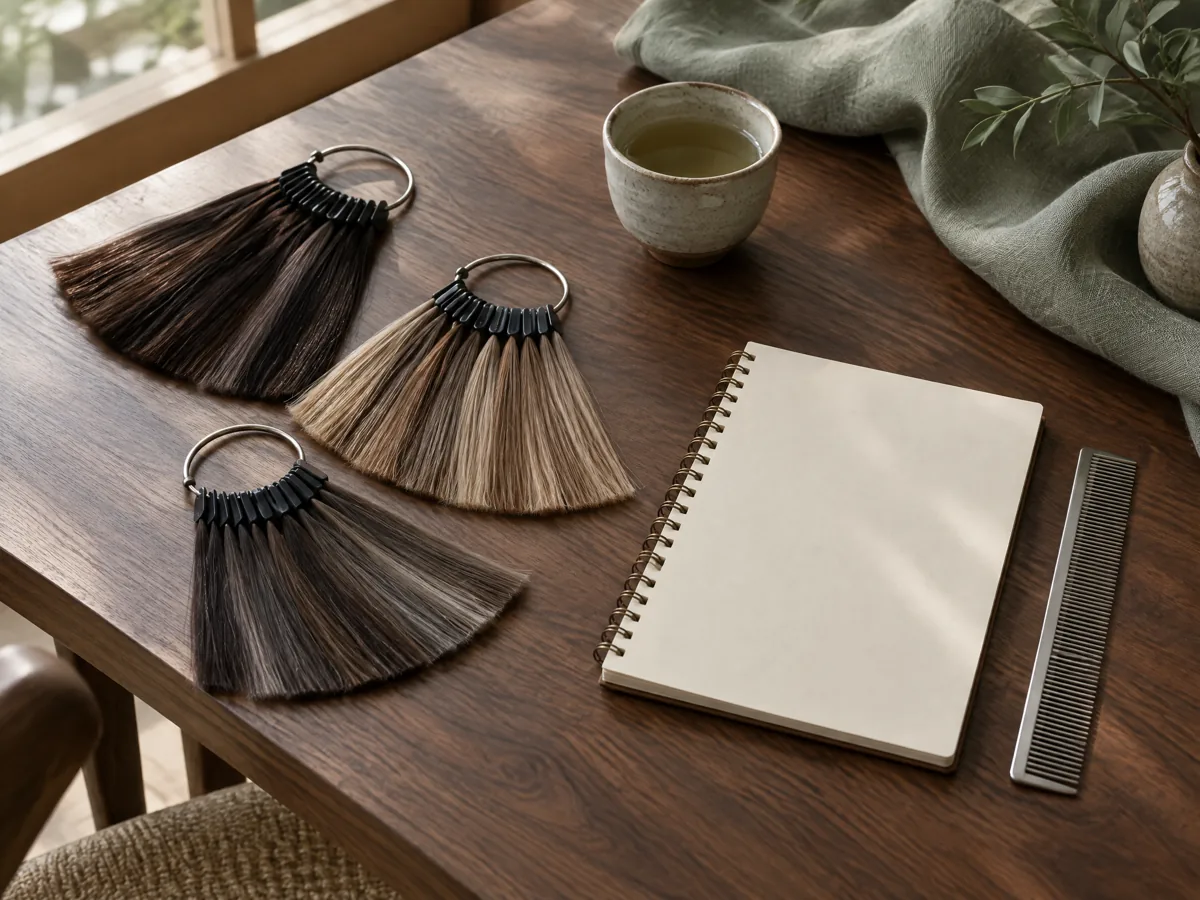
Use the names as a starting point, not a complete specification. Fine highlights describe a strand pattern; a balayage discussion usually concerns painted placement and a transition along selected lengths. The colourist should choose an appropriate application after assessment. Your part is to describe where lightness begins, which dark areas remain and how broad the visible accents should be.
The VitSo article on highlights for short hair also approaches colour through the haircut that will remain. When comparing references, find cuts with similar front lengths and end lines. A shoulder-length gradient can offer a tone idea for an ear-length cut, but it is not a reliable placement template because the available distance and visible proportions are different.
Canvas Blend's babylight page is relevant when you want to discuss fine strands, while its balayage page provides a separate starting point for lighter lengths. Do not assume that fine means invisible or that a dark-root design is automatically low maintenance. A high-contrast front accent and a soft brown transition can have different upkeep priorities even when both retain dark roots.
Compare options by the effect you want and the condition that could make each unsuitable. An ends-focused transition is less useful if the ends are about to be removed. A surface accent can become hidden if you change the parting. These are reasons to adapt placement, not to purchase a larger scope automatically. Ask which smaller design could meet the same visual goal.
Before a first colour appointment or a refresh, browse hair bleaching Hong Kong for visual inspiration, practical preparation and a clearer sense of what to discuss during your consultation.
| Option to discuss | Useful visual goal | What to check before choosing |
|---|---|---|
| Fine, spaced highlights | Small points of brightness while retaining a dark overall outline | Fine strands can still stand out if very pale; confirm spacing and contrast together |
| Selected wider ribbons | A deliberately visible accent beside darker hair | A broad ribbon can dominate a crop or front panel; check the normal parting |
| Short balayage transition | Darker upper lengths with lightness emerging lower on retained strands | Confirm that the kept length allows the transition you imagine |
| Limited face framing | Brightness concentrated around the front rather than across the whole head | Check fringe position, glasses and ear tucking; the front may feel bolder than expected |
| Retain the current colour and revise the cut | Emphasise the shape without additional lightening | Useful when condition, imminent trimming or uncertainty makes colouring a poor next step |
Choose the smallest suitable placement that delivers the intended effect; technique names do not determine contrast, safety or scope.
04
How does previous dark dye change the plan?
Natural black hair and lengths covered with dark dye are not interchangeable starting points. Describe where artificial colour was applied, whether it was repeated through the ends and whether any sections were previously lightened. Also disclose chemical straightening or perming. A dark appearance can hide different treatment histories within the same haircut, so do not describe the whole head simply as black and untreated unless that is accurate.
The American Academy of Dermatology warns that colouring can leave hair dry and brittle and that greater lightening can cause more damage. Its advice explains why a pale target deserves a more cautious discussion than a modest change; it does not predict an individual salon outcome or establish a universally safe shade limit. On short hair, a small highlighted area can still require a substantial change in colour. [1]
Ask whether a strand assessment is appropriate for the proposed work and what information it can provide. A test on selected hair addresses a different question from a skin allergy test: processing response and skin reaction should not be confused. Neither a good-looking test strand nor a photograph guarantees identical results everywhere. The assessed plan may be restrained, staged or deferred rather than matching the palest reference immediately.
If avoiding lightener is your main priority, use Canvas Blend's no-bleach colour guide to prepare questions rather than assuming every brown reference is achievable without it. If breakage or fragile ends are the concern, the damaged-hair care page is a more relevant starting point than adding further highlights. Cosmetic care should not be presented as permanently reversing earlier chemical damage.
Set the lightness target after reviewing history and condition, with an acceptable alternative if the desired contrast is unsuitable.
05
How can you choose a tone without being misled by photographs?
Separate the colour family from the degree of lightness. You may like a warm brown reflection without wanting blonde ends, or like a muted finish without wanting a very pale strand. Explain both preferences. A label such as caramel can describe quite different references, so point to the exact area you like and say how much brighter than your dark base you want it to appear.
Look at the whole haircut before studying a close-up. A photograph of a few bright strands cannot show how much dark hair remains at the back or beneath the surface. Compare a front view with the side and end line. On a bob, the difference between light accents and a generally light perimeter may be easier to identify in a full-head photograph than in a detailed colour shot.
Match the finish to your daily styling. A waved reference exposes alternating surfaces and can make the placement appear more separated; a smooth bob may show a clearer line. If you normally wear your hair straight, ask to discuss the pattern in that position. You can still use a curled image for tone, but explain that you do not want daily curling to be necessary for enjoying the colour.
Use current pictures taken in ordinary indoor light and near a window, with a similar angle and hairstyle. These help communicate preference, but camera settings and screens can alter apparent warmth and brightness. Put the desired effect into words as well: mostly dark in indoor meetings, visible brown accents in daylight, or distinct lighter front strands in either setting. Avoid treating a filtered picture as a shade guarantee.
Select tone, brightness and placement separately, then check them against ordinary light and the finish you actually wear.
06
What maintenance will matter most on a short dark haircut?
Start maintenance planning with your haircut rather than a universal refresh interval. If most lightness sits in the tips, a trim can remove the feature you paid to create. If the accent extends further up a retained strand, some brightness may remain after cutting. Ask which areas would survive your intended end line and whether the plan should change before colour is applied.
Root visibility and the finish of lighter lengths are separate issues. Retaining a natural dark root can reduce the contrast of some regrowth patterns, but it does not stop lightened lengths from changing in appearance or needing care. A very bright face frame may become your first concern even when the back still looks acceptable. Agree what visible change would prompt a review rather than promising a fixed maintenance schedule.
Keep aftercare proportionate to the actual processing. Ask which cleansing and conditioning products suit the assessed hair, and avoid adding multiple colour-correcting products without guidance on the intended tone. Canvas Blend's post-colour care guide can organise that discussion. The AAD also advises sun protection, including a wide-brimmed hat, because sun exposure can leave coloured or bleached hair dry, rough and faded. [1]
Planning example, not a client case: suppose someone has a naturally dark jaw-length bob, wears it smooth and plans to shorten the front at the next cut. They want the hair to remain mostly dark at work. A useful consultation would compare spaced brown accents on retained side strands with an ends-focused transition, then check both against the future cut. No particular outcome or processing suitability is assumed.
In that example, the ends-focused option loses its appeal if its brightest section lies in hair that will be cut away. A smaller contrast or postponing the colour until the shape is settled could serve the goal better. Conversely, a person growing the bob may prefer a different placement because those lengths will remain. The decision comes from the retained shape and desired appearance, not the assumption that short hair always needs frequent recolouring.
Define maintenance through retained length, visible changes and realistic care habits, not an unsupported timetable.

07
What should you confirm before arranging the colour appointment?
For the related VitSo service, balayage sheung wan leads to its own transition and service-scope information. Treat that as a separate enquiry from a Canvas Blend booking. Do not assume the two sites offer identical packages or that a named balayage service includes changing the dark base, correcting old dye, cutting and every finishing step needed for your particular short haircut.
Ask for an itemised scope before comparing totals: which areas are being lightened, whether existing colour needs separate work, what finishing colour is proposed and whether cutting is included. Canvas Blend's pricing page is the appropriate starting point for its own published information, followed by confirmation for the assessed request. A service label alone does not establish the full work or guarantee a desired shade.
Discuss allergy history before the appointment rather than after selecting colour. The FDA advises following product instructions and doing the skin test before every dye use; previous problem-free colouring does not exclude a later reaction, and a negative test cannot guarantee no reaction. Ask the provider which testing instructions apply to the products proposed, including any dye used to finish the lightened strands. [2]
An irritated or damaged scalp is a reason to stop and reassess; the FDA advises against dyeing in those circumstances. Canvas Blend's sensitive-scalp colour guide can help prepare the conversation, but salon scalp care is not medical treatment. If dye causes burning, an itchy rash or blisters, stop use and seek appropriate advice. The NHS identifies sudden mouth or throat swelling and breathing difficulty as signs requiring emergency medical help. [2] [3]
When contacting Canvas Blend through its booking page, send a concise brief with current photographs, colour history, the cut you will keep and the contrast you would accept. Ask what happens if assessment rules out the reference: a darker target, fewer light areas or no colour for now should remain available decisions. Confirmation should concern suitability and scope, not an assurance that any photograph can be reproduced.
Confirm the assessed design, product-safety instructions and provider-specific scope before proceeding; a reference is not a service guarantee.
What else should you know?
Can an ear-length crop have balayage?
Possibly, but the short distance from the upper strand to the tip may not display the long transition in your reference. Ask whether selected accents or a smaller contrast would communicate the same idea more clearly on the length you will retain. Suitability still depends on condition and colour history.
Are fine highlights always subtler than wider ribbons?
No. Very pale fine strands can stand out sharply against a black base, while a warmer ribbon surrounded by dark hair may create a different emphasis. Compare width, spacing, lightness and placement together rather than judging subtlety from strand width alone.
Does a brown highlight mean no bleach is needed?
No. The appearance of the target shade does not establish the processing needed to reach it, especially on previously dyed lengths. Share your full colour history and ask which approach, if any, is suitable. Do not select a process solely from a shade name or an online caption.
Should I cut my bob before colouring it?
Agree the intended cut before placement is finalised, but let the provider confirm the working sequence for the actual appointment. The important point is to avoid placing most brightness in ends that will be removed or overlooking layers whose visibility will change after cutting.
Will retaining dark roots make the colour maintenance-free?
No. It may make some regrowth less prominent, but the appearance of lighter lengths, front accents and the trim line still matters. Ask what changes should trigger a review and which care is appropriate; no universal refresh interval follows from the word balayage.
Is a strand test the same as a skin allergy test?
No. A strand assessment concerns selected hair and the proposed processing, while a skin test concerns a possible reaction to a dye product. Follow the relevant product and provider instructions. A satisfactory result from either assessment is not a guarantee against every processing problem or allergic reaction. [2]
What is the practical next step?
For dark short hair, settle three decisions first: the cut you will retain, the areas that should stay dark and the level of contrast you want in ordinary light. Then compare fine highlights, selected accents and a short transition against those decisions. If the preferred reference needs more length, more lightening or more upkeep than you want, adapt the design rather than treating the technique name as a requirement.
Your next step is a consultation with current photographs and an honest colour history, followed by confirmation of suitability, safety instructions and the actual work included. Keep a restrained alternative available and be willing to defer colour if the assessment makes that the better choice. The most useful plan is one that respects your short haircut and everyday routine, not one that depends on copying someone else's styled photograph.
If you are searching for hair colour salon Central, plan a colour visit around meetings or after work, with enough time to discuss tone, upkeep, and your journey from Central.
Sources and editorial notes
- [1] American Academy of Dermatology: Coloring and perming tips for healthier-looking hair
- [2] U.S. Food and Drug Administration: Hair Dyes
- [3] NHS: Hair dye reactions
This AI-assisted Canvas Blend guide is not a first-person case study or an article reviewed by Vit So. Vit So Hair Stylist and Canvas Blend share ownership. Links are not independent third-party endorsements and do not mean that fees, booking policies or packages are interchangeable. Colour, chemical processes, extensions and styling require individual assessment; cosmetic hair and scalp care do not replace medical advice.
AI-assisted Canvas Blend editorial guidance, prepared for current use on 2026-11-06; not written in Vit So's voice or represented as personally reviewed by him. VitSo and Canvas Blend are under the same ownership, so the three related links are not independent third-party endorsements. Placement comparisons and the explicitly labelled planning example are decision aids, not client cases or guarantees. Product-safety advice does not prescribe a salon chemical sequence; individual suitability and each provider's service scope require confirmation.
Continue reading
 Hair Decisions
Can a two block haircut work with your natural curls?
Plan a two-block shape around your natural curls: compare dry fringe length, side coverage, weight, styling effort and the questions to ask before booking.
 Hair Decisions
Planning a women's haircut: bob and pixie colour placement that fits your routine
Compare bob, lob, pixie and bixie shapes, then plan colour around the lengths you will keep, your natural parting, hair condition and realistic upkeep.
Hair DecisionsLayered haircut or lob: how to keep the length you actually need
Compare layers, lob outlines and shoulder-to-collarbone lengths by dry landing point, end fullness, ponytail reach and the styling you will actually do.