Coverage × Comfort × Personal Choice
How do you write a repeatable colour brief for grey wigs?
瀏覽獨立繁體中文指南 →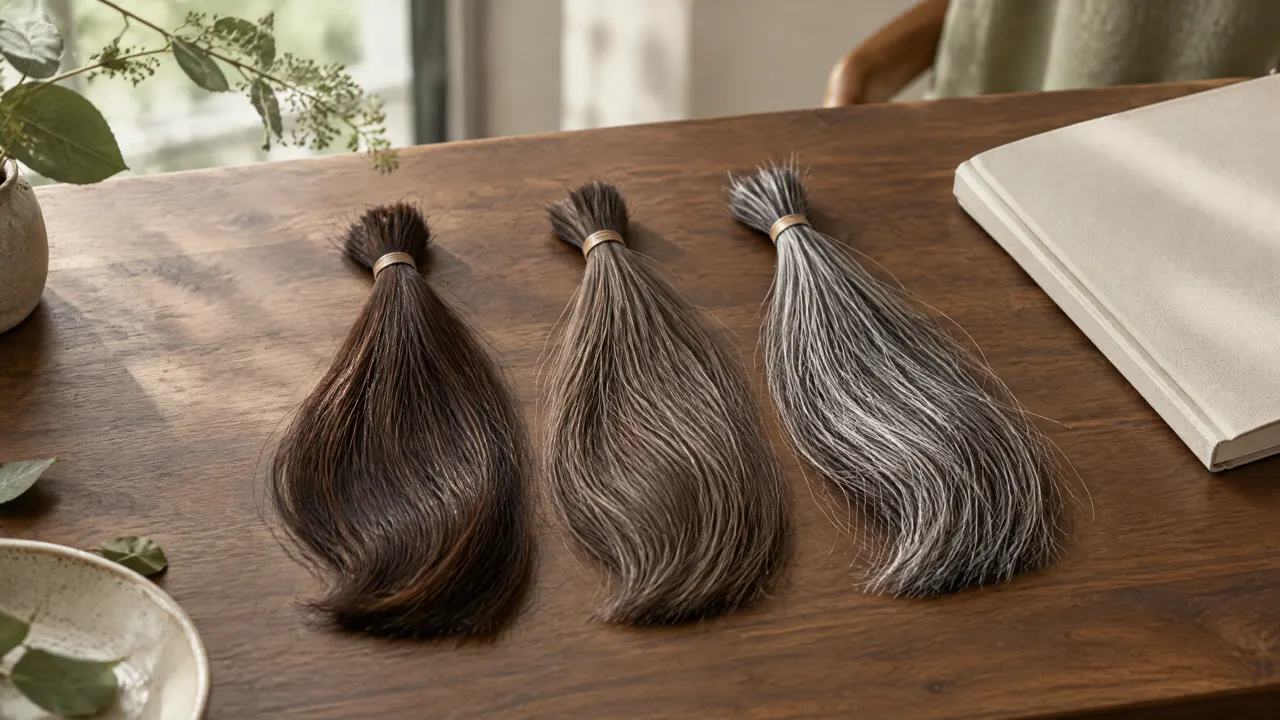
Write the base colour, the intended prominence of grey and its placement separately, then identify the reference and acceptable differences. A percentage alone cannot describe a salt-and-pepper look or guarantee that a maker can reproduce it.
A useful colour brief should survive being read by someone who has not seen your favourite photograph. ‘About thirty per cent grey’ leaves unanswered questions: grey against which brown, concentrated where, and visible in what hairstyle? The goal is not an elaborate technical formula. It is a short, consistent description that makes competing options easier to compare.
Start by separating what you want from what a supplier has confirmed. Your preference might be a dark overall impression with pale temples, while the available choice might be an evenly mixed shade. Recording that difference helps you decide whether to compromise or keep looking. It also prevents an attractive reference from quietly becoming an assumed promise about the finished piece.
If you are planning a change of colour, learn about hair colour Hong Kong before your consultation and consider the techniques, tones and upkeep that suit your routine.
01
What does your grey percentage actually describe?
Ask what the percentage means before comparing numbers. Does it describe the proportion of grey strands in a blend, the apparent lightness of the finished style, or a maker's named colour option? Those are different things. A pale strand against black can create a strong contrast, so a visibly grey impression is not a reliable measurement of the proportion of strands.
Write the darker base first, using a reference rather than only ‘brown’ or ‘black’. Then describe the lighter component: soft grey, pale silver or near-white, for example. These are visual directions, not universal colour definitions. Two blends with the same stated proportion can look different if their dark base or pale component differs, even before placement enters the discussion.
For a custom wig with a percentage of grey hair, treat your number as an enquiry prompt rather than a selectable recipe. OWNSTRAND's supplied service information says possible proportions and colour comparisons are considered case by case. Ask how the proposed balance would be described and assessed; a preferred percentage does not establish an available sample or an exact match.
If you do not know a number, do not invent one from a photograph. ‘Dark remains dominant, with grey clearly visible at conversational distance’ can be a better starting point. Ask the supplier to identify the closest discussable reference. Keep any suggested percentage beside that reference and its explanation, rather than allowing an unverified number to replace the visual goal.
A percentage needs a definition, a base colour and a reference before it becomes useful.
02
Where should the grey appear when the piece is worn?
Draw a simple zone map covering the front, temples, crown, sides and nape. Describe each zone in words before assigning any numbers: lighter temples, mixed crown, darker nape. Mark whether this is a preference or something the supplier has confirmed as possible. A whole-piece percentage cannot tell a reader whether the pale strands should frame the face or sit mainly behind it.
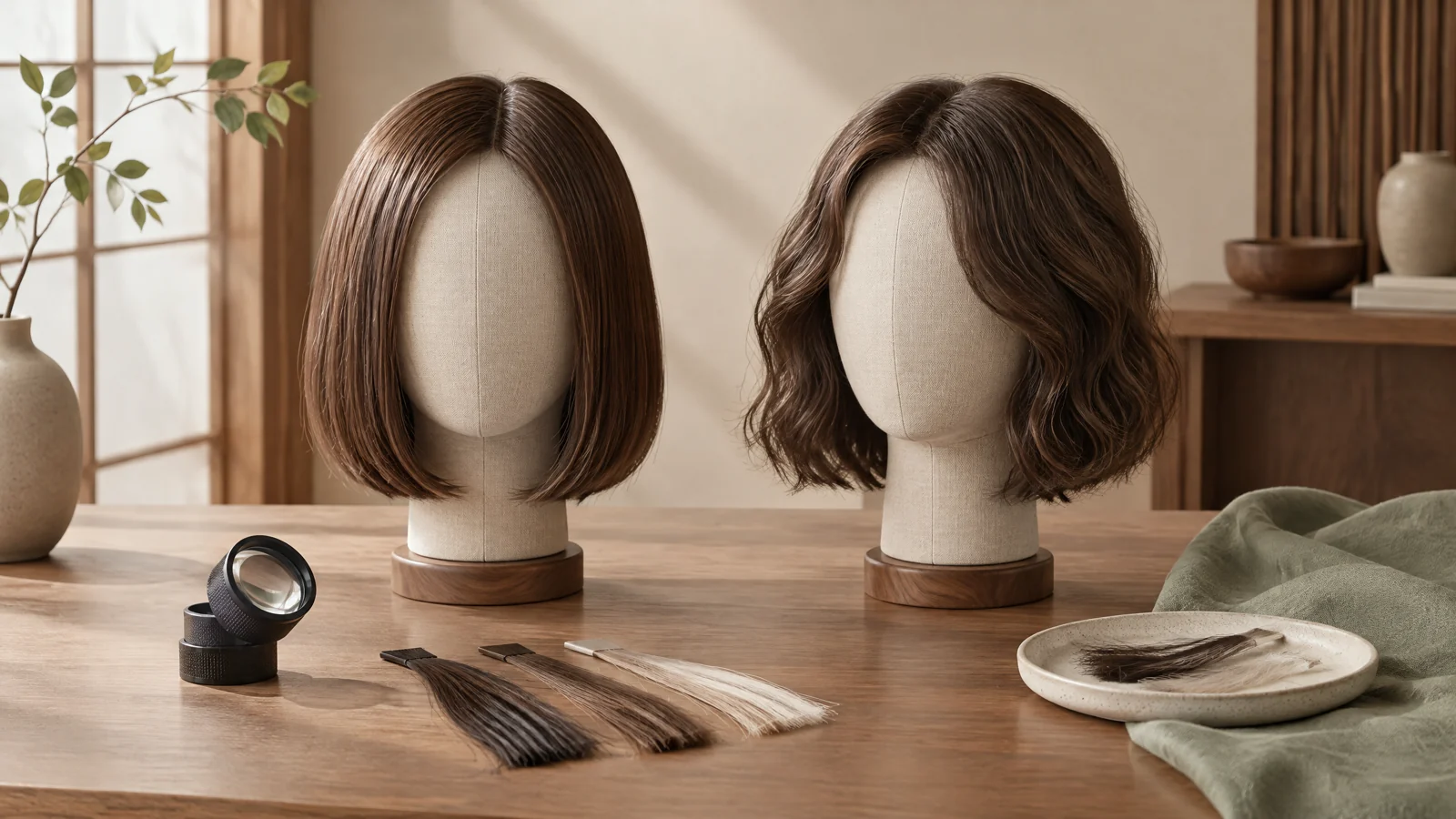
Add the intended parting and everyday styling position. A side part may expose a pale region differently from a centre part, while a fringe can cover an important front transition. Ask to assess colour in the intended style where a suitable reference or trial is available. A loose swatch can help compare tones, but it cannot demonstrate every effect of placement on the head.
If some natural hair will remain visible, mark only those exposed areas on a separate map. Avoid using the crown as the sole reference when the real comparison will be with the temples. The natural-hair grey coverage page is relevant if you separately want to discuss your own hair colour, but changing it is not a prerequisite for a wig purchase.
Record whether visible natural hair is currently coloured and when the reference photograph was taken. A newly coloured side section and its later regrowth are not interchangeable comparison targets. Choose whether the brief should relate to today's appearance or a planned natural-hair look. If that future look is uncertain, say so rather than asking a supplier to match an outcome that does not yet exist.
Keep placement requests realistic by ranking them. You may insist on a darker nape yet accept a more even mix through the crown. Alternatively, the front may be the priority and the rear less important. This ranking is more actionable than specifying equally exact treatment everywhere, particularly when a ready-made option offers a fixed distribution or a custom request has limitations.

03
Are you asking for an even mix, pale zones or a root transition?
Separate strand mixing from regional colour changes. An even salt-and-pepper blend puts light and dark strands together; a lighter front with a darker back changes the balance by area. A rooted effect changes colour along the hair length. These directions can overlap, but choosing one does not automatically specify the others. Ask which pattern the reference actually shows before discussing the shade name.
Jon Renau's own grey collection illustrates why location matters. Its Moonlight description places lighter silver at the front and darker tones at the nape. Peppercorn is described as dark with white woven throughout and a lighter front, while Mist combines pale grey with subtle brown tones.[2] These are manufacturer-specific examples, not an OWNSTRAND stock list or a universal grey-percentage system.
When browsing grey wigs, use the category to find a direction, then ask about the exact style and shade. ‘Silver’ is not a complete placement specification, and ‘salt and pepper’ does not establish a standard ratio. Compare a whole-style reference as well as any available swatch; the colour category alone confirms neither supply nor suitability.
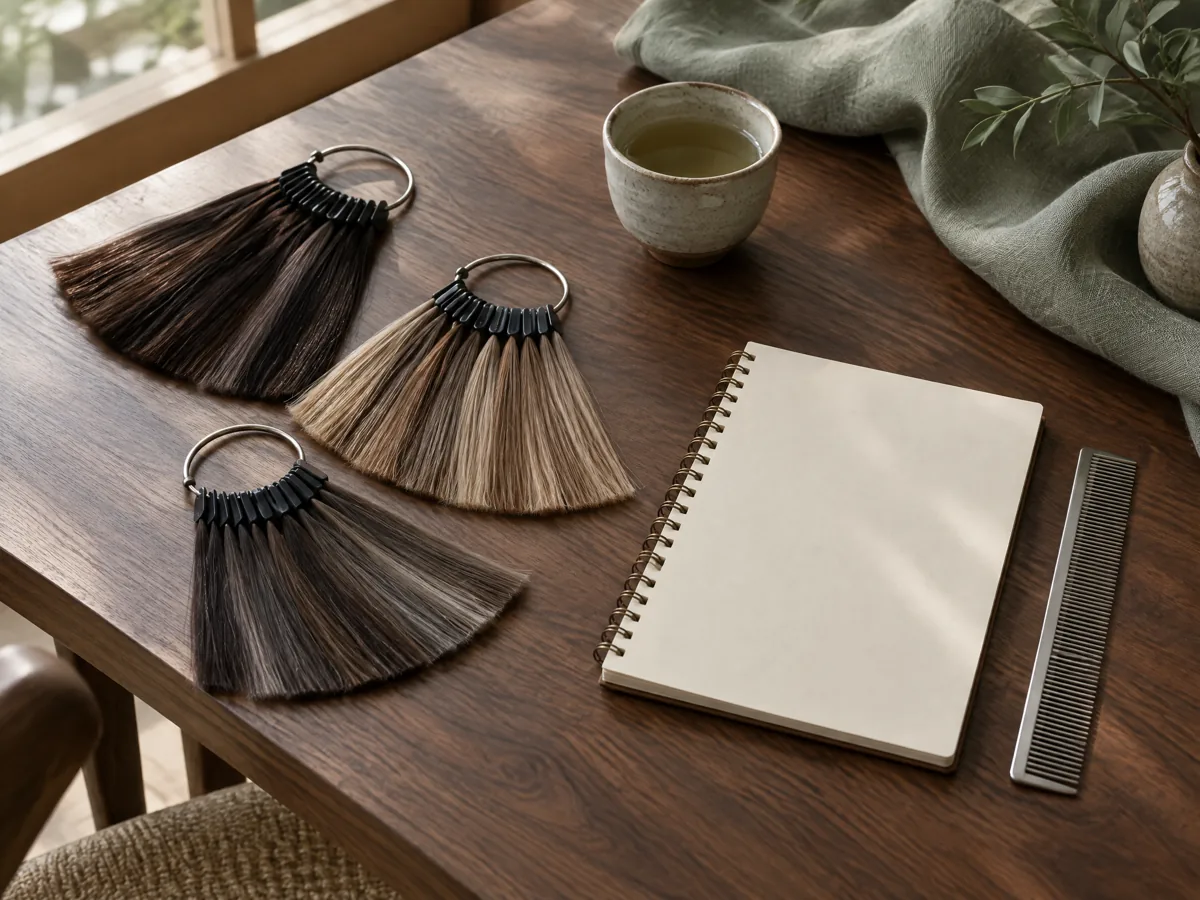
If you use the Canvas Blend gallery to explore tonal preferences, identify only the feature you like, such as a muted pale tone beside a deeper brown. Do not treat an image of salon work as a wig sample or copy its technique into the purchase brief. Write ‘tone reference only’ so a supplier does not mistake it for a request to reproduce the entire image.
When looking up hair salon Central, check the location details and choose a consultation time that lets you compare tones in natural daylight before or after work.
| Visual direction | What to write in the brief | What to compare | Main compromise |
|---|---|---|---|
| Fine, even salt-and-pepper mix | Dark base remains visible; pale strands dispersed rather than clustered | Whole-style appearance and close-up blend | May not reproduce naturally lighter temples |
| Lighter front or temples | Pale emphasis around the face; specify the rear separately | Front, side and rear views in the intended parting | A small swatch may hide the regional difference |
| Grey-led with darker variation | Grey is the main impression; retain visible darker strands | Overall lightness and depth of the darker component | A familiar dark base may become less prominent |
| Darker roots with lighter lengths | Describe the root depth and transition separately from the grey mix | Root area and full hair length | Not equivalent to scattered grey strands throughout |
04
How can you make photos and samples usable again later?
Choose a small reference set rather than sending many contradictory images. Include a front view, a side view showing the temples and a rear view if the nape matters. Label each with the feature it is meant to demonstrate. Add one image showing an unwanted effect, such as a sharply white front, so the brief explains both the goal and its boundary.
The American Cancer Society advises using current-hair photographs and comparing hair with wig swatches in natural light, outdoors or near a window.[1] Apply that as general colour-selection guidance: use even daylight where practical and avoid relying exclusively on a strongly lit indoor photograph. It does not establish a product match, and no single lighting condition can show every appearance a wearer will encounter.
For repeatability, record the date, light source and whether a filter was used. Compare references under similar conditions and do not judge a pale shade solely from a phone thumbnail. The before-and-after hair colour documentation guide can help frame the record-keeping task for your own hair. The useful connection is consistent documentation, not a recommendation to colour either natural hair or the piece.
If a manufacturer shade is being discussed, copy the brand, full shade code and exact style into the brief. Jon Renau's colour-code guide, for example, explains a code containing blended colours, bold highlights and shaded roots.[3] The full code carries more information than a nickname. Its meanings belong to that maker; a number in a shade code should not be assumed to mean a grey percentage.
Ask what any offered sample represents. It might be a colour ring, a sample piece or a photograph of the same shade on another style. Record that limitation beside it. If the final placement matters, a colour ring is not a substitute for discussing the whole design. Retain the selected reference identifier so later questions do not depend on someone remembering ‘the lighter one’.
05
What must material and care information add to the colour brief?
Keep the colour preference separate from the fibre specification. A convincing salt-and-pepper photograph does not establish whether the piece is human hair, synthetic or a blend. Ask for the exact material description and whether it applies to the requested shade. A manufacturer's synthetic colour example can explain a visual pattern without proving that an equivalent human-hair version exists or can be supplied.
For human hair wigs, check the actual item rather than assuming the category grants unrestricted styling or colouring. Request its care instructions and any stated processing limitations. If keeping the selected grey appearance requires maintenance you cannot realistically manage, that is a purchase disadvantage even when the initial colour reference is appealing. Confirm specifications and availability for the particular option.
Do not plan to correct an uncertain blend with home dye, bleach or a colour rinse. Ask what professional work, if any, the maker permits and what it would change. The American Cancer Society's styling guidance cautions against colour rinses on synthetic wigs and heat tools unless the wig is heat resistant.[1] Follow the exact item's instructions; this guide supplies no universal temperature or alteration method.
Comfort is a separate acceptance question, not something a grey percentage can answer. If scalp sensitivity affects the purchase, discuss the wearing arrangement and seek medical advice for persistent pain, redness or broken skin. The sensitive-scalp colour guide concerns natural-hair salon decisions, not proof that a wig material is medically suitable. Wigs offer appearance options, not treatment or hair regrowth.
06
How would a hypothetical buyer choose between imperfect matches?
Consider a hypothetical shopper, not a real client, who wants to retain a familiar dark-brown impression while showing more pale hair at the temples. They expect to wear a side part and leave some natural side hair visible. Their first message says ‘thirty per cent grey’. That number is an initial preference only, not a measured strand count or a confirmed option.
After describing the visible areas, they rewrite the brief: ‘Dark brown should remain dominant across the crown and nape. The temples should look noticeably lighter, with a soft transition rather than a white block. The side-part view is the main comparison.’ They attach dated daylight references and label the temple photograph as the priority. The revised request explains more than the original whole-piece percentage.
Suppose two directions can be discussed: a ready-made even blend close to the desired overall lightness, or a custom proposal that might offer regional emphasis but needs further confirmation. Neither is assumed to be stocked, affordable or exactly reproducible. The shopper asks for item-specific references and quotations before comparing them. A theoretical design is not yet evidence that either purchase can proceed.
If overall lightness matters more than local temple placement, the even blend may be an acceptable compromise, provided its visible join with natural hair and other specifications work. If lighter temples are the defining feature, the same option may disappoint despite a pleasing general shade. The shopper should then investigate the custom proposal or pause, rather than treating a higher price as proof of a closer match.
They set a fallback before ordering: a softer temple contrast is acceptable, but a uniformly pale crown is not. If neither direction meets that boundary, they do not solve the problem by automatically dyeing their own hair. They can revise the appearance goal or continue researching. A clear brief is valuable even when it reveals that the currently discussable choices are not the right ones.

07
What should you confirm before approving a colour direction?
Give the final brief a date and version number. Keep the darker base, pale component, zone map and preferred reference together, followed by acceptable differences. If a new sample changes your choice, replace the old reference explicitly. This avoids a conversation where an early dark blend, a later silver photograph and a final percentage are all treated as equally current instructions.
Ask the supplier to state what is confirmed and what remains provisional. Important questions include whether the regional distribution is feasible, whether the reference shows the proposed material, and what final colour variation should be expected. Ask which comparison can be offered before commitment. An enquiry, an illustrative photograph and a quotation are not interchangeable with an agreed specification or a completed order.
Agree how colour will be assessed if a relevant sample or fitting arrangement is possible. Use the intended parting, view the front and rear, and include any natural hair that will normally be exposed. Compare tone and distribution separately so a pleasing overall shade does not conceal an unwanted front patch. Also confirm fit and comfort independently; passing a colour check does not settle those questions.
Before paying, ask about applicable change, cancellation and return terms, particularly for custom work. The American Cancer Society also recommends checking return policies before buying a wig.[1] Do not import another retailer's rules into this purchase. Ask whether colour approval has consequences for later changes and record the answer. A documented preference is useful, but it does not create a colour guarantee or a right to remake.
- Base and pale component identified by words plus a named reference.
- Front, temples, crown, sides and nape described where relevant.
- Percentage defined or clearly marked as an unconfirmed preference.
- Parting, exposed natural hair and reference date recorded.
- Priority, acceptable compromise and unacceptable result stated.
- Product specification, supply and purchase terms confirmed separately.
What else should you know?
Can I estimate a reliable grey percentage from a photograph?
Not reliably. Light, contrast, styling and the photographed area can change the apparent amount of grey. Describe the overall impression and local placement, then ask how the maker defines any proposed percentage.
Does salt and pepper mean an evenly mixed shade?
Not necessarily. It describes light-and-dark contrast but does not confirm a standard ratio or distribution. Ask whether the particular reference is evenly mixed, lighter at the front or different by region.
Should the temples and crown have the same grey balance?
Only if that is your intended appearance and the option supports it. Describe them separately when lighter temples matter. Local placement may be limited in a ready-made design or require case-by-case confirmation for custom work.
Is a physical swatch enough to approve the entire look?
A swatch can help compare tones, but it may not show distribution across the finished style. Record what it represents and ask how the front, parting and nape would relate to it.
Can I request an exact match to my own grey hair?
You can make closeness a priority, but an exact match should not be assumed. Identify the exposed natural-hair areas and current reference, then ask what degree of similarity can realistically be discussed and assessed.
Does a custom colour discussion confirm an order or supply?
No. A discussion establishes preferences and questions. Confirm feasibility, specifications, quotation, supply, arrangements and applicable terms before treating the request as an agreed purchase.
What is the practical next step?
Your next step is to write one dated brief containing the darker base, pale tone, regional placement, intended parting and strongest reference. Add one acceptable compromise and one result you would reject. Send it as a request for clarification, not as proof that a particular percentage or placement is available. This makes any supplier's response easier to compare with your actual priorities.
If you separately want Canvas Blend advice about visible natural hair, use the Canvas Blend booking page to clarify that salon scope. It does not confirm wig supply, attachment services or a joint package. Keep the natural-hair discussion and the wig enquiry distinct so you can decide about each without assuming that one business has accepted the other's colour or service commitments.
For hair that looks dry, frizzy, or prone to breakage in a photo, read about damaged hair treatment Hong Kong to help frame questions for a colour-care consultation.
Sources and editorial notes
- [1] American Cancer Society — Wigs for Hair Loss
- [2] Jon Renau — Gorgeous Grey Collection
- [3] Jon Renau — Color Codes 101
This AI-assisted Canvas Blend guide is not a real-client case study or an article reviewed by Vit So. OWNSTRAND and Canvas Blend share ownership; links are not independent third-party endorsements. Confirm wig, hairpiece and natural-hair services, fees and appointments separately. Materials, stock and handling limits depend on the actual product. Appearance coverage does not replace medical assessment of hair loss or scalp concerns.
Canvas Blend Editorial — AI-assisted guide, prepared on 2026-11-06. Canvas Blend and OWNSTRAND have the same owner, so this is not an independent third-party recommendation. It uses the supplied verified service-page information and the cited external sources; it is not a hands-on product test, a stock check or medical advice. The shopping scenario is explicitly hypothetical. No authorship or review by Vit So is claimed. Colour feasibility, supply, care, fit and purchase terms require confirmation for the specific request.
Continue reading
 Wig Selection
How should you describe coverage before comparing men's wigs?
Compare men's full wigs, toupees and hair systems by the area covered, the natural hair left visible and the product details a seller must confirm.
Wig SelectionHow should you choose a men's hairpiece for work and compare crown-coverage quotes?
Compare crown hairpiece footprints, workday fitting checks and itemised quote conditions before committing, with a hypothetical office-wear decision example.
Wig SelectionHow can a custom men's hair system enquiry preserve your options?
Plan a custom hair-system enquiry around reversible choices, written permissions and cosmetic limits. Compare wearing commitments before changing your own hair or approving production.