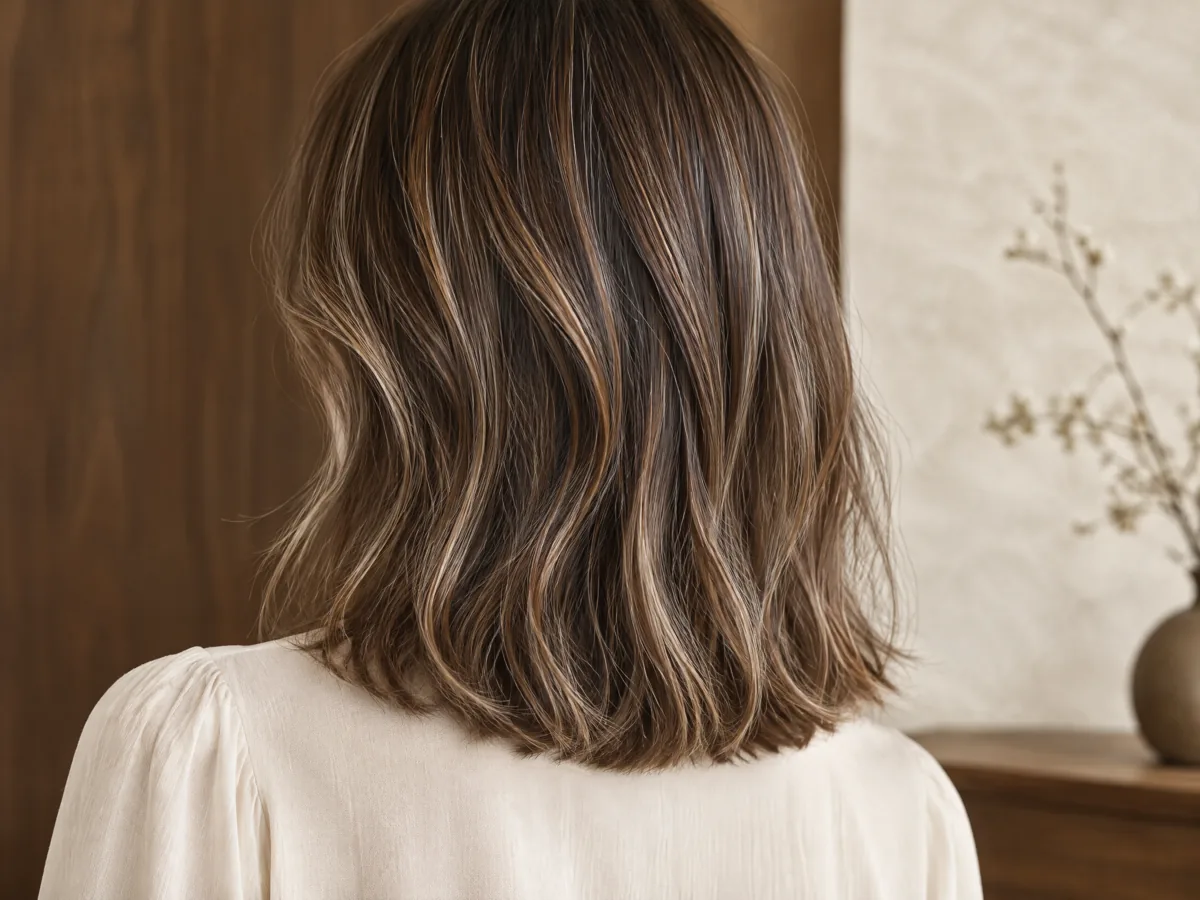
Coverage × Comfort × Personal Choice
How can long wigs keep movement without unwanted bulk?
瀏覽獨立繁體中文指南 →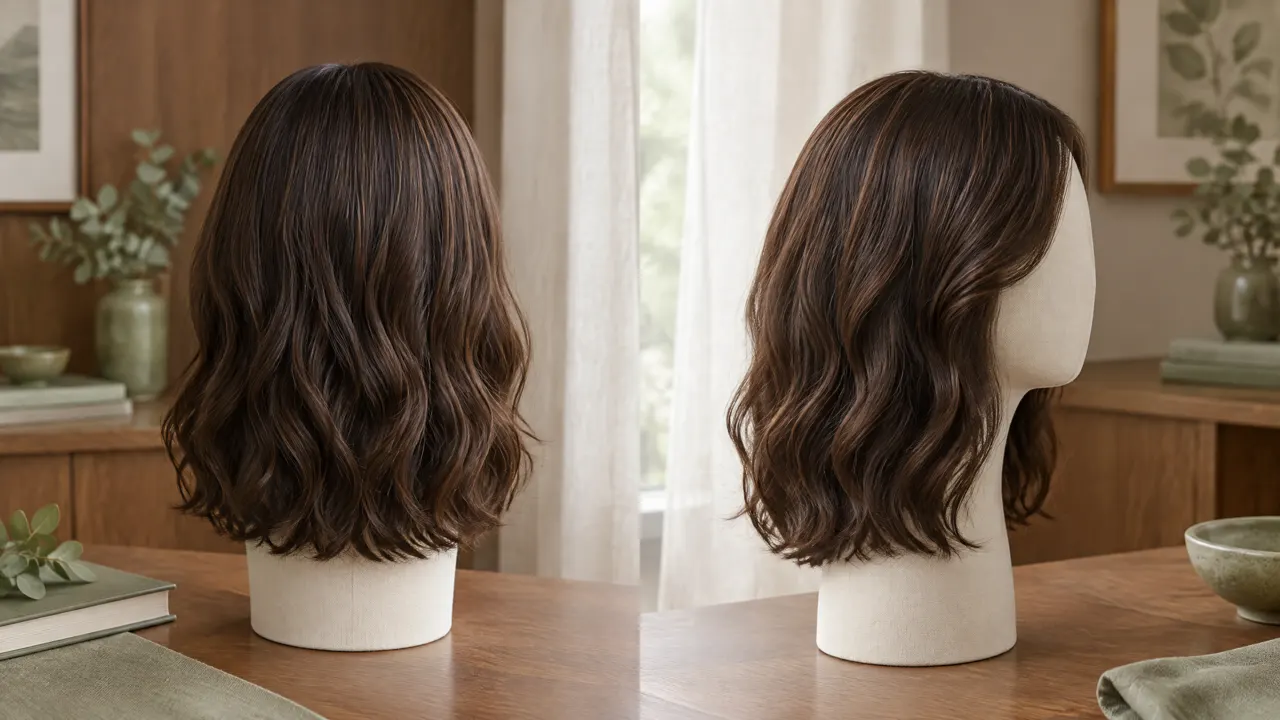
Keep the length you enjoy, but assess fullness separately at the crown, cheeks and ends rather than selecting the lowest density label. Choose a shape that moves comfortably and retains the coverage you want, then verify the exact cap, fibre and care requirements before considering any permanent thinning.
A long style can look slim from the front yet feel crowded around the shoulders. Another can have a quiet crown and generous waves below it without creating the same problem. The useful buying question is therefore not simply how much hair the wig contains. It is where that hair sits, how it moves away from your face and what happens when you stop arranging it.
Start with an outline reference rather than an aspirational density percentage. Choose front, side and back views that show the proportions you want; the Canvas Blend hairstyle gallery can help you describe colour and silhouette preferences, not prove how a wig behaves. This guide focuses on keeping a long, mobile outline without unnecessary width, while preserving enough hair for your chosen part and wearing routine.
When lightened pieces need a softer-looking refresh between appointments, read about highlights Hong Kong to see how considered placement can work alongside a practical at-home care routine.
01
Where does the unwanted bulk actually appear?
When browsing long wigs, separate the length you want from the fullness you want to avoid. Mark three areas in your reference: the crown, the sides beside your cheeks and the lower lengths. A single description such as too much hair cannot distinguish a lifted crown from a wide curl pattern or a heavy-looking perimeter. Each calls for a different comparison.
Use a plain description for each area: close at the crown, softly framing the cheekbones and substantial enough at the ends to remain visible against your clothes. These preferences need not point to the same density throughout. A flatter top with lively lower waves may be your preferred result, whereas reducing hair everywhere could remove the end coverage that makes the long shape appealing.
Judge the outline in an ordinary top as well as a contrasting one. A dark length against dark clothing can be difficult to read, while a light background makes gaps easier to notice. This is a practical viewing method, not a claim that one colour changes the amount of hair. Keep camera distance and lighting similar when comparing two candidates so that the photographs answer the same question.
Record physical comfort separately from the visual outline. A less-full appearance does not establish lower product weight, a cooler cap or a more secure fit. Ask for the actual item's weight if that matters, but do not let a weight figure replace wearing assessment. You might accept visible body below the shoulders while rejecting pressure at the temples, even when the catalogue calls the style light.
Name the location of excess fullness before asking for less hair.
02
Can lighter density preserve movement and convincing ends?
The phrase low density wigs is useful for starting a discussion about a restrained silhouette, not for predicting an identical result across brands. Ask what the wording means for the particular style and inspect its actual outline. Overall fullness is different from individual strand thickness, and neither a label nor an unexplained percentage tells you whether the lower lengths will look adequately covered when moved.
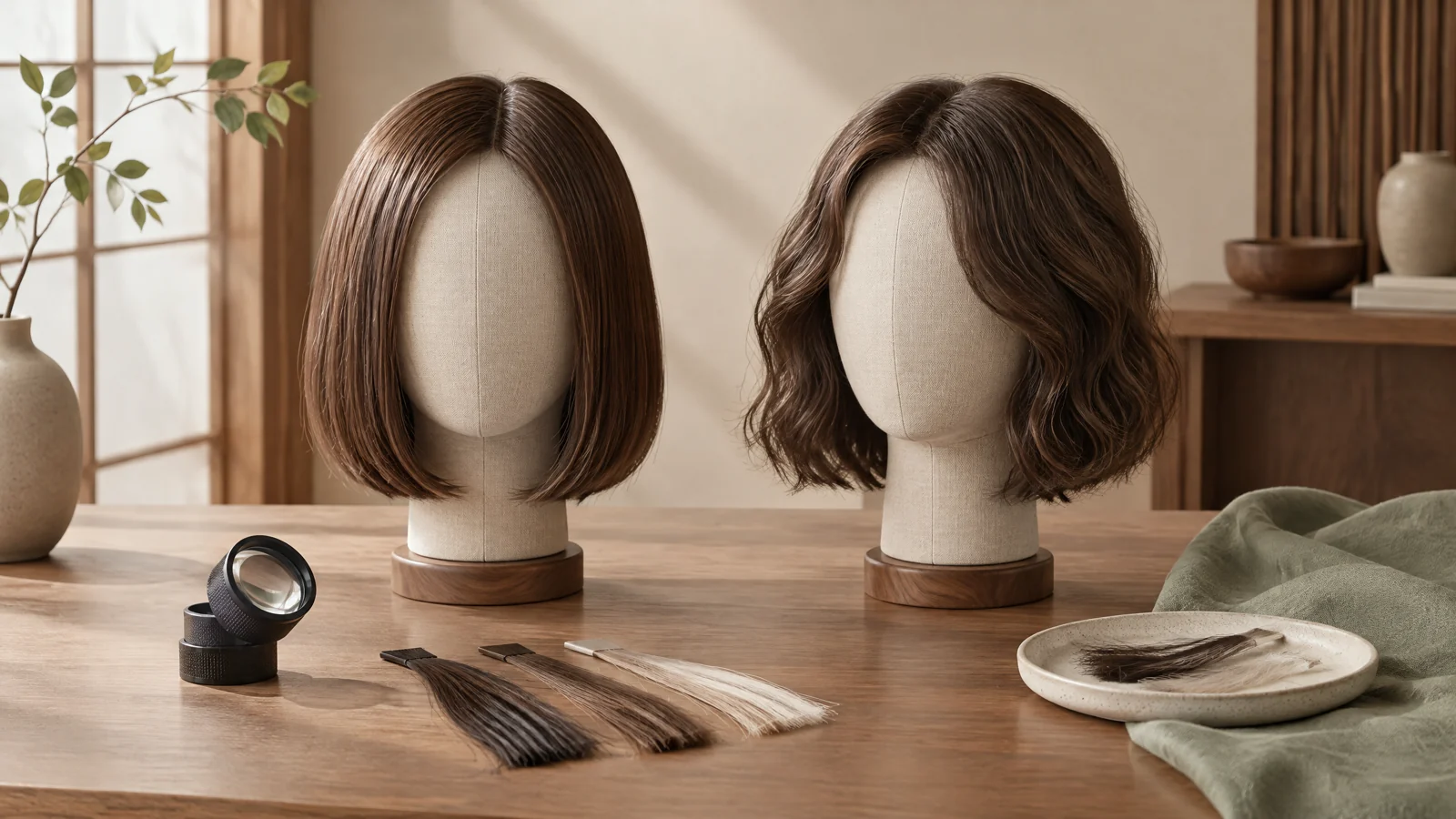
Compare similar textures before deciding that density caused the difference. A wide wave pattern can occupy more visible space than a straight fall, even if you have not established any difference in hair quantity. Conversely, a straight style may form a solid-looking curtain when arranged together. If possible, keep colour and intended end position close, then compare the crown, side width and perimeter rather than unlike promotional poses.
Layers redistribute the outline, but more layers are not an automatic solution to bulk. Short upper layers can introduce lift or separate from the longer lengths; long, gradual layers may soften an edge while retaining more of the lower outline. Ask where each important layer ends when worn. The trade-off is whether you prefer face-framing movement or a continuous, fuller-looking perimeter, not whether layering is inherently better.
A useful movement check is to bring the permitted amount of hair forward over one shoulder and then return it to its usual position. Notice whether the ends still form the shape you want and whether any base area becomes visible beyond your comfort level. Do not demand complete invisibility from every possible hairstyle. Instead, establish which everyday arrangements the exact construction is intended to support before selecting a sparse-looking option.

03
Is crown lift coming from density, root support or fit?
Crown volume can come from more than the quantity of hair. Some designs use permatease, meaning teased fibre near the roots that supports the shape. Jon Renau's named HD collection describes both low density and low permatease, with one design specified as having none. That distinction supports asking about root support separately; it does not establish that all low-density products have a flat crown or share that construction. [3]
Ask which parts of the cap have the stated construction rather than treating a front feature as a whole-cap description. A lace front concerns the front hairline; a specified part or top area does not automatically describe the back. Compare where the hair is intended to separate and how the crown settles. Manufacturer terms should be explained for the item, not translated into interchangeable promises of movement or coverage.
Natural hair underneath can also influence the outline you see at a trial. Use the arrangement you expect to wear, without forcing a tight or uncomfortable style merely to flatten the wig. If your own haircut or usual arrangement changes later, the comparison may change too. Keep a simple record alongside the Canvas Blend cut and colour photo-record guide, while clearly separating your natural-hair record from any wig specifications.
Fit deserves attention before you blame the fibre or request thinning. Jon Renau explains that excess cap material bunching at the back can contribute to nape tangling, and repeated readjustment can create friction frizz. These are possible fit-related explanations, not proof of a fault in every tangled wig. Ask a supplier to assess a slipping or bunched cap rather than removing hair to compensate for an unresolved sizing problem. [2]
To compare a painted gradient with more defined foil placement, start with balayage Hong Kong and consider your everyday styling, colour base, and preferred upkeep before deciding.
04
Which fibre routine can maintain the outline you chose?
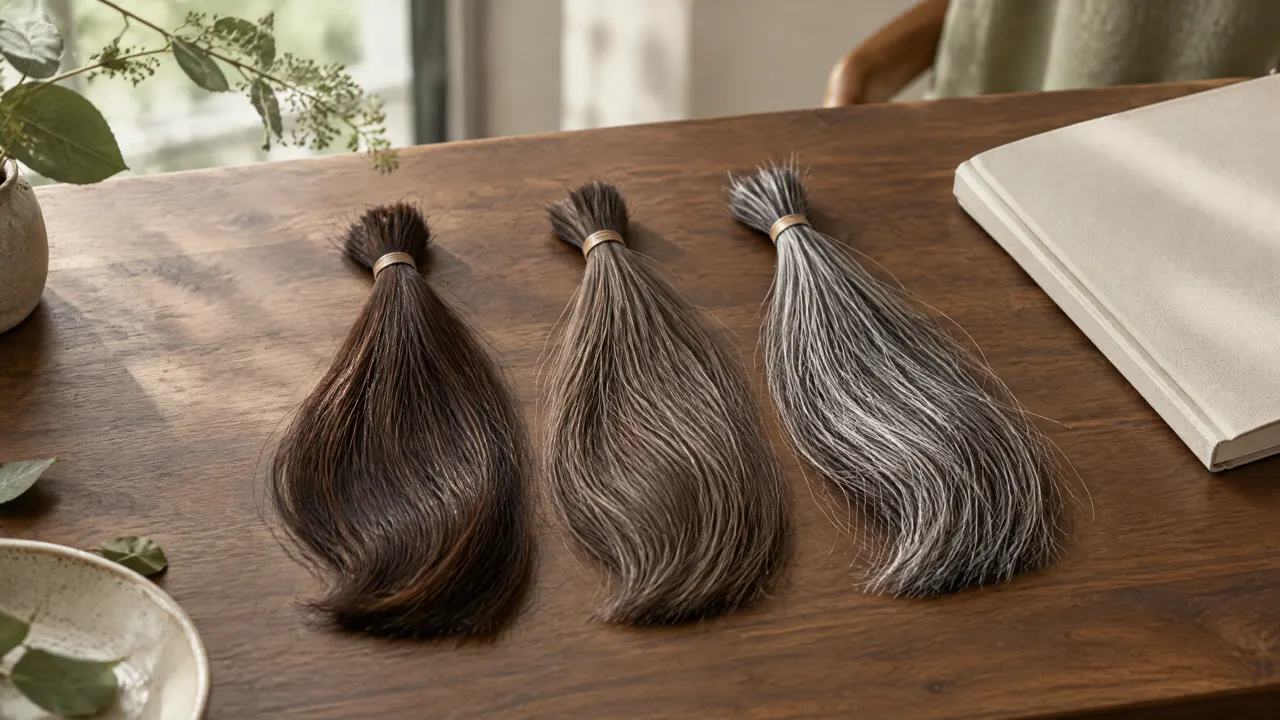
Considering human hair wigs makes sense if you want to discuss a shape that may be restyled within its instructions, but the material label does not promise effortless movement or unlimited processing. Ask what finish is supplied, what care maintains it and which changes are permitted. A photograph of a smooth long fall cannot establish how much work is needed to reproduce it after washing.
The American Cancer Society describes synthetic options as generally requiring less maintenance and human-hair options as requiring more, while recognising that preference matters. Use that broad comparison to question your routine, not to assume every synthetic piece is ready without care or every human-hair piece allows colouring. The exact product instructions decide what tools, products and processes are appropriate for maintaining your chosen silhouette. [1]
For a low-bulk goal, ask how the style looks after its approved wash-and-dry routine, not only after a polished presentation. Is the shape meant to return largely as supplied, or does it need arranging to achieve the reference? If a comparison depends on continual flattening, that is a recurring commitment. You may prefer a slightly fuller ready-set outline over a sleeker candidate that requires more work than you enjoy.
Long ends deserve particular discussion because they meet clothing and other surfaces during ordinary wear. Jon Renau's HD guidance identifies face and nape areas as relevant to friction-related frizz and gives fibre-specific care instructions. Do not import its heat settings or schedule into another piece. Request the exact maker's detangling, drying and storage advice, including whether any heat is allowed, before treating that material as manageable for you. [3]
05
What should a permitted movement trial reveal?
If a suitable sample can be viewed or tried, confirm the arrangement beforehand and ask which movements or styling changes are permitted. A listing does not guarantee a sample, your preferred size or a particular colour. During an approved trial, observe the hair at rest first. A result that looks acceptable only while someone holds the lengths apart may not match your aim of understated everyday movement.
Then turn your head, sit in your usual posture and bring your hands down after arranging the hair. Wear glasses if they are part of your routine and check how the sides sit around them. Look for repeated need to clear hair from your face or push it away from the neckline. These observations help compare candidates; a brief trial cannot establish all-day comfort or performance in every condition.
Keep two separate judgments: whether the lengths move as you like and whether the cap stays comfortably positioned. Hair swinging freely is not useful if you feel compelled to keep correcting the base. The American Cancer Society notes that size charts can vary by brand, so a familiar size name is not enough. Ask which measurements and adjustment limits apply to the actual candidate rather than transferring another wig's fit assumptions. [1]
Stop an assessment if there is pain or irritation rather than accepting it as the price of a slim silhouette. The Canvas Blend sensitive-scalp colour guide concerns a separate natural-hair service decision, not wig treatment. Persistent redness, broken skin or concerns about the cause of hair loss belong with a healthcare professional. Lower density is an appearance preference, not a remedy or a guarantee of scalp suitability.
- Check crown height and side width before and after gentle head movement.
- Compare the lower outline with hair behind the shoulders and, if permitted, brought forward.
- Note cap pressure or slipping separately from fibre fullness.
- Ask before altering the sample's part, fastening hair or changing its finish.
06
How would a hypothetical commuter weigh two long shapes?
Consider a clearly hypothetical buyer who wants hair falling below the shoulders, a quiet crown and soft movement while working at a desk. Assume they wear a collared top, carry a shoulder bag and do not want frequent restyling. There is no real customer or measured wear test behind this example. Its purpose is to show how two appealing candidates can lead to different decisions without declaring either universally superior.
Assume Candidate A has a light-looking straight outline with gradual layers and a specified human-hair care routine that includes restyling. Candidate B has a somewhat fuller supplied synthetic wave and instructions for maintaining that set shape. Neither candidate represents confirmed Ownstrand stock. Keep their fit acceptable and intended end position similar for this exercise; otherwise a size or length difference could dominate the choice before density becomes meaningful.
For this buyer, Candidate A wins the still-image preference but loses if its post-wash styling commitment is more than they will realistically accept. Candidate B may remain the better everyday choice if the extra width is modest and its lower outline sits acceptably against the collar. However, if the waves repeatedly crowd the face during a permitted trial, convenience alone does not meet the buyer's stated priority. The comparison must satisfy both limits.
The buyer should not solve the conflict by immediately ordering substantial thinning on Candidate B. First ask whether another supplied shape offers a quieter side outline, or whether a small, expressly permitted adjustment can be discussed. If neither candidate satisfies both the outline and care requirements, keep looking. A useful shortlist can end with no purchase; buying the closest photograph is not obligatory when the compromises are already unacceptable.
| Decision point | Candidate A: light straight layers | Candidate B: fuller supplied wave | What would change the decision? |
|---|---|---|---|
| Side outline | Closer-looking in the assumed reference | More visible width from the assumed wave | Whether either repeatedly crowds the face during an approved trial |
| Lower coverage | Must be checked with lengths brought forward | Appears more substantial in the assumed reference | Whether the buyer still likes the perimeter after movement |
| Maintenance | Assumed item routine includes restyling | Assumed item routine maintains a set shape | The buyer's willingness to follow the exact care instructions |
| Alteration risk | Further thinning may compromise the desired ends | Thinning may change the supplied shape | Written confirmation of permitted work and its effect on return terms |
| Buying outcome | Prefer if outline and upkeep both suit | Prefer if manageable width and care both suit | Reject both if either non-negotiable requirement remains unmet |
07
What must be confirmed before thinning or placing an order?
Permanent cutting and thinning should come after the fit, supplied shape and care discussion, not before. Removing hair cannot simply be reversed by arranging it differently. It can change end coverage and how short sections sit within the longer outline. Ask who is qualified to assess the particular product, what adjustment is proposed and whether the maker's instructions permit it. This is not a do-it-yourself cutting or lace-trimming guide.
Check the purchasing consequences as carefully as the aesthetic ones. The American Cancer Society recommends reviewing return or exchange policies before buying. Ask the seller whether a tried, ordered or altered item is eligible, and obtain the relevant terms before authorising any work. Do not assume a disappointing silhouette can be returned after thinning, or that an enquiry reserves a product while you decide between candidates. [1]
Send a focused request: your preferred end position, the area where you want less width, acceptable crown lift and the care routine you can manage. Ask for the exact style identifier, confirmed fibre and construction, sizing guidance, current quotation and supply arrangements. A catalogue category or concept image is not evidence that the desired density, colour and size combination is available, nor that the seller can reproduce every reference shape.
Keep natural-hair services distinct from wig purchasing and alteration. Consult Canvas Blend's about page for its salon context, then confirm any proposed natural-hair trimming separately. This article does not establish that Canvas Blend supplies wigs, fits attachments, applies adhesives or offers a joint package with Ownstrand. A coherent appearance plan can involve separate providers without converting a shared ownership relationship into a promise of combined services.
What else should you know?
Does a low-density label mean a long wig will feel physically lighter?
No. The label describes fullness, while length, fibre and cap construction also affect the piece. Ask for item-specific weight if relevant and assess fit and comfort separately.
Should I choose the lowest density to avoid a bulky crown?
Not automatically. Ask whether root support, the cut or the arrangement underneath is contributing to crown lift. Removing overall fullness may weaken the lower outline without resolving the feature you dislike.
Can long layers look fuller than a less-layered style?
Yes, the distribution of layers and texture can create lift or visible width. Compare where the layers finish and how the hair settles, rather than assuming that the word layered means slim.
Does human hair guarantee better movement with less upkeep?
No. Movement and upkeep depend on the exact piece, finish and instructions. Compare its routine with your preferences; do not infer unrestricted heat styling or chemical processing from the fibre name.
Can thinning be the first fix if the wig looks too full?
It should not be the first assumption. Resolve fit and assess the supplied shape first. Any permanent alteration needs product-specific approval and a clear understanding of the likely appearance and return-policy consequences.
What if no trial sample is available for my preferred option?
Request confirmed specifications, comparable front and side references, care instructions and written purchase terms. Explain which uncertainties would prevent an order. Images can narrow a shortlist, but they cannot prove personal comfort or movement.
What is the practical next step?
Write one sentence describing your ideal long outline, then add two limits: where you do not want extra width and how much maintenance you will accept. Compare candidates against that brief using their actual construction and care information. Prefer a supplied shape that meets both limits over a plan that depends on substantial irreversible thinning, repeated cap adjustment or styling you already know you will avoid.
If your plan also includes a change to your own haircut, use the Canvas Blend booking page to enquire about that separate service and confirm its scope before attending. For a wig, ask its supplier about the exact item, quotation and arrangements. Keep the two conversations distinct, and do not authorise an order or alteration until the remaining uncertainties about coverage, fit and upkeep are acceptable to you.
Before choosing a new colour, review balayage price Hong Kong alongside your hair length, density, and preferred technique so you can plan the appointment with clarity.
Sources and editorial notes
- [1] American Cancer Society — Wigs for Hair Loss
- [2] Jon Renau — When to Reassess Wig Sizing
- [3] Jon Renau — HD Collection Volume I
This AI-assisted Canvas Blend guide is not a real-client case study or an article reviewed by Vit So. OWNSTRAND and Canvas Blend share ownership; links are not independent third-party endorsements. Confirm wig, hairpiece and natural-hair services, fees and appointments separately. Materials, stock and handling limits depend on the actual product. Appearance coverage does not replace medical assessment of hair loss or scalp concerns.
Canvas Blend Editorial — AI-assisted guide, prepared for the selection context as of 2026-11-06. Canvas Blend and Ownstrand share the same owner, so this is not an independent third-party recommendation. External sources support only the stated general or manufacturer-specific points; we have not conducted product wear testing. The buying example is expressly hypothetical, not a real customer case. This guide is not attributed to Vit So and does not claim his review. Product availability, specifications, prices, samples and service scope require separate confirmation with the relevant provider. No hair-growth or medical-treatment benefit is claimed.
Continue reading
Wig SelectionHow do you choose custom vs ready-made wigs without over-specifying?
Decide which wig requirements need making to order, which an existing design can meet, and what to confirm before committing, with a practical comparison and hypothetical example.
Wig SelectionWhat do wig prices in Hong Kong include when comparing custom wigs and toppers?
Compare custom full-wig and topper quotes on separate lines, with coverage, fitting, finishing, natural-hair work and order terms made explicit.
 Wig Selection
What should you check at a custom wig fitting Hong Kong completion visit?
Prepare for a completed custom wig fitting with questions about comfort, agreed appearance, irreversible cutting, care instructions and unresolved collection details.