Coverage × Comfort × Personal Choice
How do bob wigs compare with pixie cuts around glasses, ears and necklines?
瀏覽獨立繁體中文指南 →
Choose between a bob and a pixie by checking where the sides and nape meet your glasses, ears and everyday collars, rather than assuming the shorter option is more comfortable. Keep the silhouette you enjoy only if the exact cap fits and ordinary movements do not create pressure, unwanted exposure or constant rearranging.
A hairstyle photograph leaves out much of the space you actually use. You look down at a phone, turn towards another person, put on reading glasses and pull a jacket collar around your neck. A wig that looks balanced from the front can behave differently during those movements. These everyday interactions are a more useful starting point than a rule about which cut should suit your face.
A bob gives you a perimeter to position around the jaw or neck; a pixie lets you consider a closer outline around the ears and nape. Neither label fixes the amount of side coverage, crown volume or fringe. Compare the actual design, including its underside, instead of treating a crop as automatically airy or a bob as automatically concealing every edge.
This is an AI-assisted Canvas Blend Editorial buying guide, not an independent retailer review. Canvas Blend and Ownstrand share the same owner; the Canvas Blend background provides context for the salon's identity. Our focus here is a practical decision framework. We have not tested the featured categories, and the illustrative choices below are not customer experiences or promises about a particular product.
If your hair feels dry, fragile, or difficult to detangle after lightening, explore damaged hair treatment Hong Kong before planning another colour service or adjusting your home-care routine.
01
Where do you want hair coverage, and where do you want clear space?
Begin with your preferences at the temples, ears and back of the neck. Some people enjoy a soft curtain beside the cheeks but dislike hair under a collar. Others prefer visible earrings but want a longer fringe. Separate those preferences: you need not accept an entirely exposed ear just to gain a shorter nape, or choose a dense side panel to have a bob outline.
If you are browsing women's wigs, treat that page as a full-head category rather than evidence of a particular fit. The category does not tell you whether a cap's sides clear your ears or accommodate your own hair comfortably. Identify one design, then ask for its dimensions and construction before judging whether its attractive outline is achievable for you.
Make a simple record of what currently bothers you: hair caught at a shirt collar, strands pushed forward by glasses, or side pieces covering an earring. Describe the location and movement, not just 'too much hair'. A long side section can be visually useful while a shorter back gives more neck clearance. Conversely, a compact cut can still put volume exactly where your glasses sit.
Choose one essential requirement and two preferences before comparing photographs. An essential might be glasses that sit correctly without pressure. Preferences might be a visible earlobe and a softly framed jaw. This distinction prevents a flattering front view from overriding an uncomfortable side fit, while allowing you to compromise on appearance details that genuinely matter less. It also makes your enquiry easier to answer.
02
How does your usual neckline change the bob-versus-pixie decision?
When comparing bob wigs, ask where the back and side ends land relative to your actual clothes. A jaw-level front does not tell you the back length. A graduated shape can have a short nape and longer sides; an apparently compact bob can still reach a raised collar. Request a back view and the relevant measurements instead of estimating everything from one image.
Bring a representative garment into the comparison if the supplier permits a try-on: an office shirt, a light jacket or the high neckline you wear regularly. Sit normally, turn your head and look down. Observe whether the ends remain where you like them, brush the collar or fold outwards. These are individual checks, not predictions that every bob will snag or that every crop will stay clear.
Contact is not automatically a failure. You may enjoy a bob resting near a low neckline and accept occasional rearranging with a scarf. The decision changes if a stiff collar repeatedly pushes the perimeter into a shape you dislike. Consider whether changing the garment is realistic. A wig chosen for daily office wear should not depend on a neckline you almost never wear.
Review appearance in proportion to the whole outfit rather than inspecting the hair alone. A cropped nape can leave more of a high collar visible; a longer perimeter can create a deliberate frame over a simple top. The Canvas Blend gallery can help you communicate a preferred colour mood, but its natural-hair images are not wig specifications, exact shade references or evidence that a comparable wig is available.
| Everyday condition | Bob direction to consider | Pixie direction to consider | What to check on the exact item |
|---|---|---|---|
| Raised shirt or jacket collar | Shorter nape with the desired side length | Nape that visibly clears the collar | Back view and behaviour when looking down |
| Low neckline and preferred jaw framing | Perimeter that falls where you enjoy the frame | Longer side pieces if some framing is wanted | Front and profile with your usual top |
| Glasses worn throughout the day | Sides that do not need constant tucking | Clearance around the arms without exposed unwanted edges | Cap position, pressure and glasses removal |
| Visible earrings are a priority | An ear-revealing design or permitted tuck | Side outline that leaves the chosen ear area visible | Earlobe exposure and contact with the earrings |
| Underlying hair should remain covered | Enough coverage at the intended perimeter | Coverage that still works with a closer crop | Temples, ear area and nape during normal movement |

03
Can your glasses sit correctly without disturbing the side shape?
Bring the glasses you actually use, not just a visually similar frame. The American Cancer Society advises removing glasses before putting a wig on and checking the position of the ear tabs; it also says the cap should not cover the ears.[1] Follow the exact item's fitting directions, then put your glasses back on to evaluate the combined result. That second check is where the practical comparison begins.
Notice whether the arms press against a cap edge, whether hair bunches above them, and whether the frames sit in their usual position. A short cut exposes more of this meeting point, while a bob may place hair over it. Hiding a pressure point is not solving it. Equally, visible glasses arms are not a flaw if you like the appearance and the fit remains comfortable.
Take your glasses off and put them back on gently during an approved try-on. Check whether the sides return to an acceptable shape without repeated pulling or tucking. If you switch between reading and distance glasses, compare both. A design that works while the frames stay untouched may be less convenient for someone who removes them frequently. This is an accessory habit, not simply a hairstyle preference.
Do not lift the cap away from its intended position merely to make room for the glasses. That can change the hairline and coverage you were trying to assess. If the combination feels wrong, ask the supplier whether another size or design would be more appropriate. Avoid assuming that a tighter adjustment is always more secure, or that reshaping the side area will necessarily correct the problem.
Check the fringe separately from the arms. A side-swept front may cross the lens area even when the ears have ample room; a shorter fringe may leave the lenses clearer but reveal more forehead than you want. Compare ordinary forward vision and your preferred profile. There is no need to choose a fashionable fringe that requires moving your glasses or continually shifting hair to see.
When viewing colour inspiration, ask about grey coverage hair colour Hong Kong to compare a low-contrast transition with fuller coverage, then choose the look that suits your preferred upkeep.
04
How much ear exposure can you comfortably accept?
Use pixie wigs to explore a cropped direction, then inspect exactly what the sides reveal. A close perimeter and an ear-covering pixie are different choices. Ask for views with the hair in its intended position, not only a styled photograph where the sides have been moved. The label does not establish whether the ear tabs, temples or nape will be concealed on you.
Separate the upper ear from the earlobe in your description. You might want a small stud visible while retaining hair above it, or want the whole ear clear because you dislike contact. If a bob appeals only after tucking, confirm whether the individual design is intended to be arranged that way. Do not assume every cap edge remains discreet when hair is pulled behind the ears.
Check any intended exposure of your own hair before planning changes to it. A closer crop may leave natural hair near the temples or nape visible, depending on fit and your hair distribution. Use the haircut and colour photo-record tips to document those areas consistently. The purpose is to make the discussion clear, not to suggest that dyeing or cutting your own hair is required.
Keep natural-hair changes reversible where possible while you are undecided. Do not cut away a section solely because a sample image appears to hide it, and do not remove side coverage from a wig before confirming the effect and alteration terms. If earrings are central to your style, bring the pair you wear most often and check contact without pulling on the hair or cap.
05
Which cap and comfort details matter more than the haircut name?
Measurements provide a necessary check beneath the appearance. The American Cancer Society notes that its general size chart can vary by brand and recommends checking the chart for the brand you intend to buy.[1] Ask how the manufacturer describes circumference, front-to-back and ear-to-ear fit where available. Do not transfer an 'average' label from one model to another or treat your preferred haircut as a size recommendation.
Dana-Farber's selection guide places comfort, fit and budget alongside appearance, and says the foundation should not feel uncomfortably hot or heavy.[2] That supports evaluating the whole piece, not claiming a pixie is inherently cooler. Less visible hair does not reveal how a cap is built. Ask about the specific base and any stated ventilation features, then assess your own comfort if a try-on is arranged.
If your scalp is sensitive, do not explain away pressure or irritation as something you must tolerate to achieve a tidy silhouette. The sensitive-scalp colour guide is relevant to a separate discussion about your natural hair, not proof that a wig material is medically suitable. Persistent pain, redness, broken skin or concern about the cause of hair loss warrants qualified healthcare advice; a wig is not treatment.
Confirm the fibre and care directions before deciding that a side section can simply be restyled out of the way. The American Cancer Society cautions against heat tools unless the wig is heat resistant.[1] For an actual purchase, follow the exact manufacturer's limits; there is no shared safe temperature for all designs. Human hair, synthetic fibre and style labels alone do not establish permission to heat, colour or alter the item.
06
What would a glasses-wearing office shopper choose in a hypothetical comparison?
Consider a clearly hypothetical shopper who wears glasses throughout the workday, usually chooses collared shirts and wants a small earring visible. Assume the budget allows either of two candidate designs with confirmed fitting arrangements. Option A is a bob with longer sides and a shorter back; Option B is a pixie with an open earlobe and a longer fringe. These are illustrative descriptions, not stocked products or tested customer outcomes.
The shopper makes comfortable glasses placement essential. In this invented comparison, Option A fits without pressure and gives the desired jaw frame, but its sides fall forward when the glasses are removed. Option B also fits comfortably and clears the collar, yet its fringe moves across a lens during reading. Neither earns an automatic win from its length. The inconvenience occurs in different places and at different moments.
Suppose the shopper rarely removes the glasses but reads at a desk for much of the day. Option A becomes the stronger provisional choice because its inconvenience occurs less often, provided the collar check is satisfactory. If the shopper instead switches glasses repeatedly and values neck clearance above jaw framing, Option B may be worth reconsidering—but only if the fringe issue can be resolved within that item's approved styling options.
Now add an alternative assumption: Option A's back repeatedly catches the raised jacket collar during the permitted try-on. That changes the decision rather than merely lowering its style score. The shopper can choose another bob with suitable back measurements, accept wearing a different jacket, or keep looking at crops. The useful compromise is explicit; it does not require believing that a popular silhouette must work with every outfit.
Write down the decision in plain terms: 'I prefer the jaw frame, but I will not accept glasses pressure or persistent collar disruption.' Then request answers to the unresolved points. If those cannot be confirmed, postpone the choice rather than assuming a future trim will fix it. The example shows how habits and requirements can outweigh a first photographic preference without prescribing a cut for everyone.
07
What should you confirm before committing to either silhouette?
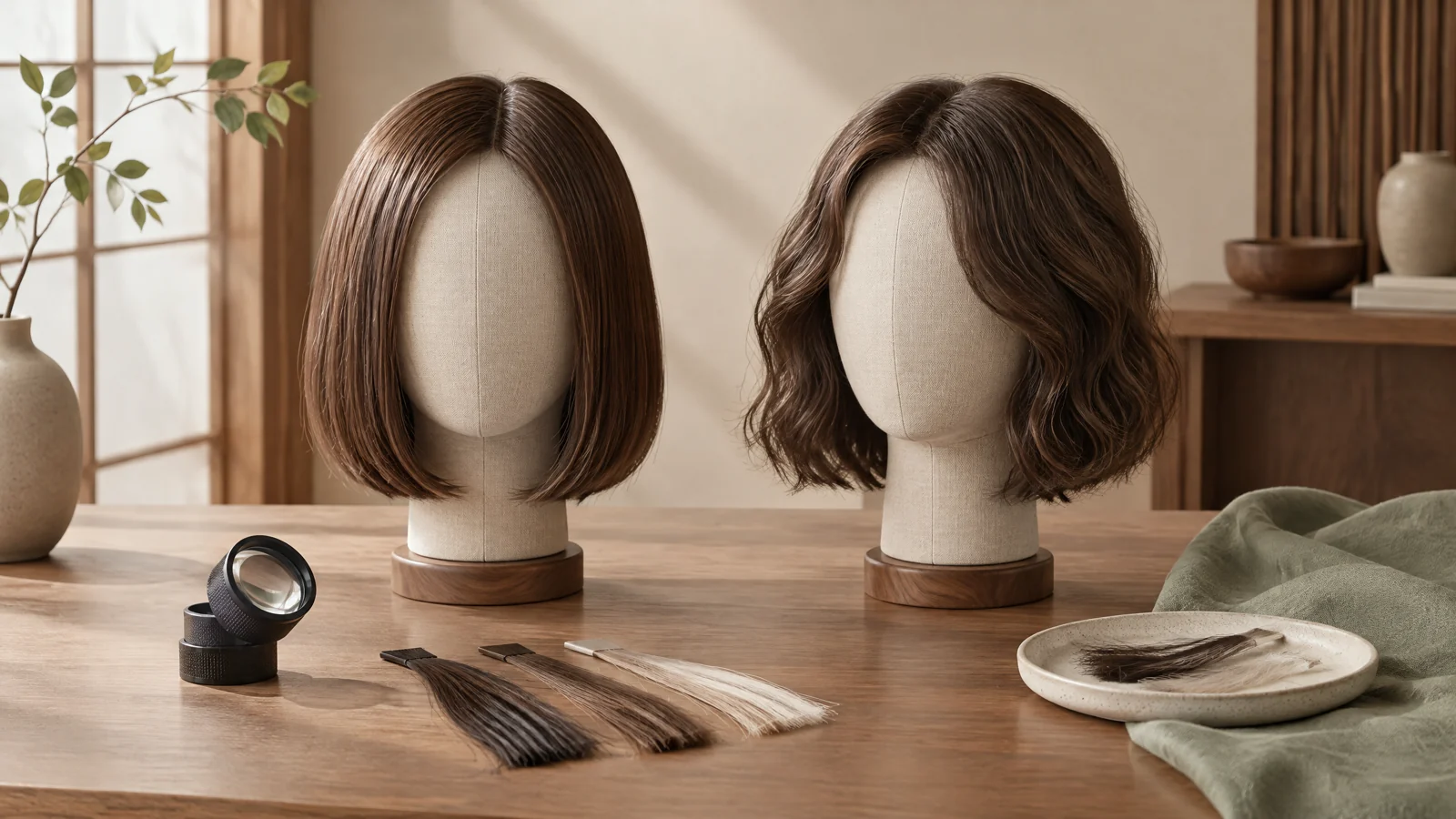
Use the same comparison conditions for both candidates: the same glasses, a representative neckline, your intended underlying-hair arrangement and similar viewing angles. With permission, make front, profile and back records, then note comfort separately from appearance. Photographs help you remember the outline; they cannot demonstrate pressure, secure fit or warmth. A design should not pass merely because you happened to photograph it with a more favourable outfit.
Identify the product by its exact model and requested option when making an enquiry. Ask for cap size, side and nape measurements, fibre, care instructions and the shade information available for that model. Confirm current supply, quotation and what any fitting arrangement includes. A catalogue entry, illustration or message does not establish stock, a completed order or same-day access to samples. Missing specifications should remain questions, not assumptions.
Discuss alterations before agreeing to them. Ask who can assess the actual piece, what changes are permitted, and how a cut or other alteration affects return terms. A shorter side can expose a cap feature that was previously covered, and removing length cannot simply be undone. This guide does not provide instructions for cutting lace, applying adhesive or chemically changing a wig, and does not imply those services are available.
Keep natural-hair salon planning separate from the wig purchase. If you want to discuss the shape of your own hair around a possible exposed nape or temple, describe that limited goal when contacting Canvas Blend. A salon haircut or colour appointment is not evidence that a wig can be fitted, installed or supplied there. Your next step should match the actual unresolved issue, rather than combining different services into an assumed package.
- State your non-negotiable comfort requirement and preferred ear exposure.
- Compare the front, side and back with your everyday glasses and neckline.
- Request exact-item sizing and care guidance rather than relying on the cut name.
- Confirm supply, fitting scope and alteration or return terms before agreeing to proceed.
Choose the silhouette that works during ordinary movements, then confirm the exact product details that photographs cannot supply.
What else should you know?
Is a pixie always easier to wear with glasses than a bob?
No. A pixie may reveal the meeting point between the glasses and cap, but its sides or fringe can still interfere. A bob may work well without tucking. Check pressure, frame position and what happens when you remove and replace your own glasses.
Should a bob finish above my shirt collar?
Only if collar clearance matters to your routine. A perimeter near a collar can be acceptable if you like its behaviour. Compare the actual back length while turning and looking down; a jaw-level front does not establish where the nape ends.
Can I tuck any bob behind my ears to show earrings?
Do not assume so. Ask whether the specific design is intended to be arranged that way and whether the cap edge and your own hair remain covered as you want. Check earlobe visibility separately from exposing the whole ear.
Does choosing a very short wig guarantee a cooler or more comfortable fit?
No. Cap construction, sizing, fibre and your own comfort matter as well as visible length. A cropped photograph cannot establish ventilation or pressure. Persistent irritation should not be accepted as a normal requirement of achieving a particular hairstyle.
Should I buy a longer option and assume it can be cut later?
Not without exact-item advice. Confirm whether an alteration is appropriate, who will assess it and how it affects return terms. Removing length can reveal cap features or change the intended outline, and it cannot be reversed simply by restyling.
What is the practical next step?
Shortlist one bob and one crop by the coverage you want, then compare both against your most frequent accessory and neckline habits. Keep a note of where contact occurs, whether it bothers you and how often it happens. If an essential comfort requirement fails, look for another design rather than using a flattering photograph to justify a poor practical fit.
Send the wig supplier your exact-item questions before making purchasing plans. For a separate conversation about your own hair, use Canvas Blend booking to ask about the intended appointment scope; it does not confirm wig supply, adhesive installation or a combined package. Leave with confirmed facts about the product and service you are actually choosing, not an expectation created by a style category.
From root touch-ups to pre-wedding colour planning, use hair colour price Hong Kong as an initial reference and discuss your current hair condition before confirming the service.
Sources and editorial notes
- [1] American Cancer Society — Wigs for Hair Loss
- [2] Dana-Farber Cancer Institute — How to Choose a Wig
This AI-assisted Canvas Blend guide is not a real-client case study or an article reviewed by Vit So. OWNSTRAND and Canvas Blend share ownership; links are not independent third-party endorsements. Confirm wig, hairpiece and natural-hair services, fees and appointments separately. Materials, stock and handling limits depend on the actual product. Appearance coverage does not replace medical assessment of hair loss or scalp concerns.
Canvas Blend Editorial — AI-assisted guide prepared for Canvas Blend on 2026-11-06. Ownstrand and Canvas Blend share the same owner, so this is not an independent third-party recommendation. No first-hand product testing or customer sample is claimed; all shopping outcomes in the example are explicitly hypothetical. The guide has not been represented as written or reviewed by Vit So. Product specifications, supply, quotation, fitting arrangements and alteration terms require confirmation for the exact item. Canvas Blend natural-hair services are distinct from Ownstrand enquiries; no wig installation, shared package or medical hair-growth benefit is implied.
Continue reading
Wig SelectionWhen do synthetic wigs save money by keeping the factory style?
Compare the cost of a ready-shaped synthetic wig with styling flexibility, cap comfort and care needs, using a clearly hypothetical shopping decision.
Wig SelectionHow do you choose custom vs ready-made wigs without over-specifying?
Decide which wig requirements need making to order, which an existing design can meet, and what to confirm before committing, with a practical comparison and hypothetical example.
Wig SelectionWhat do wig prices in Hong Kong include when comparing custom wigs and toppers?
Compare custom full-wig and topper quotes on separate lines, with coverage, fitting, finishing, natural-hair work and order terms made explicit.