Coverage × Comfort × Personal Choice
Which men's hair system for receding hairline keeps the front shape you want to show?
瀏覽獨立繁體中文指南 →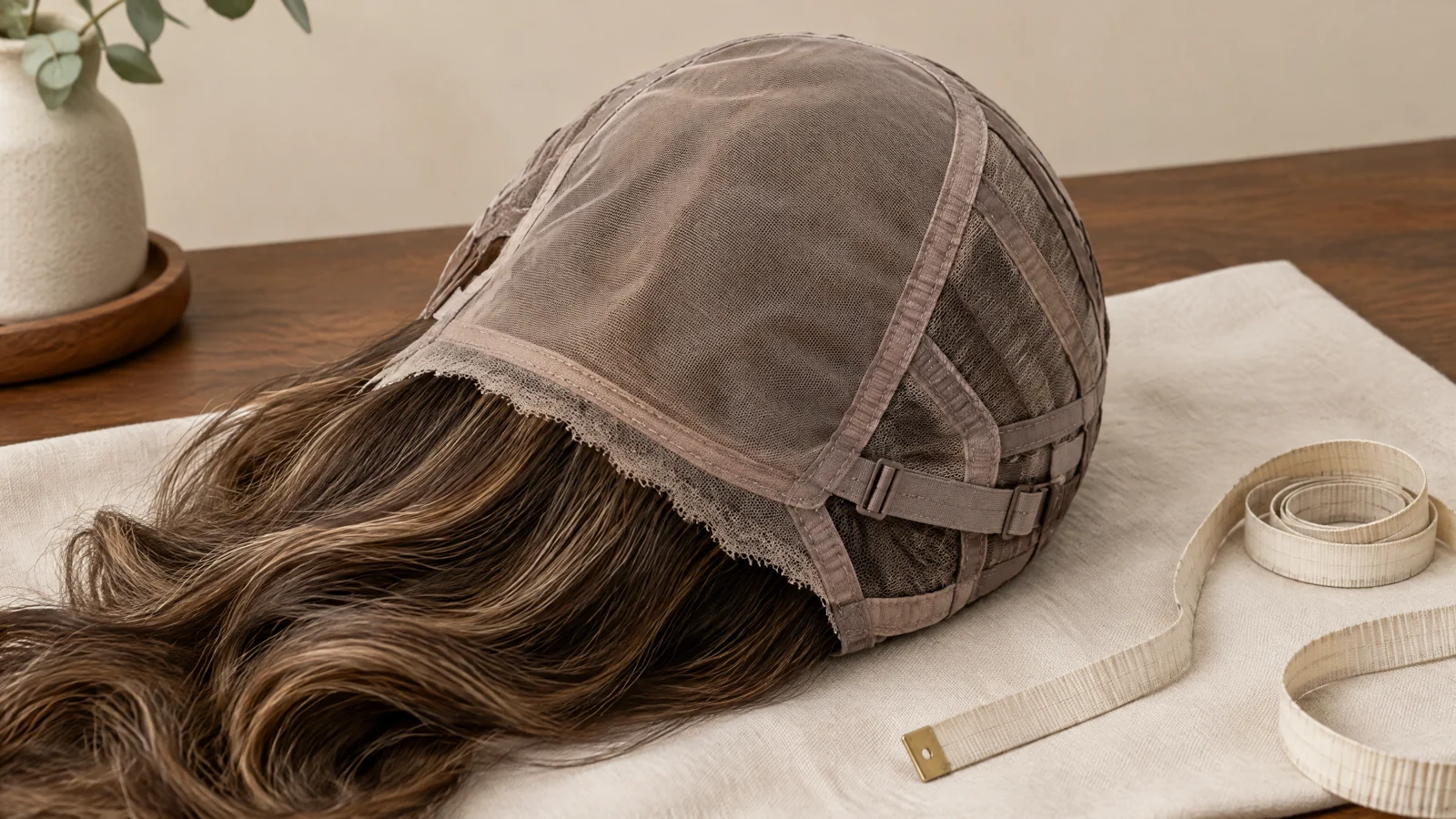
Choose the front outline you want to keep before deciding how much recession to cover. Compare a specific piece's boundary, visible hairline and blend with your existing hair, rather than assuming that a lower or straighter front is the right result.
A receding front does not have to disappear completely for a cosmetic change to feel worthwhile. You might want a little more fullness beside one temple while retaining the higher centre you recognise. Another person may want a new outline across the whole front. Those are different purchase briefs, even when the reference hairstyles look similar and both shoppers use the same search terms.
The useful distinction is between the hairline you want people to see and the footprint of the piece needed to create it. A front can look restrained yet require more coverage behind it than you expected. Conversely, a small-looking piece may not follow the curve of your temples. Keeping these two questions separate prevents a pleasing photograph from becoming an unsupported assumption about fit.
Start with recent, unfiltered views of your own front and sides, with your hair arranged as you normally wear it. Add a short note identifying what should remain unchanged. A record of your existing cut and any colour history, organised using the questions in Canvas Blend's before-and-after preparation guide, can make the surrounding hair easier to describe without requiring a colour service.
From root touch-ups to pre-wedding colour planning, use balayage price Hong Kong as an initial reference and discuss your current hair condition before confirming the service.
01
Which parts of your current front do you actually want to preserve?
Describe the desired outline in three parts: centre, left temple and right temple. You do not need a perfectly mirrored shape. If one side sits farther back and that asymmetry feels familiar, say so. Decide whether you want to keep it, soften it or replace it. This turns a vague request for a natural result into features a seller can discuss individually.
Make two notes for each part: what must stay visible and what you would like covered. For example, keep the central peak but add fullness just behind the right temple. The guide to a men's hair system for receding hairline is a relevant enquiry route, but its category wording cannot establish that a particular footprint preserves that peak.
Avoid treating an old photograph as an instruction to recreate every detail. Your preferred front now may differ from the one you had years ago, and the surrounding hair may have changed. A recent reference shows the starting condition; an older reference can explain the feeling you like. Neither replaces checking how the proposed edge would relate to the hair you have today.
Give the seller a clear priority rather than several competing ideals. You might accept some visible recession if the result retains your familiar forehead shape. Or you might prioritise a fuller temple despite a more noticeable style change. Recording that trade-off beforehand makes it easier to reject a visually impressive sample that achieves the wrong kind of change.
Preserving a familiar outline is a valid objective; maximum coverage is not automatically the best match.
02
How can a restrained-looking front still need a different coverage footprint?
The visible front edge is only one boundary. The base also has sides and a rear edge that must sit somewhere relative to your existing hair. Ask for the actual outline and dimensions of the candidate, then have the seller explain its proposed position. Do not infer a narrow footprint simply because the finished style shows a high or softly receding hairline.
A temple-focused request raises a particular question: does the candidate extend into hair you intended to leave untouched? That does not automatically rule it out, but it changes the decision. Ask what happens to that surrounding hair during wear and whether any preparatory trimming is proposed. An irreversible haircut should not be a surprise discovered after you have selected the piece.
The American Cancer Society notes that full-wig size charts may vary by brand and advises checking the relevant chart before buying. [1] The broader lesson is to verify the exact item. Whole-head circumference is not a substitute for a frontal piece's footprint, and a generic full-wig fitting instruction should not be converted into a fixed placement rule for partial coverage.
If the front is your only concern, ask why a larger candidate is being proposed. It may deserve comparison because of its available shape, but the explanation should address your brief rather than rely on a name. If you also want coverage farther back, state that separately. Expanding the footprint should be a conscious choice, not a quiet consequence of chasing a particular photograph.
| Your intended change | What you hope to preserve | Main trade-off | What to verify |
|---|---|---|---|
| Soften one temple | Central front and the other temple | Less visual change, but a demanding local blend | Whether the actual footprint respects the retained hair |
| Redefine the whole front | Existing sides and hair farther back | More freedom over the outline, with a longer transition to assess | Front position, side edges and rear overlap |
| Compare full-head coverage | A familiar overall silhouette | Less dependence on a partial blend, but more existing hair covered | Full-cap fit, visible front and complete wearing arrangements |

03
How much front exposure will your everyday hairstyle demand?
Evaluate the front in the hairstyle you intend to wear, not only in the one used to present the sample. A brushed-back look leaves the leading edge on view. A loose fringe changes which areas are visible, but it does not eliminate the need for suitable fit. Choose your preferred exposure level first, then ask whether the actual item supports that styling direction.
A slightly higher front with restrained volume can be more consistent with your brief than a low line with a dense wall of hair. Macmillan's general wig guidance suggests matching your existing volume, or choosing slightly less, when you want continuity with your current appearance. [2] This supports comparing volume thoughtfully; it does not establish a universal density percentage for frontal systems.
Look at the transition rather than judging density at the centre alone. Does the piece seem much fuller than the hair at your temples? Does its direction meet the surrounding hair comfortably, or would you have to adopt a part you dislike? Ask what adjustment is possible for the exact candidate before assuming that every awkward transition can be corrected by cutting it.
Use Canvas Blend's hairstyle and tone gallery only to explain the visual direction you like, not as proof of hairpiece results. Describe the specific feature: a softer temple, a less vertical front or a side profile that leaves the forehead open. References are most useful when they clarify one choice instead of supplying an entire look that the candidate may not support.
Before choosing a new tone, the guide to hair colour salon Sheung Wan can help you consider access from Central, natural daylight, and an appointment time that suits your week.
04
What should stay unchanged in the hair surrounding the piece?
Your own hair is part of the finished result when partial coverage leaves it visible. Decide how much side length you want to retain and whether you are willing to change its styling direction. If keeping your current haircut is important, make it an explicit constraint. A candidate that only blends after a substantial cut may be unsuitable even if its front looks convincing.
Browsing a broader hair system category can help you compare the coverage question, but it does not settle what must happen to your own hair. Ask separately about the base, intended wearing method and any preparation. Obtain an item-specific answer about removal and upkeep rather than assuming that a small frontal piece necessarily offers a simple, reversible routine.
Keep natural-hair colour decisions optional. If you plan to retain your current shade, record that before choosing a candidate that would require changing it to blend. Canvas Blend's no-bleach colour options guide can inform a separate discussion if you already want a colour change; it is not a reason to colour healthy surrounding hair merely to rescue the wrong purchase.
If grey is visible at the temples, decide whether it should remain visible in the finished outline. Do not reduce this to one average shade across the head. Canvas Blend's grey-coverage colour page is relevant to your own hair only. Discuss any piece's grey proportion and placement with its supplier; a salon colour plan does not confirm a corresponding hairpiece option.

05
What should a front-boundary review reveal before you commit?
If sample viewing or a fitting discussion can be arranged, review the centre and both temples from the front and each side. Include a normal conversational distance as well as a closer view. Ask to see the intended everyday styling where permitted. A close-up may reveal an edge detail, while the wider view tells you whether the outline still feels proportionate to your face.
Use consistent reference conditions. Changing the camera angle, styling and lighting between two candidates makes a fair comparison difficult. The American Cancer Society recommends natural light when comparing hair with colour swatches. [1] Apply that to a tone comparison if suitable viewing is available, while recognising that matching colour alone cannot confirm a satisfactory front shape or fit.
Ask what comfort assessment is possible for the proposed item and wearing arrangement. Macmillan notes that a wig lining can irritate the scalp, and that adding a liner may also change how the wig moves. [2] No base or accessory should therefore be assumed comfortable for everyone. A visually acceptable boundary is not enough if its confirmed arrangement causes pressure or rubbing.
For an already sensitive scalp, keep cosmetic decisions separate from health advice. Canvas Blend's sensitive-scalp colour guide is background for a natural-hair service discussion, not clearance for a hairpiece or adhesive. Persistent pain, redness, broken skin or concern about the cause of hair loss warrants qualified healthcare advice. A cosmetic piece neither diagnoses recession nor treats it or promises regrowth.
- Name the front shape you want retained before reviewing alternatives.
- Record the candidate's identity and proposed boundary, not just a hairstyle photograph.
- Separate appearance, comfort and wearing-method questions so one favourable answer does not stand in for all three.
- Ask which observations are possible now and which remain unconfirmed.
06
How would a hypothetical buyer choose between a softer temple and a new front?
Consider a hypothetical buyer, Alex, who likes his central peak and left temple but wants more fullness at the right temple. He wears a loose side sweep, wants to keep his side hair and does not want a colour change. This is an invented decision example, not a client account or a tested product outcome. His priority is continuity, not the lowest possible hairline.
Suppose Candidate A appears to retain the peak but looks sparse beside his right side hair. Candidate B presents a fuller, straighter front but would replace more of the outline he likes. Neither wins from a photograph. Alex asks whether A's footprint and volume can be verified for his intended styling, and whether B can preserve the peak rather than simply covering it.
If A meets the boundary brief but requires a short side cut Alex does not want, its smaller footprint has not solved the real problem. If B only offers the stronger front shown, its fullness is not a benefit he values. He can decline both and revise the enquiry instead of accepting a compromise that contradicts the feature he most wanted to preserve.
His decision rule is practical: first confirm that the proposed outline keeps the central shape, then compare the blend and comfortable wearing arrangement. Only candidates meeting those conditions proceed to quotation. If his priority later changes to an entirely new hairstyle, broader coverage becomes worth reconsidering. That is a changed brief, not evidence that his original preference was mistaken.
07
Which unanswered questions should stop an order rather than be left for later?
Pause if you cannot identify the actual piece, its coverage boundary or the changes proposed to your own hair. The same applies if a reference image is being treated as a guaranteed result. For a buyer whose brief involves a broader hairstyle change, men's wigs provide a full-coverage comparison route. That choice still requires checking fit and does not automatically preserve your preferred front.
Ask for the quotation to identify the item and clarify what it includes: any confirmed measurement, fitting, cutting or other arrangement should be stated rather than inferred. Check cancellation, alteration and return conditions before authorising work. The American Cancer Society advises reviewing return policies before purchase. [1] This is a shopping precaution, not a claim that any particular seller accepts returns after customisation.
Confirm the fibre and the exact care instructions, especially if your hairstyle needs heat to achieve the intended front direction. Use heat only where the item's own instructions permit it; there is no universal safe temperature for all pieces. A similar-looking sample does not prove equivalent styling limits. If the required style exceeds the confirmed instructions, reconsider the style or candidate before paying.
A catalogue listing does not establish stock, and an enquiry does not place an order. OWNSTRAND's confirmed physical shop is in Kwun Tong; clarify any viewing and fitting arrangement directly before travelling. Canvas Blend's booking page concerns its own salon enquiry scope, not confirmation that it supplies hairpieces, provides attachment or offers a joint package with OWNSTRAND. Keep the two requests explicit.
What else should you know?
Do I have to hide the whole receding shape?
No. You can make retaining a central peak, one temple or a higher overall front part of your purchase brief. Whether a specific piece can achieve that depends on its outline, dimensions and styling possibilities, which need confirmation.
Does a small-looking frontal piece necessarily leave my existing hair untouched?
No. Its actual base footprint and wearing method may involve hair beyond the visible front. Ask what preparation is proposed and whether any trimming would be required before agreeing to the option.
Should I choose the lowest or straightest hairline available?
Only if that is the change you want. A higher or slightly asymmetrical outline may better preserve your familiar appearance. Compare the candidate in your intended hairstyle rather than using maximum coverage as the sole measure of success.
Can I assume a fringe will hide every front-edge issue?
No. A fringe changes exposure, but it does not correct unsuitable fit or guarantee that an edge remains concealed during everyday wear. Ask whether the specific piece supports your preferred styling and review the boundary where possible.
Must I colour my own hair to match a partial piece?
No. Keeping your existing colour can be a firm constraint. Check suitable options first and treat any natural-hair colour service as a separate, optional decision, not a mandatory step or a way to make an unsuitable purchase work.
Can front coverage stop recession or regrow my hair?
No. It is a cosmetic appearance choice, not treatment. Consult a qualified healthcare professional if you have symptoms or concerns about the cause of hair loss; a pleasing hairline result does not answer a medical question.
What is the practical next step?
Prepare a brief that names the centre and temple features you want to retain, the parts you want covered and any limits on changes to your own hair. Compare only identifiable candidates against that brief. A worthwhile choice should answer your particular boundary question, not persuade you to accept a different front merely because the sample has more hair.
Your next step is to ask which candidate can be assessed, what its footprint and care instructions confirm, and which arrangements remain open. If no option meets your priorities, keep the enquiry open rather than turning uncertainty into an order. A modest change that respects the shape you are comfortable showing can be a better decision than broader coverage you never wanted.
When looking up hair salon Central, check the location details and choose a consultation time that lets you compare tones in natural daylight before or after work.
Sources and editorial notes
- [1] American Cancer Society — Wigs for Hair Loss
- [2] Macmillan Cancer Support — Wigs for cancer treatment
This AI-assisted Canvas Blend guide is not a real-client case study or an article reviewed by Vit So. OWNSTRAND and Canvas Blend share ownership; links are not independent third-party endorsements. Confirm wig, hairpiece and natural-hair services, fees and appointments separately. Materials, stock and handling limits depend on the actual product. Appearance coverage does not replace medical assessment of hair loss or scalp concerns.
Canvas Blend Editorial — AI-assisted guide prepared for Canvas Blend on 2026-11-06. OWNSTRAND and Canvas Blend share the same owner, so this is not an independent third-party recommendation. The article uses supplied page verification and two externally read sources; it does not report hands-on tests or real customer outcomes. Alex is an explicitly hypothetical buyer. Vit So is not claimed to have written or reviewed this guide. Specific product supply, material, fit, attachment and service arrangements require direct confirmation; general guidance does not establish individual suitability.
Continue reading
Wig SelectionHow should you compare wig prices in Hong Kong before confirming an online order?
Separate a wig catalogue enquiry from an accepted order: verify the exact option, quotation, delivery, returns and service scope before committing online.
Wig SelectionWhat evidence should you request before buying human hair wigs?
Build a buying brief that separates human hair and Remy claims from verified specifications, care limits, fit and purchase terms, with a hypothetical comparison.
Wig SelectionWhen do synthetic wigs save money by keeping the factory style?
Compare the cost of a ready-shaped synthetic wig with styling flexibility, cap comfort and care needs, using a clearly hypothetical shopping decision.