Coverage × Comfort × Personal Choice
Which curly wigs fit your preferred shape and daily styling effort?
瀏覽獨立繁體中文指南 →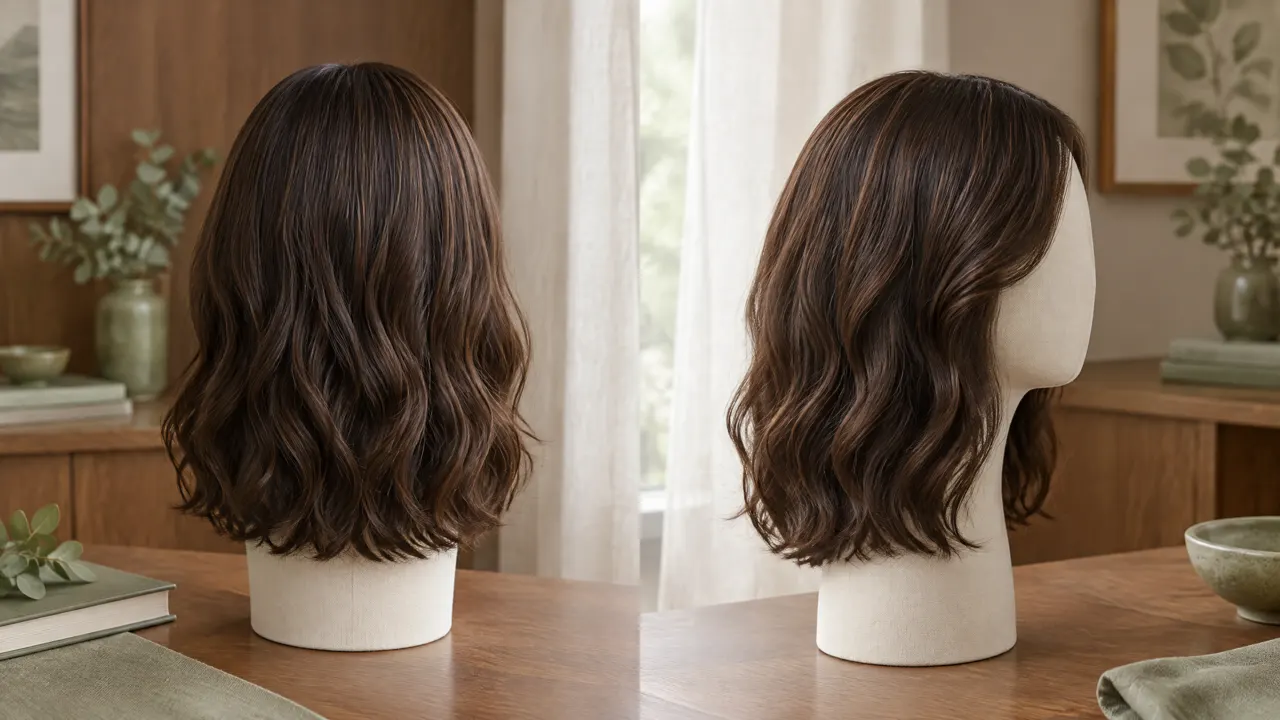
Choose a curly wig by the outline you want to keep and the product-specific work needed to keep it, not by curl names or fibre labels alone. A convincing choice should have a wearable starting shape, confirmed care instructions and enough flexibility for your actual routine without relying on an unverified restyling promise.
A photograph can make two curled styles look equally convenient even when one arrives with its intended pattern and the other has been professionally set for the image. Before choosing, separate the appearance you admire from the appearance you can reasonably maintain. The useful question is not simply whether a wig is curly, but what happens to that particular shape between wears and after the care its maker requires.
Decide which feature matters most: a narrow outline beside the cheeks, visible ringlets, a rounded crown or movement around the shoulders. Then decide what you are willing to do to preserve it. This guide compares those decisions rather than offering a universal curl-care routine. It uses general selection guidance and a manufacturer's curl-specific example, neither of which verifies the performance or supply of an individual catalogue item.
When lightened pieces need a softer-looking refresh between appointments, read about highlights Hong Kong to see how considered placement can work alongside a practical at-home care routine.
01
What should you compare before choosing a curl label?
Begin with a front view and a side view that show the entire outline. Notice where the style is widest and whether the ends turn towards the face, away from it or into a rounded cluster. Tight-looking curls do not necessarily produce a narrow silhouette; a cut can concentrate volume at the temples even when its individual curls are small. Compare placement before deciding that one pattern is more flattering.
Use the curly wigs page to identify a visual direction, then ask about the exact style behind that direction. Descriptions such as deep curl and spiral curl are useful browsing words, not standardized specifications. Neither identifies the fibre, cap, density or styling shown in a photograph. A category illustration is a reference for discussion, not evidence that a matching item is available to inspect.
Look for the difference between definition and fullness. You might enjoy separated ringlets without wanting much width, or prefer a softly expanded outline without sharply defined spirals. Tell the seller which of those results you want to preserve. Saying only that you want more curls may lead to an option with extra volume when your real priority is clearer definition in a relatively close shape.
Canvas Blend's hairstyle and colour gallery can help you describe an outline or the distribution of light and dark tones. It is not a catalogue of supplied wigs or proof of a wig's behaviour. Choose a reference for one feature, such as cheek-level width, and explain that feature in words. This makes the reference useful without requiring a supplier to reproduce an entire unrelated hairstyle.
Compare where curls create volume, not just how tightly they turn.
02
Will this fibre preserve the shape you want or require a reset?
Cancer Research UK distinguishes synthetic, human-hair and mixed-material wigs. It notes that most synthetic options come ready to wear, while some human-hair wigs require styling and setting. [1] For a curly shortlist, that suggests a precise question: is the photographed pattern the intended supplied texture, or a styled result that you will need to recreate? The broad material category cannot answer that question for an individual item.
When browsing synthetic wigs, check the named fibre and supplied texture together. A preferred starting curl can reduce your need to change the silhouette, but it does not eliminate detangling, drying or storage decisions. Conversely, a heat-friendly description adds a potential styling option only where the exact manufacturer's directions permit it. It is not a promise that the wig can become any curl pattern you choose.
Human hair may interest someone who wants to change their look, but flexibility is useful only if the necessary work is acceptable. Ask what shape remains after the item's permitted washing and drying routine, and whether maintaining the pictured curls requires professional help. Do not infer that human hair automatically arrives curly, keeps that curl indefinitely or tolerates every chemical process. Blends need their own composition and care information rather than borrowed rules.
Heat should not be the assumed solution to an unsuitable purchase. Cancer Research UK warns that direct heat can damage synthetic fibres and says to check manufacturer information. [1] This guide gives no universal temperature. If you would buy an option only on the expectation of repeatedly reshaping it, obtain written model-specific guidance first. Otherwise, compare another starting shape instead of accepting an unresolved styling risk.

03
How can you tell whether the fullness will work beyond a photograph?
Check the shape with the head facing forward rather than judging only a tilted pose. A curl hanging away from the cheek in a styled image may sit differently during ordinary movement. Ask whether available pictures show the item in its normal supplied state, and what arranging was done. You need enough information to distinguish the cut's underlying outline from temporary positioning for a photograph.
Density, layering and curl pattern are separate variables. A lower stated density does not guarantee a flat crown, just as longer strands do not guarantee less fullness at the sides. Without a comparable measurement or a viewing opportunity, treat density wording as information to clarify rather than a ranking. Ask where volume sits, whether the part is fixed and how much the wearer is expected to arrange the front.
Visible drop matters here only because it changes where the curls collect. Ask whether the stated length is measured with the curl extended or in its worn shape; do not compare unlike measurement methods. Then identify your practical boundary: ends above the collar, a clear neckline or hair that can fall onto the shoulders. An endpoint you can describe is more actionable than assuming all shoulder-length styles behave alike.
Colour contrast can also change how strongly curl groups appear in a picture. Before treating a highlighted image as evidence of greater definition, compare whether its lighting and shade differ from the alternative. The guide to recording hair-colour changes offers a related reference for keeping visual notes consistent. Use that discipline to document your preferences, not to claim a screen image guarantees the exact wig colour.
To compare a painted gradient with more defined foil placement, start with balayage Hong Kong and consider your everyday styling, colour base, and preferred upkeep before deciding.
04
What level of curl upkeep can you realistically maintain?
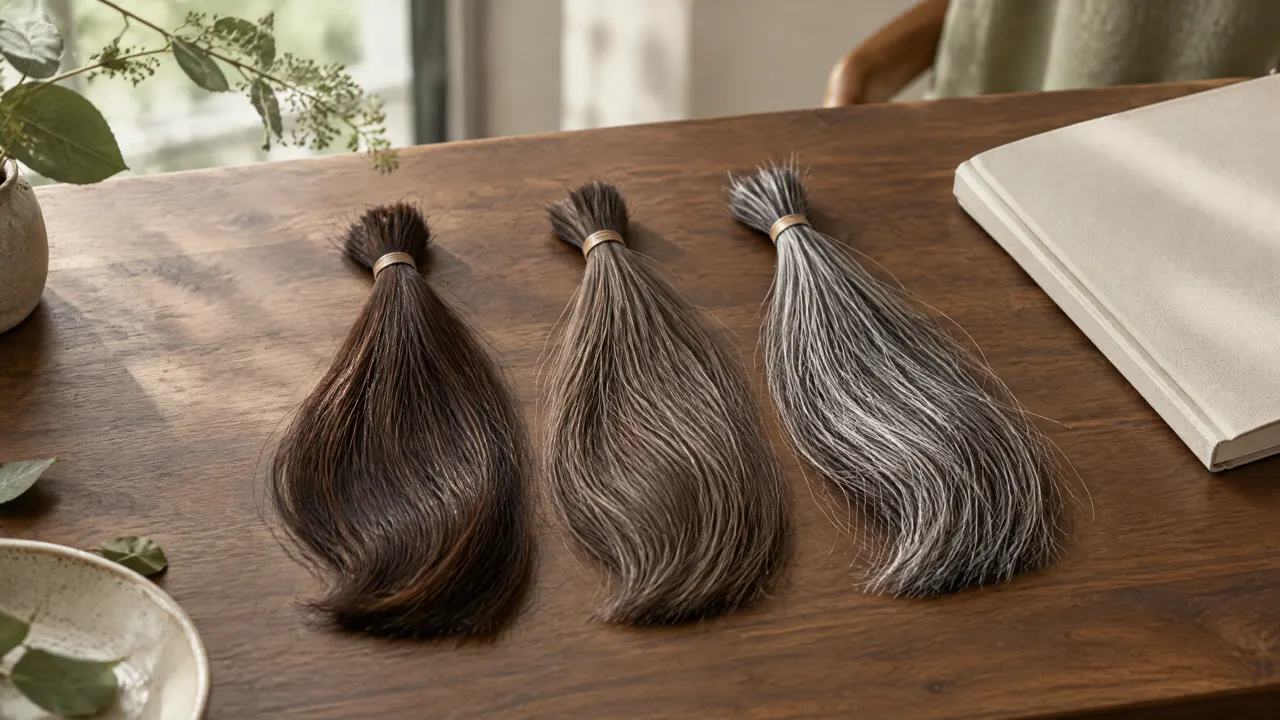
Think about effort at three points: before leaving home, between wears and after washing. A style can be quick to put on yet demand planning when it needs to dry or regain its intended arrangement. Ask the supplier to describe those stages separately for the exact item. A broad answer such as easy care does not reveal whether your preferred finish depends on daily attention or occasional professional styling.
Jon Renau's guidance for its curly synthetic styles recommends a wide-tooth comb rather than a brush to help preserve the pattern, and describes finger definition and air drying within its care routine. [2] The selection lesson is that retaining definition can depend on how the curls are handled. This is a manufacturer-specific example, not permission to apply the same products, sequence or drying expectations to every curly fibre.
Set an honest appearance threshold as well as a time allowance. Are you happy with small changes in curl separation, or do you want each side to look closely matched every morning? A more exacting finish may make a flexible style feel demanding even when its basic care is manageable. Ask what ordinary variation to expect and whether restoring the desired shape is routine maintenance or a separate styling service.
Keep care for your own hair separate from care for the piece. Canvas Blend's post-colour hair-care guide concerns natural hair after colouring; it should not replace a wig's instructions. The fact that you already own a shampoo or styling product does not establish compatibility. Include the required tools, products and storage space in your purchase decision instead of counting them as negligible extras.
- Ask what must be done before an ordinary wear, not only before a photographed finish.
- Confirm the shape expected after the exact item's approved care routine.
- Identify any professional maintenance you would need and request its scope separately.
- Choose a finish you can tolerate on a normal day, not just the most polished reference image.
05
Could the cap and front arrangement make the curls harder to wear?
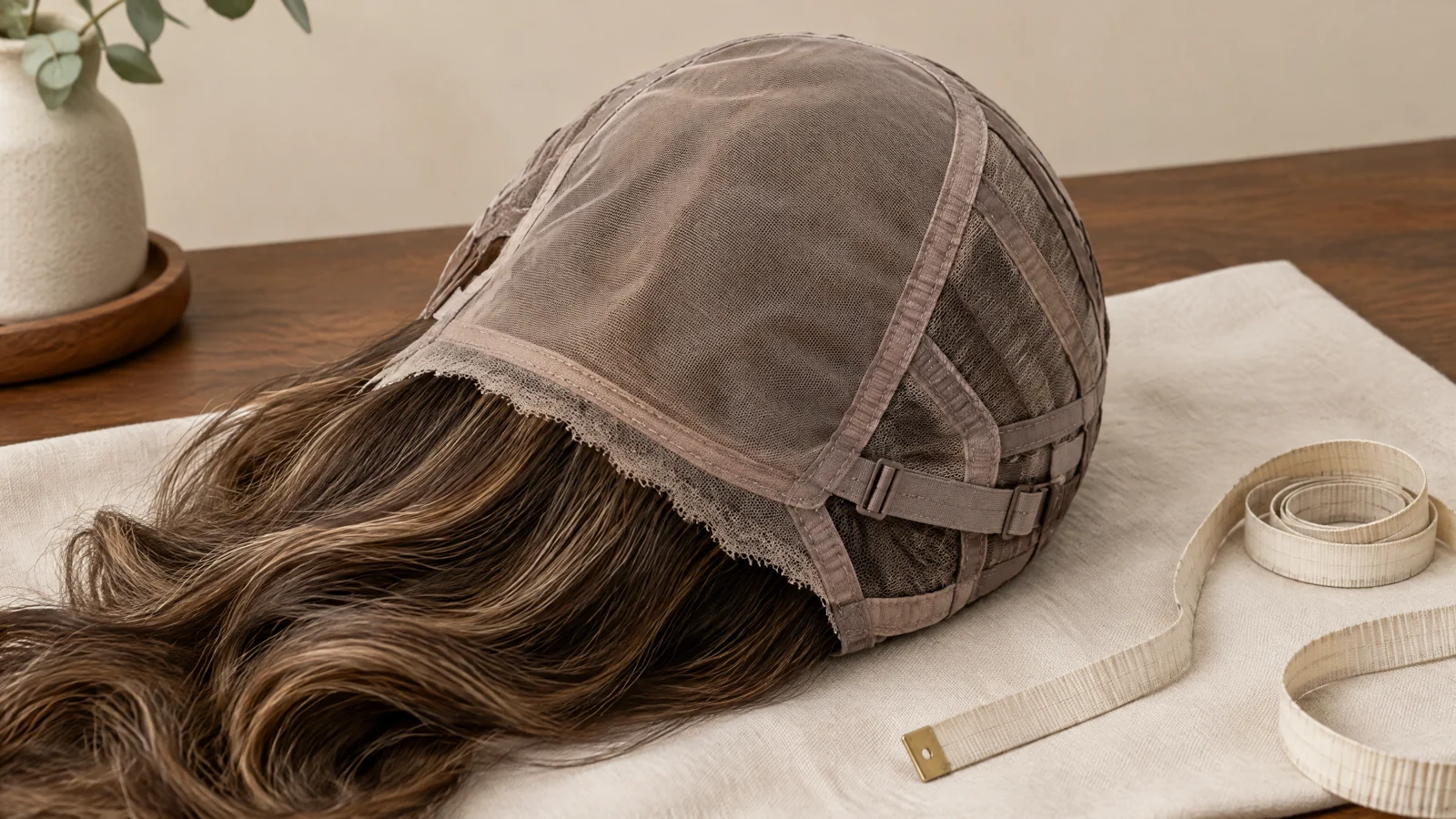
A beautiful pattern can still be inconvenient if you need to keep moving hair away from your eyes or cannot arrange the front as intended. The American Cancer Society treats fibre choice and cap construction as separate selection considerations, and advises checking the brand's sizing information. [3] Compare the parting area, front edge and fit of the actual design rather than expecting curls to compensate for an unsuitable cap.
The women's wigs category is a route for comparing full-head options, not a single fit specification. For a curly design, ask whether its front and part can support your intended arrangement without an unconfirmed alteration. A label describing full coverage says nothing by itself about adjustable range, permitted attachments or the comfort of that cap on your head. Verify those details alongside the style.
If a viewing or try-on can be arranged, assess the ordinary position of the hair around your eyes, ears and neckline before asking for changes. Bring the glasses or clothing collar you normally wear so you can notice repeated contact. Observe the permitted fit adjustment and front arrangement; do not use a trial as an opportunity to experiment with adhesive, cutting or heated tools. Confirm what can be assessed beforehand.
Comfort remains a separate condition of purchase, not something guaranteed by a textured look or premium material. Canvas Blend's sensitive-scalp guide helps distinguish cosmetic planning from health concerns; it cannot certify a wig's medical suitability. Persistent pain, redness, broken skin or concerns about the cause of hair loss need qualified healthcare advice. A wig changes appearance and does not treat those problems or stimulate hair growth.
06
How would a realistic shortlist expose the trade-offs?
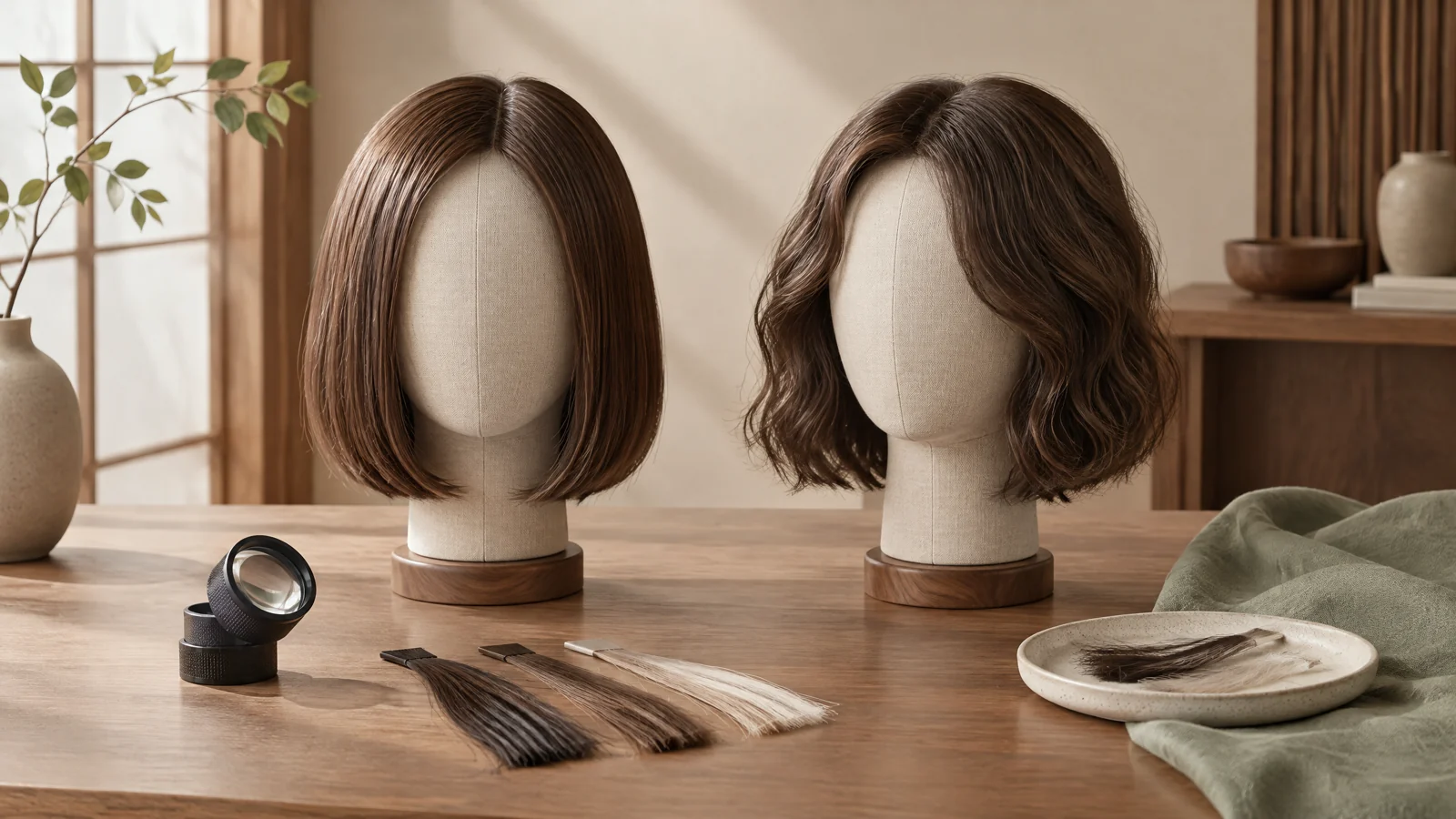
Consider a hypothetical shopper who wants defined curls beside the face, limited width at the cheeks and a repeatable weekday look. Assume they can allow five minutes for arranging before work and one planned care session when needed, but do not want recurring professional curl setting. These are invented preferences, not a customer record or a tested maintenance estimate. The three candidate descriptions below are also fictional, not supply claims.
Candidate A is described as a compact synthetic curly bob with its intended pattern supplied. Candidate B is a shoulder-reaching spiral style labelled heat-friendly, with full care information still outstanding. Candidate C is a human-hair option photographed with loose curls, but it is unclear whether those curls are its supplied texture. The shopper should compare the unresolved information, not simply award points for flexibility or assume that higher expense means less work.
If A's actual outline and instructions meet the shopper's limits, accepting fewer restyling options may be a sensible trade-off. If it is too wide at the cheeks, however, its apparently convenient fibre is not enough to rescue the choice. B remains conditional until the shopper knows what maintaining its pattern involves. C remains conditional until the supplied texture and any setting requirement are established. None earns a recommendation from its material label alone.
Now change one assumption: suppose the shopper enjoys professional styling and wants different curl shapes for events. C or B might become more relevant if their exact specifications support those plans, while A's consistent starting shape could feel restrictive. This is why the same comparison can lead to different purchases. The useful outcome is an option whose confirmed appearance and workload fit the wearer, rather than a universal best fibre.
| Fictional candidate | Potential attraction | What must be confirmed | When to pause |
|---|---|---|---|
| A: compact synthetic curly bob | Preferred starting pattern with a smaller intended outline | Actual cheek-level width, supplied texture and model-specific care | Only attractive if an unsupported cut or reshaping would be needed |
| B: shoulder-reaching heat-friendly spiral style | Visible spirals and a possible permitted restyling option | Named fibre, full heat guidance and pattern-maintenance requirements | Purchase depends on heat techniques or limits not yet documented |
| C: human-hair option photographed in loose curls | Possible styling variety if the maker permits it | Whether curls are supplied or styled, and required setting support | The shopper does not accept the work needed to recreate the image |
A convenient material cannot compensate for the wrong outline; flexibility cannot compensate for work you do not want.
07
What should be settled before you commit to a curly style?
Send a concise enquiry naming the exact design and describing two priorities: your preferred outline and your effort limit. Ask for its supplied texture, fibre, cap and applicable care information, then flag any discrepancy between the images and the description. If the seller cannot yet confirm a decisive feature, leave it open rather than treating the closest category name as an answer. A missing detail is a reason to investigate, not invent.
Request a quotation that separates the piece from any proposed fitting, cutting, styling or maintenance service. Ask about current supply, arrangements for viewing and the return or exchange conditions before payment; the American Cancer Society also advises checking the retailer's return policy. [3] An Ownstrand catalogue listing does not confirm stock, and an enquiry does not place an order. Confirm what is being supplied and what any appointment actually includes.
Avoid planning the purchase around irreversible corrections. Cutting away fullness can change how curl groups fall, and a proposed change needs assessment for that specific piece. Ask an appropriate wig professional whether the desired adjustment is possible and what cannot be reversed. You do not need to cut, dye or perm your natural hair merely to justify a full wig, and this guide does not provide DIY wig-alteration instructions.
If you also want to discuss your own hair's cut or colour, keep that separate from the wig enquiry. Use Canvas Blend's booking page to confirm the scope of a natural-hair appointment rather than assuming it includes wig supply, adhesive installation or a combined package. Sharing ownership does not make the two service offers interchangeable. Resolve the wig's shape and maintenance questions with the relevant supplier before making dependent salon plans.
What else should you know?
Are tighter curls automatically harder to maintain?
No. Curl tightness alone does not establish the workload. Compare the supplied pattern, fibre-specific instructions, cut and the level of definition you expect. An exact finish may take more attention than a relaxed one, but that needs to be assessed for the actual style.
Can I assume a synthetic curly style will return to its photographed shape after washing?
No. Ask whether the image shows the supplied texture and what the maker says to expect after the approved care routine. General ready-to-wear guidance is not a guarantee that every styled photograph can be reproduced without arranging or other maintenance. [1]
Does a heat-friendly label mean I should reshape the curls whenever I wear it?
No. It identifies a possible capability only when confirmed for the exact fibre. Whether restyling is permitted or needed depends on the manufacturer's instructions and the finish you want. Do not use heat while suitability or limits remain unclear.
Should I brush curls to make the silhouette less full?
Do not assume brushing is an appropriate way to reduce volume. Jon Renau's curly synthetic guidance specifically recommends a wide-tooth comb rather than a brush to preserve its curl patterns. [2] Check your own model's instructions and discuss an unsuitable outline before buying instead of relying on unapproved handling.
What if I like the curls but not the front arrangement?
Treat that as a separate design question. Confirm the parting and front construction, fit and permitted arrangement for the item. If your preferred look depends on an alteration, ask a qualified wig professional to assess it before committing; do not assume every cap permits the same changes.
Can a curly wig help treat hair loss or an irritated scalp?
No. This is an appearance and purchasing guide, not a treatment recommendation. Do not persist with painful wear. Seek qualified healthcare advice for persistent redness, broken skin, pain or concerns about why hair is falling out.
What is the practical next step?
Choose two exact styles that already come close to your preferred outline. Write down the shape you want to retain, the daily arranging you accept and any maintenance you do not want. Then obtain the applicable instructions and compare the expected supplied finish. If an option wins only because you imagine changing its fibre behaviour or cap arrangement later, keep searching until those changes are genuinely confirmed or no longer necessary.
A good curly-style purchase leaves fewer important questions unanswered: you know where its volume sits, what texture is supplied and what work maintaining your chosen finish requires. Confirm the exact item, supply and quotation before travel or payment. Keep natural-hair salon plans separate, and accept an option because its documented trade-offs suit you, not because one material, curl name or polished image has been presented as universally better.
Before choosing a new colour, review balayage price Hong Kong alongside your hair length, density, and preferred technique so you can plan the appointment with clarity.
Sources and editorial notes
- [1] Cancer Research UK — Wigs, hats and scarves
- [2] Jon Renau — Caring for Curly Hair
- [3] American Cancer Society — Wigs for Hair Loss
This AI-assisted Canvas Blend guide is not a real-client case study or an article reviewed by Vit So. OWNSTRAND and Canvas Blend share ownership; links are not independent third-party endorsements. Confirm wig, hairpiece and natural-hair services, fees and appointments separately. Materials, stock and handling limits depend on the actual product. Appearance coverage does not replace medical assessment of hair loss or scalp concerns.
Canvas Blend Editorial — AI-assisted guide, prepared for the information available on 6 November 2026. Ownstrand and Canvas Blend share the same owner, so this is not an independent third-party recommendation. The hypothetical shopper and candidate styles are decision examples, not real customer cases or product tests. External guidance was read for the cited selection points; individual fibre performance, specifications, supply, prices and service arrangements require confirmation with the relevant supplier. This article does not claim authorship or review by Vit So, provide medical advice, or imply that Canvas Blend supplies wigs, adhesive installation or a joint package.
Continue reading
Wig SelectionHow do you write a repeatable colour brief for grey wigs?
Turn grey percentages and salt-and-pepper placement into a clear shopping brief: define the base, map visible zones, compare references and rank acceptable compromises.
 Wig Selection
How should you describe coverage before comparing men's wigs?
Compare men's full wigs, toupees and hair systems by the area covered, the natural hair left visible and the product details a seller must confirm.
Wig SelectionHow should you choose a men's hairpiece for work and compare crown-coverage quotes?
Compare crown hairpiece footprints, workday fitting checks and itemised quote conditions before committing, with a hypothetical office-wear decision example.