Coverage × Comfort × Personal Choice
What evidence should you request before buying human hair wigs?
瀏覽獨立繁體中文指南 →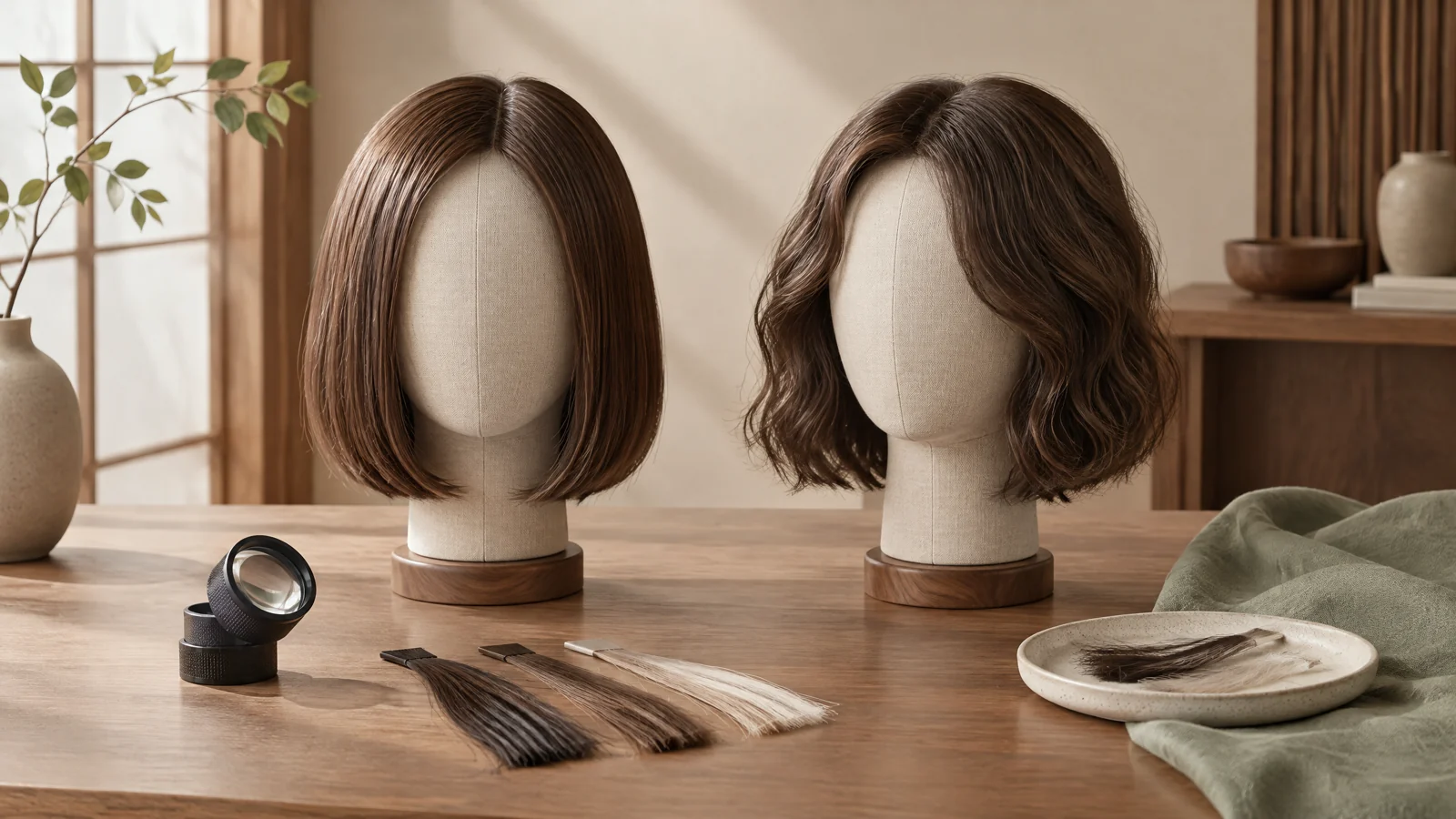
Request an identifiable product specification, a clear explanation of any Remy claim, disclosed processing, item-specific care instructions and written purchase terms. A material label is a starting point, not proof of fit, untreated hair, ethical sourcing or value.
The useful question is not whether a label sounds premium, but whether it gives you a reason to choose one particular piece over another. A buying brief should connect every important claim to the exact model and colour option being discussed. It should also describe your intended use, so a seller can answer a practical question rather than repeat a category description.
Separate appearance references from material evidence at the outset. A photograph can communicate the silhouette or tone you like, but cannot establish cuticle direction or processing history. The Canvas Blend gallery can help you describe a visual preference for your natural hair; it is not evidence of a wig's composition or a promise that Canvas Blend supplies the pictured wig style.
For hair that looks dry, frizzy, or prone to breakage in a photo, read about damaged hair treatment Hong Kong to help frame questions for a colour-care consultation.
01
What does a human-hair label actually establish?
A human-hair description identifies a fibre claim. It does not, by itself, tell you the cap design, how the hair was processed or whether the piece suits your routine. Request the wording used by the manufacturer for the exact model. If the seller says the fibre is entirely human hair, ask whether that statement refers to the hair throughout the piece or only a named component.
Record the manufacturer, model name, product code and selected colour together. These details make a reply useful later, when similarly named styles or different versions appear. A category page is weaker evidence than a model specification because it groups items rather than describes the one you will receive. A photograph with no model identifier is useful inspiration, but a poor basis for a material decision.
The Ownstrand human hair wigs page is a starting point for identifying candidates, not proof that a pictured option is currently available. Copy the relevant product identity into your enquiry and ask for confirmation of its fibre wording and original manufacturer reference. Keep catalogue visibility, confirmed specifications and confirmed supply as three separate entries in your notes.
Use a simple status beside each requirement: supported by a matching document, stated by the seller, or still unknown. A seller's written statement is worth retaining, but is not the same as independent testing. Unknown information need not automatically disqualify a wig. It becomes important when you would otherwise pay extra for that detail or rely on it for a planned styling action.
Identify the exact item before evaluating the strength of its material claim.
02
What evidence would make a Remy claim useful?
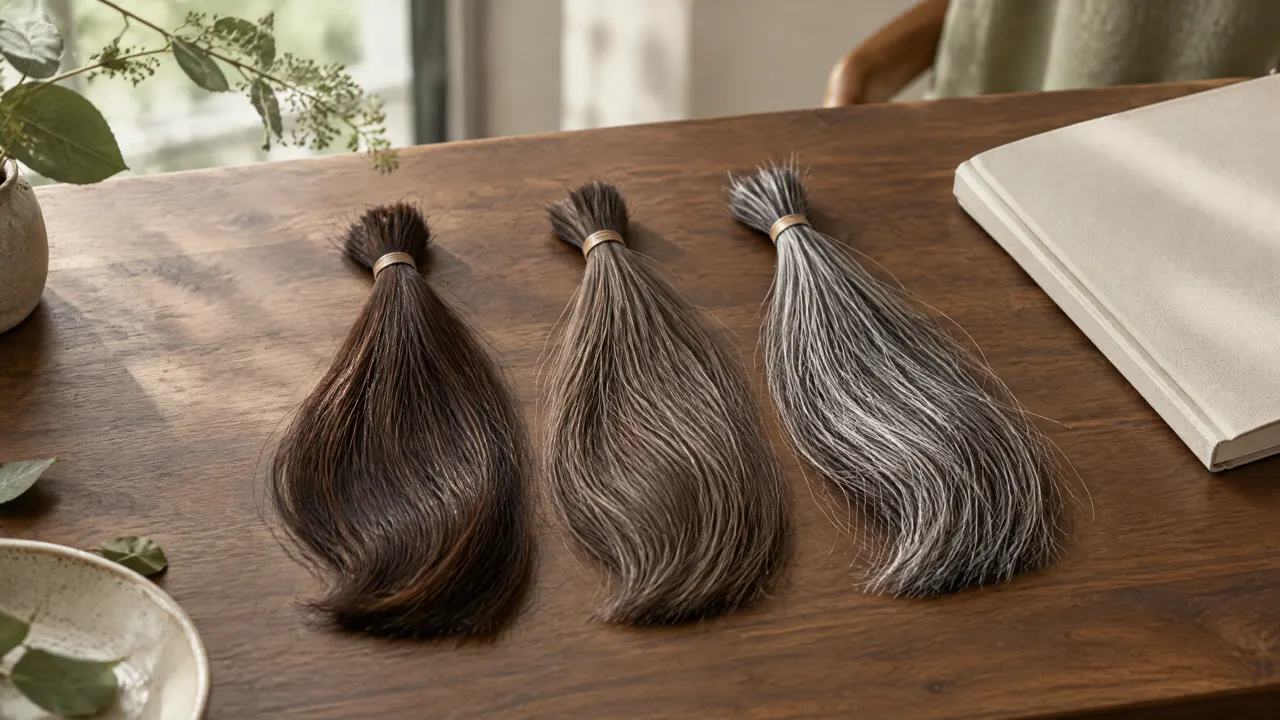
Jon Renau defines Remy hair as hair collected and sorted with root-to-tip direction consistent. Its explanation explicitly allows multiple sources and says Remy and non-Remy terminology does not establish hair quality, origin or length. [1] This manufacturer reference helps explain the term, but it does not verify another brand's production process or certify every product described with the same word.
Ask what Remy means in the maker's specification for your candidate. Does the description explicitly address directional alignment? Is the statement attached to the exact model, or only to a collection? If you receive a general definition, ask whether the manufacturer applies it to this item. The difference matters because understanding a term and establishing that it applies to a purchase are separate tasks.
When exploring Remy human hair wigs, use the label to request a more precise specification rather than presume a guaranteed upgrade. A useful reply names the model, identifies the supporting manufacturer description and leaves undisclosed details marked unknown. It should not replace those details with phrases such as luxury grade, salon quality or superior hair without explaining what they mean.
Neither a high price nor a smooth sample establishes single-donor sourcing, untreated hair or a country of collection. Those are additional claims requiring their own support. If ethical sourcing is a purchase condition, ask what traceability documentation exists and whose activities it covers. A statement about where a wig was assembled does not necessarily answer where its hair originated or how consent was recorded.
A Remy definition supports interpretation; a matching product record supports the individual purchase.
03
Which processing and care details belong in the brief?
Keep three questions distinct: what handling supports the Remy description, what processing is disclosed, and what you may do to the finished wig. Jon Renau describes partial cuticle removal in its explanation of non-Remy processing. [1] Do not turn that explanation into a finding about an unidentified item. Equally, the absence of a processing statement is not positive evidence that hair is virgin or chemically untouched.
Ask whether bleaching, colouring or texture alteration is disclosed for the selected option, and whether the maker distinguishes care between colours or versions. The seller may not have a complete manufacturing history. A candid answer identifying that limit is more useful than an unsupported promise. If unprocessed hair is essential to you, leave the purchase unresolved until that requirement has specific documentary support.
Request the care sheet before paying, not after the first wash. It should explain permitted products, washing, detangling, drying and storage for that item. Ask separately about any intended heated styling or chemical work. Human hair and Remy do not grant unrestricted permission, and no universal safe temperature follows from either label. General guidance from the American Cancer Society likewise cautions against heated tools without heat resistance. [2]
Keep natural-hair records in a different part of your brief. The hair-colour before-and-after guide can help organise comparable photographs of your own hair, while the post-colour care guide concerns its separate routine. Neither substitutes for a wig manufacturer's instructions. You do not need to dye your natural hair, or alter a wig, merely to make a material comparison meaningful.
Before choosing a new colour, review balayage price Hong Kong alongside your hair length, density, and preferred technique so you can plan the appointment with clarity.
- Ask for the care document that matches the model and fibre version.
- Write down any intended styling action and obtain a specific answer about permission.
- Keep undisclosed processing marked unknown rather than interpreting silence as virgin status.
04
How should fit and inspection qualify a material preference?
Material documentation cannot answer whether a cap sits comfortably on your head. Add your measurements and ask which manufacturer sizing chart applies. The American Cancer Society notes that sizing can vary between brands and advises checking the relevant chart. [2] An average-size label from a previous purchase therefore should not become a guarantee that another model will fit in the same way.
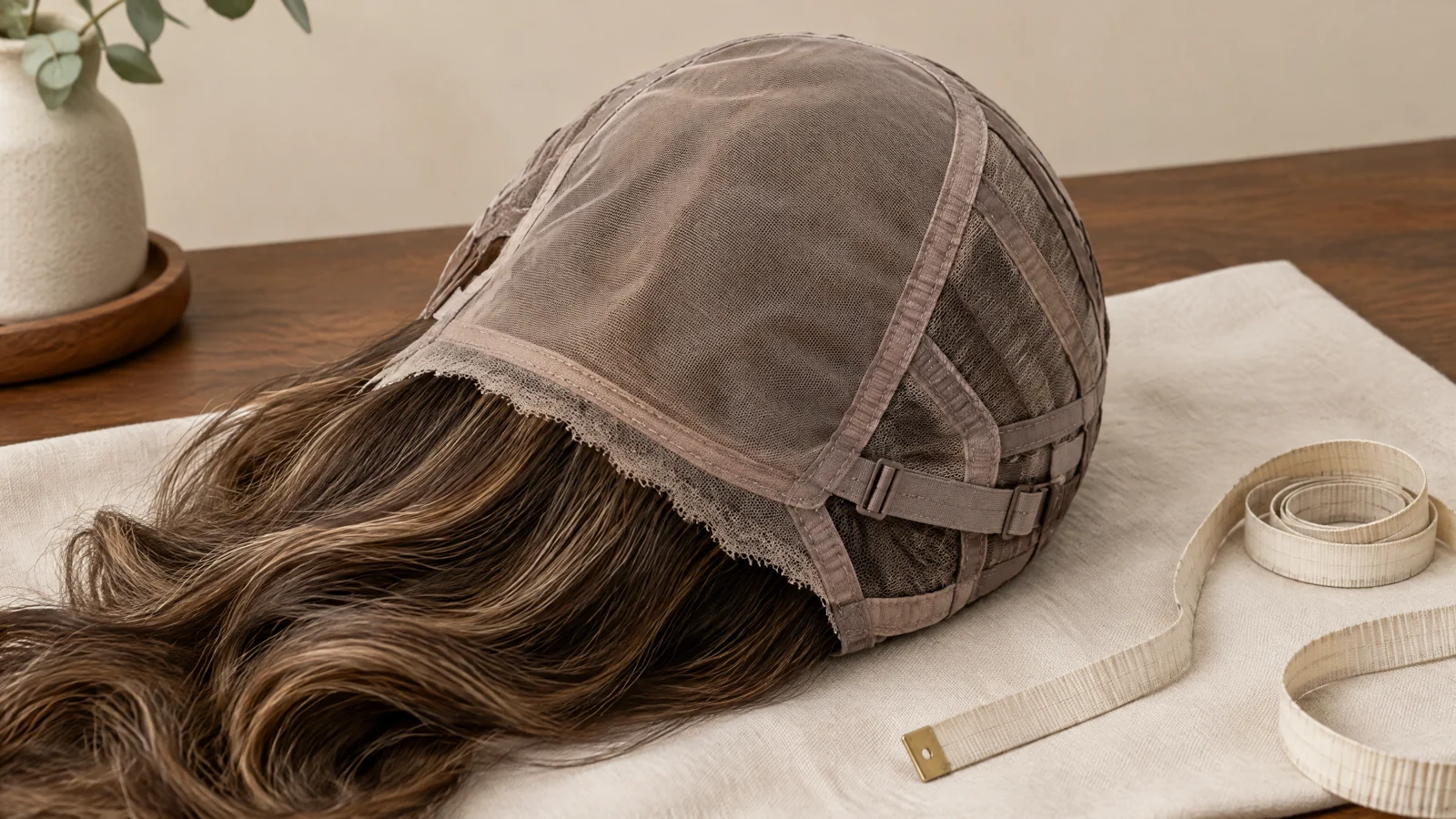
List the construction separately from fibre: the specified front, top, remaining cap and adjustment method. Ask where the parting can be positioned in that particular design. A Remy statement says nothing about these areas. Comparing the cap diagrams may reveal that a less strongly marketed material option answers your wearing needs better, especially when your preferred part or attachment arrangement is non-negotiable.
If viewing or trying a sample is possible, agree what you will inspect before making changes. Assess cap contact, ear and nape placement, visibility at your intended part and whether the silhouette feels excessive for your preference. Ask whether the sample has been styled or otherwise altered. Touch and movement help you evaluate a sample's present appearance; they do not authenticate cuticle direction or predict its lifetime.
Comfort has a medical boundary as well as a shopping dimension. The sensitive-scalp guide can help you frame concerns about your natural scalp, not certify a wig as hypoallergenic. Seek healthcare advice for persistent pain, redness, broken skin or concerns about the cause of hair loss. A material label cannot diagnose those symptoms, and a wig does not treat them or stimulate regrowth.

05
How can you compare alternatives without paying for a word?
Start with two or three actual candidates rather than a broad ranking of fibre categories. Hold your preferred coverage and silhouette reasonably constant, then compare the features that differ. Otherwise, a higher quotation could reflect construction, length or included work rather than Remy handling. Your comparison should show what you receive for the difference, not simply which candidate carries the most reassuring label.
The American Cancer Society describes human-hair wigs as requiring more maintenance than synthetic ones and says no single type or style is better for everyone. [2] That general trade-off matters, but it does not establish the workload of your shortlisted model. Ask what must happen after washing and whether maintaining your preferred shape requires tools or assistance you are willing to arrange.
Use the Ownstrand human hair vs synthetic wigs comparison to widen the shortlist if you mainly want a consistent supplied style. Then return to the individual specifications. Some synthetic products have different styling permissions from others, and a blend needs its own fibre description and care instructions. Neither a natural-fibre label nor convenience language removes the need to verify the exact option.
The table below compares evidence situations, not grades of hair. Missing Remy documentation is not proof that a candidate is poor quality, while explicit Remy wording does not resolve missing care instructions. Give each requirement a reason connected to your use. If a feature has no practical value for you, its presence alone is a weak argument for spending more on the purchase.
| Candidate description | What the evidence supports | What remains unresolved | Buying implication |
|---|---|---|---|
| Human hair; no Remy statement | The stated fibre for the identified model | Alignment, processing and sourcing unless separately disclosed | Keep it in contention if fit and care meet your needs; do not invent missing claims. |
| Remy stated in a matching manufacturer specification | The maker applies its Remy description to that model | Virgin status, donor details, fit and long-term performance | Consider the premium only alongside the cap, care and terms. |
| Premium Remy wording only in an unlinked seller image | The seller is making a claim | Product identity and the documentary basis of the claim | Ask for clarification before relying on the label or paying for it. |
06
What would a realistic hypothetical buying decision look like?
Consider this explicitly hypothetical example, not a customer story or product test. A shopper wants a medium-length full wig for office wear, prefers a side part and does not intend to change its colour. They can manage a planned washing routine but want minimal morning styling. Their budget has room for a material premium, provided it solves a clearly identified need rather than merely adds a desirable label.
Candidate A is described as Remy human hair in a matching manufacturer sheet. It has the desired parting area and a plausible size match, but the shopper has not received its care instructions. Candidate B is described as human hair without a Remy claim; its care sheet and cap specification are available. Candidate C is synthetic, has a supplied shape the shopper likes and documented handling limits. These are invented comparison conditions, not stock statements.
The first decision is to pause A, not reject it or automatically rank it first. Ask for its care sheet and whether its supplied appearance needs restyling after washing. Meanwhile, B remains a valid candidate because the shopper has not made cuticle alignment a purchase requirement. C remains relevant if its confirmed care routine is easier for this shopper and its styling restrictions do not affect their intended use.
Suppose A's instructions later confirm a routine the shopper finds burdensome, while C's cap assessment and supplied style satisfy their priorities. Choosing C would be a reasoned trade-off, not settling for an inferior material. Alternatively, if the shopper wants permitted styling flexibility and accepts A's documented upkeep, A may be worth considering. The outcome changes with the evidence and the shopper's priorities, not with a universal ranking.
The shopper records why each candidate passes, fails or needs clarification. They also separate a preference for darker visible natural hair from the wig's specification; a natural-hair haircut or colour discussion is optional and belongs in a separate service enquiry. This prevents a material decision from expanding into unnecessary salon work or an assumption that one provider will supply and customise every part of the look.
07
What must be confirmed before an enquiry becomes a purchase?
Send a brief that identifies the candidate and selected option, explains your intended use and highlights only the unanswered points that could change your decision. Request current supply confirmation and a written quotation for that specification. A catalogue listing, product count or enquiry reply is not stock confirmation, and a quotation discussion is not itself a completed order. Confirm the ordering steps rather than assuming a message reserves an item.
Ask what the quotation includes and excludes, including any agreed fitting or finishing work. Confirm deposit conditions, cancellation terms and what happens if the supplied item does not match the agreed specification. The American Cancer Society recommends checking return and exchange policies before buying. [2] Its guidance does not establish Hong Kong legal rights or any particular seller's policy; obtain the actual terms for your transaction.
Resolve uncertainty before irreversible alterations, including cutting or other finishing work. Ask whether trying the item, removing tags or authorising changes affects return eligibility, and keep the written answer with the product details. You do not need to conduct a home authenticity experiment. A destructive test may damage the purchase without proving the claim that matters, whereas a matching specification and clear terms answer practical purchase questions.
Keep providers' roles clear when arranging the next step. Use Canvas Blend booking only to ask about the scope of a separate natural-hair appointment, including any haircut discussion; do not assume it includes wig supply, attachment or a joint package. Direct the wig specification and supply enquiry to Ownstrand. Confirm the proposed arrangements independently rather than treating the shared ownership as evidence that both businesses offer identical services.
Move from enquiry to payment only when the exact item, practical limits and transaction terms are clear.
What else should you know?
Does Remy mean virgin or single-donor hair?
No. Remy commonly concerns consistent root-to-tip direction. Untreated status and donor information are separate claims that need their own product-specific support; they should not be inferred from the label.
Can I verify Remy hair by touching a sample?
Touch can help you assess a sample's current feel, but it does not authenticate cuticle direction, sourcing or processing. Request a matching manufacturer description and ask how the seller supports the claim.
Should I exclude a human-hair wig if it does not say Remy?
Not automatically. Compare its documented fibre, construction, fit, care and terms. If Remy handling is an essential purchase condition, ask for evidence; otherwise, assess whether the confirmed features meet your actual needs.
Does a human-hair description allow heat styling or colouring?
Not by itself. Obtain the instructions for the exact item and confirm the intended process before any alteration. Do not transfer a temperature or chemical permission from another wig or from your natural-hair routine.
What should I do when a seller cannot document a claim?
Mark it unknown and decide whether it affects a non-negotiable requirement or the price you are willing to pay. Request clarification where material; do not interpret missing documentation as either proof of authenticity or proof of poor quality.
Does an Ownstrand catalogue entry confirm availability?
No. Confirm the exact model, colour, size, current supply and quotation directly. An enquiry is not an order, and catalogue visibility does not guarantee stock or a same-day viewing arrangement.
What is the practical next step?
Build your final brief around the purchase you can identify, not the strongest advertising word. Attach the model and option details, keep material statements separate from construction, and record the source of each important answer. Your decisive questions are whether the supported specification meets your needs, whether you can follow its care requirements and whether the written purchase terms are acceptable.
Choose one next action for each unresolved candidate: request a missing document, clarify a claimed feature, arrange an agreed assessment or remove it from consideration because it conflicts with your routine. Do not pay a material premium merely to fill an information gap. A confident buying decision can include honest unknowns, provided none is being used as a substitute for a requirement that truly matters to you.
After browsing PMQ or Hollywood Road, readers can use the local overview of hair colour salon Sheung Wan to coordinate a colour consultation with shopping, work, or weekend plans.
Sources and editorial notes
This AI-assisted Canvas Blend guide is not a real-client case study or an article reviewed by Vit So. OWNSTRAND and Canvas Blend share ownership; links are not independent third-party endorsements. Confirm wig, hairpiece and natural-hair services, fees and appointments separately. Materials, stock and handling limits depend on the actual product. Appearance coverage does not replace medical assessment of hair loss or scalp concerns.
Canvas Blend Editorial — AI-assisted guide, prepared with AI assistance for the Canvas Blend editorial guide series on 6 November 2026. Ownstrand and Canvas Blend have the same owner; this is not an independent third-party recommendation. Vit So is not claimed as the writer or reviewer. External sources were read for the specific supporting points cited, but we did not test products, authenticate materials, verify current stock or use real customer examples. The comparison scenario is explicitly hypothetical. Wig supply, attachment and finishing services must be confirmed with the relevant provider; Canvas Blend natural-hair services are not a promised wig service or joint package.
Continue reading
Wig SelectionWhen do synthetic wigs save money by keeping the factory style?
Compare the cost of a ready-shaped synthetic wig with styling flexibility, cap comfort and care needs, using a clearly hypothetical shopping decision.
Wig SelectionHow do you choose custom vs ready-made wigs without over-specifying?
Decide which wig requirements need making to order, which an existing design can meet, and what to confirm before committing, with a practical comparison and hypothetical example.
Wig SelectionWhat do wig prices in Hong Kong include when comparing custom wigs and toppers?
Compare custom full-wig and topper quotes on separate lines, with coverage, fitting, finishing, natural-hair work and order terms made explicit.