Coverage × Comfort × Personal Choice
How do you choose a wig for hot humid weather around your Hong Kong day?
瀏覽獨立繁體中文指南 →
Choose a wig by comparing its exact fit, coverage and care needs with the warmest and least flexible parts of your actual day. Prioritise comfortable stability and a routine you can maintain rather than expecting a fibre or cap label to guarantee coolness.
A Hong Kong workday can include a warm walk to transport, a cool office, another outdoor journey and dinner before returning home. The wig that seems comfortable while seated indoors may not answer the concern that matters on that walk. Start with where you will wear it, when you can take a break and which appearance details you genuinely want to preserve.
This is a buying comparison, not a claim that one construction suits everyone in humid weather. Separate three questions: what touches your head, how the hair sits around your face and neck, and what you must do after wearing. A worthwhile purchase should make sense across those questions, including the inconvenience you are willing to accept for a preferred look.
When looking up hair colour salon Central, check the location details and choose a consultation time that lets you compare tones in natural daylight before or after work.
01
Which part of your day should drive the comparison?
Write down a representative day before browsing. Include walking outdoors, waiting under cover, sitting in air-conditioning and any time you cannot easily adjust the wig. Use your own durations rather than a generic all-day label. The longest wearing period and the warmest exposure may be different; both belong in the decision, but they should not receive identical weight.
The Hong Kong Observatory explains that heat stress depends on humidity, airflow and solar radiation as well as temperature. Its heat index considers those factors together. A shaded, breezy journey and a sunny wait with little wind therefore deserve separate attention, even when the reported air temperature is similar. This supports planning by setting; it does not establish any wig's cooling performance. [1]
Use the wig for hot humid weather guide as a prompt for specific questions about weight, fit and cap coverage. Then turn your itinerary into priorities: perhaps less hair touching the nape during a walk, or a cap that remains comfortable through desk work. Ask how the named style addresses those priorities rather than whether it is simply a summer wig.
Identify the part of the day you cannot change. If an outdoor journey is unavoidable but a private indoor break is available, convenient removal may matter. If there is no private place to remove the wig, comfortable continuous wear becomes more important. Neither preference is wrong; the useful comparison is the one that reflects your actual access to breaks, not an imagined ideal routine.
02
What should cap construction tell you about a warm journey?
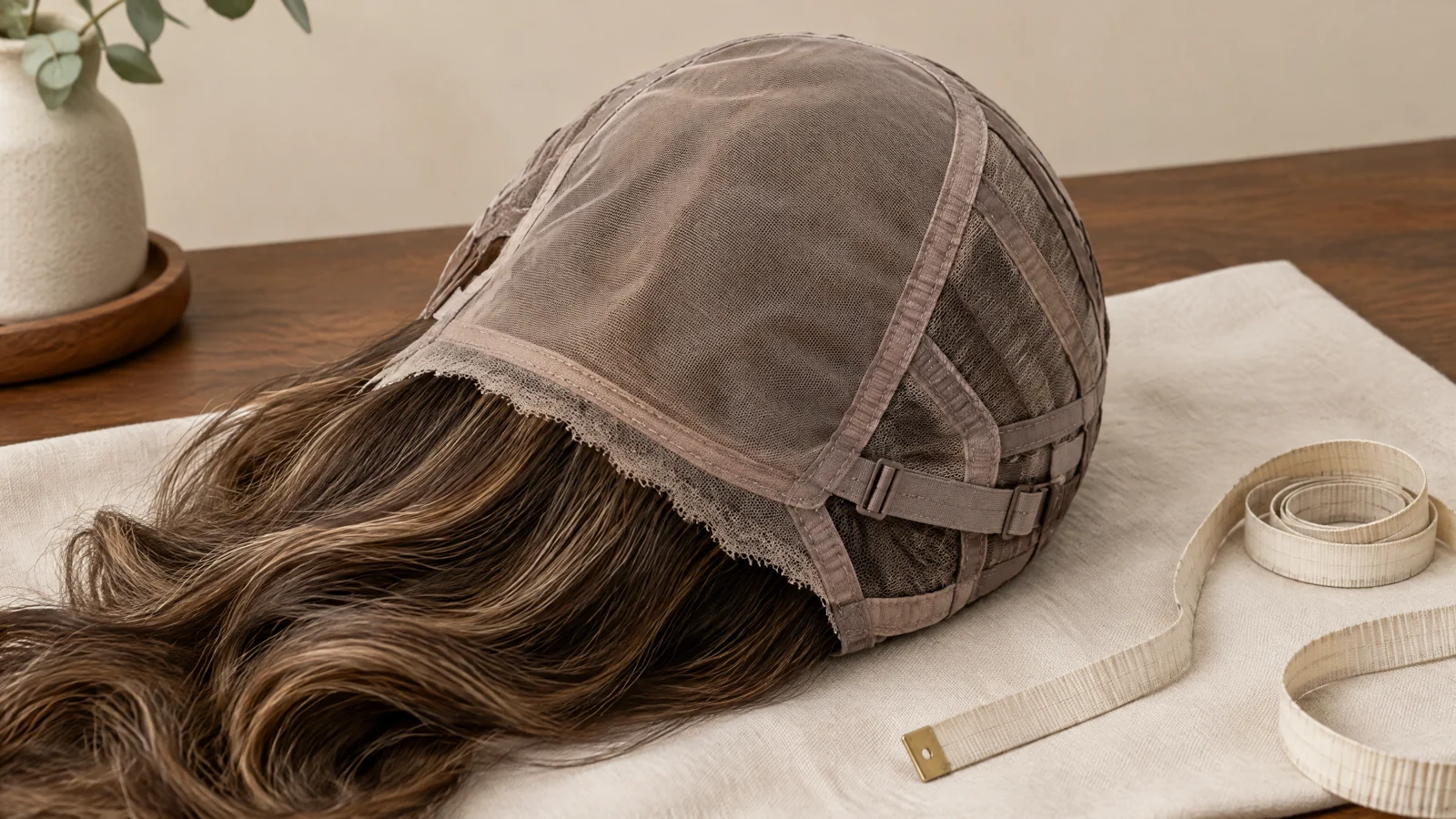
Inspect the underside, or request a clear description, with attention to the front, top, sides and back. Find out where material is continuous and where spaces are visible between hair-bearing strips. Construction helps explain coverage, but it is not a temperature rating. Record the exact model's details so you can distinguish an observable feature from a broad sales adjective.
When considering a hand tied wig, ask which areas have individually knotted hair and how the remaining areas are made. Hand attachment and cap openness answer different questions. A hand-tied top does not describe the back, and additional work by hand does not automatically establish less warmth. Pay for a feature because its placement helps your intended look or fit, not because its name sounds cooler.
Try to keep other features similar when comparing two caps. A very full, long style against a sparse, short one will not isolate the difference in construction. Where a close comparison is unavailable, note what changed together: cap coverage, amount of hair and nape contact. You can still choose between the complete styles, but should not attribute every difference in feel to the base.
Treat fibre as a care decision alongside that construction check. The American Cancer Society describes synthetic wigs as generally requiring less maintenance than human-hair wigs. That can matter when your evening is already crowded, but it does not prove that synthetic feels cooler. Ask about the chosen model's styling and cleaning requirements, rather than carrying a general material comparison into a guaranteed comfort claim. [2]
Compare the entire style on your head; do not turn an attachment method into a cooling score.
03
Would adhesive-free wear help your breaks without compromising fit?
The practical attraction of a glueless wig may be a removable wearing method, especially if you have a private place to pause. Confirm that the exact design is intended for use without adhesive and ask what holds it in position. Do not assume every style includes straps, combs or the same adjustment range, or that adhesive-free means movement-free.
Describe ordinary movements that matter to you: looking down at a phone, turning toward someone and putting glasses back on. With permission during a fitting, assess those gently rather than tugging the hair or trying an improvised stress test. Notice whether stability requires uncomfortable tightening. A fit that feels acceptable only when pulled very tight is a reason to reconsider, not a successful solution.
Think through removal as well as wearing. Can you handle the cap according to its instructions, keep it supported while off your head and refit it without rushing? A break is useful only if your setting permits it and the routine feels manageable. Having no adhesive does not establish that a particular wig can be removed and refitted conveniently in every workplace or public setting.
If pressure or irritation is a concern, identify the contact point rather than adding another accessory automatically. A liner or grip can change fit and adds material; its effect is individual. Canvas Blend's sensitive-scalp colour guide provides context for separate salon discussions, not a treatment for wig discomfort. Persistent pain, redness, broken skin or concern about hair loss calls for medical advice.
Before a first colour appointment or a refresh, browse hair bleaching Hong Kong for visual inspiration, practical preparation and a clearer sense of what to discuss during your consultation.
04
How much hair around your neck is worth the look you want?
Instead of asking whether short always beats long, identify where the hair actually rests. A chin-length shape may leave the nape clear, or it may still have bulk there; a longer style may sit away from the face but rest on the shoulders. Look at the chosen silhouette from the back as well as the front. Your preferred contact and volume matter more than a length category.
Use the Canvas Blend gallery to describe a neck outline, face-framing shape or amount of volume you like. These are visual references for discussion, not evidence that the same result is available in a wig. Ask the wig provider what changes are possible for the selected piece before relying on a photograph, especially if changing its shape would affect return or fitting arrangements.
Your own hair underneath belongs in the comparison too. Follow the wig maker's preparation guidance and mention its current length and volume when enquiring. A fit assessed with one arrangement of natural hair may feel different with another. Do not cut your own hair simply to rescue an uncertain cap choice; first establish whether that style fits with a realistic, repeatable preparation routine.
Keep a simple record of recent cuts and any changes in the hair that remains visible. The documentation ideas in before-and-after hair appointment tips can help you bring consistent references, without making colour work part of the wig purchase. If exposed hair is not involved, leave matching out of the decision and focus on fit, placement and the look you actually need.
05
What can a fitting reveal, and what can it not prove?
Before arranging a fitting, ask whether the named style or a relevant sample can be viewed and which checks are allowed. Catalogue presence does not confirm stock or a same-day trial. A sample can clarify construction and shape, but differences in size, fibre or density limit what it tells you about the item you may eventually receive. Make those differences explicit in your notes.
The American Cancer Society advises checking the brand's size chart because sizing can vary. Use measurements and instructions for the particular item rather than assuming that an average label has a universal fit. During a permitted trial, pay attention to the hairline, temples and nape, including how the cap sits with your normal glasses. Comfortable fit is a separate question from liking the reflection. [2]
A seated indoor fitting cannot reproduce an entire humid commute. It can expose immediate pressure, unexpected bulk or troublesome contact around the neck; it cannot guarantee how you will feel after prolonged wearing outdoors. Ask about the seller's written return, adjustment and fitting terms before purchase. Do not assume a home wearing trial is permitted, especially once a piece has been worn or altered.
Record observations in ordinary language: nape hair touches collar, pressure at right temple, easy to refit, or construction still unclear. Avoid combining these into a falsely precise cooling score. If two candidates fit similarly, use the unresolved practical question to decide what to ask next. If neither fits comfortably, widen the comparison rather than letting your favourite hairstyle override a clear problem.
- Confirm whether you are assessing the exact model or a different sample.
- Note immediate pressure, hair placement and stability during permitted gentle movement.
- Separate observed comfort from predictions about hours of outdoor wear.
- Obtain written care and purchase terms before agreeing to alterations.
06
How would two plausible options compare on a real schedule?
Consider this explicitly hypothetical example, not a customer account or product test. A buyer expects a twenty-minute outdoor journey, several hours in an air-conditioned office and another walk before dinner. There is no private removal space at work, and little time for styling the next morning. Assume two candidates fit acceptably in a permitted indoor trial and their care instructions are available.
Option A is a shorter synthetic style with less hair resting at the nape and a comparatively straightforward maker-specified routine. Option B is a longer human-hair style with the parting appearance the buyer prefers, but more shoulder contact and a care routine they expect to find more demanding. These are assumed specifications for the example, not descriptions of Ownstrand stock or claims about every material.
For this buyer, A could be the more practical first choice because neck contact and evening effort are higher priorities than parting flexibility. That conclusion does not require claiming A lowers scalp temperature. It follows from two observable preferences and the stated routine. The buyer should still decline A if its cap creates pressure, despite its appealing shape and simpler maintenance.
Now change the assumptions: the outdoor segment is brief, the buyer has time for maintenance and the preferred parting is important for regular photographs. B may become the better compromise if its fit and handling are acceptable. The longer appearance is no longer a disadvantage the buyer considers decisive. A climate label cannot choose between these schedules; their priorities and verified product details can.
If neither candidate offers acceptable continuous wear, the answer is not automatically a more expensive cap. The buyer could compare another density or shape, ask about a different size, or reconsider when a wig is needed. A useful budget buys a combination you will actually use. Avoid spending on unverified cooling language while leaving the known pressure or routine problem unresolved.
| Decision point | Option A: shorter synthetic | Option B: longer human hair | What could change the choice? |
|---|---|---|---|
| Fit | Assumed acceptable during an indoor trial | Assumed acceptable during an indoor trial | Any pressure or instability outweighs the assumed advantage |
| Hair placement | Assumed less nape contact | Assumed more shoulder contact | Your tolerance of contact and desired silhouette |
| Evening routine | Assumed easier for this buyer to maintain | Assumed more demanding for this buyer | Exact instructions and available care time |
| Appearance priority | Buyer accepts its simpler shape | Buyer prefers its parting appearance | Whether that visible detail matters on most wearing days |
| Humidity performance | Not measured or guaranteed | Not measured or guaranteed | Do not infer cooling from fibre, price or cap label |
07
Can you sustain the routine after the hot part of the day?
Before buying, ask how the exact cap and fibre should be handled after wear, washed and dried. Find out what equipment and products are required and whether drying fits your household arrangements. Do not assume every warm journey requires a full wash, or set a universal washing schedule. The relevant routine is the maker's guidance interpreted for your usage, not a promise attached to a summer label.
Do not use a dryer or styling tool merely to speed up the next morning. The American Cancer Society cautions against heat styling unless a wig is heat resistant; the chosen model's instructions must establish what is permitted. There is no single safe temperature to apply across these candidates. If the permitted routine is unrealistic for you, that is a legitimate reason to choose a different style. [2]
Keep natural-hair care separate from wig care. Canvas Blend's post-colour care guide concerns your own coloured hair; it does not authorise those products or methods for a wig. Likewise, salon hair services are not medical treatment for hair loss. Explain your current natural-hair routine only where it affects preparation, exposed hair or a separate salon appointment, rather than treating it as an essential wig add-on.
Prepare a specific enquiry with your itinerary, preferred shape and the model being considered. Ask for confirmed construction, sizing, wearing method, care instructions and purchase terms, then clarify availability and any fitting arrangements. Keep weather precautions separate: the Observatory advises taking appropriate measures against heat and seeking help when unwell. A wig choice cannot substitute for those measures or make prolonged outdoor exposure safe. [1]
What else should you know?
Does a breathable label prove a wig will feel cool on my commute?
No. Ask what the label refers to in the specific cap, then compare fit, coverage and hair placement. An indoor impression or construction name does not establish a measured outdoor cooling benefit.
Is hand attachment the same as an open cap?
No. Hand attachment describes how hair is secured in stated areas; openness concerns coverage and spaces in the base. Request details for the front, top, sides and back rather than assuming one term describes them all.
Will an adhesive-free design stay secure without adjustment?
Not necessarily. Confirm its intended wearing method and supplied fitting features. Assess stability without uncomfortable tightening, and do not add adhesive as an improvised fix for a poor fit.
Should I add a liner whenever I expect to sweat?
Not automatically. It adds material and can change fit. Ask about compatibility with the exact wig and evaluate your own comfort rather than treating an extra layer as a universal cooling solution.
Does choosing synthetic guarantee easier care for me?
Synthetic generally involves less maintenance, but the exact routine still matters. Confirm permitted cleaning, drying and styling before buying. Heat resistance, care time and available equipment cannot be inferred from the fibre name alone.
Can a salon fitting establish whether I can wear the wig outdoors all day?
It can reveal immediate fit and placement concerns, not prove all-day comfort in humid weather. Clarify how representative the sample is and obtain the seller's written trial, return and adjustment terms before relying on a later home assessment.
What is the practical next step?
Choose a shortlist that fits the day you most often live: its unavoidable warm stretch, available breaks and realistic evening routine. Resolve pressure and stability first, then compare visible shape and maintenance. Keep a brief record of what you observed and what remains unconfirmed; that makes the next enquiry more useful than asking for the coolest wig without defining your needs.
For a separate discussion about your existing hair, use Canvas Blend booking and confirm the appointment's scope. This does not book Ownstrand sample viewing, adhesive installation or a joint package. Direct wig-specific availability and fitting questions to the provider, and treat an enquiry as a conversation rather than an order or confirmation that any particular option is supplied.
If your hair feels dry, fragile, or difficult to detangle after lightening, explore damaged hair treatment Hong Kong before planning another colour service or adjusting your home-care routine.
Sources and editorial notes
- [1] Hong Kong Observatory — Beware of Health Effects of Extremely Hot Weather
- [2] American Cancer Society — Wigs for Hair Loss
This AI-assisted Canvas Blend guide is not a real-client case study or an article reviewed by Vit So. OWNSTRAND and Canvas Blend share ownership; links are not independent third-party endorsements. Confirm wig, hairpiece and natural-hair services, fees and appointments separately. Materials, stock and handling limits depend on the actual product. Appearance coverage does not replace medical assessment of hair loss or scalp concerns.
Canvas Blend Editorial — AI-assisted guide, prepared for Canvas Blend on 2026-11-06. Ownstrand and Canvas Blend have the same owner, so this is not an independent third-party recommendation. The workday and two-option example are explicitly hypothetical; no customer experience, physical wear test or measured cooling result is claimed. Vit So is not credited as author or reviewer. Product construction, supply, care and fitting arrangements require confirmation for the exact item; referenced styles do not establish Canvas Blend wig supply, adhesive installation or a joint service package.
Continue reading
 Wig Selection
How should you choose a men's hairpiece for work and compare crown-coverage quotes?
Compare crown hairpiece footprints, workday fitting checks and itemised quote conditions before committing, with a hypothetical office-wear decision example.
Wig SelectionHow can a custom men's hair system enquiry preserve your options?
Plan a custom hair-system enquiry around reversible choices, written permissions and cosmetic limits. Compare wearing commitments before changing your own hair or approving production.
Wig SelectionWhich men's hair system for receding hairline keeps the front shape you want to show?
Choose front-hairline coverage without erasing a familiar outline: compare visible temples, existing hair, density transitions and realistic fitting checks.