Coverage × Comfort × Personal Choice
How should you compare a silk top wig parting under the same lighting?
瀏覽獨立繁體中文指南 →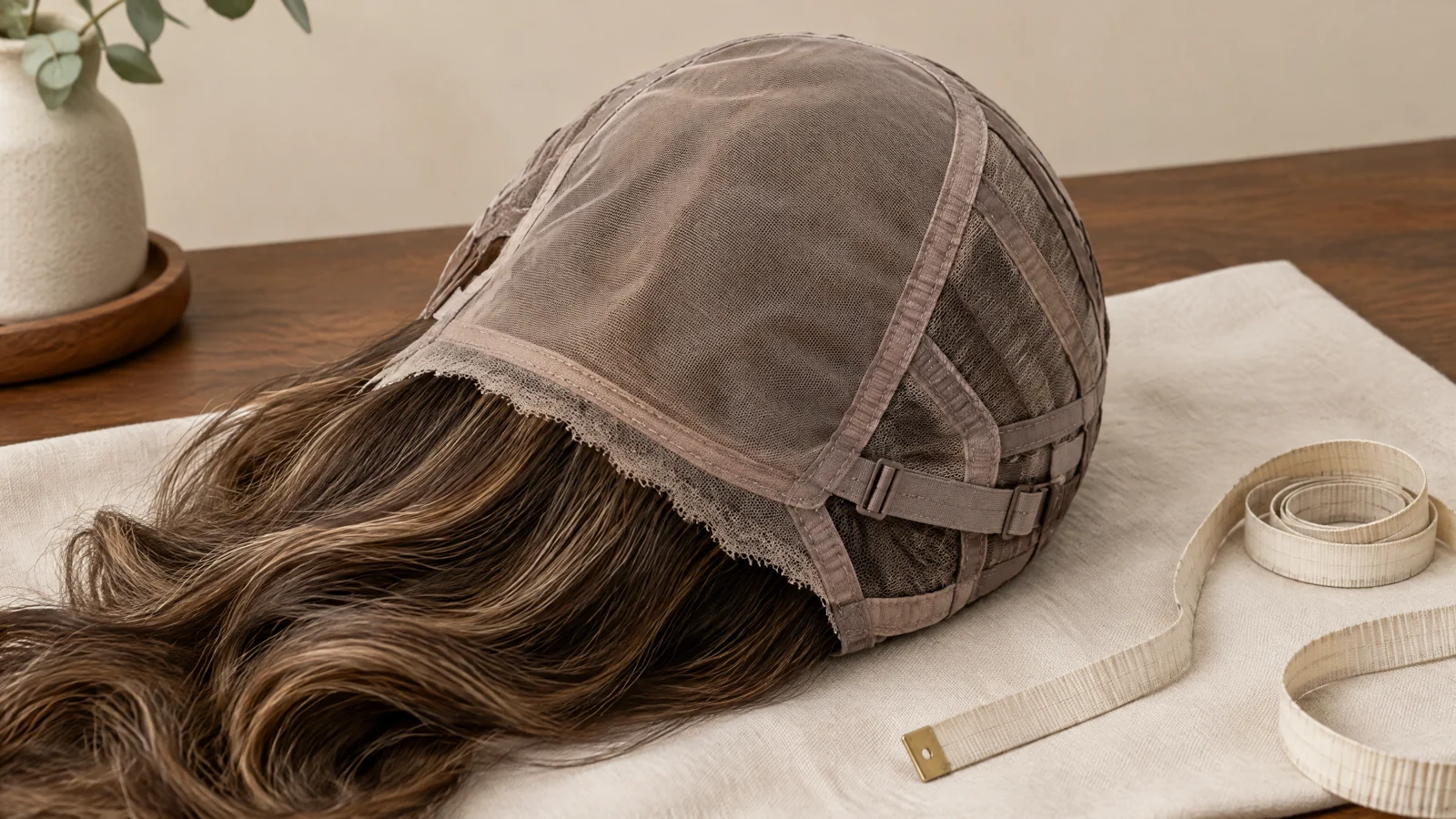
Compare both samples in the same position under the same light, with a similar parting and unchanged camera settings. Choose the parting that works at ordinary viewing distance and in your usual environments, then confirm the exact cap construction, fit and care requirements before buying.
A pale, smooth part in a catalogue photograph can be persuasive, but it is not a controlled comparison. One sample may be photographed beside a window while another sits beneath a warm ceiling lamp. A different camera exposure can also change how clearly the base is visible. Start by making the viewing conditions comparable rather than deciding that the brighter photograph proves a better scalp effect.
The useful shopping question is whether a particular top looks convincing in the part you actually wear. That includes how the visible base relates to your skin, how the roots frame the opening and whether the effect remains comfortable to look at when you move. This guide proposes a repeatable comparison, not a laboratory test or a claim that one construction is universally superior.
From root touch-ups to pre-wedding colour planning, use balayage price Hong Kong as an initial reference and discuss your current hair condition before confirming the service.
01
What are you actually comparing beneath the part?
Separate the visible part from the rest of the hairstyle. The part is the opening between hair sections; its appearance depends on the exposed base, the hairs emerging around it and the shape of that opening. Overall length or an attractive wave can distract from this area. Before comparing samples, decide whether your normal style exposes a narrow line, a wider opening or a shifting side part.
The label silk top wig is a starting point for asking about a top construction, not a complete specification. Request the maker's description of the layers, the area covered and the permitted parting range for the exact model. Do not assume that the whole cap is silk fabric, that every similarly named top uses identical layers or that a category photograph represents the available sample.
Ask to see a cap diagram or the interior if the seller can provide one. Locate the boundary of the relevant top area and check whether your preferred part sits inside it. A style might look suitable with the part used in its display photograph yet offer less useful room for your own placement. Treat unspecified boundaries as a question to resolve, not as permission to part anywhere.
A convincing top does not settle the front hairline, the sides or the securing method. Those remain separate acceptance checks. Conversely, an attractive front does not prove that the crown will show the scalp effect you want. Keeping these zones separate prevents a good result in one area from quietly substituting for evidence about the part itself.
Compare the exact exposed area, not the promise implied by a construction name.
02
How can you make the lighting comparison fair?
Begin with one viewing station. Use the same seat or stand position, the same background and the same observer position for both samples. If daylight is your first condition, choose a place near a window without a sharp patch of direct sun crossing one top. Compare the pieces close together in time; a changing sky can otherwise introduce a difference you mistakenly attribute to construction.
Keep the lighting source and direction unchanged while switching samples. Do not let one piece face the window while the other is turned towards the room. If a lamp supplements daylight, either keep that combination unchanged for both or remove the lamp from the first comparison. Mixed lighting is not forbidden, but an uncontrolled mixture makes it harder to understand what caused the apparent difference.
Nikon explains that an object's colour is affected by the lighting under which it is viewed, while cameras use white balance to compensate for different light sources. Its examples show that automatic and manually selected settings can render the same scene differently. [1] This supports controlling the capture conditions; it does not establish which wig construction has the better appearance.
If your camera app offers exposure and white-balance locks, keep those settings unchanged across the pair. Avoid beauty filters, portrait effects that alter the hair boundary and individual edits that brighten only one photograph. You do not need specialist equipment. If settings cannot be locked, treat the photographs as reminders of the viewing session rather than precise evidence of base colour or brightness.
After the first comparison, move both samples through a second condition relevant to your routine, such as your usual indoor lighting. Repeat the same setup for each. The goal is not to find one flattering lamp and declare a winner; it is to discover whether your preference survives the environments that matter. Record the condition beside each observation instead of combining unlike photographs into one ranking.

03
Which views reveal useful differences without over-inspecting?
Start at an ordinary conversation distance, with the part arranged as you intend to wear it. Look at the whole head before moving closer. Ask whether the exposed line draws attention in a way you dislike, whether the top looks unusually flat or raised, and whether the part works with the surrounding roots. This first view keeps the decision connected to everyday appearance rather than magnification.
Then inspect a closer view for specific questions. You might examine visible attachment points, the edge of a top panel or a sudden change in the base appearance. Close inspection helps explain a concern seen at normal distance, but it should not become an impossible requirement that no construction detail can ever be visible. A phone held directly above the head is not every social interaction.
Use a repeatable front-oblique view and an above-part view for both samples. Keep the camera height, angle and distance similar, and include enough surrounding hair to show context. Before touching the part, make sure its width and position are reasonably comparable. A densely closed part on one piece and a deliberately spread opening on the other test styling differences as much as the top.
Canvas Blend's hair-colour before-and-after record guide is related reading when you want more useful visual records of your natural hair. For this purchase, label your own sample photographs with the model, part position and lighting condition. Separate notes about what you saw in person from impressions created by a screen; do not let an edited photograph overwrite a clear observation.
Finally, return to the mirror after the close-up. A small technical difference may be irrelevant if neither part attracts attention in your intended style. Equally, a visible mismatch that bothers you repeatedly should not be dismissed just because a specification sounds impressive. Your own priorities decide how much that difference matters; the controlled setup simply makes the decision less dependent on presentation tricks.
Before choosing a new tone, the guide to hair colour salon Sheung Wan can help you consider access from Central, natural daylight, and an appointment time that suits your week.
04
How should silk-top and monofilament samples be compared?
Compare two actual pieces rather than assigning a winner to two categories. Jon Renau describes its monofilament construction as a thin transparent mesh at the parting area that allows multidirectional parting and aims to mimic a scalp-like appearance. [2] That explains the maker's construction concept. It does not verify another manufacturer's panel dimensions, colour, fit or the result on your head.
When researching monofilament wigs, check whether the description refers to a defined part, crown section or broader top. The useful question is whether the stated area includes your preferred opening. Monofilament and silk-top terminology should not be treated as interchangeable, and neither label alone confirms how the remaining cap is built or whether the sample permits your desired styling.
For each piece, note what the base looks like against the intended wearing background. If the seller recommends a liner, assess the combination you would actually use, provided a suitable trial is available. Do not compare a lined sample with an unlined one and attribute the entire difference to the top. Record the liner separately, including any effect on fit, rather than treating it as invisible equipment.
The table below is a comparison worksheet, not a performance ranking. A visible difference can arise from the base, root styling, lighting or an accessory. Keeping those observations separate helps you ask a precise follow-up question. If a seller cannot confirm an important construction detail, you can still evaluate appearance, but should not convert that impression into an unsupported claim about materials or layers.
| Check | Record for each sample | Why it changes the decision |
|---|---|---|
| Top specification | Exact model, stated panel type and boundaries | Names alone do not confirm identical coverage or layers |
| Part position | Preferred opening and whether it stays within the stated panel | A display part may not represent your normal style |
| Visible base | Appearance in the same light with the intended liner, if any | Different backgrounds can change the apparent scalp effect |
| Root arrangement | Similar opening width and surrounding root volume | A tightly closed part can conceal differences |
| Everyday view | Mirror observation at ordinary distance | Close-up detail may not determine daily satisfaction |
| Second environment | Repeat observations under your usual indoor light | One flattering setup is not the entire wearing routine |
| Fit and care | Pressure points, movement and model-specific instructions | Visual preference cannot compensate for an unsuitable fit |
05
Can fibre and root styling distort the result?
Yes: differences in the surrounding hair can alter how noticeable the opening becomes. A darker root against a pale base creates a different visual relationship from a lighter root against the same base. The arrangement of hairs can also expose or conceal attachment detail. Compare similar colour families and styling where possible; when they differ, write that limitation down instead of pretending you isolated construction alone.
Browsing human hair wigs answers a fibre-category question, not the entire top-construction question. Human hair does not automatically mean silk top, a particular root density or permission for every styling process. The American Cancer Society notes that human-hair wigs generally require more maintenance than synthetic options. [3] Weigh that routine separately from whether you prefer the appearance of the part today.
Ask the seller to demonstrate only styling permitted for the item; do not cut a base, bleach a part or apply heat to make the comparison more flattering. There is no universal safe heat setting for every piece. If a sample has been professionally restyled, ask whether that appearance requires ongoing work and whether the same finish is included in what you are considering buying.
Canvas Blend's gallery can help you describe a preferred overall hair mood, but its salon images are not evidence of a wig's cap or scalp effect. If your own hair will remain visible, no-bleach colour options offer separate reading about natural-hair choices. Changing that hair is optional; it should not be presented as a necessary way to rescue an unsuitable top.
06
What would a realistic hypothetical choice look like?
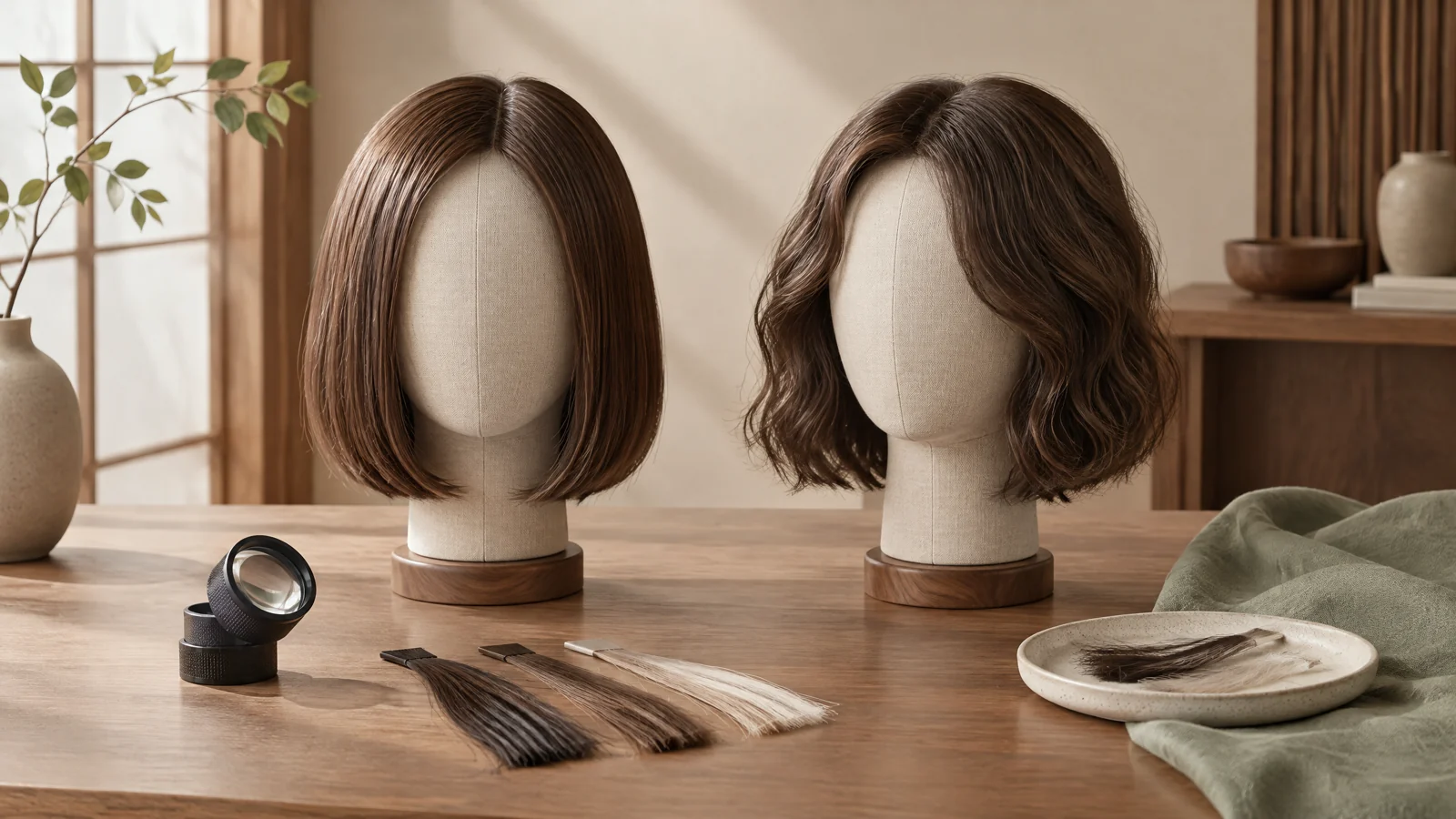
Consider a hypothetical shopper who wears a slightly off-centre part, works under ceiling lights and wants a quick morning routine. Assume two appropriately sized samples can be assessed with permission: Sample A is described by its maker as silk top, and Sample B has a specified monofilament top. These are invented comparison options, not current products, stock claims or observations from a real customer.
Suppose Sample A initially looks smoother beneath a warm display lamp, while Sample B's photograph looks less flattering. The shopper repeats both views beside the same window with unchanged camera settings and comparable part openings. In this imagined result, the initial difference becomes smaller. The sensible conclusion is that the first presentation was not a fair basis for paying a premium, not that either top has failed.
Now assume Sample A still provides the shopper's preferred visible-base appearance in both viewing conditions, but its demonstrated parting range does not include the desired off-centre position. Sample B's confirmed panel does include that position. This creates a genuine trade-off: a slightly preferred surface in a less useful style versus a satisfactory surface where the shopper actually wants to part the hair.
For this hypothetical shopper, Sample B could be the better choice if its everyday appearance and fit are acceptable. A different person who happily keeps the demonstrated part might choose Sample A. Neither decision establishes a category winner. If Sample B also requires more upkeep than the shopper can manage, the appropriate next step may be to compare another model rather than force either option to work.
Set an acceptance rule before another viewing: the chosen piece must support the normal part, look acceptable in both relevant environments and meet the practical fit and care requirements. A finer scalp effect can be a preference after those conditions are met. Writing this rule down helps prevent the final decision from being driven by the last flattering photograph or by an impressive construction label.
07
What should be confirmed before accepting the result?
Check fit as a separate decision even after the visual comparison is favourable. The American Cancer Society advises checking the brand's size chart because sizing can vary, following the supplied fitting directions and checking the return policy before purchase. [3] Ask what assessment is possible for the exact piece, including any liner you intend to use, rather than assuming that a familiar size label guarantees comfort.
Where a trial is permitted, notice pressure or rubbing and ask about appropriate adjustment without making irreversible changes yourself. A brief viewing cannot establish comfort over a whole workday. If you already have persistent scalp pain, redness, broken skin or concerns about the cause of hair loss, seek healthcare advice. A wig offers an appearance choice; it does not treat those problems or stimulate regrowth.
The sensitive-scalp hair-colour guide is separate Canvas Blend reading for decisions involving your natural hair and scalp. It is not proof that a particular wig is medically suitable. If you also need a natural-hair trim, clarify that service separately; do not assume a wig enquiry includes salon cutting, adhesive installation or a combined treatment package.
Keep the final enquiry specific: identify the model and colour, ask for the confirmed top description and parting range, and explain which lighting conditions concerned you. Request current supply information and the applicable quotation, return terms and care instructions. A catalogue entry or an enquiry is not stock confirmation or an accepted order, and an available viewing sample need not mean the desired option is ready to purchase.
For separate natural-hair appointments, use Canvas Blend's booking page and confirm the service scope. Direct wig-specific supply and construction questions to Ownstrand through the relevant category page. Do not assume Canvas Blend supplies the compared pieces or provides their installation. Keeping the two enquiries distinct helps you understand what is being offered, what remains unconfirmed and which business is responsible for each arrangement.
What else should you know?
Is a silk-top part always more natural than a monofilament part?
No universal ranking follows from those names. Compare the specific samples with similar part openings under the same light, then check whether your preferred placement is within each model's confirmed top area. Appearance, fit and styling needs may point towards different choices.
Is daylight enough to make a comparison fair?
Not by itself. Keep the position, light direction, timing and part arrangement comparable. If photographing, keep settings unchanged where possible. Then repeat the pair under another light relevant to your routine; do not compare one daylight photograph with one indoor photograph as though only the top changed.
Can a phone photograph confirm the exact base colour?
Not reliably on its own. Automatic white balance, exposure and screen presentation can alter the impression. Use photographs to record a controlled viewing session, avoid separate edits and preserve your in-person observations. Ask for model-specific details when the image leaves a material question unresolved.
Should I compare both samples with the same liner?
Where compatible and a trial is permitted, comparable liners can help isolate differences. For a final decision, also assess the combination recommended for that exact piece. Record the liner and check its effect on fit; do not assume every accessory is appropriate for every cap or scalp.
Does human hair guarantee better parting flexibility?
No. Fibre and top construction are different specifications. Parting flexibility depends on the confirmed panel and permitted styling for the individual item. Human hair also brings its own care requirements, so do not choose it solely because the fibre name sounds more versatile.
What if neither sample meets my requirements?
Do not compensate with an irreversible alteration before buying. State which requirement failed: preferred part, everyday appearance, fit or realistic upkeep. Ask whether another model can be assessed and confirm arrangements. It is reasonable to postpone a decision when important details remain unverified.
What is the practical next step?
Before enquiring, write down your normal part position and the two lighting environments you most want to check. Ask whether suitable samples and a comparable viewing arrangement are possible. During the comparison, record the model details, keep styling and capture conditions consistent, and judge the everyday mirror view before assigning importance to a close-up detail. That produces a clearer question than simply asking which top is best.
Choose only after the visual preference has been weighed against confirmed parting range, fit and manageable care. Keep unverified materials or supply details open until the seller answers them. Canvas Blend's about page provides context for the salon; this editorial guide supports your own comparison, not an independent endorsement, a personal product test or a promise that either business will provide every option discussed.
When looking up hair salon Central, check the location details and choose a consultation time that lets you compare tones in natural daylight before or after work.
Sources and editorial notes
- [1] Nikon Learn & Explore — Setting White Balance
- [2] Jon Renau — Monofilament Cap Design
- [3] American Cancer Society — Wigs for Hair Loss
This AI-assisted Canvas Blend guide is not a real-client case study or an article reviewed by Vit So. OWNSTRAND and Canvas Blend share ownership; links are not independent third-party endorsements. Confirm wig, hairpiece and natural-hair services, fees and appointments separately. Materials, stock and handling limits depend on the actual product. Appearance coverage does not replace medical assessment of hair loss or scalp concerns.
Canvas Blend Editorial — AI-assisted guide, prepared on 2026-11-06. Ownstrand and Canvas Blend share the same owner, so this is not an independent third-party recommendation. External sources were read for the specific points cited; no first-hand wear test, real customer comparison or Vit So authorship or review is claimed. The shopping example is explicitly hypothetical. Model specifications, materials, parting range, sample access, supply, prices and service scope require direct confirmation. This guide does not imply that Canvas Blend supplies wigs, performs adhesive installation or offers a joint package, and it provides no medical diagnosis or hair-regrowth claim.
Continue reading
Wig SelectionHow should you compare wig prices in Hong Kong before confirming an online order?
Separate a wig catalogue enquiry from an accepted order: verify the exact option, quotation, delivery, returns and service scope before committing online.
Wig SelectionWhat evidence should you request before buying human hair wigs?
Build a buying brief that separates human hair and Remy claims from verified specifications, care limits, fit and purchase terms, with a hypothetical comparison.
Wig SelectionWhen do synthetic wigs save money by keeping the factory style?
Compare the cost of a ready-shaped synthetic wig with styling flexibility, cap comfort and care needs, using a clearly hypothetical shopping decision.