Coverage × Comfort × Personal Choice
How should you describe coverage before comparing men's wigs?
瀏覽獨立繁體中文指南 →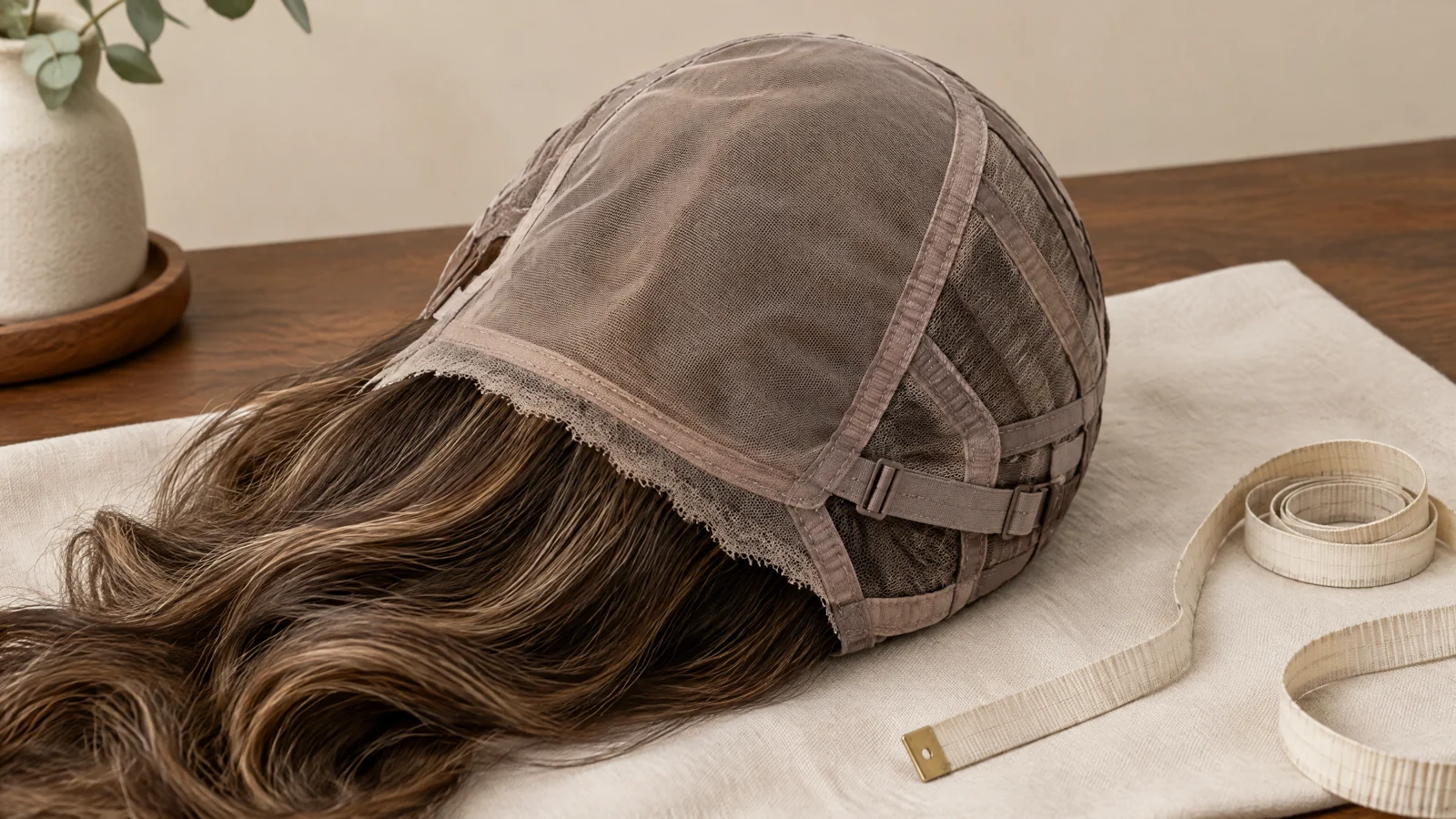
Describe the area you want covered and the natural hair you want to keep visible before choosing a product name. Then compare the exact item's dimensions, construction and wearing instructions, because a category label does not answer those questions.
A search for a men's hair replacement product can bring up several names for visually similar hairstyles. That creates a practical problem: two sellers may appear to offer the same result while discussing different coverage and upkeep. A useful enquiry starts with a sentence about your head, not a preference for whichever label sounds newest or most discreet.
This guide focuses on that first description. It separates whole-head coverage from a defined area and explains how to describe the natural hair that remains outside a piece. It does not rank one option as more masculine, diagnose thinning or assume that a particular construction is available. Your aim is to make the seller's answer specific enough to compare and verify.
From root touch-ups to pre-wedding colour planning, use balayage price Hong Kong as an initial reference and discuss your current hair condition before confirming the service.
01
What do you want covered, and what should remain visible?
Write down two things separately: the area whose appearance you want to change, and the hair you want to continue showing. For example, you might want coverage across the top while retaining your sides and back. That is more useful than saying only that you want a natural result, which leaves the actual footprint of the product undefined.
Whole-head coverage is a different starting point. If you want the hairstyle to come mainly from one covering rather than depend on blending with exposed side and back hair, compare men's wigs. The linked page addresses full-wig options; it is a browsing route, not confirmation that a specific silhouette, size or colour is currently available.
The American Cancer Society distinguishes a full wig, which covers the head, from a topper or top piece, which adds coverage and volume at the top. [1] That distinction is useful shopping language outside its cancer-care context, but it does not establish the dimensions or suitability of any particular men's product. Ask the seller to describe the actual outline.
You can make the description clearer with front, side and back photographs that show your current hair without filters. These are coverage references, not evidence of a medical condition. Decide what you are comfortable sharing and ask how photographs are handled before sending them. Keep a hairstyle reference separate so the seller can distinguish your starting point from the finish you hope to discuss.
Name both the covered area and the natural hair that stays visible.
02
Do different product names actually identify different coverage?
A full wig is a whole-head coverage category. A toupee or men's partial hairpiece generally refers to coverage of a selected area. Hair system is useful as an enquiry term, but it is not a universally complete specification and should not be treated as a third, precisely measured shape. Ask what the seller means instead of forcing every item into three exclusive boxes.
For a partial-coverage enquiry, the toupee guide provides a relevant starting category. Your next question should still be whether the proposed piece covers the area you described. A product can have an appealing hairstyle yet leave a boundary you wanted covered, or extend into natural hair you intended to preserve. The label cannot resolve that conflict.
Translate vague requests into observable ones. Instead of asking for an invisible system, explain whether you normally wear a fringe, show the front edge or keep the sides short. Instead of asking for a standard men's size, request the specific base dimensions or cap sizing information. This does not require mastering technical vocabulary; it requires asking where the product begins and ends.
The comparison below is an enquiry aid rather than an inventory list. Its purpose is to reveal which questions remain open after someone names a category. A seller's explanation may use different terminology, but it should still identify coverage and the natural hair involved. If those answers remain unclear, postpone comparing premium materials or prices: you may not yet be comparing the same task.
| Enquiry wording | Coverage starting point | Unanswered item question |
|---|---|---|
| Full wig | Whole-head coverage | Which cap size and outline apply to this model? |
| Toupee or partial hairpiece | A selected area; some natural hair remains visible | What are the base dimensions and boundary positions? |
| Hair system | Coverage must be stated separately | What exact piece, base and wearing method does the seller mean? |
| Natural-looking result | An appearance goal, not a coverage category | Which edges and views matter for my usual hairstyle? |
| Custom option | An enquiry about possible specifications | Which requested details can actually be made and supplied? |

03
How can you describe the boundary without choosing an attachment method?
Treat the boundary as the meeting point between the product and whatever remains visible around it. Describe whether you want the front hairline left alone, covered or discussed as an undecided area. Do the same for the sides and back. These choices help a seller assess the enquiry without you prematurely asking for clips, bonding or another wearing arrangement.
If a partial piece would meet your existing hair, ask where that meeting point would sit with your current haircut. Explain any plans to shorten the sides, but do not cut first simply to fit an imagined product. Until the item and its proposed placement are known, a haircut can remove hair that might have been useful for the appearance you wanted.
For separate natural-hair styling questions, Canvas Blend's general FAQ is a starting point before confirming the scope directly. Keep that conversation distinct from fitting a hairpiece. You can ask how a change to your exposed sides might affect the overall outline without assuming that Canvas Blend supplies the piece, installs it or offers a combined service with its seller.
Attachment needs its own product-specific explanation. Ask what would contact the scalp, what would rely on existing hair and who would handle fitting or removal. Do not infer a method from the word system or from a photograph. This guide does not establish that any attachment service is offered, and it is not an instruction for applying adhesive or altering a base.
Comfort is not something to trade away for a tighter appearance. The American Academy of Dermatology explains that repeated pulling can cause traction alopecia and identifies pain, stinging and crusts as warning signs. [2] Its advice supports avoiding persistent tension, not declaring any attachment universally safe. Canvas Blend's sensitive-scalp guide concerns salon colour precautions; it does not replace medical assessment of scalp symptoms.
Before choosing a new tone, the guide to hair colour salon Sheung Wan can help you consider access from Central, natural daylight, and an appointment time that suits your week.
04
Which details must a seller confirm after giving you a category name?
Once the coverage is clear, request an identifiable item or an explicit proposed specification. For a hair system enquiry, distinguish confirmed details from possibilities still under discussion. Ask the seller to restate the coverage, explain the base and identify the intended wearing arrangement. None of those features is guaranteed merely because the page or conversation uses that term.
Material answers a different question from coverage. Human hair does not automatically mean partial coverage, and synthetic fibre does not automatically mean a full wig. The American Cancer Society discusses fibre choice separately from wig style and notes different maintenance demands. [1] Use that separation to ask what the exact item contains and how it should be cared for, rather than choosing a material as a shortcut.
Construction language needs the same care. A base may be described by a material, a visible feature or a manufacturing method, and those descriptions need not refer to the same thing. Request a plain-language explanation of the relevant area. Do not translate OWNSTRAND's local construction names into foreign labels by assumption or treat a scalp-like description as proof of an undetectable result.
For a full wig, ask how the brand's sizing is checked and what adjustments the specific model permits. The American Cancer Society notes that sizing can vary by brand. [1] For a partial piece, ask about its actual dimensions and placement instead of borrowing a full-wig size chart. One measurement cannot answer every fit question, especially when natural hair remains around the edges.
Finally, request the maker's care directions for that item, including any restrictions on styling and heat. The American Cancer Society warns against heat tools unless a wig is heat resistant. [1] That is a reason to verify permission, not to apply one temperature to all products. No fibre label alone establishes a safe setting, and a natural-hair salon routine should not be transferred automatically to a hairpiece.
05
What ongoing work comes with leaving your own hair visible?
Keeping your own sides and back may preserve familiar parts of your appearance, but it also leaves a changing reference around the piece. Growth and haircut changes can alter the relationship between the two. Ask what would need reviewing when you change your natural haircut, rather than assuming that a good initial appearance guarantees the same result months later.
Describe the appearance you want to retain before discussing any colour work. You might prefer visible grey at the temples even if the top has a different proportion. Canvas Blend's grey-coverage information can help frame a separate natural-hair enquiry, but covering grey is optional. There is no requirement to dye healthy hair merely to make a product category easier to shop for.
Keep photographs or notes of the exposed hair at the time of an enquiry. Canvas Blend's before-and-after photography tips offer a useful reference for organising comparison images. Use records to explain what changed, not as proof that an exact match can be supplied. Avoid judging a boundary solely from a styled front-facing photograph that hides the sides or back.
If you browse Canvas Blend's gallery, use it to clarify an outline or general tone you want to discuss for your own hair. The gallery is not a catalogue of available hairpieces or evidence that a wig will reproduce a salon result. The shopping decision remains whether the proposed coverage works with the hair you are keeping, not whether two unrelated images look similar.
06
What does a hypothetical coverage decision reveal about the trade-offs?
Consider this explicitly hypothetical shopping example, not a customer account. A man wants a fuller-looking top, likes his grey temples and wishes to keep his existing sides and back visible. He also wants to take the covering off at home and does not want to commit to changing his haircut before seeing an option. No medical cause, product availability or attachment service is assumed.
His first enquiry could say: 'I want coverage across the top while keeping my temples, sides and back visible. Please show the proposed boundary and explain whether this specific option is intended for removal at home.' This communicates coverage and a wearing preference independently. The seller can then say whether an appropriate item exists, rather than interpreting the request through a fashionable product name.
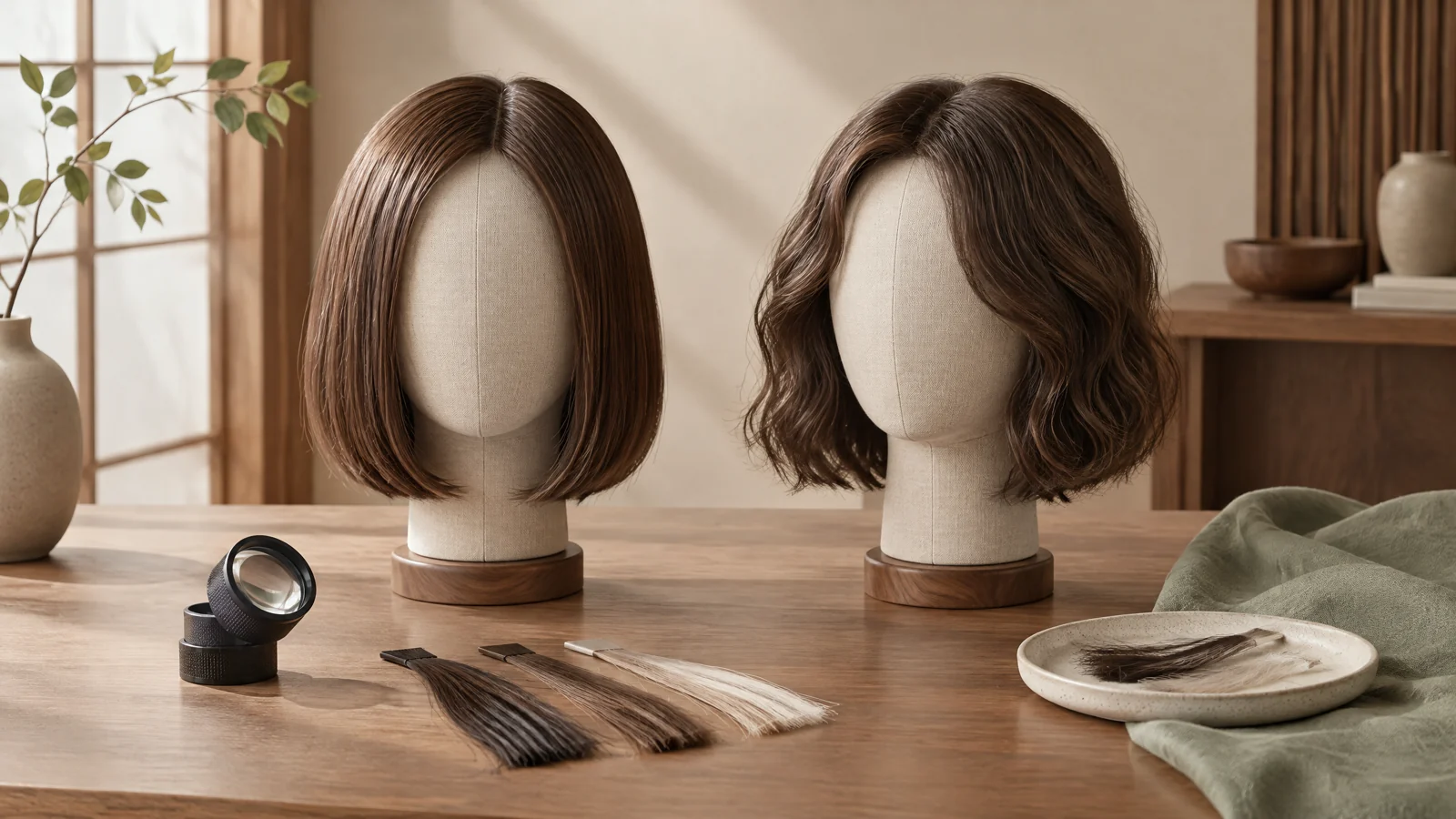
A partial option would align with his wish to keep those visible areas, if its dimensions and intended use were suitable. Its trade-off is dependence on the appearance of the exposed hair and the meeting point. A full wig would offer a different whole-head outline, but might not deliver the same visible-temple goal. Neither is the winner until those priorities are weighed against confirmed item details.
Suppose the only partial option discussed requires a wearing arrangement he does not want. He should not accept it merely because it is described as a system. He could ask about another confirmed option, reconsider whole-head coverage or pause the purchase. Likewise, if the seller cannot explain the boundary, a lower quote does not compensate for that unanswered question.
A useful decision can be to pause when the available specification conflicts with a non-negotiable preference.
07
How do you turn this description into comparable enquiries and quotes?
Send the same coverage description to each seller or use it for each option under discussion. Ask for the item's identity, dimensions, fibre, base explanation and intended wearing method. Record what is confirmed and what still requires measurement or viewing. This keeps a promising conversation from becoming a list of assumed features that were never included in the offer.
Compare quotations only after those details are aligned. Ask whether the amount covers a ready-made piece or proposed custom work and whether fitting, styling, accessories or later adjustments are included. Request any applicable cancellation, alteration and return terms before authorising changes. The American Cancer Society advises checking a retailer's return policy before buying. [1] That advice does not establish a particular Hong Kong seller's terms.
For OWNSTRAND, the supplied page information identifies its single confirmed physical shop in Kwun Tong. It does not establish other branches, current stock or same-day viewing. Ask directly about the specific item and arrangements before travelling. An enquiry is not an automatic order, and discussion of custom work does not mean every design, material or requested feature can be supplied.
Keep the natural-hair appointment equally specific. If you use Canvas Blend's booking page, confirm the salon service you are requesting rather than assuming hairpiece supply, adhesive installation or a shared package. A clear division of responsibilities is part of choosing well: you should know who answers product questions, who works on your own hair and which decisions remain yours.
What else should you know?
Should I choose the name of the product before describing coverage?
No. State the area you want covered and the natural hair you want left visible first. A category name can help locate options, but the item's dimensions and intended placement determine the practical comparison.
Is a hair system always a bonded partial piece?
Do not assume that. Ask what the seller means for the exact item, including its coverage and intended attachment or removal arrangement. The term alone confirms neither a bonded design nor an installation service.
Can I keep my natural sides with a full wig?
A full wig is intended for whole-head coverage. If keeping the sides visibly part of the result is a priority, state that explicitly and compare appropriate partial options. Do not assume a particular full wig will accommodate the appearance you want.
Should I trim my own hair before asking about a piece?
Avoid changing it solely to fit an unconfirmed product. First clarify the proposed coverage and boundary. Ask separately about any natural-hair haircut and confirm who would provide it; product fitting and salon trimming are not automatically one service.
What should I do if a wearing arrangement causes discomfort?
Do not keep tightening or tolerate persistent pulling for appearance. Ask about appropriate removal or adjustment for the specific item. Persistent pain, redness, broken skin or concerns about the cause of hair loss warrant advice from a qualified healthcare professional. A cosmetic covering is not medical treatment.
Does a category page confirm that my preferred option is available?
No. Confirm the exact style, dimensions, material, quotation and viewing arrangements with the seller. A catalogue reference, a sample or an enquiry does not establish stock, an order or an appointment.
What is the practical next step?
Before your next enquiry, write one sentence naming the covered area, one naming the natural hair you want visible and one stating a wearing preference you do not want to compromise. Bring references if useful, but ask the seller to explain the proposed product in those same terms. This is a clearer starting point than asking for the most natural or most advanced category.
Proceed when the exact coverage, fit discussion, intended use and quoted inclusions are clear enough for your decision. Leave any unconfirmed detail marked as a question rather than turning it into a promise. If a specification conflicts with your priorities, compare another option or wait. Choosing the right description does not guarantee the right product, but it makes an unsuitable offer easier to recognise.
When looking up hair salon Central, check the location details and choose a consultation time that lets you compare tones in natural daylight before or after work.
Sources and editorial notes
- [1] American Cancer Society — Wigs for Hair Loss
- [2] American Academy of Dermatology — Hairstyles that pull can lead to hair loss
This AI-assisted Canvas Blend guide is not a real-client case study or an article reviewed by Vit So. OWNSTRAND and Canvas Blend share ownership; links are not independent third-party endorsements. Confirm wig, hairpiece and natural-hair services, fees and appointments separately. Materials, stock and handling limits depend on the actual product. Appearance coverage does not replace medical assessment of hair loss or scalp concerns.
Canvas Blend Editorial — AI-assisted guide, prepared using the supplied OWNSTRAND page verification and the cited external sources as of 2026-11-06. OWNSTRAND and Canvas Blend share the same owner; this is not an independent third-party recommendation. No first-hand product testing, real customer outcome or named stylist review is claimed. The selection example is hypothetical. Product specifications, stock, quotation, fitting and attachment arrangements require direct confirmation with the relevant provider. Canvas Blend salon links do not imply wig supply, installation or a joint package. This guide concerns cosmetic selection and does not diagnose hair loss or promise regrowth.
Continue reading
Wig SelectionHow should you choose a men's hairpiece for work and compare crown-coverage quotes?
Compare crown hairpiece footprints, workday fitting checks and itemised quote conditions before committing, with a hypothetical office-wear decision example.
Wig SelectionHow can a custom men's hair system enquiry preserve your options?
Plan a custom hair-system enquiry around reversible choices, written permissions and cosmetic limits. Compare wearing commitments before changing your own hair or approving production.
Wig SelectionWhich men's hair system for receding hairline keeps the front shape you want to show?
Choose front-hairline coverage without erasing a familiar outline: compare visible temples, existing hair, density transitions and realistic fitting checks.