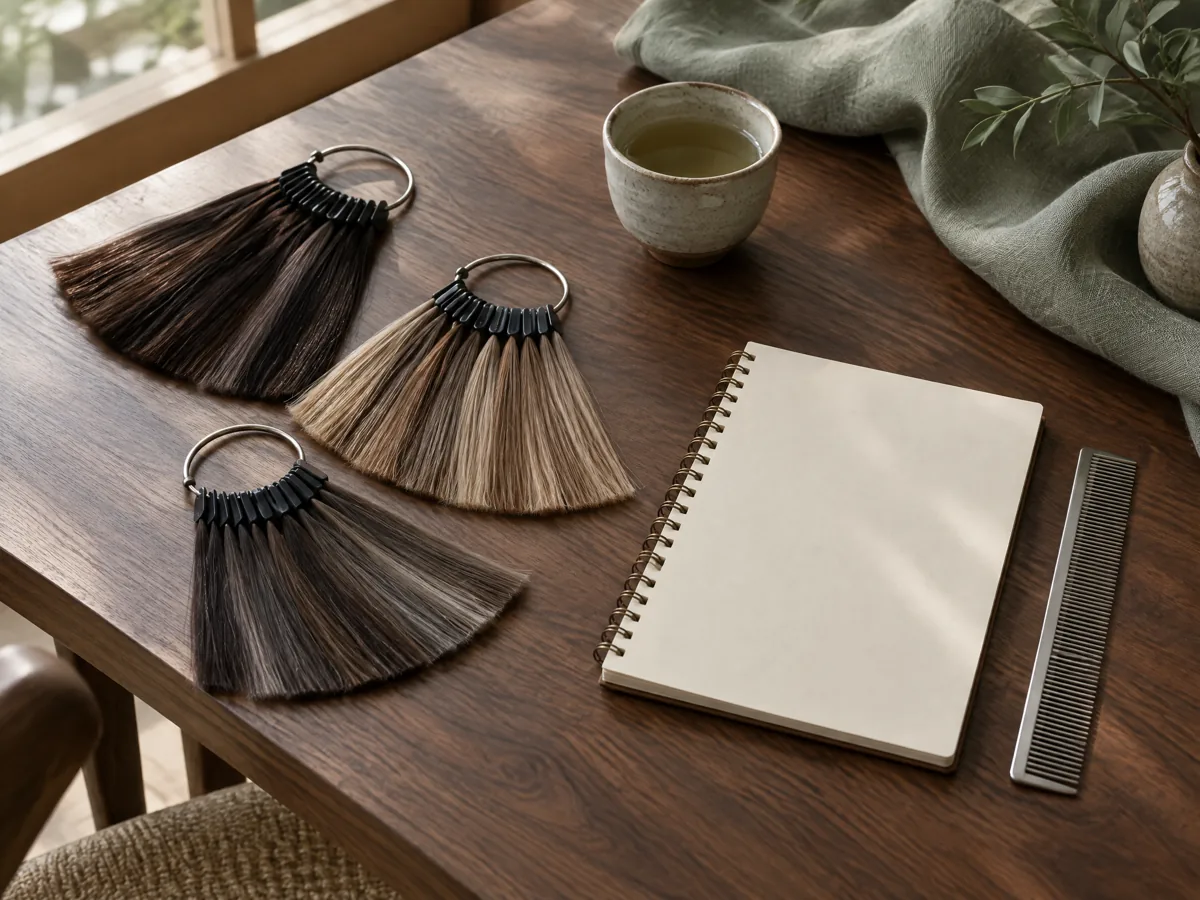
Coverage × Comfort × Personal Choice
How should you compare photos before choosing a hair topper for widening part?
瀏覽獨立繁體中文指南 →
Compare your usual part in photographs taken with the same lighting, camera position and hair preparation before deciding how much cosmetic coverage to explore. Use those images to describe the visible area and compare candidate pieces, not to diagnose hair loss, measure a base from pixels or confirm attachment suitability.
A bright overhead photograph can make a part look quite different from a flattering front-facing selfie. Buying for the most alarming image alone can lead you towards more coverage than you want; choosing only from your favourite angle can leave an important area unaddressed. The useful question is which appearance you want to change when the photographs are genuinely comparable.
Start with a small, repeatable set that includes the part and crown, then add views of your everyday hairstyle. Keep these two purposes separate: the first set records the same arrangement, while the second shows the situations in which a piece needs to look coherent. Neither set tells you why your hair looks different or whether a particular fastening method will be comfortable.
This guide focuses on that photographic decision process, rather than on a universal base size or a promised natural result. You can investigate cosmetic coverage without proving that your part has widened over time. If a change concerns you medically, speak with a health professional; shopping pictures and salon styling discussions cannot establish a cause or replace an assessment.
If you are planning a change of colour, learn about hair colour Hong Kong before your consultation and consider the techniques, tones and upkeep that suit your routine.
01
Why can two photographs of the same part suggest different coverage?
First check how each image was made. Light reflecting from the scalp, shadows between strands, camera distance and head tilt can alter the area that appears visible. The Institute of Medical Illustrators' clinical guidance controls lighting and camera distance, and cautions that surface reflections can mask detail. Its professional protocol supports the importance of repeatability, not a claim that a home photograph measures hair density. [1]
Hair arrangement is another variable. A deliberately straight central part is not equivalent to an off-centre part brushed loosely for work. Product, root lift and strands moved aside can also change what the camera sees. Describe the arrangement beside each set. Otherwise, an apparent increase in exposed scalp may actually be a comparison between different hairstyles rather than a reason to buy a larger piece.
Keep the original files and avoid beauty filters, background replacement or automatic retouching. A tighter crop can make the concern dominate the frame even when nothing else has changed. Compare similar framing rather than enlarging one image until it looks worse. If an older picture has unknown conditions, label it as a hairstyle reference instead of treating it as a reliable before image.
Changes to your own cut or colour belong in the record too. The clinical photography guideline specifically asks for consistency in the hair-dye cycle when comparing images. [1] You need not postpone an ordinary haircut for shopping, but note it. Canvas Blend's before-and-after hair colour guide is related reading for planning a clearer record of natural-hair changes, not evidence about scalp health.
A difference between photographs is a prompt to check conditions before changing the coverage brief.
02
How can you create a repeatable photo set without a clinical studio?
Choose a location with steady, even illumination and a plain background, then use it again. Changing daylight is less repeatable than it initially seems, so note the time and conditions if a window is your only practical light source. This is an editorial shopping routine adapted from photographic consistency principles, not an attempt to reproduce a clinic's flash equipment or diagnostic imaging protocol. [1]
Use the same phone, lens setting and distance where possible. A helper can keep the camera angle steadier than you can while reaching above your head. Sit in the same place and use the same comfortable head position. Save one acceptable reference frame so the helper can match its framing next time; do not balance on furniture or strain your neck to obtain an overhead shot.
Include a front view, a view of the top and part, and a crown view showing where the part meets the back of the top. Add left and right views if they reveal an edge or blending area relevant to your shortlist. A clinical study used frontal, temporal and top or crown views; the multiple-view principle is useful here, although its study was not a consumer fitting test. [2]
For the controlled set, keep your usual part placement and hair preparation as similar as practical. Note whether the hair is dry, freshly styled or carrying yesterday's product. Do not pull hair painfully to expose more scalp. You are recording the appearance you want to discuss, not copying a clinical protocol that intentionally exposes affected areas for a clinician. Retake a blurred image rather than trying to interpret it.
Make a separate everyday set if you tuck hair behind your ears or wear a different part at work. Label it clearly so it is not mistaken for a comparable time point. You can use the Canvas Blend gallery to describe an overall tone or silhouette you like, but a styled reference image should never be substituted for photographs of your own coverage and blending area.
- Keep one reference frame for each view and repeat its framing.
- Record date, light source, part placement and hair preparation.
- Label everyday styling views separately from controlled comparison views.
- Share only the views needed for the enquiry, through an agreed channel.

03
What should the photographs tell you about the area to cover?
Look at the full visible length of the part rather than its widest-looking point alone. Does the concern begin near the front, remain a narrow line, or continue into a broader crown area? Write that description in plain language. It gives an enquiry a starting point without turning an image into a numerical estimate of thinning or assigning a medical stage.
Next identify the hair you want to leave visible around the proposed coverage. Front and side views may show that you want to retain your own fringe or face-framing strands. The crown view may reveal a transition that the front selfie missed. These are styling constraints: a candidate must work with the remaining hair, not just conceal a bright patch in one photograph.
Do not derive a base measurement from a phone image. Curved scalp surfaces, perspective and the absence of a reliable scale make that a poor shortcut. Ask how the seller wants the coverage area assessed and obtain the exact candidate's footprint and attachment layout. A photograph can suggest questions about the front and rear boundaries, but it cannot locate comfortable fastening points by itself.
Once the repeated views show a focused parting concern, use the hair topper for widening part guide as a starting point for item-specific questions. Ask whether a proposed base reaches the visible ends and how its perimeter would meet your hair. The category name alone cannot establish the right dimensions, fit, colour or availability for you.
When looking up hair salon Central, check the location details and choose a consultation time that lets you compare tones in natural daylight before or after work.
04
Which coverage option should you compare after the views agree?
If the concern remains local across comparable views, partial coverage is a reasonable direction to investigate. The American Cancer Society describes a top piece as adding coverage and volume on top, while a full wig covers the entire head. [3] That distinction explains the formats; it does not determine which model suits your hair, scalp comfort or preferred daily routine.
A broader base may address an area that extends into the crown, but it also moves the perimeter to a different position. Ask what happens at that boundary in your side and rear views. More coverage is not automatically a better purchase if it changes the silhouette more than you want or makes the transition to your own hair harder to manage.
Use the hair toppers catalogue to build a short list by documented footprint and construction, not by the model photograph that most resembles your best selfie. Record missing information as unknown. A listing is a product reference rather than stock confirmation, and a displayed colour option does not establish that it can be supplied or tried on.
If there is pain, persistent redness, broken skin or concern about the cause of a change, seek medical advice rather than using photos to select stronger fastening. Canvas Blend's sensitive-scalp hair colour guide concerns natural-hair colour planning, not topper attachment clearance. Avoid adding a colour service merely to improve a comparison photograph or assuming cosmetic coverage treats hair loss.
| What comparable views show | Option worth investigating | Trade-off to verify |
|---|---|---|
| A focused line with the usual fringe and sides retained | A partial piece addressing the parting zone | Whether both ends are covered and the perimeter blends |
| The visible zone continues from the part into the crown | A candidate with a footprint that reaches the full intended zone | Whether the rear boundary and added fullness suit the side profile |
| A broader appearance goal with little desire to blend local edges | Full-head coverage | Overall cap fit, front edge and the change to the complete silhouette |
| Only one old, differently lit image looks more exposed | A repeatable new baseline before changing the shortlist | Whether the apparent difference persists under comparable conditions |
| Discomfort or a worrying change accompanies the visible concern | Medical advice alongside any cosmetic enquiry | Photos cannot diagnose the cause or establish safe attachment |
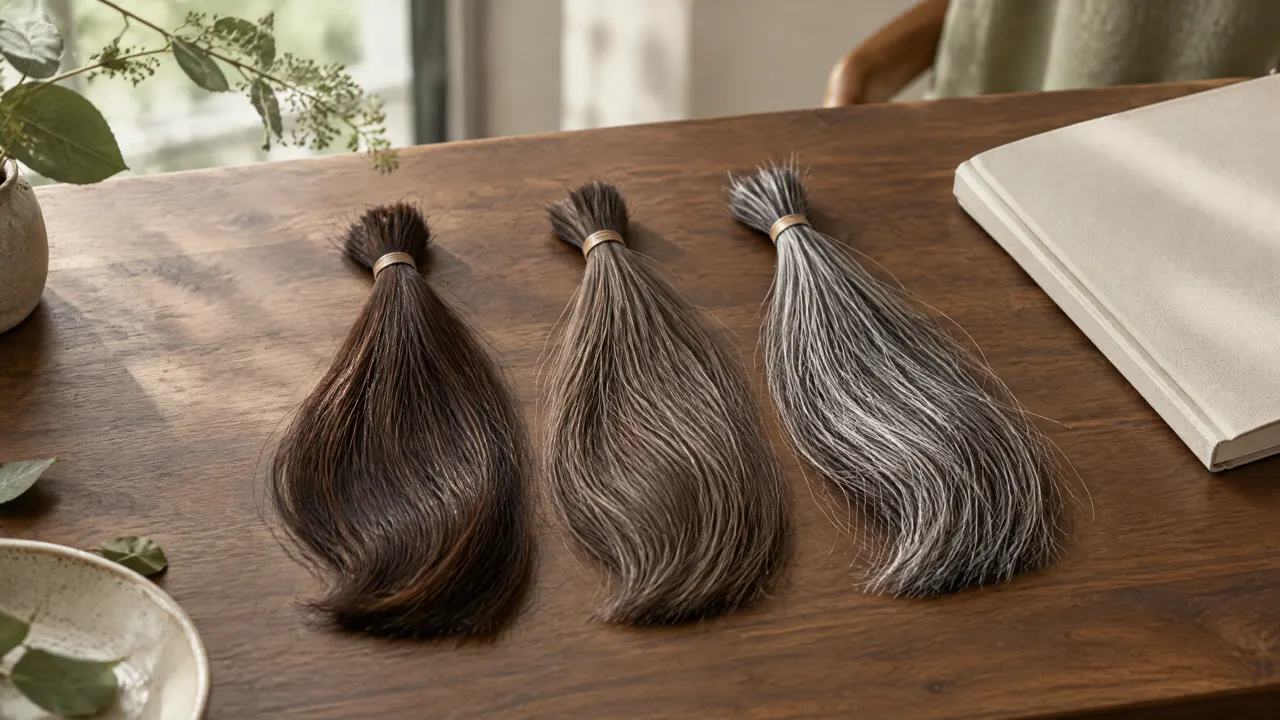
05
How should you photograph a shortlist fairly at a fitting?
Ask permission to take comparison photographs, and establish which candidates can actually be viewed before attending. Use the baseline angles for each piece, with similar light and framing. If one candidate is professionally styled and another is shown untouched, record that difference. Otherwise, the comparison may reward styling effort instead of the coverage or shape you would receive and maintain.
Compare the front, part and crown together. Check whether the intended visible zone is softened, whether the ends of the base appear conspicuous, and whether the overall fullness remains proportionate from the side. Do not assess the result only by zooming into the part. Include an ordinary viewing-distance image because that is a different question from how an extreme close-up looks.
Keep visual acceptance separate from physical acceptance. A piece can photograph well while feeling uncomfortable, and a still image cannot prove that it remains secure during normal movement. Discuss the exact product's fastening and removal instructions with the provider. If permitted, assess comfort and ordinary movements under their guidance; stop if there is pain instead of treating it as a necessary price of coverage.
Record the model and colour code with each set so later comparisons do not become a collection of unnamed hairstyles. If your own grey pattern remains visible, describe it without expecting a photograph to establish a precise shade match. The natural-hair grey coverage page is a separate styling resource; changing your own colour is optional and should not become a condition of trying coverage.
06
What would a clearly hypothetical buyer choose from these photographs?
Consider a hypothetical buyer, not a real client, who wants a familiar off-centre part and visible natural fringe. A harsh-light selfie initially suggests a broad concern. Their repeatable set instead shows a focused parting line, while the crown looks acceptable to them in their usual hairstyle. Their goal is cosmetic discretion at work, not maximum volume or a documented medical improvement.
Assume two partial candidates are offered for comparison after specifications and viewing arrangements are confirmed. Candidate A reaches the intended line with a modest change in silhouette. Candidate B covers more of the crown but adds fullness the buyer dislikes in the side view. These are invented comparison results, not claims about named products; the exercise shows why the most extensive option need not win.
A remains a tentative choice only if the rear transition and fastening are also acceptable. If the provider cannot confirm those details, the buyer pauses rather than purchasing from the front photo. They keep their natural-hair cut unchanged until the coverage decision is clearer. Any later Canvas Blend booking would concern an agreed natural-hair service, not assumed topper supply, installation or a joint package.
Change one assumption and the outcome may change: suppose the crown view now shows an area the buyer also wants covered, or they do not want to blend a local perimeter each morning. The hair topper vs wig comparison then becomes relevant to a revised brief. The decision follows the desired appearance and practical fitting evidence, not a diagnosis inferred from pictures.
Choose the option that meets the stated goal across views, then verify comfort and product facts separately.
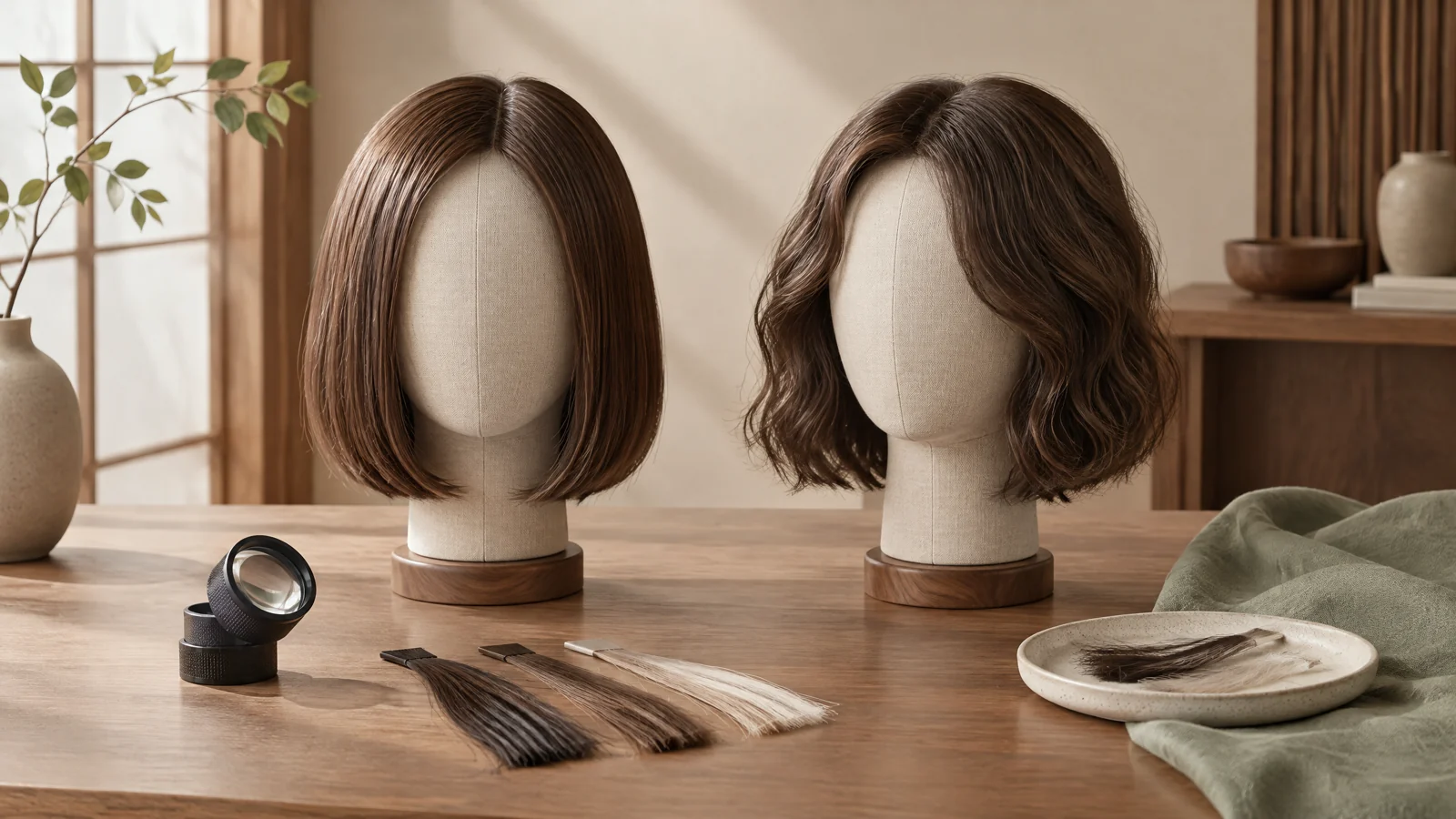
07
What should you send and confirm before committing to a purchase?
Send a concise description of the appearance you want to retain and the area you want softened, accompanied by the relevant repeatable views. Explain which images show your everyday style. Ask what additional information is necessary instead of sending a large album of inconsistent selfies. For privacy, remove unrelated background details and ask how photographs will be used and retained before sharing identifying images.
For each serious candidate, request its model identifier, base dimensions, fibre, construction, fastening details and colour options. Ask which facts come from the original manufacturer and which still require confirmation. Terms such as monofilament describe construction rather than an automatic coverage outcome. Fibre care and heat permissions are item-specific; do not apply a standard tool temperature across everything on your shortlist.
Confirm the purchase conditions as carefully as the photographs. Ask about the quotation's scope, what viewing or fitting is included, ordering arrangements and the return or exchange policy. The American Cancer Society explicitly advises checking returns before buying and notes that sizing varies between brands. [3] Photographic approval should not be mistaken for permission to alter a piece before those conditions are understood.
Keep natural-hair service costs separate from the hairpiece enquiry. Canvas Blend's pricing page concerns its own service planning, not an Ownstrand quotation. You can decide whether to discuss a natural-hair trim later, but do not infer that Canvas Blend supplies pieces, performs adhesive installation or guarantees blending. Separate responsibilities make it easier to resolve an unanswered question before money or irreversible alterations are involved.
What else should you know?
Can photographs prove that my part is widening?
Comparable photographs can help you describe an appearance difference, but home images cannot establish a diagnosis or cause. If the change worries you, seek an appropriate medical assessment rather than relying on a shopping comparison.
Should I choose coverage from the brightest overhead photo?
Not from that photograph alone. Repeat the view under recorded conditions and compare it with your front, side and crown views. Keep a harsh-light image as an additional appearance reference, not an automatic instruction to buy the largest base.
Can I calculate the base size from a phone photograph?
Do not treat pixels as a reliable scalp measurement. Perspective and the curved surface can distort the apparent footprint. Ask how the provider assesses your desired area and obtain the exact model's dimensions and fastening layout.
What if a piece looks good in photographs but feels uncomfortable?
Do not let the photograph override comfort. Stop if there is pain and discuss the specific fit and fastening with the provider. Persistent pain, redness or broken skin warrants medical advice; a cosmetic piece is not a treatment.
Does a catalogue image mean that model is available to try?
No. Confirm the exact model, colour and viewing arrangements directly. A listing or concept image does not prove stock, same-day fitting, supply or a precise colour match.
Do I need to change my natural-hair colour before comparing pieces?
No. Record your current cut and colour so the baseline is clear. A separate natural-hair service may be considered later if you want one, but it is not a prerequisite for photographic comparison and cannot treat hair loss.
What is the practical next step?
Your next useful step is a labelled set of comparable views and a short coverage brief, not a purchase based on a single alarming image. State what you want softened and what should remain your own hair. Compare candidate results using that same brief, while keeping physical comfort, attachment and supply questions outside what a photograph can answer.
Save the chosen model details beside the final comparison set and resolve missing specifications or purchase conditions before committing. If the photographs remain inconsistent, establish a better baseline rather than increasing coverage by default. If the concern is medical, take it to a health professional. Clearer images support a more deliberate cosmetic choice; they do not certify a product or promise a health outcome.
For hair that looks dry, frizzy, or prone to breakage in a photo, read about damaged hair treatment Hong Kong to help frame questions for a colour-care consultation.
Sources and editorial notes
- [1] Institute of Medical Illustrators — Hair Loss Photography
- [2] Rose et al. — Standardization of Clinical Photos for Tracking Management of Alopecia
- [3] American Cancer Society — Wigs for Hair Loss
This AI-assisted Canvas Blend guide is not a real-client case study or an article reviewed by Vit So. OWNSTRAND and Canvas Blend share ownership; links are not independent third-party endorsements. Confirm wig, hairpiece and natural-hair services, fees and appointments separately. Materials, stock and handling limits depend on the actual product. Appearance coverage does not replace medical assessment of hair loss or scalp concerns.
Canvas Blend Editorial — AI-assisted guide, prepared on 6 November 2026. Ownstrand and Canvas Blend have the same owner, so this is not an independent third-party recommendation. The article combines the supplied page information with the cited external guidance; it includes no personal wear testing, verified customer case or named stylist review. Its shopping-photo routine and hypothetical example do not diagnose hair loss or establish product suitability. Exact specifications, supply and purchase arrangements require confirmation with the relevant provider; Canvas Blend natural-hair services are separate from Ownstrand enquiries.
Continue reading
Wig SelectionHow do you write a repeatable colour brief for grey wigs?
Turn grey percentages and salt-and-pepper placement into a clear shopping brief: define the base, map visible zones, compare references and rank acceptable compromises.
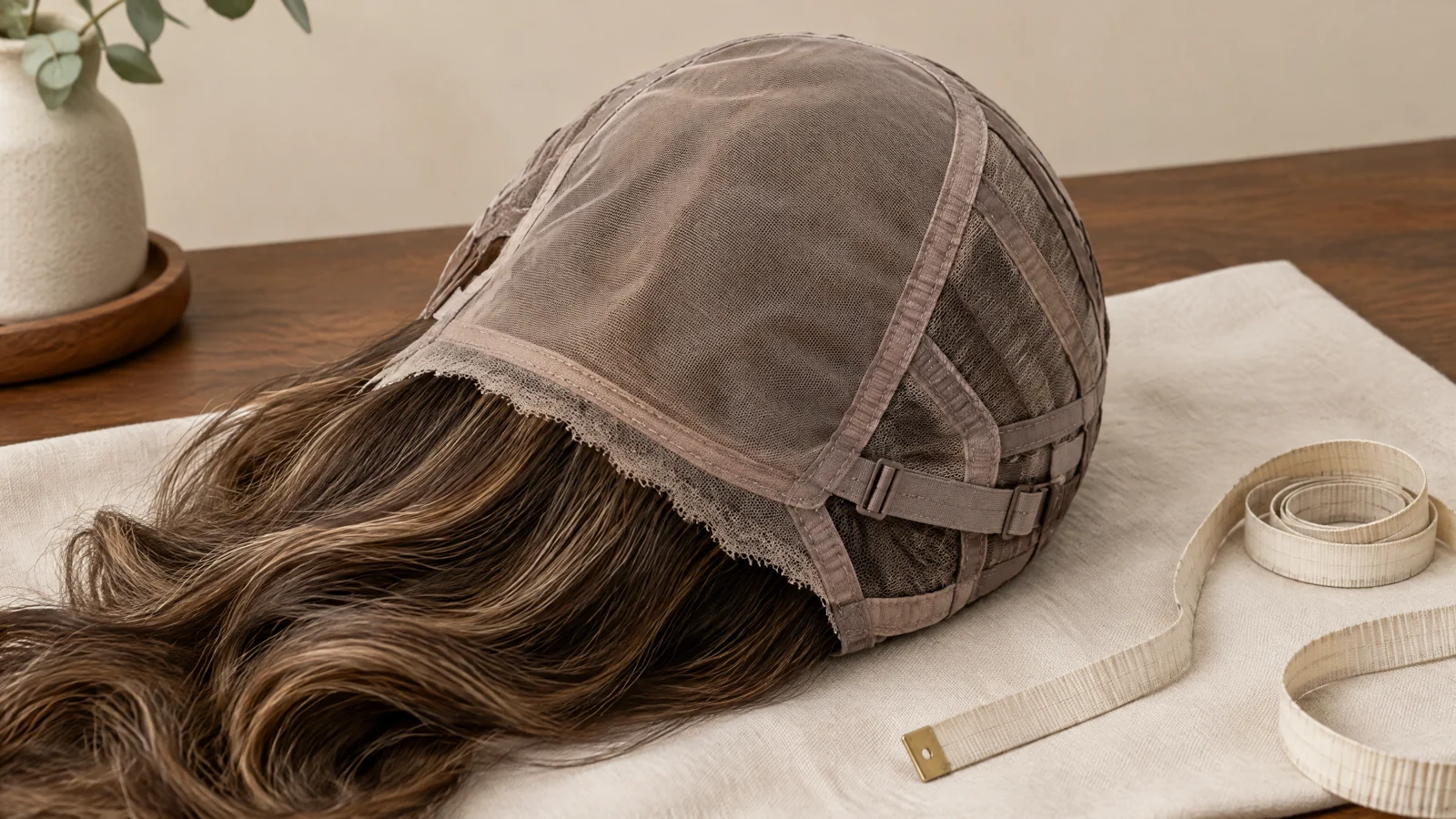 Wig Selection
How should you describe coverage before comparing men's wigs?
Compare men's full wigs, toupees and hair systems by the area covered, the natural hair left visible and the product details a seller must confirm.
Wig SelectionHow should you choose a men's hairpiece for work and compare crown-coverage quotes?
Compare crown hairpiece footprints, workday fitting checks and itemised quote conditions before committing, with a hypothetical office-wear decision example.