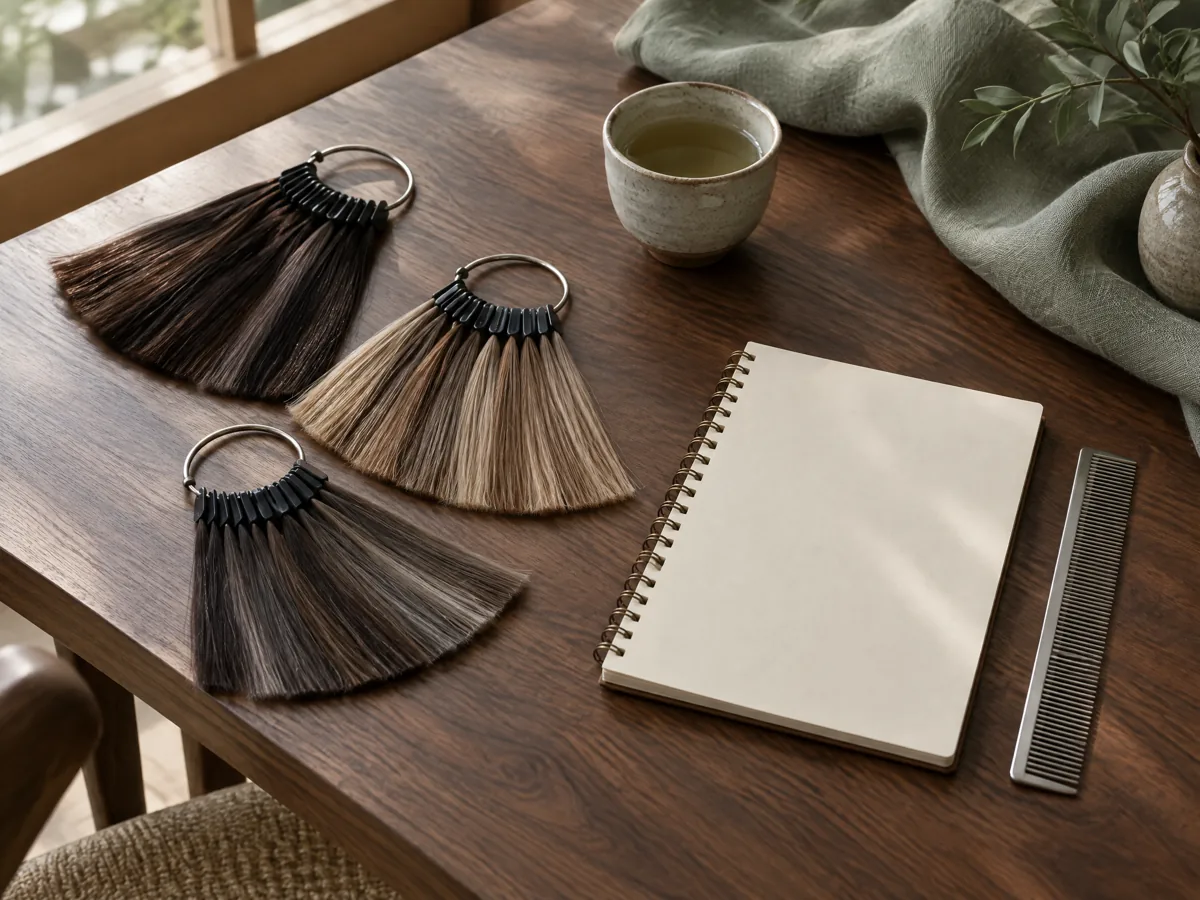
Coverage × Comfort × Personal Choice
Can a human hair topper match your surrounding hair without a salon colour change?
瀏覽獨立繁體中文指南 →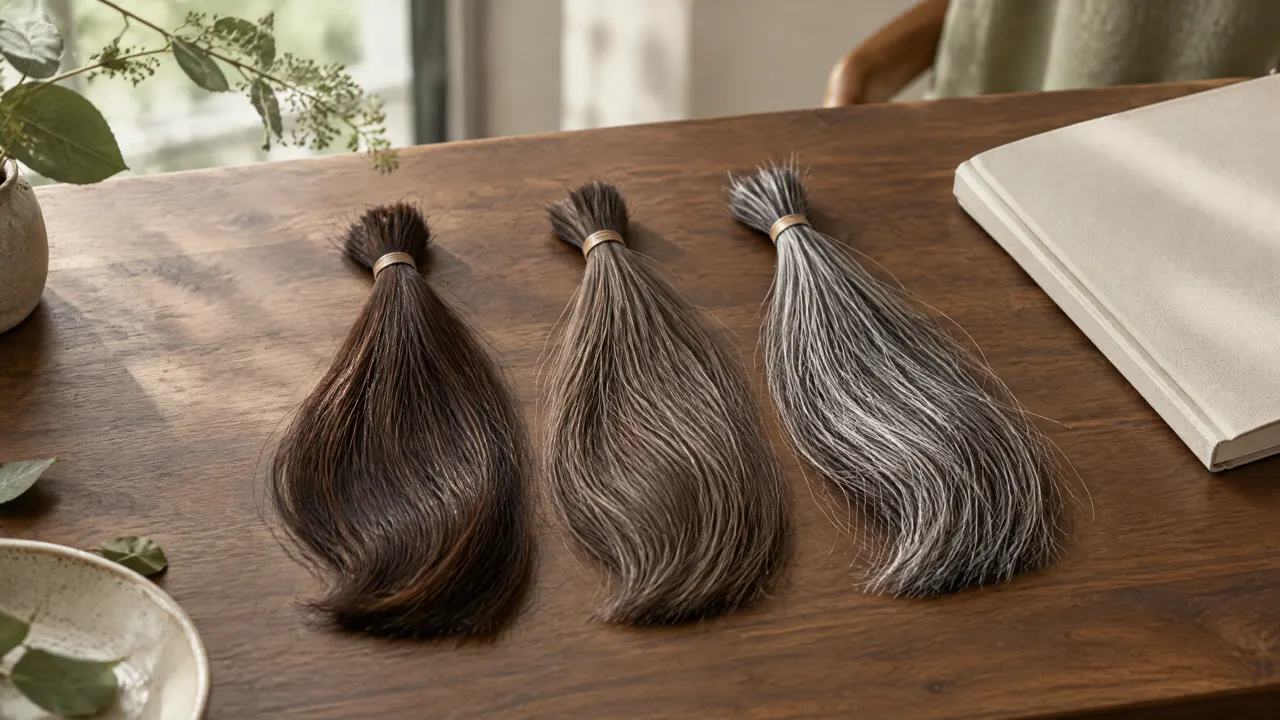
Choose the topper around your existing hair and routine, rather than assuming your own hair must be recoloured to suit the piece. If an acceptable transition cannot be demonstrated without changes you do not want, compare another shade or model, reconsider coverage, or postpone the purchase.
A partial hairpiece creates a shared hairstyle: some hair belongs to the piece and some remains your own. That makes the visible meeting points more important than whether an isolated swatch is attractive. The practical buying question is whether the candidate works with the hair you intend to keep, including its current tone, movement and everyday styling, without creating an unwanted salon commitment.
Start by naming your non-negotiables. Perhaps you want to leave your natural colour untouched, keep lighter ends from an earlier appointment, or continue wearing your hair tucked behind your ears. These preferences are legitimate selection criteria, not obstacles to be corrected. A topper that needs a different haircut, fresh colour and daily straightening may be a poor match even when its fibre is human hair.
This guide focuses on choosing within those boundaries. It does not assume an exact shade exists, that a photograph establishes a match, or that an unsuitable purchase can later be fixed. The goal is to distinguish a manageable difference from a change you would resent maintaining, and to make that distinction before an order or irreversible alteration.
If you are planning a change of colour, learn about hair colour Hong Kong before your consultation and consider the techniques, tones and upkeep that suit your routine.
01
Which surrounding hair actually needs to agree with the topper?
Map the visible hair in your normal hairstyle before shopping. Look at the front sections beside the piece, the hair above your ears and the lengths emerging beneath it. These areas may not share one shade: roots can be darker than ends, while a few face-framing strands can be lighter. The most relevant reference is the hair that will sit next to the candidate in use.
When exploring a human hair topper, separate this visible-hair map from the coverage requirement. The base must address the area you want covered, and its stated attachment must be assessed separately. A close colour is not compensation for an unsuitable footprint or uncomfortable fastening. Conversely, a promising base does not justify changing your own hair before its shade has been evaluated.
Photograph your usual parting and the surrounding lengths without filters, including a side view. The American Cancer Society recommends current-hairstyle photographs and natural-light comparison with hair references when matching wigs. [1] For a topper, apply that principle to the exposed meeting points rather than copying a whole-head colour preference. You do not need to cut a lock of already delicate hair simply to begin an enquiry.
Keep the record useful rather than elaborate. Note when your own hair was last coloured and whether you normally wear it straight, air-dried or tied back. Canvas Blend's hair colour photo and record tips can help organise that baseline. Treat photographs as communication aids: the seller still needs to explain how the exact candidate can be assessed, not certify a match from your phone alone.
Match the visible transition to the hair you are keeping, not to an abstract idea of your overall colour.
02
What does keeping your existing hair unchanged mean in practice?
Write a simple boundary before viewing candidates: no colour change, no shortening of your own hair, and no new daily heat routine, for example. Then distinguish a preference from a firm limit. You might accept a different parting on occasional days but refuse regular root appointments. This stops a sequence of apparently small adjustments from turning a coverage purchase into a makeover you never wanted.
Do not replace 'no bleach' with 'no consequences'. Colouring your own hair without lightener is still a change that can affect your future appearance and routine. The no-bleach hair colour guide is useful if you independently want colour, but it is not a reason to recolour simply because a seller has shown one attractive topper. Keeping your present shade remains a valid decision.
Allow some variation only where it makes sense to you. A slightly different shade may read as dimension through the lengths but stand out at a short exposed front section. Judge that location rather than applying a universal rule that darker or warmer is always better. Use Canvas Blend's colour gallery to describe tones you like, not as proof that a catalogue shade will reproduce them.
Also decide how much upkeep counts as a change. If the blend looks acceptable only immediately after both sets of hair are styled, it may not support an ordinary workday. Ask what the topper looks like in its supplied condition and how it must be maintained. A believable daily result is more useful than a one-time finish that depends on preparation you will rarely repeat.

03
How can you compare shades without trusting a name or screen image?
Record three observations separately: how dark the candidate looks, whether its tone seems warm or cool beside your hair, and where lighter or darker strands are distributed. A familiar name such as chocolate cannot settle all three. Nor does a shade number necessarily equal the colour level used by your salon. Jon Renau's explanation identifies its 8RN shade as salon level 5, illustrating why codes need interpretation. [3]
Browse hair toppers by exact model and shade reference, then ask what comparison evidence is available for that combination. An original maker's image or colour description can narrow the enquiry, but it does not replace viewing the transition where possible. Ask whether a relevant swatch or sample can be assessed; neither its availability nor its equivalence to a finished piece should be assumed.
Compare in natural light near a window or outdoors, following the American Cancer Society's general colour-reference advice. [1] Then consider the indoor environment where you normally wear your hair. Keep the two observations separate: a promising window-light result does not prove every setting will look identical. If photographs are offered, ask whether they depict the exact colour and fibre rather than an illustration or neighbouring shade.
If you are keeping visible grey strands, specify whether retaining them is important instead of asking for a vaguely younger look. Canvas Blend's grey coverage hair colour information can clarify your preferences for your own hair; covering grey is optional here. Ask about the candidate's actual colour distribution and supply. A pictured grey blend, like any other listed option, is not evidence that it can currently be ordered.
When looking up hair salon Central, check the location details and choose a consultation time that lets you compare tones in natural daylight before or after work.
04
Which adjustments preserve your choices, and which create a commitment?
Try the least consequential comparison first: another confirmed shade in the same suitable model, or another model with appropriate coverage. This changes the shortlist rather than your hair. A different parting or modest styling choice might also be worth assessing if the product instructions allow it, but do not move the base into an unsuitable position just to hide a colour disagreement or force attachment to unsuitable hair.
A discussion about a small trim is different from authorising one. Trimming the piece changes the item, and trimming your own hair changes the appearance you wanted to preserve. Either can remove future options. Before approving any cut, establish who is qualified to handle that specific piece and whether alteration affects return rights. Do not assume an ordinary native-hair appointment includes topper cutting or fitting.
The same caution applies to colour correction. Jon Renau explicitly warns that colouring alternative human hair can be unpredictable and does not recommend it generally; its article singles out its Renau Natural colours for alteration by experienced professionals. [2] That limited manufacturer example is not permission for another shade or brand. Reject 'we can always dye it later' as a substitute for confirmed instructions and an acceptable initial match.
Use the comparison below to identify what you are consenting to. An adjustment is not better merely because it is quick or described as subtle. Consider whether it changes the purchased item, changes your own hair, or adds a repeating task. If you are unsure, pause at the assessment stage rather than buying first and discovering that the only proposed solution crosses your boundary.
| Option | What changes | Main trade-off | What to confirm first |
|---|---|---|---|
| Compare another shade or model | The shortlist, not your hair | May mean fewer candidates or a longer search | Coverage, exact shade evidence and current supply |
| Accept modest tonal variation | Your acceptance criteria | May work in lengths but remain visible at a meeting point | Appearance in your usual styling and lighting |
| Change an everyday parting or styling choice | Your routine | May add effort or conflict with a preferred hairstyle | Product permissions, placement and acceptable daily effort |
| Trim the topper | The purchased item | Cutting is not readily reversible and may affect returns | Qualified provider, agreed scope and written terms |
| Recolour your surrounding hair | Your own colour and future upkeep | Can create a salon commitment you did not want | Independent desire for the change and suitability assessment |
| Recolour the topper | The product's processed hair | Results may be unpredictable; not all items permit it | Exact maker's restrictions and appropriately experienced professional |
| Postpone or reconsider coverage | The purchase plan | Delays the desired appearance change | Whether another coverage format better fits your priorities |
05
Will the apparent match survive the routine you actually want?
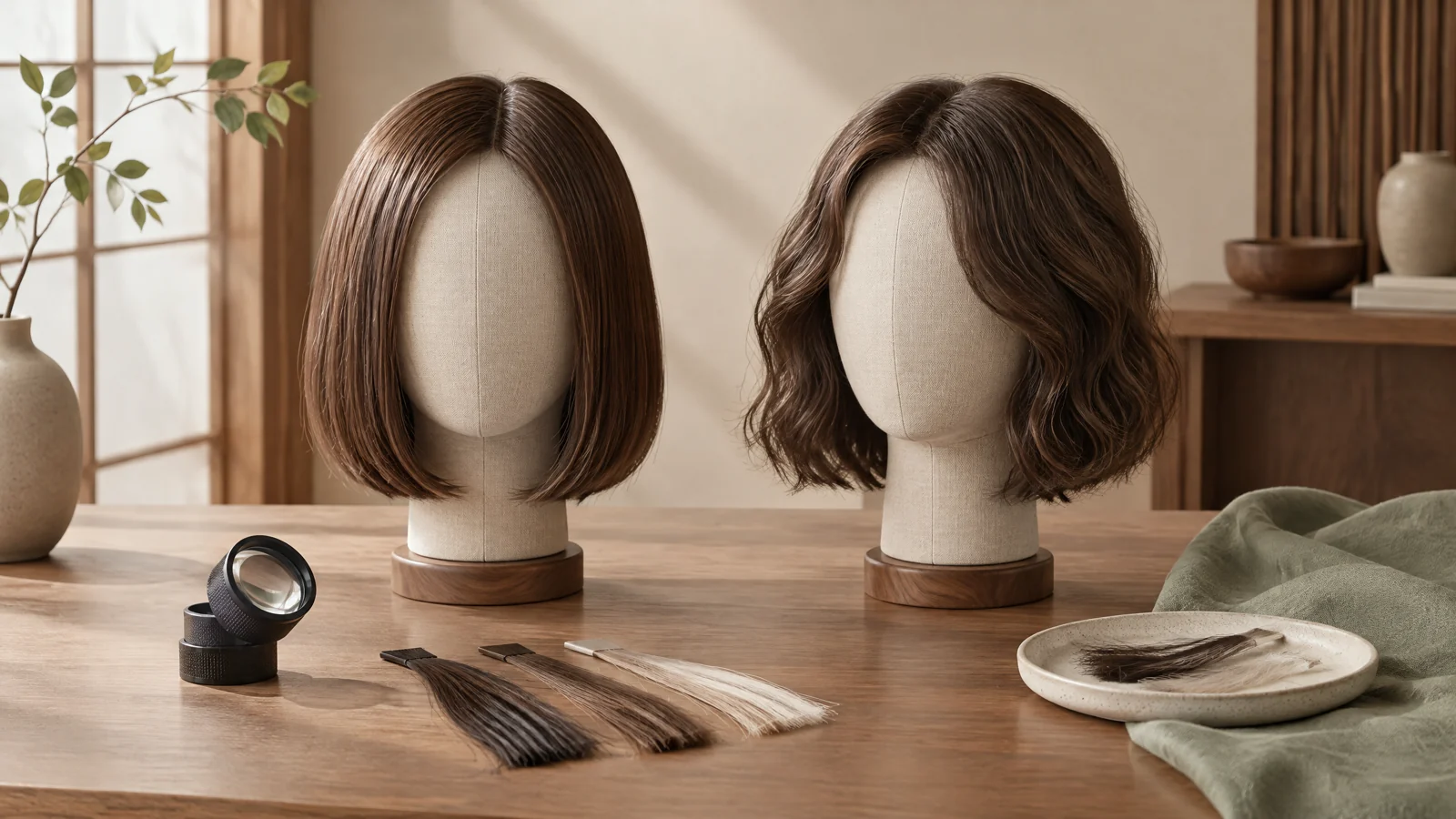
Human hair is not a promise that the piece will behave like the hair growing on your head. Your own hair may form a soft bend after air-drying while the candidate is presented smoothly styled. Ask which finish the product has as supplied and what care recreates it. If you do not want regular restyling, that difference belongs in the purchase decision rather than becoming an obligation afterward.
Ask for the exact washing, drying and heat instructions before choosing. The American Cancer Society advises against hair dryers and curling irons unless the wig is heat resistant. [1] For any candidate, obtain the maker's more specific directions rather than transferring a familiar tool setting from your own hair. No universal temperature is justified by the words human hair, and optional styling flexibility has little value if it is unconfirmed.
Keep the two care routines distinct. Canvas Blend's post-colour hair care guide concerns your own coloured hair; it does not establish suitable shampoo, conditioner or treatment for a topper. Ask whether the product's care fits your time and handling preferences. Do not approve a surrounding-hair colour change without considering that it would add upkeep alongside, rather than replace, the piece's existing care needs.
Comfort can override a visual match. Do not accept pulling or pressure simply because the colour looks convincing. The sensitive scalp hair colour guide helps frame caution around native-hair salon decisions, not topper suitability. Seek medical advice for persistent pain, redness, broken skin or concern about the cause of hair loss. A topper is an appearance choice, not a treatment or a route to regrowth.
06
What would a no-colour-change decision look like in a hypothetical purchase?
Consider this explicitly hypothetical shopper, not a real customer: someone with dark brown roots, slightly warmer shoulder-length ends and an air-dried bend. They want top coverage, refuse recolouring their own hair and do not want daily straightening. Assume two candidates have had coverage and attachment assessed as workable. Candidate A is a flat dark brown supplied straight; Candidate B has gentler tonal variation but costs more in the hypothetical quotations.
The shopper does not automatically choose the cheaper dark shade. They ask to assess both candidates beside the visible side sections and ends, with their own hair in its ordinary finish. Suppose A creates an obvious straight section through the surrounding bend, while B looks acceptable without additional daily styling. B then offers a better fit with the stated boundary, but only if its actual care and quoted terms are acceptable.
Now change the assumption: B's tone appears conspicuously warm at the front, and the proposed remedy is to colour the shopper's own hair. That fails the original brief even if the finished salon look might be attractive. The appropriate next step is another confirmed candidate or a pause, not treating the topper as a reason to abandon a no-colour-change preference. This is a decision example, not evidence of either product's performance.
If no partial piece produces an acceptable transition, comparing human hair wigs introduces a different coverage choice rather than a guaranteed solution. Whole-head coverage can reduce reliance on exposed surrounding lengths, but brings its own fit and care questions. The shopper may prefer that compromise, continue searching for a topper or buy nothing. None requires changing their own colour to justify the search.

07
What should be confirmed before an enquiry becomes a purchase?
Send a focused request with the exact model and shade, your visible-hair reference and the changes you will not accept. Ask for confirmed base dimensions, attachment and fibre description separately from colour assessment. Remy status or a named construction must be stated for the item, not inferred from its category. This makes an answer actionable without asking the seller to guarantee an identical match under every possible light.
Keep supply confirmation separate from specification confirmation. A catalogue can show a model and list colours without establishing present stock, access to a sample or an assessment appointment. Ask what can actually be supplied and on what terms. An Ownstrand message is an enquiry until the quotation and ordering arrangements are agreed; it is not an automatic order or a promise of same-day viewing.
Read return and exchange terms before payment, especially if the shade cannot be assessed directly. The American Cancer Society highlights that some sellers charge restocking fees or do not accept returns. [1] That is a prompt to ask for the relevant seller's terms, not a claim about Ownstrand's policy. Clarify restrictions after wearing, cutting or colouring, and obtain the answer before approving anything that changes the item.
If you also want a Canvas Blend conversation about keeping or trimming your native hair, use the booking page to clarify that separate appointment's scope. Do not assume topper supply, adhesive installation or a joint package is included. Keep the native-hair brief unchanged unless you independently decide otherwise. A shared owner does not make the two businesses' services, quotations or product responsibilities interchangeable.
- Identify the exact model and shade rather than sending only a category name.
- State the surrounding hair you intend to preserve and your no-change limits.
- Confirm coverage and attachment separately from shade evidence.
- Obtain exact-item care directions, supply information and written ordering terms.
- Pause if the only proposed remedy is an alteration you have not chosen.
What else should you know?
Do I have to dye my own hair to wear a topper?
No. Keeping your own colour is a valid buying constraint. Compare the exact candidate with the hair that will remain visible, and reject a proposed solution if it depends on a colour change you do not want. An acceptable option is not guaranteed to exist in every shortlist.
Should I match the roots or the ends?
Prioritise the exposed meeting points in your intended hairstyle. The relevant reference may be a side section, front strand or visible length rather than one overall shade. Record those areas separately when your roots and ends differ.
Does a human-hair label mean the topper can be dyed to match?
No. Processing and alteration permissions vary. Jon Renau warns about unpredictable colouring and discusses a limited named colour range, not blanket permission. [2] Obtain the exact maker's instructions and appropriately qualified advice; do not buy a mismatch on the assumption it can be corrected.
Can a phone photo prove the colour is right?
No. A photo helps communicate your current hair and narrow choices, but cannot guarantee a match. Ask what evidence or viewing is available for the exact model and shade, and compare the visible transition in natural light where possible. [1]
Is a slightly different shade always a bad choice?
Not necessarily. Modest variation may be acceptable through the lengths while looking conspicuous at a short exposed section. Assess the location and your tolerance for the difference. There is no universal amount of contrast that every shopper should accept.
Does booking Canvas Blend include topper fitting or supply?
Do not assume so. Clarify any native-hair appointment separately from a product enquiry. This guide does not establish that Canvas Blend supplies toppers, provides adhesive installation or offers a joint package with Ownstrand.
What is the practical next step?
Before contacting a seller, prepare one ordinary-hairstyle reference and a short statement of what stays unchanged. Choose candidates against that brief, then ask how their colour and texture can be assessed beside the hair you will expose. The most useful outcome is an acceptable transition with a routine you want, not a supposedly perfect shade that requires an unwanted salon change.
Do not authorise cutting, colouring or payment simply to keep a promising enquiry moving. Confirm the exact piece, its care and the purchase terms first. If those answers reveal a compromise outside your limits, revise the shortlist or pause. Preserving the option to walk away is part of good selection, particularly when your purpose is to add coverage while keeping your own hair recognisably yours.
For hair that looks dry, frizzy, or prone to breakage in a photo, read about damaged hair treatment Hong Kong to help frame questions for a colour-care consultation.
Sources and editorial notes
- [1] American Cancer Society — Wigs for Hair Loss
- [2] Jon Renau — Color Customizing a Human Hair Topper
- [3] Jon Renau — Why Are Renau Natural Colors Warmer?
This AI-assisted Canvas Blend guide is not a real-client case study or an article reviewed by Vit So. OWNSTRAND and Canvas Blend share ownership; links are not independent third-party endorsements. Confirm wig, hairpiece and natural-hair services, fees and appointments separately. Materials, stock and handling limits depend on the actual product. Appearance coverage does not replace medical assessment of hair loss or scalp concerns.
Canvas Blend Editorial — AI-assisted guide, prepared on 2026-11-06. Ownstrand and Canvas Blend have the same owner, so this is not an independent third-party recommendation. The guide combines the supplied page information with the external sources cited; it is not a hands-on product test, a real customer case, medical advice or confirmation of supply, shade access, fitting or alteration services. The purchase example is explicitly hypothetical. No claim is made that Vit So wrote or reviewed this article, and Canvas Blend native-hair services should not be treated as topper supply, installation or a joint package.
Continue reading
Wig SelectionHow do you choose custom vs ready-made wigs without over-specifying?
Decide which wig requirements need making to order, which an existing design can meet, and what to confirm before committing, with a practical comparison and hypothetical example.
Wig SelectionWhat do wig prices in Hong Kong include when comparing custom wigs and toppers?
Compare custom full-wig and topper quotes on separate lines, with coverage, fitting, finishing, natural-hair work and order terms made explicit.
 Wig Selection
What should you check at a custom wig fitting Hong Kong completion visit?
Prepare for a completed custom wig fitting with questions about comfort, agreed appearance, irreversible cutting, care instructions and unresolved collection details.