Coverage × Comfort × Personal Choice
How should you assess wavy wigs before relying on restyling?
瀏覽獨立繁體中文指南 →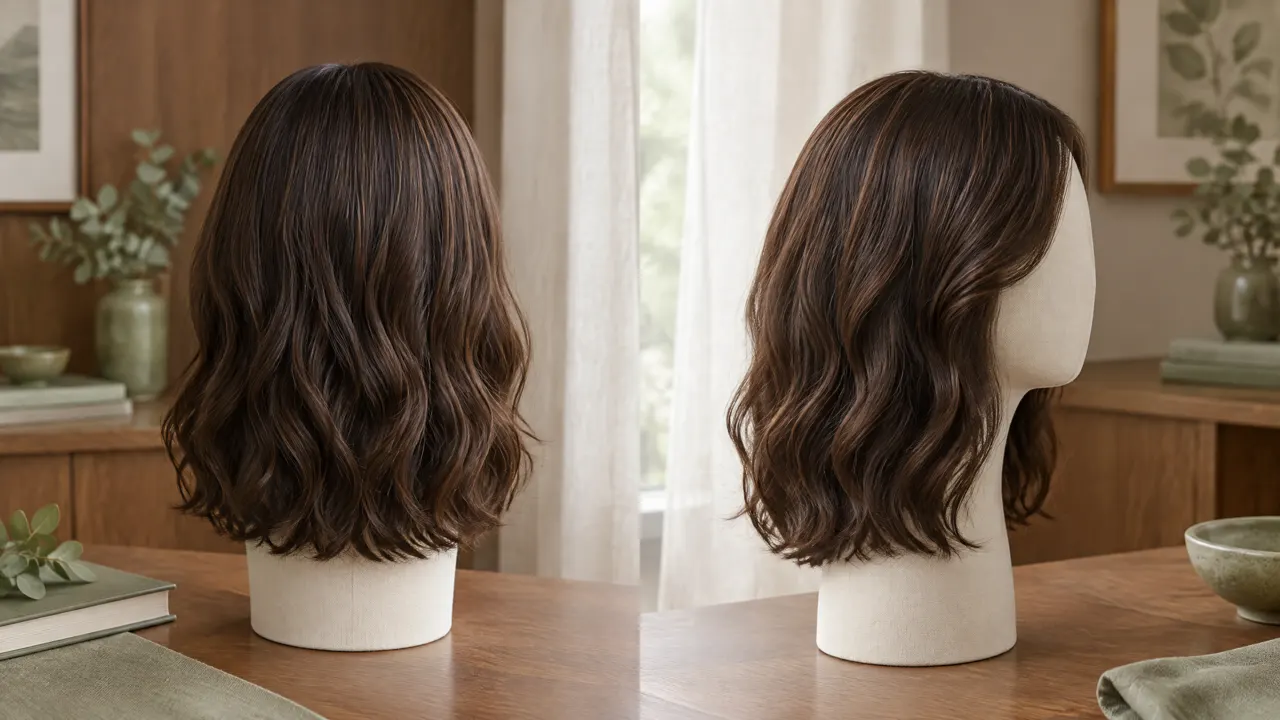
Choose a wavy wig whose supplied pattern already works for your everyday look, then treat permitted restyling as an optional adjustment rather than a rescue plan. Confirm the exact fibre, the styling history of any sample, and the maker's care instructions before deciding that an unwanted bend can be changed or restored.
The important question is not simply whether a wig can be curled. It is whether you would enjoy its shape on an ordinary morning without recreating a styled photograph. A broad wave starting near the cheek can feel quite different from soft movement confined to the ends, even when both listings use the same texture label. Make that difference the centre of your shortlist.
For this decision, 'original pattern' means the shape the identified model is supplied with before optional cutting or restyling. It does not necessarily mean an unprocessed natural curl. A display sample may have been arranged, brushed out or heat styled, while a photograph may show a deliberately finished look. Ask what you are seeing rather than assuming every attractive image records the untouched product.
A useful purchase therefore starts with two separate records: the visible wave you want and the product information needed to maintain or change it. Cancer Research UK says most synthetic wigs come ready to wear, while some human-hair wigs require styling by a hairdresser.[1] That distinction supports examining the starting shape; it does not tell you how a particular model will behave after washing.
When lightened pieces need a softer-looking refresh between appointments, read about highlights Hong Kong to see how considered placement can work alongside a practical at-home care routine.
01
Are you seeing the supplied wave or a styled display?
Ask for the manufacturer, model name and fibre description before comparing pictures. These details connect the attractive shape to an identifiable product rather than a general inspiration image. Request a manufacturer reference showing the supplied texture where one exists. If the seller can only provide a styled sample, keep its appearance on your shortlist but mark the original wave as an unanswered question.
Separate three kinds of evidence: a manufacturer's model image, a seller's photograph of an identified item, and a concept hairstyle image. Each can be useful, but they answer different questions. A concept image expresses a direction; it cannot establish the fibre or the untouched texture of something you will receive. An identified sample is stronger evidence, provided its styling history is explained.
When sharing references from the Canvas Blend hairstyle gallery, label them as visual inspiration, not evidence that a matching wig exists. Circle the feature you like, such as a shallow bend beside the face, rather than asking for the whole image to be duplicated. This helps keep a hairstyle discussion separate from a supplier's confirmation of an actual wig model.
Use the wavy wigs category to identify possible patterns, then investigate the individual item. Body wave, loose wave and beach wave are descriptive labels, not standard measurements. None establishes cap design or material, and 'beach' does not establish water suitability. A catalogue reference also does not confirm current supply, even when a style has a detailed description.
An attractive display is a lead to investigate, not proof of the untouched pattern.
02
Which parts of the wave must already suit you?
Describe the pattern by position before judging whether it is too curly or too flat. Look at where the first noticeable bend begins, how broad the bends are through the sides, and what happens at the ends. A smooth crown followed by lower waves creates a different outline from repeated bends starting high. Decide which of those features you would not want to change.
Inspect direction as well as strength. A front section curving towards the cheek may interrupt the outline you prefer, while one sweeping away may feel more open. Look at both sides and the back, not only the most flattering angle. If the style has an asymmetrical arrangement, ask whether that comes from its supplied shape, its cut, or the way the sample was styled.
Judge the wig at its intended wearing length without stretching the waves to imagine a different result. The same bend can occupy a large part of a compact cut or a smaller part of a longer silhouette. Similarly, layers can place ends at different heights. If your plan requires removing the section that carries the visible wave, the original pattern may not be a good starting point.
Keep colour and lighting consistent while comparing texture. Highlights can make bends easier to see, so a bright image and a dark image may exaggerate their apparent difference. The Canvas Blend guide to before-and-after hair photographs offers a useful record-making context for your own hair references. Apply the comparison discipline without treating natural-hair colour results as predictions of wig performance.
- Identify the first visible bend: near the crown, beside the face, or lower down.
- Record whether the front turns inward or outward in the supplied reference.
- Inspect the ends and back before approving the overall pattern.

03
How does fibre change the importance of the starting shape?
For a regular synthetic model, approach the supplied pattern as a substantial part of what you are buying. Jon Renau's regular synthetic guidance recommends arranging its fibre with fingertips or suitable wig tools and explicitly prohibits heated styling tools.[2] This is manufacturer-specific guidance, not a rulebook for every brand, but it shows why purchasing an unwanted wave with a heat-based correction in mind can be a poor plan.
Distinguish arranging a style from rebuilding it. Separating some strands or settling a displaced section may alter the presentation without producing a new underlying wave. Ask the seller which category your desired change belongs to. If you want to replace a deep, regular pattern with faint movement, do not accept 'you can style it' as sufficient detail; ask what change is actually permitted for that model.
The human hair vs synthetic wigs comparison is useful here because fibre affects the questions you need answered, not because one material wins automatically. A human-hair option may offer relevant styling possibilities, but it can also involve maintaining the desired finish. Confirm whether the item arrives in that finish or whether the pictured waves require an additional styling appointment.
Evaluate any extra flexibility against the routine you will actually sustain. Someone wanting a consistent supplied wave may value a close starting match more than multiple styling options. Someone comfortable arranging professional restyling may accept a different starting shape, provided the method and ongoing work are understood. Neither preference justifies assuming every human-hair product accepts the treatments used on hair growing from a scalp.
To compare a painted gradient with more defined foil placement, start with balayage Hong Kong and consider your everyday styling, colour base, and preferred upkeep before deciding.
| Option | What must be established | Main selection trade-off |
|---|---|---|
| Regular synthetic with a close supplied wave | Exact original texture and permitted non-heat arranging | Less need to redesign the pattern, but do not assume heat-based changes are available |
| Heat-friendly synthetic with a close supplied wave | Model-specific tools, limits and post-styling care | An allowed adjustment may be useful, but additional flexibility has its own care requirements |
| Heat-friendly synthetic with an unwanted supplied wave | Whether the desired change and later restoration are supported | The purchase depends on work succeeding; a fibre label alone does not resolve that risk |
| Human hair pictured in styled waves | Supplied texture, styling required and ongoing maintenance | The finished image may require repeated work rather than describe a ready-shaped result |
04
Would changing the pattern leave you able to restore it?
Before approving a change, ask two questions: can the desired pattern be created, and what would be required to return to the original look? These are not the same promise. Do not assume washing resets every fibre to the factory wave. Ask what the manufacturer says about post-wash appearance, and distinguish a confirmed instruction from the seller's expectation or an example from another model.
Browse heat-friendly synthetic wigs only with a defined styling goal. The label does not supply a universal temperature or permission for every device. Cancer Research UK warns that direct heat can damage synthetic fibres and advises checking manufacturer information.[1] If the exact instructions do not cover your intended change, leave that change unresolved rather than testing the wig by trial and error.
Jon Renau's HD instructions describe controlled heat styling with cooling stages, and specify a different combing routine from its regular synthetic guidance.[3] Those requirements illustrate that an allowed change can involve a process, not a quick interchangeable trick. They apply to that manufacturer's HD system; they are not directions for another fibre. Obtain the current instructions for the identified model before commissioning any restyling.
Also separate shipping distortion from a genuinely unwanted pattern. Jon Renau's regular synthetic page discusses a slight 'cold crimp' and returning its product towards the original shape under its directions.[2] That is not evidence that a pronounced supplied wave can be converted into a different texture without heat. If a sample looks uneven, ask whether it reflects packaging, wear, styling or the model's original design.
Permission to change a pattern is not a guarantee of an easy return to it.
05
What should an unmodified assessment establish before cutting or styling?
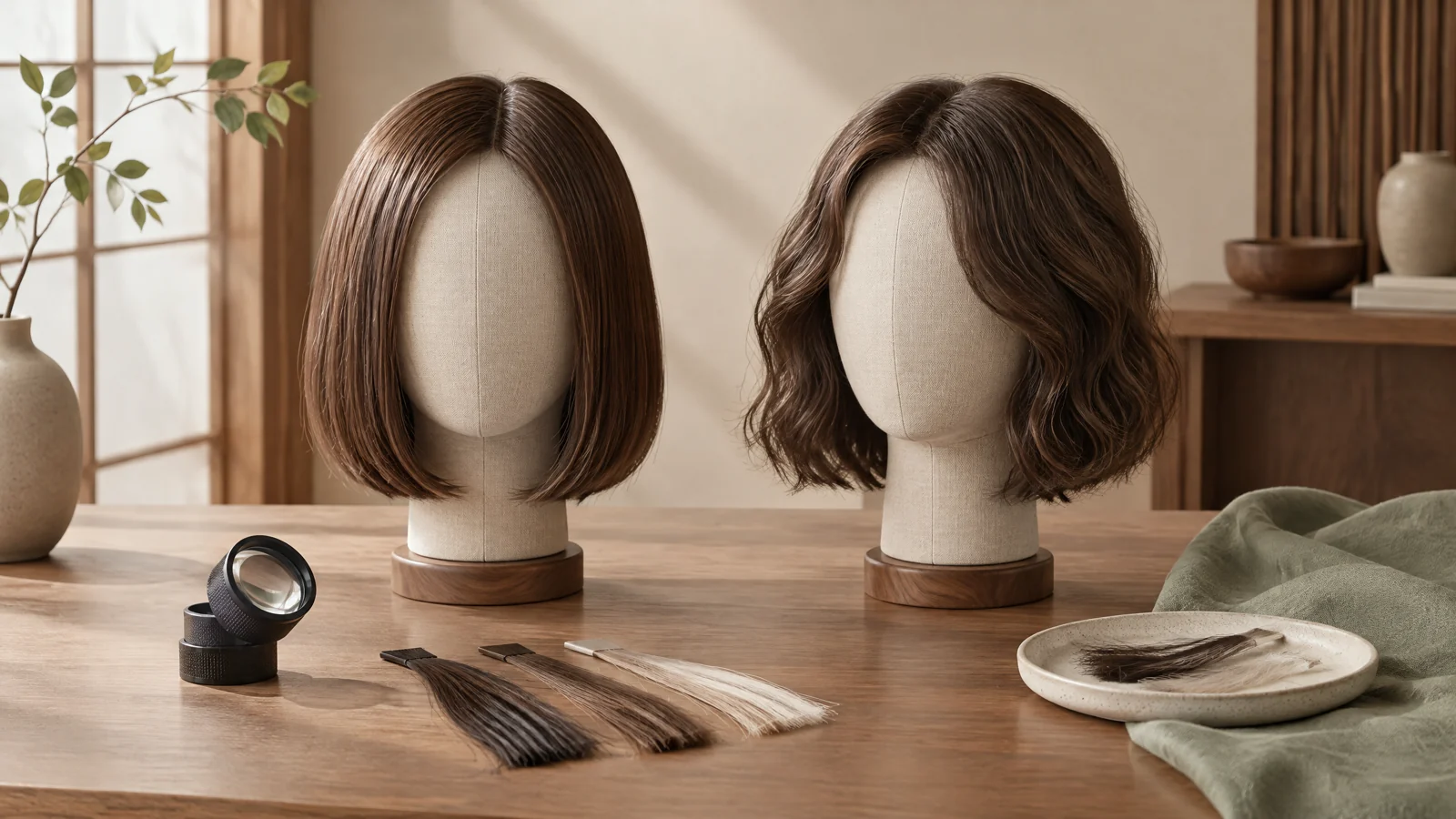
If an assessment is available, request that the identified sample be shown before optional alterations. Ask how it has already been prepared and what you may do during the assessment. Any brushing, product use or fitting should follow the seller's terms and the maker's instructions. Do not wash, heat style or cut an item merely to test a purchase assumption or before understanding acceptance and return conditions.
Observe the front, sides and back with the cap positioned as instructed. If the cap sits incorrectly, the first bend may appear in a different place, confusing fit with texture. Decide whether the shape works when properly positioned before discussing a redesign. Where useful and permitted, make a simple visual record. Keep lighting and camera distance consistent rather than letting one polished angle determine the decision.
A separate record of your own hair can clarify what is exposed and what is covered without turning the purchase into a colour or cutting project. Keep recent trim details and ordinary-day photographs, not only styled ones. The Canvas Blend filter-versus-real-image diary is relevant to evaluating reference presentation, but it does not document a test of any wig's original wave.
Do not let an appealing pattern overrule a wearing problem. Note pressure, irritation or difficulty positioning the cap separately from appearance. The Canvas Blend sensitive-scalp guide concerns natural-hair colour precautions, not wig suitability. Persistent pain, redness, broken skin or concerns about hair loss belong with a healthcare professional; a wig is an appearance choice, not a diagnosis or regrowth treatment.
06
How would a low-styling shopper choose between three plausible options?
Consider an explicitly hypothetical shopper who wants broad waves below the cheek, a relatively smooth crown, and no routine heated styling. Assume three identified options have comparable acceptable fit and coverage: A is regular synthetic with the desired supplied bends; B is heat-friendly synthetic with much tighter waves; C is human hair photographed after a professional wave styling. These are invented options, not stock claims or customer results.
Under those assumptions, A is the strongest starting candidate because its original shape matches the ordinary-day goal without a proposed transformation. It still needs confirmation of its original reference, care instructions and supply. The decision is not that regular synthetic is always better; it is that a close supplied pattern solves this shopper's main requirement more directly than a feature they do not plan to use.
B becomes competitive only if the shopper changes the brief or obtains a workable, permitted adjustment plan that they accept. Its heat-friendly label has little value to someone unwilling to maintain a redesigned pattern. C needs a clear answer about what arrives and how the photographed waves are maintained. If the finish requires repeated professional work, that conflicts with the hypothetical low-styling preference rather than proving the product is poor.
Now change one assumption: the shopper wants distinctly different textures for different occasions and accepts the associated styling work. B or C may deserve closer investigation, but only after their specific permissions and starting textures are established. This reversal shows why the right comparison depends on use. Do not pay for theoretical flexibility until you can explain which permitted change you will actually use.
07
What needs confirming before you commit to the chosen pattern?
Send a concise enquiry naming the model and showing the feature you want to preserve. Ask for the stated fibre, original texture reference, sample styling history and relevant care document. Where restyling is essential, describe the desired change and request confirmation of the permitted approach. An answer about a different style or a general material category should not close an item-specific question.
Keep commercial arrangements separate from the texture discussion. Confirm supply, the quotation's scope, whether any requested adjustment is included, and the acceptance or return conditions before proceeding. A catalogue listing is not a stock confirmation, and an enquiry is not an order. If the seller cannot resolve a critical detail about the supplied wave, pause the commitment rather than replacing evidence with optimism.
For any separate natural-hair trim or colour discussion, state that scope through Canvas Blend's booking page and confirm what the appointment covers. Do not assume it includes wig supply, attachment, alterations or a joint package. The relationship explained on Canvas Blend's about page does not remove the need to establish which business is responsible for each requested service.
What else should you know?
Does 'body wave' tell me the original pattern precisely?
No. It describes a broad visual direction, not a standard bend size or spacing. Compare the identified model's original reference, including where the wave starts and how the ends sit.
Will washing bring back the factory waves after restyling?
Do not assume so. Ask for the exact manufacturer's explanation of post-wash behaviour and any work needed to restore the look. Permission to restyle does not establish automatic restoration.
Is a heat-friendly label enough to choose a tighter pattern and loosen it later?
No. Confirm that the intended change is supported for that model, what care it involves and whether the result fits your routine. If the original wave already suits you, there is less dependence on an unconfirmed transformation.
Can I judge the supplied pattern from one photograph?
One image can start a shortlist, but it may show a styled sample or concept hairstyle. Ask for an identified reference and views of the sides, ends and back, with the styling history explained.
Should I cut a sample to see whether the waves improve?
No. Assess it without unauthorised changes and establish the seller's terms first. Cutting removes material and can change where the pattern appears; discuss any permitted alteration with an appropriate professional before committing.
Does a more expensive wig guarantee a better-looking wave?
No. Cancer Research UK notes that a higher price does not guarantee a more realistic appearance.[1] Evaluate the specific shape, fit and required styling rather than using price as evidence that its original pattern suits you.
What is the practical next step?
Start your next enquiry with a pattern requirement rather than a general request for something wavy: for example, broad bends beginning below the cheek with softly shaped ends. Attach a clearly labelled inspiration image and ask which identified model comes closest before optional restyling. This makes the supplied shape the decision's foundation instead of treating a future adjustment as the answer to every mismatch.
Choose only after the evidence covers the feature you cannot compromise on and the care you are willing to do. If you would dislike the original wave whenever optional styling is unavailable, reconsider the model. A good starting match is not a promise of zero maintenance; it is a practical way to reduce reliance on changes whose permissions, effort or restoration remain uncertain.
Before choosing a new colour, review balayage price Hong Kong alongside your hair length, density, and preferred technique so you can plan the appointment with clarity.
Sources and editorial notes
- [1] Cancer Research UK — Wigs, hats and scarves
- [2] Jon Renau — Synthetic Hair Care and Styling Tips
- [3] Jon Renau — Care and Tips for HD Fiber
This AI-assisted Canvas Blend guide is not a real-client case study or an article reviewed by Vit So. OWNSTRAND and Canvas Blend share ownership; links are not independent third-party endorsements. Confirm wig, hairpiece and natural-hair services, fees and appointments separately. Materials, stock and handling limits depend on the actual product. Appearance coverage does not replace medical assessment of hair loss or scalp concerns.
Canvas Blend Editorial — AI-assisted guide, prepared on 2026-11-06. Ownstrand and Canvas Blend share the same owner, so this is not an independent third-party recommendation. It uses supplied page information and the cited public sources; no physical wig testing or real customer case is claimed. The selection example is explicitly hypothetical. This guide is not attributed to Vit So and does not claim his review. Product supply, exact fibre permissions, sample condition, commercial terms and separate service scopes require confirmation; the article does not establish medical suitability or treatment effects.
Continue reading
 Wig Selection
What should you check at a custom wig fitting Hong Kong completion visit?
Prepare for a completed custom wig fitting with questions about comfort, agreed appearance, irreversible cutting, care instructions and unresolved collection details.
Wig SelectionHow do you write a repeatable colour brief for grey wigs?
Turn grey percentages and salt-and-pepper placement into a clear shopping brief: define the base, map visible zones, compare references and rank acceptable compromises.
 Wig Selection
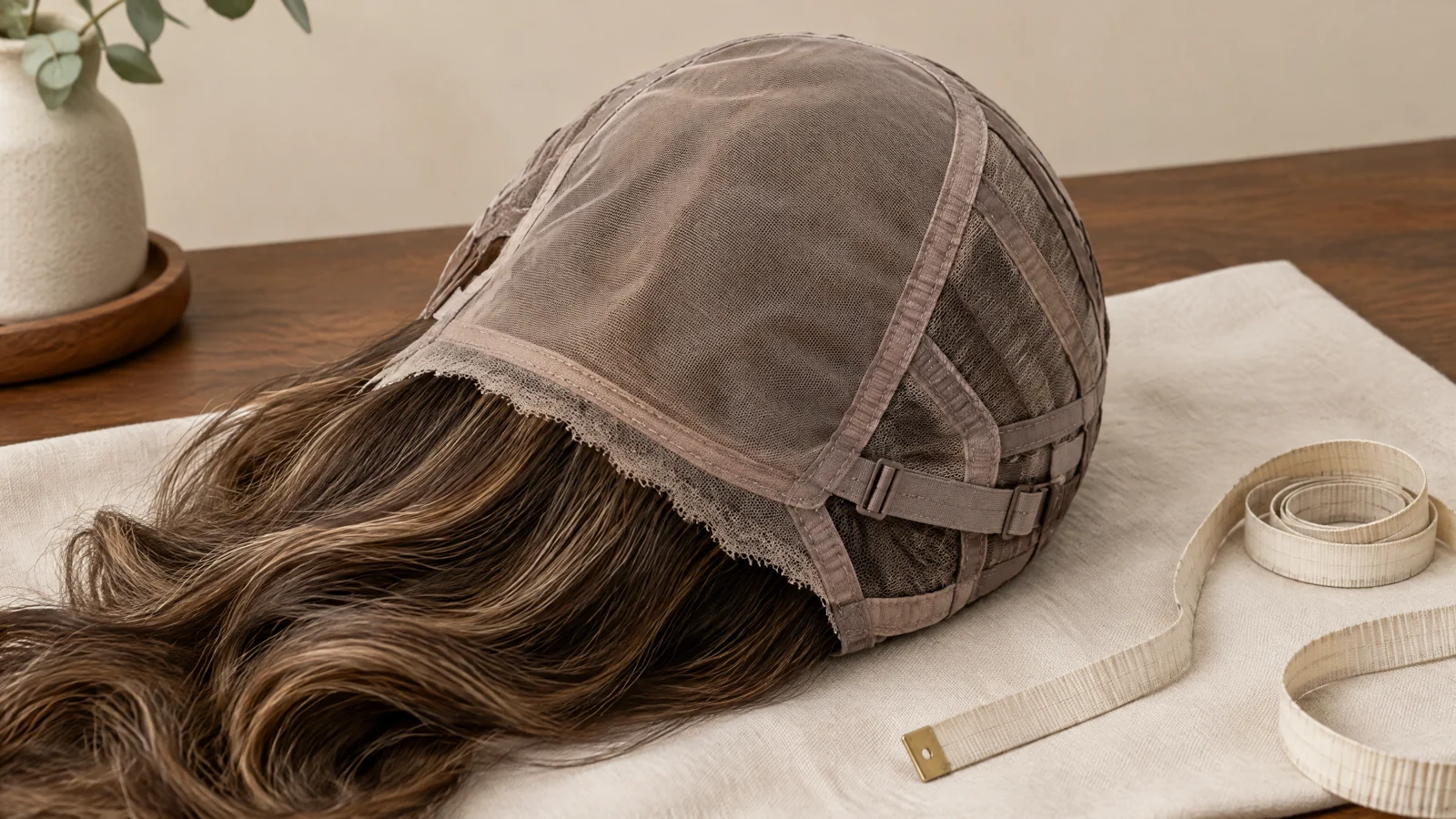
How should you describe coverage before comparing men's wigs?
Compare men's full wigs, toupees and hair systems by the area covered, the natural hair left visible and the product details a seller must confirm.