Coverage × Comfort × Personal Choice
How should you choose a men's hairpiece for work and compare crown-coverage quotes?
瀏覽獨立繁體中文指南 →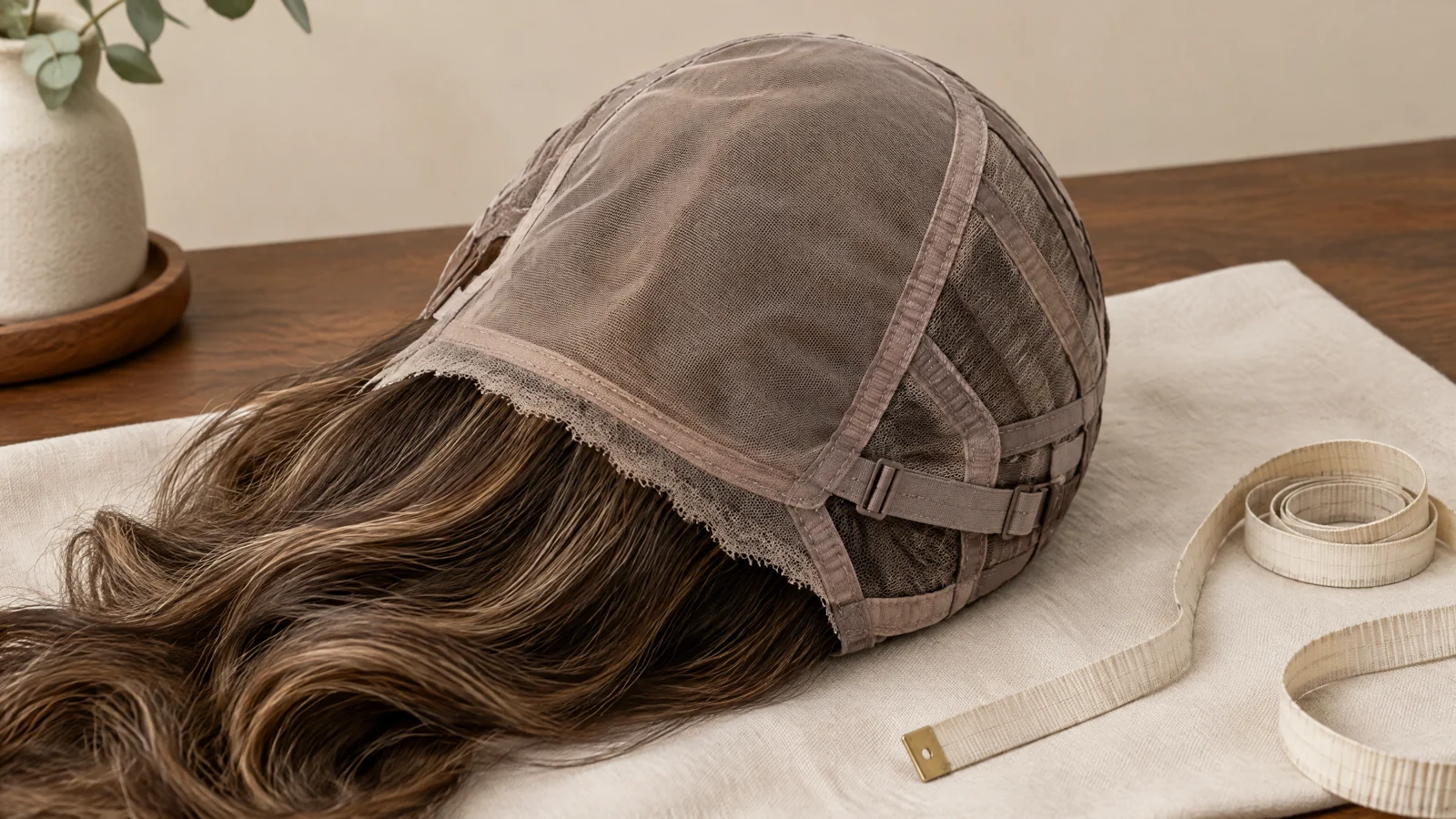
Choose workday crown coverage by checking where the base ends against your remaining hair and how the fitted piece behaves during ordinary desk movements. Compare quotations only after the exact item, attachment approach, fitting work and supply conditions are clear; a cheaper headline figure cannot settle those questions.
For office wear, the useful goal is not maximum hair everywhere. It is coverage you are comfortable with when you sit below overhead lighting, turn towards a colleague or lean forward over a laptop. These views can expose different parts of the crown from a straight-on photograph. Write down the situations that matter before selecting a hairstyle or asking for a price.
A workday purchase also has to fit your calendar. Morning preparation, changes to your existing haircut and time without the piece during cleaning can matter as much as its appearance at a fitting. This guide treats those practical demands as purchase conditions, not as proof that any product will remain undetectable or secure throughout every activity.
Canvas Blend Editorial prepared this AI-assisted guide. Canvas Blend and Ownstrand share the same owner, so this is not an independent third-party recommendation. The analysis uses published selection guidance and manufacturer specifications, not customer trials. The example below is hypothetical, and none of the discussion establishes current stock, personal suitability or a medical benefit.
From root touch-ups to pre-wedding colour planning, use balayage price Hong Kong as an initial reference and discuss your current hair condition before confirming the service.
01
Which crown views actually need coverage during your working day?
Begin with the area you want to change, rather than the product name. A mirror may show a small sparse patch while a photograph from behind shows thinning extending towards the upper back of the head. Separate the visible sparse area from the surrounding hair that would frame the piece. Neither a photograph nor a self-measurement replaces a fitting assessment.
The American Cancer Society describes a topper as adding coverage and volume to thinning hair on top, whereas a full wig covers the entire head. [1] That distinction helps set a shopping boundary: someone keeping their front and sides may be comparing partial pieces, but someone seeking whole-head coverage needs a different comparison. It does not establish the fit of any particular topper.
Ask yourself whether the concern is visible scalp, a flat crown silhouette or both. Added hair may change the silhouette without covering all the scalp you wanted concealed. Conversely, broader coverage may involve more existing hair beneath the base than you prefer. Make those priorities explicit so that a seller can explain the proposed item's position rather than merely show a fuller hairstyle.
Ownstrand's men's hairpiece page is a starting point for a partial-coverage enquiry, not a guarantee of an appropriate office-wear option. Describe the crown area, your usual parting and the hair you want left visible. Ask which exact piece is under discussion and where its boundary would sit before treating it as a candidate.
Define the views and area you want covered before comparing labels or prices.
02
How does a narrow top piece compare with a broader partial base?
The base footprint is the area occupied by the foundation, not the reach of the hair hanging from it. Longer fibres may lie over a sparse patch even though the foundation is elsewhere. Ask for both the base measurements and the proposed position on your head. A width and length alone do not describe the curve, edge shape or usable attachment locations.
Manufacturer specifications illustrate why category labels are insufficient. HairUWear lists In Full Effect with a 5-inch by 2.5-inch base, a monofilament construction and five pressure-sensitive clips. [3] Jon Renau lists JJ with a 6.75-inch by 9.25-inch base, synthetic hair, single monofilament with a polyurethane-coated perimeter and a tape/clip application method. [4] These are examples of different footprints, not a ranking or a stock report.
A narrow foundation may be worth assessing when the desired coverage is limited and the proposed clip positions can be evaluated against remaining hair. A broader foundation may be worth comparing when the sparse area extends beyond that footprint. Neither conclusion follows automatically from the dimensions. Ask the fitter to show the boundary and explain which attachment arrangement would actually be used for you.
The men's hairpiece for thinning crown guide can help frame that enquiry, but catalogue inclusion is not supply confirmation. If a listed specification differs from the maker's information, ask the seller to resolve it before quoting. Do not assume that a product can be resized, that clips are suitable for your remaining hair or that an attachment service is offered.
Keep the comparison tied to workday needs rather than optional features. If you wear your own front hair forward and want only crown coverage, an elaborate front-edge description may not answer the main question. If the proposed base reaches towards your front hairline, that edge becomes relevant. Pay for a confirmed benefit you need, not an impressive term whose practical role remains unexplained.
| Route | Potential workday trade-off | Evidence to request |
|---|---|---|
| Narrow top piece, illustrated by In Full Effect [3] | May target a limited area, but the footprint could miss part of the intended crown coverage | Base position, boundary coverage and assessment of all proposed clip locations |
| Broader partial base, illustrated by JJ [4] | Offers a different footprint, but may place more existing hair under the foundation | Actual fit, selected attachment arrangement and the hair remaining outside the base |
| Full wig | Whole-head coverage changes the role of the wearer's front and side hair | Brand-specific cap sizing, comfort and whether whole-head coverage is wanted |
| Made-to-order enquiry | May involve a different measurement and fitting process, with additional commitments | Exact construction, available adjustments, included appointments and confirmed terms |

03
What should an office-focused fitting actually check?
Ask whether there is time to assess the proposed piece from above and behind, not only in a front mirror. With permission, take reference photographs under ordinary indoor light and near a window. Keep your usual glasses on for the final assessment if you normally wear them. The purpose is to identify coverage gaps and awkward boundaries, not to certify invisibility.
Use ordinary movements during the agreed fitting: sit as you would at a desk, look down, turn your head and return upright. Ask what the fitter is checking when you do this. A boundary that appears satisfactory while standing still needs further discussion if it becomes visible in your normal posture. Do not turn a fitting into an unapproved pulling or attachment-strength test.
State the comfort questions in concrete terms. Can you feel concentrated pressure? Does movement cause pulling at a particular point? Is the piece distracting when you look down for several minutes? Explain any history of scalp sensitivity before attachment is considered. A short fitting cannot prove that you will be comfortable for an entire workday, so ask how later concerns would be handled.
Cancer Research UK advises taking time with selection and notes that people differ in how they adjust to wearing a wig. [2] That supports a cautious introduction rather than a promise of instant familiarity. If appropriate and permitted by the item's instructions, a first short wear at home may help you understand handling before an important meeting. It does not replace professional fitting or make an unsuitable piece safe.
Agree on the acceptance checks before any irreversible alteration. Ask whether you can review coverage and position before cutting or custom work proceeds, and what happens if the desired result cannot be achieved. The Canvas Blend gallery can provide hairstyle-direction references, but its images are not evidence of hairpiece performance, wearer outcomes or services included with an Ownstrand purchase.
Before choosing a new tone, the guide to hair colour salon Sheung Wan can help you consider access from Central, natural daylight, and an appointment time that suits your week.
04
Can the care routine and remaining haircut fit your work schedule?
Ask for the exact item's wearing, removal, washing, drying and storage instructions before purchase. Find out what you would do on a cleaning day and whether professional maintenance is necessary. The American Cancer Society describes synthetic wigs as generally lower-maintenance than human-hair wigs. [1] That broad comparison is useful, but the actual workload still depends on the chosen piece and permitted styling.
Do not buy heat-friendly hair on the assumption that it allows any tool or routine. Cancer Research UK says to check manufacturer information before exposing synthetic hair to direct heat. [2] Ask for the instructions supplied with the specific item, including limitations relevant to your morning routine. This guide gives no universal temperature, and human hair is not blanket permission for colouring, bleaching or perming a finished piece.
Remaining hair creates a separate maintenance commitment. A freshly cropped side or crown perimeter may meet the piece differently from the same hair several weeks later. Ask what natural-hair length needs to be retained and who will handle future trims. The haircut and colour-record tips offer a way to organise reference notes; record the intended natural-hair boundary without treating salon records as a fitting certificate.
If your exposed hair already has colour, keep its care instructions separate from those for the hairpiece. The post-colour hair-care guide concerns your own coloured hair, not permission to use the same products on every fibre or base. If you plan ongoing natural-grey coverage, discuss that distinct appointment scope through grey-coverage hair colour; buying a piece does not require dyeing your remaining hair.
Budget time for the specific piece and your remaining hair as two separate routines.
05
What must a quotation specify before two prices are comparable?
Treat a search for men's wig price Hong Kong as the start of an item-specific enquiry. A full-wig quote, a crown-piece quote and a made-to-order discussion are not interchangeable. Ownstrand's verified page describes enquiries rather than website checkout. Sending a message does not place or pay for an order, reserve an item or confirm that a selected colour can be supplied.
Request a written item reference with the coverage type, base dimensions, fibre and selected colour or other option. Then ask for the amount payable in HKD and the quotation date. This article does not reproduce reference prices because they would not establish the cost of your crown piece. Any eventual amount should be connected to the actual specification and reconfirmed before commitment.
Have the seller distinguish the product charge from services. Ask whether measurement, sample viewing, fitting and cutting are included, optional or unavailable for this route. If a return appointment forms part of custom work, ask which work is performed then. A description of a custom process should not be transferred automatically to a standard catalogue item or interpreted as an offer of adhesive installation.
Also establish the practical cost of aftercare without inventing an annual lifespan. Ask which supplies are necessary, whether maintenance appointments carry a separate charge and how repairs or replacement enquiries are handled. The relevant comparison is the obligations you can reasonably identify now. A predicted cost per year is unreliable when wear frequency, maintenance needs and replacement timing remain unknown.
Return and alteration conditions belong in the comparison, not in fine print read after payment. The American Cancer Society recommends checking return or exchange policies before buying and notes that restrictions or restocking fees can apply. [1] Ask specifically how fitting, cutting or customisation affects your options. Do not assume another retailer's policy applies, or that a request for clarification creates a right to cancel.
- Identify the exact item and selected specification rather than a category name.
- Separate confirmed supply from the quoted price and any estimated completion date.
- List included services, optional charges and required care supplies.
- Clarify payment stages and the consequences of cutting or customisation.
- Ask what support is available if a fit concern appears after collection.
06
How would a hypothetical office buyer weigh the trade-offs?
Consider a hypothetical buyer, Alex, who works at a desk, keeps his existing front and side hair and wants coverage over a crown patch. Assume that he has not yet been fitted and that two candidate pieces may be available for assessment. These are invented conditions for decision-making, not a customer story, a diagnosis or a statement about Ownstrand's stock.
Candidate A has a narrow foundation and a lower quoted purchase amount. Candidate B has a broader foundation and a higher amount that includes a specified fitting and cutting appointment. Alex should first ask whether A covers the area he identified when leaning towards his laptop. If it misses that area, the lower amount does not make it a satisfactory solution to his stated goal.
Suppose both candidates provide the desired coverage during the assessment. Alex can then compare the actual attachment proposal and comfort, rather than selecting B simply because it is larger. If A's proposed attachment points cannot be used comfortably with his remaining hair, that concern needs resolution. If B occupies more area than he wants and feels distracting, extra coverage is not automatically an advantage.
Now assume A's fitting and cutting are separately chargeable, while B's quote includes one appointment but excludes later adjustments. Alex requests both totals for the same agreed scope and asks about follow-up charges. He also compares the instructed morning preparation with the time he can realistically allow. This may reverse the initial price impression without asserting that either material is universally better.
The decision has a sensible stopping point. If neither candidate can demonstrate the required coverage and an acceptable wearing arrangement, Alex can defer rather than pay for an unresolved compromise. Cancer Research UK notes that a more expensive wig does not guarantee a more realistic appearance. [2] In this example, verified coverage and manageable obligations matter more than upgrading for price or terminology alone.
07
Which unanswered questions should stop you from committing?
Pause if the quotation names only a general category, if a specification conflict is unresolved or if supply remains unconfirmed for the selected option. Ask the seller to state what is known and what still requires measurement, viewing or ordering checks. A picture, catalogue entry or reference amount is not evidence that the exact item will be available for a particular work event.
Separate a requested date from a confirmed arrangement. Explain your meeting or travel deadline, then ask whether the item and any fitting steps can be completed in time. Do not schedule your first wear around a promise inferred from a general production description. If the timing is uncertain, keep your current hairstyle as the working plan rather than making irreversible changes in anticipation.
Pain, redness, broken skin or concerns about the cause of hair loss are reasons to seek appropriate healthcare advice, not to solve the problem by buying a tighter or different piece. A hairpiece is a cosmetic choice and does not restore hair growth. The sensitive-scalp hair-colour guide addresses a separate salon context; it cannot clear you for attachment or replace medical assessment.
Keep the two businesses' arrangements separate. Use Ownstrand's relevant page to enquire about its item and quote. If you also need an existing-hair trim or colour discussion, use Canvas Blend booking to confirm that distinct scope before arranging it. Shared ownership does not mean Canvas Blend supplies hairpieces, performs adhesive installation or offers a combined package, and it does not merge either business's pricing.
Do not turn an enquiry into a commitment while the item, fit, supply or terms remain unclear.
What else should you know?
Is the smallest crown piece the best choice for an office hairstyle?
Not automatically. Its foundation and proposed position must cover the area you want addressed, and the attachment arrangement must be assessed against remaining hair. A larger piece is not automatically better either; compare coverage, comfort and boundaries for the exact item.
Can a top-piece measurement tell me whether it will fit?
No. Base dimensions help compare footprints, but they do not establish how the foundation follows your head or where it can be secured. Ask for an item-specific positioning and fitting assessment rather than treating width and length as proof.
Does a higher quote mean the result will look more natural?
No. Cancer Research UK cautions that greater expense does not guarantee a more realistic appearance. [2] Compare the proposed coverage and fitted appearance, then check which services and specifications explain the price difference.
Does a quotation include cutting and later adjustments?
Only if those services are expressly included for the selected route. Ask whether the quoted appointment covers the piece, your natural hair or both, and whether follow-up work is separately charged. A general custom-service description is not confirmation for every product.
Can I reserve a piece by sending an enquiry?
Do not assume so. An enquiry asks for information; it does not itself place or pay for an order or confirm supply. Obtain the exact item, quotation, availability and applicable ordering arrangements directly before proceeding.
What if a piece feels uncomfortable or my scalp is irritated?
Do not treat discomfort as proof that the fit only needs to be tighter. Ask the fitter about the item and its wearing instructions. Persistent pain, redness, broken skin or concerns about hair loss need appropriate healthcare advice; a cosmetic hairpiece is not treatment.
What is the practical next step?
Prepare one clear workday brief: the crown views you want covered, the natural hair you want retained and the routine you can manage. Request an assessment of the exact footprint and attachment proposal, followed by a written quote with comparable inclusions. Keep supply and timing as separate confirmations. Those steps make the purchase decision clearer without pretending that a catalogue or a short fitting can answer everything.
Before paying or authorising alteration, decide which unresolved points would make you defer. Coverage that misses your stated goal, unacceptable pressure or unclear ordering terms deserves further discussion rather than a rushed upgrade. Keep any Canvas Blend natural-hair appointment separate from the Ownstrand enquiry, and use manufacturer instructions for the chosen piece rather than borrowing a routine from another material or style.
When looking up hair salon Central, check the location details and choose a consultation time that lets you compare tones in natural daylight before or after work.
Sources and editorial notes
- [1] American Cancer Society — Wigs for Hair Loss
- [2] Cancer Research UK — Wigs, hats and scarves
- [3] HairUWear — In Full Effect manufacturer specifications
- [4] Jon Renau — JJ manufacturer specifications
This AI-assisted Canvas Blend guide is not a real-client case study or an article reviewed by Vit So. OWNSTRAND and Canvas Blend share ownership; links are not independent third-party endorsements. Confirm wig, hairpiece and natural-hair services, fees and appointments separately. Materials, stock and handling limits depend on the actual product. Appearance coverage does not replace medical assessment of hair loss or scalp concerns.
By Canvas Blend Editorial — AI-assisted guide prepared for 2026-11-06. Ownstrand and Canvas Blend share the same owner; this is not an independent third-party recommendation. No first-hand product tests or customer outcomes are claimed, and the office-buyer example is explicitly hypothetical. This guide does not claim authorship or review by Vit So. Published specifications and enquiry descriptions do not confirm stock, a personal fit, attachment services, medical effects or a universal care routine. Canvas Blend natural-hair services and Ownstrand hairpiece enquiries have separate scopes and terms.
Continue reading
Wig SelectionHow can a custom men's hair system enquiry preserve your options?
Plan a custom hair-system enquiry around reversible choices, written permissions and cosmetic limits. Compare wearing commitments before changing your own hair or approving production.
Wig SelectionWhich men's hair system for receding hairline keeps the front shape you want to show?
Choose front-hairline coverage without erasing a familiar outline: compare visible temples, existing hair, density transitions and realistic fitting checks.
Wig SelectionHow should you compare a removable vs bonded hair system for men by daily responsibility?
Compare removable and bonded hair systems by handling, fitting evidence, scalp checks, ongoing costs and support, with a clearly hypothetical buying example.