Coverage × Comfort × Personal Choice
What does a lace front wig actually tell you about fibre, fit and heat?
瀏覽獨立繁體中文指南 →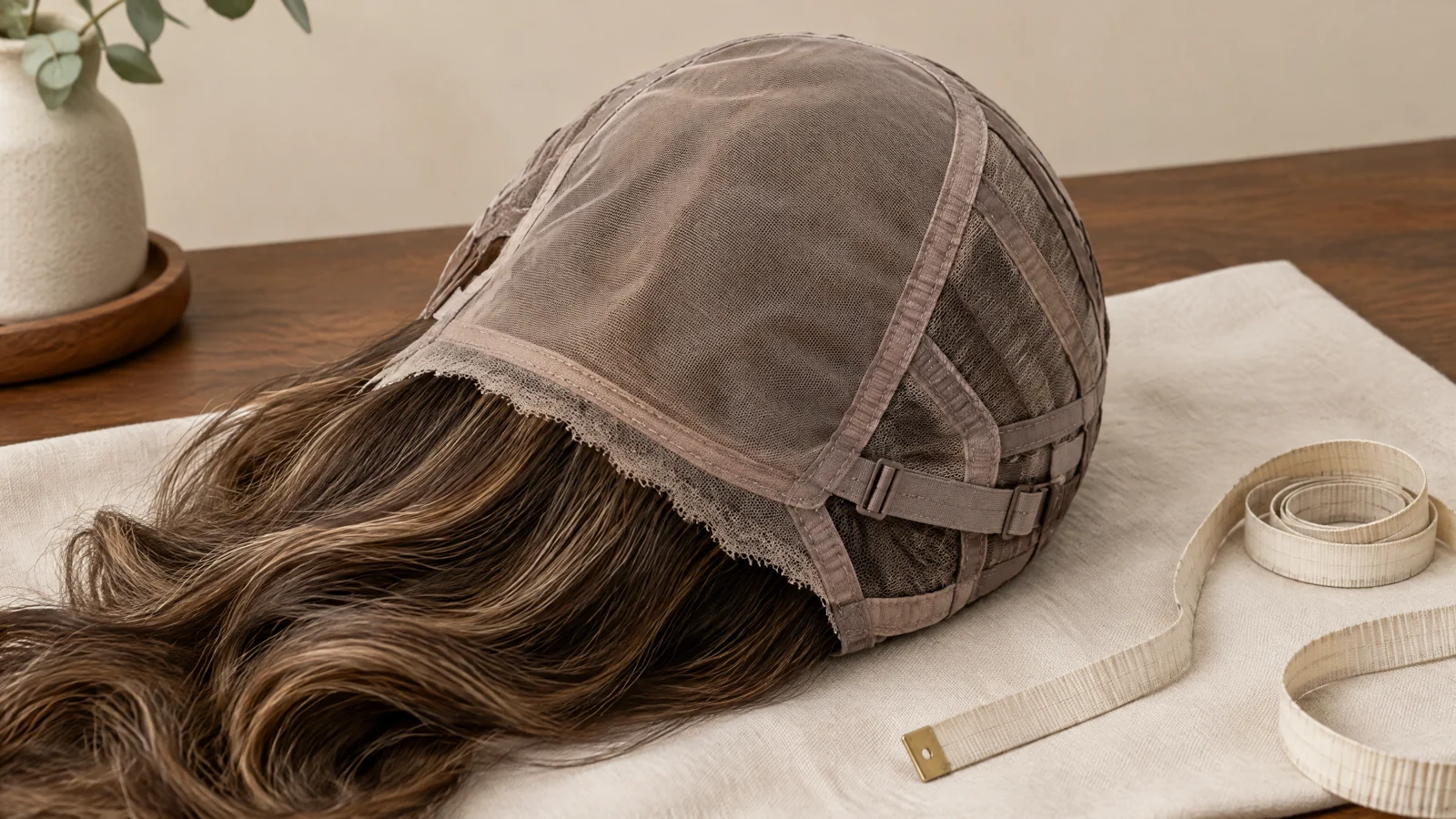
A lace front describes the front hairline construction, not the hair fibre, fastening method or permission to use heat. Choose by checking those three specifications separately, then test whether the exact combination fits your intended style and care routine.
A product title can sound complete while leaving the buying decision unfinished. A front construction label might sit beside an adhesive-free claim and a heat-friendly fibre description, but each answers a different question. The useful comparison is not which title contains the most features. It is whether the specifications establish the particular appearance, wearing method and styling option you need.
Start with your non-negotiable requirement: an exposed forehead, removable wear without adhesive, or the option to change a supplied curl pattern. Then identify what evidence would establish that requirement for the exact model. A photograph cannot settle fastening or heat permissions, and a fibre name cannot establish cap fit. Keeping these decisions separate also prevents paying for flexibility you will rarely use.
From root touch-ups to pre-wedding colour planning, use balayage price Hong Kong as an initial reference and discuss your current hair condition before confirming the service.
01
Which part of the specification does each label describe?
Think of the description as several fields rather than a single quality grade. Front construction concerns the edge near the forehead. Cap construction concerns the remaining base and parting area. Fibre concerns the hair material. Wearing instructions concern how the product is held in place. Heat guidance concerns permitted tools and conditions. None of these fields can safely fill a blank in another.
The American Cancer Society describes a lace front as a sheer lace panel along the front hairline, then discusses synthetic and human hair as separate material choices. That separation is useful for shopping: the same front concept can occur with different fibres. Its general guide does not establish the construction of a particular catalogue item or promise an invisible edge on every wearer. [1]
For each candidate, write down the manufacturer's model reference and copy the wording into the relevant field. If the listing only says synthetic, leave heat permission unresolved. If it only says lace front, leave adhesive-free wear unresolved. This is not rejecting the product; it is identifying the next question. A clearly documented simpler design can be a stronger purchase than a feature-rich description with missing instructions.
Also keep local construction names in their original context. A Chinese style name such as Swiss net should not automatically be translated into lace front or monofilament and treated as the same specification. Ask where the material sits and how the cap is built. Comparing physical areas and instructions is more reliable than matching names across brands or languages.
| Field | What it can establish | What still needs separate confirmation |
|---|---|---|
| Front construction | A stated lace area near the forehead | Fibre, remaining cap, fastening and edge-handling instructions |
| Remaining cap and top | Specified wefts, mesh, hand-tied areas or parting construction | Personal comfort, permitted styling and adhesive-free wear |
| Fibre | Human hair, regular synthetic or a named heat-friendly fibre | Cap fit and the exact heat tools or chemical treatments allowed |
| Adhesive-free wearing claim | An intended wearing method when supported by instructions | Which holding features are present and whether the fit suits you |
| Heat guidance | Named tools and conditions for the specified fibre or model | Permission for other devices, cap contact or unrestricted restyling |
Do not let one confirmed feature stand in for three unconfirmed specifications.
02
How much front construction do you actually need?
Choose the front according to how you intend to expose it, not how impressive the close-up photograph looks. A fringe usually directs attention differently from a swept-back style. With the latter, ask about the lace coverage at the temples as well as the centre. An attractive frontal picture does not establish that the same edge works with every direction of styling.
The lace front wig category is a starting point for that construction question, not a promise of one lace width, material or fastening system. Check the specific cap description and original maker's reference before comparing it with another item. Broader lace coverage is only useful if the documented design supports a styling choice you actually want to make.
Separate the reference hairstyle from the product specification. Canvas Blend's hair colour gallery can help you describe a preferred overall tone or silhouette, but salon photographs are not evidence of wig density, lace transparency or fibre behaviour. Tell the seller which aspect of a reference matters to you. Otherwise, a discussion about the shape can accidentally become an unsupported assumption about construction.
If your own hair will remain visible around the edge, record that fact rather than assuming every fitting hides it. The before-and-after photography guide is useful for planning clear records of your own hair. Keep light and angles comparable, and note any intended trim separately. Do not alter your natural hair merely to compensate for a wig whose fit or coverage remains unconfirmed.
03
What makes adhesive-free wear credible?
An adhesive-free description becomes useful when the instructions explain how the cap is meant to stay positioned. Ask whether the model has adjustment tabs, an elastic feature, combs or another stated component, and where those features sit. These are questions, not a list of equipment that every wig contains. Your amount of hair underneath also matters when evaluating the proposed wearing method.
When considering a glueless wig, request the model's intended wearing instructions rather than treating the label as a no-slip guarantee. A lace front can be part of such a design, but it does not itself establish hold. If adhesive-free wear is essential, an unconfirmed answer should remain a reason to pause, not an invitation to improvise another attachment method.
The American Cancer Society advises checking the brand's size chart because sizing may vary. Apply that point to the exact model, including the measurements its maker requests, rather than relying on an average-size label. If your hair underneath changes, the fit may need reassessment. Ask what adjustments are intended to do; they should not be assumed to correct every mismatch in cap shape. [1]
If a try-on can be arranged, assess ordinary gentle head movement, the placement around your ears and whether the front lifts or pulls. Wear the glasses you normally use when evaluating the final fit, following the fitting instructions. Do not simulate strenuous activity unless the maker addresses it. Stability that requires uncomfortable tightening is a fit concern, not proof that the attachment system is working well.
Adhesive-free does not mean irritation-free: pressure and contact materials still need personal assessment. Canvas Blend's sensitive-scalp colour guide concerns precautions for natural-hair colour services, not certification of wig materials. Persistent pain, redness, broken skin or concern about hair loss warrants healthcare advice. A wig changes appearance; it does not diagnose a scalp problem or provide a hair-growth treatment.
Before choosing a new tone, the guide to hair colour salon Sheung Wan can help you consider access from Central, natural daylight, and an appointment time that suits your week.
04
What would count as usable heat permission?
First establish whether heat is allowed at all. Then identify the named tool, stated operating conditions and any warnings for the exact fibre or model. Permission to use one device is not permission to use a straightener, heated brush and hairdryer interchangeably. A retailer's heat-friendly filter may help locate candidates, but it does not replace the instructions that govern the item you receive.
Browse heat-friendly synthetic wigs only after identifying the styling change you want. Perhaps you want occasional smoothing rather than daily curl changes. Ask whether that particular method is covered by the maker's directions. If the supplied shape already suits you and you do not intend to use permitted heat styling, the additional fibre feature may bring little practical benefit.
Jon Renau's care guide offers a concrete example of why device permissions need separate reading. Its regular synthetic section prohibits curling irons, flat irons and blow dryers. Its heat-friendly HD section allows specified iron use yet still instructs air drying rather than blow drying. These are manufacturer-specific directions, not rules to transfer to other brands, but they clearly show that heat-friendly does not mean every hot device is allowed. [2]
There is no universal temperature to borrow from a different product. Even a numerical limit is incomplete without the rest of the method and warnings. Ask for the relevant care document and confirm that it matches the fibre supplied. If the instructions are missing or conflicting, do not test the material by trial and error. Request clarification before bringing a heated tool near it.
Keep fibre permission separate from protecting the cap and its front edge. Being able to style hair lengths does not establish that a hot tool can contact lace or other base materials. The American Cancer Society also cautions against hairdryers or curling irons unless the wig is heat resistant and warns about sudden heat near cooking sources. Styling permission is not a general guarantee against environmental heat damage. [1]
05
Can your own-hair routine stay separate from wig care?
Two heads of hair can require two different care routines. Products used on your natural hair are not automatically appropriate for artificial fibres or a knotted cap. Jon Renau separates its human-hair, synthetic and heat-friendly guidance, including different handling instructions. Before purchase, check whether you are comfortable maintaining the actual material rather than assuming your existing shampoo, brush and drying routine will transfer. [2]
A heat-friendly option may also carry handling obligations that are easy to overlook when focusing on versatility. Jon Renau's HD guidance specifies a wide-tooth comb and regular detangling rather than unrestricted use of other brushes. This does not establish the care routine for every heat-friendly fibre. It illustrates why a permitted styling feature should be assessed alongside the maintenance required to keep that specific product usable. [2]
If a natural-hair colour change is already under consideration, keep it as a separate decision. Canvas Blend's no-bleach colour options guide can help frame that discussion, but choosing a wig does not create a need to colour or lighten your own hair. Nor does a human-hair wig label establish permission for salon dye, bleach or chemical treatment on the purchased piece.
Record which care products belong to which material. The post-colour hair care guide addresses natural hair after colouring; use the wig maker's directions for the wig instead. Ask about service scope before requesting a trim or restyle. A natural-hair salon appointment does not automatically include fibre-wig cutting, lace alteration, adhesive installation or manufacturer-approved servicing of an outside product.
06
Which compromise wins in a realistic hypothetical shortlist?
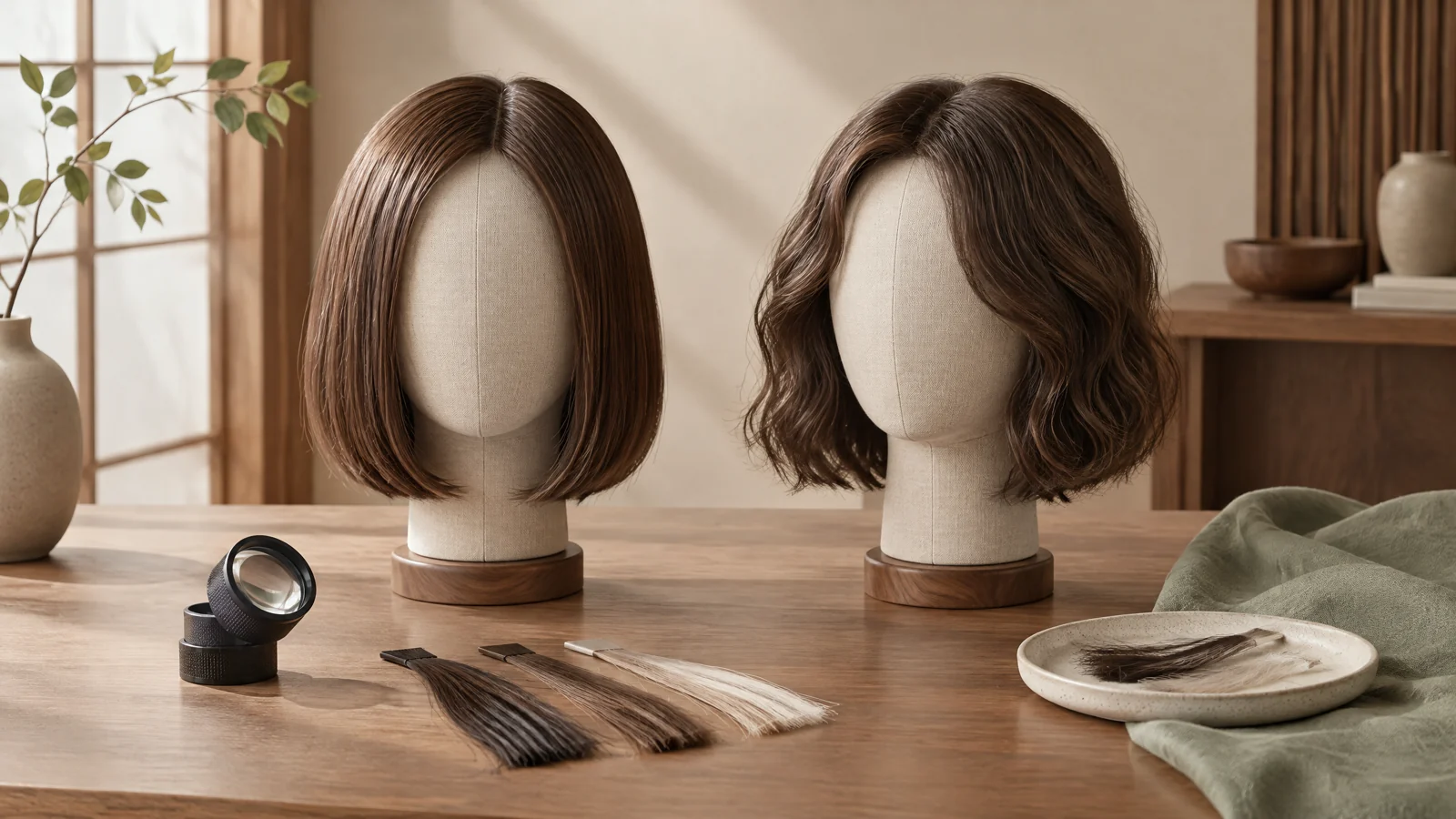
Consider this explicitly hypothetical shopping example, not a real customer account or a report of available stock. The shopper wants a swept-back bob, removal each evening without adhesive, and minimal weekday preparation. They sometimes imagine wearing waves but have no established heat-styling routine. Their shortlist contains three invented candidates with different confirmed features. The decision is about priorities, not a claim that one material is universally superior.
Candidate A has a documented front lace panel, regular synthetic fibre and explicit adhesive-free wearing instructions with stated adjustments. Its supplied bob already matches the desired shape, although fit still needs checking. It cannot be selected on the assumption of later heat restyling. For this shopper, accepting the supplied shape may be a reasonable compromise because daily simplicity and the wearing method matter more than occasional waves.
Candidate B has a documented lace front and named heat-friendly fibre, with instructions covering the desired styling tool. Its adhesive-free method is not yet confirmed. This candidate solves a secondary styling preference but leaves the essential wearing requirement open. The rational next step is to ask about fastening and fit, not to purchase it because two attractive features appear in the title. Its extra flexibility cannot resolve the missing evidence.
Candidate C has a specified human-hair fibre and front construction, but its instructions describe a maintenance routine the shopper does not want to undertake. Human hair is not automatically the winning choice when the practical aim is a predictable morning routine. A different shopper who values restyling and accepts the documented upkeep could reasonably rank it higher, provided its wearing method and fit are also established.
The provisional choice is Candidate A if its fitting and edge assessment succeed. Candidate B remains worth reconsidering only if the required wearing method is confirmed and its care commitments are acceptable. If none fits comfortably, the shortlist should change rather than the shopper lowering a safety boundary. This is a conditional decision example: the final result depends on evidence for the actual product, not these invented descriptions.
07
What must be confirmed before an enquiry becomes a purchase?
Send an enquiry that identifies the model, preferred colour and size, then state the requirement that could rule it out. Request the front and remaining cap construction, fibre name, intended fastening method and relevant care document. Asking these together helps avoid receiving an answer about a whole category when you need a specification for one item. Keep unanswered details visible in your comparison notes.
A catalogue entry is not proof of current stock, and a message is not automatically an order. Confirm the exact option, current availability or supply arrangements, quotation and what services are included before committing. Do not presume that every material, cap size, shade or same-day try-on is offered. No price or delivery promise should be inferred from the technical discussion in this guide.
Check returns, exchanges and any restrictions before payment or alteration. The American Cancer Society recommends reviewing the retailer's return policy before buying; the applicable terms still have to come from your seller. Ask whether opening, wearing, cutting or changing the item affects those terms. If an adjustment is proposed, establish who will perform it, what the maker permits and whether it is included in the confirmed scope. [1]
For separate natural-hair trimming or colour planning, use Canvas Blend's booking information and confirm that appointment's scope directly. It should not be treated as a wig-stock reservation or a joint installation package. Keeping the two service conversations distinct makes the final decision clearer: the wig enquiry establishes the product and its wearing requirements, while any salon booking addresses your own hair and the services actually agreed.
What else should you know?
Does lace front mean the wig is human hair?
No. It describes construction at the front hairline. Check the separate fibre field to establish whether the exact model is human hair, regular synthetic, a blend or a named heat-friendly synthetic fibre.
Can a lace front be worn without adhesive?
Some designs may permit it, but front lace alone does not establish the wearing method. Confirm the model's instructions, holding features and fit rather than adding an attachment method yourself.
Does glueless mean the wig will never move?
No. It describes an intended adhesive-free wearing approach, not guaranteed stability. The cap's size, shape, adjustments and your hair underneath still need assessment. Uncomfortable tightening is not a solution to a poor fit.
Does heat-friendly allow me to blow-dry the wig?
Not automatically. Some manufacturer instructions distinguish permitted iron use from drying methods. Read the directions for the exact fibre and model; permission for one tool cannot be extended to another.
Is there one safe temperature for all heat-friendly fibres?
No. Use only the product-specific guidance covering the tool, conditions and any stated limit. If it is unavailable or unclear, seek clarification before applying heat rather than borrowing a setting from another wig.
Should I choose regular synthetic if I never plan to restyle it?
It can be a sensible candidate when the supplied shape suits you and the documented wearing method, fit and care routine are acceptable. Heat-friendly is not automatically better; compare the feature against a styling need you genuinely have.
What is the practical next step?
Make a shortlist with separate columns for front construction, fibre, wearing method and heat guidance. Mark each answer as confirmed or unresolved for the individual model. Decide which unresolved field could stop the purchase, and ask about that first. This gives the enquiry a practical purpose instead of collecting feature names that may have little bearing on your daily use.
Choose the least complicated documented combination that meets your essential requirements, not the most elaborate title. An exposed hairline, adhesive-free removal and occasional restyling are different needs, so each deserves its own evidence. Keep your natural-hair plans separate, retain the maker's instructions, and confirm the seller's terms before payment or alteration. Reconsider the shortlist if fit or care makes the proposed option unsuitable.
When looking up hair salon Central, check the location details and choose a consultation time that lets you compare tones in natural daylight before or after work.
Sources and editorial notes
This AI-assisted Canvas Blend guide is not a real-client case study or an article reviewed by Vit So. OWNSTRAND and Canvas Blend share ownership; links are not independent third-party endorsements. Confirm wig, hairpiece and natural-hair services, fees and appointments separately. Materials, stock and handling limits depend on the actual product. Appearance coverage does not replace medical assessment of hair loss or scalp concerns.
Canvas Blend Editorial — AI-assisted guide, prepared on 2026-11-06. Ownstrand and Canvas Blend have the same owner; this is not an independent third-party recommendation. No claim is made that Vit So wrote or reviewed this article. The shortlist is explicitly hypothetical, with no first-hand product testing or real customer evidence. Source guidance and supplied category descriptions do not confirm current stock, individual fit, every material's suitability or included services. Product-specific maker instructions and seller confirmation remain necessary; wigs are cosmetic appearance options, not medical hair-growth treatments.
Continue reading
Wig SelectionSearching for wigs Hong Kong: how do you compare shops without assuming a recommendation?
Turn wig-shop search results into an evidence-based shortlist: verify product identity, location, fit arrangements, quotes and terms before committing.
Wig SelectionHow should you compare wig prices in Hong Kong before confirming an online order?
Separate a wig catalogue enquiry from an accepted order: verify the exact option, quotation, delivery, returns and service scope before committing online.
Wig SelectionWhat evidence should you request before buying human hair wigs?
Build a buying brief that separates human hair and Remy claims from verified specifications, care limits, fit and purchase terms, with a hypothetical comparison.