Coverage × Comfort × Personal Choice
When do synthetic wigs save money by keeping the factory style?
瀏覽獨立繁體中文指南 →
Keeping a synthetic wig's factory style can be a budget advantage when you already like its supplied shape and can follow its care instructions without planning major changes. Compare confirmed fit, the full quotation and realistic upkeep before paying extra for styling flexibility you may never use.
A lower purchase price is helpful only if the wig works in the form you receive. A fringe that needs substantial correction, a parting you cannot move or a shape you expect to straighten every morning can turn an appealing listing into the wrong purchase. Start by deciding whether you want a dependable repeated look or a base for changing looks.
This is an AI-assisted Canvas Blend Editorial buying guide, not an independent retailer ranking. Canvas Blend and Ownstrand have the same owner; the Canvas Blend background provides context for the salon's identity. We have no wearer test panel or verified customer outcomes for this analysis. The decision example below is explicitly hypothetical, and catalogue details remain subject to confirmation.
For hair that looks dry, frizzy, or prone to breakage in a photo, read about damaged hair treatment Hong Kong to help frame questions for a colour-care consultation.
01
Why can keeping the supplied shape be worth more than extra styling options?
Cancer Research UK describes most synthetic wigs as ready to wear and generally less expensive than real-hair alternatives. That supports considering a supplied hairstyle as a practical purchase rather than an unfinished project. It does not establish a price range for Hong Kong, prove every synthetic option costs less, or guarantee that a particular style will need no fitting attention. [1]
Jon Renau explains that its traditional synthetic fibre has style memory: the original shape is retained after washing. This manufacturer explanation helps show why a ready-shaped style can reduce the need to recreate a hairstyle. It is not a laboratory comparison of all brands, and another maker's care sheet must still establish what happens to its specific fibre. [2]
For a shopper who wants the same shape each working day, that consistency can be useful. There is less reason to purchase styling equipment solely to recreate curls or smooth a cut that already looks right. The saving is conditional, however: you still need to position the wig correctly and follow the stated care routine. Ready-shaped does not mean maintenance-free.
When browsing synthetic wigs, use the category to identify candidate shapes, then read each candidate's fibre and construction details. A photograph of a bob does not prove that its fringe will sit correctly on your face. The strongest budget case is a style you would accept substantially as supplied, rather than the cheapest shape you hope to transform.
The factory shape is a benefit only when it is a shape you actually want to keep.
02
How can you tell whether the factory style already meets your brief?
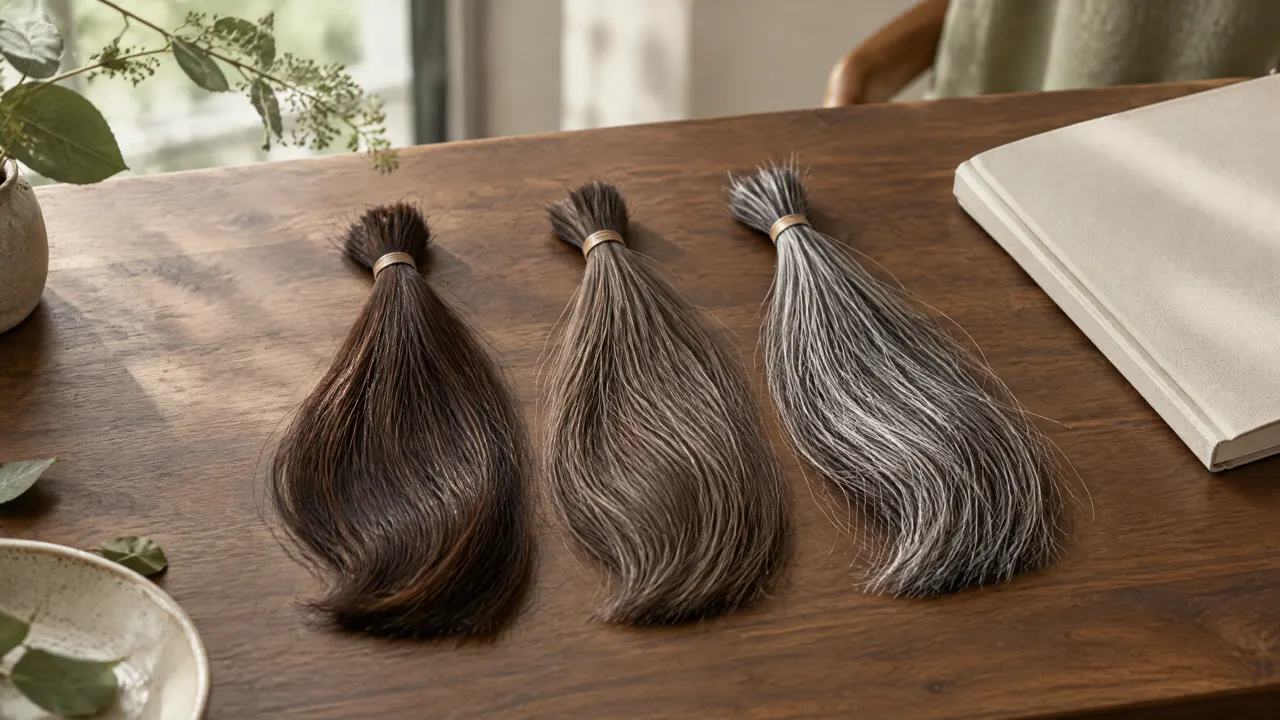
Write a short acceptance brief before collecting listings. Describe where you want the fringe to fall, whether the front will usually be swept back, and how much volume you are comfortable seeing around the face. Specify the hairstyle you expect to wear most often, not every hairstyle you might admire. That makes it easier to reject a tempting but unsuitable bargain.
Use photographs to describe your preferred visual direction without treating them as product specifications. The Canvas Blend gallery can help you communicate a tone or silhouette for discussion, but it is natural-hair work, not evidence that a wig can achieve the same finish. Ask for the original manufacturer's reference for the exact shortlisted wig rather than relying on a concept image.
If keeping a familiar overall appearance matters, an existing haircut record can be useful. The before-and-after photo tips offer a way to organise reference photographs; use them to document your own hair, not to infer a synthetic fibre's colour accuracy. There is no need to commission a colour change simply to make a factory wig seem compatible.
Separate acceptable small differences from changes that would defeat the purchase. You might accept a slightly fuller outline, yet reject a fringe that blocks your view. Ask whether any desired adjustment is possible, who would perform it and whether it affects return eligibility. Do not buy on the assumption that cutting or heat will rescue a mismatch; seek a better starting shape first.
- Record the exact style name, colour option, cap size and stated fibre.
- Mark each preferred feature as essential, negotiable or unnecessary.
- Identify any proposed alteration before deciding whether the purchase makes sense.
03
Which fit and comfort details deserve the budget before restyling features?
Once the supplied shape passes your brief, check whether the cap can work for you. Ask for the maker's measurement guidance and the exact size being quoted. A general size label is not a personal fit assessment. If viewing or trying the specific option is possible, confirm the arrangements first; neither an online listing nor an enquiry guarantees that an item is available to try.
Compare comfort against your intended wear rather than choosing the lightest-looking photograph. Ask what information is available about the cap, adjustment system and contact areas. Where a permitted assessment is possible, notice pressure near the temples, the ears and the back of the head. A lower-priced shape that you cannot comfortably wear is not rescued by having an attractive fibre label.
Pay for a construction detail when it answers a visible requirement. Someone who normally keeps a fringe forward may assess the front differently from someone who sweeps it away. Parting and front-edge construction should therefore be compared separately from heat suitability. Neither a more elaborate cap nor a higher price automatically ensures a more convincing appearance; Cancer Research UK explicitly cautions against that price assumption. [1]
If the scalp is already uncomfortable, do not make pressure or irritation part of the budget compromise. Canvas Blend's sensitive-scalp colour guide is related natural-hair reading, not medical clearance for a wig. Persistent pain, redness, broken skin or concerns about the cause of hair loss warrant healthcare advice. A wig is an appearance option, not a treatment or a promise of regrowth.
Before choosing a new colour, review balayage price Hong Kong alongside your hair length, density, and preferred technique so you can plan the appointment with clarity.
04
When is heat flexibility actually worth paying for?
Consider heat flexibility only after naming a change you genuinely expect to make. Wanting a softly waved work look and a straighter evening look is a specific requirement. Wanting the possibility of doing something different one day is a weaker reason to increase the budget. Even a useful extra feature loses value if you do not want the associated styling work.
Compare heat-friendly synthetic wigs when a planned change matters, but ask whether the exact maker permits that tool and method. The category label does not authorise every device or technique. This guide gives no universal temperature: if the instructions are missing or unclear, do not test a heated tool on the fibre to discover its limits.
The distinction also concerns effort. Jon Renau describes its heat-resistant synthetic and human-hair categories as requiring more time and maintenance than traditional synthetic, while offering styling versatility. That is a maker-specific explanation, not a rule that every heat-friendly option is difficult. Ask what your shortlisted item requires after washing or restyling and decide whether you want that responsibility. [2]
If you dislike the supplied shape but cannot verify how to achieve the replacement shape safely, treat the choice as unresolved rather than flexible. A different ready-shaped model may solve the problem without added tools or intervention. Equally, if changing the style is central to your enjoyment, a cheaper fixed-look option may be false economy even when its factory finish is attractive.
| Decision | Keep the factory shape | Buy for styling flexibility |
|---|---|---|
| Main purpose | Repeat a supplied look you already accept | Make a named change that the maker expressly permits |
| First evidence to obtain | Exact shape, fit information and care sheet | The same details plus relevant tool and method instructions |
| Potential budget benefit | Avoid buying features or tools solely for unused restyling | Avoid buying a fixed look that cannot meet your planned uses |
| Effort to assess | Positioning and the item's routine care | Routine care plus the item's permitted styling tasks |
| Reason to reject | Fit or supplied shape needs an unconfirmed correction | Desired change is unsupported or upkeep is unwanted |

05
What belongs in the budget besides the wig quotation?
Build the initial spending plan from confirmed items. Start with the quotation for the exact style and colour, then ask whether fitting, any agreed adjustment and recommended care items are included or separate. Include delivery only if it applies to the agreed arrangement. Avoid assuming that a headline figure covers finishing work, or that accessories pictured with a style are supplied with it.
Use the guide to wig prices in Hong Kong to frame those scope questions, not to borrow a custom human-hair reference price for a synthetic catalogue item. They are different purchase routes. As of 2026-11-06, this article gives no synthetic price range: request a current item-specific quotation in HKD and confirm what that quotation actually includes.
Keep the wig spending separate from any natural-hair service you independently want. Canvas Blend's salon pricing concerns its own service context and must not be treated as a wig price list or a combined package. A factory style that already suits you does not create a requirement for bleaching, colouring or a salon appointment. Those would need their own purpose and budget.
For ongoing costs, ask which consumables the maker specifies and what professional help, if any, you realistically expect to use. Do not divide a price by an invented lifespan to produce a persuasive cost-per-wear figure. Wear frequency, handling and product condition differ. A modest reserve for a confirmed care need is more defensible than a claimed saving built on guaranteed years of use.
06
How would a factory-style budget work in a hypothetical purchase?
Consider a clearly hypothetical shopper, Alex, who wants one softly layered look for office days and does not enjoy using heated tools. Alex's non-negotiables are a comfortable cap and a fringe that stays out of their eyes in its supplied position. This is a decision illustration, not a real customer account, a product test or a claim about any named model.
Suppose Alex obtains two current quotations with the same clearly stated purchase scope. Option A is a traditional synthetic style whose supplied shape Alex likes. Option B has manufacturer-confirmed heat flexibility but costs more. Assume that fit information is suitable for both and that the stated care routines are manageable. These assumptions must be checked in an actual purchase, not inferred from category names.
On those assumptions, Alex chooses A because the extra flexibility in B does not solve an existing problem. The remaining budget can stay unspent or cover the maker-specified care items that are actually needed. There is no reason to buy a straightener just because a different fibre category allows one. Alex is choosing a fit-for-purpose look, not declaring traditional synthetic universally superior.
Now change one condition: Alex needs a distinctly different texture for regular evening performances, and B's maker expressly permits the required method. B becomes a serious candidate if Alex accepts the additional care and full quotation. Alternatively, if A's fringe requires an unconfirmed correction, its lower price stops being persuasive. The decision changes when the requirement changes, not when marketing calls one option premium.
Choose the lower-cost route only after it meets the requirements you will actually use.

07
What should you confirm before committing to the factory-style choice?
Before payment, keep the agreed style name, colour option, size, fibre description and quotation together. Ask the seller to confirm availability or ordering arrangements, the applicable cancellation or return policy, and whether any inspection or fitting opportunity is possible. An Ownstrand catalogue entry is a reference for an enquiry, not proof of stock. Sending a message does not by itself place an order.
Ask how to assess the supplied item without compromising any return conditions. A wearer may need to check orientation, cap position and the manufacturer's allowed adjustment before deciding the shape is wrong. Do not proceed with cutting, glue work or heated alterations as an experiment. Clarify discrepancies between what was quoted and what was supplied before treating the item as a project to repair.
If your existing natural hair independently needs a trim, use Canvas Blend booking to clarify that salon service separately. A natural-hair appointment does not establish that Canvas Blend supplies wigs, performs adhesive installation or offers joint packages. Keep any wig-specific adjustment question with the wig seller and a professional whose experience with that exact fibre and construction has been confirmed.
Finally, obtain the actual care instructions rather than building a routine from another brand's video. Cancer Research UK advises following the supplier's wearing and care directions and checking manufacturer information before direct heat. Those are useful purchasing checks because a low-cost routine must still be a permitted routine. If the essential instructions cannot be confirmed, pause the purchase rather than guessing. [1]
What else should you know?
Is a factory-styled synthetic wig always the cheapest option?
No. Compare current quotations for exact products with comparable scope. A generally lower-cost fibre category does not prove that every model is cheaper, and poor fit or an unacceptable supplied shape can make a low quotation irrelevant.
Does style memory mean I never need to care for the wig?
No. Style memory describes retained shape in a maker's fibre explanation, not immunity to wear or a substitute for care. Follow the exact product's washing, handling and storage directions.
Should I pay extra for heat-friendly fibre just in case?
Only if the feature has meaningful value for you. Identify the change you expect to make, verify that the maker permits it and consider the required work. Unused flexibility is not automatically a better purchase.
Can a cheaper wig look convincing without an expensive cap?
Possibly, but appearance depends on the actual style, positioning and visible construction. A higher price alone does not guarantee realism. Assess the features relevant to how you plan to wear the front and parting.
Can I assume a listed style is available for a same-day try-on?
No. Ask about the exact style, size and colour and confirm any viewing arrangements before travelling. A catalogue listing and an enquiry do not guarantee stock or a same-day fitting.
Does this guide mean Canvas Blend sells or installs the wig?
No. Canvas Blend's editorial guide and natural-hair services are separate from Ownstrand's product enquiries, despite the same-owner relationship. Do not infer wig supply, adhesive installation or a bundled service from an internal salon link.
What is the practical next step?
Make the next step a comparison of two or three exact supplied looks, not a search for the lowest category price. For each, record whether you accept the factory shape, whether fit information meets your needs, what the quotation includes and whether the maker's care routine is realistic. Remove options that rely on an unconfirmed alteration before comparing their cost.
If the remaining choice already gives you the look you want, keeping its factory style can be a deliberate budget advantage. If a planned change genuinely matters, compare a product with verified permission for that change instead. Spend on requirements you can identify, leave unused features out of the decision, and wait for unresolved product details before committing.
After browsing PMQ or Hollywood Road, readers can use the local overview of hair colour salon Sheung Wan to coordinate a colour consultation with shopping, work, or weekend plans.
Sources and editorial notes
This AI-assisted Canvas Blend guide is not a real-client case study or an article reviewed by Vit So. OWNSTRAND and Canvas Blend share ownership; links are not independent third-party endorsements. Confirm wig, hairpiece and natural-hair services, fees and appointments separately. Materials, stock and handling limits depend on the actual product. Appearance coverage does not replace medical assessment of hair loss or scalp concerns.
Canvas Blend Editorial — AI-assisted guide, prepared for the 2026-11-06 editorial context. Ownstrand and Canvas Blend have the same owner, so this is not an independent third-party recommendation. The cited pages were read for their stated support; no firsthand product tests, real customer outcomes, confirmed stock or universal fibre performance are asserted. The Alex example is entirely hypothetical. Vit So is not claimed to have written or reviewed this article. Product details, quotation scope, availability and any appointment arrangements must be confirmed separately. Wig appearance choices do not diagnose hair loss, treat scalp conditions or promise regrowth.
Continue reading
Wig SelectionHow do you choose custom vs ready-made wigs without over-specifying?
Decide which wig requirements need making to order, which an existing design can meet, and what to confirm before committing, with a practical comparison and hypothetical example.
Wig SelectionWhat do wig prices in Hong Kong include when comparing custom wigs and toppers?
Compare custom full-wig and topper quotes on separate lines, with coverage, fitting, finishing, natural-hair work and order terms made explicit.
 Wig Selection
What should you check at a custom wig fitting Hong Kong completion visit?
Prepare for a completed custom wig fitting with questions about comfort, agreed appearance, irreversible cutting, care instructions and unresolved collection details.