Catering × Gifts × Cakes × Floristry × Occasion Styling
Private floral workshop: Planning an Inclusive Team Session
Browse original Traditional Chinese celebrations and everyday aesthetics articles →
Plan an inclusive private floral workshop by agreeing several equally valued ways to participate before choosing the flowers. Book only after the facilitator confirms the room, materials, teaching approach and adjustments your team actually needs. A private booking creates scope for discussion; it does not automatically guarantee accessibility, personal suitability or individual instruction.
A floral session can give colleagues something interesting to do together without demanding sporting ability or a public presentation. Yet a beautiful invitation can conceal a difficult afternoon: standing throughout, reaching across crowded tables, following a fast demonstration or carrying an awkward arrangement home. Inclusion starts with these ordinary details, rather than with a promise that everyone will enjoy flowers.
For Canvas Blend readers organising a Hong Kong team celebration or creative offsite, the useful question is not which bouquet looks most impressive. It is whether the activity lets people contribute without exposing private information or being ranked against colleagues. This AI-assisted Canvas Blend guide shares that planning approach. Canvas Blend and YumYum share an owner, so it is not an independent third-party review of Y. Florist.
Before lightening through the mid-lengths and ends, read about balayage Hong Kong, assess your current hair condition, and leave time to discuss a simple at-home care routine.
01
What makes a private session genuinely inclusive?
A private workshop reserves an agreed session for your group rather than placing colleagues in an open class. The value is potential control over the teaching and environment, not an automatic entitlement to a personal tutor for every participant. Decide which changes matter most: a seated demonstration, written instructions, quieter working time or an option that avoids handling particular materials.
Use the private floral workshop page as an enquiry starting point. Ask Y. Florist whether a suitable session is currently available and which adjustments can be agreed for your actual group. Do not interpret the page's discussion of personalised instruction as proof of a particular instructor allocation, accessible venue or confirmed curriculum.
Give the activity one modest purpose, such as helping colleagues practise exchanging design ideas. That supports a session with opportunities to listen and make choices. It does not justify promising improved mental health, repaired team relationships or a measurable productivity gain. If the main objective is a serious workplace issue, an attractive craft activity should not replace the appropriate management process.
When choosing between activities, Canvas Blend's Hong Kong team-building aesthetic experience guide offers a related planning context. Apply a simple test here: could someone join the conversation, decline a tool and still be treated as a full participant? If the answer is no, change the format before designing the invitation or selecting a photographic theme.
Treat private booking as an opportunity to negotiate participation, not as evidence that every need is already covered.
03
How can you ask about access without demanding diagnoses?
Send a practical description before asking for requirements. Explain whether the session involves scissors, standing, water, scented materials, spoken demonstrations and carrying a finished piece. People cannot judge an activity from the word creative alone. Offer a private contact route for requests, and keep ordinary preferences separate from health information so a request for seating does not become a public medical disclosure.
HSE's guidance recommends discussing adjustments with workers and describes changes to layouts, equipment and task allocation. It also says employees are under no obligation to disclose details of a disability. These are useful planning principles from a UK workplace source, not a statement of Hong Kong law. Use them to shape a respectful conversation; seek locally applicable advice for legal obligations. [1]
Ask what would make participation workable, not what is wrong with someone. A participant might request a clear view of the demonstration, a written sequence or stems prepared in advance. Share only the operational requirement with the facilitator, with the person's agreement. Do not forward a medical explanation simply because a supplier asks for background; it may add nothing to the arrangement being negotiated.
Preserve the chance to change a choice during the session. Someone who expected to use scissors may find the task uncomfortable, while a quiet observer may decide to arrange stems later. Agree how they can switch without an announcement. Alternative participation should be available to anyone where practicable, rather than introduced as a visible special category that identifies a particular colleague.
Some requirements need specialist input rather than an organiser's guess. HSE identifies occupational health services and medical professionals as possible sources of help and emphasises consent when approaching specialists. [1] If a colleague has a personal health concern, let them seek qualified advice and agree what information can be shared. Neither the salon editor nor a general floral workshop invitation can establish individual medical suitability.
04
Which materials fit the team instead of just the photograph?
Begin with a material inventory, not a mood board. Ask for flower and foliage names, any treatments or sprays, and the tools and fixing materials used. Request clarity about substitutions, especially if a restriction concerns a particular plant or product. A photograph cannot establish fragrance level, skin compatibility or what will actually arrive. Record exclusions so they survive a late change in supply.
CCOHS explains that scented products can trigger adverse reactions and that labels such as unscented do not have a consistent meaning across manufacturers. Its guidance also identifies pollen, glues and cleaning products among possible triggers. [2] For this workshop, ask about the whole room and process, not only fragrant blooms. A request to reduce fragrance is sensible; calling the session allergy-free would be an unsupported guarantee.
If considering preserved flower workshops, ask whether participants arrange already prepared materials or perform any treatment themselves. Also ask about dyes, adhesives, wiring and the care instructions for the exact finished piece. Do not assume preserved means untreated, scent-free or suitable for every attendee. The merchant page is not independent evidence of a universal lifespan or safe formulation.
Fresh stems introduce their own practical demands. RHS recommends gloves when handling cut flowers because some plants are poisonous and others can irritate skin. Its conditioning guidance also recommends removing submerged foliage and allowing prepared stems to take up clean water in a cool place. [3] Ask the facilitator to handle appropriate preparation in advance and demonstrate tool use, rather than making beginners improvise specialised treatments.
Make the easier construction method the starting point. Ask whether a stable container and prepared stems can avoid unnecessary wiring, hot tools or prolonged gripping. If a complex technique is essential to the proposed design, consider a different project. The attractive option is not necessarily the workable one: a simpler piece that participants can shape themselves may serve the session better than an elaborate piece completed mostly by the instructor.
If longer intervals between colour appointments appeal to you, read about babylights Hong Kong and discuss regrowth, upkeep, and your preferred level of brightness during consultation.
05
How should the room support different ways of learning?
Walk the route from arrival to the workstation, including lifts, doors and toilets. A building described as accessible may still have a table layout that obstructs movement. Confirm seated working space, suitable chair options and whether materials can be brought to participants. HSE's examples of adjustments include changing layouts and adapting equipment; use that principle to examine the specific activity rather than accepting a broad venue label. [1]
Position the demonstration where everyone can see it without standing behind a crowd. Ask the instructor to show one stage, explain it and then allow practice before adding another. A brief written sequence can help people rejoin after a pause. Where language needs differ, confirm what instruction can actually be provided. Do not announce a bilingual session unless both the facilitator and the supporting materials are confirmed.
Keep background music optional and prioritise clear speech. Plan a quiet place for a break that does not require someone to leave the event entirely. CCOHS recommends addressing sources of scent and maintaining fresh-air replacement, rather than relying only on a policy notice. [2] Discuss ventilation and cleaning with the venue; an open window or a low-fragrance flower selection is not proof that all sensitivity concerns have been resolved.
Keep water, trimming waste and sharp tools under an agreed handling routine. Ask who checks spills, where unused tools rest and how clear-up is supervised. If refreshments are part of the wider celebration, place them at a separate station rather than among stems and floral products. The facilitator's briefing should explain how participants move between stages safely, without requiring everyone to carry a filled vase around the room.
06
What would a usable facilitator brief look like?
Consider a hypothetical Hong Kong office team planning an afternoon celebration. Several colleagues prefer seated work, one wants a quieter pace and others are keen to try something detailed. This is a planning example, not a report of a real client or a confirmed class. The organiser chooses individual compact arrangements after a shared palette discussion, with optional added detail rather than a competitive final judging round.
The brief asks for prepared stems, an unobstructed demonstration and instructions that participants can revisit. It also asks for a contribution route that does not involve cutting. The decisive question is whether the facilitator can deliver those features without placing a colleague in a token observer role. If the answer is vague, simplify the project or reconsider the activity instead of making a reassuring promise to the team.
Set a minimum finished stage and an optional extension. Everyone should be able to understand what counts as complete before the session starts; additional decoration should remain a choice. Ask how the instructor will respond when someone is behind, ahead or taking a break. This matters more to inclusion than a catalogue of advanced techniques, because it determines whether differences in pace become public pressure.
Confirm who owns each shared or individual piece and whether packaging is supplied. A group photograph does not answer who takes the arrangement away. Ask participants privately whether they want a take-home piece, and agree an alternative destination for unwanted work. For fresh arrangements, request care guidance appropriate to the flowers; RHS recommends clean vases, checking water levels and a cool display position away from heat. [3]
Put the agreed participation features alongside the commercial terms, not in an informal message detached from the booking. The written confirmation should cover material changes, staffing, setup responsibilities and what happens if a requested adjustment cannot be supplied. Check payment and cancellation conditions directly. Private or bespoke does not mean all-inclusive, guaranteed availability or an automatic right to a refund.
- State the session's purpose and say explicitly that there will be no ranking of arrangements.
- Describe the chosen project, its minimum finished stage and any optional extension.
- Confirm seated access, demonstration visibility, teaching language and revisitable instructions.
- Agree material exclusions and obtain approval before substitutions that affect them.
- Provide a private contact and a discreet way to change participation during the session.
- Assign setup, spill checks, clear-up, packaging and the destination of finished pieces.
- Keep the facilitator's commitments with the written booking and payment conditions.
07
How can the workshop fit a celebration without appearance pressure?
A creative celebration sometimes grows into a larger programme with team portraits or individual styling appointments. Keep those choices separate. Participation in a floral activity should not imply consent to photographs, social posting or a personal appearance service. Offer a straightforward way to decline images, and make sure a colleague's arrangement can be recognised without showing their face or attaching their name publicly.
If someone independently wants hair-colour inspiration for an event, Canvas Blend's balayage information gives a relevant salon starting point for discussing a softer transition in colour. That is a separate personal decision, not an activity required for team participation. Floral design preferences may help someone describe an aesthetic they like, but they do not determine a suitable hair treatment or its outcome.
For a person interested in more distinct lighter accents, the highlights service page provides another salon topic to discuss. Keep the consultation with the hair professional rather than translating a flower palette into a technical prescription. Likewise, leave the workshop's material handling and instruction to the floral facilitator. Shared ownership does not make the two businesses' expertise interchangeable or establish floral qualifications for Vit So.
Use Canvas Blend's booking page only for a separate salon enquiry, and confirm floral arrangements with Y. Florist through the relevant workshop enquiry. Do not imply a combined package or shared appointment unless both services explicitly agree it. The best event plan preserves a boundary: colleagues can enjoy making something together without being asked to change their appearance, disclose a condition or take home something they do not want.
What else should you ask about celebration planning and everyday aesthetics?
Does private booking guarantee individual instruction?
No. Ask how many instructors will attend, how demonstrations work and what support is available during practice. Confirm the agreed staffing and teaching format in writing rather than assuming the word private defines them.
Should everyone make the same arrangement?
Not necessarily. A common minimum finished stage with optional detail can accommodate different paces. Shared colour direction can connect the pieces without requiring identical results or a competition.
Can preserved flowers make the session allergy-free?
No such guarantee follows from the material name. Confirm the exact materials, treatments and tools. CCOHS advises considering multiple possible sources of sensitivity, including scented products, pollen and glues. Personal health suitability needs qualified advice. [2]
Must participants explain their medical conditions to the organiser?
Ask privately about practical requirements rather than requesting diagnoses. HSE's UK guidance says employees are under no obligation to reveal disability details and emphasises consent when seeking specialist help. This guide uses those planning principles without presenting them as Hong Kong legal advice. [1]
Is an office automatically easier than an offsite venue?
No. Familiar access helps only if the workstations, demonstration area, water handling and movement routes fit the activity. Confirm the actual setup at either venue, including quieter participation and any requested seating arrangements.
What if someone does not want to handle flowers or take a piece home?
Agree an equally recognised design or discussion contribution before booking, and allow people to switch discreetly. Ask about take-home preferences separately and decide where unwanted or shared pieces will go. If the facilitator cannot support meaningful alternatives, reconsider the format.
How can you organise styling and supplier arrangements separately?
Start with a short participation brief, then ask the facilitator to confirm what is workable. Choose the simplest project that meets the team's purpose and preserves choice over pace, handling and photographs. A polished display is a welcome outcome, but a session where someone can change how they participate without embarrassment is the more important planning achievement.
Before inviting colleagues, resolve the room layout, material exclusions and alternative contribution routes. Before paying, obtain the specific written commitments and commercial terms. This guide is an AI-assisted Canvas Blend editorial resource, not a firsthand workshop review or professional medical assessment. Y. Florist's current availability and the exact session arrangements must be confirmed directly; attractive page examples are not a substitute for that agreement.
Before choosing a new colour, review hair colour price Hong Kong alongside your hair length, density, and preferred technique so you can plan the appointment with clarity.
Sources, shared ownership and editorial notes
- [1] HSE: Employers' duties in protecting disabled workers — Making reasonable adjustments
- [2] CCOHS: Scent-Free Policy for the Workplace
- [3] RHS: Cut flowers: cutting and conditioning
This AI-assisted guide is produced by Canvas Blend Editorial. It is a celebrations and everyday aesthetics guide, not a real-client, food-tasting, product-use or event record, and not an independent review. Canvas Blend and YumYum share the same owner; resource links are not independent third-party endorsements. It is not personally written by Vit So or reviewed by him as a food, baking, nutrition or floristry expert; his real salon background does not establish qualifications in those fields.
Obtain written confirmation from the supplier for service scope, delivery dates, food ingredients, allergens and cross-contact risks, product or supplier certification, actual availability and applicable terms. Images and general guidance are not evidence of these details. Discuss individual food allergies or health needs with a qualified medical professional. This page promises no price, discount, stock, refund or cancellation arrangement and does not describe external services as a joint salon package. Quotes, deposits, amendments and cancellation/refund arrangements depend on the supplier’s current written terms and individual confirmation.
An AI-assisted Canvas Blend editorial guide. Canvas Blend and YumYum share an owner; this is not an independent third-party review, a firsthand workshop account or a real client case. No food or floristry qualification, authorship or review role is attributed to Vit So. The scenario is hypothetical. Confirm current workshop availability, location, staffing, materials, treatments, substitutions, access arrangements, inclusions and written payment or cancellation terms directly with Y. Florist. Personal medical needs should be discussed with qualified professionals.
More Celebrations & Everyday Aesthetics Guides
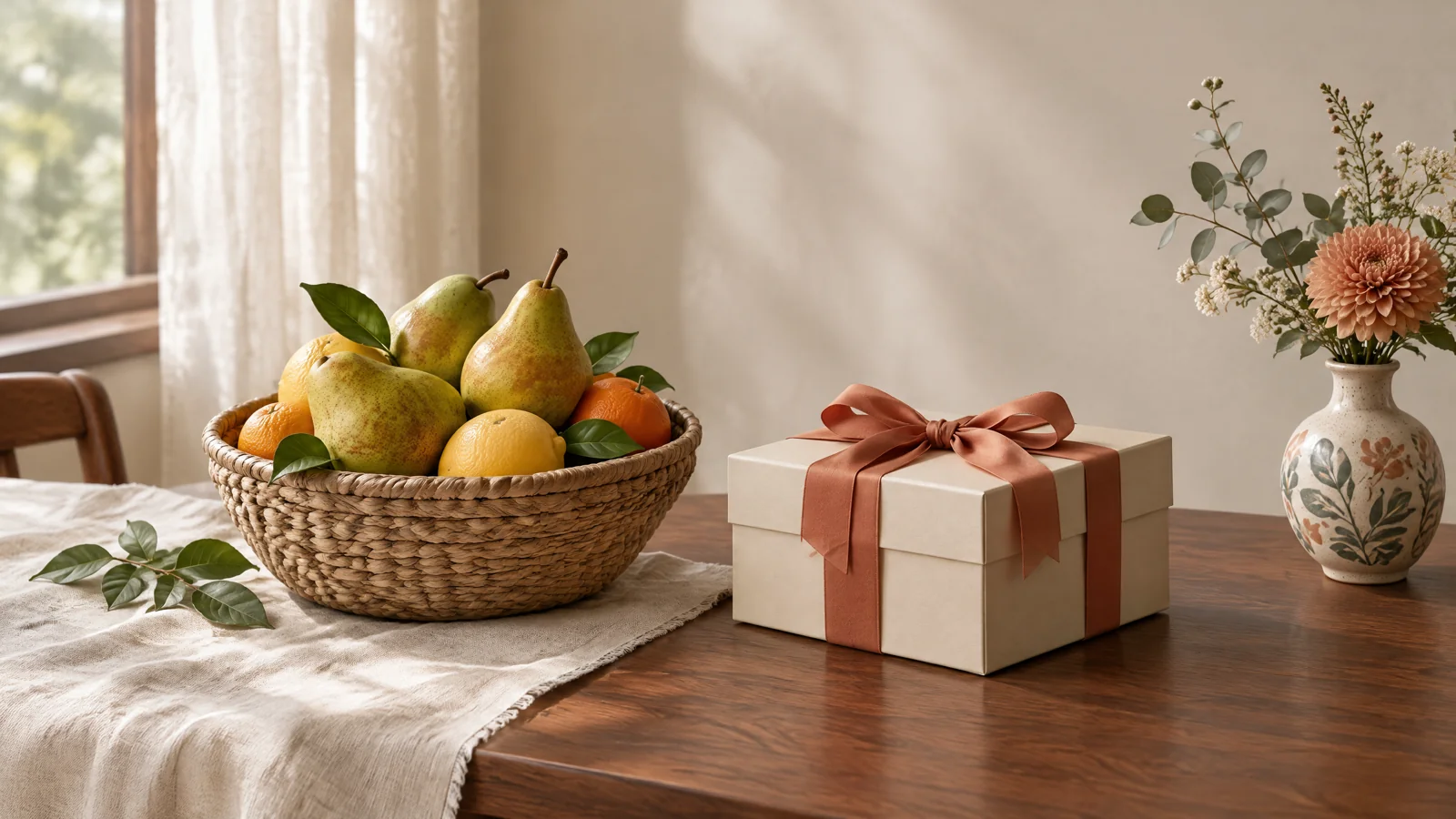
Vase arrangement or hamper: which gift fits a real home?
Choose flowers or a hamper around the recipient’s space, care routine and food needs. Use this home-first guide to prepare a practical florist enquiry.
Rose bouquet portraits: how to choose colour and shape
Choose bouquet colour, shape and wrapping around the portrait you want. Compare roses, sunflowers and tulips, then prepare a clear photographic brief.
A preserved flower bouquet or a living plant: which suits you?
Compare preserved and dried bouquets, orchids and indoor plants for Hong Kong gifts and celebrations. Use our room-first checklist before enquiring.