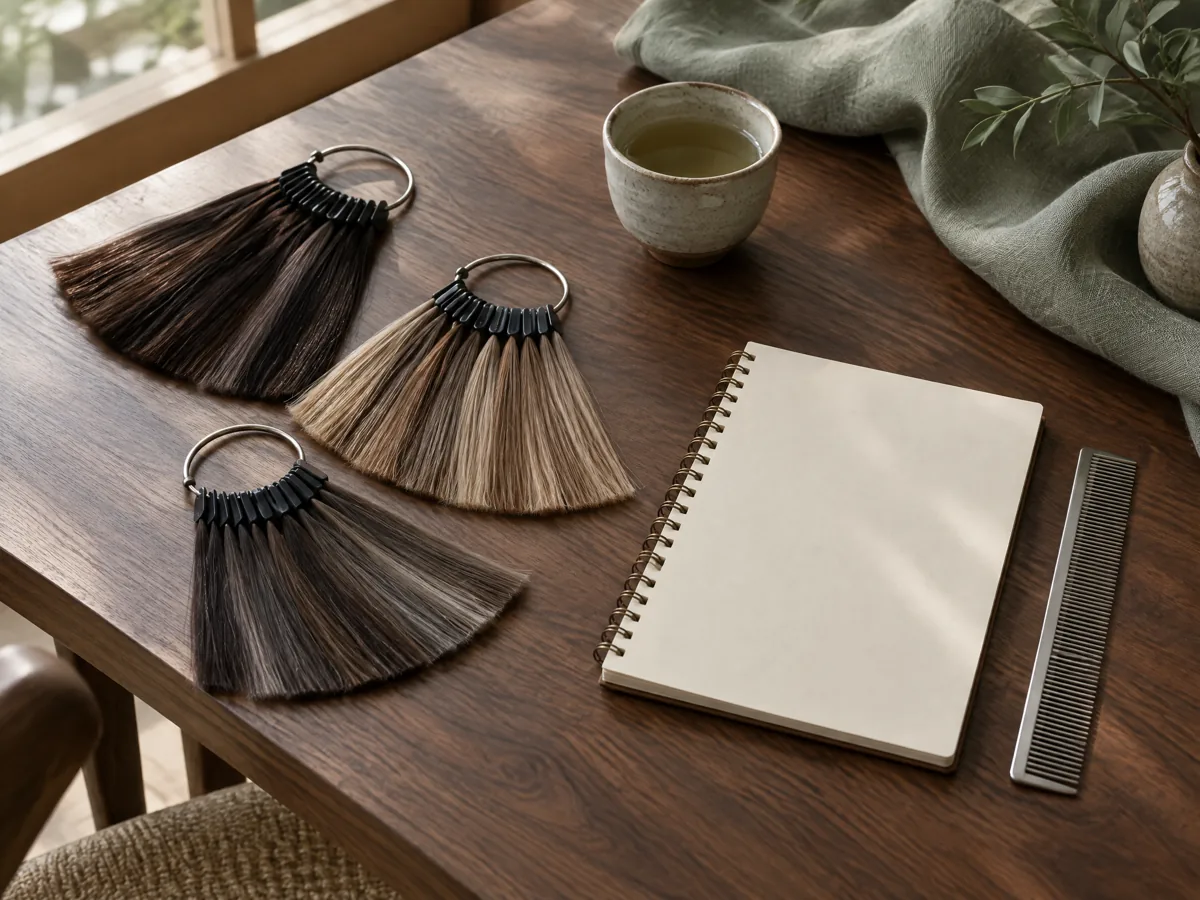
Design × Evidence × Personal Choice
Searching for hair extensions hong kong: do you need fitted length or detachable pieces?
瀏覽獨立繁體中文指南 →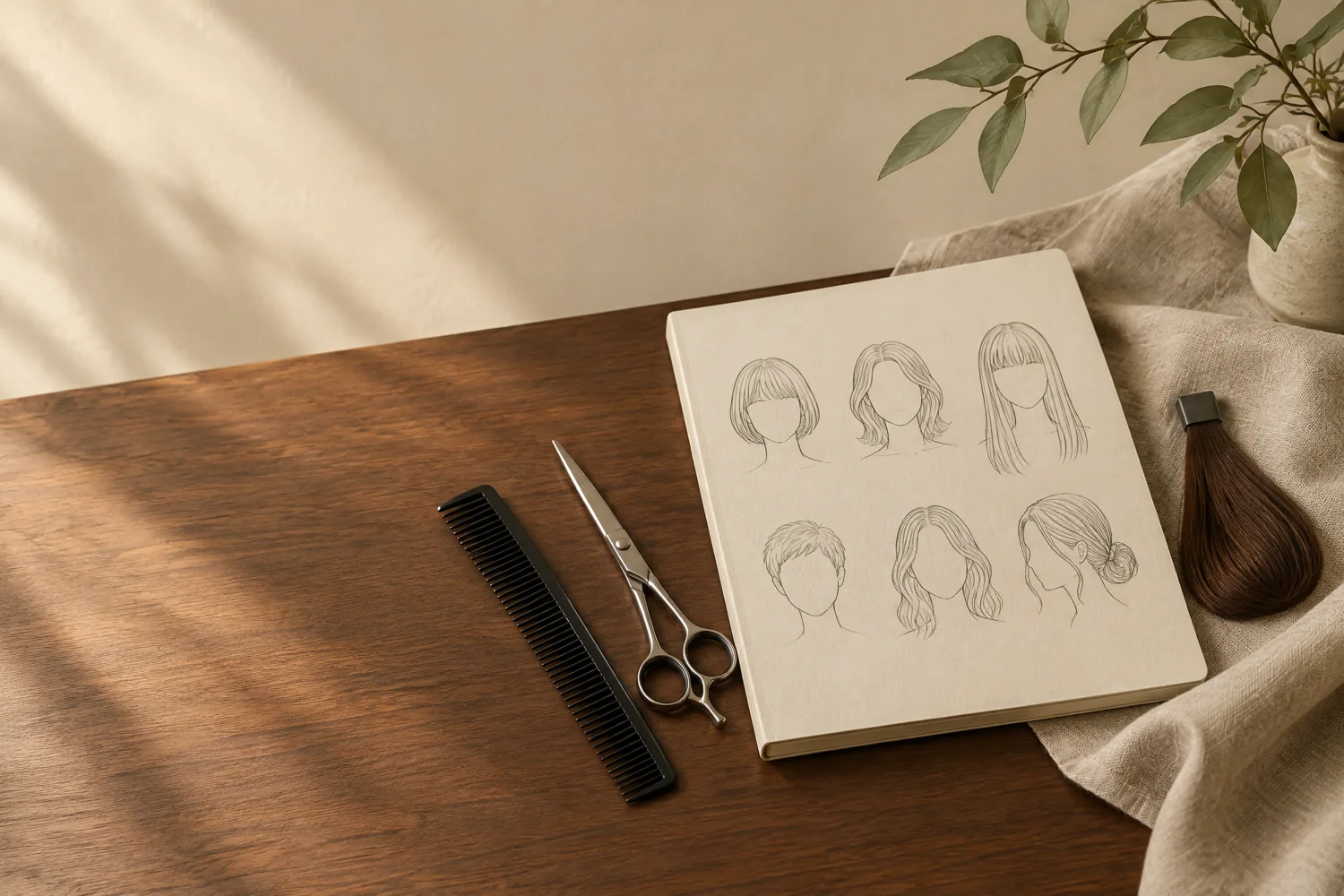
Choose fitted extensions when your aim is added length or fullness and a consultation establishes suitable attachment support; compare detachable pieces when being able to remove them matters more. If your main concern is a visible parting or a broader area of scalp, discuss coverage separately rather than assuming more extension hair will solve it.
A search for extensions can bring together very different purchases: attached strands, removable wefts and pieces intended to cover a particular area. The useful starting point is not the longest available length. Describe what should change when you look in the mirror, what should remain visible, and whether you want to wear the additional hair throughout an ordinary day.
This Canvas Blend guide compares those decisions rather than ranking attachment names. A photograph can suggest an outline, but it cannot establish comfort, the condition of your supporting hair or the work included in a quote. Keep cosmetic fitting separate from medical assessment if you have unexplained hair loss, scalp symptoms or a change that worries you.
When looking up hair colour salon Central, check the location details and choose a consultation time that lets you compare tones in natural daylight before or after work.
01
Are you changing your lengths or trying to cover a visible area?
Begin with an ordinary view of your hair: worn down, parted as usual and without arranging it specifically for a photograph. Describe whether the issue is short ends, an uneven outline, fullness around the shoulders or visible scalp near the part. These are different fitting goals, even when each is described casually as wanting thicker hair.
Extensions add hair that needs to be attached somewhere. They do not automatically create a new parting surface or cover every visible area above the attachment. If the supporting hair cannot conceal the connection in your preferred style, adding more length may leave the original concern unchanged while introducing a new blending problem lower down.
A detachable coverage piece or a fuller wig can address a different area from extension wefts, but neither is automatically the right choice. Ask what remains visible around the front, sides and parting. Compare the proposed coverage with your own aim before discussing fibre, shade or a named attachment technique; a category label alone is not a fitting specification.
Bring a record of your current cut and previous chemical services. Canvas Blend's hair colour before-and-after planning guide can help organise that history and clarify what you do not want changed. Use it to prepare the discussion, not as evidence that coloured or previously lightened hair can safely support a particular extension arrangement.
Write an acceptance sentence before the consultation: for example, you want a fuller shoulder-length outline while keeping your familiar parting. Write a separate boundary, such as declining any cut to your natural fringe. This gives the fitter a concrete goal and makes it easier to recognise when the proposed solution is solving a different problem.
02
What should a fitted-extension consultation establish before attachment?
Ask the provider to distinguish what they observe about your hair from what they can promise about the finished look. A fitting consultation can discuss placement, blending and a care routine. It should also allow the option of not attaching hair. Do not treat a salon photograph or a close-up scalp image as a medical explanation for thinning.
The DT HUB page for hair extensions kwun tong describes tape-in, keratin-bond and clip-in options alongside colour matching and aftercare. Treat this as a service enquiry route. Confirm which option is currently available for your request, whether blending and removal are included, and how the team would respond if your desired length is unsuitable.
Attachment comfort matters more than a claim that a method is invisible. The American Academy of Dermatology explains that repeated pulling from weaves or extensions can damage hair and cause hair loss. It advises telling the stylist if the hairstyle causes pain or a headache because that indicates excessive tightness. [1] Professional fitting is not a guarantee of zero risk.
Ask to discuss your normal movements, including leaning against a chair, turning your head and wearing the style you expect at work. You are checking an individual fit, not conducting a durability trial. If a proposal works only with the hair arranged carefully over every connection, consider whether that restriction is acceptable during the days you actually plan to wear it.
Before booking attachment, use the scalp-care-before-colour guide to frame a separate conversation about any planned chemical service. Do not assume fitting and colouring should happen together simply because both are available. Ask which work is necessary for the blend and whether declining a colour change leaves a satisfactory, simpler option.
03
When should you compare broader coverage instead of adding more extensions?
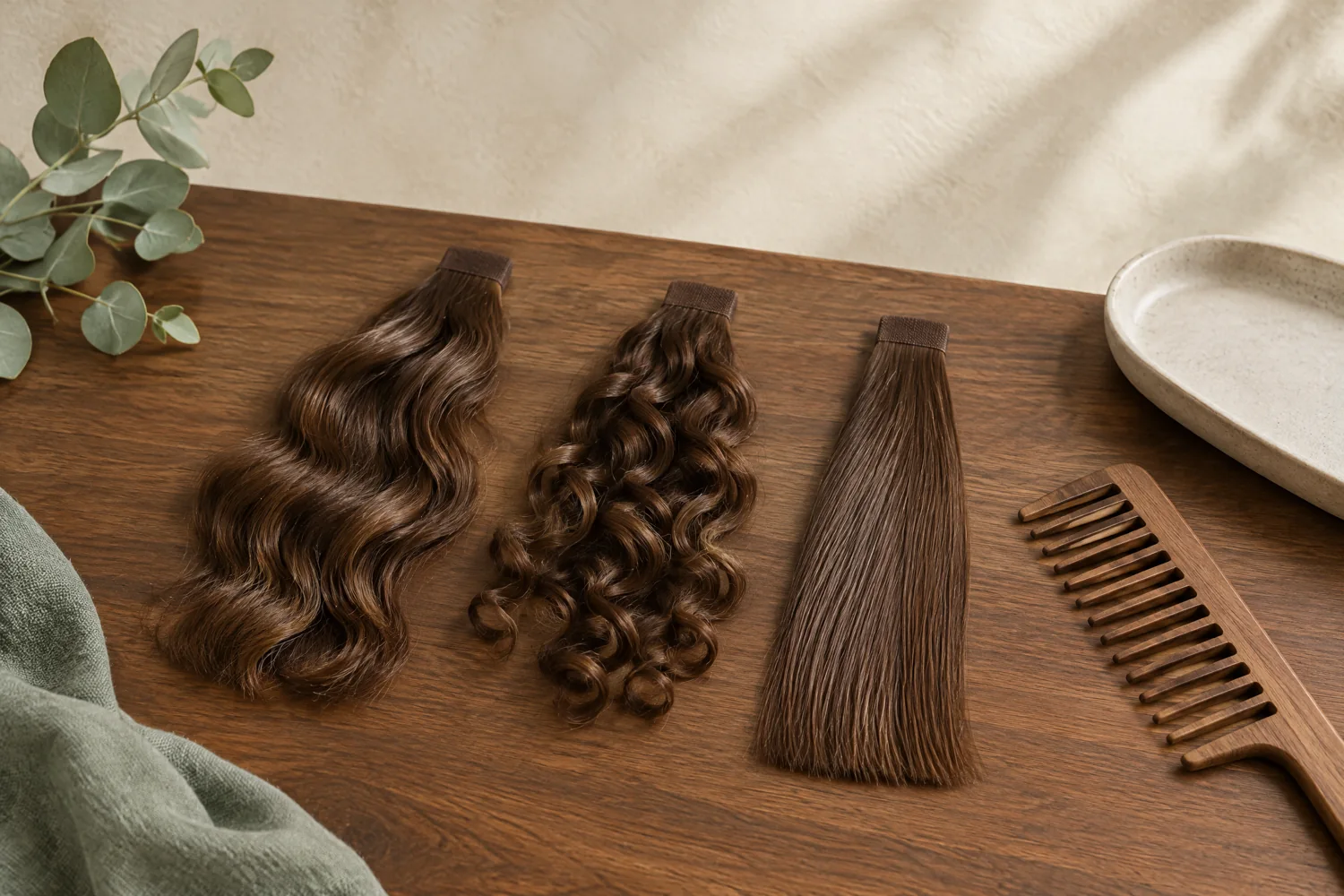
Reconsider the category when the request keeps shifting upward from the ends to the crown or front. If your priority is concealing a visible area while changing the appearance of the parting, ask to see a coverage proposal as well as an extension proposal. Compare them with the same desired outline, so extra length does not distract from the original need.
The DT HUB service page linked through hair extensions hong kong discusses attachment methods and integration options, and also directs readers towards wigs. That makes it a place to ask which category is being proposed. Establish whether the quote concerns individual extensions, an integrated piece or a separate wig before comparing fitting work or ongoing charges.
If supporting hair is already fragile, do not decide from density claims alone. The British Association of Dermatologists identifies extensions, weaves and hair clips among practices associated with traction-related hair loss, and notes additional risk when tight styling is combined with chemical relaxers. [2] A detachable label does not by itself establish that an attachment is suitable for you.
Ask where the proposed piece obtains its support and whether that support conflicts with the area you want to conceal. You do not need to learn an attachment procedure to ask this question. A useful explanation should make clear what hair or other fitting structure is involved, what would be exposed during movement and when the arrangement should be reconsidered.
If a visible area is new or changing, seek qualified medical assessment rather than allowing a cosmetic fitting to settle the cause. Choosing temporary coverage while obtaining advice is a different decision from treating hair loss. You can decline an attached system, discuss a different outline or postpone the purchase without having to select a medical treatment in the salon.
Before a first colour appointment or a refresh, browse hair bleaching Hong Kong for visual inspiration, practical preparation and a clearer sense of what to discuss during your consultation.
| Option | Main question it can address | Responsibility to clarify | Reason to reconsider |
|---|---|---|---|
| Fitted extensions | Do you want added length or fullness within a supported outline? | Attachment, blending, maintenance access and professional removal | The needed attachment conflicts with comfort or your preferred styling |
| Detachable extension wefts | Do you want occasional extra length that you can take off? | Demonstrated handling, suitable support, cleaning and storage | Clips pull or the connections cannot be concealed in your usual style |
| A detachable coverage piece | Is the priority a defined area near the part or crown? | Coverage boundaries, attachment support and what remains visible | Its base or support does not match the area you actually want covered |
| A fuller wig | Would a broader change of coverage simplify the appearance goal? | Individual fit, hairline preferences and removal routine | The broader coverage or wearing routine feels unnecessary for your aim |
| No attachment for now | Would a simpler cut or postponement preserve your options? | A clear cosmetic plan and separate assessment of concerning symptoms | You still want extra hair after resolving the fit and support questions |
04
Does a detachable piece fit the way you want to use additional hair?
Removal is useful when you want added hair for selected occasions rather than continuous wear. It also transfers some responsibility to you: recognising an uncomfortable fit, handling the piece and keeping it ready for the next use. Compare that responsibility with a fitted option instead of assuming detachable means effortless or suitable for every scalp and hair condition.
For a product enquiry, clip in hair extensions hong kong leads to DT HUB's page discussing clip-in and tape-in pieces. Ask specifically which product can be removed by the wearer and which requires professional removal. The presence of both names on a page does not make their application, care or support arrangements interchangeable.
Request a demonstration with the actual proposed piece and an explanation you can understand. You should know how to recognise poor fit and when to stop wearing it, without relying on instructions copied from another product. If you cannot comfortably manage the agreed handling routine, discuss further fitting support or a different option before committing to the purchase.
Plan washing around the distinction between your hair and the removable piece. The AAD specifically advises removing clip-in extensions before washing natural hair. [1] Obtain separate product instructions for cleaning and drying the extension hair; a rule for your own shampoo routine does not necessarily establish what a particular fibre, clip or adhesive can tolerate.
Consider what happens after the occasion as well as before it. Ask how to store the proposed piece, what signs of wear should prompt inspection and whether a replacement component can be supplied. If you expect to need repeated help with handling, include that support in your comparison rather than treating the purchase as a one-time transaction.
05
Can the blend work without changing your natural colour or cut?
Decide which hair you are willing to alter before requesting a colour match. You might accept trimming additional hair while keeping every natural layer, or prefer a compatible stock shade to another colour appointment. Making that boundary explicit prevents an extension consultation from gradually becoming a full restyle that you did not intend to purchase.
Compare a sample against both the roots and lengths in lighting you can reasonably reproduce. Your natural hair may have more than one tone, and the lower section may look different from the area hiding the attachment. Ask which mismatch the proposal addresses and what remains visible; a flattering overall photograph can conceal a join that bothers you in person.
Use the Canvas Blend styling gallery to discuss a preferred silhouette rather than to predict an extension result. Identify whether you like the compact ends, the movement or the position of layers. Then ask the fitter what can be reproduced with your current cut and what would require changing the natural hair you want to keep.
Treat fibre claims and styling permissions as separate questions. Human hair, synthetic fibre and processing descriptions do not replace care instructions for the supplied item. Ask what restyling is permitted and what would affect replacement or return terms. Do not copy heat settings or colour instructions from your own hair routine onto an unfamiliar extension product.
If the plan includes colouring your own hair, review the sensitive-scalp hair-colour guide as preparation for that separate service discussion. Existing irritation should not be concealed with extra hair and ignored. Ask whether the fitting can proceed without additional chemical work, or whether postponing gives you a clearer way to assess comfort and the desired blend.
06
What should the quote say about removal, maintenance and problems?
A useful quote identifies the supplied hair and the work needed to make it wearable. Ask whether it includes fitting, blending cuts, any agreed colour work and an explanation of care. Keep optional additions separate. Comparing a product-only figure with a complete fitted service can make the cheaper option appear better without showing what you will still need to arrange.
For attached extensions, confirm who handles removal and how to contact them if the fit becomes uncomfortable before a planned visit. For detachable pieces, ask what support is available if a clip, connection or fibre develops a problem. These are practical responsibilities, not proof that one method lasts longer or that a provider can prevent all damage.
Request the provider's own maintenance plan for the specific arrangement rather than borrowing a universal calendar from another page. Ask what might require an earlier check and whether removal can be arranged when you are travelling or changing providers. A support plan is only useful if its appointments and communication arrangements fit your actual circumstances.
When your natural lengths are coloured, the post-colour hair-care guide offers a starting point for discussing that existing routine. Ask the extension provider which parts remain appropriate and which require adjustment for the supplied product. Do not presume that a product suitable for coloured hair is automatically suitable around every attachment or for every fibre.
Read the written terms before irreversible cutting, colouring or attachment begins. Clarify what happens if you change your mind after customisation, what inspection is offered for a fitting concern and what is charged separately. Confirm the actual appointment address and availability too; a service page aimed at Hong Kong readers does not establish a branch in every district.
07
How would different everyday priorities change the choice?
Consider a hypothetical reader who wants extra length for a banquet but normally prefers a short workday routine. Their current parting is not the concern, and they would rather take the additional hair off afterwards. A detachable extension enquiry fits that priority more closely than committing to attached length, provided the individual fitting and handling demonstration are satisfactory.
Now change the assumption: another hypothetical reader wants a fuller outline throughout an ordinary week and is willing to attend maintenance and arrange professional removal. Fitted extensions may deserve a consultation. The trade-off is not simply a more natural appearance; it is accepting continuing attachment responsibilities in exchange for not handling a removable set for each occasion.
A third hypothetical reader is concerned mainly about a visible area near the crown, not short ends. Adding length could miss their goal. They would compare coverage boundaries and attachment support, and seek medical advice if the change is unexplained. A broader piece might be worth discussing, but this scenario does not establish an appropriate system or the cause of the change.
For each scenario, identify the compromise you would accept first. It might be less dramatic length, keeping a darker stock shade or declining extra chemical work. Then identify a firm stopping point, such as discomfort or a proposal that requires altering hair you want to keep. A smaller cosmetic change can be preferable to a purchase whose routine you cannot maintain.
Symptoms should override the planned look. BAD describes itching, soreness and increased flaking among possible features of traction alopecia, but those signs do not let a reader diagnose the cause. [2] Raise discomfort with the fitter promptly and seek qualified medical assessment for concerning symptoms or hair loss; do not wait for an occasion to pass before asking for advice.
What else should you know?
Are extensions and coverage pieces the same purchase?
No. Extension hair generally adds length or fullness through an attachment, while a coverage piece has a defined area it is intended to cover. Ask what the proposed item changes and what remains visible before comparing materials or quotes.
Does professional fitting make extensions risk-free?
No. Professional fitting and an appropriate care plan matter, but repeated pulling can still be a concern. Report pain or excessive tightness promptly and seek qualified medical advice if you notice concerning scalp symptoms or hair loss.
Can I assume that every clip-in piece is suitable for thinning hair?
No. Detachability describes removal, not the suitability of its support. The individual fitting must consider where the clips obtain support, whether that area is comfortable and whether the piece actually addresses your coverage goal.
Should I colour my own hair to match an extension set?
Not automatically. Ask whether a compatible stock shade, a different extension selection or changing only the supplied hair could meet your aim. Any chemical service on your natural hair needs its own discussion and should not be treated as an unavoidable purchase condition.
What if a detachable set is difficult for me to handle?
Ask for a demonstration and clarify what further help is available before buying. If the routine remains impractical, compare a different piece or postpone. Do not assume an attached option solves the problem without introducing maintenance and removal responsibilities.
What information should I request before confirming the appointment?
Request the actual item or method being proposed, the fitting scope, any changes to your natural hair, a written quote and the care and removal arrangements. Confirm the full appointment address, availability and any access requirements independently of a neighbourhood search label.
What is the practical next step?
Prepare a short brief stating the area you want to change, the natural hair you want to preserve and whether removal between uses matters. Ask the provider to explain a proposed fit against those priorities, then compare the complete work and support rather than the method name or starting figure. Keep the option of a smaller change or no attachment open.
Before committing, make sure you understand who handles removal, how concerns are reported and which care instructions apply to the actual supplied piece. If the appearance concern includes new hair loss or persistent scalp symptoms, arrange qualified medical advice separately. Cosmetic coverage can be discussed without accepting a diagnosis, a treatment claim or a promise of future hair growth.
If your hair feels dry, fragile, or difficult to detangle after lightening, explore damaged hair treatment Hong Kong before planning another colour service or adjusting your home-care routine.
Sources and editorial notes
This AI-assisted Canvas Blend guide is not a real-client case study or an article reviewed by Vit So. DT HUB and Canvas Blend share ownership; links are not independent third-party endorsements. Confirm salon, wig and Chinese-medicine service scope, qualifications, fees and appointments separately. Cosmetic scalp care, appearance coverage and medical assessment are different decisions. This guide does not diagnose or guarantee results; ask a qualified professional whether an intervention or product is suitable.
Canvas Blend Editorial · AI-assisted guide. Canvas Blend and DT HUB share an owner; this is not an independent third-party endorsement, a personal fitting test or medical advice. No review by Vit So is claimed. Confirm current product, appointment and support arrangements directly.
Continue reading
Hair, Scalp & Coverage DecisionsSearching for mens haircut hong kong: how do you write separate family briefs?
Plan a family haircut visit with separate adult and child briefs: agree on length, styling effort, comfort, stop signals and booking scope before cutting.
Hair, Scalp & Coverage DecisionsConsidering balayage hong kong: how much colour contrast would you accept?
Choose the contrast you can live with before choosing a colour technique. Compare placement, existing colour, fading, scalp limits and a realistic fallback.
Hair, Scalp & Coverage DecisionsHow should you plan hair bleaching hong kong after henna before choosing highlights?
Separate your henna product history from your desired highlights. Learn what to disclose, why product warnings matter, and when to postpone lightening or choose a different plan.