Design × Evidence × Personal Choice
Considering hair topper hong kong options: when should comfort and medical referral come first?
瀏覽獨立繁體中文指南 →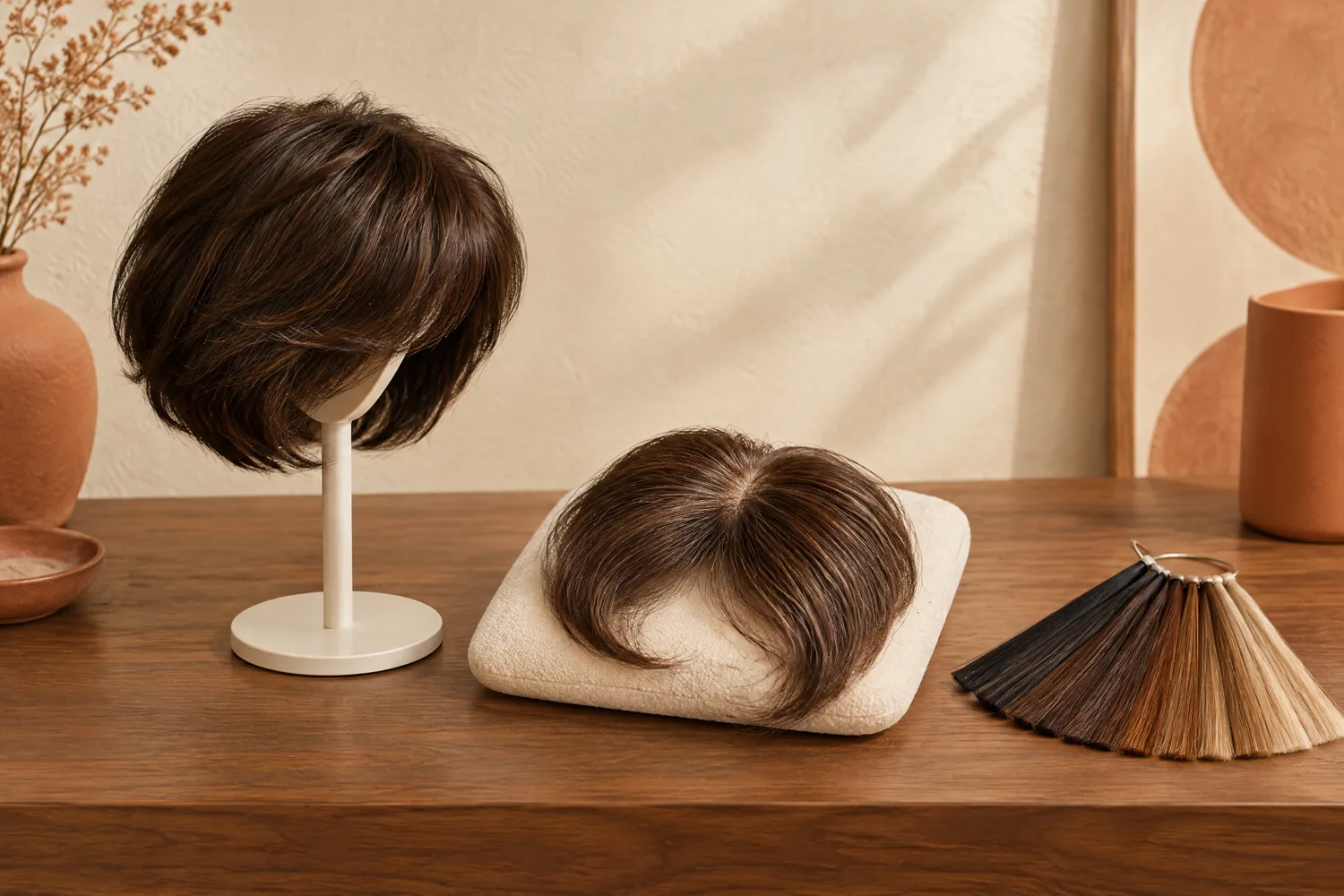
Choose a topper only when the intended coverage and attachment can work with the hair you retain; compare a full wig when that dependence is unsuitable or unwanted. If hair loss is unexplained or your scalp is uncomfortable, arrange appropriate medical assessment rather than treating a fitting or a medical-wig label as a diagnosis.
A piece that looks convincing can still ask too much of the hair beneath it. Another may offer the coverage you want but feel uncomfortable at the ears or require care you cannot manage. The useful buying question is therefore not simply which category looks most natural. It is which arrangement supports your everyday appearance without overlooking a health concern.
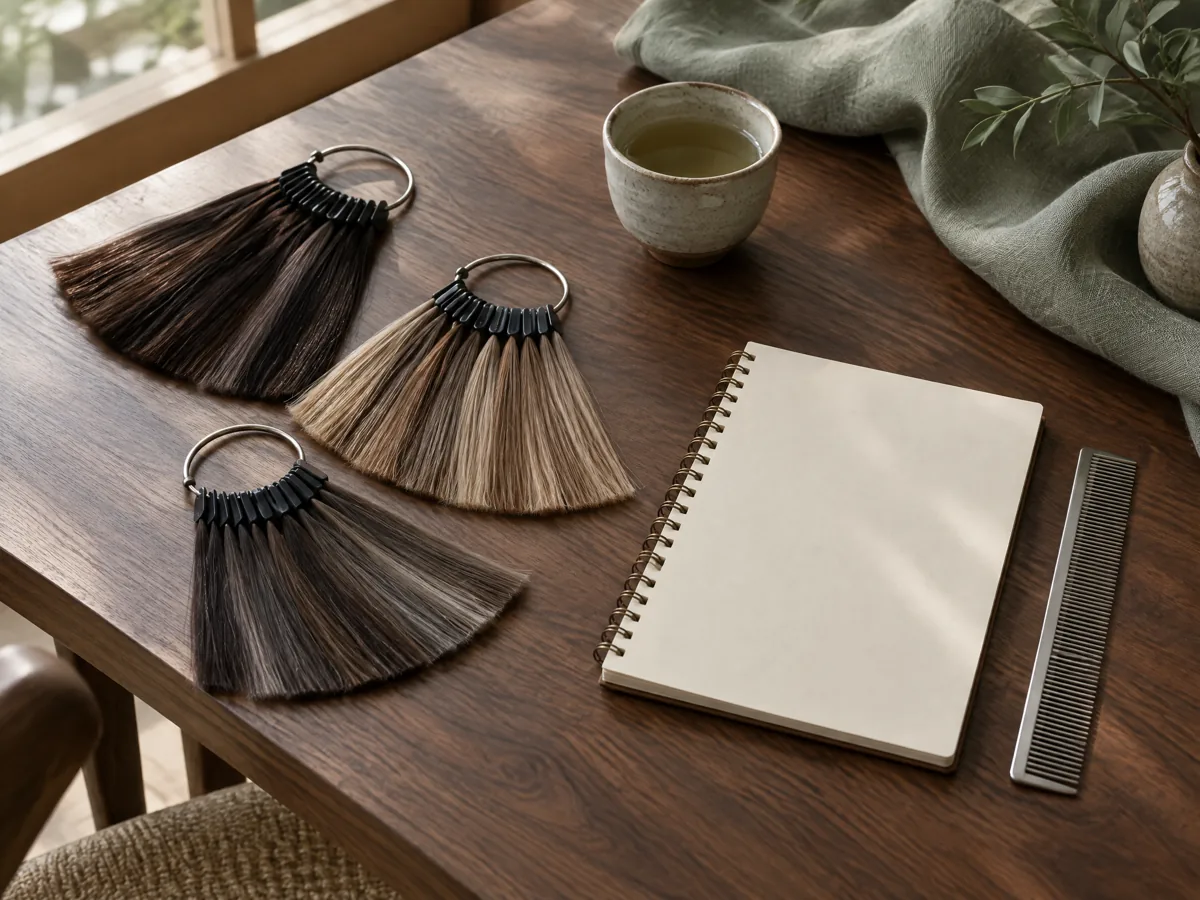
Begin with separate notes for appearance, comfort and medical questions. Record where you want coverage, what wearing the piece feels like, and what remains unexplained about your hair loss. Canvas Blend's hair colour before-and-after guide can help organise visual references and colour history. Photographs support a conversation; they cannot establish the cause of thinning or whether an attachment is appropriate.
This guide is published by Canvas Blend Editorial and is AI-assisted. Canvas Blend and DT HUB share the same owner, so the linked service pages are not independent third-party recommendations. The comparison below uses published health guidance and practical purchasing questions, not customer testing. A fitting conversation concerns the item; medical assessment concerns your health, even when both are needed.
If you are planning a change of colour, learn about hair colour Hong Kong before your consultation and consider the techniques, tones and upkeep that suit your routine.
01
What needs covering, and what should a hairpiece never be asked to explain?
Describe the area you want covered without naming a condition from its appearance. A visible parting, a crown area or more extensive loss can guide a discussion about coverage. It does not identify why that change happened. The NHS advises seeing a GP if you are worried about hair loss and understanding its cause before considering a commercial hair clinic. [1]
The American Cancer Society distinguishes a topper, which adds coverage and volume at the top, from a full wig covering the entire head. [2] That distinction helps narrow your browsing. It does not mean partial coverage is automatically gentler, or that every full wig is appropriate during treatment. The actual base, contact points and method of securing it still need consideration.
Use the hair topper hong kong page to ask about partial pieces and blending with retained hair. DT HUB's supplied page describes toppers, material choices and fitting discussions in Kwun Tong. Ask which exact piece could be demonstrated for your intended coverage, rather than interpreting a category description as confirmation of suitability or present availability.
Make a separate statement about what you do not want the consultation to do. For example, you may want help concealing an area while a clinician investigates it, without being sold an explanation for the loss. Cosmetic coverage can be considered alongside medical care. It should not become a reason to delay that care or a promise that follicles will recover.
02
Can the retained hair support the proposed attachment without uncomfortable pulling?
Partial coverage often involves a relationship with the hair left visible or used for attachment. Ask the fitter to explain that relationship in plain language: where the piece rests, what helps hold it, and what happens if the surrounding hair changes. An attractive blend is only one part of the decision. It does not establish that the attachment is comfortable or suitable.
The American Academy of Dermatology warns that repeated pulling from tight styles, extensions or weaves can lead to traction-related hair loss. It identifies pain, stinging and scalp crusts as reasons to change the hairstyle. [3] This is a reason to take discomfort seriously, not a way to diagnose yourself or calculate a safe amount of clip tension from a photograph.
During a supervised try-on, describe the location of any pressure and the ordinary movement that brings it on. Do not accept pain as proof that the piece is secure. Ask whether a different arrangement is possible, or whether attachment should be reconsidered. Avoid improvising with extra clips, stronger bonding or tighter hair underneath just to reproduce the displayed look.
If your hair is changing, bring that uncertainty into the discussion rather than asking the fitter to work around it silently. Canvas Blend's hair-loss and scalp-care guide can provide background for organising questions, but it cannot assess your scalp. A clinician can address the loss; a fitter can explain how the proposed item relies on your current hair.
A convincing blend does not cancel an uncomfortable attachment.
03
What should a medical-wig description actually help you verify?
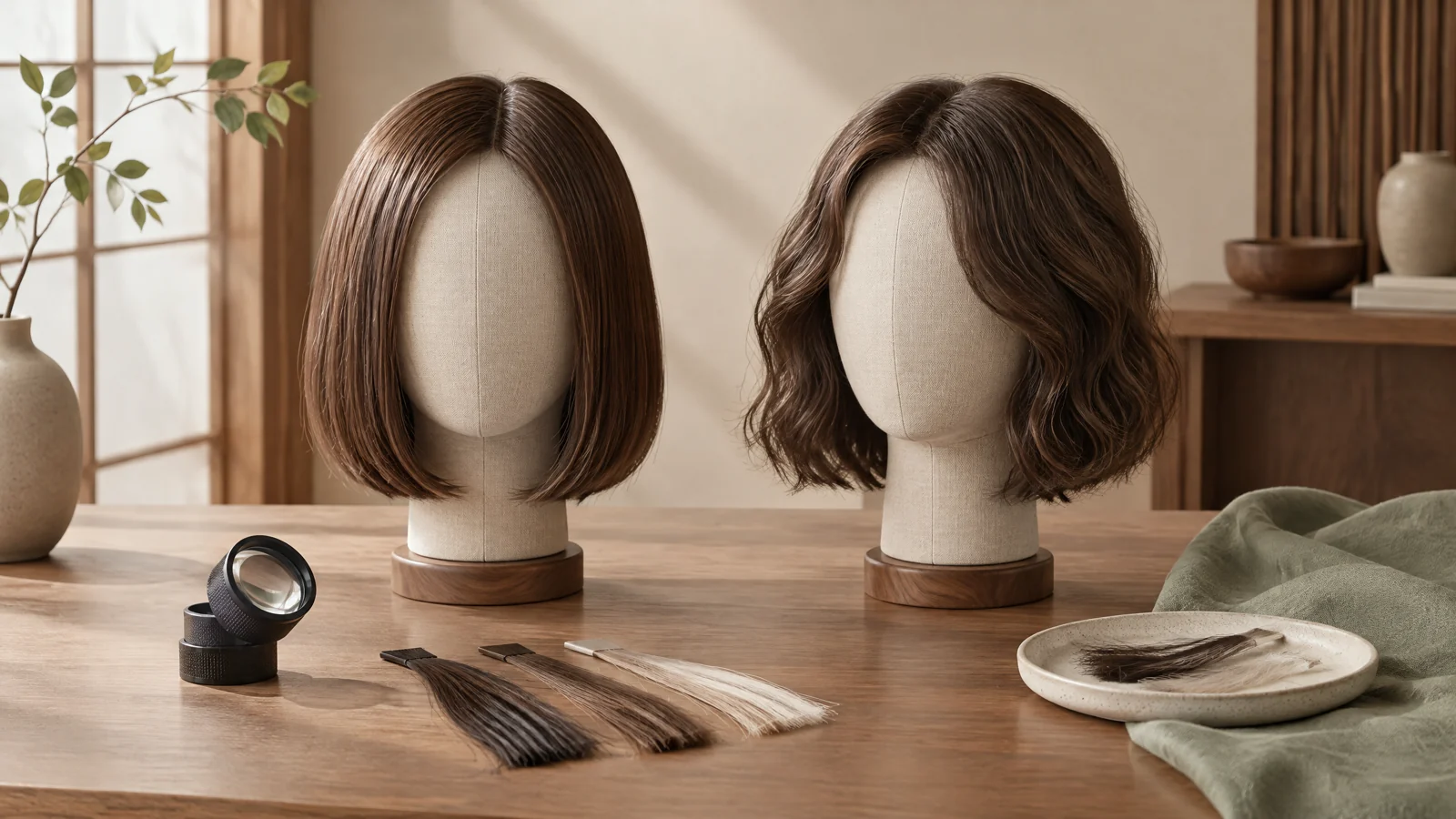
Treat the word medical as a prompt for more specific questions, not as automatic clearance to wear the item. Ask what the exact cap contains, which parts touch your skin and what adjustments are available. A seller's broad description of softness or breathability cannot predict your individual response. It also does not establish the seller's medical qualifications or replace advice from your treating team.
The medical wig hong kong page describes wigs intended for treatment-related or other hair loss and private fitting discussions. That makes it a service-information starting point. Confirm the construction and care instructions for the candidate you would actually receive, and ask your care team about any relevant scalp restrictions. Do not infer clinical approval from the category name.
The American Cancer Society notes that chemotherapy can make the scalp sensitive and discusses liners as a possible comfort aid. It also advises checking adjustment because fit can change after hair loss. [2] Use that guidance to ask about options, rather than assuming every liner will help you or that one fitting will settle comfort throughout a changing treatment course.
If a retailer mentions insurance, grants or a cranial prosthesis, separate the product discussion from eligibility. The American Cancer Society describes asking an insurer about coverage and asking the cancer care team about local resources. [2] Its guidance is not a statement of Hong Kong entitlement. Confirm applicable documentation and funding with the relevant organisation before relying on reimbursement in your purchasing decision.
When looking up hair salon Central, check the location details and choose a consultation time that lets you compare tones in natural daylight before or after work.
04
How do you compare comfort without assuming one fibre or cap is always better?
Compare the actual inside of the candidate, not just its hair texture in the mirror. Ask to see the surfaces that would rest near the forehead, ears and nape. Explain whether glasses or other everyday items share those spaces. A short try-on can reveal a specific pressure point, but it cannot prove comfortable wear across every journey, activity or working day.
For broader coverage, the women's wig hong kong page can support an enquiry about full wigs and partial pieces. Do not let the product category decide the construction for you. Ask which candidate can be compared with your usual glasses and preferred outline, and whether any finishing work is included in the particular quote.
The American Cancer Society describes synthetic wigs as generally requiring less maintenance than human-hair wigs, while human hair offers styling flexibility but needs more care. It also cautions against heated tools unless a wig is heat resistant. [2] Translate that into a manageable routine. The label human hair is not enough to establish every permitted process on a particular item.
Ask what you would need to do after removing the piece, which instructions come from its maker and who can help if the fit changes. Include the practical possibility of choosing a scarf or another comfortable covering when you do not want to wear a wig. Your choice need not reproduce a perfect hairstyle at the expense of comfort or manageable care.
| Option | What it can help you plan | What must still be checked | Main trade-off |
|---|---|---|---|
| Removable topper | Localised coverage while keeping some natural hair visible | Actual attachment support, contact points and blending | Less overall coverage, but greater dependence on retained hair |
| Full wig | An overall silhouette with less reliance on visible blending | Cap fit, edges, adjustment and item-specific care | Broader coverage introduces contact around the whole head |
| Wig marketed for medical hair loss | Questions about sensitivity, lining and fit during change | Exact construction and advice relevant to your health situation | The description does not establish personal tolerance or clinical approval |
| Scarf or another chosen covering | An alternative when you prefer not to wear hair | Comfort, friction and any advice from your care team | Different appearance without the same fibre-care routine |
| Pause the fitting | Space to address unresolved discomfort or unexplained loss | Appropriate medical assessment and a revised fitting brief | Delays selection rather than forcing an unsuitable attachment |

05
Which changes to your own hair should stay separate from the purchase?
A topper may look different as the hair around it changes in length, colour or amount. Ask which parts of the proposed appearance rely on that hair remaining similar. If achieving the sample look requires cutting or colouring your own hair, treat that as a separate decision. Agree what the piece itself can achieve before accepting irreversible changes to make it blend.
If you have scalp discomfort or are receiving treatment, do not turn matching the piece into an automatic colour appointment. Canvas Blend's sensitive-scalp hair-colour guide is a discussion resource, not permission to proceed. Explain symptoms and relevant restrictions to the appropriate professional; the need for an attractive blend does not override a reason to defer a chemical service.
For a familiar colour direction, the American Cancer Society recommends photographs before anticipated treatment-related loss and comparing references in natural light. [2] A dated image may be enough to communicate the general impression you want. It is not a precise manufacturer shade code, and differences between your screen, salon lighting and the actual fibre should remain explicit in the enquiry.
Canvas Blend's hairstyle and colour gallery can help describe a softer outline or restrained contrast. Identify the feature you mean rather than requesting a complete photograph to be reproduced. Salon images of natural hair do not show the inside of a wig, establish stock or prove how a topper will sit on you. Appearance references and product evidence have different jobs.
06
What would a clearly hypothetical comfort-first decision look like?
Consider a hypothetical office worker, Mina, who wants crown coverage while keeping her own fringe visible. She has arranged a medical appointment because the hair change is unexplained. At a fitting discussion, she says her priorities are a removable option and no uncomfortable pulling. This is an invented decision example, not a customer account, diagnosis or prediction of results.
Suppose the topper produces the preferred outline, but Mina feels pulling near an attachment point during the supervised try-on. The full wig changes more of her familiar fringe, yet she does not notice that same pulling in the brief comparison. Neither observation proves long-term comfort. She asks about an alternative attachment and cap adjustments instead of choosing solely by the mirror image.
In this scenario, Mina chooses not to buy the pulling topper. She might keep the full wig under consideration if its fit questions are answered, or use another covering while she waits for medical advice. The concrete trade-off is accepting a less exact match to her usual fringe, or delaying the purchase, rather than treating discomfort as the necessary cost of invisibility.
Now change the assumption: Mina is receiving cancer treatment and her care team has given specific advice about her scalp. That advice becomes part of the fitting brief; a retailer cannot override it by suggesting a premium material. If a candidate conflicts with those restrictions, she pauses that option. A more expensive description does not resolve an unanswered question about contact or attachment.
- State the coverage you want without self-diagnosing the cause of loss.
- Identify whether the design depends on retained hair or skin contact for security.
- Describe discomfort and ask what can change; do not authorise tighter attachment to hide it.
- Keep medical advice, natural-hair services and product purchase as separate decisions.
- Leave with unanswered questions recorded rather than accepting a vague assurance.
07
What should you confirm before booking, paying or accepting the piece?
Ask whether the appointment is a product consultation, a try-on, a fitting adjustment or a medical assessment. Those are different services, even if someone uses the word scalp in their description. If you need evaluation of unexplained loss or symptoms, arrange that with an appropriately qualified healthcare professional. Do not assume a salon camera or a photograph of equipment supplies a diagnosis.
The supplied DT HUB information places the studio in Kwun Tong and describes private consultations. Confirm the venue, available candidate and appointment scope directly before travelling. A page addressing customers from another district does not prove a branch there. Likewise, a description of free consultation or try-on should be checked for the appointment you want, not treated as an unconditional future promise.
Request a written quote naming the piece, material description, included adjustments and separate care or repair work. Ask what happens if fitting concerns remain, and check the applicable return terms before authorising finishing work. The American Cancer Society advises checking return policies before purchase because retailers may have restrictions or fees. [2] Confirm the actual seller's terms rather than assuming a general right from that guidance.
If you also want a natural-hair haircut or colour discussion, Canvas Blend's salon booking page is a separate route. State that a hairpiece may be involved and ask what the salon can assess. It is not a DT HUB wig booking or a medical referral. Keeping appointments distinct helps prevent colour work, fitting and healthcare questions from being bundled into one unclear promise.
What else should you know?
Can a topper treat the cause of my hair loss?
No treatment effect is established by choosing a topper. It is an appearance option for partial coverage. If the loss is unexplained or concerning, seek medical assessment and keep that question separate from the fitting discussion.
Does a medical-wig label mean the wig is safe for every sensitive scalp?
No. Ask about the exact cap, contact surfaces, adjustment and care instructions. Your response and any restrictions from your treating team matter more than a general category description. The label does not establish clinical approval for you.
Should I accept pulling because it makes a topper more secure?
Do not treat pain or stinging as a successful fit. Tell the fitter where it occurs and pause the uncomfortable arrangement. Ask whether another attachment or coverage option is appropriate, and seek medical advice for unresolved scalp symptoms rather than improvising tighter attachment.
Is human hair always the most comfortable option?
Fibre alone does not settle comfort. Compare the actual cap and contact points, then consider the care you can manage. Human-hair styling flexibility may be useful, but it does not establish scalp tolerance or permission for every chemical or heat process.
Can I choose a wig while waiting for a medical appointment?
You can discuss cosmetic coverage without using that discussion to diagnose the loss. Explain the unresolved issue and avoid proceeding with an uncomfortable arrangement. If you are receiving treatment, ask your care team what restrictions should guide the fitting.
Will insurance pay for a wig bought in Hong Kong?
Do not assume coverage. Ask your insurer or relevant support organisation about eligibility, documentation and the specific item before relying on reimbursement. Overseas guidance about cranial prostheses does not establish Hong Kong entitlement or approval of a particular purchase.
What is the practical next step?
Before your enquiry, write a brief that separates the coverage you want from the attachment you can tolerate and the health questions that need assessment. Bring relevant care-team advice and a few clear appearance references. Ask the fitter to explain the actual candidate and its care requirements, then record what remains unknown rather than filling the gaps with category promises.
Proceed only when the particular piece, appointment scope and purchase terms are clear enough for your decision. If there is uncomfortable pulling, unresolved scalp sensitivity or unexplained loss, choose a recheck or appropriate medical advice instead of forcing a purchase. A useful outcome may be a different silhouette, another covering or more time; it need not be an immediate hairpiece order.
For hair that looks dry, frizzy, or prone to breakage in a photo, read about damaged hair treatment Hong Kong to help frame questions for a colour-care consultation.
Sources and editorial notes
This AI-assisted Canvas Blend guide is not a real-client case study or an article reviewed by Vit So. DT HUB and Canvas Blend share ownership; links are not independent third-party endorsements. Confirm salon, wig and Chinese-medicine service scope, qualifications, fees and appointments separately. Cosmetic scalp care, appearance coverage and medical assessment are different decisions. This guide does not diagnose or guarantee results; ask a qualified professional whether an intervention or product is suitable.
Canvas Blend Editorial · AI-assisted guide. Canvas Blend and DT HUB share the same owner. This article is not a personal fitting assessment or medical advice and does not claim review by Vit So; product availability, appointment terms and suitability require separate confirmation.
Continue reading
 Hair, Scalp & Coverage Decisions
What drying routine should you plan before booking digital perm hong kong?
Choose a perm by the drying routine you can repeat: compare digital and Japanese-style waves, disclose colour history and agree a realistic home-care plan.
Hair, Scalp & Coverage DecisionsSearching for mens perm hong kong: what changes with usable length?
Compare short-cut perm designs by usable fringe, crown and side length, chemical history and daily styling effort before committing to a cut or curl pattern.
Hair, Scalp & Coverage DecisionsSearching for hair straightening hong kong: what does the proposed process actually do?
Ask what straightening and keratin services actually involve: the product, shape change, heat, chemical history, treatment scope and aftercare before you commit.