Water Activities × Hair Care × Travel Planning
Underwater photography diving course Hong Kong: keep training first
Browse original Traditional Chinese water activity and hair-care guides →
Choose underwater photography training only after discussing your certification, recent diving and current comfort with an instructor. Compare what the course actually teaches, keep the camera secondary to the dive, and plan boat logistics and hair-colour care separately. A private boat or expensive camera cannot replace readiness, and a successful learning day need not produce a portfolio.
An underwater photograph can be the reason you become interested in diving, but it should not dictate how quickly you progress. Camera controls compete for attention with the ordinary responsibilities of being a diver. The useful question is therefore not which course promises the most impressive pictures. It is which learning arrangement lets you develop photographic judgement without asking you to manage more than your current diving ability supports.
For Canvas Blend readers, a coastal photography plan may also include fresh colour and portraits on shore. Treat those as separate appointments with different requirements. Start with the practical prompts in our hair-colour preparation guide, then tell your colourist whether the trip involves pool training, boat travel or repeated swimming. A shore portrait can be rearranged around your hairstyle; an in-water training plan must remain governed by the instructor and conditions. Canvas Blend is a hair-colour salon, not a diving school, and shares ownership with DiveHarbour, so this is planning guidance rather than an independent course review.
Before lightening a deeper base, use milk tea brown hair colour Hong Kong as a starting point for discussing the tone you prefer, your current hair history, and at-home colour care.
01
What should be comfortable before you add a camera?
Begin the enquiry with a description of your recent diving rather than the word intermediate. Tell the instructor when you last dived, what conditions you experienced and which parts still demanded concentration. Include unfamiliar rental equipment or a previous outing that felt rushed. You are not being asked to pass a self-administered safety test. You are giving a qualified professional useful information for deciding what assessment or preparation belongs before photography.
DAN uses task loading to describe the burden of additional activities on a diver's attention. In one published case analysis, filming distracted a diver from depth and buddy awareness; DAN recommends adding tasks gradually without compromising safety. That supports a training-first approach, not a prediction about your personal risk. A camera can be small and still absorb attention. The relevant question is whether the proposed learning environment and support match your current ability, not whether the equipment looks simple. [4]
Consider a hypothetical pair of friends, not a real customer example. Both hold entry-level certificates, but one has recent comfortable dives while the other has been away from scuba and wants pictures for a travel album. Booking identical photography sessions would hide an important difference. Their first shared activity might need to be a readiness conversation, with separate preparation if recommended. The trade-off is spending time rebuilding familiarity rather than producing images immediately. That is a useful investment if it prevents the camera from becoming another source of pressure.
02
What should a photography course actually help you learn?
Write a small learning brief before comparing course names. Perhaps you want to understand why your images look flat, choose equipment you can manage comfortably, or learn how to review a few photographs constructively. PADI's official Digital Underwater Photographer description includes photography lights, avoiding backscatter and enhancing colour. These are examples of a recognised course's photographic subject matter, not confirmation that a particular local booking includes every topic, rental item or editing session. Ask which agency pathway and objectives apply to the course being offered. [1]
Use the underwater photography diving course Hong Kong page to begin that discussion with DiveHarbour. Share your certification, recent experience and exact camera and housing models. Ask whether the proposed training includes theory, a controlled-water setting, open-water practice or image review, and what is supplied. A page describing photography training does not establish that your chosen equipment will be available, that a particular site will operate or that a preferred date has space. Those details need direct confirmation.
Look for feedback rather than a promised gallery of finished pictures. An instructor might explain what the agreed exercises are intended to teach and how performance will be assessed. Ask how diving awareness and marine-life conduct remain part of that assessment. A compact camera may suit your aims better than a larger purchase, but that is a compatibility conversation rather than a universal recommendation. Keep manufacturer advice and supervised instruction responsible for equipment use; this article does not provide housing preparation, buoyancy or underwater handling procedures.
- Send your certification agency and level, recent-diving summary, and concerns about the intended conditions.
- State one photographic learning goal and provide the exact camera and housing model.
- Ask for prerequisites, training settings, supervision and the method of giving feedback.
- Confirm equipment supply, transport, certification and image-review inclusions in writing.
- Ask what changes if the instructor recommends more preparation or conditions are unsuitable.
03
Would a simpler outing or refresher be the better first booking?
A recreational outing and a photography course solve different problems. One gives appropriately qualified divers an opportunity to enjoy a suitable site; the other has defined learning aims. A refresher addresses familiarity and proficiency after a break or when confidence has changed. Do not assume a guide will provide unbooked specialty tuition during an ordinary trip. Equally, do not assume another certificate is the answer if the real issue is limited recent practice or uncertainty about basic equipment.
The Hong Kong fun dive information can help you ask about an outing or supervised refresher before choosing photography training. Explain whether you are seeking practice without a camera, a skills review or a new specialty. Confirm the actual support separately: being on a boat with other divers is not the same as having a dedicated instructor evaluate your readiness. The suitable format depends on your background and the proposed conditions, so this comparison is a conversation starter rather than permission to dive.
There is a practical benefit to separating objectives. If your first return to scuba is also the first time you use a new camera, it becomes harder to tell which task caused the difficulty. Ask whether the instructor recommends postponing the camera until the underlying concerns are addressed. This follows DAN's principle of introducing extra tasks gradually. It does not prescribe how many practice dives you need or a universal time limit after inactivity. Let the professional assess the relevant training needs, and leave medical clearance to an appropriate clinician. [4]
Before choosing a new colour, review balayage price Hong Kong alongside your hair length, density, and preferred technique so you can plan the appointment with clarity.
| Starting question | Format to discuss | Important limitation |
|---|---|---|
| I am uncertain after a break | Supervised readiness review or refresher | Assessment determines the next step; camera time is secondary |
| I want comfortable recent practice | Suitable recreational outing without a photography goal | A fun dive is not specialty instruction |
| My diving is current and I have a photographic learning goal | Photography training with confirmed prerequisites | Equipment, teaching scope and review need confirmation |
| Our group wants a coordinated boat day | Private charter planning alongside suitable activity support | Transport does not establish anyone's readiness or provide automatic tuition |
04
Can a private boat improve the plan without changing training priorities?
A private boat can be worth discussing when a group needs coordinated transport and an agreed purpose. It should not be treated as a way to secure perfect visibility, a particular animal encounter or unlimited camera time. Define the group first: who is diving, who is observing from shore, and whether anyone hopes to board without diving. These arrangements require explicit confirmation. Then explain the photographic objective without presenting it as an obligation for the crew to deliver a specific frame.
A Hong Kong private speedboat dive charter enquiry should ask what private means in the proposed quotation. Establish the vessel arrangement, passenger suitability, equipment storage and who provides any instruction or guiding. A charter discussion is not itself a photography-course booking. Include camera cases in the luggage conversation and ask where they can be kept without obstructing the deck. Confirm meeting details and return expectations rather than building a tight portrait appointment around an assumed boat timetable.
For the hypothetical friends, adding two non-diving companions could make a private arrangement attractive, but also make the day more complicated. The operator would need to confirm whether those passengers and their plans are appropriate. Someone waiting for a shore portrait should not pressure divers or crew to finish on a fixed creative deadline. Keep a land-based alternative for the companions, and let the operator's condition-specific decision govern the water activity. A separate portrait day may offer less convenience but a calmer schedule for everyone.
05
How should fresh hair colour fit around pool training and portraits?
First distinguish the days in your itinerary. A pool session, an open-water boat day and a dry shore portrait do not involve the same exposure. AAD explains that chlorine can damage hair and that ultraviolet exposure can affect its proteins and colour. Its summer-care guidance advises people planning blond colouring or highlights to avoid doing that immediately before a sun- and pool-filled vacation. That is a reason to discuss the order of appointments, not evidence that seawater has identical effects or that waiting a fixed number of days makes every treatment safe. [2]
If you are considering a major lightening change mainly for the trip photographs, read our guide to bleaching and hair damage before deciding. Give the colourist your actual activity calendar and treatment history. You may prefer to keep the existing colour for training and arrange a new look for a later shore shoot. The compromise is not getting every desired image in one weekend; the benefit is avoiding a schedule that combines a demanding colour change with immediate pool exposure and hurried styling.
Scalp symptoms deserve a separate conversation. Our sensitive-scalp hair-colour guide is a useful prompt for describing past reactions, irritation or products you have used, not a diagnosis. A protective product cannot remove allergy risk, and salon advice cannot provide personal medical clearance for diving. If you are uncomfortable before the activity, tell the instructor rather than hiding it to protect the photo plan. Questions requiring medical assessment belong with an appropriate healthcare professional; urgent symptoms need appropriate medical care.
06
What belongs in a practical shore-side hair-care plan?
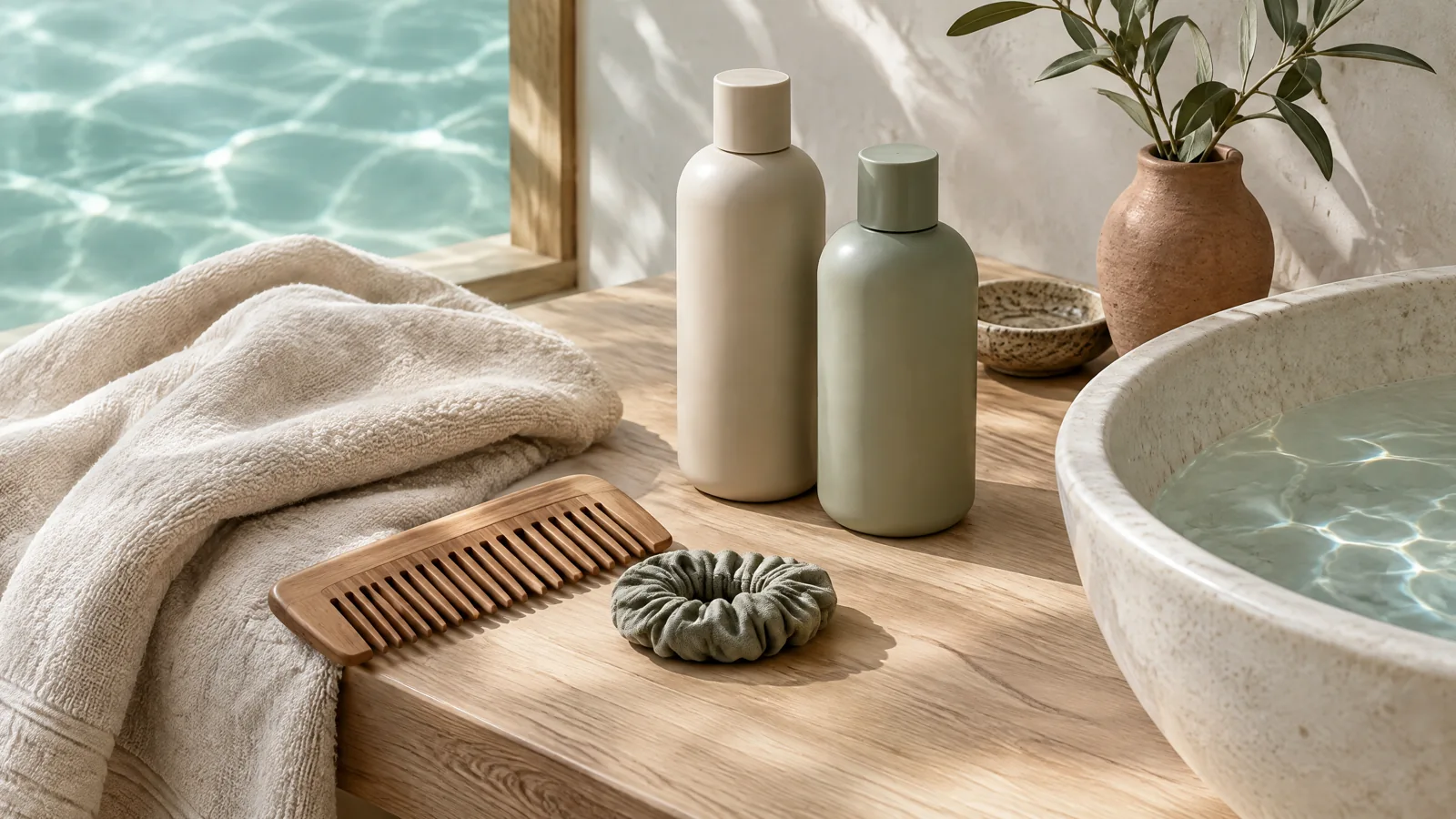
Plan the recovery arrangements before packing an elaborate styling kit. Ask whether fresh water and changing facilities are actually available, where personal items can be stored and how much time there is after the activity. Do not infer facilities from a place name or an illustrative image. A simple plan with access to rinsing and unhurried travel is more useful than a bag of products you cannot use comfortably. Keep hair-care items separate from camera and diving equipment, with the operator's storage instructions taking priority.
For pool exposure, AAD recommends rinsing hair immediately after swimming, then using a swimmers' shampoo to remove chlorine and following with deep conditioner. That is pool-specific guidance; ask your colourist how suitable products fit your hair's condition and existing routine. Our post-colour hair-care guide can help you prepare that conversation. Do not assume that repeated strong cleansing or additional chemical treatments are the solution to any change you notice. Describe what happened and where you swam before choosing a response. [2]
For time on shore, AAD recommends shade and a wide-brimmed hat as ways to reduce sun exposure to hair. Boat use of any hat or loose accessory still needs to suit the crew's instructions. Keep portrait styling outside the diving-equipment discussion: no oils, petroleum jelly or conditioner belong on a mask or other equipment as a hair-care workaround. Ask the instructor to confirm actual mask fit with your intended hairstyle. If comfort is uncertain, change the styling plan rather than trying to establish equipment suitability from a photograph. [2]
07
How will you judge the day fairly and make the final booking?
Agree in advance that progress can be visible even when the best photograph is never taken. Useful feedback might clarify a camera limitation, identify a sensible next learning goal or show why a subject should have been left undisturbed. Make respectful wildlife behaviour part of the brief: no touching, chasing or rearranging animals for a frame. Ask about site-specific rules and restrictions rather than assuming a general photography course grants access everywhere. A missed shot can be the right outcome when the image conflicts with the agreed plan.
Review shore portraits and hair colour separately from underwater images. Lighting and editing differences make casual comparisons unreliable as evidence of a colour change. If fading worries you, bring comparable dry-hair photographs into the discussion prompted by our hair-colour fading guide. For an eventual land-based shoot, the Canvas Blend gallery can help communicate colour and finish preferences. It is a visual reference for a salon conversation, not evidence of how a style will perform underwater or of any diving service.
Photography can also support a longer learning interest without becoming a professional credential. PADI describes how non-scientists' images can contribute to marine-animal photo-identification research. That is a meaningful creative direction, but suitable projects, species and submission requirements need checking; it does not promise a Hong Kong encounter or make a beginner a researcher. Before paying for the activity, confirm the teaching scope, equipment responsibilities and terms in writing. All paid DiveHarbour course and activity fees are non-refundable. Make-up sessions are available only under the written terms, with no automatic replacement date. [3]
What else should you know about water activities, hair care and planning?
Can I book underwater photography training if I am not yet a certified diver?
You can enquire, but do not assume a scuba photography specialty is an entry-level diving course. Ask the provider to confirm the agency pathway, prerequisites and appropriate first training. Interest in photography does not replace required diving preparation.
Do I need an expensive camera before contacting the instructor?
No purchase should be inferred from the course title. Send the details of equipment you already have and ask what suits the objectives, what support is available and whether rental is actually offered. A more expensive system is not proof of readiness.
Is a private charter the same as a private photography lesson?
No. A boat arrangement, a guide and an instructor-led course are different services. Confirm each role, the teaching scope and the inclusions in the proposed booking rather than assuming private transport includes tuition.
How long should I wait after colouring my hair before training?
This article does not give a universal safe interval. Discuss your treatment, hair and scalp condition, and whether training involves a pool or open water with the relevant professionals. Neither a waiting period nor a protective product guarantees freedom from irritation or allergy.
Will the course guarantee clear water or photographs of particular animals?
No. Conditions and wildlife are outside a course's control. Ask what learning objectives and alternative arrangements are realistic, and accept changes required by the instructor or operator. Judge progress through feedback rather than guaranteed pictures.
Can I get a refund if the plan changes?
All paid DiveHarbour course and activity fees are non-refundable. Make-up sessions are possible only where the written terms permit them; a date change is not automatic or guaranteed. Obtain the applicable weather, illness and equipment terms before payment.
What is the next step for travel and hair-care planning?
Your next step is to send a short, honest learning brief: current qualification, recent experience, camera details and one photographic goal. Ask whether photography training is appropriate now or whether a supervised review or simpler outing should come first. Only then add the boat arrangement and confirm the complete service and written terms. This sequence makes the booking answer the problem you actually have rather than the picture you hope to bring home.
Keep the colour appointment and shore portraits on a parallel plan, with realistic rinsing, travel and styling arrangements. There is no need to make one weekend deliver a new look, restored diving confidence and a polished underwater portfolio. A successful first photography-training plan leaves room for professional judgement, respects wildlife and gives you a clear next learning goal, even if the camera stays out of the water that day.
After browsing PMQ or Hollywood Road, readers can use the local overview of hair colour salon Sheung Wan to coordinate a colour consultation with shopping, work, or weekend plans.
Sources and editorial notes
- [1] PADI: Underwater Photography Course | Start Online
- [2] American Academy of Dermatology: Must-try summer hair care
- [3] PADI: Saving The Ocean with Underwater Photography
- [4] Divers Alert Network: Distraction, Unplanned Exposure, and a Lucky Outcome
This AI-assisted Canvas Blend editorial guide is not a real-client or travel record and is not an independent review. Canvas Blend and DiveHarbour share the same owner; resource links are not independent third-party endorsements. It was not written or reviewed by Vit So in the capacity of a diving instructor; his salon experience does not establish diving-teaching qualifications. It covers water activities, hair care and travel/course planning, not diving instruction, emergency procedures or personal medical clearance. Ask a qualified medical professional about individual medical fitness, and obtain technical training from a qualified instructor. Confirm current external course fees, dates, terms and eligibility directly with DiveHarbour. DiveHarbour’s written terms provide no refunds; only eligible make-up arrangements may be considered under those written terms, with no guaranteed make-up session. Canvas Blend salon enquiries and DiveHarbour external course enquiries, payments and bookings must be handled separately.
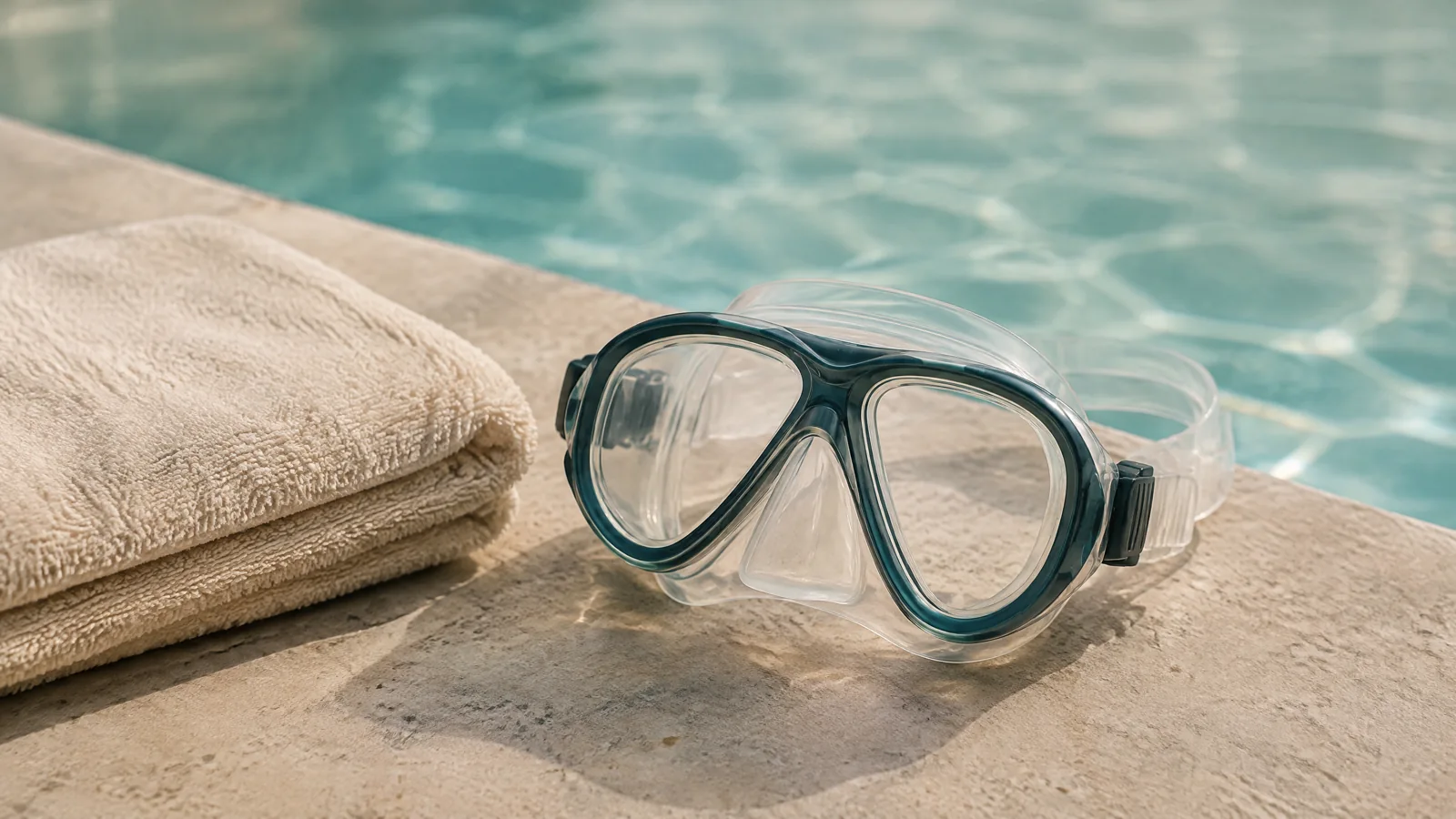
Canvas Blend editorial, with AI assistance. Canvas Blend is a hair-colour salon and shares ownership with DiveHarbour; this article is not an independent review, instructor-authored training or medical advice. No Vit So dive-instructor or reviewer credential is claimed. Any AI-created illustration is illustrative, not a photograph of actual facilities or training. Confirm current services, prerequisites, arrangements and written terms directly. All paid DiveHarbour course and activity fees are non-refundable; make-up sessions are subject only to the written terms.
More Water Activity and Hair-Care Guides
 Water, Travel & Hair Care
Enriched Air Nitrox course Hong Kong: ask an instructor, not a formula
Choose nitrox training by asking about agency standards, practical assessment and written inclusions, with realistic travel and colour-treated hair planning.
Water, Travel & Hair CareRescue Diver course Hong Kong: prepare questions, not DIY procedures
Prepare a useful rescue-course enquiry: check agency prerequisites, refresher needs, supervision, booking terms and hair-care logistics without practising DIY rescue drills.
 Water, Travel & Hair Care
PADI Bubblemaker Hong Kong for kids: keep comfort and consent first
Plan a child-centred Bubblemaker enquiry in Hong Kong, with readiness questions, an honest stop plan, separate family roles and practical pool-day hair care.